Odometer Rules on a Florida Quad Title
Buying or selling a quad in Florida can feel like a maze, especially when you start digging into all the little details on the paperwork. One question that often trips people up is about odometer readings: do they matter for your Florida ATV title? While they're absolutely critical for cars, the rules are a bit different, and frankly, often less straightforward for off-highway vehicles, leading to confusion and sometimes unnecessary worry. This guide will cut through the clutter and explain exactly how odometer readings factor into titling your ATV or UTV in the Sunshine State, so you can navigate the process with confidence.
Why Odometer Readings Matter on Florida ATV Titles (or Don't!)
When you think about vehicle titles, especially car titles, the odometer reading is usually front and center. It’s a key piece of information for valuation, tracking wear and tear, and ensuring honest transactions. However, the world of ATVs and UTVs operates on a slightly different logic, reflecting their primary use and design. Understanding this distinction is crucial to comprehending Florida’s titling process for these machines.
The Basic Difference: Odometer vs. Hour Meter
Let's start with the fundamental difference that dictates a lot of the discussion around mileage on quads. An odometer measures the total distance a vehicle has traveled, usually in miles or kilometers. You find these in cars, trucks, and often on larger, more road-oriented utility vehicles. For cars, a high odometer reading generally signals more wear, potentially lower resale value, and a history of extensive use on public roads. It's a universal metric for road vehicles.
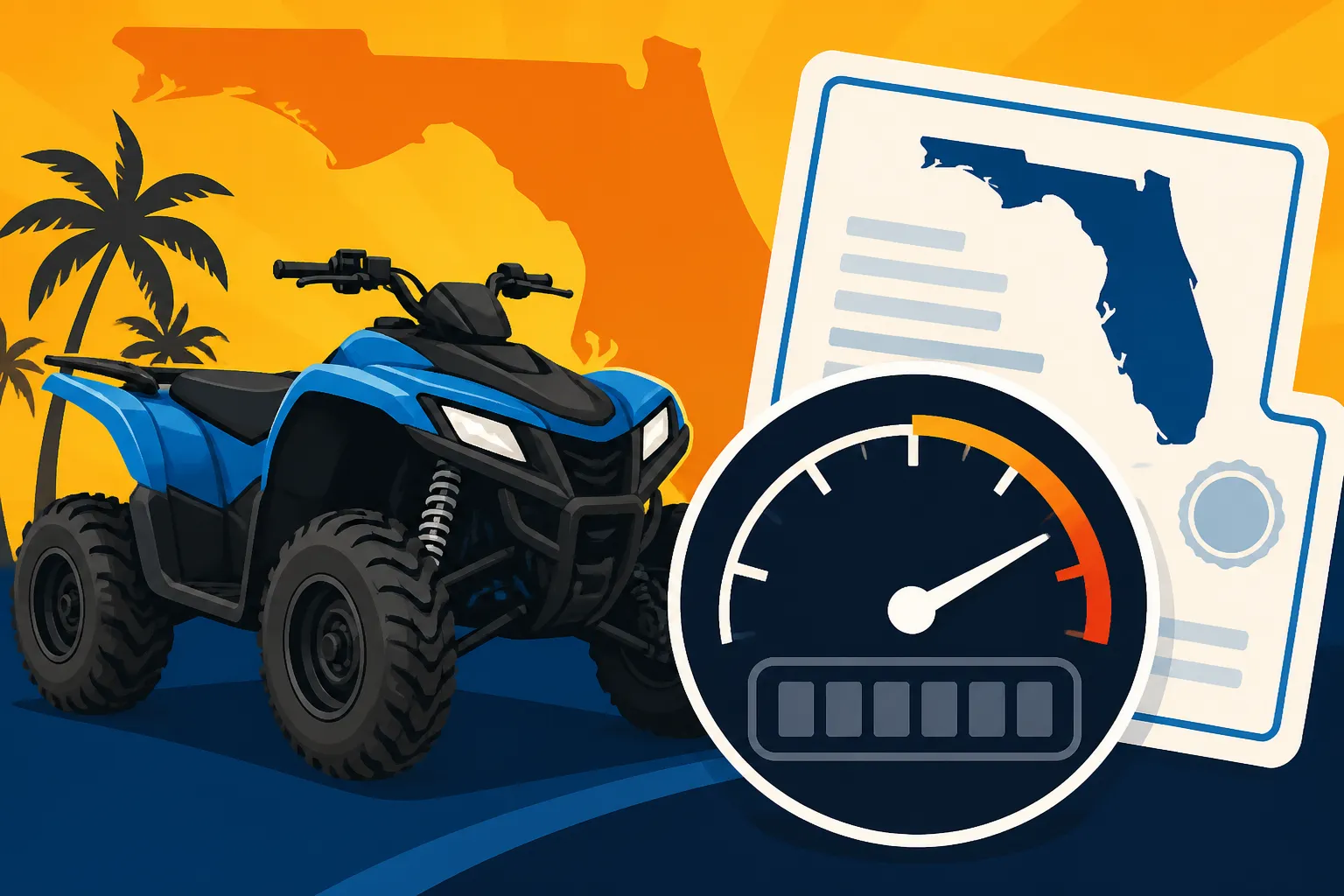
An hour meter, on the other hand, measures the total operational time of the engine, typically in hours. Most traditional ATVs, especially those built for pure off-road recreational use, come equipped with hour meters rather than odometers. Think about it: an ATV might spend hours idling, crawling over technical terrain, or running at low speeds in mud, none of which racks up significant mileage but certainly puts wear on the engine. For these machines, engine hours are often a far more accurate indicator of actual use and wear than any theoretical mileage. This is why many riders, mechanics, and enthusiasts in the off-road community put more stock in hour meter readings when evaluating an ATV's condition.
How Florida Law Treats Odometer Readings on OHV Titles
Now, let's talk about the legal side in Florida. For passenger vehicles (cars, trucks), the odometer reading is a mandatory disclosure on the title application and transfer forms. It's a federal requirement designed to prevent odometer fraud. However, when it comes to off-highway vehicles (OHVs) like ATVs, Florida's approach is notably different. The state primarily titles these machines as "Off-Highway Vehicles" or "Recreational Off-Highway Vehicles" (ROVs), which are distinct from traditional street-legal vehicles. [Florida Off-Highway Vehicle Title Rules Explained] delves deeper into these distinctions.
For most standard ATVs, the Florida Department of Highway Safety and Motor Vehicles (FLHSMV) title application forms do not have a specific, mandatory field for an odometer reading. This absence reflects the reality that many ATVs simply aren't equipped with odometers, or if they are, the mileage isn't considered as critical for their classification and ownership transfer as it is for a car. The focus for ATVs is more on identification (VIN) and proof of ownership. This means you generally won't be asked to provide an odometer reading when you're going through the steps for [Florida's ATV Title Application Explained] at your local tax collector's office for a typical quad.
When an Odometer Reading Might Appear on Your Florida Quad Paperwork
Even if an odometer reading isn't a mandatory field for every ATV title in Florida, there are specific situations and types of off-highway vehicles where you might encounter one. It's not a universal rule, but it's important to be aware of when and why it might pop up on your paperwork, especially during the initial purchase or a resale.
Manufacturer's Certificate of Origin (MSO) and Initial Sales
When you purchase a brand-new ATV or UTV from a dealership, the first piece of ownership documentation is the Manufacturer's Certificate of Origin, or MSO. This document essentially serves as the birth certificate for your machine. For many traditional ATVs, the MSO will list the vehicle's specifications, VIN, and perhaps an engine number, but rarely a mileage figure, simply because most don't have odometers.
However, for more sophisticated utility terrain vehicles (UTVs) or side-by-sides, which often come with features like speedometers and odometers, the MSO might include an initial odometer reading. This reading would typically be very low, reflecting only the factory testing and movement around the dealership lot. When the dealer processes the initial title application for you, they will submit the MSO along with other required forms. If an odometer reading is present on the MSO for a UTV, it may be recorded by the state, although its legal significance remains primarily for informational purposes rather than strict mileage disclosure requirements akin to passenger vehicles. This is part of the extensive paperwork process that [What a Dealer Files on Your Behalf After a Sale] covers in detail.
Selling a Used Quad: Declarations and Disclosures
When you're buying or selling a used quad in Florida, especially through a private sale, the odometer question can become a point of discussion, even if it's not a strict titling requirement. While the state might not demand an odometer reading on the title transfer form for an ATV, transparency is always the best policy. If the machine does have an odometer (more common on UTVs) and you're the seller, disclosing the reading on your bill of sale can build trust with the buyer. This is particularly true if the reading is exceptionally high or low, as it offers a more complete picture of the machine's history.
For clarity and protection for both parties, a comprehensive bill of sale is invaluable. Documents created using platforms like LawDepot can be customized to include specific details about the machine, including any available odometer or hour meter readings. Even if the Florida title form doesn't require it, a detailed bill of sale can include fields for "actual mileage," "not actual mileage," or "exceeds mechanical limits" if applicable, mirroring the thoroughness seen in car sales. This protects sellers from later disputes and gives buyers peace of mind. Remember, a robust [Florida ATV Bill of Sale: What It Needs to Say] is your best friend in a private transaction.
What the Florida Title Application Form Asks (or Doesn't)
Let's look at the actual forms you'd interact with at the FLHSMV or county tax collector's office. For example, the Florida Department of Highway Safety and Motor Vehicles form HSMV 82040, "Application for Certificate of Title With/Without Registration," is the primary document for titling an off-highway vehicle. If you meticulously review this form, especially the sections pertaining to OHVs, you'll notice that unlike the dedicated odometer disclosure section for cars, there typically isn't a mandatory line item for "odometer reading" for most ATVs.
Instead, the form prioritizes information like the VIN, make, model, year, and proof of ownership. This is a clear indicator that for the average ATV, the state doesn't track or require odometer declarations in the same way it does for a family sedan. The state is primarily concerned with establishing legal ownership and taxing the sale, not regulating the mileage of a machine largely confined to private land or designated trails. While the form might have a general "mileage" box that's relevant for street-legal vehicles, it's generally left blank or marked "NA" for a typical ATV, reflecting its non-applicability. This nuance is critical for anyone trying to understand the [Florida ATV Title Application Explained] comprehensively.
UTVs and Side-by-Sides: A Different Story for Odometer Readings
While traditional ATVs often forego odometers in favor of hour meters, the landscape shifts considerably when we talk about Utility Terrain Vehicles (UTVs) and side-by-sides. These machines, with their increasing popularity and diverse applications, frequently bridge the gap between recreational off-road use and more utilitarian or even occasional road-adjacent functions. This often means their manufacturers equip them with odometers, which, in turn, can subtly change how mileage is approached in their titling process in Florida.
Why UTVs Often Have Odometers
UTVs and side-by-sides are designed with a broader range of uses in mind compared to their smaller ATV cousins. They often feature steering wheels, bench seating, larger cargo beds, and sometimes even enclosed cabs. Many are used for farm work, ranching, hunting, property management, or even as shuttle vehicles in large private communities. Because of these applications, where they might travel greater distances, often at higher speeds, and sometimes on maintained private roads, an odometer becomes a much more practical and relevant gauge of their usage.
Manufacturers recognize this, so it's very common to find UTVs equipped with digital or analog odometers right from the factory. These vehicles are often more substantial, sometimes exceeding the 55-inch width threshold that defines a standard ATV in Florida, placing them firmly in the "Recreational Off-Highway Vehicle" (ROV) category. This distinction, explored in articles like [Florida UTV Titling for Side-by-Sides Over 55 Inches] and [Florida ROV Definition: 80 Inches and 3,500 Pounds], often correlates with the presence of an odometer. The more a machine resembles a "mini-truck" or a "golf cart on steroids," the more likely it is to track miles rather than just hours.
Titling a UTV with an Odometer in Florida
So, what happens when you have a UTV with an odometer and you need to title it in Florida? The process largely remains the same as for an ATV in terms of requirements like VIN verification and proof of ownership. However, if the UTV's Manufacturer's Certificate of Origin (MSO) explicitly lists an odometer reading, or if the dealer provides one at the time of sale, that information might be entered into the state's titling system. It's not necessarily a mandated disclosure on the same level as for a car, but it can be recorded as part of the vehicle's descriptive data.
The key difference here is often that the state's system has the capacity to record it for ROVs, even if it doesn't strictly require it for legal transfer purposes. When completing the application, if an odometer reading is available and clearly stated on supporting documents, it's generally a good idea to include it if there's a relevant field, or to provide it if asked. While the state isn't likely to scrutinize the "accuracy" of the UTV's mileage in the same way it would for a car, having that information accurately reflected on any documentation aids in maintaining a clear record of the vehicle's history. It becomes more about creating a complete profile for the vehicle rather than fulfilling a specific anti-fraud mandate.
Protecting Yourself: Beyond Just the Odometer Reading
In the world of Florida ATVs and UTVs, focusing solely on an odometer reading can sometimes lead you astray. Unlike cars, where mileage is a primary indicator of value and wear, off-highway vehicles demand a broader perspective. Whether your quad has an odometer, an hour meter, or neither, protecting yourself during a purchase or sale involves looking beyond a single number and ensuring all aspects of the transaction are sound and transparent.
Importance of an Accurate Bill of Sale for Any OHV
Since the Florida title might not explicitly require an odometer reading for many ATVs, the importance of a comprehensive and accurate bill of sale cannot be overstated. This document acts as your primary record of the transaction, detailing the specific machine, its agreed-upon price, and any conditions of the sale. For both buyer and seller, it’s a critical piece of protection.
A good bill of sale for an ATV or UTV should clearly include:
- The full legal names and addresses of both the buyer and seller.
- The date of the sale.
- A clear description of the machine, including its make, model, year, and especially its Vehicle Identification Number (VIN). The VIN is paramount for identification and ownership verification.
- The final agreed-upon purchase price.
- Any disclosures about the machine’s condition, known defects, or agreements (e.g., "as-is").
- If the machine has an hour meter, listing the hours at the time of sale. If it has an odometer, list the mileage. Even if not state-mandated for the title, it provides a transparent record.
- Signatures of both parties, and ideally, a witness or notary, though notarization isn't always required for the title itself.
Platforms like LawDepot offer customizable bill of sale templates that can help you create a robust document, ensuring you don't miss any critical details. This way, even if the title application doesn't ask for mileage, your private agreement is well-documented. For more details on what to include, check out [Florida ATV Bill of Sale: What It Needs to Say].
Verifying VIN and Ownership History
Far more critical than an odometer reading for an ATV is verifying its VIN and understanding its ownership history. The VIN is the machine's unique identifier, and it's the single most important piece of information to ensure you're buying a legitimate, non-stolen quad. Before you hand over any money, always compare the VIN on the machine (usually stamped on the frame) with the VIN on the title or MSO. If they don't match, walk away.
You can also use the VIN to perform a basic check for theft or prior liens. While Florida doesn't have a public database for ATV history reports like cars, you can often call local law enforcement or the tax collector's office to run a quick check for a stolen status. Additionally, when buying a used machine, always ensure the seller has a clear title in their name. Buying a quad with no title, or an improperly signed title, can lead to serious headaches down the road. [Checking a Florida Quad's Title History] provides excellent advice on how to navigate this crucial step.
The Overall Condition of the Machine Trumps Odometer/Hour Meter
Ultimately, for off-highway vehicles, the physical condition and maintenance history of the machine often speak louder than any number on an odometer or hour meter. An ATV with low hours might have been poorly maintained or ridden aggressively, leading to more wear than a high-hour machine that was meticulously cared for.
When evaluating an ATV or UTV, especially in a private sale, focus on these practical inspection tips:
- Engine: Listen for unusual noises, check for leaks, and assess the overall cleanliness. Ask about oil change intervals and service history.
- Suspension: Check for leaks in shocks, excessive play in bushings, and bent components.
- Tires: Look at tread wear and condition.
- Frame: Inspect for cracks, bends, or signs of major damage or repairs.
- Drivetrain: Check chain/belt tension, sprocket wear, and the condition of axles and CV joints (on UTVs/4×4 ATVs).
- Brakes: Test both front and rear brakes, check fluid levels and pad wear.
- Fluids: Ask about recent fluid changes (oil, coolant, differential fluid).
Don't be afraid to ask for maintenance records or even to have a trusted mechanic look over the machine. These real-world observations will give you a much more accurate picture of the quad's health and value than a simple mileage number ever could, regardless of what Florida's titling forms might ask for.
| Feature | Odometer (Miles) | Hour Meter (Hours) | Relevance to Florida Title | Common on | Primary Use Indicator |
|---|---|---|---|---|---|
| Measurement | Distance traveled | Engine run time | |||
| ATVs | Rare on traditional ATVs, sometimes on higher-end recreational models | Very common, often the primary usage metric | Generally not required | Most utility ATVs, many recreational quads | Engine wear, maintenance cycles |
| UTVs/ROVs | Common, especially on larger, more utilitarian side-by-sides | Can also be present, sometimes alongside odometer | May be recorded if present | Most UTVs, side-by-sides, increasingly common | Distance, engine wear, maintenance |
| Cars/Trucks | Mandatory, legally required for disclosure | Not applicable | Mandatory | All street-legal passenger and commercial vehicles | Distance, resale value, wear & tear |
| Title Form | Mandatory field for street-legal vehicles | No specific field | Not mandatory for ATVs/ROVs | ||
| Key Takeaway | Focus on VIN and machine condition for ATVs/ROVs, not just mileage |
Disclaimer
This article is for general informational purposes only and does not constitute professional advice. Laws, prices and regulations vary by location and change over time. Consult a qualified professional for guidance on your specific situation.