Why an OHV Title Carries No Plate Number
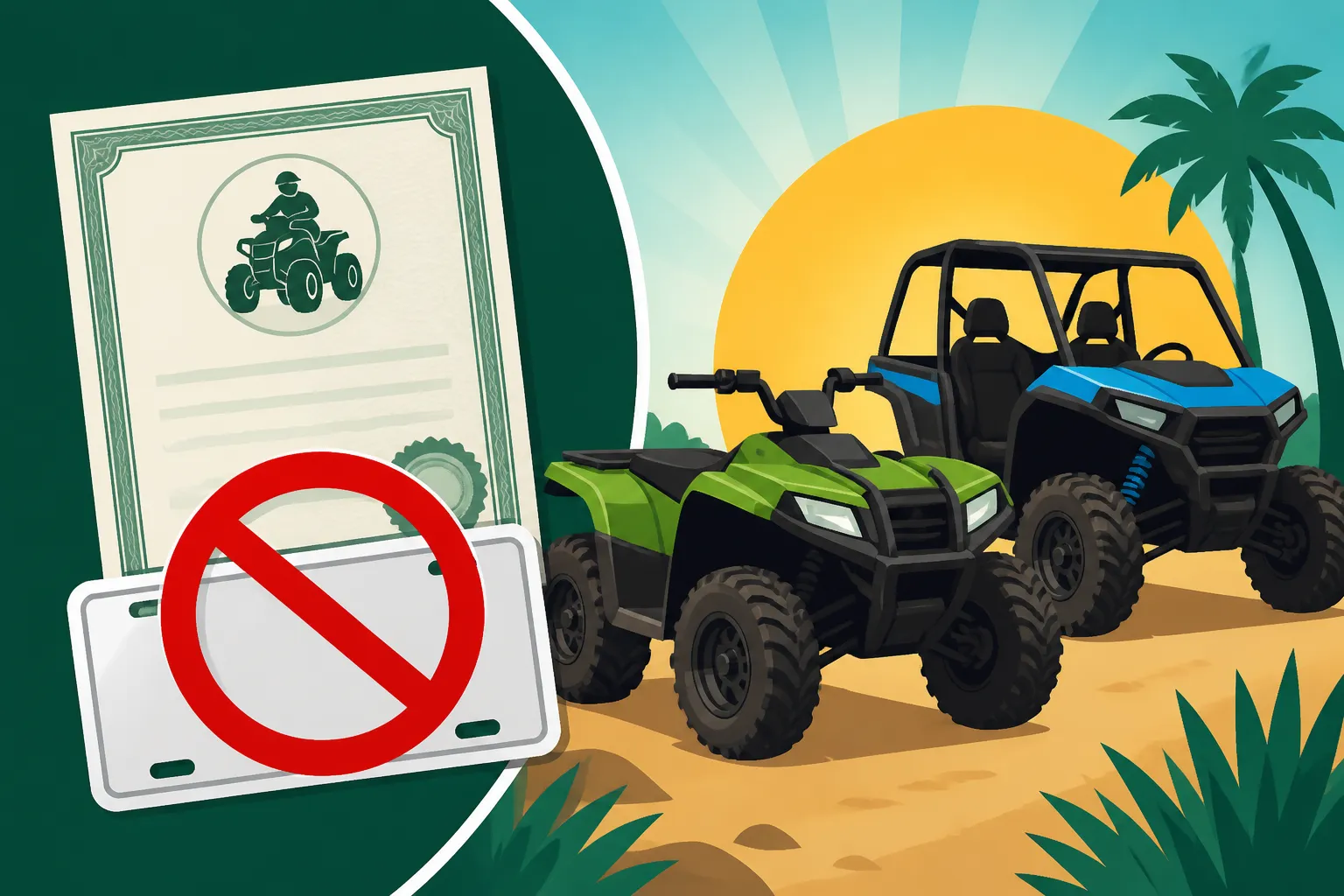
It's incredibly common to get your shiny new (or new-to-you) Florida Off-Highway Vehicle (OHV) title in the mail, flip it over, and find yourself scratching your head. Where's the license plate number? You've got this official document for your ATV or UTV, but it feels incomplete without that familiar alphanumeric identifier. This guide is here to unravel that mystery, explaining precisely why your Florida OHV title comes without a license plate number and what that means for how you legally operate your machine in the Sunshine State.
The Core Difference: Title vs. Registration in Florida
Let's cut right to the chase, because this is where the confusion usually starts. In Florida, an OHV title serves a very different purpose than a vehicle registration that would come with a traditional license plate. It's a fundamental distinction that trips up a lot of riders, especially if they're used to the rules for cars, trucks, or even motorcycles.
What an OHV Title Actually Represents
When you receive a title for your ATV or UTV in Florida, what you're primarily holding is indisputable proof of ownership. Think of it like the deed to a house; it shows who legally owns the property. This document is crucial for several reasons, but none of them involve street legality.
First, it establishes your legal right to the machine. If your quad were ever stolen, that title is your primary evidence to law enforcement that it belongs to you. It also plays a vital role in buying and selling. When you purchase an OHV, you're transferring ownership, and the title is the document that makes that transfer official. It's also where any liens, such as from a financing company, would be recorded. Without a title, proving ownership can become a tangled mess, especially when buying a used ATV in Florida: Transferring the Title. Florida's Off-Highway Vehicle Title Rules Explained cover these aspects in detail. Essentially, your title is about proving it's yours, not about proving it's allowed on certain roads.
The Role of a License Plate and Registration
Now, let's talk about what a traditional license plate and vehicle registration are for. In Florida, these are generally reserved for vehicles intended for use on public roads and highways. A registration and plate signify that the vehicle has met specific safety and emissions standards (where applicable), has appropriate insurance, and that the owner has paid the necessary fees to legally operate it on public thoroughfares. The plate number provides an immediate visual identifier for law enforcement and others, linking the vehicle to its registered owner and ensuring it's compliant for road use. This is where the major divergence happens for OHVs. The rules for [Florida ATV Title vs Registration: The Difference] are a critical point of understanding.
Why Florida OHVs Don't Get Traditional License Plates for Most Uses
The reason your Florida OHV title doesn't come with a license plate number boils down to how the state views and regulates these machines. They are primarily considered off-road vehicles, designed and intended for recreational use on private land or designated trail systems, not for general transportation on public streets.
Where You're Meant to Ride Your OHV in Florida
Florida law is pretty clear: ATVs and UTVs are primarily for off-highway use. This means places like:
- Private Property: If you own a large tract of land, or have permission from a landowner, you can ride your OHV there without needing a license plate or traditional registration. This is the most straightforward scenario for untitled machines, as covered in [Can You Ride an Untitled ATV on Private Land in Florida].
- Designated OHV Trails and Parks: Florida boasts a fantastic network of public and private OHV parks and trail systems, such as the Croom Motorcycle Area in Withlacoochee State Forest or sections of the Ocala National Forest. These areas are specifically designed for off-road recreation. When you ride here, you generally need an OHV permit, not a road-going license plate. This is an important distinction and is why [Riding Public Land as the Trigger for a Title] is so significant. The state wants to track ownership of machines used on public lands, but not necessarily allow them on public roads. You'll typically display a special OHV pass or decal, not a traditional license plate. [Florida OHV Permits: What You Need Before You Ride] delves deeper into these requirements.
Because the primary intended use of these machines does not involve operating on paved public roads, the need for a license plate, as understood for a car or truck, simply doesn't exist for the vast majority of OHV use cases.
The Limitations of OHV Road Use in Florida
Now, this isn't to say that ATVs and UTVs never touch a public road in Florida. There are very specific, highly limited exceptions, but even in these instances, they don't typically involve a standard license plate.
Florida Statute 316.2123 allows for OHVs to be operated on certain unpaved county roads, under strict conditions. These conditions often include:
- Designated Roads: The county commission must have specifically designated the unpaved road for OHV use.
- Daytime Hours Only: No night riding on these roads.
- Licensed Driver: The operator must possess a valid driver's license.
- Age Restrictions: Special rules apply for minors, and sometimes an ATV safety course certificate is required, as discussed in [Florida ATV Safety Course Requirements for Riders Under 16].
- Specific Equipment: While not a "license plate," the machine itself might need certain safety equipment like headlights and taillights.
Even when these conditions are met, you won't be getting a license plate for your OHV. Instead, proving compliance typically involves showing your title (proof of ownership), your driver's license, and perhaps a county-issued permit or a general understanding of which roads are designated. The overarching rule remains that ATVs and UTVs are not street legal in Florida for general use. For more on this, you can check out [Florida ATV Road Rules: Where You Can Legally Ride]. The intention of these exceptions is usually to allow access between private properties or to public trailheads, not for commuting or extensive road travel.
What a Lack of a Plate Number Means for You
Understanding that your Florida OHV title won't have a plate number is crucial for knowing your rights and responsibilities as an OHV owner. It shapes how you think about ownership, legality, and what documentation you need to carry.
Proof of Ownership and Your Title
Since there's no license plate to visually identify your OHV, your title becomes even more vital as proof of ownership. This document, issued by the Florida Department of Highway Safety and Motor Vehicles (FLHSMV), officially records you as the owner.
Here’s why it's so important:
- Preventing Theft and Recovery: In the unfortunate event your machine is stolen, your title, with its unique Vehicle Identification Number (VIN) and your name, is paramount for reporting the theft and aiding in recovery. This is directly related to [What an OHV Title Proves in a Theft Claim]. Without clear proof of ownership, retrieving a stolen OHV can be significantly more challenging.
- Buying and Selling: When you sell your OHV, you'll endorse the title over to the new owner, making the legal transfer of ownership official. This process protects both the buyer and the seller. Conversely, when you buy an OHV, ensure you receive a properly executed title, or if it's new, a Manufacturer's Certificate of Origin (MSO). Sometimes, you might need a bill of sale to supplement the title, particularly for private sales. Resources like LawDepot can provide templates for a comprehensive bill of sale, ensuring you include all necessary details beyond just the title number, like the VIN and buyer/seller information, to avoid future headaches.
- Lien Recording: If you finance your OHV, the lender will typically record a lien on your title. This means they have a financial interest in the machine until the loan is paid off. The title serves as the official record of this lien.
Required Documentation for Public Trail Riding
While you won't carry a license plate, you absolutely need documentation when riding on public lands in Florida. Here’s what you should typically have on hand:
- Proof of Ownership (Title): Even if the physical title isn't on your person, having access to its information or a copy can be helpful. The most important part is that the machine is titled in your name, or your legal guardian's name if you're a minor. [Who Must Title an ATV in Florida] outlines these requirements.
- OHV Permit/Pass: As mentioned, many Florida State Forests and National Forests require an OHV pass or permit for trail use. These are usually decals displayed on your machine or a paper permit carried by the operator.
- Safety Certificate: For riders under 16 using public lands, a mandatory ATV safety course certificate is usually required.
- Identification: Always carry a valid form of identification, like a driver's license or state ID.
Failing to have these can lead to citations and penalties, as described in [Penalties for Operating Untitled on Public Land]. It’s about being responsible and ensuring you meet the requirements for the type of riding you're doing.
To summarize the differences, here’s a quick table:
| Feature | Florida OHV Title | Florida Vehicle Registration & License Plate (for cars/trucks) |
|---|---|---|
| Primary Purpose | Proof of legal ownership; records liens. | Permission to operate on public roads; tracks road legality. |
| Issued By | FLHSMV | FLHSMV |
| Plate Number | NO (does not include a license plate number) | YES (includes a unique license plate number) |
| Road Use | Generally NOT permitted for road use. Specific, limited exceptions exist for designated unpaved roads. | REQUIRED for operation on most public roads and highways. |
| Public Land Use | Often required to track ownership for public land access. Additional OHV permits may be required. | Not applicable; public land use usually requires specific OHV permits or is otherwise restricted for traditional vehicles. |
| Theft Recovery | Primary document for proving ownership and aiding recovery. | Helps identify vehicle and owner for law enforcement. |
In short, your Florida OHV title is a declaration of ownership, a foundational document in the life of your ATV or UTV. It doesn't come with a license plate number because Florida's legal framework positions these machines primarily for off-road adventures, where the concept of a "street-legal" plate simply doesn't apply. Knowing this empowers you to ride responsibly and keep all your paperwork in order, ensuring your off-road experiences are as smooth as a freshly groomed trail.
Disclaimer
This article is for general informational purposes only and does not constitute professional advice. Laws, prices and regulations vary by location and change over time. Consult a qualified professional for guidance on your specific situation.