What to Carry Into a Florida State Forest
A Florida State Forest ride can go sideways before the engine starts if a pass, safety certificate, or proof of ownership is missing. The right packing list depends on the forest, the riding area, your machine, and who is riding it. Use this checklist to prepare the paperwork and trail essentials, then confirm the current rules for your destination before you leave.
Documents and permissions to have ready
Start with access requirements, not riding gear. A forest pass or other authorization may be required for off-highway riding, and having one does not automatically give you permission to ride every road or trail on the property. Forests can have different designated areas, seasonal restrictions, closures, and check-in procedures.
Before your trip, confirm which pass applies, how it must be displayed or carried, and whether each machine needs its own pass. The details are covered in Florida State Forest OHV Day Use and Annual Passes. If you are deciding between a short visit and repeat trips, Florida OHV Annual Pass vs Day Pass Value can help you compare the options. Check the forest’s official information shortly before departure, since access details can change.
For each machine, consider carrying:
- The required forest pass or a record that lets you retrieve it if it is electronic
- Proof that you own the machine, such as its title or a bill of sale
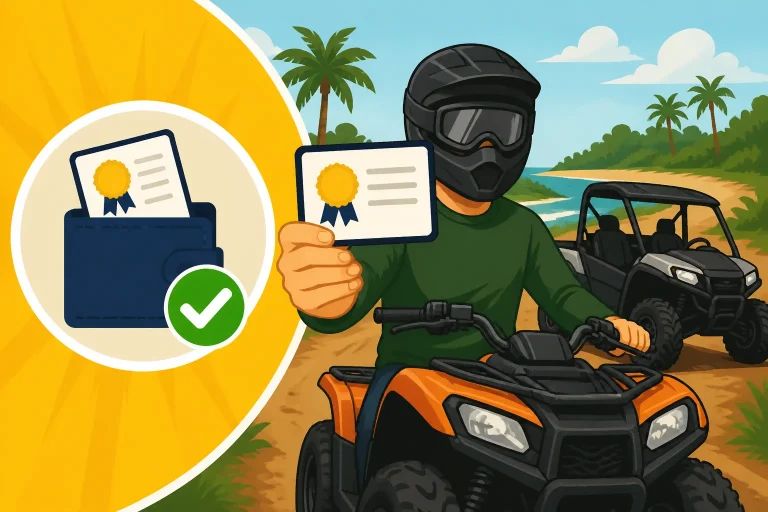
- Any safety-course certificate required for a rider
- A photo ID for the adult responsible for the group
- Written permission or other authorization if you are using land or access not covered by the public riding pass
- A copy of the forest’s current access rules and contact details
A state forest pass and a vehicle title serve different purposes. The pass addresses access to a particular riding area or activity; a title is evidence of ownership and is part of Florida’s off-highway vehicle requirements in situations where titling applies. One does not substitute for the other. If you are unsure whether your machine needs a Florida title, see Florida Residents Who Ride Public Land Must Title and Florida OHV Permit Rules for Out-of-State Riders.
Visiting from outside Florida
An out-of-state registration, title, or riding permit may help establish ownership or legal status where it applies, but do not assume it replaces Florida forest access requirements. Reciprocity is not a blanket pass to use a Florida State Forest. Confirm what the destination accepts, what the machine needs, and whether the rules differ for residents and visitors.
If the ATV or UTV is registered or titled elsewhere, bring that paperwork along with any Florida pass required for the ride. A clear photo of the document can be useful as a backup, but do not rely on a phone image if the forest specifically requires the original, a printed pass, or a particular display method. Ask the forest office if the instructions are unclear.
Riders under 16
If a rider is under 16, check the applicable safety-course and supervision rules before arriving. Requirements can depend on the setting and the rider’s age, so verify them for the specific forest and activity rather than assuming a course card is optional or that one adult rule fits every situation. The overview at Florida ATV Safety Course Requirements for Riders Under 16 is a useful starting point.
If a certificate is required, carry it in a form that can be shown at the trailhead. Keep the supervising adult’s contact information and identification with the group as well. A parent or guardian should also make sure the young rider understands which trails or riding areas are permitted for their skill level.
What to pack on the machine and in the vehicle
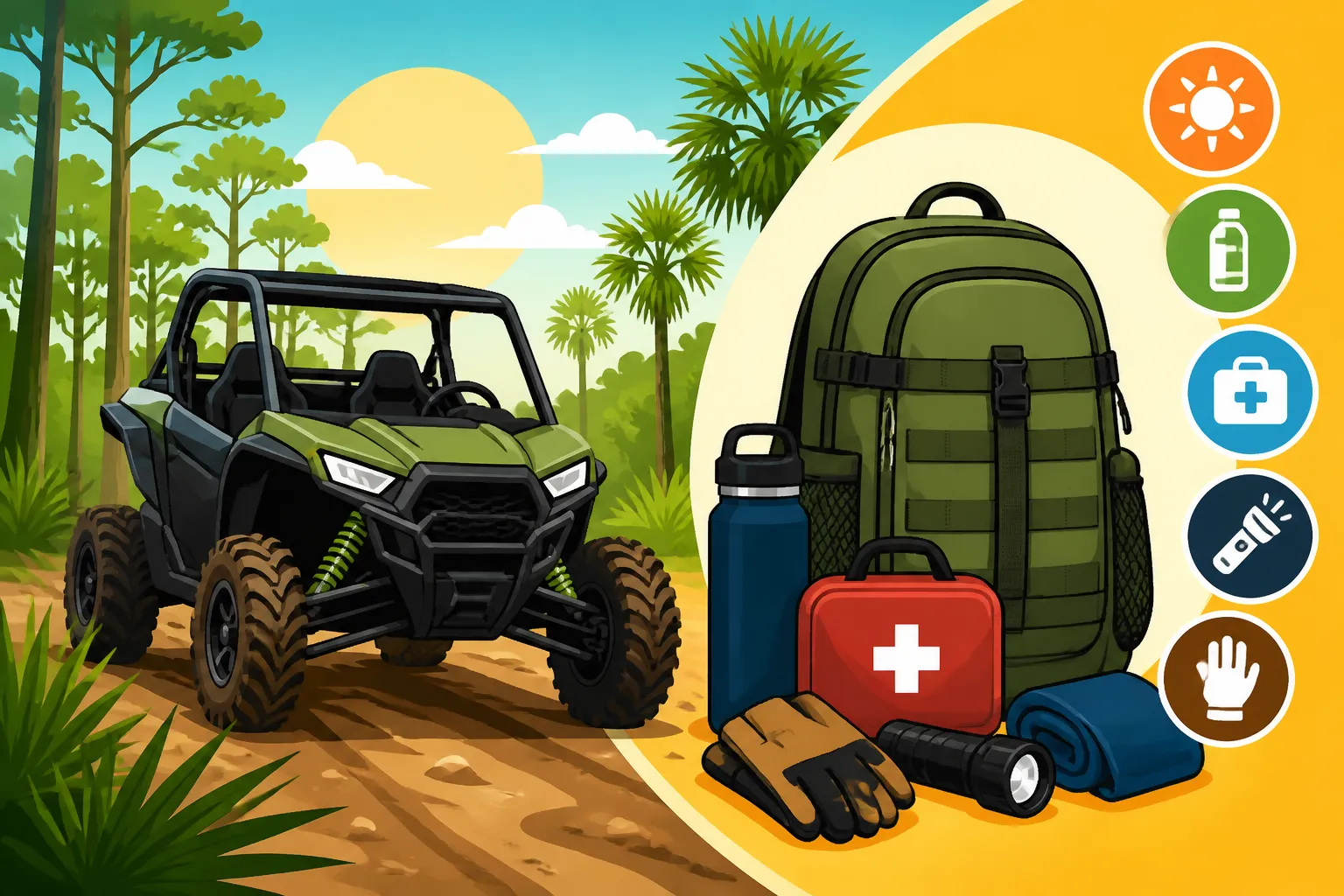
A good checklist covers both the trail and the trip to the trailhead. Keep important papers protected, but pack tools and recovery items where they can be reached without unloading everything. On a UTV, use a secure storage compartment; on a quad, use a small, firmly attached bag that will not interfere with the rider or controls.
| Item | Why it helps | Where to keep it |
|---|---|---|
| Pass and ownership documents | Helps establish access and ownership if asked | Waterproof pouch or secure storage |
| Phone and offline map | Useful for navigation and contacting help where service is available | Protected pocket or mounted case |
| First-aid kit | Handles minor cuts, scrapes, and basic needs | Easy-to-reach storage |
| Water and sun protection | Supports hydration and reduces sun exposure | Within reach, secured from spills |
| Basic tools and tire repair supplies | Helps address common trail problems | Vehicle storage or tool roll |
| Tow strap or recovery gear | Can help with a stuck machine when used safely | Secured compartment |
| Spare clothing and towel | Useful after rain, mud, or a wet crossing | Dry bag in the tow vehicle |
| Trash bag | Keeps rubbish contained until disposal | Vehicle cab or machine storage |
Keep documents dry and accessible
Paperwork that has been soaked in a muddy storage box is not much help at a checkpoint. Use a sealed document pouch or a sturdy waterproof sleeve, and separate papers from tools that could tear or stain them. A waterproof pouch from Amazon may be a practical option, but check the size and closure before relying on it in wet conditions. Keep the pouch secured so it cannot fall off during the ride.
For digital documents, download the files to your phone rather than depending on an internet connection at the trailhead. Save the pass receipt, map, and forest contact information for offline access. A phone screenshot can be a useful backup, but it may not satisfy a requirement to show a physical pass or original document.
Navigation and communications
Do not assume that mobile service will be available throughout a forest. Download a map before leaving home, and make sure everyone in the group knows the planned route and meeting point. A paper map can still be useful if a phone battery fails, but learn how to read it before you are on the trail.
Carry a charged phone and, if the group uses them, radios with charged batteries. Agree on a simple plan for what to do if riders become separated. For example, decide in advance whether everyone should return to the last signed junction or stay put and contact the group. Do not split up to search without a plan.
Tools and recovery items
The right repair kit depends on the machine and the trail. A sensible basic set may include the tools needed for common fasteners, tire repair supplies that match the tires, and a small flashlight. Check your owner’s manual for machine-specific tools or emergency procedures.
A tow strap or recovery equipment can be useful, but carrying gear does not make every recovery safe. Avoid attaching a strap to a part not designed for towing, and do not stand in line with a loaded strap. If the machine is deeply stuck, damaged, or in a hazardous spot, stop and assess the situation rather than risking an injury to save time.
Safety, comfort, and personal essentials
A document check gets you through the gate; it does not make a ride safe by itself. Pack for the distance, weather, riders’ experience, and difficulty of the route. A short ride on a marked trail still calls for basic protective gear and enough water to handle delays.
Protective gear
Wear a helmet that fits securely and meets the applicable requirements. Goggles or other suitable eye protection help keep dust, branches, insects, and debris out of your eyes. Gloves improve grip and protect hands from abrasion; sturdy footwear and long sleeves add protection from brush and hot surfaces.
Check the forest’s rules and any riding-area requirements before deciding what is acceptable. A private park’s rules are not necessarily the same as a state forest’s, and equipment that works for a slow family ride may not be enough for rougher terrain. If you are riding with children, confirm the fit of each person’s helmet and eye protection before starting the engine.
Water, food, and weather protection
Bring more water than you expect to need, especially during hot or humid weather. A ride can take longer than planned because of a flat, a closure, a wrong turn, or a machine that needs attention. Carry water in a bottle or hydration system that stays secure while riding.
Pack sunscreen, insect protection, and weather-appropriate layers. A light rain layer can make a wet ride more comfortable, while a dry change of clothes in the tow vehicle is useful after a storm or muddy section. Keep a small snack available for longer outings, particularly if children are riding.
Check the forecast and look for heat, lightning, heavy rain, and storm-related closures. Weather can change trail conditions quickly, and a route that was manageable earlier may become difficult after heavy rain. If conditions are unsafe or the forest closes an area, follow the closure rather than trying to ride around it.
First aid and emergency planning
Pack a first-aid kit suited to your group and know where it is. Include supplies for small cuts and blisters, along with any personal medication riders may need. Keep medication in its original packaging when practical and protect it from heat and water.
Before leaving the staging area, tell someone who is not riding where you are going and when you expect to return. Share the forest or trail name, your tow vehicle’s location, and a contact number. If your group has a serious incident, use the local emergency number when you have service and give the clearest location information available, such as a trail marker or junction name.
A basic pre-ride check also prevents avoidable problems. Inspect tires, brakes, lights where fitted, controls, fuel, and visible leaks. Make sure the machine is appropriate for the trail and that all riders know how to stop and regroup.
Check the forest rules before you head out
A Florida State Forest is not one uniform riding area. Some locations may have designated OHV trails or staging areas, while other roads and paths may be closed to recreational vehicles. A pass does not override signs, gates, closures, or restrictions on a particular route.
Use the forest’s official information to confirm:
- Whether ATV or UTV riding is allowed at your destination
- Which trailheads, roads, or designated areas are open
- Whether the machine’s type or size is allowed
- What pass or permit is required, and whether it applies per rider or per machine
- Whether there are age, course, supervision, or equipment rules
- Whether temporary closures, hunting activity, maintenance, or weather affect access
- Where to park, check in, and display or present the pass
If the machine is wider or heavier than a typical ATV, do not assume it can use every trail. Vehicle classifications and trail restrictions can matter, and a UTV that fits on a public road may still be too large for a particular riding area. The forest’s own vehicle limits and trail signs are the deciding information for access.
Riding areas and public roads are different
A permit to ride in a designated OHV area does not make nearby public roads legal for ATV or UTV use. Likewise, a forest road should not be treated as open simply because it is unpaved or appears quiet. Follow the signs and the rules for the specific road or trail. For a broader explanation of access boundaries, see Florida ATV Road Rules: Where You Can Legally Ride.
If your trip requires traveling between a staging area and a trail, plan the route without assuming you can ride on pavement. Many riders transport the machine on a trailer to avoid an illegal or unsafe road connection. Keep trailer documents and tie-down equipment in the tow vehicle, too.
Make a final check at the trailhead
Before unloading, check for current notices, signs, and payment or check-in instructions. Confirm that the pass covers the machine you brought and that it is displayed or available in the required way. If a sign conflicts with an older map or an online post, follow the current on-site notice and ask staff for clarification.
Take a moment to identify the trailhead, parking area, and return route. Make sure everyone knows the rules for speed, passing, staying on marked routes, and giving other users space. A quick briefing is especially valuable when the group includes new riders or children.
A practical packing routine
Packing the same way each time reduces the chance of leaving the pass on the kitchen counter or discovering that the phone map is unavailable after you arrive. Keep a reusable checklist in the tow vehicle and update it when the forest or machine requires something different.
- Confirm the destination. Check the forest’s current access information, open trails, closures, and machine restrictions.
- Verify the authorization. Buy or retrieve the correct pass, and confirm how it must be carried or displayed.
- Gather paperwork. Pack ownership documents, required certificates, identification, and any written permission relevant to the trip.
- Charge and download. Charge phones and radios, download maps and documents, and pack a backup charging option if appropriate.
- Pack safety gear. Check helmets, eye protection, gloves, footwear, first aid, water, and weather protection.
- Load tools securely. Place repair and recovery gear where it will stay put and can be accessed safely.
- Tell someone the plan. Share the destination, expected return time, and a way to reach the group.
- Recheck at the trailhead. Read posted notices, confirm access, and make sure every rider knows the route and regroup plan.
Separate gear into two groups: items that must stay with the machine and items that can remain in the tow vehicle. The pass, water, phone, and essentials for a basic trail problem should be accessible while riding. Spare clothes, extra supplies, and a larger first-aid kit can stay at the staging area if they are secured and the group can return to them.
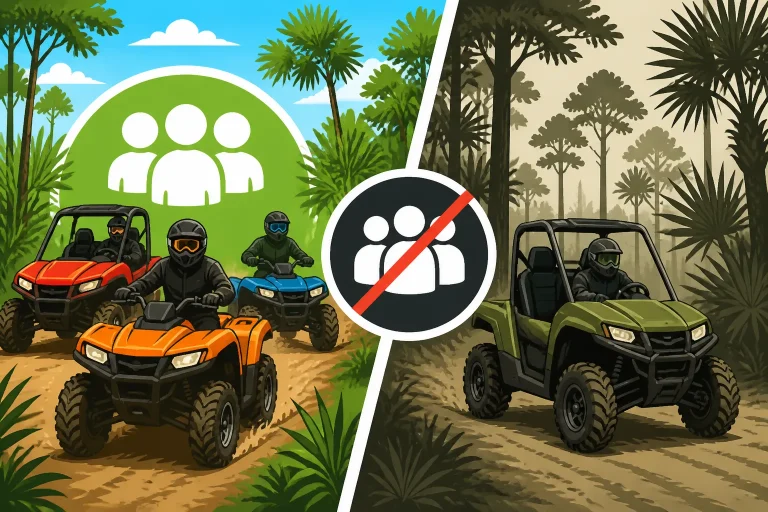
If you ride with several machines, check each one rather than assuming the lead rider’s documents cover the group. Keep each pass associated with the machine it applies to, and make sure riders can explain where they are headed and how to get back. That small bit of organization can save time during a check and make a mechanical delay easier to manage.
Frequently Asked Questions
Is a Florida State Forest pass the same as an ATV title?
No. A forest pass or permit addresses access to a particular recreation area or activity. A title is ownership documentation and may be required under Florida’s off-highway vehicle rules. Confirm both requirements separately.
Can an out-of-state pass replace a Florida State Forest pass?
Do not assume it can. An out-of-state document may establish registration or ownership, but Florida forest access requirements are separate. Check with the specific forest before traveling.
Do I need to carry my paperwork in original form?
Follow the forest’s instructions. Digital copies can be useful backups, but they may not meet a requirement for a physical pass, original document, or specific display method.
What should I do if the trailhead rules differ from an older map?
Follow current posted notices and ask forest staff for clarification. Do not ride a route that is signed closed or assume an older map overrides a current restriction.
Disclaimer
This article is for general informational purposes only and does not constitute professional advice. Laws, prices and regulations vary by location and change over time. Consult a qualified professional for guidance on your specific situation.