Recreation.gov and the Two-Forest OHV Pass
Recreation.gov and the Two-Forest OHV Pass
If you’re planning to ride an ATV or UTV in a Florida national forest, it can be hard to tell which pass you need and where it works. The pass sold through Recreation.gov is for designated OHV areas in two national forests, not every public riding area in Florida. Here’s how to choose it, buy it, and avoid common trip-planning mistakes.
What the Two-Forest OHV Pass Covers
The pass available through Recreation.gov is associated with off-highway vehicle riding in the Ocala and Apalachicola National Forests. It is useful for riders who want to visit designated OHV routes in either forest, but it is not a general pass for every forest, trail, or public parcel in Florida.
A pass is permission to use specified OHV areas under their rules. It does not mean every road or trail in the forest is open to motorized vehicles. Routes may be closed for resource protection, weather, maintenance, or other management reasons. Check the forest’s current notices and maps before you travel, and follow posted signs at the trailhead.
The two forests are far apart. Ocala National Forest is in Central Florida, while Apalachicola National Forest is in the Panhandle. The shared pass can simplify planning if you ride in both, but it does not make them one continuous riding area. Each forest has its own routes, access points, seasonal conditions, and local directions. Confirm where you intend to ride rather than assuming that a pass alone is enough to find an open trail.
| Question | Practical answer |
|---|---|
| Which forests does the pass apply to? | Designated OHV riding areas in Ocala and Apalachicola National Forests |
| Does it open every forest road? | No. Ride only where motorized use is allowed and currently open |
| Does it cover Florida state forests? | No. State forest OHV fees and passes are separate |
| Is it a vehicle title or registration? | No. It is a recreation pass, not proof of ownership or road registration |
| Does it replace safety requirements? | No. Riders must still meet applicable course, supervision, and equipment rules |
| Can one pass cover a group’s machines? | Pass rules are generally tied to the individual vehicle; check the current listing for the pass type |
If you need a broader overview of the different pass systems, see Florida OHV Permits: What You Need Before You Ride. For a closer look at the national forest options, Florida National Forest OHV Pass: 3-Day, 7-Day or Annual explains the available pass types. Confirm the current choices and conditions on Recreation.gov before making plans, since the listing and terms may change.
What “two-forest” does and does not mean
The key benefit is that the pass can apply at designated OHV areas in both national forests. It does not let you ride between them, use routes that are closed to motor vehicles, or enter a separate state forest riding area without meeting that area’s requirements.
It also does not replace a campground reservation, camping fee, or other recreation authorization. Riding and camping are separate activities with separate rules. If you plan to stay overnight, check the campground’s own requirements rather than assuming an OHV pass includes a campsite.
The same distinction applies to private parks and riding areas. A national forest pass does not grant entry to a private mud park or a private trail system. Those places set their own access rules, fees, and equipment requirements.
For a trip that includes more than one type of property, make a simple list of each place you expect to visit and what it requires. A national forest pass may cover one part of the trip, while another riding area may require a separate pass or payment. Florida National Forest Riding vs State Forest Riding is helpful when you’re comparing different public land systems.
Choosing a Pass and Understanding the Terms
Recreation.gov may offer pass options for different visit lengths, including short-term and annual choices. The right one depends on how long you’ll ride, how often you expect to return, and whether you will use both forests. Check the current listing for the available pass types, validity dates, purchase conditions, and any processing charge before checkout. Those details can change.
A short-term pass may suit a single trip. An annual pass may be more convenient for repeat visits, but it is not automatically the best value for every rider. Consider how many days you realistically expect to ride at eligible locations, whether all your planned dates fall within its validity period, and whether a pass is required for each machine.
The pass is generally assigned to a particular vehicle rather than serving as a group admission ticket. If several ATVs or UTVs are riding, check whether each one needs its own pass. Do not assume that one pass covers a family, a trailer load, or every machine owned by the same person. Florida Annual OHV Passes Are Per Vehicle and Florida OHV Pass for a Second Machine address why this detail matters.
Match the pass to your itinerary
Before choosing, write down:
- Which forest or forests you plan to ride.
- The dates you expect to use the OHV routes.
- How many machines will enter the riding area.
- Whether you need a separate campground booking.
- Whether any rider is subject to a course or supervision requirement.
- Whether the routes you want are currently open to your type of machine.
If the trip is limited to one weekend, compare the available short-term option with the annual option, but use the current Recreation.gov listing for the actual terms and cost. If you ride regularly in both forests, the broader coverage may be convenient. If your plans are uncertain, avoid buying on the assumption that the pass can be refunded, transferred, or extended. Read the current cancellation and transfer conditions before paying.
A pass’s validity period is not necessarily the same as a calendar year. Read the start and end dates shown in the purchase details and save the confirmation. If the annual option is valid for a set period from purchase, note the expiration date before planning a later trip. [Florida National Forest OHV Pass Runs One Year] and Florida Annual Pass Start Date cover common questions about how validity dates work; still verify the dates attached to your own purchase.
Avoid mixing up federal and state forest passes
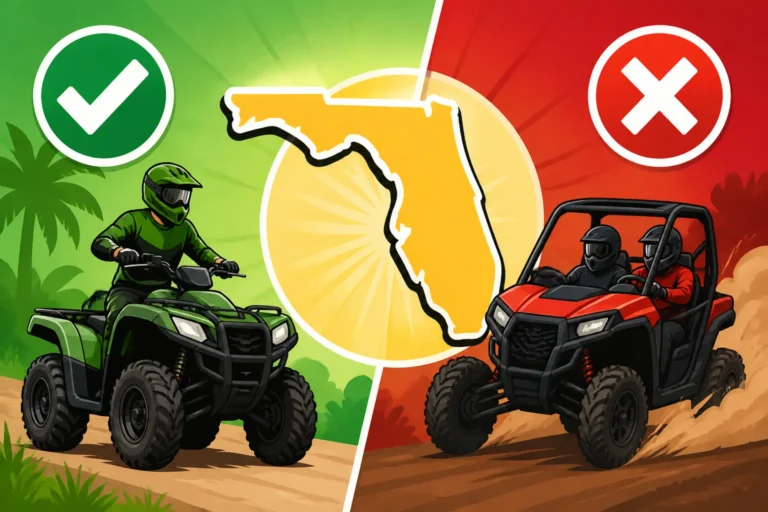
Florida has national forests and state forests, and the pass systems are not interchangeable. A Recreation.gov OHV pass for the national forests does not automatically cover a state forest OHV area. State forest locations may have their own day-use or annual passes, separate purchase methods, and separate operating rules.
If you plan to ride both types of property, check each land manager’s requirements. For example, Florida State Forest OHV Day Use and Annual Passes covers the state forest system. Do not rely on a trail map, online discussion, or an older pass receipt to decide whether a particular route is included.
The distinction is especially useful when planning a multi-stop trip. A rider could visit a national forest, then drive to a state forest or private park. The pass for the first location may not cover the next one, even if the sites are near each other or offer similar riding. Treat each property as a separate stop in your planning.
How to Buy the Pass Through Recreation.gov
Recreation.gov is the online platform used to find and purchase the national forest OHV pass. The page for the pass should identify its eligible locations, types, dates, and terms. Read the full listing rather than relying on a search result or a saved screenshot; the purchase details shown at checkout are the ones to use for your decision.
Use this process:
- Find the OHV pass listing. Search Recreation.gov for the Florida national forest OHV pass. Make sure the result is for the Ocala and Apalachicola National Forests, not a campground, another forest pass, or a different recreation permit.
- Read the coverage details. Confirm the eligible forests and areas, the pass duration, whether it is tied to one machine, and any rules about displaying or carrying proof of purchase.
- Choose the correct option. Select a duration that matches your visit. If multiple machines will ride, check whether each needs its own pass before checkout.
- Review the full cost and conditions. The amount shown can include charges beyond the base pass. Check the final total, validity dates, cancellation terms, and whether the pass can be transferred or replaced.
- Complete the purchase and save the confirmation. Keep the receipt and any pass document where you can retrieve them offline. Follow the listing’s instructions for printing, displaying, or carrying proof.
- Check the forest conditions before leaving. Verify that the routes you plan to use are open and that your machine is permitted on them. Keep the current map and any required proof accessible during the ride.
If you have trouble locating the correct product, confirm that the listing name and forest coverage match your intended trip before paying. Do not purchase a campground reservation or a general recreation pass as a substitute unless the listing specifically says it meets the OHV requirement.
Keep proof available without relying on cell service
Trailheads and riding areas may have limited or no cell service. Save the purchase confirmation to your phone before leaving coverage, and consider printing the pass or receipt if the instructions allow or require it. Follow the pass’s directions about where it must be displayed. A screenshot may help you retrieve details, but it does not override any requirement to carry or display the actual pass.
Keep a copy of the pass information separate from the machine when practical. If a phone battery dies or a document becomes unreadable, having a backup can make it easier to show that you purchased the correct authorization. Check the forest’s instructions for what staff accept as proof; do not assume that a payment-card record alone is sufficient.
It’s also sensible to keep proof of ownership available. A recreation pass does not establish that the machine belongs to you. The relevant requirements can vary by property and situation, so review Proof You Own the Quad You Are Riding if you’re unsure what to carry.
Requirements That Still Apply on the Trail
A purchased pass is only one part of being ready to ride. The forest’s route rules, safety requirements, and operating restrictions still apply. A pass does not authorize riding on closed roads, outside designated OHV areas, or on a trail that is unsuitable or prohibited for your machine.
Check the route map for vehicle limits and restrictions. A route that is open to an ATV may not be open to a wider UTV, and a road that appears on a map may not be designated for OHV riding. Read signs at entrances and intersections. If a map and a field sign appear to disagree, don’t assume the older or more convenient information is correct; contact the responsible forest office or follow the current posted closure.
Riders under 16
Young riders may have additional safety-course and adult-supervision requirements on public land. These requirements are separate from pass purchase. A child having a pass, or riding with an adult who has one, does not by itself satisfy course or supervision rules.
Check the applicable requirements before the trip, especially if your group includes riders under 16. Florida National Forest Under-16 Course Requirement explains the course issue, while Florida Adult Supervision Rules on Public Land addresses supervision. Carry any required course proof and follow the rules for the specific riding area.
Do not assume a course requirement is the same everywhere in Florida. Rules can differ between national forests, state forests, and private parks. Confirm what applies to the location you plan to visit, and make sure the supervising adult meets the stated conditions.
Vehicle and route fit
The pass does not change the size or type of vehicle permitted on a particular route. Before hauling a side-by-side, confirm that the route allows it and that any width or other vehicle limits are met. UTV access can vary by location, even within the same forest. A machine’s title classification does not necessarily determine what trails it can use.
If you ride both an ATV and a UTV, check the rules for each machine independently. Also check the width and other specifications the forest uses, rather than relying on the name used by the dealer or the vehicle’s marketing category. Florida OHV Pass for a Rental Machine can help if you’re using a rental, but the rental operator’s rules and the forest’s rules both matter.
Closures and changing conditions
Route conditions can change. Heavy rain, erosion, fire danger, maintenance work, wildlife protection, or other concerns can lead to temporary closures. A pass does not guarantee that your preferred route will be available on your arrival date.
Check for alerts close to departure, then check again at the trailhead. If a route is closed, respect the closure and choose an authorized alternative. Riding around a barrier or using an unmarked track can damage the land and create safety problems, even if the path looks well established.
Prepare for the forest environment as well. Bring water, basic tools, and a way to contact your group if you become separated. Tell someone where you plan to ride and when you expect to return. These precautions are useful even when the route is familiar and the pass is in order.
Common Pass Mistakes and How to Avoid Them
Most pass problems come from assuming that one authorization answers every question. It helps to separate the issues: where you may ride, which machine the pass covers, what you must carry, and what safety or access rules apply.
| Common mistake | Why it causes trouble | Better approach |
|---|---|---|
| Treating the pass as permission to ride anywhere in either forest | OHV use is limited to designated routes and areas that are open | Check current maps, closures, and signs |
| Assuming the pass covers state forests | National and state forest systems use separate requirements | Check each land manager’s pass rules |
| Buying one pass for several machines without checking | The pass may be assigned to an individual vehicle | Confirm per-machine conditions before checkout |
| Relying on an old receipt or saved fee amount | Prices and terms can change | Review the current Recreation.gov listing |
| Assuming a pass includes camping | Camping and OHV access may be separate | Check campground rules and reservations independently |
| Arriving without saved proof | Cell coverage may be weak or absent | Save or print the required documents before travel |
| Assuming the pass settles youth rules | Course and supervision requirements are separate | Check the rules for riders under 16 |
| Taking a wide UTV onto an ATV route | Vehicle access can vary by route | Verify machine limits for the specific trail |
A second common mistake is buying the pass before deciding where the group will ride. If the plan changes from a national forest to a state forest or private park, the original pass may not cover the new destination. Check coverage first, and contact the land manager when a route or pass description is unclear.
Another is expecting staff to resolve a mismatch between the pass and the vehicle at the gate. If the pass is linked to a specific machine, make sure the details match the machine you bring. For rentals, ask the rental provider whether the pass is included or whether you must arrange it yourself. Never assume the answer based on what another shop or park does.
Finally, don’t plan around a fee or rule remembered from a previous season. Pass charges, purchase procedures, and terms can change. Use Recreation.gov for current purchase details and the relevant forest’s notices for route access. If the official information is unclear, ask before leaving home rather than trying to sort it out at the trailhead.
A Simple Pre-Ride Checklist
Use this checklist the day before your trip:
- Confirm the Recreation.gov listing covers the forest you plan to visit.
- Check that the pass type and validity dates match your ride.
- Verify how many machines need their own pass.
- Save or print proof as directed by the listing.
- Check current forest maps and closure notices.
- Confirm your ATV or UTV is allowed on the planned routes.
- Review safety-course and supervision requirements for younger riders.
- Check camping and other recreation arrangements separately.
- Carry ownership information and emergency essentials.
- Tell someone your route and expected return time.
If the group has several vehicles or riders with different experience levels, assign one person to verify the paperwork and another to check the route plan. That small division of tasks helps avoid a common trailhead delay: discovering that the pass is right for the forest but wrong for the vehicle, or that the planned route is closed.
For a fuller overview of the national forest pass system, see Recreation.gov Account Setup for a Pass and Printing a Pass Before You Leave Home. If you want to compare short and longer visits, Florida Forest Pass for a Three-Day Visit and Florida Forest Pass for a Week of Riding cover trip-length planning. Always use the current Recreation.gov listing for final purchase terms.
Frequently Asked Questions
Does one Recreation.gov OHV pass work in both Ocala and Apalachicola National Forests?
The pass is intended for designated OHV areas in both forests. Check the current product listing and forest notices to confirm the specific coverage and any restrictions.
Can I use the pass in a Florida state forest?
No. A national forest OHV pass does not automatically cover state forest riding areas. Check the state forest’s own pass and access requirements.
Does the pass cover every ATV or UTV in my group?
Do not assume so. Passes are generally tied to a vehicle, and each machine may need its own authorization. Confirm the current terms before buying.
Does buying the pass mean every trail is open?
No. The pass does not override closures, route designations, vehicle limits, or safety rules. Check current maps and posted notices before riding.
Is a national forest OHV pass the same as a title or registration?
No. It is a recreation authorization. It does not prove ownership, title the machine, or make an off-highway vehicle street legal.
Disclaimer
This article is for general informational purposes only and does not constitute professional advice. Laws, prices and regulations vary by location and change over time. Consult a qualified professional for guidance on your specific situation.