Florida Waivers Riders Sign at Private Parks
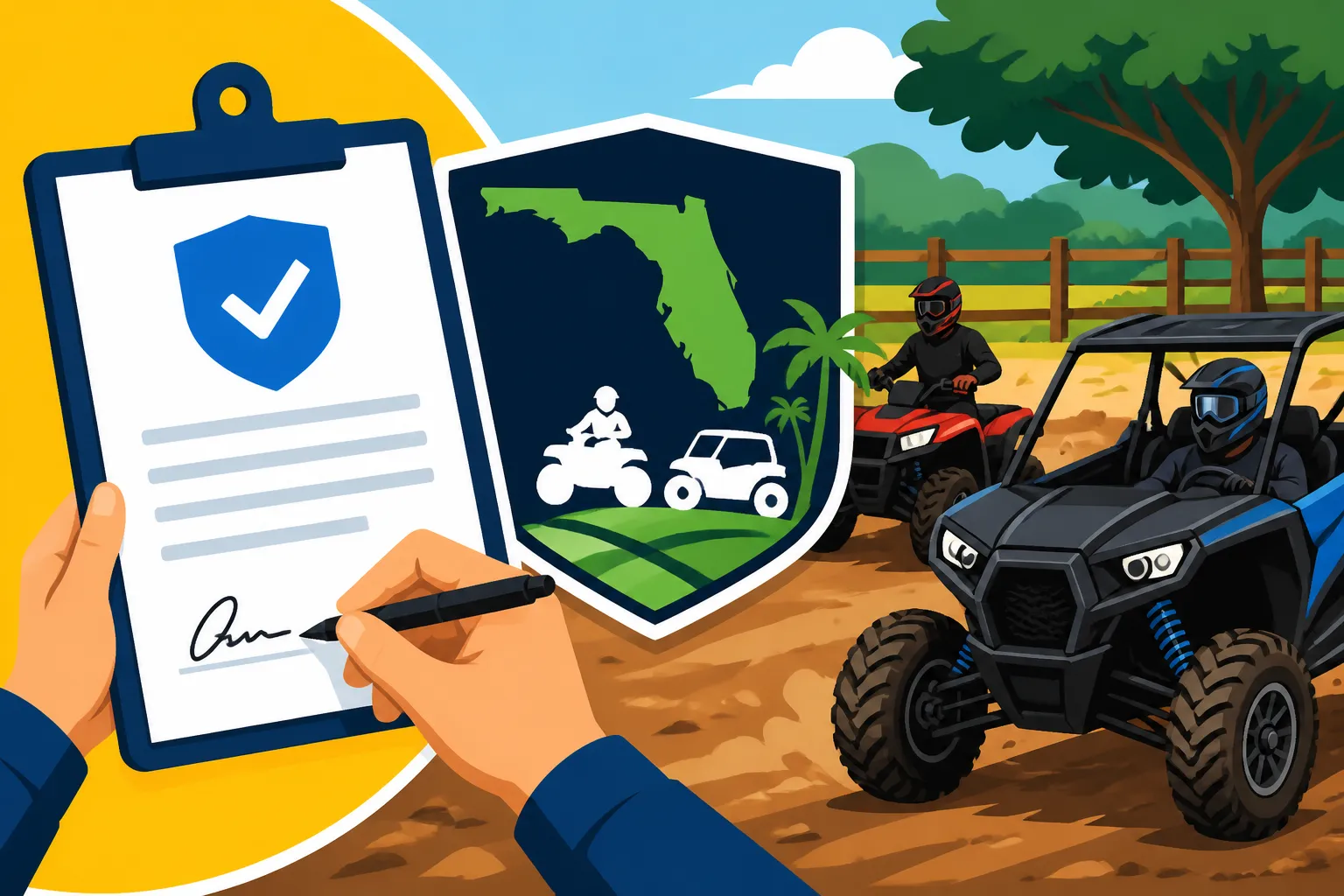
A Florida ATV or UTV park may ask every rider to sign a waiver before entering, even when the visit is just for a day. The form can cover more than riding risks: it may address passengers, minors, injuries, equipment damage, and photos. Knowing what to check before you sign helps you understand the trade-offs and ask useful questions at check-in.
What a private-park waiver is for
A waiver is a written agreement a park uses to explain risks and set conditions for participating. It may be required for riders, passengers, parents or guardians, and sometimes anyone entering the riding area. A park’s particular form controls; don’t assume the waiver you signed at another facility covers the same things.
Off-road riding can involve uneven ground, hidden obstacles, mud, water, changing weather, other riders, and machine failures. A waiver may acknowledge those hazards and state that the participant accepts certain risks. It may also attempt to release the park, its owners, employees, landowners, or other named parties from specified legal claims.
That does not automatically mean the park has no responsibilities or that every part of a waiver will be enforceable. The wording, the circumstances, and applicable law matter. A signature is not a guarantee that every claim is barred, but it can affect your options if someone is hurt or property is damaged. If you have a legal question about a specific form, ask a Florida attorney rather than relying on a general explanation.
A waiver also isn’t a riding permit, proof of ownership, insurance policy, or permission to use land beyond the park’s boundaries. Before heading out, check the facility’s entry conditions and riding rules separately. Public-land permit requirements are a different issue from private-park paperwork; see Florida OHV Permits: What You Need Before You Ride if your plans include public riding areas.
| Waiver section | What it may address | What to check |
|---|---|---|
| Risk acknowledgment | Hazards associated with off-road riding | Whether the risks match the activities you plan to do |
| Release of claims | Claims against named parties | Who is covered and what claims the wording refers to |
| Assumption of risk | Risks the participant agrees to accept | Whether signing means accepting risks beyond ordinary trail hazards |
| Indemnity | Certain costs or claims involving the participant | When you could be responsible for another person’s claim |
| Minors | Parent or guardian consent and minor participation | Who must sign and whether the child must also acknowledge the rules |
| Damage or rental terms | Responsibility for machines or park property | Whether separate rental terms, deposits, or damage rules apply |
| Photos or media | Use of a participant’s image | Whether consent is optional or bundled with entry |
A waiver can be only one part of the paperwork. Riders who rent machines may also be asked to sign rental agreements, damage acknowledgments, or rules specific to the machine. Those documents can allocate responsibilities differently from the park’s general waiver. For more on that separate issue, see Florida ATV Rental Damage Policies.
Clauses to read before you sign
Read the whole document, including any text on the back, linked terms, or boxes that require initials. If the park uses an online form, save a copy or ask how to access the completed version. A staff member’s quick verbal summary may help, but it is not a substitute for seeing the terms you are agreeing to.
Release and assumption of risk
Look for the part that lists who is being released and which activities are included. A waiver might name the park operator, property owner, employees, volunteers, or event organizers. It might cover riding, loading and unloading, walking around the facility, or using a particular attraction. If you are only there to ride a marked trail, ask whether the form also applies to other activities.
Pay close attention to language about negligence or injury claims. A waiver may try to release claims arising from a range of conduct, but the legal effect is not something you can determine from a heading alone. If the scope is unclear, ask the park to explain it in plain language. If you need to know what rights you may be giving up, get legal advice before signing.
Indemnity and responsibility for claims
An indemnity clause is different from a basic acknowledgment that riding involves risk. It may say that the signer will cover certain losses, costs, or claims involving the signer’s actions or someone in the signer’s group. That can matter if a rider damages property, injures another person, or brings a claim that involves the park.
Ask what situations the clause is intended to cover and whether it applies to every member of your party. Don’t treat indemnity language as routine fine print, especially if you are signing on behalf of a group, an event, or a child. If the wording appears to make you responsible for claims outside your control, consider pausing for legal guidance.
Minors, parents, and guardians
Parks may require a parent or guardian to complete paperwork for a minor, and may also require the young rider to sign or initial a separate acknowledgment. Confirm the park’s minimum-age and supervision requirements as well; a signed waiver does not make a rider eligible for an activity that the park restricts.
A parent’s signature can have different implications from an adult signing only for themselves. Read the form carefully to see whether you are consenting to the child’s participation, agreeing to rules, accepting responsibility for certain costs, or making other commitments. Ask who must be present at check-in and what identification or relationship documentation the park expects. For related facility rules, see Florida Minimum Age at a Private Riding Park.
Do not assume that a parent can sign away every right a child may have. The effect of a minor’s waiver or a parent’s signature can depend on the facts and applicable law. If the issue is important to your family, ask a qualified Florida attorney before the ride.
Passengers, media, and medical information
If a passenger will ride in a UTV, check that the waiver covers passengers and that each required participant signs separately. A driver’s signature may not complete paperwork for everyone in the vehicle. Also confirm that the machine is designed for the number of occupants and that the park allows the passenger’s age. The waiver does not override the park’s operating rules; see Florida Passenger Rules at a Private Park for more on that topic.
Some forms include permission to photograph or record participants and use their image in promotional material. Look for whether that permission is optional, how it can be declined, and whether refusal affects access. A separate checkbox or media release may be easier to understand than a broad consent bundled into the main waiver.
A form may ask for an emergency contact or medical information. Share what is necessary for the park’s safety procedures, but ask how sensitive details are handled if you are unsure. Emergency-contact information does not replace a personal plan for medical care or insurance.
Before signing at the park
The best time to resolve questions is before your group is at the counter with helmets on and a ride scheduled. Check the park’s website or contact the facility in advance for its waiver process, age rules, passenger requirements, and any gear or machine restrictions. Requirements can vary from one private riding area to another.
Use this checklist:
- Identify everyone who must sign. Ask whether each adult, passenger, or minor needs a separate form, and whether a parent or guardian must be present.
- Confirm the activities covered. Check that the waiver applies to your planned machine and riding area, rather than assuming a general admission form covers rentals or special activities.
- Read related documents too. Rental contracts, event rules, and damage terms may carry separate obligations. Don’t rely on the waiver alone to understand potential charges or machine responsibilities.
- Ask direct questions. If a term is confusing, ask what it means in practice and request a copy of the form. If the answer does not resolve a significant concern, consider not signing until you have advice.
- Check your insurance separately. Do not assume that auto, homeowners, health, or recreational coverage applies to ATV or UTV riding. Ask your insurer about the specific activity and location. The park’s own insurance is not necessarily coverage for your personal injury or machine damage. See Florida Insurance Requirements at a Private Park for related questions.
- Keep a copy. Save the signed form and any rental or event paperwork, along with receipts and the park’s written rules.
You can ask whether the park accepts questions or changes to its form, but don’t assume staff can alter the waiver. A park may require its standard agreement as a condition of entry. If you decide not to sign, ask about the facility’s cancellation or refund policy before leaving; those terms may be separate from the waiver.
Check safety rules as carefully as the release language. Parks can set requirements for helmets, eye protection, machine condition, riding zones, and conduct. A waiver does not excuse riders from following posted instructions or reduce the need to protect themselves. See Florida Helmet Rules at a Private Park for a related safety topic.
If someone is injured or property is damaged
If an incident occurs, prioritize immediate safety and medical care. Notify park staff and follow the facility’s incident-reporting process. If it is safe to do so, record the date, location, people involved, machine details, and a clear description of what happened. Photos of the scene, damage, or relevant conditions may be useful, but avoid interfering with emergency response or other riders.
Ask for a copy of any incident report you complete or sign. Read it for accuracy and request corrections if it contains a factual mistake. Keep your waiver, rental agreement, receipts, photographs, messages with the park, and medical or repair records together. If another rider or a park employee was involved, note their names and contact details if available.
If the injury is serious, or you are asked to sign an additional release or settlement after the incident, consider getting legal advice before agreeing. A routine entry waiver and a later document resolving a particular claim are not necessarily the same thing. Don’t sign a statement you do not understand, and don’t assume that signing the initial waiver ends every possible dispute.
For property damage, report it promptly and check the rental contract or park rules for the process to follow. A waiver may not be the only document relevant to a damage claim. If the machine was rented, keep records of its condition before and after use, and ask for an itemized explanation of any proposed repair charge.
The practical takeaway is simple: treat a private-park waiver as a contract to read, not as a formality to sign blindly. Know who must sign, what activities and parties it covers, and whether separate rental or damage terms apply. When an important clause remains unclear, ask questions before riding and get qualified legal advice if needed.
Disclaimer
This article is for general informational purposes only and does not constitute professional advice. Laws, prices and regulations vary by location and change over time. Consult a qualified professional for guidance on your specific situation.