Proving Florida Residency at the Counter
Trying to title your ATV or UTV in Florida can feel like a bureaucratic labyrinth, especially when it comes to proving you actually live here. It's not always as simple as showing your driver's license, and getting it wrong can mean wasted time, multiple trips to the tax collector's office, and a whole lot of frustration. This guide is here to untangle the requirements and help you confidently walk into the office with all the right paperwork.
Why Florida Residency Matters for Your ATV Title
When you're trying to title an ATV or UTV in the Sunshine State, the concept of "residency" isn't just a casual detail; it's a fundamental requirement that impacts everything from the process itself to the fees you pay. Florida, like many states, wants to ensure that vehicles titled within its borders belong to actual residents or legitimate entities operating within the state. This helps maintain accurate records, ensures proper tax collection, and establishes jurisdiction for future transactions or enforcement.
The Basics of State Requirements
At its core, Florida needs to confirm you're a bona fide resident for several practical reasons. First, titling an off-highway vehicle (OHV) establishes a legal record of ownership within the state. If you’re a resident, your machine belongs in Florida’s system. Second, the fees associated with titling, like sales tax and the various service charges, are often tied to your residency status. For example, while the base initial title application fee is standard, the sales tax you pay is based on Florida’s sales tax rate, which applies to transactions involving Florida residents or machines that will primarily reside here. If you were merely a visitor, the situation might be different, but for titling, Florida wants its due from its residents. They’re not just being nosy; they’re ensuring the legal framework is sound and that state coffers are properly funded for public services, including those that benefit riders.
The state also uses residency to determine if you meet other statutory requirements. For instance, if you're a minor trying to title an ATV, the residency of your parents or guardians becomes a critical factor. [Florida ATV Title Rules for a Minor Owner] will explain more about those specifics, but it all circles back to proving a connection to Florida. The Florida Department of Highway Safety and Motor Vehicles (FLHSMV) oversees these rules, and they rely on the county tax collectors to enforce them at the local level. Each county tax collector's office acts as the frontline for these transactions, so understanding what they need is paramount to a smooth process.
Avoiding Pitfalls for New Residents and Snowbirds
Florida is a magnet for new residents and seasonal visitors (our beloved snowbirds!), which means the tax collector's office sees a lot of folks who might have varying degrees of "Florida-ness." This is where things can get tricky. If you've just moved here, you might still have an out-of-state driver's license or utility bills in your previous address. The counter staff are trained to look for clear, undeniable proof that Florida is now your primary domicile. Without it, you could be facing delays or even outright refusal to process your title application until you can present adequate documentation.
For snowbirds, the situation is different. If your ATV is primarily kept and used in Florida, and you're here for an extended period, you might still be required to title it here, especially if you intend to ride on public lands. [Titling an Out-of-State ATV After Moving to Florida] dives deep into this scenario. The key is understanding that "residency" for titling purposes isn't always the same as residency for voting or tax purposes. For an ATV title, it means demonstrating a substantial connection to the state, often through a combination of documents that show you live here, receive mail here, and have established a physical presence. Don't assume your out-of-state registration will suffice indefinitely if Florida is truly where your machine calls home for a significant chunk of the year.
What Counts as Proof of Residency in Florida?
When you walk into a Florida county tax collector's office, you're essentially presenting your case: "I live here, and here's the proof!" The state has a list of acceptable documents, and they often categorize them by how strong they are as evidence. It's not just about having one document; sometimes, it's about having a combination that paints a clear picture.
Tier 1: Primary Documents That Scream 'Florida!'
These are the heavy hitters, the documents that immediately signal to the clerk that you are a Florida resident. If you have one or more of these with a current Florida address, you're usually in good shape.
- Florida Driver's License or ID Card: This is the gold standard. If you have a valid Florida driver's license or official Florida identification card with your current physical address, it's often all you need, especially if it's been issued for a while. It's directly from the state and designed for identification and residency purposes. Ensure the address on it matches the address you're putting on your ATV title application.
- Florida Vehicle Registration Certificate: If you already have another vehicle (like a car or truck) registered in your name in Florida, that registration certificate serves as excellent proof. It demonstrates you've already established residency for another vehicle with the state. This is especially helpful if your driver's license is still out-of-state but you've already moved your other vehicles here.
- Utility Bills (Electric, Water, Gas): Recent utility bills in your name, showing your Florida address, are strong indicators. The key here is "recent" – typically within the last 60-90 days. A single, current bill often suffices. These bills demonstrate you are actively living at a Florida address and maintaining a household.
- Homestead Exemption Application or Deed to Property: If you own property in Florida and have applied for or received a homestead exemption, or even if you simply have the recorded deed in your name, this is undeniable proof of your connection to a Florida address. This shows a long-term commitment to living in the state.
Having a couple of these Tier 1 documents is almost always sufficient. The clerks at places like the [Hernando County Tax Collector] or [Marion County ATV Title Office Hours] see these documents daily and know exactly what to look for.
Tier 2: Supplementary Documents for Extra Proof
Sometimes, the Tier 1 documents aren't available, or the clerk might ask for a second piece of evidence to solidify your claim. That's when these supplementary documents come into play. They aren't usually enough on their own, but they bolster your case when combined with other forms of identification.
- Bank Statements or Financial Institution Records: A current statement from a Florida-based bank or credit union, or any bank statement showing a Florida mailing address for your account, can work. Again, recent statements (last 60 days) are preferred. This proves you conduct financial business within the state or at least receive important mail here.
- Rental or Lease Agreement: A valid, current residential lease agreement for a Florida property, signed by all parties, is excellent evidence, especially for those who rent rather than own. It clearly shows your intent to reside at a specific Florida address for a defined period.
- Mail from a Government Agency: Official mail from a federal, state, or county government agency (like the IRS, Social Security Administration, or local city hall) sent to your Florida address can serve as secondary proof. The more official the sender, the better.
- Proof of Florida Employment: A recent pay stub or an employment verification letter from a Florida-based employer, showing your Florida address, indicates that you're working and earning income within the state.
- School Records: For students, enrollment verification or transcripts from a Florida school, college, or university, with your Florida address, can be used. This is particularly relevant for younger individuals or families establishing residency for educational purposes.
It's a good idea to have at least one or two of these ready if your primary documents seem thin or if you're a new resident without much established history. The goal is to provide a comprehensive picture of your residency.
Special Cases: When the Usual Isn't Enough
Life isn't always straightforward, and sometimes your situation doesn't fit neatly into the typical categories. Here are a few scenarios that might require a bit more effort or different types of documentation.
- Military Personnel: If you're active-duty military stationed in Florida, even if your legal home of record is another state, you might be considered a Florida resident for titling purposes. You'll likely need your military ID, orders showing your Florida duty station, and proof of your Florida address (like base housing documents or a lease). [Military Riders Stationed in Florida] can provide more specific guidance on this.
- Minors: If a minor is the owner of the ATV, their residency is often tied to a parent or legal guardian. The parent/guardian will need to provide their own proof of Florida residency, along with documents connecting them to the minor (like a birth certificate).
- Living with Family/Friends: This is a common one, especially for younger adults or those new to the state. If utility bills aren't in your name, you might need an affidavit of residency. This is a sworn statement, often notarized, from the person who does have the bills in their name, attesting that you live at that address. You can often find generic affidavit forms on legal document sites like LawDepot, but always confirm with your specific county tax collector that they will accept it and if they have a preferred format. Make sure it's notarized to add to its official weight.
- Homeless Individuals: While less common for ATV titling, individuals without a fixed address may face significant challenges. In such cases, mail from social service agencies, shelters, or a notarized statement from an official entity confirming a mailing address might be considered, though this requires direct consultation with the FLHSMV or the county tax collector.
The key takeaway here is that if your situation is unique, it's always best to call ahead to your local [Florida County Tax Collector vs Service Center for ATV Titles] office. They can guide you on the specific documentation they will accept for your particular circumstances, saving you a potentially fruitless trip.
Navigating the Tax Collector's Office with Confidence
You've gathered your documents, double-checked addresses, and now it's time for the main event: the trip to the county tax collector's office. While the actual process of titling an ATV is generally similar across Florida, proving residency often feels like the personal interview portion of the exam.
What to Expect at the Counter
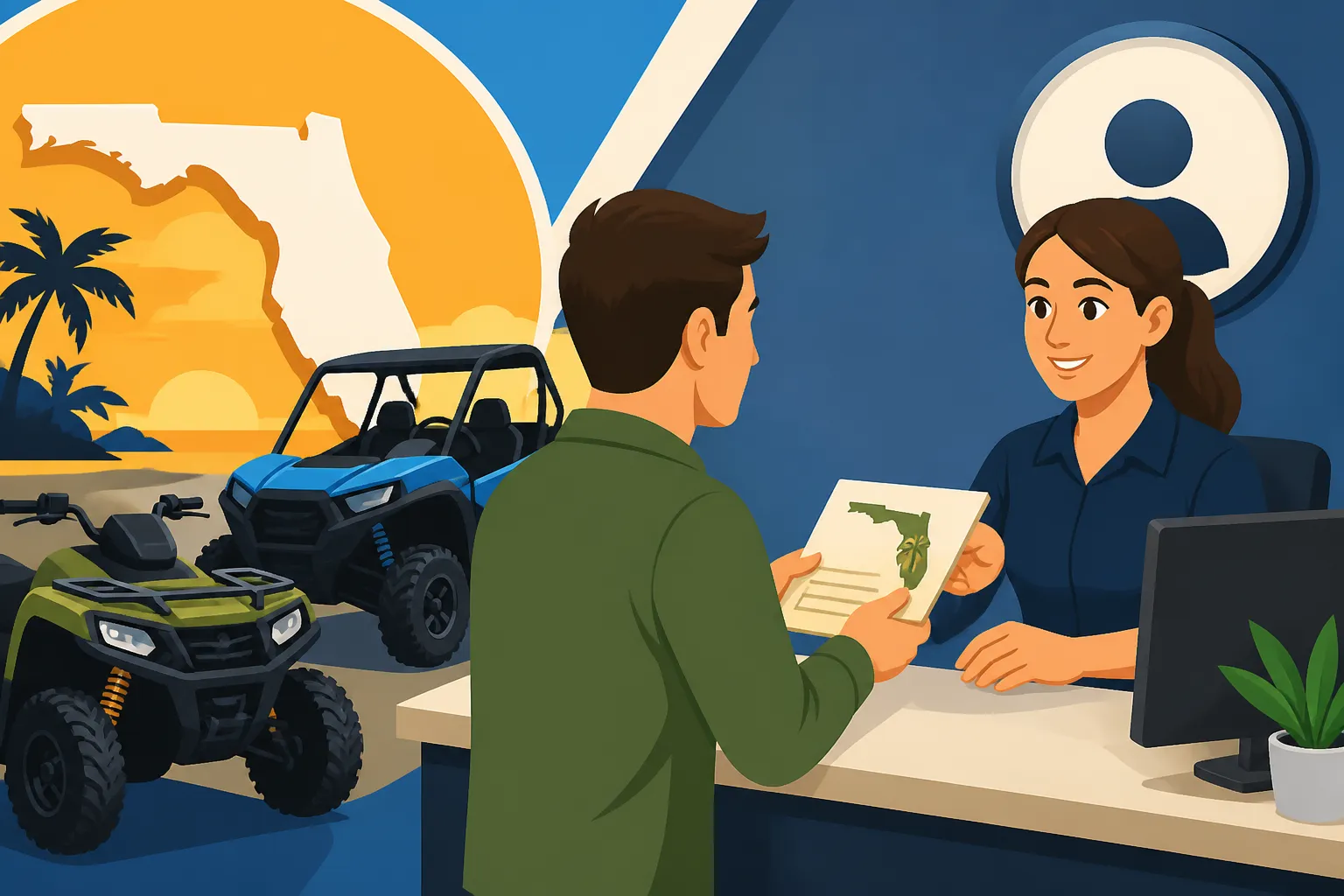
When you get to the counter, be prepared for questions. The clerk isn't trying to trick you; they're simply trying to verify the information you're providing aligns with the state's requirements. They'll ask for your identification, your completed [Florida's ATV Title Application Explained], and of course, your proof of residency. They'll scrutinize the addresses on your documents, comparing them to the address you've listed on the application. They might ask how long you've lived at that address, or if your Florida driver's license is newly issued.
Patience is a virtue here. The clerks process hundreds of transactions, and they have protocols to follow. Having all your documents organized and ready will make their job—and your experience—much smoother. Be ready to explain any discrepancies or special circumstances clearly and concisely. For example, if you just moved in last week, simply state that. If your utility bill hasn't arrived yet, but you have your lease agreement, explain that, too.
Common Red Flags and How to Avoid Them
There are a few things that can raise a red flag for a clerk and lead to delays or requests for additional proof:
- Mismatched Addresses: This is probably the biggest culprit. If your driver's license shows one address, your utility bill shows another, and your title application lists a third, you've got a problem. Ensure consistency across all your documentation. If you've recently moved, update your driver's license address before you go to title your ATV.
- Insufficient Documentation: Showing up with only a P.O. Box address and nothing else indicating a physical Florida presence won't fly. Florida requires a physical address for titling. Or presenting just one weak form of proof, like a single piece of junk mail, won't cut it. Always aim for multiple, strong proofs.
- Out-of-Date Documents: A utility bill from last year, or a bank statement that's several months old, might be rejected. Most offices want documents from within the last 30-90 days.
- Lack of Physical Presence: If you claim to be a Florida resident but have no utility bills, lease, or local employment, and your only proof is a P.O. Box, the clerk will likely ask for more. Florida wants to see tangible evidence that you physically live here.
- Incomplete Forms: While not strictly a residency issue, submitting an incomplete title application can also cause delays. Take your time to fill out every section accurately, as instructed in guides like [Filling Out Florida's Title Form Line by Line].
To avoid these pitfalls, create a checklist of required documents before you leave your home. Many people find it helpful to use resources like LawDepot for creating a comprehensive bill of sale if they are buying from a private seller, ensuring all ownership details are clear, which indirectly supports your residency claim by legitimizing the transaction.
What If Your Documents Are Electronic?
In our increasingly digital world, many people receive their utility bills, bank statements, and even lease agreements electronically. This is perfectly acceptable, but you need to present them in a way the clerk can easily verify.
- Print Them Out: The safest bet is to print out electronic copies of your bills, statements, or agreements. Make sure they are clear, legible, and show all relevant information: your name, your Florida address, the issuing company, and a recent date.
- Access on a Device: Some offices will allow you to pull up documents on your smartphone or tablet. However, this isn't always preferred, as it can be harder for the clerk to review or make copies. Also, relying on a device means you need a good internet connection and a fully charged battery. If you choose this route, have the documents downloaded or easily accessible, not just reliant on a slow loading web page.
When it comes to official documents, remember that a physical copy that can be handed over and reviewed quickly is always the most efficient option.
Preparing Your Documents for a Smooth Process
The adage "fail to prepare, prepare to fail" certainly applies when heading to the tax collector's office. A little forethought can save you a world of headaches and ensure your ATV titling process is as smooth as a fresh-paved highway.
The Power of a Checklist
Before you even think about leaving the house, create a detailed checklist of every single document you plan to bring. This isn't just for proof of residency; it should include everything needed for the title application itself. Think of it as your personalized roadmap. For residency, write down:
- Florida Driver's License/ID Card (verify address matches application)
- Current Utility Bill (Electric, Water, Gas – within last 60 days)
- Residential Lease Agreement (if applicable, current and signed)
- Bank Statement (showing Florida address, recent)
- Vehicle Registration (for another FL-titled vehicle)
- Deed or Homestead Exemption (if you own property)
Then, check each item off as you gather it. This ensures you haven't forgotten anything crucial. Having a clear idea of [What a County Clerk Checks on Your Application] before you go will further refine your checklist.
Digital vs. Physical Copies
While we touched on this earlier, it bears repeating: aim for physical copies whenever possible. The tax collector's office operates on paper for most of its record-keeping, and providing them with physical documents simplifies their process.
- Physical is Preferred: For utility bills, lease agreements, and bank statements, having a crisp, clear printout is ideal. The clerks often need to scan or make copies for their files.
- Driver's License/ID: This will be physically presented, of course.
- MSO/Bill of Sale: Your Manufacturer's Statement of Origin (MSO) for a new ATV or a detailed [Florida ATV Bill of Sale: What It Needs to Say] for a used one should always be original physical documents. These are critical for establishing the chain of ownership.
If you only have digital versions of supporting documents (like utility bills), print them out before you leave. Don't rely on being able to print them at the office, or on a clerk being able to conveniently view them on your phone.
Addressing Mismatched Information
Life happens, and sometimes your documents might not perfectly align. Maybe you moved last month, and your new driver's license hasn't arrived yet, or your utility bill from your old address just came in. Don't panic, but do address it proactively.
- Recent Moves: If you've just moved, bring proof of the change of address with the FLHSMV if you've updated your driver's license online but haven't received the physical card yet. Pair this with a current lease or utility bill for your new Florida address.
- Maiden Names/Married Names: If your name has recently changed due to marriage or other legal means, and your documents reflect different names, bring your marriage certificate or court order for the name change. This clarifies any discrepancies instantly.
- Temporary Addresses: If you're staying at a temporary address, be honest. Explain your situation and provide the best available proof for that temporary location, along with any documents that show your intent to establish a permanent Florida residence.
The more transparent and prepared you are about any potential inconsistencies, the more likely the clerk will be able to help you navigate them and find an acceptable solution. Sometimes, a simple explanation accompanied by supporting documents is all that's needed to bridge a gap.
Beyond the Basics: Other Residency Considerations
Proving residency isn't a one-and-done deal for all aspects of your life, but for ATV titling, understanding a few extra nuances can be helpful.
How Long Does It Take to Establish Residency?
For the purpose of titling an ATV in Florida, there isn't a rigid, statutory waiting period like there might be for in-state tuition or voting. Essentially, if you can present the required documentation showing you live here now, you're generally considered a resident for that transaction. The state isn't asking how long you've been here in terms of months or years, but rather, "Is this where you live now?"
However, the longer you've been established, the easier it is to provide robust proof. Someone who's lived in Florida for five years will likely have a long-standing Florida driver's license, multiple utility bills, and other strong ties, making the process almost seamless. A brand-new resident, on the other hand, might have to piece together a few more documents to satisfy the requirements.
Out-of-State ATVs and Florida Residency
This is a common scenario. You've just moved to Florida, and you're bringing your beloved ATV with you. While you might have titled it in your previous state, Florida will require you to title it here as well, assuming it meets the criteria for titling. [Florida ATV Title Requirements for a New Resident] outlines this process in detail. Your proof of Florida residency is crucial here because it signals the state that this machine is now calling Florida home and needs to be integrated into the state's titling system. You'll generally need:
- Your out-of-state title.
- Proof of Florida residency.
- A VIN verification performed by a Florida law enforcement officer or authorized dealer. [Who Can Verify an ATV VIN in Florida?] has more on this.
- Payment for applicable fees, including sales tax (if you haven't paid it on the machine in Florida or your previous state and received reciprocal credit).
Remember, riding an untitled ATV on public land in Florida without proper documentation can lead to penalties. So, even if it's already titled elsewhere, getting your Florida title squared away once you're a resident is vital.
When In Doubt: Ask Before You Go
Honestly, this might be the most valuable piece of advice in this entire guide. Each county tax collector's office can have slight variations in how they interpret certain requirements or what specific combination of documents they prefer. Instead of making multiple trips, pick up the phone or check their website.
- Call Ahead: Call your specific county tax collector's office. For example, if you live in Polk County, call the [Polk County ATV Title Walk-In Wait] office directly. Explain your unique situation, list the documents you have, and ask exactly what they will accept.
- Check Websites: Many county tax collector websites have detailed lists of acceptable documents for various transactions. These lists are often updated and can be a fantastic resource for preparing.
- Consult a Professional: While typically not needed just for residency, if you have a very complex situation involving multiple machines, business ownership, or intricate legal questions, consulting a professional who specializes in Florida vehicle transactions might be an option.
By being proactive and asking questions before you arrive at [Where to File an ATV Title in Florida], you can eliminate much of the guesswork and ensure your visit is productive, getting you back to the trails faster.
Disclaimer
This article is for general informational purposes only and does not constitute professional advice. Laws, prices and regulations vary by location and change over time. Consult a qualified professional for guidance on your specific situation.