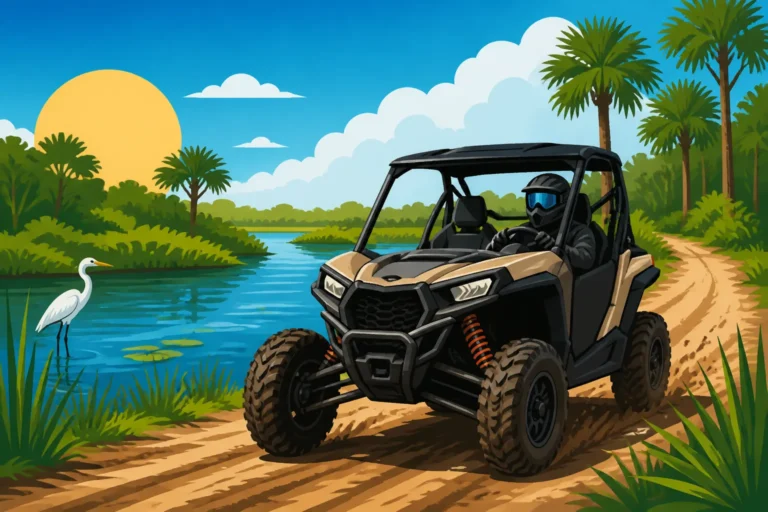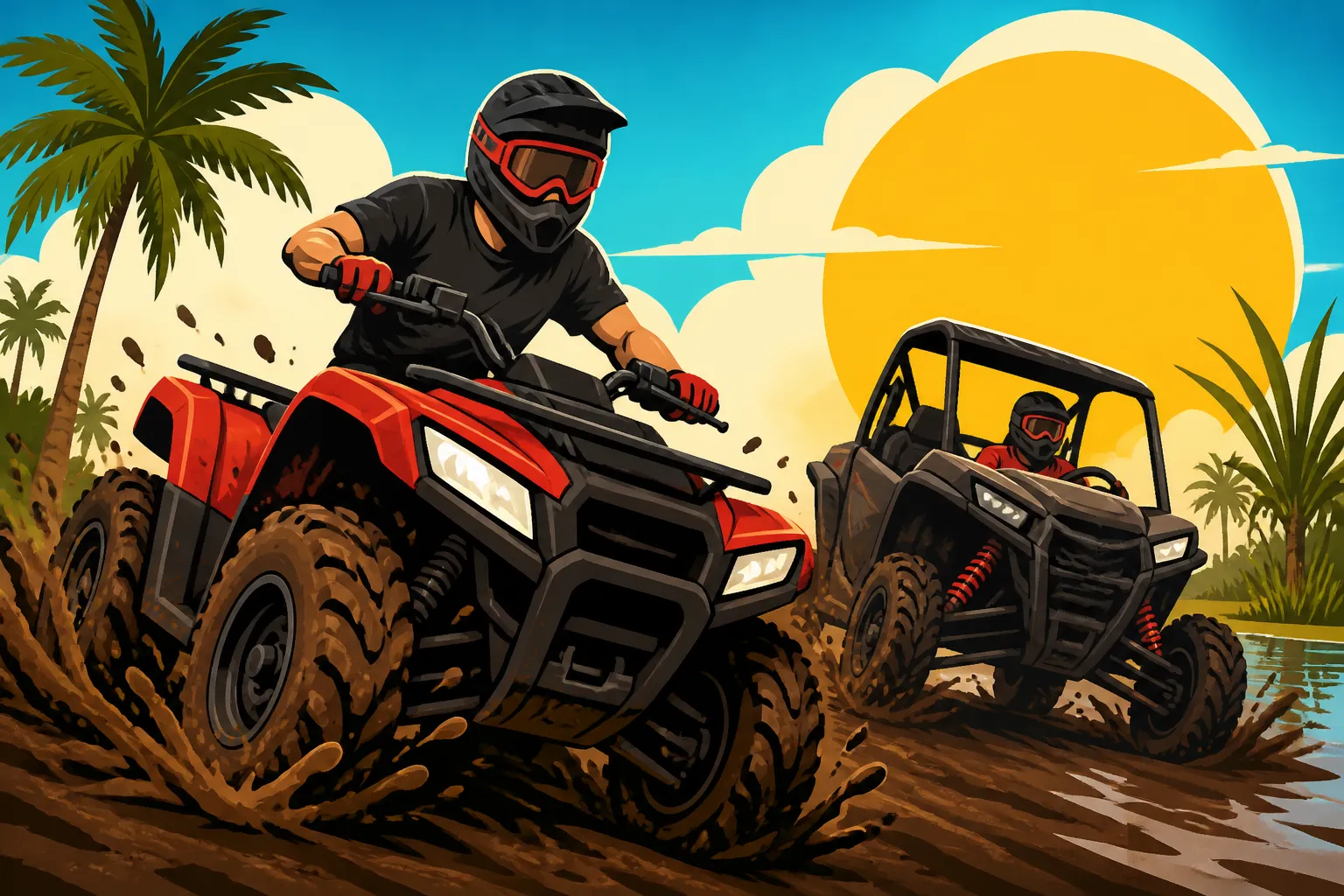
Redneck Mud Park Near Punta Gorda, Florida
Redneck Mud Park near Punta Gorda is often imagined as a simple place to unload a machine and ride, but event schedules, entry rules, permitted vehicles, and available facilities can vary. This guide explains how to plan a visit, choose the right machine, prepare for mud and Florida weather, and avoid common day-of surprises before you head out.
What to Know About Redneck Mud Park
It Is Best to Plan Around the Event
Redneck Mud Park is associated with organized off-road events near Punta Gorda, rather than a public trail system you should assume is open whenever you arrive. That distinction matters. A rider who drives in expecting a casual weekday trail ride may find that access is limited, the grounds are being prepared for an event, or admission and riding arrangements are different from what they expected.
Before setting out, check the park’s own event information for the specific date you have in mind. Confirm whether the event is open to spectators, riders, or both; whether you need to register a machine ahead of time; and what the arrival and departure arrangements are. If you are traveling from Tampa, Fort Myers, or farther away, verify the details before loading the trailer. A quick check can save a long drive with a machine that cannot participate.
It also helps to treat each event as its own visit, not as a copy of the last one. The schedule, activity areas, camping arrangements, vehicle requirements, and crowd levels may differ. Look for specific rules about what machines can enter and what equipment riders must bring. If information is unclear, contact the park or event organizer directly rather than relying on an old social media post or a friend’s memory.
Understand the Difference Between a Mud Park and a Public Trail
A dedicated off-road event setting is different from riding public land. Public trail systems may have marked routes, land-management rules, access passes, and restrictions on machine size or use. A private event venue may instead set its own entry conditions, safety procedures, and event-specific restrictions. One set of rules does not automatically replace the other.
This difference can affect what you bring and what you expect to ride. A trail map for a public area may not tell you anything about the layout or conditions at Redneck Mud Park. Likewise, a private park’s admission arrangements do not grant permission to ride on nearby roads, woods, or other private property. Keep your machine within the area where the organizer has authorized riding, and follow posted directions even if a route looks familiar.
For broader comparisons between public and private riding options, see [Florida Mud Parks: Where Riders Actually Go] and [Florida National Forest Riding vs State Forest Riding]. If you are comparing event weekends around the state, [Redneck Mud Park Fall Bash] and [King of the Deep Weekend Explained] may also help you understand how a specific event can shape the visit. Always confirm details for the event you plan to attend.
Choosing a Machine and Preparing for the Terrain
ATV or UTV: Start With the Event Rules
An ATV can be easier to transport and maneuver, while a UTV offers a wider seating area and may be a better fit for a group or family. Neither choice is automatically right for every event. Before you decide, verify which machine types are admitted, whether there are size or passenger restrictions, and whether specific activities are limited to certain vehicles.
Width deserves particular attention when you ride a side-by-side. A machine that fits comfortably on a trailer or rural property may not fit through every designated route or staging area. Do not assume that a UTV is permitted just because the event is held at a large off-road venue. Confirm the applicable rules for your machine, and bring accurate information about its width and configuration if you are asked to provide it. The guide [Florida ATV Trails That Allow Side-by-Sides] can help you think through why machine access differs from one riding area to another.
Passengers are another point to check. An ATV designed for one rider is not made safe for two just because there is room to sit close together. On a UTV, seat belts and passenger seating should match the machine’s design and the event’s rules. If you are bringing children, ask about minimum ages, supervision expectations, and any required protective gear well before travel day.
Set Up for Mud Without Guessing at Modifications
Mud changes how a machine steers, brakes, cools, and recovers if it gets stuck. Tires, ground clearance, gearing, and snorkel equipment may matter, but a modification that works for one riding style can be unnecessary or even inconvenient for another. Start by asking what kinds of riding are permitted at the event and whether there are restrictions on equipment, noise, or vehicle condition.
For a first visit, it is usually wiser to arrive with a familiar, well-maintained machine than to make last-minute changes based on online advice. Check tire condition and pressure according to the manufacturer’s guidance, inspect the brakes, and make sure the throttle returns smoothly. Look for loose battery connections, damaged wiring, leaking fluids, and anything that could come free in rough terrain. If your machine has been modified, test it close to home before depending on it at an event.
Mud can conceal ruts, holes, and debris, so do not treat a muddy surface as predictable just because it looks shallow. Ride at a pace that leaves room to react, keep a safe distance from other machines, and avoid entering water or mud holes unless the area is clearly designated for that use. For additional background, [Mud Tires for a Weekend at a Mud Park] and [Snorkel Kits and Water Crossings] explain why equipment choices should match the conditions rather than be copied blindly.
Planning the Visit From Punta Gorda and Beyond
Check the Practical Details Before You Leave
A successful ride begins before the trailer leaves the driveway. Confirm the event date, entry process, arrival instructions, parking arrangements, and whether you need to register as a rider or spectator. Ask what identification, proof of ownership, waivers, or safety equipment may be required. If you are staying overnight, verify the camping rules separately rather than assuming that event admission includes a site or that every camping option is available.
Build your travel plan around the possibility of traffic and delays. Event weekends can bring more vehicles to the area than an ordinary riding day, and loading or unloading a machine takes time. Leave room in your schedule for checking in, securing the trailer, and reviewing event instructions before riding. If the park publishes a gate or staging procedure, read it before you arrive so you are not trying to sort it out in a line.
Use a navigation tool to plan the drive, but do not let a route app become your source of access permission. A road shown on a map may be private, closed, or unsuitable for a trailer. Apps such as onX Offroad can help riders review mapped routes and orient themselves when planning outdoor travel, but map information does not replace the organizer’s directions or posted property rules. Check your route in advance, then follow official instructions on arrival.
Pack for Florida Heat, Rain, and Cleanup
Florida weather can make a short ride feel demanding. Heat, humidity, sudden rain, and wet ground all affect comfort and concentration. Bring drinking water, sun protection, and clothing that can get dirty. Closed-toe footwear, gloves, and eye protection can help with debris and spray, while a change of dry clothes makes the drive home more comfortable. Follow the event’s specific protective-equipment rules, which may be stricter than your personal minimum.
Think through the whole trip, not only the time on the machine. Secure loose gear in the tow vehicle, bring basic tools suited to your machine, and pack supplies for cleaning mud from hands and equipment. If you transport a muddy ATV or UTV, plan how to keep the trailer, vehicle, and any camping area from becoming a mess. A tarp, spare straps, and separate bags for dirty clothing can make the return trip easier.
Rain can change ground conditions quickly. Check for weather updates before you leave, and be prepared to adjust your pace or skip an activity if conditions become unsafe. Lightning, poor visibility, deep standing water, and crowded riding areas are reasons to pause rather than push through. For a broader packing checklist, [Florida Trail Riding Gear for the Heat] and [Florida Trail Riding in the Rainy Season] cover challenges that apply across many Florida riding areas.
| Planning question | What to confirm | Why it matters |
|---|---|---|
| Is the venue open on your date? | Event schedule and access status | Avoids arriving when riding access is unavailable |
| Can your machine participate? | ATV or UTV eligibility, size limits, and event rules | Prevents a machine from being turned away or restricted |
| What does entry include? | Rider or spectator access, parking, and any separate arrangements | Helps you plan the full cost and logistics |
| Can you stay overnight? | Camping availability, rules, and reservations | Keeps you from assuming a site is included |
| What must riders bring? | Required gear, identification, waivers, or ownership documents | Makes check-in smoother and supports safe riding |
| What are the conditions? | Weather, ground conditions, and event updates | Helps you choose equipment and ride within your limits |
Safety, Rules, and Responsible Riding
Follow the Property’s Rules and Stay in Authorized Areas
At a private off-road venue, the property operator’s instructions matter. Read posted signs, listen during any rider briefing, and stay within areas designated for your machine and activity. Do not follow another rider through a gate or into a section simply because the route appears open. Conditions and permissions can change across a property, and an unauthorized shortcut can create a safety issue or damage land.
Ride with awareness of other participants. Mud can make braking distances longer and visibility worse, especially when another machine throws spray or approaches from behind. Leave space, avoid sudden turns near other riders, and signal your intentions where practical. If you become stuck, stop and look before attempting a recovery. A second machine arriving quickly can turn a manageable problem into a collision.
Rules for public roads are separate from private property rules. Do not ride a quad or side-by-side on a nearby road unless that road is legally open to the vehicle and you meet the applicable requirements. A private event does not make surrounding roads part of the park. For more on that distinction, see [Florida ATV Road Rules: Where You Can Legally Ride] and [Florida ATV Road Rules by County].
Carry Useful Information and Know When to Stop
Keep a phone protected from water and mud, but do not rely on cell service being available everywhere. Before riding, agree on a meeting point with your group and make sure everyone knows what to do if someone becomes separated. If the event provides emergency procedures or identifies staff locations, make a note of them. A simple plan is especially useful when a group includes new riders or children.
An offline map can be useful for orientation, but it should not be treated as permission to enter an area. onX Offroad may help with route planning and location awareness, particularly when connectivity is unreliable, but follow the venue’s signs and boundaries first. Save or review maps before leaving an area with a strong connection, and do not use a screen while moving through crowded or technical terrain.
Set a conservative limit for your group. A rider who is tired, overheated, frustrated, or uncomfortable in deep mud is more likely to make a poor decision. Take breaks, drink water, and stop if a machine develops a mechanical problem. If someone is injured or a situation feels unsafe, alert event staff or call emergency services as appropriate. You do not have to complete every loop, obstacle, or activity to have a worthwhile day.
Camping, Costs, and Making the Weekend Work
Confirm What Is Included Before You Budget
The cost of a visit can involve more than entry. Depending on the event, you may need to plan separately for rider admission, spectator access, camping, parking, machine registration, food, fuel, or other activities. These arrangements can vary, so avoid relying on figures shared for a previous season or a different event. Check the organizer’s official information for current terms before you commit.
A useful approach is to list the expenses by person, machine, and vehicle. A family with one ATV may have a different set of charges and needs from a group bringing several UTVs and a travel trailer. Include practical costs that are easy to overlook: fuel for towing, straps or replacement parts, meals, cleaning supplies, and a possible overnight stay nearby. If you are attending with friends, agree in advance on who handles reservations and how shared expenses will be divided.
Ask what happens if plans change. Review cancellation, transfer, refund, and weather policies before paying or traveling. Do not assume that a rainout, mechanical failure, or late arrival automatically qualifies for a refund or rescheduled entry. Clear expectations make it easier to decide whether the trip works for your group.
Decide Whether to Ride, Watch, or Make a Weekend of It
Not everyone in a group has to ride. Some visitors may prefer to watch the event, take photos from permitted areas, or spend time with family while others are on the machines. Confirm spectator access and viewing restrictions beforehand, especially if you are bringing children. A spectator area may have different rules from riding zones, and walking into an active course or trail can be dangerous.
If you plan to camp, verify the details directly. Find out whether camping is available for the event, whether you need to reserve in advance, and what is permitted at a site. Ask about quiet hours, generators, pets, fires, and access to facilities rather than assuming the same conditions as a state forest campground. Event camping can have its own layout and expectations.
For riders building a longer Florida trip, compare the event with other places rather than trying to make one weekend do everything. [Florida ATV Camping With Trail Access] can help you consider camping options near riding areas, while [Florida Trail Closures You Should Check First] is useful for checking public-land plans before adding another ride to the itinerary. onX Offroad can support route planning between destinations, but confirm access, closures, and local rules with the land manager or venue before riding.
A Simple Pre-Trip Checklist
The Week Before the Event
Start by confirming the event is scheduled and that your intended activity is allowed. Check whether your machine needs registration, whether camping or parking requires a separate arrangement, and what documents or gear riders must have. If you are bringing a UTV, verify its eligibility and any width or passenger restrictions rather than assuming all side-by-sides are treated the same.
Inspect your machine early enough to fix problems without rushing. Check the tires, brakes, fluids, battery, lights if needed for transport, and tie-down points. Make sure the trailer is in suitable condition, the load is balanced, and the machine is secured according to safe towing practices. For related transport guidance, see [Strapping a Quad Down for a Highway Tow].
Use a shared checklist if you are traveling as a group. Confirm who is bringing tools, water, first-aid supplies, tie-downs, and the event information. If everyone assumes someone else has packed a basic item, it is often the item nobody brought.
On Arrival and Before the First Ride
Follow the event’s check-in process, read any updated instructions, and give yourself time to get oriented. Locate permitted riding areas, spectator zones, exits, and any posted safety information. Make sure your group understands where to meet if separated and how to contact event staff in an emergency.
Before riding, adjust your protective gear, secure loose belongings, and do a quick check of the machine. Start slowly and learn how the surface behaves before entering a challenging section. Mud that looks familiar can hide a different depth or footing than expected, and crowded event conditions may require more patience than a quiet trail.
When you finish, inspect the machine before loading it. Look for packed mud around the radiator, wheels, brakes, and moving parts, and address problems before towing home. Keep muddy gear separate from clean belongings, secure the machine again, and leave the property as directed. A careful end-of-day routine helps prevent an enjoyable event from turning into a frustrating repair or cleanup job.
Disclaimer
This article is for general informational purposes only and does not constitute professional advice. Laws, prices and regulations vary by location and change over time. Consult a qualified professional for guidance on your specific situation.