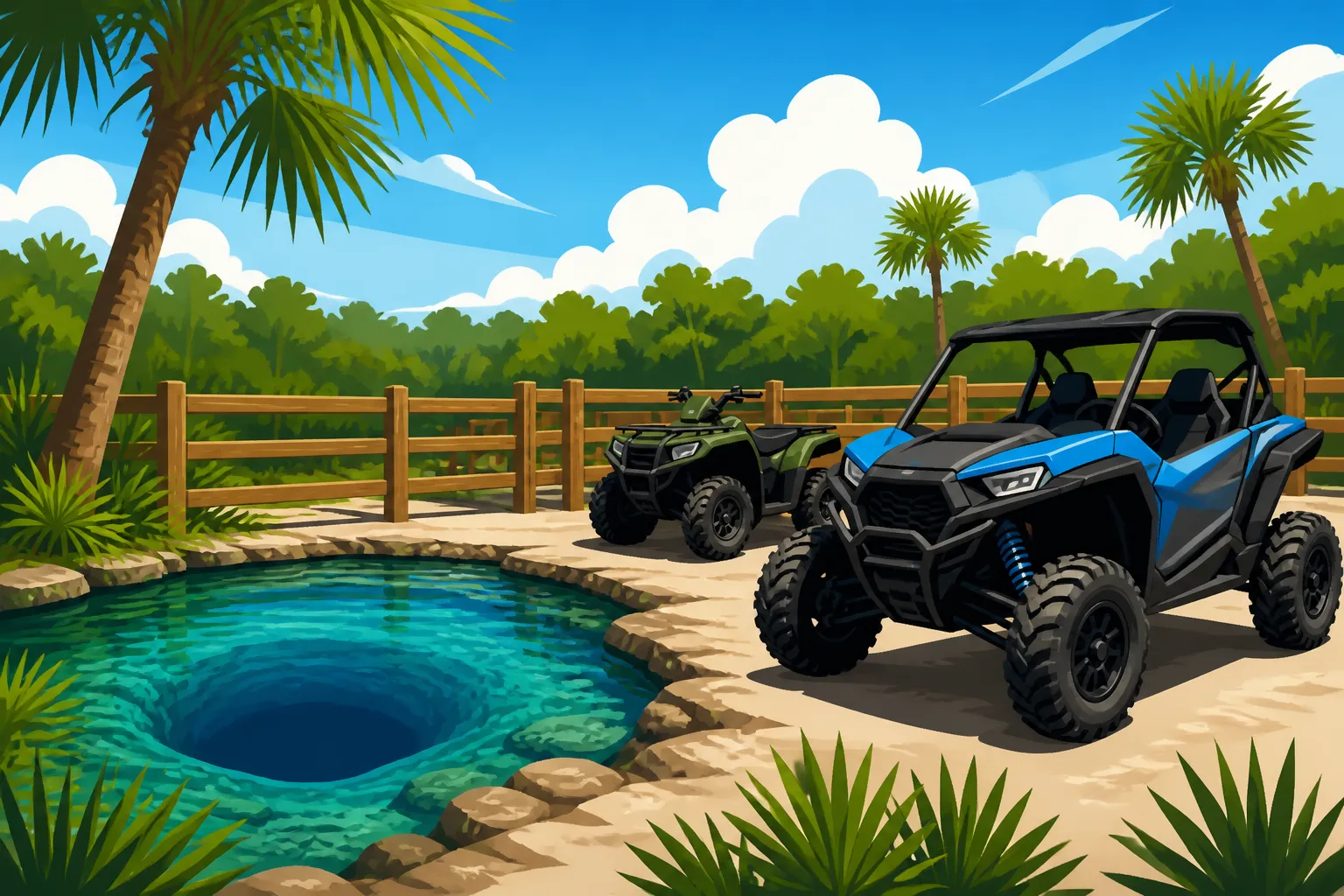
Blue Sink Corral Parking
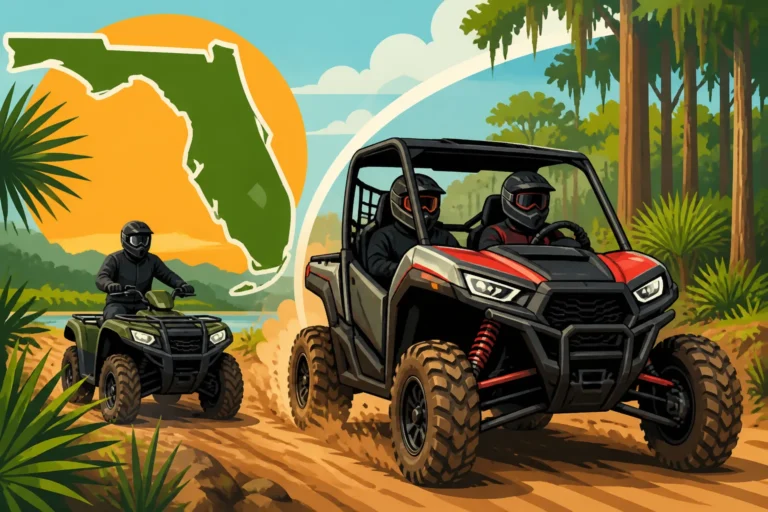
Blue Sink Corral can be a convenient place to stage an ATV or UTV for riding in the Ocala National Forest, but finding the right entrance, fitting a truck and trailer into the available space, and knowing which routes you can use takes a little planning. This guide covers how to prepare, park considerately, and verify trail and pass requirements before you unload.
Planning a visit to Blue Sink Corral
Confirm the access point before you drive
Blue Sink Corral is associated with riding in the Ocala National Forest, where designated OHV routes connect riders to a broader trail network. The name can be easy to confuse with nearby recreation areas or other forest access points, so don’t rely on a familiar place name alone when entering directions. Check the current official forest map and route information, then match the access point to your intended ride.
This matters most when you’re towing. A route that looks simple on a phone screen may involve forest roads, turns, or access conditions that are less comfortable with a long trailer. Before leaving home, identify the approach roads and save the necessary map information. The overview in Ocala National Forest ATV Trails in Florida can help you understand how Blue Sink fits into the wider riding area.
Conditions can change because of maintenance, weather, fire activity, or land-management decisions. Check for current alerts and closures before setting out, and check again if your plans depend on a particular route. A useful habit is to confirm both the access point and the trail status separately: an open parking area does not necessarily mean every route you hoped to ride is open. Florida Trail Closures You Should Check First explains why a last-minute check can save a long drive.
Get your maps and navigation ready
Cell service can be inconsistent in forested areas, so don’t make a live internet connection your only navigation plan. Download or save the maps you expect to need before you leave reliable coverage. Keep an official forest map available as well, and make sure everyone in your group understands how to identify the planned trail and return route.
The onX Offroad app can be a useful supplementary tool for preparing a route and reviewing your position. It should not replace official information about permitted routes, closures, or access rules. If you use it, check that the relevant map data is available offline, and compare what it shows with the forest’s current maps and notices before riding. A phone with a full battery, a charging option, and a paper backup is more reassuring than discovering at the trailhead that your map needs a signal.
A little route planning also helps prevent parking-area confusion later. Agree on where the group will meet if riders get separated, how long the ride is expected to take, and which trailhead everyone will return to. For more preparation ideas, see Florida ATV Trail Map Downloads and Florida Trailhead Cell Service and Getting Help.
Parking and unloading your ATV or UTV
Plan for the whole truck-and-trailer setup
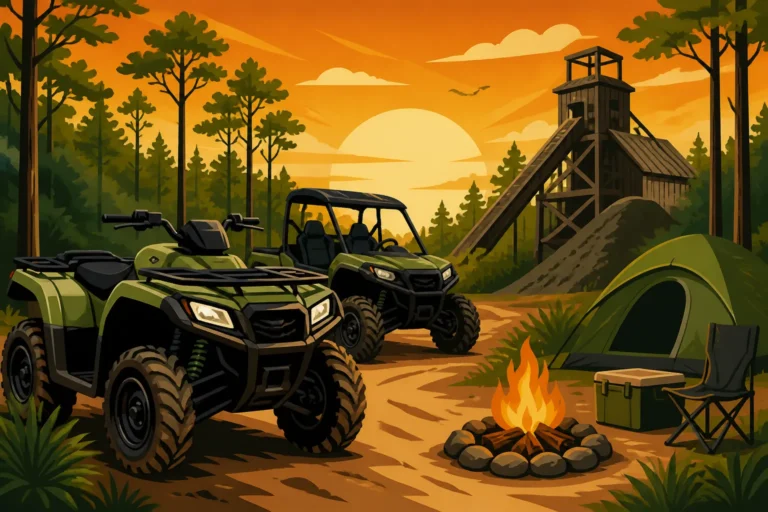
A parking space that looks roomy for a passenger vehicle may feel very different when you arrive with a long truck, trailer, and one or more machines. Before pulling into a tight area, look for posted directions, designated spaces, and room for other visitors to move through. Avoid blocking access, roadways, entrances, or areas that appear intended for turning around. If the available layout is unclear, take a moment to assess it before committing to a maneuver that is difficult to reverse.
If you’re arriving with a group, coordinate unloading rather than having several vehicles jockey for space at once. One driver can position the trailer while the others wait outside the busiest part of the parking area. Unload only where it is safe and permitted, and keep ramps, tie-downs, helmets, and other gear contained so they don’t spill into a travel lane. A brief parking plan can make the first ten minutes calmer for everyone.
The same care applies when you’re ready to leave. Give yourself enough room to reload without crowding another vehicle, and check the area for straps, tools, trash, and loose equipment before pulling out. If the parking area is busy, patience is usually better than trying to squeeze into a space that leaves no room to maneuver.
Check the fit and rules for your machine
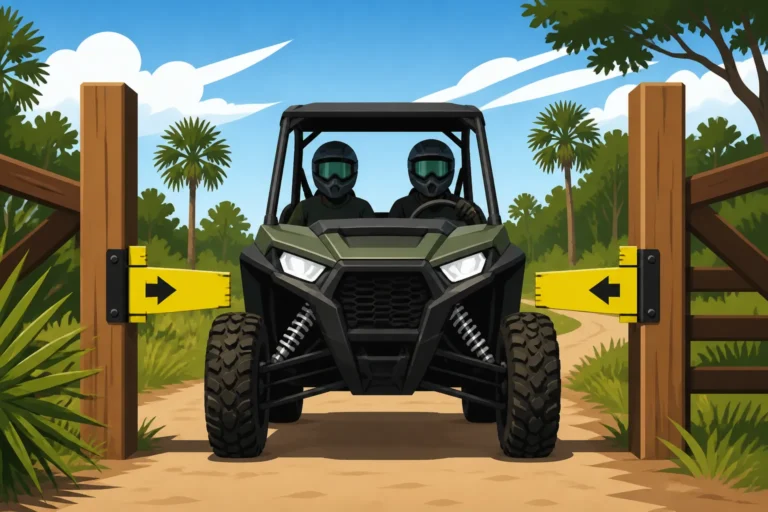
ATVs and UTVs are not interchangeable for every trail or staging area. Width restrictions and vehicle classifications can affect where a machine may ride, so check the rules for your specific vehicle rather than assuming that a route open to one kind of OHV is open to all. This is especially important if you have a wider side-by-side or a machine modified with accessories that increase its width. The guide Florida ATV Trails That Allow Side-by-Sides offers useful context for checking trail access.
Don’t assume that a parking space, trailhead, or route is suitable for a machine just because it appears physically large enough. Posted signs and official forest information take priority. If a trail or access road is marked for a particular class of vehicle, follow that restriction even if you see other riders taking a different route.
Before leaving the vehicle, secure the trailer and store equipment so it does not obstruct other visitors. Keep valuables out of sight, take essential items with you, and avoid leaving food or rubbish behind. These small steps are especially helpful when you expect to be away from the parking area for several hours.
| Before unloading | Why it matters |
|---|---|
| Check signs and the parking layout | Helps you avoid blocking access or using a restricted area |
| Confirm your vehicle fits route rules | ATV and UTV access may differ |
| Keep ramps and gear out of traffic paths | Makes unloading safer for your group and other visitors |
| Agree on a return plan | Reduces confusion if riders separate |
| Secure the trailer and belongings | Helps keep the staging area orderly while you ride |
Passes, routes, and riding preparation
Confirm the pass requirements for your trip
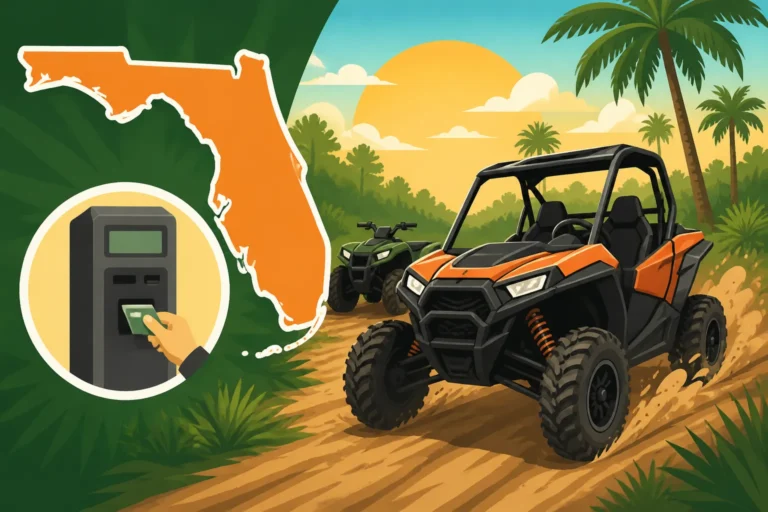
Parking at a trailhead and riding on an OHV route are different parts of a visit, and each may have its own requirements. Before leaving, confirm what pass or permit applies to the specific forest area and the machines you plan to bring. Don’t assume that a pass purchased for another site, another vehicle, or another kind of recreation covers your Blue Sink ride.
If you have more than one ATV or UTV, check whether each machine needs its own pass or documentation. The details can matter when a group arrives with multiple vehicles, even if everyone is riding together. Florida National Forest OHV Pass: 3-Day, 7-Day or Annual and Florida OHV Pass for a Second Machine are useful starting points for understanding the kinds of questions to resolve before heading out. Verify the applicable requirements through the official land manager before relying on any general guidance.
Keep required proof accessible rather than buried under camping gear or spare equipment. Make sure the rider responsible for the paperwork knows where it is, and take a moment to review any route restrictions before unloading. That way, if a ranger or official asks to see documentation, you are not scrambling through the trailer to find it.
Choose a route that suits the group
A route that feels manageable to an experienced rider may be stressful for a beginner, a child, or someone on an unfamiliar machine. Before setting off from Blue Sink, consider the group’s skill levels, the amount of daylight available, the weather, and how comfortable everyone is with sand, uneven ground, or changing trail conditions. Build in time for breaks and for a slower return than you expect.
Keep the route conservative if you’re unsure about conditions. Mark a turnaround point, tell the group what signs or junctions to watch for, and avoid exploring an unfamiliar spur simply because it looks inviting. A navigation app such as onX Offroad may help your group follow a planned route, but it cannot tell you by itself whether a route is currently open or allowed for your particular machine. Confirm those details with official forest information before riding.
Route references can also help you understand the forest’s road and trail naming conventions. Ocala National Forest Road Numbers Riders Use can help with orientation, while Florida National Forest Riding vs State Forest Riding explains why rules and systems should not be assumed to carry over from one type of public land to another. When in doubt, follow posted signs and choose a route clearly identified as open to your vehicle.
A practical Blue Sink Corral checklist
Before leaving home
Start with the basics: confirm the access point, check official notices for closures, and make sure the planned route suits every rider in your group. Review your pass or permit requirements, vehicle access rules, and any safety requirements that apply. Save maps for offline use, bring a backup, and share the plan with someone who is not riding with you.
Check your truck, trailer, and machines before the drive. Verify that the trailer is properly connected, the tie-downs are secure, and the machines are ready for unloading. Pack water, suitable protective gear, a first-aid kit, and basic tools. For broader packing ideas, What to Carry Into a Florida State Forest can help you think through essentials, though you should confirm which items and rules apply to your specific riding destination.
It’s also worth planning for a change of pace. A delayed departure, a crowded staging area, or a closed route can all affect the day. Leave room in your schedule to choose a different permitted route or turn back if the conditions don’t feel right. A flexible plan is more useful than a tightly timed itinerary that depends on everything going perfectly.
At the corral and when you leave
On arrival, pause before unloading. Read the signs, assess the parking arrangement, and confirm that your truck and trailer are not blocking anyone’s access. Keep your group and equipment organized, and use the marked routes and staging areas as directed. If you discover that your intended route is closed or unsuitable for your machine, don’t improvise onto an unmarked route; check official information and adjust the plan.
Before riding, make sure everyone knows the return point and has the essentials they need. Keep the group together or agree on a clear regrouping plan at trail junctions. If someone has a navigation app open, such as onX Offroad, treat it as a helpful reference—not permission to ride a route that signs or official notices restrict.
When you return, reload carefully and leave the area as you found it. Collect trash, check for dropped gear, and make space for other visitors. The best Blue Sink visit is not just one where you find parking; it’s one where you can unload safely, ride only permitted routes, and leave the staging area ready for the next group.
Disclaimer
This article is for general informational purposes only and does not constitute professional advice. Laws, prices and regulations vary by location and change over time. Consult a qualified professional for guidance on your specific situation.