Croom’s 55-Inch Width Check at the Gate
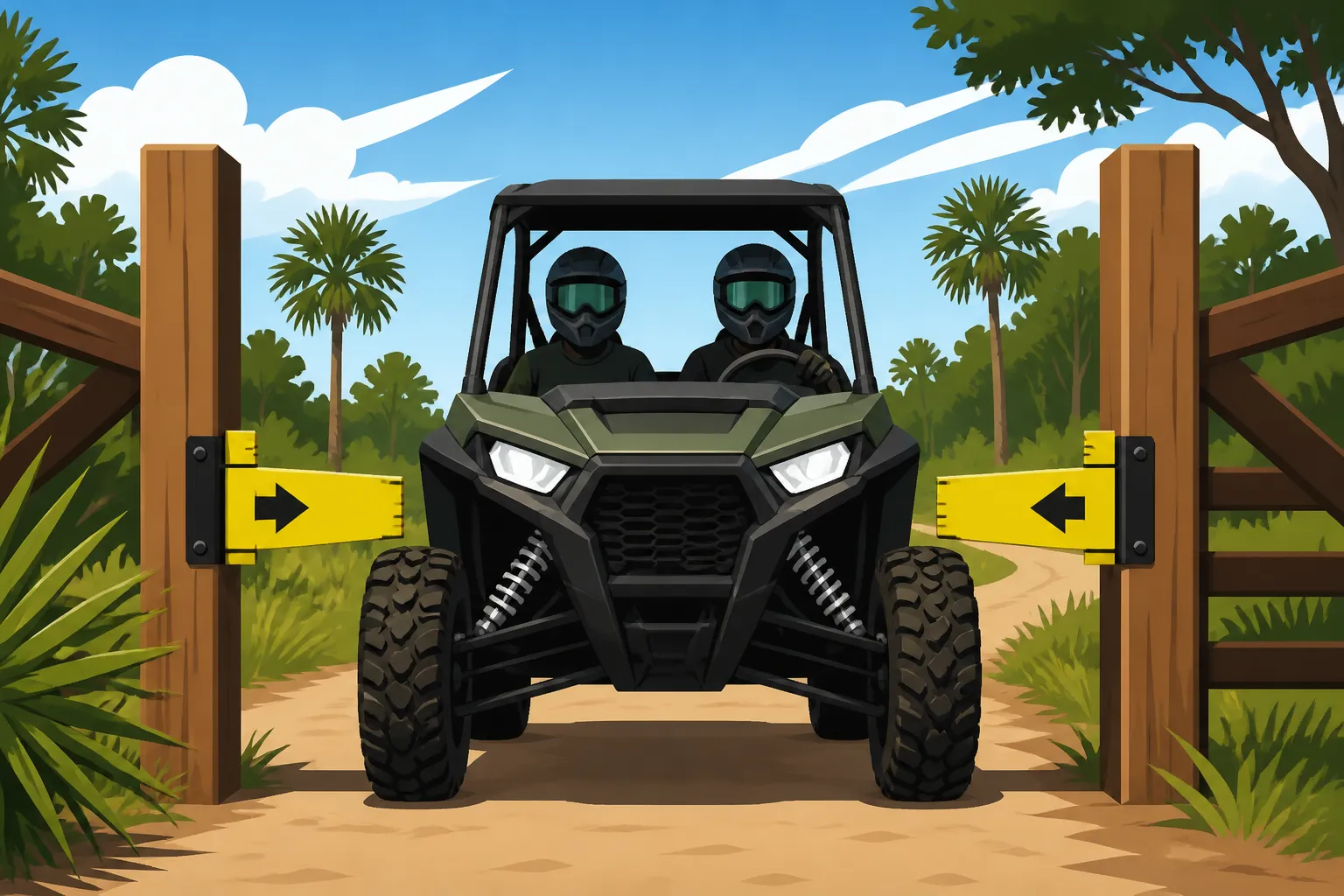
A trailer packed, a long drive to Brooksville, and then a width check at the entrance can turn a riding day into a frustrating turnaround. Croom’s gate check matters because a machine that looks like a regular quad may still measure wider than the area allows. This guide explains what to check before leaving, how to prepare your ATV or UTV, and what to do if its width is close to the limit.
Why Croom Checks Machine Width
The 55-inch cutoff is about the machine, not its name
Riders often describe their machines by brand, model, or style: sport quad, utility ATV, side-by-side, or UTV. Those labels don’t necessarily tell you whether the machine meets a riding area’s width requirement. The relevant question is how wide the machine is under the applicable rule and how Croom applies its entry requirements at the gate.
Florida’s ATV classification includes a 55-inch width limit. That number is a useful starting point, but it is not a substitute for checking the specific requirements for the riding area you plan to visit. For background on the state-level definition, see [Florida's 55-Inch ATV Definition and Why It Matters]. Croom’s gate check is a separate practical concern: staff may assess whether the machine presented for entry fits the area’s rules.
This distinction can catch people off guard. A rider may have a narrow ATV that seems no bigger than other machines on the trail, but aftermarket wheels or other changes can affect its overall width. Conversely, a machine marketed as a UTV might be narrower than expected, but that alone does not mean it will be accepted. Don’t rely on model names, forum comments, or a visual comparison in the parking lot.
Why side-by-sides deserve extra checking
Side-by-sides are often wider than conventional ATVs, so riders should be especially careful before bringing one to Croom. A machine’s passenger seating or utility design does not automatically determine whether it can enter; the applicable width and access rules do. For a closer look at the issue, read [Why Croom Turns Away Side-by-Sides] and [Florida ATV Trails That Allow Side-by-Sides].
The risk is not just that a wide machine might be awkward on a narrow trail. Access rules can be tied to the type of area, its trail design, and the machine classes permitted there. So even if a side-by-side fits through a gate or between trees, that does not establish that it qualifies for entry. Treat the posted requirements and confirmation from Croom as more reliable than a test based on appearance.
Before loading up, write down the machine’s make, model, year, and any width information you can find in its owner’s manual or manufacturer specifications. If it has been modified, note those changes too. A factory measurement may not reflect the machine as it sits today, especially if its tires or wheels have been changed.
How to Check Your Machine Before You Drive
Measure the machine as it is set up to ride
Start with the ATV or UTV in the configuration you plan to bring to Croom. Park it on level ground, straighten the wheels, and look for the widest points from side to side. Depending on the machine and the measurement method being used, components such as tires, wheel offsets, fenders, or other protrusions may matter. Don’t assume that the body panels or the distance between the seats represent the machine’s total width.
Use the same basic approach for a machine that has been modified. A wheel-and-tire package that adds only a little width on each side can make a meaningful difference to the overall measurement. Spacers, aftermarket wheels, or a different tire setup are easy details to overlook when the machine still looks familiar. If you’re near the cutoff, remeasure rather than relying on a catalog figure.
There can also be a difference between a manufacturer’s published specification and a measurement made at a gate. Published figures may describe a particular configuration, while your machine may have accessories or changes that affect its width. The relevant measurement procedure can matter, so use [Measuring Machine Width the Way the Statute Does] as a reminder to check how width is defined rather than guessing from a spec sheet alone.
Make a quick pre-trip record
A simple written record can make the conversation with the riding area more useful. Note the measurement you obtained, how you measured it, and what equipment is installed. If the machine has removable accessories, record whether they will be on the vehicle when you arrive. Take a few clear photos from the front and rear, and one showing the measuring tape at the widest point. Photos don’t replace an official check, but they can help you explain your setup over the phone.
| What to check | Why it matters | Useful next step |
|---|---|---|
| Published width specification | Gives you a starting point, not necessarily the final answer | Compare it with the machine’s actual setup |
| Tire and wheel setup | Changes may alter the overall width | Measure across the widest points |
| Spacers or other modifications | Small additions on both sides can add up | Include them in your measurement |
| Removable accessories | The machine may be wider when equipped for the ride | Ask whether they affect the gate check |
| Croom’s current entry requirements | Rules and procedures can change | Confirm directly before traveling |
| Your measurement photos and notes | Helps explain a borderline setup | Keep them accessible on your phone |
If you use onX Offroad to plan a trip, it can help with route and area planning, but a map does not confirm that your machine meets Croom’s entry requirements. Use onX Offroad for navigation planning, then verify access details with the riding area itself. It’s also wise to download or save the information you need before leaving home, since cell coverage can be unreliable in some riding areas.
What to Expect at the Gate
Be ready for a check without treating it as a personal dispute
A gate check can feel awkward, particularly when you have already driven a long way or see similar machines inside. Still, a comparison with another rider’s vehicle is not a reliable way to determine whether yours qualifies. The other machine may be a different configuration, may be subject to a different rule, or may have been measured differently. The practical question is whether the machine you brought meets the requirements Croom is applying.
When you arrive, make it easy for staff to inspect the machine. Keep the vehicle accessible on the trailer or in the staging area, and avoid loading bags or gear in a way that hides the wheels or other likely measurement points. If staff ask you to reposition the machine, follow their instructions and ask calmly where they want the measurement taken.
If there is a difference between your own measurement and the gate’s measurement, ask how the check is being made. You can explain what you measured and mention any relevant manufacturer specification, but don’t assume that a brochure settles the matter. Staff may need to apply the riding area’s entry procedure to the actual vehicle in front of them. A respectful question is more likely to clarify the issue than a heated argument.
Reduce the chance of a surprise
The most useful step is to contact Croom before loading, especially if your vehicle is close to the limit or is a side-by-side. Give staff the exact make and model and describe any wheel, tire, or suspension changes. Ask whether they have a specific measurement procedure and whether accessories affect the measurement. For the practical value of making that call, see [Calling the Croom Gatehouse Before You Drive].
You can also review [When Your Quad Is Too Wide for Croom's Gate] before setting out. If your own measurement is right at the threshold, treat that as a reason to verify—not as proof that entry is guaranteed. A few inches of uncertainty can matter when a rule is stated as a maximum, and a home measurement may not match the gate’s procedure.
If staff determine that your machine does not qualify, ask whether they can explain the measurement and what options, if any, are available. Don’t attempt to squeeze through, remove safety-related equipment on the spot, or misrepresent the vehicle’s configuration. If the answer is no, a frustrating change of plan is safer than risking a rule violation or disrupting the entrance for other riders.
Planning a Backup Ride
Don’t assume another nearby area has the same rule
A rejected entry does not necessarily mean there is nowhere else to ride, but access rules vary. One area may be intended for narrower machines, while another may permit a broader range of OHVs. Check the specific site’s requirements for vehicle width, machine type, permits, and trail access before redirecting your trip. The list of [Florida ATV Trails That Allow Side-by-Sides] can help you start comparing options, but confirm the details with each destination.
A backup plan is especially helpful if you’re traveling with a group. If one machine is turned away, the group may need to split up, change locations, or postpone riding. Talk through those possibilities before the trip rather than deciding beside a loaded trailer. You might identify a second riding area that allows your machine type, or agree in advance that everyone will switch to another activity if access does not work out.
onX Offroad can be useful for organizing possible routes and keeping trip-planning information together, but treat maps as one part of the plan. Confirm that a destination is open to your kind of machine and that your planned route is legal. A mapped route does not override posted restrictions or establish permission to ride on a particular property.
Pack for a flexible day
If there is any uncertainty about access, keep your plan easy to change. Carry the riding gear you need, but avoid making the entire day depend on one machine being admitted. Save the contact details and directions for your alternative destination before you leave, and make sure every driver knows the backup plan. When traveling with children or less experienced riders, explain the change-of-plan possibility in a straightforward way so a gate decision does not become a stressful surprise.
For groups bringing multiple machines, check each one separately. Two ATVs from the same manufacturer can have different equipment, and one may have modifications the other does not. A measurement for one vehicle should never be treated as clearance for the whole trailer. Keep each machine’s notes and photos identifiable so you can answer questions about the right vehicle.
A little preparation turns the width check from a guessing game into a manageable part of the trip. Measure the machine as equipped, verify the applicable rule with Croom, and keep a realistic alternative in mind. Those steps can save a wasted drive and help you arrive ready to ride rather than hoping the gate check goes your way.
Disclaimer
This article is for general informational purposes only and does not constitute professional advice. Laws, prices and regulations vary by location and change over time. Consult a qualified professional for guidance on your specific situation.