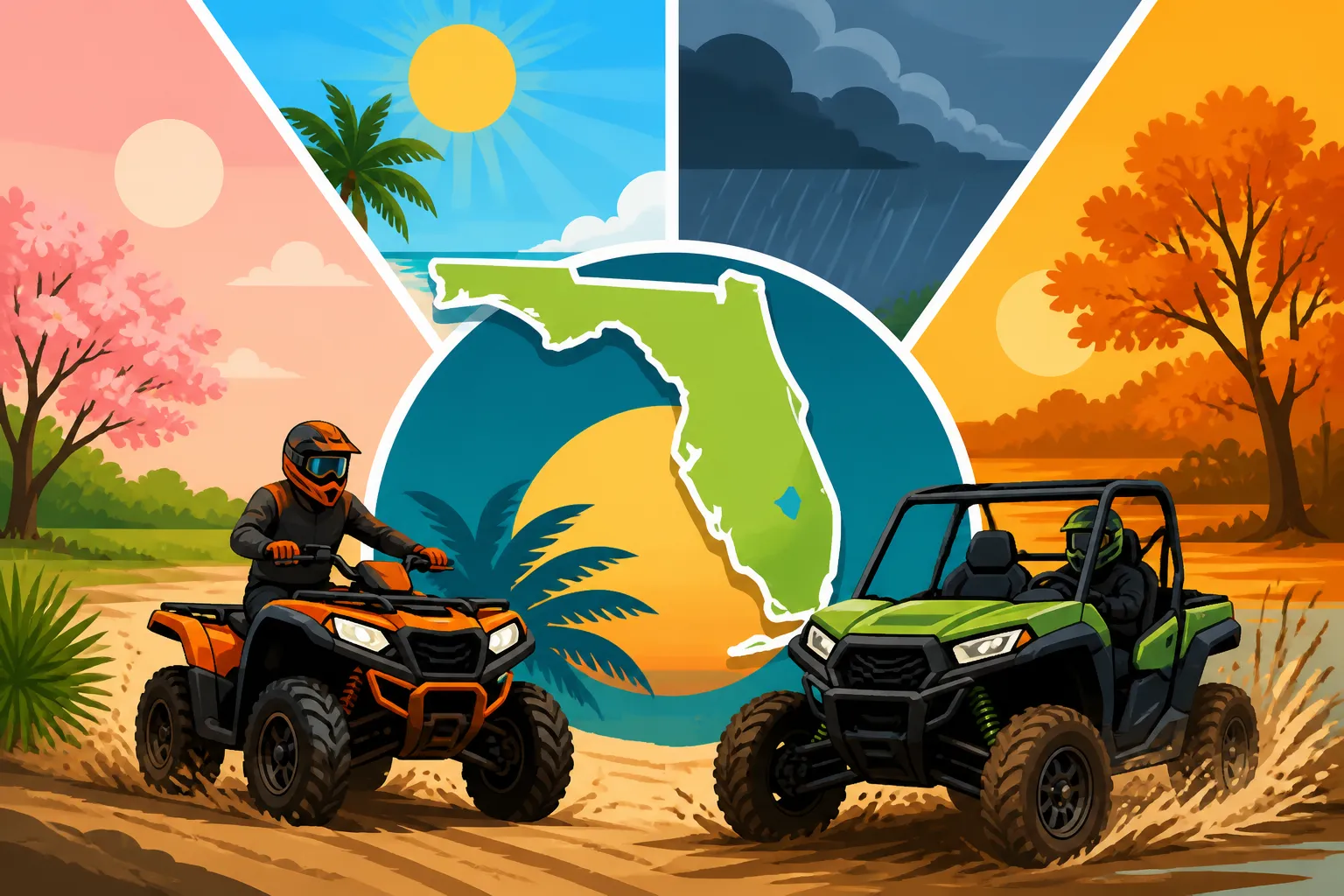
Florida Riding Season Month by Month
Florida riding plans can fall apart when a cool, dry morning turns into afternoon heat, a soaked trail, or a seasonal closure. The best riding month depends on where you’re headed, what your machine can handle, and whether the route is open—not just the forecast. This guide walks through Florida’s riding seasons month by month and helps you plan for changing conditions.
Florida ATV and UTV riding season month by month
Florida doesn’t have one statewide riding season. The Panhandle, Central Florida, and South Florida can feel very different at the same time of year, and trail access depends on the land manager as well as the weather. Treat the calendar as a planning guide, then confirm the status of your specific riding area before you leave.
| Month | Typical riding feel | What to plan for |
|---|---|---|
| January | Often cooler and relatively dry, especially in North and Central Florida | Pack layers, check for wet or muddy sections, and confirm any seasonal restrictions |
| February | Frequently comfortable for longer rides, though cold snaps can still happen | Check the forecast and trail notices; bring water even when temperatures feel mild |
| March | A popular transition month, with warmer afternoons and generally favorable conditions in many areas | Expect busier weekends and changing conditions; reserve or check access where required |
| April | Warmer and often still suitable for riding, but heat becomes more noticeable | Start early, carry extra water, and check for closures or maintenance |
| May | Hotter, with humidity building ahead of summer rain patterns | Shorten exposed rides, watch for storms, and avoid assuming a dry-looking trail is firm |
| June | Hot, humid, and often storm-prone, particularly later in the day | Ride early, check for lightning and heavy rain, and be ready to change plans |
| July | Peak summer heat and frequent afternoon thunderstorm potential | Prioritize hydration, shade, storm timing, and trail-condition updates |
| August | Similar to July, with hot conditions and possible heavy rain | Leave a flexible schedule; avoid low, flooded, or recently washed-out areas |
| September | Still hot and humid, with continued rain and possible tropical weather impacts | Check for storm damage, closures, and local access advisories before traveling |
| October | Often a transition toward more comfortable conditions, though weather can vary | Recheck conditions after storms and keep an eye on seasonal land-use notices |
| November | Frequently a more comfortable, drier-feeling period in many parts of the state | Bring a light layer for cooler mornings and verify hunting-season access rules |
| December | Often pleasant for riding, with cooler mornings and occasional cold fronts | Pack for temperature swings and check trail status during busy holiday periods |
These are broad seasonal patterns, not a guarantee of conditions on a particular trail. A sandy route near Ocala can behave differently from a low-lying, muddy area near Palatka, and a rainstorm several days earlier may matter more than the day’s forecast. For a wider look at seasonal changes, see [Florida Riding Season Month by Month].
January through April bring many comfortable riding days
For many riders, the cooler months are the easiest time to plan a long day outside. Milder temperatures can make it more comfortable to gear up, travel between trail sections, and ride without the constant effort of managing summer heat. North and Central Florida can still have chilly mornings, so a thin, removable layer is useful when the day starts cold and warms up later.
Comfortable weather does not automatically mean easy trail conditions. Recent rain can leave low spots soft, muddy, or impassable, and dry stretches can still be dusty. If your plan involves a state forest, national forest, or managed OHV area, check the area’s current notices before setting off. [Florida ATV Trails Open Year-Round] is a useful related topic, but an area’s usual availability should never be treated as a promise that every trail is open on your visit date.
These months can also be popular, especially on weekends and during school breaks. If you’re heading to a well-known riding destination such as Croom or the Ocala National Forest, plan for the possibility of busy trailheads and full parking areas. Check for access requirements, trail rules, and any seasonal restrictions well before the drive. Hunting activity can affect access on some public lands, so review [Florida Riding Areas That Close for Hunting Season] and the specific property’s notices rather than relying on a general calendar.
May through September call for heat and rain planning
Summer riding is possible, but it asks more of you and your group. Heat and humidity can make even a moderate ride feel draining, especially when protective clothing, helmets, and goggles limit airflow. Start early when permitted, choose a route that suits the least-experienced rider, and plan places to stop in shade. Don’t wait until someone feels unwell to take a break.
Afternoon storms are another planning challenge. A ride that begins under clear skies can become uncomfortable or unsafe if lightning, heavy rain, or strong winds move through. Check the forecast close to departure, keep a way to receive weather alerts, and have a turnaround plan. The guidance in [Florida Trail Riding in Summer Heat] and [Florida Trail Riding in the Rainy Season] can help you think through those seasonal risks in more detail.
Heavy rainfall can change a trail after the storm has passed. Water may cover ruts, hide soft ground, or leave erosion and debris behind. Avoid forcing a machine through water when you can’t judge the depth or the surface, and turn around if a route looks damaged or unsafe. For practical condition checks, see [Florida ATV Trail Conditions After Heavy Rain]. A map app such as onX Offroad may help with route planning, but a digital route line cannot confirm that a trail is currently open or safe; verify local notices separately.
October through December can bring a welcome change
As temperatures begin to ease, many riders find it more pleasant to spend longer stretches outside. But October is not a guaranteed return to dry, cool weather. Recent tropical systems or heavy rain can leave trails closed, damaged, or in need of repair. Before a long drive, look for updates from the agency or park responsible for the riding area. [Florida Trail Riding After a Hurricane] covers why storm impacts can outlast the rain itself.
November and December often bring comfortable daytime riding conditions, but mornings can feel surprisingly cool after a front passes. Dress in layers that are easy to remove, and keep a dry layer available if your group gets wet. The cooler season is also a good time to revisit [Florida Dry Season Riding From November to April], while remembering that local rain and trail conditions can still vary.
Fall and winter calendars may overlap with hunting seasons, land-management work, or temporary closures. A trail that was open on your last visit may have changed status. Check the area’s official information before loading the machines, and don’t assume that a nearby road or track is approved for OHV use simply because it appears on a general map.
Match the season to the kind of ride you want
The “best” month depends on whether you prefer long trail days, technical terrain, mud, family outings, or a quick local loop. Weather matters, but rider experience, machine setup, and access rules matter just as much. A route that’s enjoyable for an experienced rider may be a frustrating choice for a beginner after rain or during peak heat.
Dry-season comfort versus summer challenge
The cooler part of the year is often a good fit for riders who want to spend more time moving and less time managing heat. It can also be easier to keep a mixed-age group comfortable when children or less-experienced riders are along. Still, a cool day is not a reason to skip water, eye protection, or breaks. Riders can become tired without noticing it, particularly when they’re focused on keeping up with the group.
Summer can appeal to riders who enjoy wetter, more challenging conditions, but don’t confuse “muddy” with “safe.” Deep water, hidden ruts, slick roots, and soft shoulders can create problems for a machine and its rider. If your group is looking for a mud-focused outing, choose a designated riding area that permits that kind of use rather than testing an unknown trail or wetland. A wet trail can also be more vulnerable to damage, so respect closures and posted restrictions.
Use onX Offroad or another mapping tool to plan a route and orient yourself, especially when an area has multiple junctions or trail sections. Before you go, compare your plan with the land manager’s current map and notices. The app is a planning aid, not permission to ride, proof that a route is open, or a substitute for posted signs.
Choose the region as carefully as the month
A trip to the Panhandle may involve different temperatures and rain patterns from a ride in South Florida. Central Florida destinations such as Croom and areas around Ocala can also vary in surface and drainage, even when they’re only a few hours apart. Check conditions for the actual location rather than relying on a statewide forecast or a friend’s report from another county.
Think about travel time as part of the seasonal decision. If you’re hauling a UTV or several ATVs, a closure discovered at the trailhead can turn into an expensive, disappointing day. Check access, parking, permits, machine restrictions, and trail status before loading. If you’re considering a public forest ride, [Florida Trail Closures You Should Check First] offers a useful reminder to confirm access rather than assume it.
A route app can make it easier to keep track of planned stops and nearby connections. onX Offroad can be part of that preparation, but don’t let a mapped line override a gate, sign, or official closure notice. Save the agency’s contact details and have a backup destination in mind, particularly during storm season or when traveling to an area you haven’t visited before.
Prepare for the day, not just the season
A month-by-month guide helps you anticipate broad patterns, but a good ride plan accounts for the specific day, your group, and the rules of the place. A little preparation can prevent common headaches: arriving at a closed entrance, running short on water, or discovering that the route is a poor match for a newer rider.
Use a pre-ride check for weather and access
Before departure, check the forecast for the riding area itself, not only your home or hotel. Look for rain timing, lightning risk, heat, and any storm-related alerts. Then review the riding area’s official trail or closure notices. If the land manager lists a phone number or posts local updates, use those channels to confirm anything unclear.
Next, make sure the route matches your machine and group. Consider width restrictions, trail difficulty, distance, fuel, and where you can safely turn around. Share the plan with everyone riding, including the expected finish time and what to do if the group becomes separated. If you rely on onX Offroad for navigation, download or prepare the information you need before you lose service, and carry a backup way to orient yourself.
Finally, check basic gear. Bring water, sun protection, suitable clothing, eye protection, and any first-aid or repair supplies appropriate for your trip. For hot months, read [Florida Trail Riding Gear for the Heat] and adjust your kit to the forecast. For cooler mornings, add a light layer that can be stowed once temperatures rise.
Keep a backup plan and respect changing conditions
Choose a backup activity or location before leaving, especially if your ride depends on a particular trail being open. A nearby alternative is only useful if it allows your machine and riding style, so check its rules in advance. Don’t improvise by entering private land, bypassing a barrier, or using an unmarked route because the planned area is closed.
During the ride, reassess conditions as you go. Turn back if water is deeper than expected, weather is worsening, a trail is visibly damaged, or a member of the group is tired or uncomfortable. The schedule is less important than getting everyone back safely. In summer, that may mean ending a ride earlier than planned; after heavy rain, it may mean choosing a firm, open route instead of trying to push through mud.
Leave the area as you found it, follow posted restrictions, and give other trail users room. Seasonal conditions are part of riding in Florida, but they don’t have to ruin the day. When you plan around heat, rain, closures, and the needs of your group, you’re much more likely to enjoy the ride you came for.
Disclaimer
This article is for general informational purposes only and does not constitute professional advice. Laws, prices and regulations vary by location and change over time. Consult a qualified professional for guidance on your specific situation.