Florida Single Track vs Wide Trail
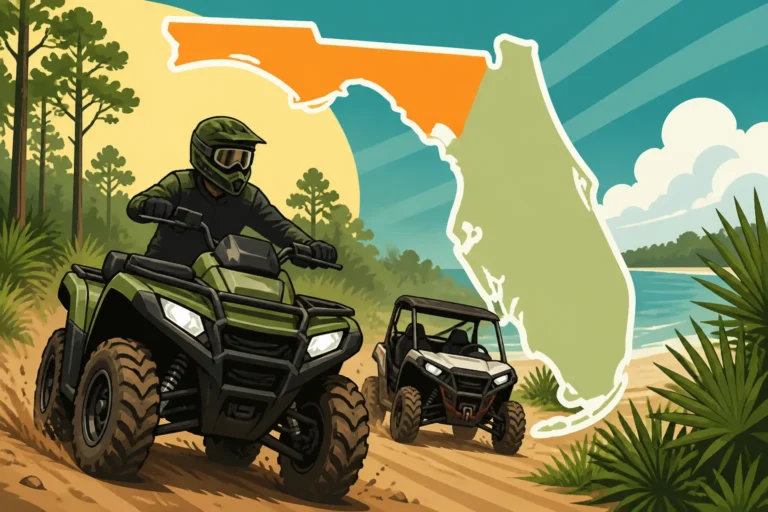
Florida riders can arrive at a trailhead with the right machine, the right gear, and a full day planned—then discover the route is too narrow for their ATV or UTV. This guide explains what single track and wide trails mean, how they differ on Florida riding areas, and how to check whether a route suits your machine before you unload.
What Single Track and Wide Trails Mean
Single track is a narrow, one-machine-wide route
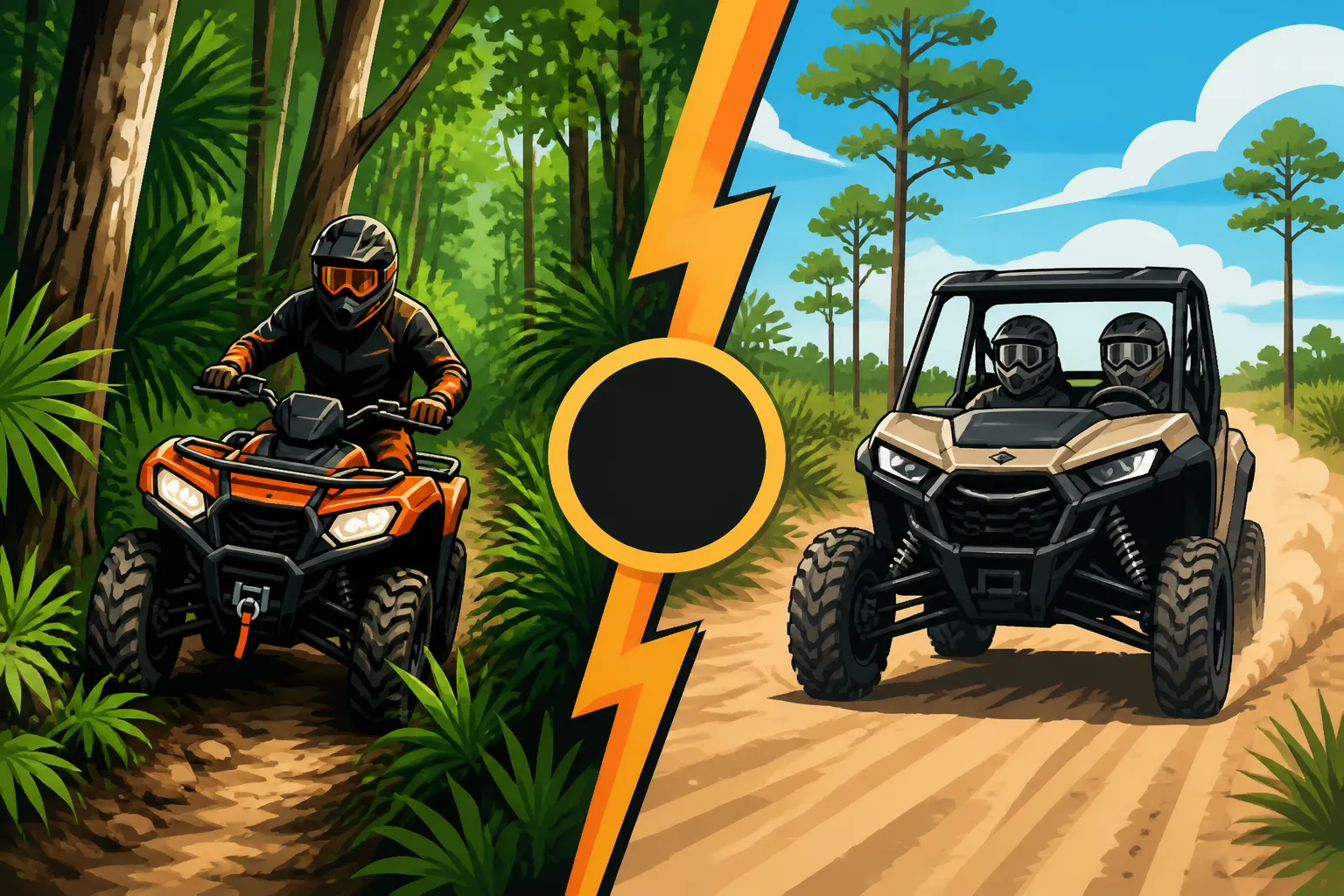
Single track is generally a narrow trail intended for one rider at a time. In Florida, these routes are often associated with dirt bikes and off-highway motorcycles. Their tight turns, limited passing space, and narrow openings can make them unsuitable for quads and side-by-sides, even when the surface looks rideable.
The label describes the trail’s width and riding style, not a promise that every kind of off-highway vehicle can use it. A quad may physically fit in some places but still be prohibited. A wider machine can also damage trail edges, vegetation, or drainage features when riders try to squeeze through a route designed for motorcycles.
Wide trails are built to accommodate more space
Wide trails leave more room for an ATV, and some may be designed for side-by-sides. They can feel more forgiving for riders who are still learning, or for groups that want to ride at a measured pace without negotiating a narrow corridor. But “wide” is not the same as “open to all machines.” A route’s permitted vehicle types can depend on the riding area, trail designation, machine dimensions, and posted restrictions.
This distinction matters especially for UTV owners. A side-by-side can be wider and longer than a quad, so a route that works for one ATV may still be too tight for a UTV. Before riding, check the specific area’s rules and route markings. For a broader overview of the difference between trail types, see [Florida ATV Trail Ratings and What Green Means].
Trail width and vehicle access are separate questions
When choosing a route, answer two questions: Can your machine physically fit, and is your machine legally allowed on that trail? The first is about dimensions, obstacles, and turning room. The second is about the rules set by the land manager or riding area.
That distinction can prevent a frustrating day. Imagine unloading a UTV near Brooksville, only to discover that the route you planned to ride is motorcycle-oriented or excludes wider vehicles. A wide-looking entrance does not settle the question; restrictions may apply farther along the route. Check maps, signs, and current area guidance before committing to a trail.
How Single Track and Wide Trails Feel on a Ride
Single track demands focus and precise control
On a narrow trail, riders often need to pay close attention to roots, sandy turns, low branches, and changes in the trail surface. There may be little room to pull aside or pass another rider. That can make single track exciting for experienced dirt-bike riders, but it can also feel cramped or stressful for someone who is new to off-road riding.
Florida’s sandy terrain adds its own challenge. A narrow route may have soft sections, tight bends, or small ruts that require controlled steering and steady throttle. A rider who is used to open trails may find that the limited room leaves less margin for correcting a mistake. Pick a route that matches your experience rather than assuming a narrow trail will be easier because it is short.
Wide trails offer more room, but not automatically an easier ride
A wide trail can make it easier to keep a comfortable line, ride with a group, or navigate with a larger machine. It may also give riders more space to manage shallow ruts or avoid a puddle. Still, wide routes can include deep sand, uneven ground, sharp turns, or muddy sections, so width alone does not determine difficulty.
For families and newer riders, a wider route may be a more comfortable starting point if its difficulty rating and vehicle rules also fit. Use local maps and posted guidance to check both. [Florida ATV Trails for Beginners] can help you think through what makes a trail a sensible first ride, while [Florida OHV Trail Etiquette Locals Expect] is useful for sharing the route respectfully with other riders.
Group size and machine mix change what feels manageable
A narrow trail can become more complicated when riders have different skill levels or machines. Dirt bikes can move through tight sections differently from quads, while a UTV needs more space to turn and maneuver. If your group includes several machine types, choose routes that are expressly suitable for all of them instead of relying on the smallest vehicle to set the plan.
It also helps to agree on a regrouping routine before setting off. On single track, stopping in the trail can block others or create a hazard around a bend. On a wider route, choose safe pull-offs or open areas for regrouping. If someone in the group is unsure about a section, pause somewhere that does not obstruct the route and decide together whether to continue.
| Trail feature | Single track | Wide trail |
|---|---|---|
| Typical width | Narrow, generally one rider across | More room for ATVs and, where permitted, some UTVs |
| Common fit | Often associated with off-highway motorcycles | May suit quads or side-by-sides, depending on rules |
| Passing and stopping | Limited room; use care and avoid blocking the route | Usually more space, but safe pull-offs still matter |
| Main planning check | Confirm the route permits your machine | Confirm both machine access and width limits |
| Beginner consideration | Can feel demanding because there is little room to maneuver | May feel more comfortable, but difficulty still varies |
Choosing a Florida Trail for Your ATV or UTV
Start with your machine, not just the trail name
Before planning a ride, identify the vehicle you will bring: dirt bike, ATV, or UTV. If it is a side-by-side, know its overall width and pay attention to any posted limits or route-specific restrictions. A route that allows ATVs may not allow UTVs, and a UTV-friendly area may still have narrow trails that are off-limits.
This is one reason to read the rules for the riding area instead of relying on a general description from a friend or an old map. For side-by-side owners, [Florida ATV Trails That Allow Side-by-Sides] and [Where Florida Bans Side-by-Sides on Trail] are useful starting points for understanding why access can vary. Treat them as planning context, then confirm the rules for the exact route you intend to ride.
Compare the type of riding area and its trail network
Florida has public forests and designated riding areas with different layouts and rules. Croom Motorcycle Area near Brooksville, for example, is known as an OHV destination, but riders still need to check the rules and route information that apply to their machine. In the Ocala area, trail access and permitted use can differ by location and route. Conditions and closures may also change, so do not assume a familiar area is unchanged from your last visit.
A route map can help you understand the network, but a map should not replace signs or official guidance at the trailhead. The agency managing the land has the final say on where and how you can ride. If you are comparing public options, [Florida State Forest OHV Areas Explained] and [Florida National Forest Riding vs State Forest Riding] provide useful context about how riding areas can differ.
Use maps as a planning tool, not permission to ride
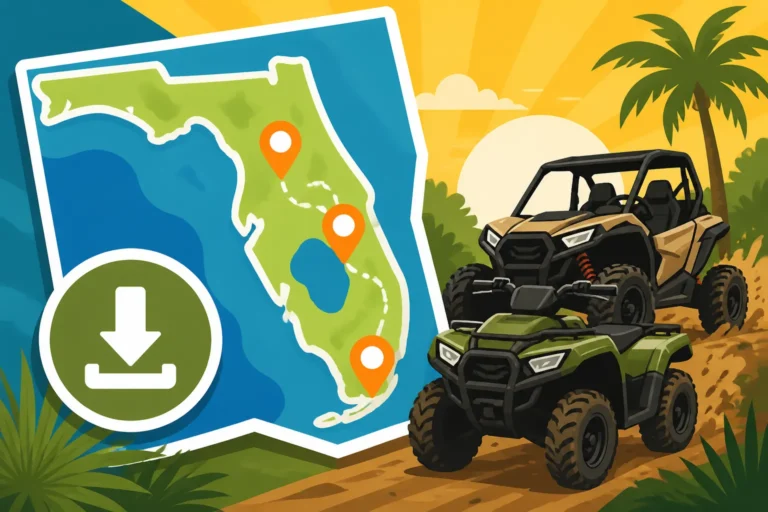
Mapping tools can help you organize a route, locate trail connections, and avoid getting turned around. Riders may use onX Offroad to review route information during trip planning, but an app display is not authorization to ride a trail. Check the relevant land manager’s rules and local signage, especially where routes meet, close, or change designation.
Before leaving home, compare your intended route with the official information for the area. If your phone has a signal, an app can be a handy reference; if it does not, you will be glad you checked and saved the details before arriving. [Florida ATV Trails: Every Public Riding Area] can help you identify potential destinations, while [Florida Trail Closures You Should Check First] is a reminder to verify access before making the drive.
A Practical Pre-Ride Checklist
Confirm access, closures, and machine restrictions
First, find the exact riding area and the route you plan to use. Check whether the route is open, whether it is designated for your vehicle type, and whether width or other machine restrictions apply. Look for updates from the land manager and read signs at the entrance and along the trail. If a sign conflicts with your app or a saved map, follow the posted restriction and ask the area staff if you need clarification.
For UTV riders, pay special attention to width limits and route designations. A machine that clears the entrance may still be unsuitable for a narrow stretch farther along. Croom’s entrance screening is one example of why it helps to understand vehicle dimensions before the trip; see [Croom's 55-Inch Width Check at the Gate] for related planning context.
Match the route to the least experienced rider
A trail that feels easy to an experienced rider may be uncomfortable for someone who has not ridden much, particularly if it is sandy, narrow, or difficult to turn around on. Choose a route that lets the least experienced person in your group ride at a steady pace and stop safely when needed. If you are unsure whether a trail is a good fit, start with an easier, clearly permitted route and reassess before moving to more demanding terrain.
For mixed groups, plan around the machine that needs the most room and the rider who needs the most time. That usually makes the ride more enjoyable for everyone. It is better to turn back from a narrow or challenging section than to pressure someone into continuing.
Prepare for navigation and changing conditions
Florida trails can look different after heavy rain, maintenance, or a closure. Sand, standing water, and soft shoulders can affect how a route feels, even if you have ridden it before. Pack what you need for the conditions, keep a way to contact your group, and agree on what to do if someone gets separated.
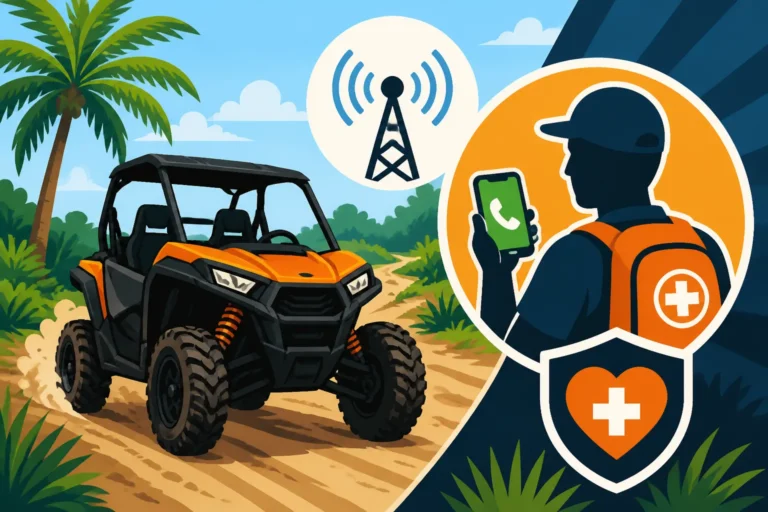
Do not depend on mobile coverage for navigation or help. Cell service can be limited in remote riding areas, so check maps in advance and tell someone where you plan to ride. [Florida Trailhead Cell Service and Getting Help] offers more context for planning around connectivity. And if you are still deciding where to go, use [Florida ATV Trails: Every Public Riding Area] to compare possible destinations before committing to a route.
The practical rule is simple: choose the trail for your machine, your group’s experience, and the rules of that specific riding area. Single track can be a rewarding choice for a rider on a suitable machine who wants a focused, narrow-route experience. Wide trails can offer more room for quads and some side-by-sides, but only where those machines are allowed. Check the route before you unload, follow posted directions, and be ready to adjust your plan if conditions or access have changed.
Disclaimer
This article is for general informational purposes only and does not constitute professional advice. Laws, prices and regulations vary by location and change over time. Consult a qualified professional for guidance on your specific situation.