Why Croom Turns Away Side-by-Sides
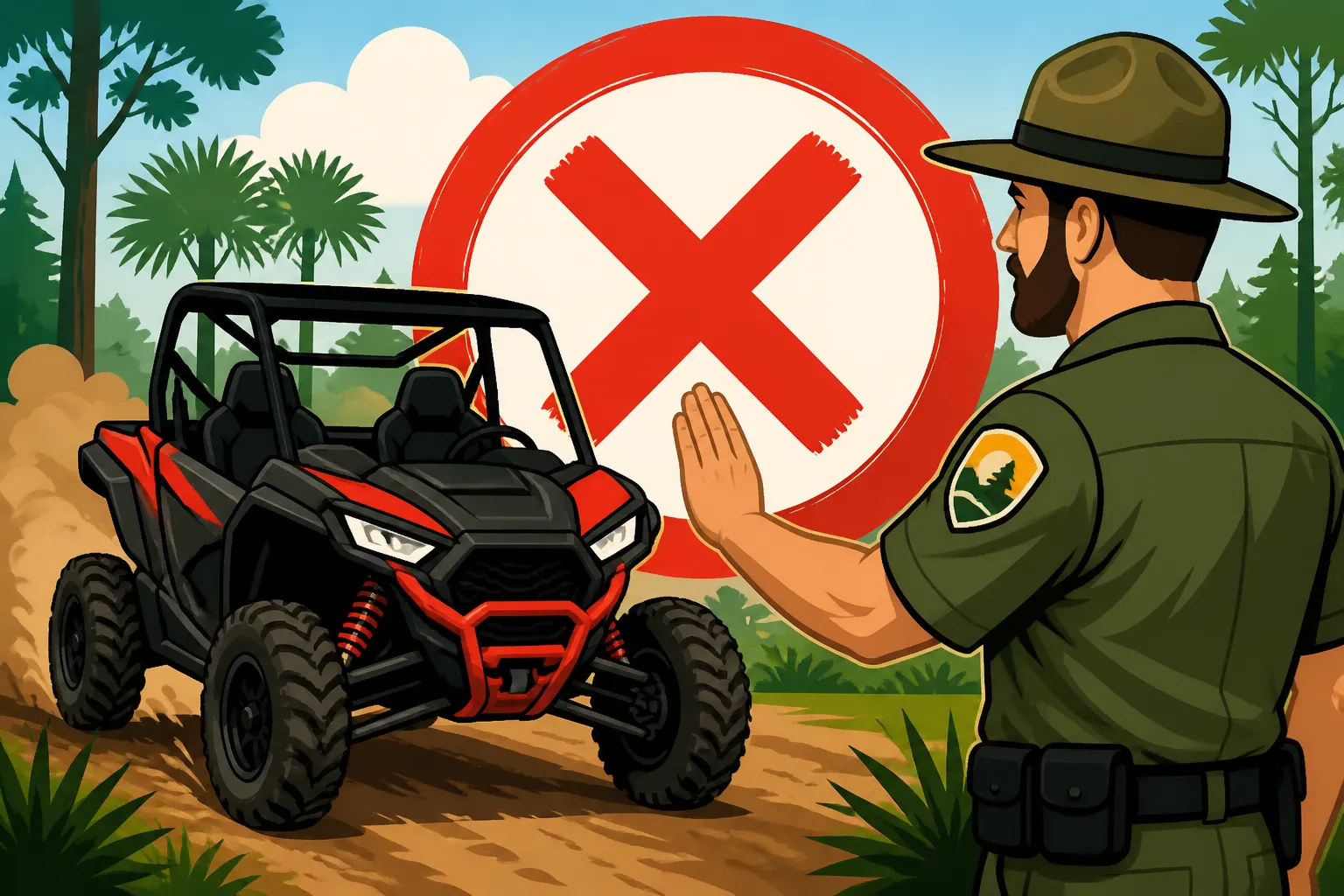
Croom’s narrow trails are a common surprise for riders who arrive with a side-by-side ready to unload. The key issue is that Croom Motorcycle Area is not a general-purpose riding park for every off-highway vehicle. This guide explains why side-by-sides are turned away, how width and vehicle type affect access, and what to check before you tow to the gate.
Why Croom Turns Away Side-by-Sides
Croom is set up for motorcycles and ATVs
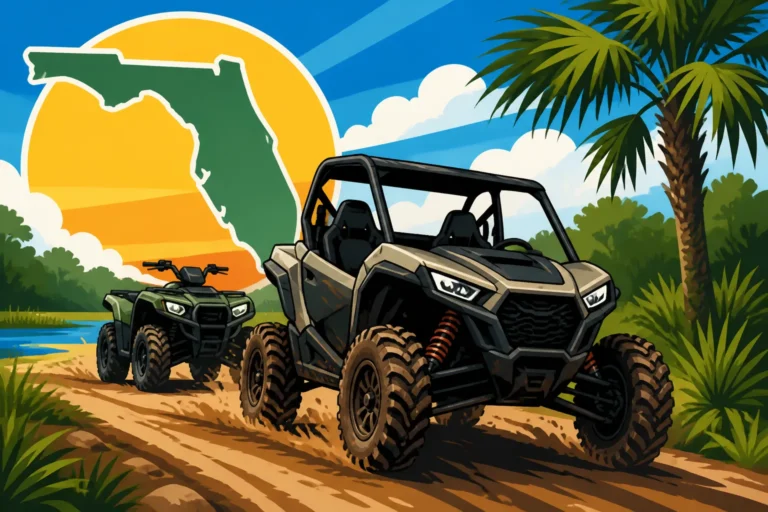
Croom Motorcycle Area, within Withlacoochee State Forest near Brooksville, is built around trails intended for motorcycles and ATVs. A side-by-side may be a capable off-road vehicle, but that does not mean it is permitted on every OHV trail. Park access depends on the rules for that specific riding area, not just whether a machine is designed for off-road use.
That distinction can be frustrating when a side-by-side seems small enough to fit down a trail or you have seen similar vehicles riding elsewhere in Florida. But trail access is managed site by site. Some areas accommodate wider machines; others are designed for narrower vehicles and do not allow side-by-sides. Croom’s restrictions are one reason it is important to check the rules for the exact trailhead you plan to visit rather than rely on a general list of Florida riding areas.
If you are comparing destinations, [Florida ATV Trails That Allow Side-by-Sides] can help you look for places that specifically accommodate these vehicles. Also check [Where Florida Bans Side-by-Sides on Trail] before setting off. A trail system may allow ATVs while excluding UTVs, or it may have different rules across separate areas.
Trail width and site design matter
Croom’s trails and riding areas are associated with narrower machines than many side-by-sides. A wider vehicle needs more room to pass through tight sections and can make encounters between riders harder to manage. Even when a trail looks open near the entrance, conditions can change farther in: turns may tighten, vegetation may crowd the route, or other trail users may have limited room to move aside.
Width is also only one part of the practical question. A side-by-side can have a different turning radius, weight, and handling profile from a typical ATV. On trails planned for narrower machines, those differences can create conflicts or increase the likelihood of trail-edge damage. Restrictions help keep use consistent with the layout and intended operation of the area.
This is not a judgment about the quality of your machine or your ability to ride responsibly. It is a site-access rule. A careful driver in a compact UTV can still be turned away if that class of vehicle is not allowed. For more context about the gate’s width screening, see [Croom's 55-Inch Width Check at the Gate] and [When Your Quad Is Too Wide for Croom's Gate].
How Width and Vehicle Class Affect Access
The 55-inch cutoff is useful, but it is not a permission slip
Florida’s off-highway vehicle categories use width as one way to distinguish machines. The 55-inch measurement is especially relevant to ATV classification and to access rules at certain riding areas. Riders often hear the number and assume that a vehicle measuring less than 55 inches must be admitted. That conclusion can lead to an expensive and disappointing trip.
A width measurement does not override the rules of an individual park. Croom may restrict side-by-sides as a vehicle type, even if a particular model is relatively narrow. Conversely, a vehicle’s classification under a Florida title or OHV rule does not automatically establish that it can use a particular trail. The state’s definitions and an area’s operating rules answer different questions.
Think of it as two checks, not one. First, identify what kind of vehicle you have under the applicable Florida definitions. Then confirm whether Croom allows that kind of vehicle. A title category, manufacturer description, or sales listing is not a substitute for the park’s current access requirements. For background, [Florida's 55-Inch ATV Definition and Why It Matters] explains why the measurement matters, while [Florida UTV Titling for Side-by-Sides Over 55 Inches] covers a separate titling issue.
Measure the machine you are actually bringing
Manufacturer specifications are a sensible place to start, but the listed width may not match the machine as it sits on your trailer. Tires, wheels, spacers, bumpers, and other accessories can affect the widest point. If you are close to a stated limit, a small difference between the published figure and the machine’s actual width can matter.
Before leaving home, measure the vehicle at its widest installed point and write down the result. Check the owner’s manual and any posted park instructions for the measurement method. Do not guess from the distance between the seats, the bed width, or the size of the trailer. If the rules do not make clear which part of the vehicle counts, ask the park before your trip rather than trying to settle the question at check-in.
| What to check | Why it matters | Practical step |
|---|---|---|
| Vehicle type | Croom’s rules may exclude side-by-sides regardless of a model’s width | Confirm that the vehicle class is permitted |
| Actual width | Accessories or tire setup may change the machine’s widest point | Measure the vehicle as configured for riding |
| Trail-area rules | Access can vary between Florida riding areas | Check rules for the specific destination |
| Current operating information | Closures or access procedures can change | Contact the area before towing out |
If you have received conflicting answers about how width is checked, ask the gate staff what measurement method they use. The discussion in [Width Measurement Disputes at Check-In] is a useful reminder not to assume that a brochure figure and an on-site measurement will always be treated as identical.
What to Do Before Driving to Croom
Confirm the rule for your exact machine
Before loading up, identify your machine by make, model, and vehicle type. “Off-road vehicle” is too broad to get a dependable answer. A compact side-by-side, a two-seat UTV, and a four-wheel ATV may all be described casually as quads or trail machines, but access staff may treat them differently.
When you call, ask directly whether that vehicle type is allowed at Croom. If width is relevant to your machine, provide the measured width and ask whether meeting a measurement threshold is sufficient or whether side-by-sides are excluded as a category. That last question matters: it separates a width issue from a type-of-vehicle restriction.
It is also worth confirming where to check in, whether the riding area is open, and what other requirements apply to your visit. [Calling the Croom Gatehouse Before You Drive] is a useful related topic for planning that call. For a broader comparison of destinations, [Florida's Three State Forest OHV Areas Compared] can help you see why a rule at one forest area should not be assumed to apply at another.
Use maps to plan a permitted alternative
If Croom does not allow your side-by-side, avoid trying to find an unofficial way onto a trail. A machine that is refused at the gate is not made eligible by unloading farther away, entering through another access point, or following a map line that appears to connect to the riding area. Stick to destinations that explicitly allow your vehicle type.
A map can help with the planning stage, especially when you are comparing trailheads or tracing a route to a legal riding area. Riders may use tools such as onX Offroad to review mapped routes and organize possible destinations. Treat any digital map as a planning aid, not as proof that a route is open to side-by-sides. Check the land manager’s rules and current notices before you go.
This extra verification is particularly helpful when a map shows roads or trails crossing different land-management areas. A route that looks continuous on a screen may pass through places with separate access rules, closures, or vehicle restrictions. Use onX Offroad alongside official area information, and confirm that both the destination and the route to it are suitable for your machine. For more route-planning background, see [Florida ATV Trail Map Downloads].
Choosing a Better Riding Area for a Side-by-Side
Match the destination to your machine
If you own a side-by-side, start your search with destinations that expressly permit UTVs or side-by-sides. Do not assume that an area allowing ATVs also allows UTVs. Confirm any width limits, vehicle-class restrictions, and trail-specific rules before you commit to a trip.
A quick pre-trip checklist can save a long drive and the hassle of rearranging a trailer at the entrance:
- Identify the machine’s class and model.
- Measure its actual width with installed tires and accessories.
- Find the official rules for the riding area you plan to visit.
- Ask the area manager whether side-by-sides are allowed.
- Check for trail closures or other restrictions before leaving.
- Keep a backup destination in mind if access is uncertain.
That process may feel overly cautious, especially if you have ridden other Florida trails without a problem. But access rules are local. A permissive policy at one riding area does not guarantee that Croom or another nearby site will admit the same machine.
Keep paperwork and trail expectations separate
Vehicle paperwork can help establish ownership or identify the machine, but it does not grant access to a trail that prohibits that vehicle type. Likewise, a state OHV pass or other required documentation should not be treated as permission to use every public riding area. Make sure you understand both the administrative requirements and the site’s vehicle restrictions.
That distinction is useful when you are planning a trip with several riders. One friend might bring a dirt bike, another an ATV, and another a side-by-side. They may all ride off-road, but they may not all be eligible for the same trails. Confirm each vehicle separately so a group does not reach Croom only to discover that one machine cannot enter.
For riders who are bringing an ATV rather than a UTV, the relevant rules may be different. For side-by-side owners, the safest approach is to get a clear answer from the destination before departure and choose a location that explicitly welcomes the vehicle. The more precise your question is—vehicle type, actual width, intended riding area—the less likely you are to face an unpleasant surprise at the gate.
Disclaimer
This article is for general informational purposes only and does not constitute professional advice. Laws, prices and regulations vary by location and change over time. Consult a qualified professional for guidance on your specific situation.