Buying a Quad With No Title From a Neighbor
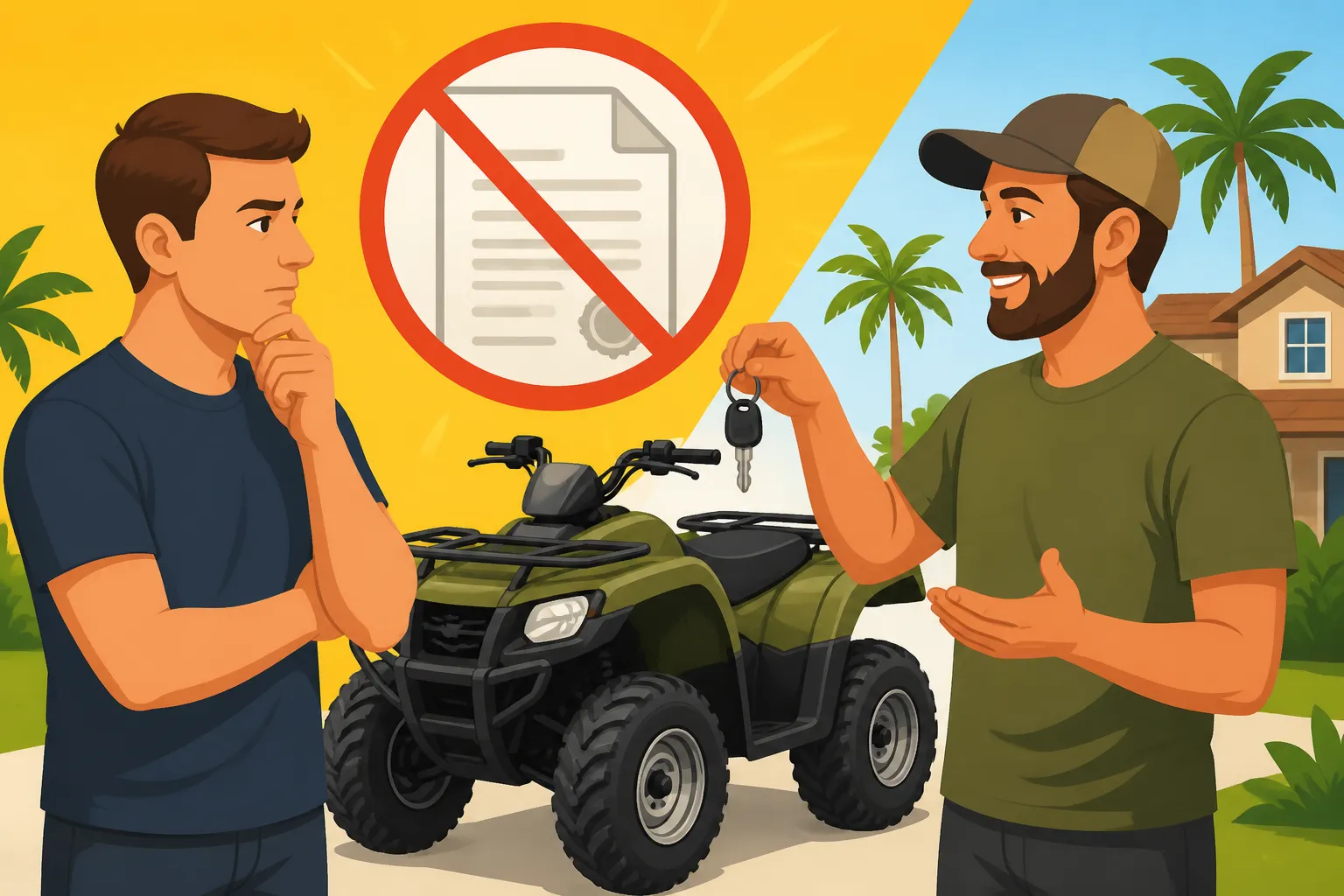
It's incredibly common in Florida to come across what seems like a great deal on an ATV or UTV – maybe your neighbor has an old quad sitting in their shed, or a side-by-side they rarely use. The price is right, the machine looks good, but then they drop the bombshell: "Oh, I never got around to titling it." This situation can feel like a tempting shortcut, but buying a quad without a title in Florida can quickly turn your exciting new toy into a major headache, leaving you with a machine you can't legally ride on public land or sell down the line. This guide will walk you through the very real frustrations and potential pitfalls of buying an untitled ATV or UTV from a neighbor, and what steps you absolutely need to take to protect yourself and hopefully get that machine properly titled in the Sunshine State.
The Tempting Trap of the Untitled Quad: Why It's Risky Business
We’ve all been there – you see a fantastic price on a used quad, maybe a Polaris Sportsman or a Honda Rancher, being sold by someone you know, like a neighbor or a friend. They assure you it's been theirs for years, they just never got around to titling it. Perhaps they only used it on their private farm or a buddy's hunting lease, so they never thought it was necessary. While their intentions might be perfectly innocent, buying an ATV or UTV without a valid Florida title is a serious gamble, one that often doesn't pay off.
Why a Missing Title is a Red Flag, Even From a Friend
Even if you trust your neighbor implicitly, a missing title immediately raises several red flags that you, as the buyer, need to address. First and foremost, a title is the legal proof of ownership. Without it, you have no definitive way to prove the machine belongs to you. This isn't just about showing it off; it's about protecting your investment. If the ATV ever gets stolen, or if there's a dispute over ownership later, you'll be in a very weak position without that crucial piece of paper. Imagine trying to explain to the police that your neighbor, who you've known for years, sold you a machine they couldn't legally prove they owned. It quickly gets complicated.
Beyond theft and ownership disputes, a missing title can also indicate deeper issues. While it might genuinely be an oversight, it could also mean the machine has a lien against it that was never satisfied, or that it was previously reported stolen. It’s rare, but it happens. Your neighbor might have bought it untitled themselves, perpetuating a chain of unregistered ownership. Without the title, you inherit all these potential problems, turning what seemed like a bargain into a financial and legal quagmire. Remember, even with personal connections, it's always "buyer beware" when it comes to formal transactions.
Understanding Florida's ATV Titling Requirements
Florida law is pretty clear on who needs to title an ATV or UTV. The state requires that all off-highway vehicles (OHVs), which include most ATVs and UTVs (or ROVs, as Florida calls them), must be titled if they are operated on public lands. This includes places like state forests, national forests, and designated county trails. Even if you only plan to ride on private property, having a title provides that crucial proof of ownership. Without it, you're essentially owning a piece of equipment that, in the eyes of the state, has no official owner.
The Florida Highway Safety and Motor Vehicles (FLHSMV) is the agency responsible for issuing these titles. They want to see a clear chain of ownership, usually starting with the Manufacturer's Certificate of Origin (MSO) for a new machine, or a properly endorsed title if it's a used machine changing hands. When that chain is broken because someone never bothered to title it, the process for you, the new owner, becomes significantly more difficult and often requires extra steps and fees to rectify. You can learn more about this in [Florida Off-Highway Vehicle Title Rules Explained].
Proving Ownership Without a Title: The Paper Trail You'll Need
So, your neighbor insists the quad is theirs, but they don't have a title. What kind of paperwork can they provide to at least start proving ownership? This is where you need to be extremely diligent. The more documentation you can gather, the better your chances of successfully titling the machine yourself. Think of it as building a case for ownership.
The Essential Role of a Bill of Sale
A comprehensive bill of sale is absolutely paramount when buying an untitled ATV or UTV, especially from a private seller like a neighbor. This isn't just a scribble on a napkin; it needs to be a detailed document that clearly outlines the transaction. It should include:
- Full legal names and addresses of both the buyer and the seller.
- Date of the sale.
- Detailed description of the ATV/UTV: Make, model, year, color, and most importantly, the Vehicle Identification Number (VIN). Double-check that VIN against the machine itself, ideally taking a photo of it on the frame.
- Sale price agreed upon.
- A clear statement that the seller is transferring all ownership interest in the vehicle to the buyer.
- A clause where the seller attests that they are the legal owner and that the vehicle is free of all liens and encumbrances. This is critical for your protection.
- Signatures of both the buyer and the seller, preferably witnessed by a third party or even notarized. A notarized bill of sale carries more weight and can be incredibly helpful if you ever need to legally assert ownership.
You can find templates for robust bills of sale online, even from services like LawDepot, which can help ensure all the necessary legal language is included. A well-drafted bill of sale is your first and strongest line of defense when you don't have a title. Without it, you have almost nothing.
Manufacturer's Certificate of Origin MSO or Other Supporting Documents
If your neighbor bought the ATV new and simply never titled it, they might still have the Manufacturer's Certificate of Origin (MSO). This is the original document issued by the manufacturer when the machine was new, essentially its birth certificate. If they have the MSO, that's fantastic! The process becomes much simpler, as you can often use the MSO, along with your bill of sale, to apply for an initial Florida title. Make sure the MSO is properly assigned by the dealer to your neighbor (the first retail owner) and then reassigned by your neighbor to you.
However, if the MSO is missing, or if the machine has changed hands multiple times without a title, things get trickier. Other supporting documents that could help, though not a guarantee, include:
- Old registration documents from other states (if applicable).
- Repair receipts with the VIN on them, showing your neighbor paid for work on the specific machine.
- Insurance policies listing your neighbor as the insured party and the ATV's VIN.
- Photos of your neighbor with the ATV over a period of years, demonstrating prolonged possession (though this is weaker evidence).
The goal is to paint a complete picture of continuous, undisputed ownership by your neighbor, leading up to the sale to you. The more pieces of this puzzle you can collect, the better off you'll be.
Options for Titling an Untitled Quad in Florida
So, you’ve got a bill of sale, maybe an MSO, maybe some old receipts – now what? Getting a title for an ATV or UTV that has never been titled, or whose title is lost somewhere in its history, is a process that requires patience and due diligence in Florida. It's not always a straightforward path, but there are routes you can explore.
The Standard Title Application with an MSO
If your neighbor provides a properly assigned MSO, you're in luck! This is the most direct route. You'll take the MSO, your detailed bill of sale, and proof of identity to your local Florida tax collector's office. You'll fill out the necessary application forms, pay the required fees (including sales tax if it wasn't collected by a dealer), and the tax collector will process your application for an initial Florida OHV title. This is essentially the same process as buying a brand new ATV from a dealer, just with the MSO coming from your neighbor instead. Ensure the MSO is correctly filled out by all parties. For specifics on the forms, refer to [Which Florida Title Form to Use for an ATV].
Bonded Title: A Path for Missing Paperwork
When an MSO is nowhere to be found, and there's no previous title history, Florida offers a process to obtain a bonded title. This is often the route people take when buying a machine with "no paperwork." A bonded title essentially involves purchasing a surety bond, which is an agreement from a surety company to pay out up to a certain amount if someone else comes forward with a superior claim of ownership on the vehicle within a set period (usually three years).
The process for a bonded title generally involves:
- Contacting the FLHSMV or a county tax collector: They can provide specific instructions and forms for applying for a bonded title.
- Getting a VIN verification: A qualified law enforcement officer or FLHSMV investigator will need to verify the VIN on the ATV matches your paperwork and isn't reported stolen. See [Who Can Verify an ATV VIN in Florida?].
- Obtaining an appraisal: You might need to have the ATV appraised to determine its current market value, as the bond amount is often based on a percentage of this value.
- Purchasing a surety bond: This bond usually costs a fraction of the ATV's value, but the exact cost varies.
- Submitting all documentation: This includes your bill of sale, VIN verification, appraisal, the surety bond, and a completed application for a bonded title, along with the standard titling fees.
This process is more complex, takes longer, and incurs additional costs, but it can be a lifesaver for legitimately owned machines lacking traditional paperwork. Be prepared for a detailed review by the state to ensure there are no red flags.
Affidavit of Ownership or Lost Title Process
In some rare cases, if your neighbor did title the machine at some point but lost the actual paper title, they could apply for a duplicate title. This is the cleanest solution if it applies. Your neighbor would submit an application for a duplicate title, pay the fee (see [Florida Duplicate ATV Title Cost]), and once they receive it, they can properly sign it over to you. This removes all the headaches for you.
If they insist they never titled it, but there’s a chance they actually did and simply don’t remember, it might be worth running a VIN check through the FLHSMV system (if possible, with their permission) to see if a Florida title was ever issued.
Alternatively, some states allow for an "Affidavit of Ownership" or similar declaration if the title is truly lost and no MSO exists. Florida has provisions for this, but they are typically for vehicles that were previously titled and the title was lost or damaged, not for those that were never titled in the first place. You would typically need a bill of sale and clear documentation proving the chain of custody. If you pursue this, a lawyer or a service like LawDepot can assist in drafting a robust affidavit that clearly states the history of ownership and the circumstances surrounding the missing title.
What to Do Before You Buy That Untitled Quad
The best offense is a good defense, and when it comes to buying an untitled ATV from a neighbor, prevention is worth a pound of cure. Taking a few proactive steps before you hand over any money can save you immense frustration and potential financial loss down the road.
Verify the VIN and Check for Stolen Status
This is non-negotiable. Before you even think about buying, locate the Vehicle Identification Number (VIN) on the ATV or UTV. It's usually stamped into the frame in an accessible location. Take a photo of it. Then, ask your neighbor if you can run the VIN through a stolen vehicle database. While there isn't a single, universally perfect public database for all powersports vehicles, you can often check with your local law enforcement agency. Many police departments can run a quick check for you. In Florida, an FLHSMV investigator can also do a VIN verification, which will often flag if the vehicle has been reported stolen.
If your neighbor is hesitant or refuses to let you verify the VIN, walk away. Immediately. No matter how good the deal, or how well you know them, this is a massive red flag. You do not want to inadvertently purchase a stolen vehicle; doing so could lead to the machine being confiscated and you losing both your money and the ATV. It’s also wise to compare the VIN on the machine to any paperwork your neighbor does have, like old receipts or insurance cards. If anything doesn't match, or if the VIN appears tampered with, do not proceed.
Ask for All Available Paperwork and Purchase History
Don't just take your neighbor's word for it when they say "I just never titled it." Politely, but firmly, ask for any and all paperwork they have related to the quad. This includes:
- The original Manufacturer's Certificate of Origin (MSO), if they bought it new.
- Any past bills of sale, even if they bought it untitled themselves.
- Service records, repair invoices, or parts receipts that list the VIN.
- Old insurance cards or policies.
- Photos or documentation of accessories purchased for the quad.
- Any communication related to the quad's purchase.
The goal here is to establish a clear paper trail, even if it's imperfect. The more documentation your neighbor can provide that corroborates their ownership claim, the stronger your position will be when you eventually try to title the machine yourself. If they have absolutely nothing beyond "it's been in my garage for ten years," then you know you're facing a much more challenging path.
Consider the Long-Term Consequences of an Untitled Machine
It's tempting to think, "I'll just ride it on my property, who cares about a title?" But this short-sighted approach can lead to significant problems down the line. First, as mentioned, you cannot legally operate an untitled ATV or UTV on public lands in Florida, including many popular trails in state and national forests. If you get caught, you could face fines and even have your machine impounded.
Second, if you ever want to sell the ATV, you'll be in the same predicament as your neighbor – trying to sell a machine without a title is extremely difficult and severely limits your potential buyers. Most informed buyers will (rightly) shy away from an untitled quad, and if you do find a buyer, you'll likely have to deeply discount the price. You're effectively inheriting and perpetuating a problem.
Finally, think about insurance. While Florida doesn't require ATV insurance for titling, many riders choose to insure their machines for theft or damage. An insurance company may require a VIN and proof of ownership (like a title) to issue a comprehensive policy. Without it, you might be limited in your coverage options. Weigh these consequences carefully against the initial "bargain" price your neighbor is offering. Sometimes, paying a bit more for a titled machine is the smarter, less stressful investment.
Navigating the Titling Process After Purchase
So you've decided to move forward with the purchase, armed with a solid bill of sale and whatever other documents your neighbor could provide. Now comes the real work: getting that Florida title in your name. This process requires diligence and a willingness to work with the state agencies.
Gathering Your Documents for the Tax Collector
Before you even step foot in a Florida tax collector's office, make sure you have every single piece of documentation organized and ready. This includes:
- The comprehensive bill of sale: Original and copies.
- Any MSO: Original, properly assigned to you.
- Proof of identity: Your Florida driver's license or state ID.
- Proof of Florida residency: If your ID isn't enough, utility bills or a lease agreement can work. See [Proving Florida Residency at the Counter].
- VIN verification form: If required (often done by law enforcement for untitled machines).
- Funds for fees and sales tax: Be prepared for the [Florida ATV Title Fee Breakdown: $29 Plus Service Charges] and the [Florida Sales Tax When You Title an ATV]. You can also ask about the [The $4.25 Service Charge on an OHV Title].
- Any supporting affidavits or ownership declarations: If you drafted one.
Having everything in order will significantly speed up your visit. The less the clerk has to question or send you back for, the better.
What to Expect at the Tax Collector's Office
When you go to the tax collector's office (or a designated service center, see [Florida County Tax Collector vs Service Center for ATV Titles]), be prepared for a thorough review of your paperwork. They are looking to establish a clear and legal chain of ownership.
- Present your documents: Hand over your bill of sale, MSO (if you have it), and all supporting paperwork.
- Complete the title application: You'll fill out the Florida title application form (HSMV 82040, or a similar form for OHVs). Take your time and fill it out accurately.
- VIN Verification Review: If a VIN verification was required, the clerk will review it to ensure it was properly completed.
- Fee Calculation: They will calculate the initial titling fee, any service charges, and the sales tax based on the purchase price listed on your bill of sale (or an appraised value if the price seems unusually low).
- Processing Time: Understand that processing times can vary. For an unusual case like an untitled machine, it might take longer than a standard transfer. Ask about the estimated [Florida ATV Title Application Processing Time].
If the clerk identifies any missing or insufficient documentation, they will explain what else is needed. This might mean going back to your neighbor for more information or exploring the bonded title route. Don't get discouraged; persistence is key.
When to Consider Legal Counsel or a Bonded Title
If you hit a brick wall at the tax collector's office – for example, they refuse to issue a title because the MSO is missing and the ownership chain is too murky – it might be time to consider professional help.
- Legal Counsel: For particularly complex situations, especially if there's any dispute over ownership or you suspect a past lien, consulting with a Florida attorney specializing in vehicle titles can be invaluable. They can advise you on your legal options, help draft necessary affidavits, or guide you through the bonded title process.
- Bonded Title Process: If the standard application doesn't work, a bonded title is often the next step. The tax collector's office can usually provide you with the specific forms and steps required for a bonded title application in Florida. This is where your comprehensive bill of sale and any other documentation proving legitimate purchase becomes critical. Remember, you're essentially indemnifying the state against any future claims of ownership.
While it's not ideal to spend more money and time after buying what seemed like a good deal, ensuring your ATV or UTV is properly titled is crucial for your peace of mind, legal standing, and future ability to use or sell the machine. Don't let the frustration lead you to abandon the process; a titled quad is a valuable asset, an untitled one is often a liability.
Disclaimer
This article is for general informational purposes only and does not constitute professional advice. Laws, prices and regulations vary by location and change over time. Consult a qualified professional for guidance on your specific situation.