Florida ATV Camping With Trail Access
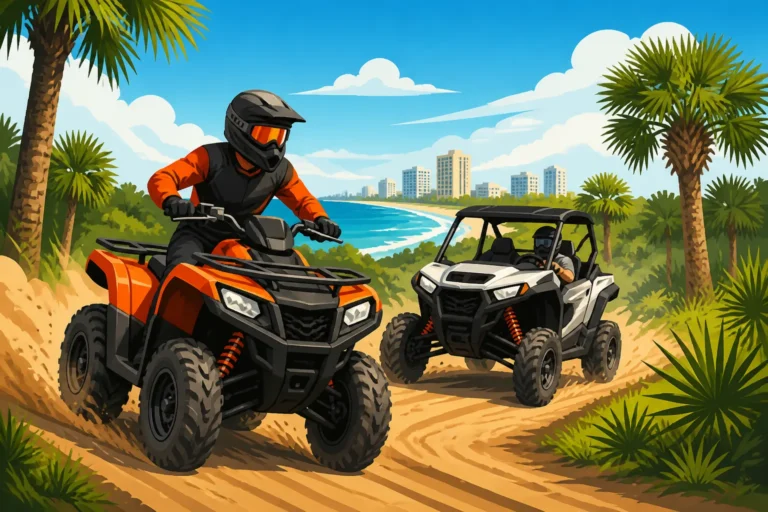
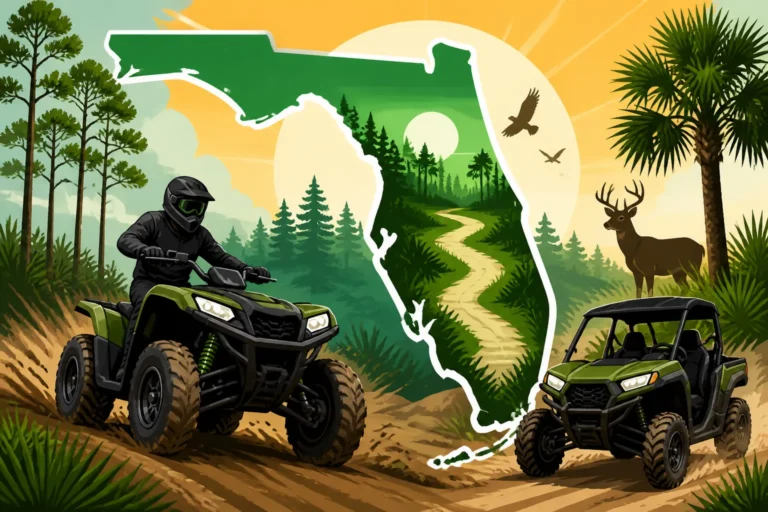
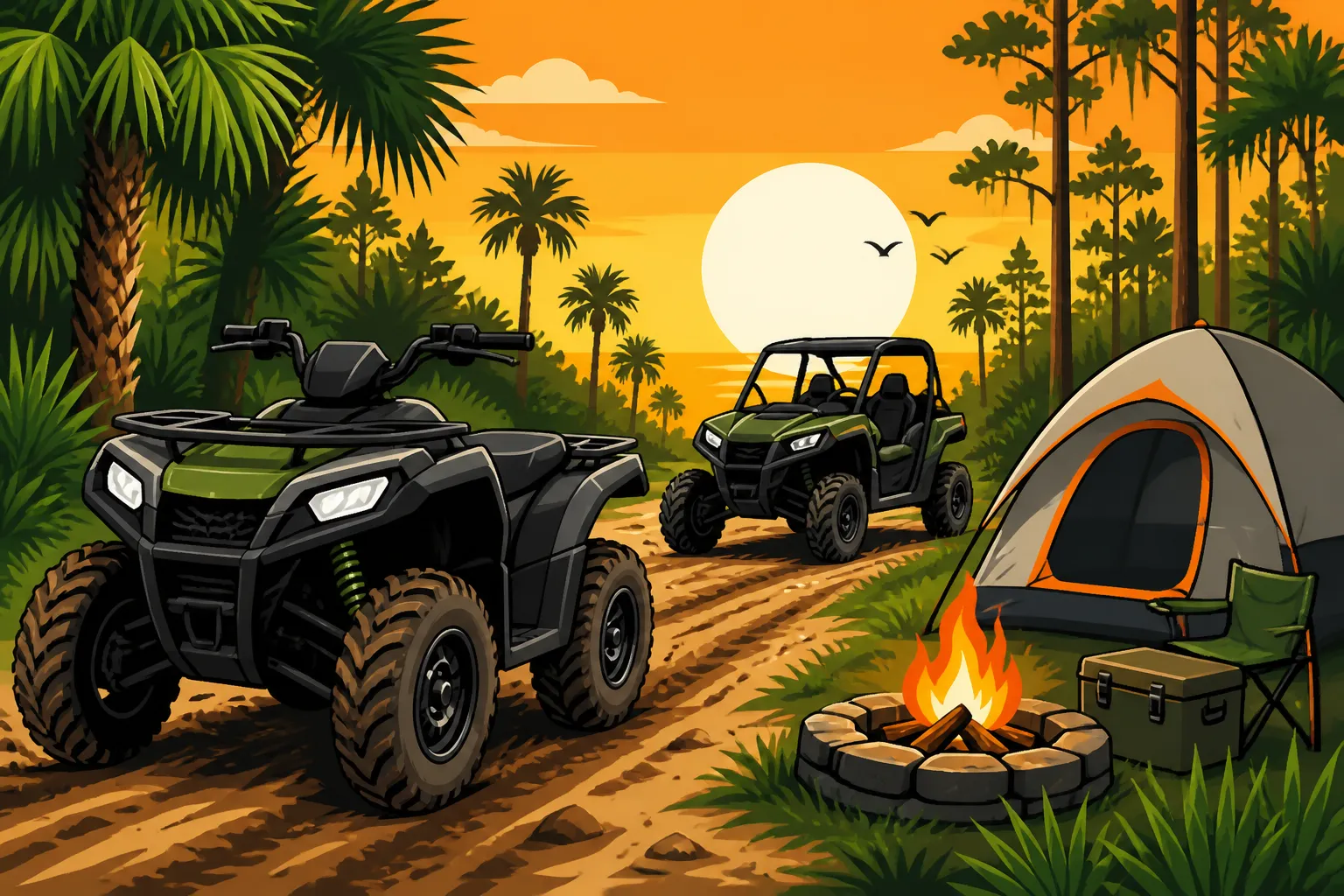
Camping beside an ATV trail sounds like the easiest kind of Florida getaway: park the truck, set up camp, and ride without loading the machines again. The catch is that a campground’s location does not automatically give you permission to ride there. This guide explains how to find Florida campsites with nearby legal riding, choose the right area for your machine, and plan the details that can make or break the trip.
What trail-access camping means in Florida
A campground near a trail is not always a ride-in campground
“Trail access” can mean several different things. A campsite may sit inside a riding area, have a designated OHV trail nearby, or simply be a short drive from a trailhead. Those arrangements can look similar on a map, but they do not offer the same experience—or the same permission to ride.
For example, you might camp at a developed campground and still need to trailer your ATV to the legal staging area. A forest road between the campground and trail could be closed to OHVs, even if it looks convenient. A path on a campground map might be for hiking, horseback riding, or maintenance vehicles rather than motorized use.
Before booking, find out exactly how riders travel from the campsite to the trail. Ask whether riding directly from the site is allowed, whether you must use a designated connector, or whether the machine has to be transported by trailer. A phone call to the land manager or campground can save you from arriving with a loaded trailer and discovering that the “nearby trail” is not accessible to your vehicle.
It also helps to distinguish legal access from physical access. A sandy track may appear to lead toward the riding area, but that does not mean it is an authorized OHV route. Follow posted signs and official maps, and avoid cutting across fields, fire lanes, or closed roads. This is especially important around wetlands, private property, and conservation land, where an innocent-looking shortcut can create a serious access problem.
Public land and private parks work differently
Florida public forests and national forests generally require riders to stay on designated motorized routes and meet the area’s access requirements. Those can include an OHV pass, a vehicle-specific pass, proof of ownership, age-related safety requirements, or seasonal restrictions. Camping permission and riding permission are separate questions, even when both activities happen on public land.
Private riding parks often have their own admission, camping, machine, passenger, noise, and safety rules. Some offer camping close to riding areas; others require a tow between the campsite and the riding zone. A private park may also restrict certain machine sizes or types, so a side-by-side that fits on the trailer may not be allowed on the park’s trails.
Do not assume that a campground’s ordinary vehicle rules cover your quad. Ask whether the park permits ATVs to be driven between campsites and staging areas, whether a flag or spark arrestor is required, and where machines may be washed or fueled. Confirm whether the ride area is open on the dates you plan to visit, rather than relying on a general description that may not reflect closures.
If you are still sorting out what you need before heading onto public land, [Florida OHV Permits: What You Need Before You Ride] is a useful companion topic. For the purposes of your trip, verify the requirements with the specific land manager; a pass for one riding area may not apply to another.
Florida areas to consider for camping and riding
Ocala National Forest and Big Scrub
Ocala National Forest is a major destination for Florida riders, but the forest is not one continuous, open riding area. Motorized riding is limited to designated routes and OHV areas, and the rules can vary by route, season, and vehicle type. A forest road shown on a general map is not necessarily an OHV trail, so use the motorized-use information for the exact area you intend to ride.
Big Scrub is a well-known staging and camping area associated with riding in the forest. It can be a practical base for riders who want to camp near designated routes, but “near” does not replace checking the route map and campground rules. Confirm which trails are open, whether your machine is permitted on them, and whether the campground allows the type of camping you have planned.
The camping experience can range from a simple tent setup to a larger trailer or RV arrangement, depending on the site and its facilities. Ask about site size, hookups, toilets, potable water, generator rules, and whether the campground accommodates your vehicle and trailer combination. In Florida’s heat, a site with shade and a reliable way to keep food and drinking water safe can matter just as much as a short ride to the trail.
Before leaving home, identify the exact campground entrance and OHV staging point. Forest roads can be confusing, and mobile service may be unreliable in some areas. Download or save the relevant maps in advance, and keep a backup plan for navigation. Riders who use onX Offroad can use it as one planning aid for reviewing routes and organizing a trip, but should still check official forest maps and current closures for the legal route information.
Croom and nearby camping
Croom Motorcycle Area in the Withlacoochee State Forest is a popular riding destination, but it should not be treated as a catch-all option for every ATV and UTV. The area has specific machine and trail rules, and riders should confirm that their vehicle fits the permitted class and width requirements before making a reservation or driving to the gate.
Buttgenbach Mine Campground is commonly associated with camping near the Croom riding area. Before you book, ask how camping access works for your vehicle, whether the campground is open for your dates, and what facilities are available. Check whether you can ride directly from your site or must use a designated route to reach staging. Never assume the route between camp and trail is open just because the two places appear close together on a map.
Machine fit matters here. A full-size side-by-side, a wider utility vehicle, and a small quad may face different restrictions. Measure your machine as the area instructs, including any accessories that affect its width. If you ride a UTV, confirm eligibility directly with the land manager rather than relying on an old forum post or a friend’s experience with a different model. [Croom's 55-Inch Width Check at the Gate] and [Florida ATV Trails That Allow Side-by-Sides] cover useful questions to investigate before you go.
Croom’s riding character and access rules may not suit every group. A family with young riders may want a different setting from experienced riders looking for a more demanding day. Make sure your campsite plans match your riding group: a quiet overnight stay is not the same thing as permission for every rider in the group to use every trail.
Private parks and other forest options
Private riding parks can make camping-and-riding trips easier to organize because the operator can explain the rules for the campground, trails, and admission in one place. Some offer tent or RV camping, while others have limited sites or require advance arrangements. Trail access, machine eligibility, and amenities vary considerably, so compare the details rather than choosing only by the park’s name or distance from home.
Hog Waller near Palatka is one private riding destination that riders may consider when building a camping weekend around off-road recreation. Confirm the current camping setup, trail access, vehicle rules, and operating schedule directly with the park. Private parks can change which areas are open or how events affect access, and an event weekend may feel very different from a quieter visit.
Other state forest riding areas may be a better match if you want a more natural setting or a different region of Florida. Clear Creek and Tate’s Hell are examples riders may research, but camping options and access arrangements are not interchangeable among forests. Check whether camping is available where you want to ride, whether a separate campground is required, and whether the riding route is open to your ATV or UTV.
Use a comparison table to narrow your shortlist, then confirm the details with the relevant operator or land manager.
| Trip feature | Public forest or national forest | Private riding park |
|---|---|---|
| Trail access | Usually limited to designated routes and authorized areas | Set by the park; route access may vary by machine |
| Camping | May be in a designated campground, sometimes separate from staging | May be on-site, nearby, or unavailable on some dates |
| Pass or admission | Public-land pass or other requirements may apply | Park admission and camping rules apply |
| Machine eligibility | Check route, width, and vehicle-class rules | Check the park’s machine restrictions |
| Closures | Can result from weather, fire danger, wildlife, or management work | Can result from events, maintenance, or park policy |
| Best planning step | Review official maps and land-manager notices | Confirm directly with the park before booking |
For trips involving public land, [Florida National Forest Riding vs State Forest Riding] can help you understand why the two settings may call for different planning. Treat a private park’s own instructions as the authority for that park, and public land agencies as the authority for their routes and campsites.
How to choose the right campground
Start with your machine, not the campsite photos
A campsite that looks spacious in a listing may still be awkward for your setup. Think about the total length of your truck and trailer, how much room you need to unload, and whether you will be backing into a narrow site. A small tent site that works for a pickup and one ATV may not work for a long RV, a side-by-side trailer, and several extra vehicles.
Then check whether the riding area accepts your machine. Confirm the vehicle type, width, passenger configuration, and any other requirements that could affect access. If your group brings different machines, ask about each one individually. A campground booking does not guarantee that all machines in the group will be allowed on the same trails.
Also consider how the machine gets from camp to the legal riding area. If trailering is required, make sure there is room to park the trailer at the staging area or campground. If an authorized connector exists, ask exactly where it begins and ends. A vague answer such as “the trails are right there” is not enough when you need to know whether you can ride from the site.
When comparing routes digitally, onX Offroad may help you visualize a planned trip and keep notes about possible staging points. Treat any app-based route information as a planning tool, not permission to ride. Cross-check it against the official motorized-use map and signs on the ground, because a displayed track may not reflect a current closure or land boundary.
Match the campground to how your group camps
For tent campers, shade, drainage, and the distance to water and restrooms often matter more than a long list of amenities. Florida rain can arrive quickly, and a low spot that seems comfortable in dry weather may become muddy. Ask whether the site is level, whether the ground is suitable for tent stakes, and whether there is a designated place to store muddy gear away from sleeping areas.
RV and trailer campers need to think about access roads, turning space, site length, hookups, and generator rules. A campground may welcome RVs but have individual sites that cannot accommodate a tow vehicle and trailer together. Ask whether the trailer can remain at the site or needs to be parked separately, and whether the road to the campground is suitable for your rig.
Families should look beyond trail distance. Find out whether the campground has quiet hours, safe places for children to move around, and clear rules about riding near campsites. Plan for a separated “camp zone” where helmets, wet clothes, and tools can be stored without becoming a tripping hazard. If a child is riding, make sure the trail difficulty and supervision requirements are appropriate for that child.
For groups with mixed comfort levels, select a base that gives less-experienced riders a manageable plan and experienced riders a legal option for longer rides. Discuss the day’s route before engines start, and agree on a meeting point if the group separates. Cell coverage should never be your only plan for finding each other.
Check the small rules that affect the whole stay
Campground policies can shape the trip more than the trail map does. Ask whether campfires are permitted, whether fire restrictions may be in effect, whether pets are allowed, and whether quiet hours apply to generators. Find out if fuel can be stored at camp and whether the campground has a designated wash area. Do not bring fuel containers or operate equipment in ways prohibited by the site.
Ask how check-in and after-hours arrival work. If you reach the campground after the office closes, you need to know whether there is a self-check-in procedure and where to park without blocking access. For public areas, confirm whether the gate or trailhead uses a separate entry process from the campground. A late arrival can become stressful if the site is hard to locate or the staging area is closed.
Weather deserves its own check. Florida’s rainy season can leave trails soft or flooded, while dry conditions may increase dust and fire concerns. Ask how closures are announced and whether reservations can be adjusted if a riding area closes. Pack for both heat and rain: breathable layers, rain gear, drinking water, a first-aid kit, and a way to protect phones and maps from moisture.
For more help choosing a base for a riding trip, [Florida OHV Campgrounds With Trail Access] is a closely related topic. For individual locations, use the campground or land manager’s own current rules rather than assuming the same policies apply across the state.
Plan a legal ride from camp to trail
Confirm the route and access requirements before you leave
Begin with the official map for the property where you plan to ride. Identify the campground, the trailhead, the routes open to your machine, and any roads you must avoid. If you are using a public forest, check whether your route is designated for motorized travel and whether the area requires an OHV pass. A trail marked for one vehicle class may not be open to another.
Check whether your group needs to carry proof of a pass, a safety course certificate, or proof of ownership. Requirements can differ between public land, private parks, and specific age groups. Make sure every rider understands what must be carried and where the documents are stored. Do not leave the only copy of a required document in a locked vehicle far from the trail.
Pay close attention to boundary lines. Florida riding areas can sit near private property, conservation land, wildlife areas, and water-management district land. A visible track that continues beyond a permitted route is not an invitation to continue. Respect gates, signs, and closures even when no staff member is present.
If you are planning a route with onX Offroad, use it to organize waypoints, campsite locations, and backup meeting points, then compare those details against official maps. Keep an offline copy if available and carry a paper map or another navigation option. Apps can help you stay oriented, but they do not replace posted restrictions or the land manager’s instructions.
Know what camping permission does not include
A campsite reservation normally gives permission to occupy a site under that campground’s rules. It does not automatically authorize riding on every nearby road, entering a closed trail, driving across another campsite, or using a trailhead after hours. Treat each activity as its own permission question.
This distinction is easy to miss when a campground sits near a trail system. A paved or unpaved access road may be open to ordinary vehicles but closed to ATVs. A service road may be restricted to staff. Even a route that other campers use does not establish that it is legal for your machine.
If you are unsure, ask a direct question: “Can we ride this specific machine from this campsite to this named trailhead, and which marked route are we allowed to use?” A clear answer gives you something practical to follow. If staff cannot confirm, plan to trailer the machine instead of improvising a route.
Avoid using road riding as a workaround unless local rules specifically allow it. Florida has separate rules for road use, and an ATV’s lights, registration, or appearance do not by themselves make a road legal to ride. Florida ATV Road Rules: Where You Can Legally Ride explains why access on roads needs to be treated separately from trail access.
Keep your group safe and trail-ready
Before unloading, inspect the machines for tire condition, brakes, controls, leaks, and loose accessories. Pack tools suited to the machines, a tire repair kit, basic recovery gear, and a first-aid kit. If you are riding in sand or mud, understand how your machine behaves before committing to a difficult section. A campsite close to the trail is convenient, but it cannot replace preparation.
Set a turnaround time and a check-in plan. Pick a route that suits the least experienced rider, and agree that no one will ride ahead without telling the group. If a machine breaks down, avoid splitting up in a way that leaves a rider alone without navigation or communication. Carry enough water for the ride, not just for the drive back to camp.
Helmets and eye protection are essential parts of a responsible riding plan, and age-related requirements may apply on public land or in other settings. Check the rules for the particular area and make sure equipment fits properly. Pack spare goggles or lenses if dust, mud, or rain could interfere with visibility.
After the ride, keep the campsite orderly. Remove mud from equipment only where washing is permitted, store food securely, and leave the site as you found it. Responsible behavior helps preserve access for the next group and reduces the chance that a riding area will face complaints or stricter restrictions.
Build a practical camping checklist
Reservations, passes, and paperwork
Start with the reservation confirmation and the land manager’s latest instructions. Save the campground address, entrance directions, check-in details, and a phone number for the operator or agency. If the site is remote, download maps before the drive and save the information in a place you can access without a signal.
Prepare any required passes and documents before arriving. Check whether a pass is needed for each vehicle, each rider, or each riding area. Do not assume that one campground fee covers trail access, or that a trail pass includes camping. [Florida Camping Pass vs Florida OHV Pass] explores the distinction between these types of access.
Carry proof of ownership and any required riding credentials in a secure, dry location. If you are riding with a minor, confirm the supervision and course requirements for that rider’s age and the property you plan to visit. Keep emergency contacts available, and tell someone at home where you are staying and when you expect to return.
If a reservation involves several vehicles or campsites, share the rules with the group before departure. One person’s misunderstanding can affect everyone: a late arrival, an oversized machine, or an unapproved route can disrupt the weekend. A simple group message with the campground address, meeting time, machine restrictions, and route plan keeps everyone on the same page.
Camp comfort and machine care
Florida camping calls for planning around heat, insects, rain, and sand. Bring lightweight clothing that covers skin, sun protection, insect repellent, and extra drinking water. A tarp or canopy can create shade, but secure it properly in case of wind. Keep wet clothing separate from dry bedding, and store food in a way that follows campground wildlife rules.
For the machine, bring the owner’s manual or a saved copy, basic hand tools, spare fuses, a tire repair kit, and any machine-specific items you know you need. Check fuel range before choosing a route. Do not count on finding fuel at the campground or trailhead; confirm nearby options and arrive with a sensible plan.
Mud and sand can travel from the trail into the tent, RV, and truck quickly. Pack a boot tray, towels, a brush, and sealable bags for dirty gear. Use only approved wash areas, and do not dump soapy water or fuel near a waterway or campsite. Leave room for muddy helmets and gloves to dry without placing them next to food or bedding.
Finally, consider what happens if riding becomes impossible. A storm, closure, or mechanical issue can turn a ride-focused weekend into a campground weekend. Bring a backup activity, flexible meal plans, and enough supplies to stay comfortable if you need to wait out weather or change the route.
Avoid the most common trip-planning mistakes
Booking before confirming trail access
The most frustrating mistake is booking a campground because it appears close to a riding area, then learning that the trail is closed, the machine is too wide, or riding from the campground is not allowed. Prevent this by confirming the campsite and the trail system separately. Ask about the exact machine, the exact dates, and the route between camp and the staging area.
Do not rely on search results, old social posts, or an outdated map screenshot for current operating conditions. Trail status can change because of weather, maintenance, fire danger, hunting activity, or land-management decisions. Check the official notice shortly before departure and again when you arrive.
Be cautious about relying on the word “ATV” as a catch-all. Some sources use it loosely to describe quads and side-by-sides, even when the actual route has vehicle-class limits. A UTV may be treated differently from a smaller ATV. Ask the land manager to confirm that your specific type of machine is permitted.
Another common mistake is assuming that a campsite is guaranteed simply because a riding area is open. Camping may have separate reservations, seasonal availability, or site limits. Secure both parts of the trip before you tow several hours across the state.
Underestimating distance, weather, and vehicle logistics
A trail that looks close on a small map may be far from camp by the legal route. Roads can loop around wetlands, gates, or restricted zones. Calculate the actual route you are allowed to travel, not a straight line between the campsite and the trail. If you must trailer, factor in loading time, parking, and the possibility that the staging area fills.
Florida weather can change the character of a trip. Heavy rain may make some routes difficult or lead to temporary closures; prolonged dry weather can mean dust and fire restrictions. Keep a flexible schedule and avoid treating a reservation as a promise that every trail will be open.
Plan for breakdowns and delays. Bring enough food, water, and fuel for the stay, and make sure the tow vehicle is ready for the drive home. If you are traveling with a group, establish a meeting plan in case vehicles arrive at different times or someone gets separated on the trail.
For a broader look at places and route planning, Florida ATV Trails: Every Public Riding Area can help you compare potential destinations. Use it as a starting point, then confirm the specific campground, route, and restrictions with the organization responsible for the land.
Leaving the site or trail in worse shape
A good trip depends on respecting the place you came to enjoy. Stay on designated routes, pack out trash, and avoid cutting through vegetation or creating new tracks around mud. Riding around a puddle can widen a trail and damage nearby ground, especially where water drains slowly.
Keep noise and campsite activity within the posted rules. A late-night engine test or loud generator can affect other campers and lead to complaints. Do not ride around campsites for convenience unless the campground expressly allows it. Use designated routes and move slowly where pedestrians, children, pets, or parked vehicles are present.
If a route is closed, do not remove barriers or follow another rider through. Closures may protect wildlife, repair damaged ground, or prevent unsafe conditions. Report a fallen sign or confusing route marker to the responsible agency rather than guessing where the trail continues.
Before you leave, check the campsite for trash, lost gear, food scraps, and damage. A clean exit is simple, but it helps keep campgrounds welcoming and preserves access for future riders. The best trail-access camping trip is not only one where you got to ride; it is one where the next visitor can enjoy the same place.
A simple way to choose your destination
Compare the trip you want with the rules the area allows
Before committing to a location, write down what your group needs: the machine types, the kind of camping, the length of stay, the desired trail difficulty, and whether you want to ride directly from camp. Then compare those needs with the actual rules and facilities of each destination.
A tent camper with a small quad may find a forest campground and designated trail system suits the trip. A group traveling with wide side-by-sides may need a private park or another area whose vehicle rules clearly allow those machines. Families with young riders may value simple routes and nearby facilities over a large or technically challenging trail network.
If you want a quiet base and do not mind trailering, a campground near an authorized staging area may work well. If you want to ride from camp, confirm that the connector route is legal and open. That single detail often determines whether a destination matches your expectations.
Do not choose only by the number of trails shown on a map. Consider the drive, campsite setup, access rules, machine fit, weather exposure, and what your group will do if riding is interrupted. The right campground is the one that supports the whole trip, not just the ride.
Confirm everything before the final drive
A few days before leaving, review the campground reservation, trail status, pass requirements, weather, and machine restrictions. Recheck the entrance address and identify where to stage or unload. Make sure every driver and rider knows the plan, including where to meet and what documents to carry.
If you have an unresolved question, contact the campground or land manager and ask it plainly. For example: “We have a two-seat UTV and a youth ATV. Are both allowed on these routes, and can we ride from our campsite to the staging area?” That is more likely to get a useful answer than asking generally whether the area is “ATV friendly.”
Keep official maps available even if you use a navigation app such as onX Offroad. Use apps to organize your notes and waypoints, but let posted signs and land-manager rules determine where you ride. If instructions conflict, stop and seek clarification rather than choosing the more convenient interpretation.
A little extra planning can spare you the classic trail-camping headache: a beautiful campsite, a trailer full of machines, and no legal way to reach the trail. Confirm the details first, and you can spend the weekend doing what you came for—camping comfortably, riding responsibly, and enjoying Florida’s outdoor spaces.
Disclaimer
This article is for general informational purposes only and does not constitute professional advice. Laws, prices and regulations vary by location and change over time. Consult a qualified professional for guidance on your specific situation.