Florida ATV Passenger Age Limits
Navigating the world of ATVs and UTVs in Florida can sometimes feel like trying to ride through deep sugar sand with a flat tire – it's tough, confusing, and you’re never quite sure if you’re doing it right. One of the biggest head-scratchers for riders, especially those with families, revolves around who can actually ride as a passenger. It’s not just about fitting someone on the back; Florida has specific laws, and ignoring them can lead to fines, safety risks, and a whole lot of frustration. This guide is here to clear the mud, giving you a comprehensive breakdown of Florida's ATV and UTV passenger age limits, helping you understand the rules so you can ride legally and, most importantly, safely.
Understanding Florida's ATV Passenger Laws And Why They Matter
When we talk about ATVs, or All-Terrain Vehicles, in Florida, it's crucial to remember that the law looks at them very specifically. Unlike a regular car where you just buckle up, ATVs have a unique design and purpose that dictates how many people can safely and legally ride. This isn't just bureaucratic red tape; it's about rider safety, especially when it comes to younger passengers who might not have the physical strength or coordination to manage an off-road ride.
The laws are designed to minimize risk on public lands, protecting both the operator and any passengers from potential harm. Failing to understand and adhere to these regulations can not only put your loved ones in danger but also open you up to legal consequences, including fines and possibly even the impoundment of your machine. It’s a situation where a little knowledge goes a long way in ensuring your fun stays safe and legal.
The Core Distinction: Single-Rider vs. Designated Passenger ATVs
This is perhaps the most fundamental aspect of Florida's ATV passenger laws. The state differentiates between ATVs manufactured for a single operator and those specifically designed to carry two or more people. How do you tell the difference? It primarily comes down to how the manufacturer built the machine – specifically, the seating and footpeg arrangements. A single-rider ATV, by its very design, has one seat and footpegs intended for one person. It’s not meant to accommodate a second rider, no matter how small or how short the trip might be.
Trying to squeeze an extra person onto a single-rider ATV, even if they're a child, drastically changes the machine's balance and handling characteristics. This can be incredibly dangerous, leading to instability, loss of control, and increased risk of rollover, especially on uneven terrain or during turns. The ATV’s suspension, brakes, and engine are all calibrated for a single rider, and adding weight significantly impacts its performance and safety margins. So, even if it looks like there's "just enough" room, if your ATV isn't explicitly designed for a passenger, don't carry one.
For ATVs that are designed for more than one person, sometimes called "two-up" ATVs, they will have a longer seat, separate footpegs or footrests for the passenger, and often a grab handle. These machines are engineered with the additional weight and dynamics of a passenger in mind. Always check your ATV's manufacturer specifications and warnings to confirm its intended passenger capacity. Misinterpreting this simple distinction is where many riders get into trouble, inadvertently putting themselves and their passengers at risk while also breaking the law. For more details on these classifications, you might find [Florida Two-Rider ATV Titling Rules] helpful.
General Age Limitations for ATV Passengers in Florida
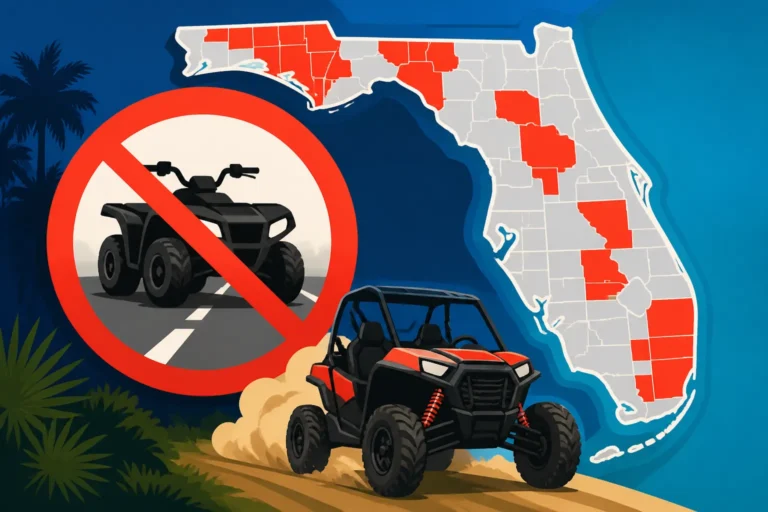
Florida law, specifically Florida Statute 316.2074, lays out clear guidelines for who can operate an ATV and, by extension, who can ride as a passenger. For ATVs designed for a single rider, the rule is straightforward: no passengers are allowed. Period. This applies regardless of the passenger's age, whether they are an adult or a child. The risk of injury is simply too high, and the law reflects that uncompromising stance.
For ATVs that are designed to carry a passenger (the "two-up" models we just discussed), there's still an age consideration. While the statutes primarily focus on the operator's age and safety course requirements, the underlying principle is ensuring the passenger can safely participate in the ride. Generally, a passenger should be old enough to hold on securely, keep their feet on the designated footrests, and follow instructions. While the law doesn't explicitly state a minimum age for a passenger on a legally two-up ATV, it's implicitly understood that very young children, who cannot meet these physical requirements, should not be carried.
It’s about common sense and responsible riding. Think about a child’s strength, their ability to react, and their overall size relative to the machine. Even on a two-up ATV, an infant or a toddler simply doesn't have the physical capabilities to be a safe passenger. The bumps, turns, and sudden stops inherent in off-road riding can easily dislodge a small child or cause them to be injured. Always prioritize the safety of your passengers over the desire for them to experience a ride.
UTV Passenger Rules in Florida: A Different Story
While often grouped together in casual conversation, UTVs (Utility Task Vehicles), also known as side-by-sides, are treated quite differently under Florida law than traditional ATVs. This distinction is critical because UTVs are inherently designed with multiple occupants in mind, resembling small off-road cars more than their quad-bike cousins. This design difference means the rules surrounding passengers are considerably more flexible, reflecting their greater stability and seating configurations.
The confusion often arises because both are "off-highway vehicles," but their legal definitions and operational requirements diverge significantly. Understanding this allows UTV owners to more confidently and legally transport passengers, including children, provided they adhere to the specific guidelines that apply to these machines. It's a welcome relief for families who want to enjoy the trails together, but it still comes with its own set of responsibilities.
UTV Seating Capacity and Passenger Requirements
UTVs are typically built with multiple seats, often bench-style or bucket seats, complete with seatbelts or harnesses, much like a conventional vehicle. This is the key differentiator from most ATVs. Florida law recognizes this multi-passenger design, and therefore, UTVs are permitted to carry passengers up to their manufacturer-designated seating capacity. If your UTV has two seats, you can carry one passenger. If it has four seats, you can carry three passengers, and so on.
The crucial element here is the manufacturer's intent and safety features. Passengers in a UTV must use the factory-installed seatbelts or harnesses and sit within the designated seating areas. You shouldn't try to add extra seats or carry more people than the UTV was designed for, even if it seems possible to squeeze them in. Doing so compromises the vehicle's safety features, such as roll-over protection structures (ROPS) and seatbelt efficacy, and can lead to severe injury in the event of an accident.
It’s also important that all passengers are able to safely occupy their designated seat, with their feet flat on the floor or footrests and their hands securely inside the vehicle. For any modifications or accessories that enhance passenger safety or comfort, many riders look to reputable brands. For instance, SuperATV offers a range of aftermarket accessories like harnesses, door enclosures, and cages that can significantly improve the safety profile of a UTV for all occupants, provided they are installed correctly and meet all relevant safety standards. Always verify that any accessory you add does not compromise the vehicle's structural integrity or legal compliance.
Age Guidelines for UTV Passengers and Youth Riders
Unlike single-rider ATVs, which strictly prohibit passengers, UTVs generally allow passengers of all ages, provided they can be safely secured within the vehicle's designed seating and restraint systems. This means that if a child can sit properly in a UTV seat, wear the seatbelt or harness, and keep their hands and feet inside the vehicle, they can typically ride as a passenger. There isn't a specific minimum age mandated by Florida law for UTV passengers, making them a popular choice for families.
However, "legal" doesn't always equate to "safe." As the operator, you bear the responsibility for your passengers' well-being. This means making sound judgments based on the child's maturity, physical size, and the riding conditions. For very young children, ensure that the seatbelt or harness fits snugly and provides adequate restraint. Some parents might use booster seats or other child safety seats that are compatible with the UTV's restraint system, always ensuring they are securely fastened and do not interfere with the UTV’s safety features.
Remember that while the passenger might not have an age limit, the operator of a UTV (just like an ATV) who is under 16 years old does need to complete a Florida-approved ATV safety course. This indirectly influences family riding, as parents must ensure the young operator is trained and competent, even if the passengers are younger. Always exercise caution, drive defensively, and choose terrain appropriate for all occupants. Safety should always be your paramount concern, regardless of what the letter of the law explicitly states for passengers.
Exemptions, Enforcement, and Best Practices for Safe Riding
Understanding the letter of the law is one thing, but knowing how it applies in real-world scenarios – from your backyard to a public trail – is another. Florida's ATV and UTV passenger rules aren't just suggestions; they carry legal weight, and knowing where they apply and what happens if you don't follow them is vital for any rider. Beyond the law, however, lies the even more important aspect of responsible riding, which often means going above and beyond the minimum requirements to ensure everyone's safety.
Riding off-road is an exhilarating experience, but it also comes with inherent risks. Being prepared, understanding your machine, and making informed decisions about who rides with you are all part of being a good steward of the trails and a responsible vehicle owner. It's about combining legal compliance with practical wisdom to create a safe and enjoyable environment for all.
Private Property vs. Public Land: Where Rules Change
A common misconception among off-road enthusiasts is that "anything goes" on private land. While it's true that the strict enforcement arm of Florida law may be less visible on your own acreage or a friend's private ranch, the core safety principles and, in many cases, the legal statutes regarding ATVs and UTVs still apply. On public lands – think state forests, national forests like Ocala, or designated OHV parks like Croom Motorcycle Area – Florida's specific ATV and UTV passenger laws are strictly enforced by agencies like the Florida Highway Patrol (FHP), county sheriffs, and the Florida Fish and Wildlife Conservation Commission (FWC). If you're caught with an unauthorized passenger on a single-rider ATV in these areas, you're likely to receive a citation. You might be interested in [Florida Public Land Riding: Permits and Proof] for more on public land rules.
On private property, the direct legal enforcement of passenger age limits for ATVs might be less frequent, but this doesn't mean the rules vanish. The property owner can set their own rules, and if an accident occurs, liability can become a significant issue. Furthermore, your insurance policy might have clauses that deny coverage if you were operating your machine illegally, even on private land. This is why, regardless of where you ride, adhering to the manufacturer's recommendations and the spirit of Florida's safety laws is always the best practice.
Ultimately, safety should be your guiding principle, no matter the location. A serious injury is just as devastating whether it happens on a public trail or in your own backyard. Always err on the side of caution, especially when children are involved. Teach them to ride safely and properly when they are old enough, and never put them at risk by carrying them on a machine not designed for passengers.
Enforcement and Penalties for Non-Compliance
Florida's law enforcement agencies take ATV and UTV safety seriously, and violations of passenger rules are no exception. If an officer observes you operating a single-rider ATV with a passenger on public land, or a UTV with more passengers than its designated capacity, you can expect consequences. Penalties typically include fines, which can add up quickly, especially if combined with other violations like not having a safety course certificate if required for the operator. For more on what officers might look for, see [What Florida Deputies Check at a Roadside Stop].
In more severe cases, particularly if the operation is deemed reckless or if it contributes to an accident, additional charges could be filed, and your ATV or UTV might even be impounded. Beyond the immediate legal repercussions, there's the significant issue of liability in the event of an accident. If a passenger is injured while being carried illegally, you could face civil lawsuits, medical expenses, and immense personal distress. This is why having insurance that covers your machine and understanding its limitations is so crucial.
The goal of these laws isn't to discourage riding but to promote safe and responsible enjoyment of Florida's outdoor trails. By understanding and complying with passenger rules, you not only avoid penalties but also contribute to a safer environment for everyone who shares the trails. It's a small effort that yields significant peace of mind.
Beyond the Law: Prioritizing Passenger Safety
While Florida's laws provide a baseline for passenger safety, true responsibility goes beyond mere compliance. As a veteran lifestyle blogger in the Florida ATV & UTV scene, I've seen firsthand that safe riding is a mindset. For any passenger, especially children, adequate safety gear is non-negotiable. This means a properly fitting helmet that meets USDOT standards, appropriate eye protection (goggles or a face shield), long pants, long-sleeved shirts, over-the-ankle boots, and gloves. The terrain in Florida, from sandy trails to muddy bogs, presents numerous hazards, and proper gear is your first line of defense. The [Florida ATV Helmet Law for Riders Under 16] is a good read.
Beyond gear, consider the limitations of your machine and the riding conditions. Don't push your ATV or UTV beyond its capabilities, especially with passengers on board. Riding at excessive speeds, attempting stunts, or navigating overly challenging terrain significantly increases the risk of an accident. Always ride within your skill level and the machine's design limits. Remember, even if your UTV allows multiple passengers, a wild ride is not a safe ride for kids.
Regular maintenance of your machine is another critical aspect. Ensure brakes are functioning, tires are properly inflated, and all controls are in good working order. For those looking to enhance their vehicle's safety features, aftermarket components can be a great option. Companies like SuperATV offer a variety of robust parts, from heavy-duty suspension components that improve stability to full roll cages and harnesses, which can add an extra layer of protection, particularly beneficial when carrying passengers. Always supervise younger riders, ensure they understand basic safety commands, and lead by example. Your commitment to safety creates a better experience for everyone.
Navigating Specific Scenarios and Common Questions
The general rules around ATV and UTV passenger limits in Florida can seem clear on paper, but real life often throws curveballs. Many riders have very specific questions or find themselves in situations that feel like gray areas. Is it okay for my child to ride on the tank if we're just puttering around the farm? What about a quick hop across the yard to grab something? These are the kinds of questions that often pop up, and it’s important to address them with both legal clarity and a healthy dose of practical safety advice.
Ultimately, the goal is to make informed decisions that keep everyone safe and within the bounds of Florida law. Avoiding assumptions and understanding the intent behind the regulations will serve you well, especially when family members are eager to join in on the off-road fun.
Riding with Children: What Every Parent Needs to Know
When it comes to riding with children, parental responsibility trumps all. Florida law prohibits passengers on single-rider ATVs, period. For UTVs, while there's no explicit minimum age for passengers, common sense must prevail. Can your child physically hold on securely without interfering with your operation? Can their feet reach the designated footrests and stay there? Are they mature enough to understand and follow instructions, especially in an emergency? If the answer to any of these is "no," then they are not ready to be a passenger, regardless of what the law might technically permit in a UTV.
Consider their size relative to the machine. A tiny child might be jostled excessively on rough terrain, even in a UTV, potentially leading to injury. For young operators (under 16) who are learning to ride their own machine, Florida requires completion of an approved ATV safety course. While this is for operators, it highlights the state's emphasis on proper training and preparation for minors in off-road environments. Parents should invest in appropriate youth-sized ATVs or UTVs if their children are old enough and ready to learn to operate their own machine, ensuring they have the right equipment for their size and skill level. You can find more about this in [Florida ATV Safety Course Requirements for Riders Under 16].
Never underestimate the forces at play when riding off-road. Even seemingly small bumps can cause a child to lose their grip or be thrown off balance. Take the time to explain safety rules to your children, ensure they are wearing all appropriate gear, and always supervise them closely. The experience should be fun, but safety should always be the priority, allowing them to build confidence in a controlled environment.
What About "Incidental" Passengers or Short Trips?
This is a classic scenario: "I'm just going to quickly drive it to the barn," or "I just need to move it across the yard, can I give Junior a ride?" The temptation is strong, especially on private property, to bend the rules for what seems like a short, harmless trip. However, Florida law regarding passengers on single-rider ATVs does not make an exception for distance or duration. A "short trip" with an illegal passenger is still a violation if you are on public land, and it still carries all the inherent safety risks.
Accidents can happen in an instant, even at low speeds or on seemingly flat ground. A sudden dip, an unexpected obstacle, or a moment of inattention can lead to a fall or rollover. When an extra, unauthorized passenger is involved, the consequences can be much more severe. It's simply not worth the risk of a citation, an injury, or potential liability for the sake of convenience or a quick thrill. The machine is designed for its stated capacity, and deviating from that compromises safety.
If you consistently find yourself needing to transport more than one person, it might be time to consider whether a multi-passenger UTV is a better fit for your needs than a single-rider ATV. Manufacturers like SuperATV produce excellent UTVs and accessories that cater to a wide range of uses, including family-friendly models designed to safely accommodate multiple riders. Investing in the right machine for your intended use, rather than stretching the limits of an unsuitable one, is always the smartest approach. Always prioritize the law and safety over convenience, even for the shortest of journeys. The potential cost of an "incidental" ride can be far greater than you imagine.
Summary of Florida ATV vs. UTV Passenger Rules
To help clarify the distinctions, here’s a quick overview of the key differences in Florida when it comes to carrying passengers on ATVs versus UTVs:
| Feature | All-Terrain Vehicle (ATV) | Utility Task Vehicle (UTV) / Side-by-Side |
|---|---|---|
| Design Intent | Primarily designed for a single operator. Some models are specifically built as "two-up" ATVs with designated passenger seating. | Designed for multiple occupants, often with bench or bucket seats and roll-over protection. |
| Passenger Legality | Generally NO passengers allowed on single-rider ATVs. Only allowed on manufacturer-designated "two-up" ATVs. | Passengers generally allowed up to the manufacturer's designated seating capacity. |
| Passenger Age Limit | No specific minimum age for passengers on legal "two-up" ATVs, but safety dictates the passenger must be able to hold on. | No specific minimum age, but passengers must be able to sit properly, be secured by restraints, and keep limbs inside the vehicle. |
| Restraints | Not typically present for a passenger on a two-up ATV (rely on grab handles, physical strength). | Factory-installed seatbelts or harnesses are mandatory for all occupants, including passengers. |
| Primary Safety Concern | Instability, loss of control, and rollover risk with unauthorized passengers. | Ensuring all passengers are properly restrained and seated, and that the UTV is operated safely within its limits. |
| Operator Age/Course | Operator under 16 requires a Florida-approved ATV safety course to operate on public lands. | Operator under 16 requires a Florida-approved ATV safety course to operate on public lands. |
Disclaimer
This article is for general informational purposes only and does not constitute professional advice. Laws, prices and regulations vary by location and change over time. Consult a qualified professional for guidance on your specific situation.