When a Florida County Closes Every Road to ATVs
It can be incredibly frustrating to pack up your ATV or side-by-side, head out for a ride, and then discover that the very roads you planned to use are off-limits. Many Florida riders face the confusion and disappointment of county-specific rules that can shut down all local road access for their machines. This guide is here to shed light on why a Florida county might close every road to ATVs, how you can find out the rules in your area, and what your options are when faced with such restrictions.
The Reality of County-Level ATV Road Bans in Florida
Florida is a big state with a lot of local control, and what's perfectly legal for ATV riders in one county might be strictly prohibited just across the county line. This patchwork of regulations can feel like a minefield, especially when you're just trying to enjoy your machine responsibly. It's not uncommon to hear stories of riders getting tickets simply because they weren't aware that their particular county had opted out of the state's general provisions for ATV road use.
Counties often enact these bans due to a mix of concerns, ranging from public safety on shared roads to noise complaints from residential areas. While the state statutes lay out a general framework for off-highway vehicles (OHVs), they also grant individual counties the power to tighten those rules or, in some cases, completely restrict ATV access on their local roads. This local control means that every rider needs to do their homework before hitting the asphalt or even the dirt roads within a specific county.
Understanding Florida Statute 316.2123
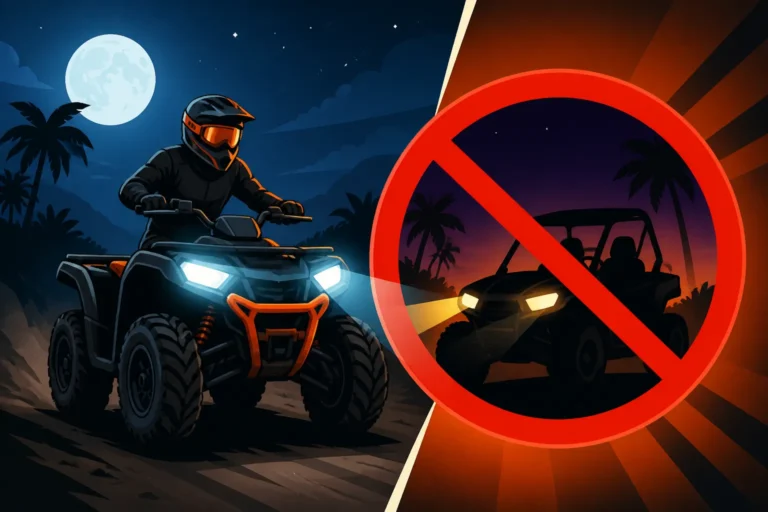
Florida Statute 316.2123 is the core of how ATVs and UTVs are generally allowed to operate on certain public roads. It permits OHVs to operate on unpaved roads where the posted speed limit is 35 mph or less, and where the OHV is equipped with headlights and taillights, operated only during daylight hours, and driven by a licensed driver. Minors, too, have specific provisions for supervised operation. This statute aims to provide some flexibility for riders, especially in rural areas where unpaved roads are common.
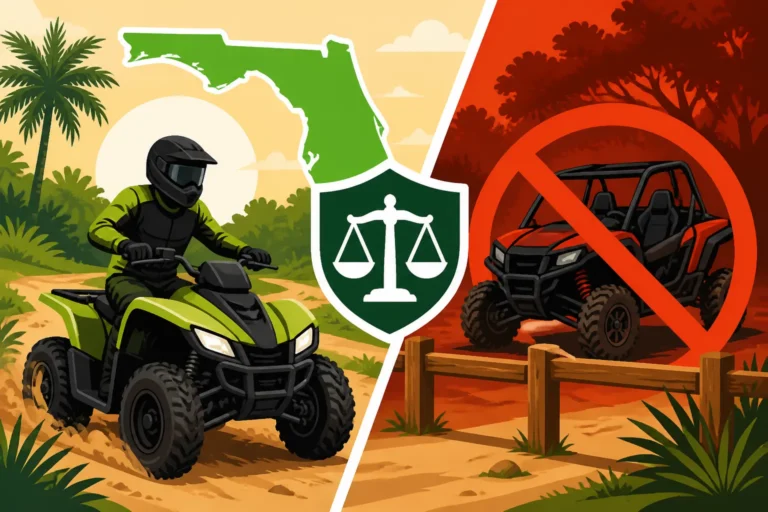
However, the crucial part for many riders is that this same statute, or other local ordinances passed under its authority, also gives counties the power to say "no." They can choose to prohibit OHV operation on any county road, paved or unpaved, within their jurisdiction. This local discretion means that while the state might allow it under certain conditions, your specific county could override that general allowance, leaving you with no legal road access. This is a significant piece of the puzzle, and it's why understanding [Florida County ATV Opt-Outs: Why Rules Change at the Line] is so important.
When a county decides to close all or specific roads to ATVs, they are typically acting within the legal framework provided by the state. This isn't just a random decision; it's usually a formal process involving resolutions or ordinances passed by the county commission. Riders often feel targeted, but these decisions are often presented by local authorities as measures to improve public safety for all road users, reduce environmental impact, or mitigate noise in populated areas.
Common Reasons for County-Wide Closures
The reasons behind a county's decision to close every road to ATVs are usually multifaceted. Public safety is almost always at the top of the list. ATVs and UTVs are designed for off-road use, and their handling characteristics, tires, and lack of certain safety features can make them less predictable on paved or even well-maintained unpaved roads when mixed with traditional vehicle traffic. Collisions, particularly with passenger cars, can be severe due to the unprotected nature of ATVs.
Beyond direct safety concerns, counties also grapple with issues like noise pollution, especially in more residential or agricultural areas where roads might cut through private property. The roar of an exhaust system, while thrilling on the trails, can be a major nuisance to homeowners. Furthermore, some argue that heavy off-road machines can contribute to road degradation, particularly on less-developed unpaved routes, leading to increased maintenance costs for the county.
Environmental concerns can also play a role, particularly in sensitive ecological areas. While state forests and designated OHV parks have specific rules to manage environmental impact, widespread ATV use on county roads, especially those near wetlands or vulnerable habitats, could raise concerns about soil erosion, habitat disturbance, or water quality. These are all factors that county commissions weigh when deciding to restrict or ban ATV road access.
How to Determine If Your County Has Banned ATVs from Roads
Navigating the local rules for ATV road use can feel like detective work, but it's a crucial step to avoid an expensive ticket or, worse, an accident. You can't just assume that because you've seen other riders, or because the road is unpaved, it's fair game. Local rules are often enforced vigorously, and ignorance of the law is rarely an acceptable defense. Knowing [Florida ATV Road Rules: Where You Can Legally Ride] is half the battle; the other half is knowing where you can't.
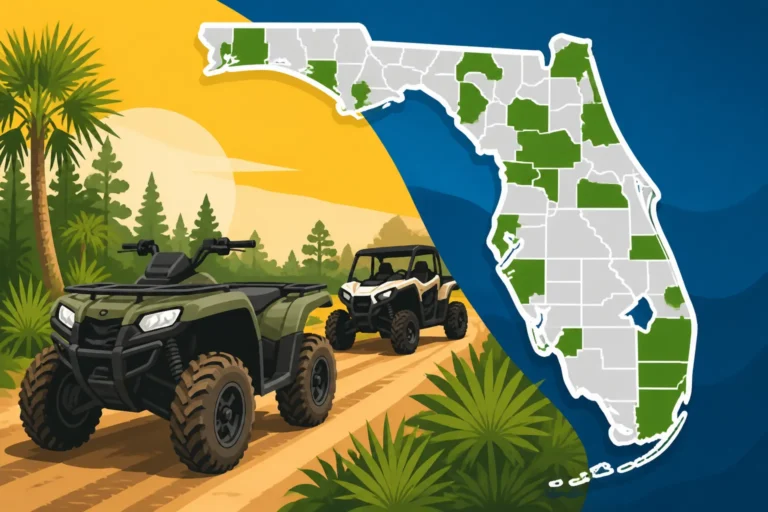
The state of Florida provides a general framework, but specific counties have the power to create their own ordinances that might be more restrictive. This means what's permitted in Marion County might be completely different from Polk County. This regional variation is a fundamental aspect of Florida's approach to OHV regulation. Taking the time to verify the rules for your intended riding area can save you a lot of grief.
Checking County Ordinances and Commission Meetings
The most definitive way to understand your county's ATV road policies is to go straight to the source: the county government. Most Florida counties have official websites where they publish their local ordinances. Look for sections related to "Transportation," "Traffic," "Motor Vehicles," or specifically "Off-Highway Vehicles." These documents can be dense, but they will contain the precise legal language outlining what is and isn't allowed. Many counties will also have their county clerk's office as a resource, where you can request copies of relevant ordinances.
Another excellent, albeit more proactive, method is to keep an eye on your county commission's meeting agendas and minutes. Significant changes to local ordinances, especially those impacting recreational activities like ATV riding, are often discussed in public forums before being voted upon. If you're a regular rider in a particular county, attending these meetings or at least reviewing the minutes can give you early insight into potential changes or existing restrictions. If all else fails, a call to the county sheriff's non-emergency line or their traffic division can sometimes provide quick clarification, though always try to get a reference to the specific ordinance if possible.
It’s also important to remember that these ordinances aren't always set in stone. Public input often plays a role in their creation and modification. If you feel strongly about ATV access, knowing the legislative process is your first step toward effective advocacy. You might find that other riders in your area are also passionate about these issues, and working together can be more effective.
Reading Road Signs and Posted Notices
While checking county ordinances is the most thorough approach, sometimes the information is right in front of you on the road itself. Counties that restrict or ban ATVs on certain roads are usually required to post clear signage indicating the prohibition. These signs might explicitly state "No Off-Road Vehicles," "ATV Prohibited," or similar language. It's crucial to pay attention to these signs, especially when entering new areas or roads you haven't traveled before.
However, don't solely rely on signage. A lack of a "no ATV" sign doesn't automatically mean ATV use is permitted. It's possible for a county-wide ban to exist without every single road having a sign posted, especially if the ban is comprehensive across all non-designated roads. Signs are helpful indicators, but they are not always exhaustive representations of all applicable laws. Always cross-reference with actual ordinances if you have any doubt, especially on roads that seem ambiguous.
Think of it like this: in Florida, generally, ATVs are not allowed on paved roads unless explicitly designated. Similarly, if a county has a comprehensive ban, you should assume all roads are off-limits unless you see a specific sign allowing them, or you've verified an ordinance for [Florida Counties That Designated ATV Roads]. It's always better to err on the side of caution and ensure you're riding legally.
What to Do If Your County Has Banned ATVs on Roads
Discovering that your local county has closed every road to ATVs can be a real bummer. It effectively limits where you can ride directly from your home or even travel between trail systems. But don't despair! You still have options, though they might require a bit more planning or a different approach to your riding habits. The key is to adapt and explore legal alternatives rather than risking penalties.
Ignoring local ordinances can lead to serious consequences, not just for your wallet but potentially for your machine. Understanding the rules is the first step, and the next is figuring out how to comply while still enjoying your passion for off-roading. Remember, the goal is always to ride safely and responsibly.
Respecting the Law and Avoiding Penalties
First and foremost, if your county has a road ban for ATVs, respect it. Florida law enforcement, including county sheriffs, take these regulations seriously. Operating an ATV on prohibited roads can lead to a variety of penalties, from traffic citations to having your machine impounded. These citations can carry significant fines, and court costs can add up quickly. Imagine the hassle and expense of having to retrieve an impounded ATV – it's a headache no rider wants. [Florida Penalties for Illegal ATV Road Riding] can be quite steep.
Furthermore, illegal road riding can damage the reputation of ATV enthusiasts as a whole. When riders disregard local laws, it often fuels public complaints and reinforces the perception that ATVs are a nuisance or a danger, making it harder for advocacy groups to push for more reasonable access in the future. By following the rules, even the restrictive ones, you contribute to a more positive image for the entire off-road community.
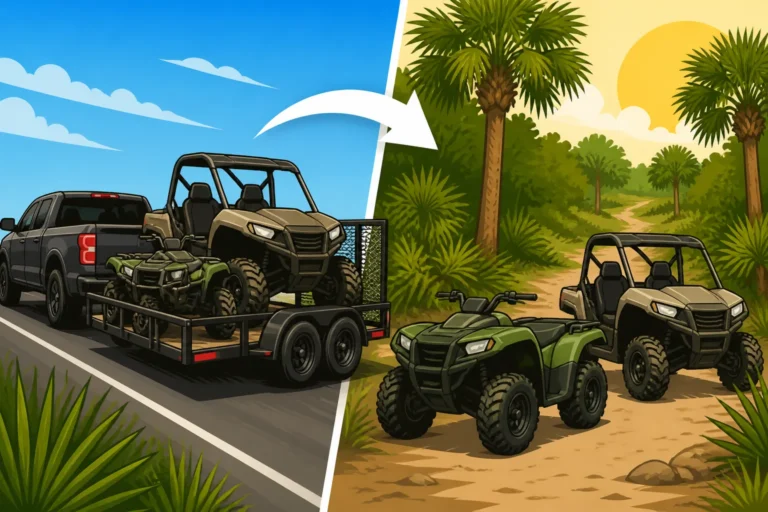
Remember, if you're riding with a group, everyone is responsible for knowing and adhering to the local laws. A quick check before embarking on a ride can save everyone a lot of trouble. This might mean trailering your ATV to a designated riding area rather than riding it on county roads, even for short distances.
Advocating for ATV Access and Community Engagement
Just because a ban exists doesn't mean it has to be permanent. Riders who are passionate about their sport can become powerful advocates for change. One of the most effective ways to do this is by forming or joining local ATV clubs. These organizations often have the collective voice and resources to engage with county commissioners, present well-researched arguments for responsible access, and offer solutions that address local concerns.
When advocating for change, it's crucial to demonstrate responsible riding practices. Show up to public meetings, present data on the economic benefits of OHV recreation, and propose designated routes or specific conditions for road use. Companies like SuperATV offer a wide range of accessories that can enhance safety and compliance, such as mirrors, turn signals, and street-legal kits for UTVs, which can be part of a solution-oriented presentation. Highlighting how riders can use these types of products to be more visible and safer can go a long way in swaying public opinion and decision-makers.
Community engagement also involves being a good neighbor. If riders consistently operate their machines quietly, stay on approved paths, and don't litter, it builds trust within the community. Conversely, reckless or noisy riding only entrenches negative perceptions. By showcasing a commitment to safety and respect for the environment and other residents, ATV enthusiasts can slowly but surely work towards creating more reasonable access opportunities.
Exploring Legal Alternatives for ATV Road Use
Even if your county has a strict "no ATV on roads" policy, there are still specific circumstances and machine types that allow for some form of legal road use. It's vital to understand these distinctions, as they are often very narrowly defined by Florida statutes and local ordinances. Don't assume that because one type of machine or one scenario is permitted, all are. [Florida Off-Highway Vehicle Title Rules Explained] is a good starting point for what's an OHV and what's not.
The line between an "ATV" and a "street-legal vehicle" can be blurry for some riders, but legally, it's quite distinct. Misinterpreting these differences can still lead to citations. Being clear on these classifications will help you make informed decisions about how and where you ride.
Incidental Road Crossings and Agricultural Exemptions
Florida law does provide for certain limited exceptions to general ATV road prohibitions. One common exception involves "incidental" or direct road crossings. This means if you need to cross a paved road to get from one section of private property to another, or to access a designated trail, you might be legally permitted to do so, provided you do it safely and directly, adhering to all traffic laws. This is not about riding on the road, but across it, and often for the shortest distance possible. Always check your county's specific interpretation of "incidental crossing," as some may still prohibit it.
Another significant exemption often applies to agricultural use. Farmers and ranchers frequently use ATVs and UTVs as essential tools for their operations. Florida statutes generally permit the use of these vehicles on public roads for agricultural purposes, even within counties that otherwise have bans. This typically requires the machine to be used exclusively for farm work, and the operator must usually be a licensed driver. [Florida Farm and Ranch ATV Road Exceptions] are designed to facilitate necessary agricultural activities, not recreational riding. If you fall under this category, ensure you have documentation or other proof of your agricultural status.
These exemptions are very specific and are not a loophole for general recreational road riding. Attempting to claim agricultural use when you're simply out for a joyride will not hold up if stopped by law enforcement. The intent and primary use of the vehicle in that moment are critical.
The Street-Legal Side-by-Side Conversion (LSV Route)
For UTV owners, there's a unique pathway that can make your machine legally operable on many Florida roads: converting it into a Low-Speed Vehicle (LSV). While traditional ATVs (quads) cannot be made street-legal in Florida, many side-by-sides (UTVs) can be. This involves equipping your UTV with specific safety features to meet LSV requirements, which are similar to golf carts but with higher speed capabilities. These features include headlights, taillights, brake lights, turn signals, a windshield, seatbelts, a parking brake, and a vehicle identification number (VIN). The UTV must also be capable of speeds between 20 mph and 25 mph.
This conversion allows your UTV to be registered, titled, and insured as an LSV, granting it access to most public roads where the posted speed limit is 35 mph or less. It essentially transforms your off-road machine into a road-legal vehicle that can navigate many community streets. Many aftermarket companies, including SuperATV, offer complete kits and individual components like signal lights, mirrors, and DOT-approved tires specifically designed for this conversion, making the process much more accessible for UTV owners. [Turning a Side-by-Side Into a Florida LSV] is a popular option for those who want more versatility.
Keep in mind that even as an LSV, there are still restrictions. You won't be driving your street-legal side-by-side on state highways or interstates, and it still must adhere to the 35 mph speed limit rule for road access. However, for getting around neighborhoods, accessing local stores, or traveling short distances to a trailhead, it can be a fantastic solution. Always check the specific LSV regulations and ensure your conversion meets all state and local requirements before hitting the pavement.
Summary of ATV vs. LSV Road Legality in Florida
| Feature/Requirement | Traditional ATV (Quad) | Street-Legal UTV (LSV Conversion) |
|---|---|---|
| Primary Use | Off-road recreation | Off-road & Street-legal transportation |
| Road Access (General) | Restricted to specific unpaved roads* | Permitted on roads <= 35 mph |
| Road Access (Paved) | Generally Prohibited | Permitted on roads <= 35 mph |
| Road Crossing | Limited incidental crossings only | Allowed as a vehicle |
| Agricultural Exemption | Yes | Yes |
| Driver's License Required | Yes, for road use/crossing | Yes |
| Speed Limit on Roads | N/A (unpaved roads) | Max 25 mph (on roads up to 35 mph) |
| Headlights/Taillights | Required for unpaved road use | Required |
| Turn Signals | Not required | Required |
| Windshield | Not required | Required |
| Seatbelts | Not required | Required (for all passengers) |
| DOT-Approved Tires | Not required | Required |
| Registration/Title | OHV Title (if riding public land) | LSV Registration & Title |
| Insurance | Not typically required for OHV title | Required for LSV registration |
*Note: County ordinances can override state general provisions for ATVs on unpaved roads. Always check local rules.
Disclaimer
This article is for general informational purposes only and does not constitute professional advice. Laws, prices and regulations vary by location and change over time. Consult a qualified professional for guidance on your specific situation.