Night Riding an ATV on a Florida Back Road
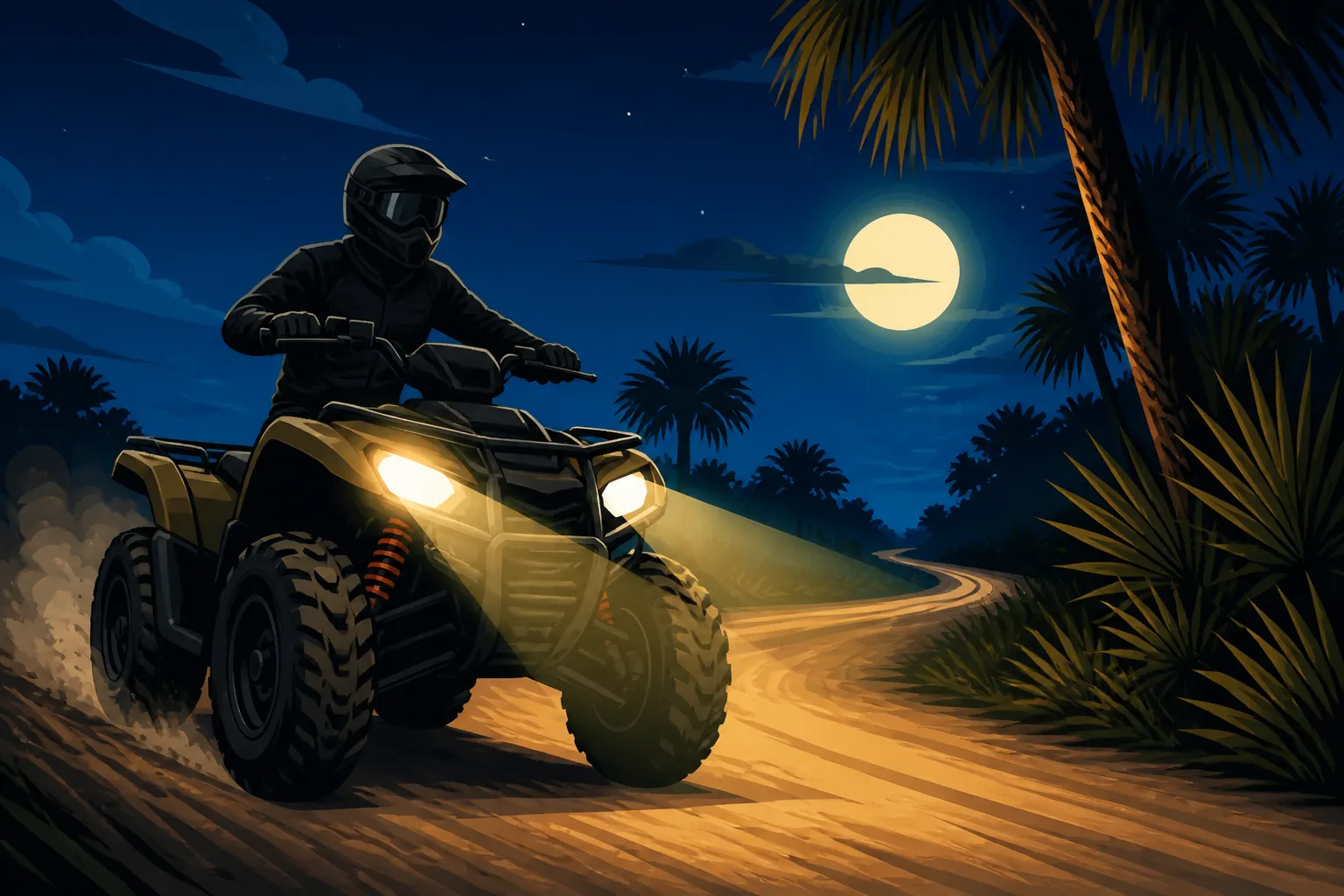
The thought of night riding an ATV on a quiet Florida back road can conjure up images of peaceful solitude under a canopy of stars, a cool breeze offering a welcome reprieve from the daytime heat. It's an alluring idea, offering a completely different perspective on the landscape. However, the reality of hitting those unpaved paths after sunset often clashes sharply with Florida's specific ATV laws, which can lead to hefty fines or even impoundment if you're caught in the wrong place at the wrong time. This guide will help you understand the legal landscape, highlight the significant safety challenges, and suggest safer, legal alternatives for enjoying your machine when the sun goes down.
The Allure and Legal Reality of Night Riding on Florida Back Roads
There’s undeniably a certain magic to being out on your ATV or UTV when the sun has dipped below the horizon. The air is often cooler, the humidity drops, and the sounds of the day give way to the calls of nocturnal wildlife. For many riders, it’s a chance to escape the crowds, find a different kind of peace, and perhaps even experience familiar trails in a whole new light (or lack thereof!). The temptation to cruise down a seemingly deserted dirt road or an isolated track under the moon can be strong, especially after a long, hot day.
But that peaceful solitude can quickly turn into a stressful encounter if you're not aware of Florida's rules. While some dirt roads might feel like private, unrestricted territory, the law often sees them differently. It's a common misconception that if a road isn't paved, it's automatically open season for off-road vehicles at any hour. This isn't the case in the Sunshine State, and understanding the nuances can save you a lot of headache, and a lot of money.
When a "Back Road" Isn't Private: Public vs. Private Land
One of the biggest pitfalls for riders who venture out at night is mistaking a public "back road" for a private one. In Florida, many unpaved roads, even those that seem to lead to nowhere or snake through vast tracts of undeveloped land, are actually considered county or state roads. These can include anything from old logging roads to utility access paths, or even unmaintained tracks that were once part of a platted subdivision. Just because it's sandy or riddled with potholes doesn't mean it's not subject to the same traffic laws as a paved street.
Think about the dirt roads running through parts of Marion County near the Ocala National Forest, or the sandy tracks cutting across ranch land in Polk County. While they might feel remote, a sheriff's deputy could still be patrolling them. The moment a road is open to the public, even if only sparingly used, it typically falls under the jurisdiction of local law enforcement. Without clear signage indicating private property and restricted access, it's often best to assume a road is public, especially if it connects to other public thoroughfares. If you're riding on private land, ensure you have explicit, [Written Permission Slips Worth Carrying] from the landowner to avoid trespassing issues, and always understand their specific rules, including any hours of operation.
Understanding the difference is critical. Riding on your own private property, or property where you have explicit permission, is one thing. Venturing onto what you think is a private road, only to find out it's a public easement or county road, is entirely another. A simple check with the county property appraiser's office or even a look at online maps can often reveal the ownership and designation of a specific road. Don't let the rural feel of a back road lull you into a false sense of security regarding its legal status.
Florida's Strict Daytime-Only Rule for OHVs
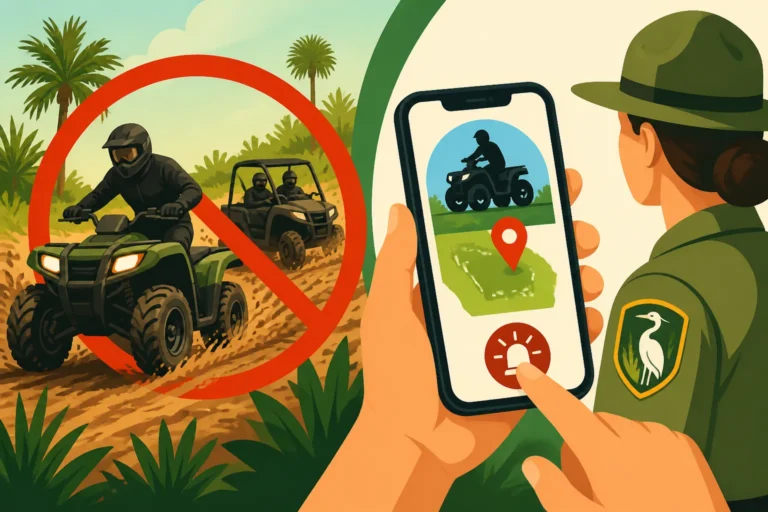
This is where the dream of starry-night rides on a back road often collides with Florida law. Florida Statute 316.2074, which governs the operation of all-terrain vehicles, is quite explicit: ATVs are generally restricted to operating only during "daylight hours" on any designated unpaved public roadway. This means from sunrise to sunset. There aren't many exceptions to this rule for general recreational riding, and "back roads" that are public typically fall squarely under this regulation.
The intent behind this rule is largely safety-driven. ATVs and UTVs, by their nature, are not designed with the same lighting, turn signals, and reflective properties as street-legal vehicles. While you might add a brilliant LED light bar to your machine, that doesn't magically make it street legal or exempt it from the daytime-only restriction on public roads. The law aims to minimize collisions between these vehicles and larger, faster-moving traffic that might also use these unpaved roads, especially when visibility is low. [Florida's Daytime-Only ATV Road Rule] is a non-negotiable part of enjoying your off-road vehicle responsibly and legally on public access points.
If a Florida deputy pulls you over on a public dirt road after dark, even if it's the most remote-feeling track in the state, you're looking at a citation. The penalties for illegal ATV road riding can range from significant fines to having your machine impounded. It’s a harsh reality, but one that every Florida ATV owner needs to be fully aware of before they consider a midnight cruise. Knowing [What Florida Deputies Check at a Roadside Stop] is crucial for all riders, and operating outside of legal hours is an easy way to attract unwanted attention.
Safety Considerations Beyond Legality for Night Riding
Even if you're lucky enough to own vast tracts of private land where night riding is permissible, or you find a private park that allows it, the inherent risks of riding an ATV after dark are significantly amplified. It's not just about what you might hit, but also what you might miss seeing. The thrilling challenge of navigating by limited light often outweighs the potential dangers in a rider's mind, but a small mistake in the dark can have much more severe consequences.
When the sun goes down, even the most familiar terrain transforms. Shadows play tricks on your eyes, depth perception becomes a serious challenge, and obstacles that are easily avoided in daylight can suddenly become major hazards. It's a completely different ballgame, demanding a much higher level of caution, slower speeds, and impeccable machine preparation. Neglecting these safety considerations is an open invitation for an accident, regardless of whether you're legally allowed to be there.
The Critical Role of Proper Lighting
While standard ATV headlights provide some illumination, they are often insufficient for truly safe night riding, especially when you consider the speeds and terrain off-road vehicles are designed for. When you're zooming down a trail, the beam from factory lights often creates a tunnel vision effect, leaving your peripheral vision in deep shadow. This makes it incredibly difficult to spot approaching turns, hidden obstacles like submerged logs in water crossings, or even a sudden drop-off.
For serious night riding on private land, you need to think beyond the basic setup. Auxiliary lighting is not just a cosmetic upgrade; it's a safety imperative. LED light bars, floodlights, and spot lights can dramatically increase your field of vision, helping you see further down the trail and illuminating the areas to your sides. Brands like SuperATV offer a wide array of lighting solutions, from compact pod lights that can be mounted strategically to powerful light bars that turn night into day. It's about creating a comprehensive lighting system that covers all angles, not just a single beam pointing forward. Remember, adequate lighting isn't just about seeing where you're going; it's also about being seen by anyone else who might be on the property, whether they are fellow riders or landowners.
Navigating Unseen Hazards in the Dark
Florida's varied terrain, from dense palmetto scrub to sprawling mud holes and winding sand trails, presents a unique set of challenges in broad daylight. At night, these challenges become exponentially more dangerous. A seemingly innocuous dip in the trail during the day can become a wheel-swallowing crater in the dark. Hidden roots, loose sand, washouts, and unexpected changes in elevation are all magnified when your vision is limited to the beam of your lights.
Consider the wildlife: Florida is home to a vast array of creatures, many of which are most active at night. Deer, wild hogs, raccoons, opossums, and even alligators near water bodies can dart out onto the trail with little to no warning. Hitting an animal at speed, especially at night, can lead to serious injury for both the rider and the animal, and significant damage to your ATV. Even low-hanging branches or vines that you’d easily duck under during the day can become unseen clotheslines in the dark, capable of knocking a rider off their machine.
The best way to mitigate these risks, even with excellent lighting, is to slow down considerably. You cannot ride at the same speeds at night as you can during the day. If you're exploring new terrain, it's highly recommended to scout it during daylight hours first to get a feel for its features and potential hazards. Always ride within the limits of your visibility and your comfort level, and never push yourself or your machine beyond what you can clearly see and react to. A slower, more cautious approach is your best defense against the myriad of unseen hazards that lurk after dark.
Equipping Your ATV for Florida Night Riding (Even on Private Land)
If you're absolutely determined to enjoy some nighttime adventures on your quad, and you have legal access to private land where it's permitted, then preparing your machine properly is paramount. This isn't just about bolting on a few extra lights; it's about creating a robust system that maximizes visibility, both for you to see and for others to see you. Think of it as investing in your safety and the longevity of your machine. Skimping on proper lighting and safety gear for night riding is a recipe for disaster, and it's simply not worth the risk.
Many factory ATVs are simply not equipped for serious night operations beyond a slow putter around a campfire. The stock headlights are often adequate for getting you back to camp from a sunset ride, but they fall far short of what's needed for active, dynamic riding in varied terrain after dark. Planning your lighting system and rider gear requires careful thought and often a significant upgrade from what came off the showroom floor.
Essential Lighting Upgrades for Dark Trails
When it comes to seeing clearly in the dark, a multi-faceted approach to lighting is key. Your standard headlights are a good starting point, but they need to be augmented. The first upgrade should often be to brighter LED bulbs for your factory headlights if they aren't already LED. These offer a whiter, more intense light with less power draw on your electrical system.
Beyond that, consider adding dedicated light bars. A forward-facing LED light bar mounted on your bumper or roof (for UTVs) can project a wide, powerful beam far down the trail, illuminating obstacles long before you reach them. Many riders also add "pod lights" or smaller floodlights to the sides, helping to illuminate turns and peripheral vision areas that a straight-ahead light bar might miss. For those who navigate particularly technical terrain, ditch lights aimed slightly outward can be invaluable. Don't forget the rear of your machine either; bright LED tail lights and brake lights, possibly even a small amber chase light, dramatically increase your visibility to any riders behind you. You might find a wide selection of these powerful lighting solutions from retailers like SuperATV, which specializes in off-road accessories designed for harsh conditions and maximum output.
When installing these upgrades, pay close attention to your ATV's electrical system. Adding too many powerful lights can strain your battery and stator. Consider adding a heavier-duty battery or even a voltage regulator if your current setup struggles. Ensure all wiring is properly protected from mud, water, and debris, and use robust switches that are easy to operate, even with gloves on.
Rider Visibility and Safety Gear
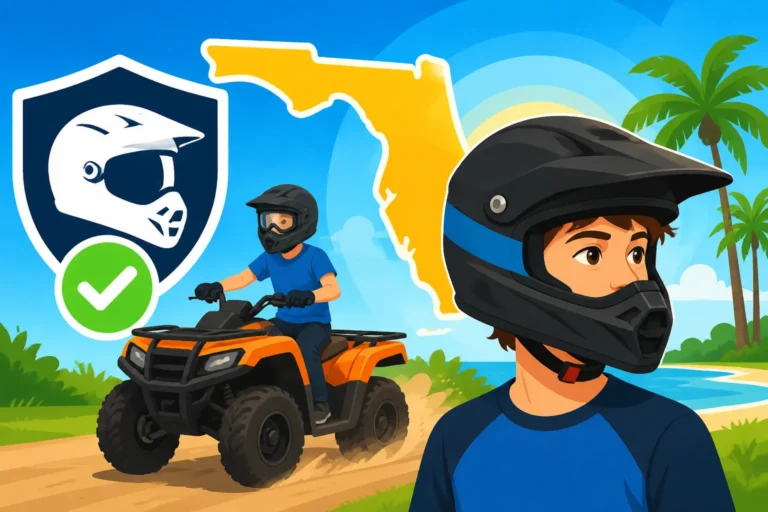
Your machine isn't the only thing that needs to be visible; you do too. Reflective clothing is an absolute must for night riding. Helmets with reflective strips, jackets with bright, contrasting colors, and even reflective tape applied to your gear can make a huge difference in how easily others spot you. While [Florida ATV Helmet Law for Riders Under 16] focuses on minors, all riders should wear a DOT-approved helmet for night riding. For night riding, a clear visor or goggles are essential, as tinted ones will severely impair your vision.
Beyond visibility, consider communication. If you're riding in a group, having a reliable two-way radio system or helmet-mounted communicators can be a lifesaver. This allows you to alert others to hazards, signal for help, or simply stay coordinated without having to shout over engine noise or stop frequently. Carry a reliable headlamp or flashlight as a backup in case your primary lighting fails, or you need to dismount and inspect your machine or the trail. A basic first-aid kit, a tool kit, and plenty of water are also non-negotiable for any extended ride, especially when assistance might be harder to find in the dark.
Table: Day vs. Night ATV Riding Challenges on Back Roads
| Feature/Challenge | Daytime Riding | Nighttime Riding |
|---|---|---|
| Visibility | Excellent; full field of vision, depth perception. | Limited to light beams; shadows, tunnel vision. |
| Hazard Identification | Easy to spot roots, ruts, water, wildlife. | Difficult; hazards appear suddenly, distorted. |
| Speed | Can maintain higher speeds based on skill/terrain. | Must reduce speeds significantly due to limited vision. |
| Navigation | Clear view of trail markers, landmarks. | Requires heightened awareness, GPS, familiarity. |
| Wildlife Encounters | More likely to spot animals at a distance. | Animals appear suddenly, hard to avoid. |
| Mechanical Issues | Easier to diagnose, repair in daylight. | Challenging to troubleshoot, work on machine in dark. |
| Emergency Response | Easier for rescuers to locate you. | More difficult for rescuers to find you, especially off-trail. |
| Legal Status (Public Roads) | Generally permitted on [Florida's Unpaved Road Rule for ATVs Explained] during daylight hours. | Strictly prohibited on public roads. |
Alternatives to Illegal Night Riding on Florida Back Roads
Given the legal restrictions and the heightened safety risks, it's clear that hitting Florida's public back roads after dark is generally a bad idea. But that doesn't mean your nocturnal ATV adventures are completely off-limits! There are safer, and more importantly, legal ways to experience the thrill of riding under the stars. It simply requires knowing where to go and understanding the rules of those specific locations.
Many riders are drawn to the mystique of night riding for legitimate reasons – the cooler temperatures, the quiet, the unique perspective. The key is to channel that desire into sanctioned activities and locations, rather than risking a run-in with the law or a serious accident on an unauthorized public road. Florida offers a variety of options that cater to the off-road enthusiast, and some even embrace night riding as a core part of the experience.
Designated Night Riding Events and Private Parks
The best and safest way to enjoy night riding in Florida is to visit one of the many private mud parks or dedicated off-road resorts that specifically offer night riding hours or host special events after dark. These facilities are designed for off-road recreation, often have ample lighting in key areas, and have staff on site in case of emergencies. They understand the appeal of night riding and create controlled environments where it can be done safely and legally.
Places like Hog Waller ATV Resort in Palatka or Redneck Mud Park near Punta Gorda are famous for their weekend events, which often extend well into the night. These parks usually have specific rules about lighting, safety gear, and sometimes even noise levels after certain hours. By riding in a designated park, you're not only staying within legal boundaries but also benefiting from a community of fellow riders, potential rescue services, and an environment tailored for off-road fun. Always check the park's specific rules and schedule before you go, as some only allow night riding during special events. While [Florida State Forest OHV Areas Explained] and [Florida National Forest OHV Pass Prices] cover many riding options, these public lands typically adhere to the strict daytime-only rules.
Private Property Riding with Permission
If you have a friend, family member, or know a landowner with extensive private property, this can be another fantastic option for legal night riding. As long as you have explicit, written permission from the property owner, you can ride their land at night without worrying about public road laws. This is particularly relevant for those with access to large ranches, farms, or timberland. [Florida Farm and Ranch ATV Road Exceptions] can sometimes allow for special considerations, but these typically don't apply to general recreational night riding on public rights of way.
However, even on private property, all the safety considerations mentioned earlier still apply, if not more so. Ensure the landowner is aware of your plans, especially if you're riding alone. Discuss any specific hazards on their land, like open wells, fences, or changes in terrain. It's also a good idea to let someone know your route and expected return time. While you won't face a ticket for riding after dark, the risks of hitting something unseen or getting lost are still very real. Always respect the landowner's property, leave no trace, and adhere to any noise restrictions they might have.
Disclaimer
This article is for general informational purposes only and does not constitute professional advice. Laws, prices and regulations vary by location and change over time. Consult a qualified professional for guidance on your specific situation.