Citrus Grove Roads and Florida ATV Law
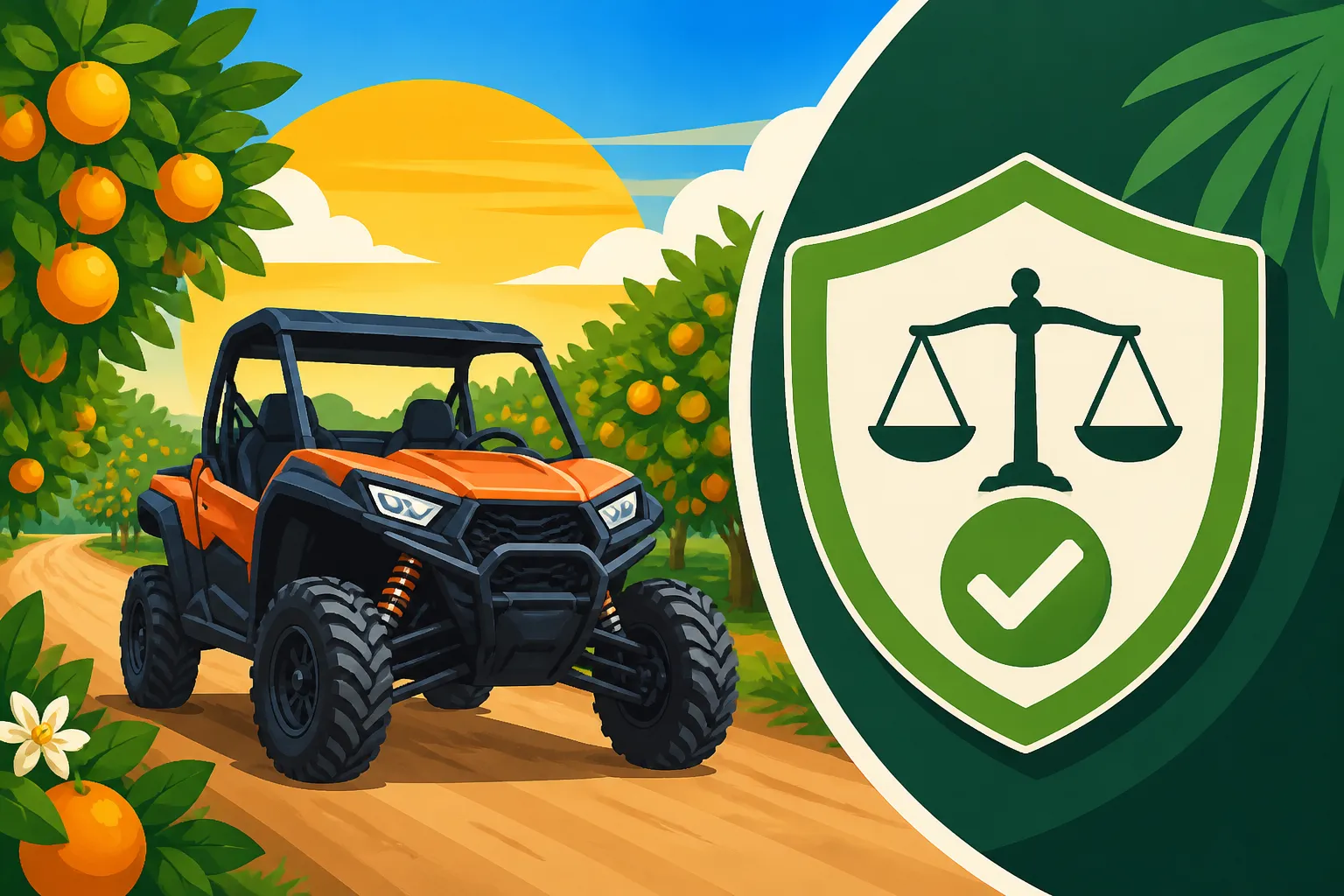
It's a familiar sight across much of Florida: those long, often dusty, unpaved roads winding through endless rows of citrus trees. For many ATV and UTV enthusiasts, these quiet, scenic routes look like the perfect place for a peaceful ride. But before you crank up your engine and head down a tempting grove road, you need to understand the often-confusing landscape of Florida's ATV laws, especially when it comes to private property like citrus groves. This guide will help you navigate the rules, understand your rights, and most importantly, stay out of trouble while exploring Florida's beautiful backroads.
Understanding Florida's ATV Road Rules: The Basics
Florida's laws regarding ATVs and UTVs on public roads can feel like a tangled mess of "can-dos" and "can't-dos," often leaving riders scratching their heads. The truth is, the general rule is pretty clear, but the exceptions are where things get tricky, especially when you're looking at roads that don't quite fit the typical "street" or "trail" category.
The General Prohibition: Why Paved Roads Are a No-Go
Let's start with the absolute baseline: in Florida, you generally cannot operate an ATV or UTV on a public paved road. This isn't just an arbitrary rule; it's rooted in safety and the fundamental design of these machines. ATVs and UTVs are built for off-road conditions, with low-pressure tires, a high center of gravity, and suspensions designed for uneven terrain, not smooth asphalt.
Imagine trying to stop quickly on a paved road with knobby tires that offer little grip. Or picture navigating fast-moving traffic when your machine wasn't designed for sustained speeds or the responsiveness needed in such an environment. The state's reasoning is pretty straightforward: mixing these vehicles with cars, trucks, and other street-legal vehicles on paved public thoroughfares creates a dangerous situation for everyone involved. Police officers are well aware of this and often patrol areas where riders might be tempted to cut across a paved road or ride a short distance to access a trail. The penalties for illegal operation on paved roads can range from hefty fines to impoundment of your machine, so it’s always best to err on the side of caution.
The Unpaved Road Exception and Its Nuances
Now, here's where those citrus grove roads start to enter the conversation. Florida Statute 316.2123 provides a very specific exception: an ATV or UTV can be operated on an unpaved public road or highway where the posted speed limit is 35 mph or less, under certain conditions. This is a crucial distinction and one that many riders misunderstand or misapply.
First and foremost, the road must be unpaved. This means dirt, gravel, or shell rock – anything that isn't asphalt or concrete. Secondly, there has to be an official posted speed limit of 35 mph or less. If there's no posted limit, or if it's higher than 35 mph, that road is off-limits. You also need to ride during daylight hours only. No night riding on these unpaved public roads, even if your machine has headlights. Furthermore, any rider under 16 years old must wear a helmet, and if the operator is under 16, they must be under the direct supervision of a licensed adult. Even if you’re riding legally on an unpaved public road, you still need to remember your machine isn’t designed for high-speed travel, and you should always be mindful of other vehicles, pedestrians, or even farm equipment that might be using the same route. For a deeper dive into these rules, check out our guide on [Florida's Unpaved Road Rule for ATVs Explained].
Citrus Grove Roads: Are They Public or Private?
This is truly the million-dollar question when it comes to riding your ATV or UTV through a Florida citrus grove. The answer isn't always obvious, and making the wrong assumption can lead to serious legal trouble, not to mention upsetting landowners who are just trying to protect their property.
The Critical Distinction: Private Property vs. Public Access
When you're looking at a road that cuts through a citrus grove, your immediate thought might be, "It's just a dirt road, what's the big deal?" But the "big deal" is who owns that land and who has the right to use it. Many citrus groves are vast, privately owned agricultural operations. The roads crisscrossing them are often private property, built and maintained by the landowner for their specific farming needs.
Just because a road isn't gated or marked with a "No Trespassing" sign doesn't automatically make it public or give you permission to ride there. Florida's trespass laws are pretty clear: entering or remaining on private land without the express permission of the owner or their agent can land you in hot water. This isn't just about avoiding a ticket; it's about respecting the hard work and investment of farmers who rely on these groves for their livelihood. Imagine the frustration of a farmer finding ruts from recreational vehicles in their access roads, especially during wet seasons, or worse, finding damage to irrigation lines or young trees. What looks like a fun shortcut to you could be vital infrastructure for their farm. Sometimes, these private roads may have easements for utility companies (power lines, water pipes) or even for neighboring properties to access their land, but an easement for a utility company does not grant the public recreational riding access.
Navigating Permission and Easements
So, how do you know if you can legally ride on a particular citrus grove road? The safest and most straightforward answer is to always assume it's private property unless you have explicit, verifiable information to the contrary. If you're really keen on riding a specific grove road, your best bet is to seek out the landowner and ask for permission. A simple, polite request can often go a long way. If they grant permission, try to get it in writing. A handwritten note or email can save you a lot of grief if you encounter law enforcement or a less-than-friendly property manager. This is why having [Written Permission Slips Worth Carrying] can be so valuable.
Checking county property appraiser websites can sometimes help identify land ownership, but it rarely clarifies public access rights on specific internal roads. Utility easements are often recorded with the county, but again, these typically only grant specific access to the utility company, not the general public for recreational purposes. Unless you have clear proof of public access or explicit permission, riding on these roads is considered trespassing. And landowners have legal recourse when people trespass, as detailed in [What a Landowner Can Do About Trespassing Riders].
Farm and Ranch Exceptions: Do They Apply to Citrus Groves?
Florida law does provide specific exceptions for ATVs and UTVs used for legitimate agricultural purposes. If you are operating an ATV or UTV on a citrus grove road because you are actively involved in the farming operation – say, you're checking irrigation lines, spraying trees, moving equipment, or supervising workers – then you would likely fall under Florida's agricultural exemption. This exemption allows for the use of ATVs and UTVs on public roads (both paved and unpaved, within reason) when directly related to farming activities.
However, this exception is very specific. It does not extend to recreational riding. If you're simply riding your ATV through a grove for fun, even if it's owned by a friend who is a farmer, you are not covered by the agricultural exemption unless you are actively performing a farm duty. A good rule of thumb is: if you're riding for pleasure, you're probably not exempt. If you're actually working on the farm, then the rules are different. This nuanced area is something we explore further in [Florida Farm and Ranch ATV Road Exceptions]. It’s important not to confuse an ATV being able to handle farm work with it being exempt from road rules when used for recreation.
Practical Considerations and Staying Out of Trouble
Navigating the legalities of ATV use on Florida's backroads, especially those cutting through private lands like citrus groves, requires not just understanding the law but also exercising good judgment and common courtesy.
Equipment and Safety on Grove Roads
Even if you have permission to ride on a private citrus grove road, or you've found a legitimate unpaved public road that fits the criteria, safety should always be your top priority. Grove roads can be deceptive. They might look smooth, but hidden ruts, potholes, irrigation pipes, or sudden soft sand patches can appear out of nowhere.
Ensure your ATV or UTV is properly equipped for the terrain. While street tires are a definite no-go, overly aggressive mud tires might tear up softer grove roads if not handled carefully. All-terrain tires are often a good compromise. Even in daylight, having functional headlights and taillights is crucial, especially if you encounter other vehicles, farm equipment, or pedestrians. Many riders choose to upgrade their lighting with aftermarket solutions from brands like SuperATV to ensure maximum visibility and utility, even in dusty conditions or low light. Helmets are not just for kids under 16; they're a smart choice for all riders, regardless of age, whenever you're on a machine. Eye protection is also a must, as dust, debris, and low-hanging branches can be real hazards in a grove.
Remember, even on private property with permission, you are responsible for your own safety and the safety of those riding with you.
Local Enforcement and Community Relations
Florida's ATV laws are state statutes, but their enforcement often falls to local county sheriffs and municipal police departments. The interpretation and priority of enforcement can sometimes vary slightly from one county to the next, especially in rural areas with extensive agricultural lands.
A major factor in whether you'll encounter enforcement is often community relations. If riders are respectful, quiet, and clearly have permission, they're less likely to draw negative attention. However, if there are noise complaints, reports of property damage, or concerns about safety from local residents or landowners, law enforcement is much more likely to step in. This is particularly true if you're riding too close to residences or disturbing agricultural operations. [Florida County ATV Opt-Outs: Why Rules Change at the Line] are a good example of how local sentiment can impact riding opportunities. Understanding these local nuances and building positive relationships (or at least not causing problems) with landowners and residents can make a significant difference. Ignoring these community aspects can quickly lead to increased patrols and stricter enforcement, resulting in [Florida Penalties for Illegal ATV Road Riding].
Verifying Road Status and Ownership
Before you venture onto any citrus grove road, take the time to do your homework. Don't rely on assumptions or vague memories of what someone told you once. Here's how you can proactively check the status of a road:
- County Property Appraiser's Website: Most Florida counties have online property appraiser databases. You can often search by address or parcel number to identify the legal owner of the land. While this won't always tell you about specific internal roads, it's a good starting point to identify the landowner for whom you might need to seek permission.
- Contact Local Law Enforcement (Non-Emergency Line): Believe it or not, calling the non-emergency line of the local sheriff's department or city police and explaining your query can sometimes yield helpful information. They may be able to tell you if a particular road is known to be public or private, or if there are specific local ordinances about ATV use in that area. Be polite and specific, and understand they might not have every answer immediately.
- Directly Ask the Landowner: This is, hands down, the best approach for private property. If you can identify the landowner or their representative (a farm manager, for example), a face-to-face or phone conversation to request permission is ideal. If granted, re-emphasize the importance of getting that permission in writing to avoid any misunderstandings later.
Always remember that public lands, like those managed by the Florida Forest Service or the Water Management Districts, often have clear rules and permitting processes for ATV use. Citrus groves are generally private, working agricultural properties, and they operate under a different set of expectations and legal frameworks. Being prepared and respectful is key to responsible riding in Florida.
Here’s a quick overview of what to consider:
| Feature | Private Citrus Grove Road (with permission) | Public Unpaved Road (designated) | Private Road (no permission) |
|---|---|---|---|
| Legality of Riding | Legal with landowner's explicit permission. | Legal under specific Florida Statute 316.2123 rules. | Illegal – considered trespassing. |
| Permission Needed | Yes, preferably in writing. | No, if it meets statute criteria. | Not applicable (must obtain permission first). |
| Conditions for Use | As per landowner's terms; generally safe, respectful. | Daytime only, speed limit ≤ 35 mph, specific rules. | No use permitted. |
| Enforcement Risk | Low if permission is clear and behavior is respectful. | Moderate if rules (speed, time, helmets) are broken. | High – immediate risk of citation/impoundment. |
| Potential Penalties | Loss of privilege, potentially civil claims for damage. | Fines, impoundment, points on driving record if applies. | Fines, impoundment, criminal trespass charges. |
| Required Equipment | Helmet (recommended for all), eye protection, lights. | Helmet (under 16), eye protection, working lights. | Not applicable (should not be riding). |
| Driver's License | Not explicitly required for private land, but recommended. | Yes, if operating on public roads. See [Do You Need a Driver's License for an ATV in Florida?]. | Not applicable. |
| Helmet Rule | Recommended for all. Mandatory for under 16. | Mandatory for riders under 16. See [Florida ATV Helmet Law for Riders Under 16]. | Not applicable. |
Disclaimer
This article is for general informational purposes only and does not constitute professional advice. Laws, prices and regulations vary by location and change over time. Consult a qualified professional for guidance on your specific situation.