Florida LSV Registration and Insurance Rules
It's incredibly frustrating when you want to take your side-by-side on a quick run to the corner store or cruise through your neighborhood, only to be stopped by the confusing labyrinth of Florida's road laws. Many riders wonder if they can simply add a few lights and mirrors and call it a day, but converting your UTV into a legal Low-Speed Vehicle (LSV) in Florida involves specific registration and insurance steps. This guide is here to demystify that process, walking you through everything you need to know to get your machine legally on approved public roads.
What Exactly is a Florida Low-Speed Vehicle (LSV)?
Before you even think about hitting the pavement, it's crucial to understand what the Sunshine State considers a Low-Speed Vehicle. This isn't just a fancy name; it's a specific classification that dictates what your machine needs to be equipped with and how it operates on public roads. Trying to skirt these definitions can lead to citations, fines, or even having your beloved UTV impounded, which is a headache no one wants to deal with.
Distinguishing LSVs from Golf Carts and ATVs
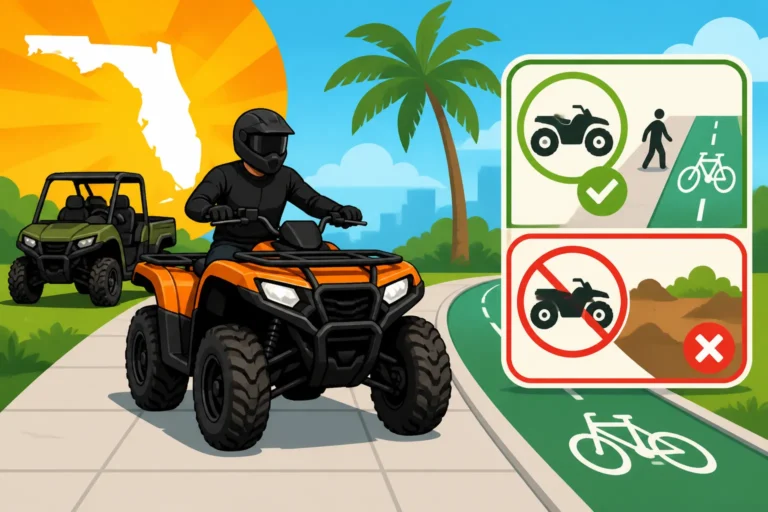
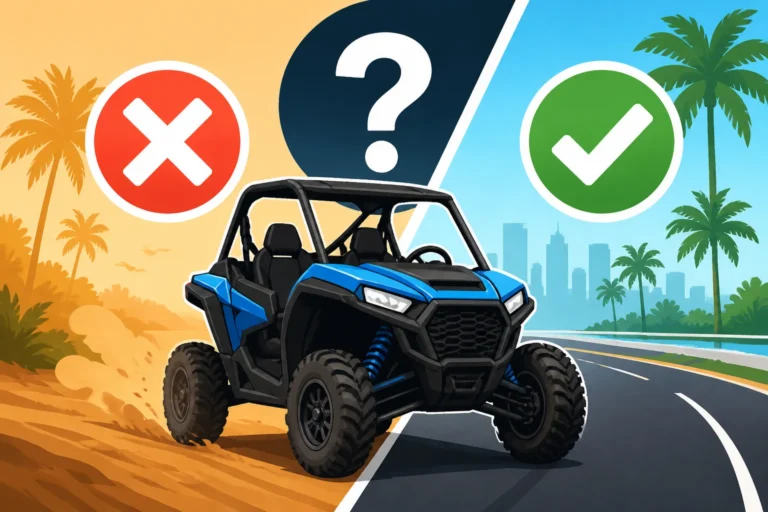
One of the biggest sources of confusion for riders is mistaking an LSV for a golf cart or an ATV. While they might look similar or serve similar purposes in some contexts, legally speaking, they are very different animals in Florida. An ATV, or All-Terrain Vehicle, is designed purely for off-road use. It’s what you take to [Croom Motorcycle Area: Florida's Biggest OHV Park] or [Ocala National Forest ATV Trails in Florida] to conquer mud and trails. It’s not meant for paved roads, and with very few, specific exceptions, it's illegal to operate one on a street. You can read more about this in [Are ATVs Street Legal in Florida?].
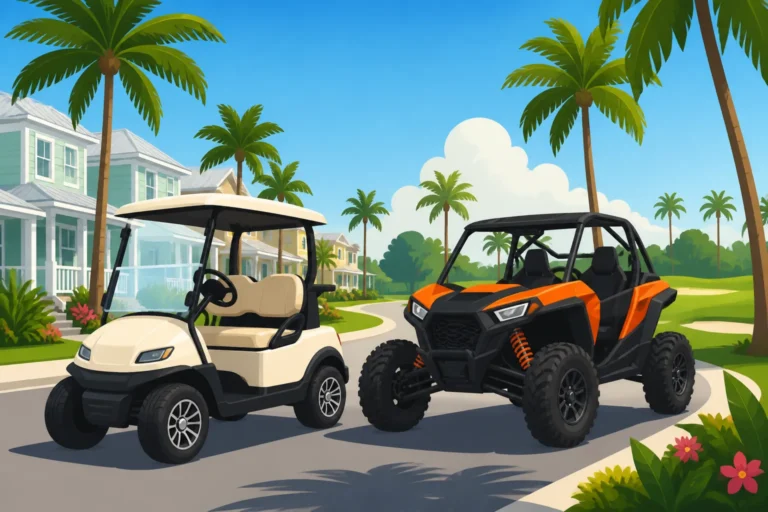
Golf carts, on the other hand, can be operated on certain public roads in Florida, typically those with speed limits of 20 mph or less, often found within planned communities or golf course areas. However, traditional golf carts have a maximum speed designed for golf courses and usually lack many of the safety features required for general road use. They typically don't require the same level of registration or insurance as an LSV, and their legal operating areas are much more restrictive. This distinction is important, as you'll see when we discuss [Florida Golf Cart Laws vs ATV Laws]. The bottom line is, while your UTV might eventually share some road space with a golf cart, the process to get it there is far more rigorous.
Key Characteristics of a Florida LSV
So, what makes a vehicle an LSV in Florida? The state statutes define a low-speed vehicle as any four-wheeled electric vehicle whose top speed is greater than 20 miles per hour but not greater than 25 miles per hour. That "electric" part often throws people off, but the law has been updated to include gasoline-powered vehicles that meet the other criteria. The core idea is that these vehicles are designed for short-distance travel on secondary roads, not for highway speeds or heavy traffic. This is a crucial distinction if you're thinking about [Turning a Side-by-Side Into a Florida LSV].
To qualify as an LSV, your machine must meet a specific set of equipment requirements designed to ensure basic road safety. This includes things like headlamps, tail lamps, stop lamps, turn signals, reflex reflectors, a parking brake, a rearview mirror (or exterior mirrors on both sides), a windshield, seat belts, and a Vehicle Identification Number (VIN). Furthermore, the vehicle must be capable of reaching speeds between 20 mph and 25 mph. Any faster, and it falls into a different classification requiring even more stringent safety standards. Any slower, and it might be considered a golf cart, which has different, more restrictive rules. Understanding [Florida LSV Top Speed Limit] is absolutely critical for compliance.
Essential Equipment for LSV Conversion
Thinking about converting your UTV into an LSV? It's not just about slapping on a license plate; it's about making sure your machine is up to snuff with Florida's safety standards. This often means adding specific components that weren't necessarily factory-installed on your off-road machine. Trying to bypass these requirements will lead to immediate rejection during inspection and could even land you in hot water if you're pulled over on a public road without the proper gear.
Required Safety Features and Components
Florida law is pretty clear about what an LSV needs to be street-legal. Your UTV must be equipped with the following items:
- Headlamps: These must be capable of illuminating the road ahead for a specified distance, just like a regular car. No dim, barely-there lights will pass muster.
- Tail Lamps and Stop Lamps: Clearly visible from the rear, functioning as both running lights and brake lights.
- Turn Signal Lamps: Front and rear, amber or red, to clearly indicate your intentions to other drivers.
- Reflex Reflectors: Rear-mounted, red reflectors, ensuring visibility even if your lights fail.
- Parking Brake: A fully functional parking brake is non-negotiable for securing the vehicle.
- Rearview Mirror: At least one mirror providing a clear view of the roadway to the rear. Many choose to install side mirrors for better visibility.
- Windshield: Made of safety glass, just like a car, to protect occupants from road debris.
- Seat Belts: For every designated seating position, meeting federal safety standards.
- Vehicle Identification Number (VIN): This is standard for UTVs, but it's essential for titling and registration.
- Speed Capability: The vehicle must be capable of a minimum speed of 20 mph and a maximum speed of 25 mph. This usually means a speed governor or limiter is installed if your UTV is capable of higher speeds.
Without each of these components in working order, your application for an LSV title and registration will be denied. It’s not just about having them; they must be fully functional and properly installed. Remember, these rules are in place for the safety of everyone on the road.
The Role of Aftermarket Parts
For many UTV owners, converting their machine into an LSV means diving into the world of aftermarket parts. Very few, if any, UTVs come from the factory ready to be classified as an LSV in Florida. This is where companies like SuperATV come in, offering a wide array of accessories specifically designed to meet these street-legal requirements. You might need to install a full street-legal kit, which bundles many of the necessary components like turn signal kits, horns, and mirrors. Other riders might piece together their conversion, buying a DOT-approved windshield, a horn, and seat belts separately.
When selecting aftermarket parts, always prioritize quality and compliance. Look for parts that explicitly state they are DOT (Department of Transportation) compliant, especially for items like windshields and tires. A cheap part that doesn't meet the standards will only cause headaches down the road. It's an investment in both your safety and the legality of your ride. While the initial cost of [Florida Side-by-Side Street Legal Conversion Cost] might seem significant, think of it as unlocking a whole new realm of utility for your UTV, allowing you to use it for errands and short commutes that were previously off-limits. Just make sure everything is installed correctly, as a faulty installation can be just as problematic as missing parts.
The Florida LSV Registration Process
Alright, you've equipped your UTV with all the necessary bells and whistles, and it's now a legitimate LSV in terms of its features. Congratulations! But the journey isn't over yet. The next crucial step is getting it officially recognized by the state of Florida through the registration and titling process. This can feel like a bureaucratic maze, but with the right preparation, you can navigate it smoothly.
Gathering Your Paperwork and Proof of Ownership
Before you even step foot into your local tax collector's office, you need to have your ducks in a row with documentation. Florida requires several key pieces of paperwork to title and register an LSV. Missing even one item can send you home frustrated, forcing another trip. Here's a breakdown of what you'll typically need:
- Manufacturer's Certificate of Origin (MCO) or Previous Title: If your UTV is brand new or has never been titled, the MCO is your primary proof of ownership. If you bought a used UTV, you'll need the original Florida title, properly signed over to you by the seller. If it's an out-of-state machine, you'll need its current title. This is where details matter, as a mistake here could lead to issues like title jumping, which is a major no-no.
- Bill of Sale: A detailed bill of sale, especially for a private party purchase, is crucial. It should include the purchase price (for sales tax calculation), the date of sale, the full names and addresses of both buyer and seller, and the UTV's VIN.
- Proof of Florida Insurance: We'll dive deeper into insurance soon, but you must have current Florida-compliant insurance coverage for your LSV before you can register it.
- Completed Application for Certificate of Title With/Without Registration (Form HSMV 82040): This is the main form for titling any vehicle in Florida. You'll fill out your personal information, vehicle details, and confirm that it meets the LSV requirements.
- VIN Verification: For UTVs that were not originally manufactured as LSVs or are coming from out of state, a VIN verification might be required. This can often be done by a Florida law enforcement officer, a licensed dealer, or a DMV inspector. They confirm the VIN on your paperwork matches the physical VIN on your machine.
- Odometer Disclosure Statement: While not always strictly applicable to off-highway vehicles, if your UTV has an odometer, you may need to complete an odometer disclosure, especially if it's new to you.
Having all these documents organized and ready will save you a lot of time and potential headaches. For more information on what exactly a county clerk looks for, you can check out [What a County Clerk Checks on Your Application]. Remember, these requirements are in place to prevent fraud and ensure proper ownership and vehicle identification.
Navigating the County Tax Collector's Office
Once your paperwork is in order, your next stop is your local County Tax Collector's office. This is where the magic (or sometimes the waiting) happens. While the process is generally straightforward, prepare for potential wait times, especially if you go during peak hours. Some counties allow appointments, which can be a huge time-saver.
When you get to the counter, you'll present all your documents. The clerk will review everything, verify your identity (bring your Florida driver's license or ID!), and calculate any applicable fees. These fees typically include:
- Initial Title Application Fee: This is the base fee for issuing a new Florida title for your LSV.
- Registration Fee: This annual fee is based on the weight of your vehicle and is required for street-legal operation.
- Sales Tax: If you purchased your UTV from a dealer, they likely collected sales tax. If it was a private sale, you'll pay Florida sales tax on the purchase price listed on your bill of sale.
- Plate Fee: You'll receive a standard Florida license plate for your LSV, which comes with its own fee. Remember, [Why a Cart Needs No Title but an LSV Does] is because the LSV is officially titled and registered as a motor vehicle.
- Service Charges: There are usually small service charges associated with processing these transactions.
After all fees are paid and paperwork is processed, you'll walk out with a temporary registration and often your new license plate. Your official Florida title will typically be mailed to you within a few weeks. If you have a lien on your vehicle (like a loan from a credit union), the title will likely be held electronically by the lienholder. This whole process is crucial, as [LSV Registration and the Insurance It Triggers] allows you to legally operate your newly converted machine on approved public roads.
Understanding Florida LSV Insurance Requirements
You wouldn't drive your car without insurance, and the same principle applies, perhaps even more so, to your Low-Speed Vehicle in Florida. Once your UTV is converted and titled as an LSV, it falls under the same general insurance umbrella as other motor vehicles when it comes to operating on public roads. Skipping this step isn't just risky; it's illegal and can lead to serious consequences if you're involved in an accident.
Mandatory Coverage for Street-Legal Operation
In Florida, all motor vehicles operated on public roads are required to carry a minimum amount of Personal Injury Protection (PIP) and Property Damage Liability (PDL) insurance. This mandate extends to your LSV.
- Personal Injury Protection (PIP): This coverage is often referred to as "no-fault" insurance. It pays for your medical expenses and a portion of lost wages (up to your policy limits) regardless of who was at fault in an accident. Florida requires a minimum of $10,000 in PIP coverage.
- Property Damage Liability (PDL): This coverage pays for damages your LSV causes to another person's property, such as their vehicle, fence, or mailbox, if you are at fault in an accident. Florida requires a minimum of $10,000 in PDL coverage.
It's important to understand that these are minimum requirements. Many insurance professionals will advise you to carry higher limits, especially for PDL, to protect yourself financially in the event of a more significant accident. Imagine if you accidentally backed into someone's brand new luxury car – $10,000 in PDL might not cover it. While your UTV might be small, the damage it can inflict, or the medical costs associated with an injury, can quickly add up. Some riders also opt for additional coverage like collision (to repair damage to your own LSV) or comprehensive (for non-collision damage like theft or fire), especially if their converted side-by-side is a significant investment.
Factors Affecting Your LSV Insurance Premiums
Just like insuring a car, several factors will influence the cost of your Florida LSV insurance premiums. Understanding these can help you shop smarter and potentially save some money.
- Your Driving Record: A clean driving record with no accidents or violations will generally result in lower premiums. If you have a history of tickets or at-fault accidents, expect to pay more. This applies even if those incidents were in your regular vehicle; insurers look at your overall risk profile.
- Your Age and Experience: Younger, less experienced drivers typically pay higher rates. As you gain more driving experience, your rates tend to decrease, assuming a good driving record.
- Location: Where you live in Florida can impact your rates. Areas with higher traffic density, crime rates, or accident frequencies may lead to higher premiums. For example, insuring an LSV in a bustling urban area might cost more than in a quiet, rural community.
- The LSV Itself: The make, model, year, and value of your UTV will play a role. A brand-new, high-performance side-by-side with many aftermarket upgrades will likely cost more to insure than an older, basic model, simply because it costs more to repair or replace.
- Coverage Limits and Deductibles: Choosing higher coverage limits will increase your premiums, but offers greater financial protection. Similarly, a higher deductible (the amount you pay out-of-pocket before insurance kicks in) will usually lower your premium, but means more expense for you if you file a claim.
- Insurance Provider: Rates vary significantly between insurance companies. It's always a good idea to shop around and get quotes from multiple providers specializing in vehicle insurance. Don't assume your current auto insurer will automatically offer the best rate or even coverage for an LSV; some may not cover them at all, or might consider them under a different policy type.
While getting your LSV insured might feel like another hurdle, it's a critical step. Operating without it can lead to severe penalties, including fines, suspension of your driving privileges, and financial ruin if you cause an accident. Having the proper coverage provides peace of mind, knowing you're protected on Florida's approved roads.
Ongoing Compliance and Best Practices for LSVs
Getting your UTV titled, registered, and insured as an LSV is a fantastic accomplishment, opening up new possibilities for how you use your machine. However, the journey doesn't end there. Florida's road laws are dynamic, and staying compliant is an ongoing responsibility. Think of it like maintaining your off-road machine; you wouldn't just ride it without ever checking the oil or tires, would you? The same proactive approach is needed for its legal status.
Renewing Your LSV Registration
Just like your car, your Florida LSV registration isn't a one-and-done deal. It needs to be renewed annually. The Florida Department of Highway Safety and Motor Vehicles (FLHSMV) typically sends out renewal notices well in advance of your expiration date, usually a few months prior. These notices will detail the fees due and the different ways you can renew.
Renewing your registration is usually a straightforward process. You can often do it online, by mail, or in person at your local County Tax Collector's office. You'll need to pay the annual registration fee, which is based on the weight of your LSV. It's crucial to renew on time to avoid late fees or, worse, being cited for operating an unregistered vehicle. Always make sure your proof of insurance is still valid and active when renewing, as the state requires continuous coverage for registered vehicles. If your insurance lapses, your registration could be suspended. Keep an eye on your mailbox for that renewal notice, or set a reminder on your phone so you don't miss it.
Staying Up-to-Date on Florida LSV Laws
Florida's laws regarding vehicles, including LSVs, can change. Legislators occasionally update statutes, or county and municipal governments may pass their own ordinances that affect where and how LSVs can be operated. For instance, a county might designate specific roads for LSV use, or conversely, restrict them in certain areas. Staying informed about these changes is key to avoiding accidental violations.
The best way to stay current is to regularly check the FLHSMV website for updates or sign up for newsletters from local government offices if you live in an area where LSVs are common. Joining a Florida ATV/UTV enthusiast club or online forum can also be a great way to hear about changes from fellow riders. Remember, ignorance of the law is not an excuse. Operating your LSV on a restricted road or violating a new ordinance could result in penalties, including fines or [Florida Penalties for Illegal ATV Road Riding]. By being proactive and staying informed, you can enjoy the freedom of your street-legal UTV without unnecessary worry, making sure your adventures are always within legal bounds.
| LSV Requirement | Description | Why It Matters |
|---|---|---|
| Top Speed | Greater than 20 mph, but not greater than 25 mph | Defines LSV class, impacts road eligibility and equipment |
| Safety Equipment | Head/Tail/Stop Lamps, Turn Signals, Mirrors, Windshield, Seat Belts, Horn | Ensures visibility and occupant safety on public roads |
| VIN | Vehicle Identification Number | Essential for tracking ownership and preventing theft |
| Title | Official Florida Certificate of Title | Establishes legal ownership and required for registration |
| Registration | Annual FLHSMV registration with license plate | Legal permission to operate on approved public roads |
| Insurance | Minimum $10k PIP & $10k PDL | Financial protection for medical costs and property damage in accidents |
| Driver's License | Valid Florida Driver's License (not just a learner's permit) | Required for all motor vehicle operators on public roads |
Disclaimer
This article is for general informational purposes only and does not constitute professional advice. Laws, prices and regulations vary by location and change over time. Consult a qualified professional for guidance on your specific situation.