The New Minimum Age for a Florida Golf Cart
Florida, with its beautiful weather and relaxed vibe, has always been a haven for golf cart enthusiasts. From sprawling retirement communities to quaint coastal towns, golf carts are a way of life for many. But if you've got a teenager eager to get behind the wheel, or even if you're an adult who loves cruising around, you might have felt a recent jolt of confusion. The rules changed, seemingly overnight, leaving many scratching their heads about who can legally drive these beloved machines on public roads. This guide is here to untangle the recent shifts in Florida golf cart law, specifically focusing on the new minimum age requirements and what they mean for you and your family. We'll dive deep into the nuances, help you understand the impact, and ensure you're well-informed to keep riding safely and legally. The era of the 14-year-old golf cart driver on public roads in Florida is over, and understanding [The New Minimum Age for a Florida Golf Cart] is crucial.
Understanding Florida's Recent Golf Cart Law Changes
For years, many Floridians grew up with the understanding that a 14-year-old could operate a golf cart on designated public roads. It was a rite of passage for some, a first taste of independence for others. But like a sudden summer thunderstorm, the landscape shifted, leaving many families scrambling to understand the new reality. It wasn't just a minor tweak; it fundamentally changed how golf carts are viewed on public thoroughfares.
The Shift from 14 to 15: What Happened
Prior to October 1, 2023, the law allowed 14-year-olds to drive golf carts on public roads and streets where permitted by local ordinance. This was a long-standing practice, especially prevalent in communities where golf carts are a primary mode of local transportation. However, a new law came into effect on that date, which raised the minimum age for operating a golf cart on public roads from 14 to 15 years old, and introduced additional requirements. This change was primarily driven by safety concerns, with legislators aiming to enhance the safety of golf cart operation, particularly for younger, less experienced drivers. The thinking was that a 15-year-old, especially one who is already in the process of obtaining a learner's permit for a car, would possess a greater level of maturity and understanding of road rules. It’s a move that certainly impacted many families, especially those with children who were just on the cusp of reaching the previous legal driving age. Suddenly, those plans for your 14-year-old to run quick errands or visit friends down the street in the golf cart had to be put on hold. This effectively explains [Why a 14-Year-Old Lost Golf Cart Privileges].
Who is Affected by the New Age Requirement?
This new age requirement specifically targets the operation of golf carts on "public roads or streets." This is a critical distinction that often causes confusion. If your golf cart is used exclusively on private property – your own land, a private ranch, or within a gated community that maintains its roads as private – these specific state age requirements generally do not apply. However, most communities have their own covenants, conditions, and restrictions (CC&Rs) or HOA rules that may impose their own age restrictions or other requirements, so it's always wise to check those.
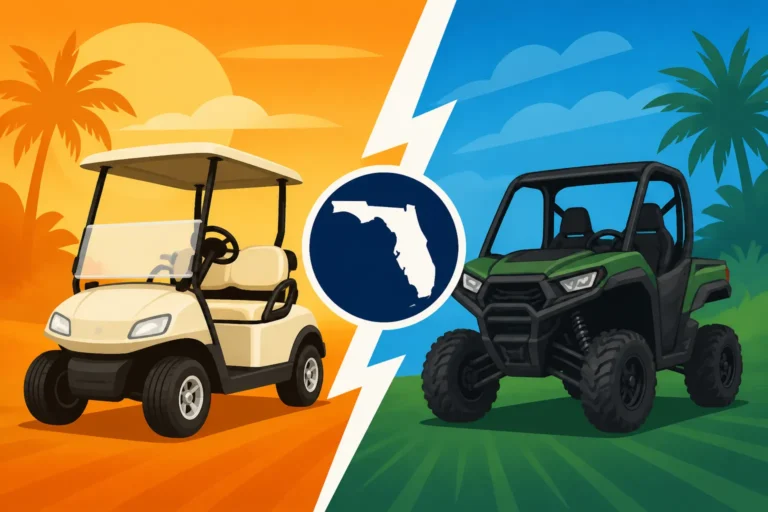
The state law's impact is felt keenly by anyone who uses a golf cart for commuting on publicly maintained roads, even if those roads are inside a residential development. This includes teenagers who previously drove a golf cart for school, after-school activities, or social visits. It also affects visiting family members from out of state who might not be aware of Florida's particular nuances for golf carts versus ATVs, or even [Florida Golf Cart Laws vs ATV Laws]. If you're 15 and want to drive on a public road, you now need to be in possession of a valid learner's permit. If you're 16 or older, you need a valid driver's license. This wasn't just about making kids wait another year; it was about ensuring that any person operating a golf cart on a public road had some foundational understanding of traffic laws, either through a permit or a full license.
The New Rules for Driving a Golf Cart on Florida Public Roads
The changes implemented in October 2023 were more than just an age bump; they introduced a clear framework for who can drive a golf cart on public roads and what they need to carry with them. This is where many people, even long-time Florida residents, get tripped up. It's not enough to just be the right age; you have to have the right credentials.
The 15-Year-Old Minimum with a Learner's Permit
For our younger riders, the new law sets a clear pathway. If you are 15 years old and want to drive a golf cart on a public road or street in Florida, you must possess a valid learner's permit issued by the state. This isn't just a suggestion; it's a legal requirement. A learner's permit, typically the first step toward getting a full driver's license, requires passing a written knowledge test about traffic laws and road signs. The idea here is that even though a golf cart isn't a full-sized vehicle, it operates in shared spaces with cars, trucks, and pedestrians. Basic knowledge of right-of-way, stop signs, and signals is absolutely critical for safety.
Furthermore, a 15-year-old with a learner's permit driving a golf cart on a public road must still adhere to the general rules of a learner's permit. While the specific "direct supervision" rules that apply to driving a car with a permit don't explicitly transfer to golf cart operation in the same way (e.g., needing a licensed driver in the passenger seat of the golf cart), the underlying principle is that the 15-year-old is expected to be more familiar with road rules by virtue of having obtained the permit. It signals a certain level of responsibility and knowledge that a 14-year-old, without such a permit, would not be assumed to have. This is a significant part of [Learner's Permits and Cart Driving at 15].
Licensed Drivers and the Photo ID Mandate
If you're 16 years old or older, the rules are somewhat simpler, but there's still a new wrinkle to remember. As of the law change, anyone aged 16 or older operating a golf cart on a public road must possess a valid driver's license. This could be any class of driver's license – Class E (the standard Florida license), a commercial driver's license, or even a valid license from another state or country, as long as it's recognized in Florida. The key is that you are a fully licensed driver, not just a permit holder.
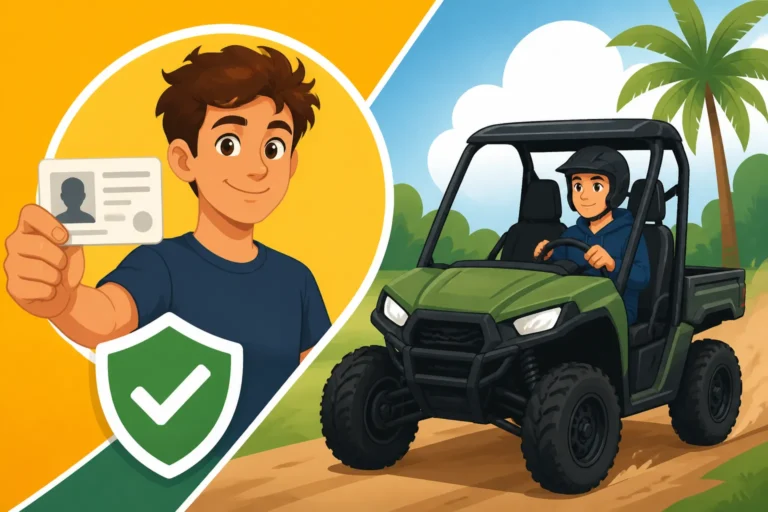
The often-overlooked, but equally important, part of this new rule is the requirement for all adults operating a golf cart on public roads to carry a government-issued photo identification. Yes, even if you're a seasoned driver with decades of experience, you need to have your physical driver's license or another form of government-issued photo ID on you. Imagine this scenario: you're just zipping down to the community pool in your golf cart, leaving your wallet at home because, well, it's just a golf cart! A local sheriff's deputy pulls you over for a minor infraction, or even just a random check, and you can't produce an ID. That could lead to a citation. It's a small change, but one that can easily trip up even the most diligent golf cart operators. Always remember to grab that ID, just like you would if you were getting in your car. This is why [Adults Carrying Photo ID on a Cart] is now such a big deal.
Where the Rules Apply: Public vs. Private Property
It's absolutely vital to grasp the distinction between "public roads or streets" and private property when it comes to Florida's golf cart laws. The new age and licensing requirements, as well as the need for adults to carry ID, only apply when you're operating a golf cart on roads that are maintained by a government entity – be it municipal, county, or state.
Think of it this way:
- Public Roads: These are the streets where you'd typically see cars, marked with street signs, speed limits, and often traffic lights. Even if they're within a residential community, if the county or city maintains them, they are public. This includes many [Florida Neighborhood Streets and Golf Cart Communities] that have designated golf cart paths or lanes. On these roads, the new age and licensing rules are strictly enforced.
- Private Property: This category includes your own yard, privately owned tracts of land (like farms or ranches), golf courses themselves, and roads within truly private gated communities where the roads are owned and maintained by the HOA or a private developer, not a government entity. On these private properties, the state's specific age and licensing laws for public road use generally don't apply. However, as mentioned earlier, private communities often have their own rules and regulations that residents must abide by, which could include age restrictions for golf cart operation. Always check with your HOA or community management to understand local guidelines.
Understanding this difference is key to avoiding legal trouble. Just because you see a golf cart driving somewhere doesn't mean it's following the same rules as a car on a public highway, or even a golf cart in a different type of community.
Golf Carts vs. LSVs: A Crucial Distinction
When we talk about golf cart laws, it's easy to lump all small, low-speed vehicles together. However, Florida law makes a very clear and important distinction between a standard "golf cart" and a "Low-Speed Vehicle" (LSV). This isn't just about semantics; it has profound implications for how and where these vehicles can be operated, and crucially, by whom. If you're considering modifying your golf cart or buying one that looks a little "beefier," understanding this difference is paramount.
Why Florida Distinguishes Between Them
The core difference between a golf cart and an LSV boils down to speed and equipment.
- Golf Carts: By Florida definition, a golf cart is a motor vehicle that is designed and manufactured for operation on a golf course for sporting or recreational purposes. They are generally not capable of exceeding 20 miles per hour. Critically, Florida law does not require golf carts to be titled or registered with the state, nor do they require liability insurance. This is a significant distinction, especially when you consider [Why a Cart Needs No Title but an LSV Does]. They are intended for short distances, low-speed environments, and typically operate on designated paths or specific local streets.
- Low-Speed Vehicles (LSVs): An LSV, on the other hand, is a four-wheeled electric vehicle whose top speed is greater than 20 miles per hour but not greater than 25 miles per hour. Because they can travel at slightly higher speeds, LSVs are held to a higher standard of safety equipment and legal requirements. They must be equipped with specific safety features that a standard golf cart often lacks: headlamps, stop lamps, turn signals, taillamps, reflex reflectors, a parking brake, a rearview mirror (or side mirrors), a windshield, seat belts, and a vehicle identification number (VIN). They must also be registered and titled with the state, and carry personal injury protection (PIP) and property damage liability (PDL) insurance. Many drivers add aftermarket components from companies like SuperATV to enhance safety and functionality, but to qualify as an LSV, these components must meet specific regulatory standards.
This distinction exists because LSVs, by nature of their higher speed capabilities, are considered more akin to conventional motor vehicles for certain purposes. They are allowed on public roads with posted speed limits of 35 mph or less, offering greater flexibility than golf carts but coming with stricter obligations.
Implications for Age and Licensing
The legal requirements for operating an LSV are much more stringent than for a golf cart, and this absolutely affects who can drive them.
- LSV Drivers: To operate an LSV on any public road in Florida, you must be at least 16 years old and possess a valid Class E (or higher) driver's license. Unlike golf carts, there's no learner's permit allowance for 15-year-olds when it comes to LSVs. Because LSVs are registered, titled, and insured, they are treated more like cars in terms of operator qualifications. This means that if you've modified your golf cart to go faster than 20 mph and added all the required safety equipment, it's no longer just a golf cart; it's an LSV, and the driver must meet all LSV requirements. This directly ties into [Florida LSV Registration and Insurance Rules].
- Golf Cart Drivers: As detailed above, a 15-year-old can drive a golf cart on public roads with a learner's permit, and a 16-year-old (or older) needs a full driver's license and must carry photo ID.
It's critical not to confuse the two. Attempting to drive an LSV without a valid driver's license, or without proper registration and insurance, can lead to significant penalties, including fines, citations, and even the impoundment of the vehicle. If you've got a cart that feels faster than a standard golf cart, or you've been adding aftermarket parts, it's worth checking its top speed to ensure you're correctly classifying it and meeting all legal obligations.
Navigating the Nuances and Common Misconceptions
Even with the new age rules clarified, there's still a maze of local ordinances, potential penalties, and safety considerations that golf cart owners and operators need to understand. Florida is a diverse state, and what's permissible in one county might be strictly prohibited just across the line. This landscape of rules and regulations can feel overwhelming, but a little knowledge goes a long way in keeping you on the right side of the law and ensuring everyone's safety.
County Opt-Outs and Local Ordinances
One of the most significant sources of confusion in Florida is the ability of counties and municipalities to enact their own specific ordinances regarding golf carts. While the state law sets a baseline for age and licensing on public roads, local governments often have the power to further restrict or even, in some cases, designate specific roads for golf cart use. This means that even if a 15-year-old with a learner's permit is technically allowed by state law to drive a golf cart on a public road, a specific city ordinance in their area might say otherwise, or might impose additional rules.
For example, a city might designate specific streets where golf carts are allowed, and explicitly prohibit them on others, regardless of the state's general permission for roads with speed limits under 25 mph. Some counties might have stricter rules for certain areas, or even ban golf carts entirely from their public roads, choosing to "opt-out" of the state's broader allowance, similar to how [Florida County ATV Opt-Outs: Why Rules Change at the Line] work for off-highway vehicles.
This fragmented regulatory environment means that simply knowing the state law isn't enough. Before you (or your teenager) head out on public roads in a golf cart, it is absolutely essential to check the local ordinances of your specific city and county. A quick visit to the county's or city's official website, or a call to the local traffic enforcement or clerk's office, can provide clarity and prevent an unnecessary citation.
What Happens If You or Your Child Don't Comply?
Ignoring the new age and licensing requirements for golf carts on public roads isn't just about breaking a minor rule; it can lead to tangible consequences. The goal of these laws is to enhance safety, and law enforcement agencies, like the [Florida Sheriff Enforcement of ATV Road Rules] for OHVs, are tasked with enforcing them to protect everyone on the road.
If a minor (under 18) is caught operating a golf cart on a public road without meeting the age or permit/license requirements, several things can happen:
- Citations and Fines: The operator can be issued a traffic citation, which carries a fine. These fines can vary, but they are often comparable to minor moving violations for other vehicles.
- Parental Responsibility: As the legal guardian, a parent or legal guardian can be held responsible for allowing an underage or unlicensed individual to operate a golf cart on public roads. This could mean they receive a citation as well.
- Impoundment: In some cases, particularly if there are repeated violations or other dangerous behaviors involved, law enforcement may have the authority to impound the golf cart. Retrieving an impounded vehicle can be costly, involving towing fees and storage charges.
- Insurance Issues: While golf carts generally don't require insurance, if an accident occurs while an underage or unlicensed driver is operating it illegally, any personal liability coverage you might have (e.g., through a homeowner's policy) could be jeopardized or denied due to the illegal operation.
For adult drivers who are 16 or older but fail to carry their required photo ID, the consequence will typically be a citation for that specific offense. While it might not seem as severe as an underage driver, it's still an avoidable hassle and expense. The core takeaway here is that taking these new rules seriously is the best way to avoid fines, stress, and potential legal entanglements. It’s all part of the broader conversation around [Florida Penalties for Illegal ATV Road Riding] which often applies to other off-highway vehicles and sometimes golf carts in certain contexts.
Safety Equipment and Avoiding Trouble
While the new age law for golf carts primarily focuses on driver qualifications, it's worth a moment to touch upon the importance of proper equipment. A golf cart, even if driven by a fully licensed adult, needs to be visible and functional to be safe on public roads. Even if your golf cart doesn't qualify as an LSV, making sure it has basic safety features is just good practice, especially given the new strictness around its operation.
Think about essentials like working headlights and taillights, especially if you might be out around dusk or dawn. Functional turn signals are also a huge plus for communicating your intentions to other drivers, whether they're in cars or other carts. A well-maintained braking system is non-negotiable. While not legally required for standard golf carts, adding mirrors can significantly improve situational awareness. Companies like SuperATV offer a wide range of aftermarket parts, from LED light bars to sturdy mirrors and improved tires, which can greatly enhance the safety and visibility of your golf cart. While these upgrades don't change the age law, they make the cart safer to operate on public roads where the new age requirements apply.
Remember, even if your driver meets the new age and licensing criteria, operating a cart that isn't safe or visible can still put them and others at risk, and potentially draw unwanted attention from law enforcement. Staying compliant with all aspects of the law, both driver-focused and equipment-focused, is the best path forward. This complete picture of regulation and safe practice is crucial, especially following [Florida Golf Cart Age Change Explained].
Disclaimer
This article is for general informational purposes only and does not constitute professional advice. Laws, prices and regulations vary by location and change over time. Consult a qualified professional for guidance on your specific situation.