Florida Golf Cart Laws vs ATV Laws
It's incredibly easy to get tangled up in Florida's vehicle laws, especially when you're trying to figure out where you can legally ride your ATV or cruise around in your golf cart. Many folks assume these machines are pretty much interchangeable or that if one can go on a certain road, the other can too. But that couldn't be further from the truth, and making the wrong assumption can lead to some hefty fines or even serious accidents. This guide is here to untangle the complexities of Florida's golf cart laws versus its ATV laws, helping you understand precisely what you can and can't do with each type of vehicle on the Sunshine State's diverse roadways and trails.
Understanding the Core Differences Between ATVs and Golf Carts in Florida
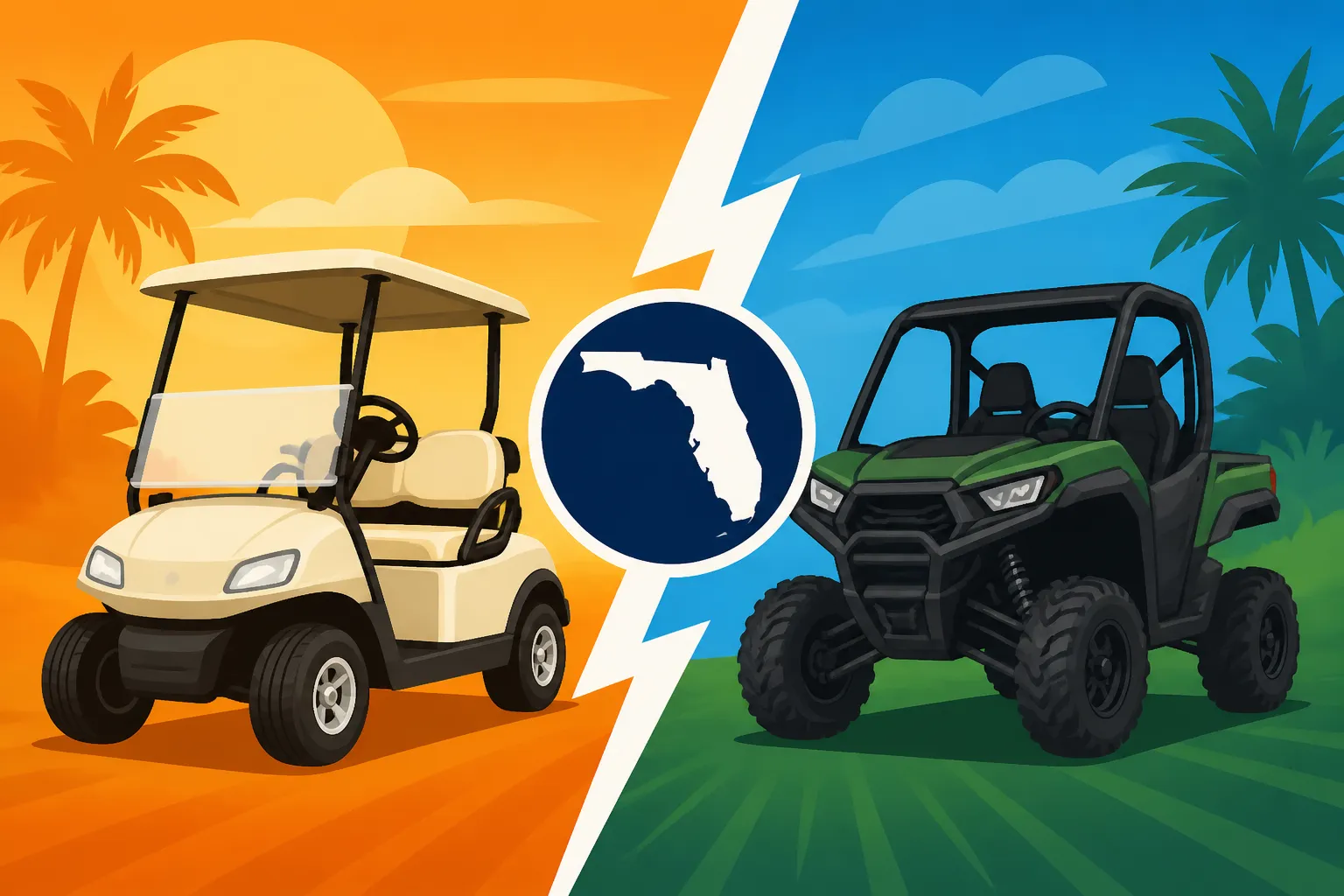
When you look at an ATV and a golf cart side-by-side, they both seem like pretty straightforward recreational vehicles, right? Four wheels, an engine, seats… what's the big deal? But in the eyes of Florida law, they are worlds apart, with vastly different rules governing where and how they can be operated. Getting this distinction clear from the outset is crucial for anyone who owns or plans to own either type of machine in Florida.
Defining an ATV Under Florida Law
Let's start with ATVs, or All-Terrain Vehicles. Florida statutes define an ATV as any motorized off-highway vehicle 50 inches or less in width, having a dry weight of 1,500 pounds or less, designed to travel on four low-pressure tires, and having a seat designed to be straddled by the operator and handlebars for steering control. Now, that's a mouthful, but the key takeaways here are the width (55 inches or less for titling purposes, though the general definition is often quoted as 50 inches), the dry weight, the straddle-style seat, and the handlebars. These are purpose-built machines for off-road adventure, meant to tackle rough terrain, mud, sand, and challenging trails.
This specific definition is vital because it dictates how the state regulates ATVs, from titling requirements to where they can be ridden. When you think about the design of an ATV, it’s all about agility, power, and handling uneven landscapes. They're not built for paved roads, nor are they intended to blend with conventional street traffic. That straddled seat and handlebar configuration, much like a motorcycle, tells you a lot about its intended use and the active riding style it requires.
Florida law also has definitions for other off-highway vehicles, like utility vehicles (UTVs) or side-by-sides, which are typically wider than 55 inches or heavier than 1,500 pounds dry weight. While many people colloquially lump UTVs in with ATVs, the state makes a clear distinction, particularly when it comes to titling and sometimes even where they can be ridden. Knowing [Florida's 55-Inch ATV Definition and Why It Matters] is important because it directly impacts the category your machine falls into and the associated regulations.
Defining a Golf Cart and Low-Speed Vehicle in Florida
Now, let's pivot to golf carts. Florida law defines a "golf cart" as a motor vehicle that has at least three wheels, an empty weight of less than 1,300 pounds, and is designed to be operated at speeds of no more than 20 miles per hour. That's a very different set of characteristics from an ATV, isn't it? Golf carts are primarily designed for transporting people and golf equipment on golf courses or for short distances in planned communities. They have bench seats, a steering wheel, and are generally much less robust than an ATV.
The key here is their speed limitation. At 20 mph max, they're not meant to keep up with even slow-moving street traffic. This inherent design choice immediately sets them apart from ATVs and dictates their limited road-use permissions. Think of them as specialized short-distance shuttles, not adventurers.
Adding another layer of complexity is the "Low-Speed Vehicle" (LSV). An LSV is a four-wheeled electric vehicle whose top speed is greater than 20 miles per hour but not greater than 25 miles per hour. LSVs must comply with specific federal safety standards for low-speed vehicles, including headlights, turn signals, stop lamps, tail lamps, reflex reflectors, a parking brake, a rearview mirror, a windshield, seat belts, and a vehicle identification number (VIN). While many LSVs start their life as golf carts, they undergo modifications and certifications that allow them greater road privileges. This distinction is crucial, as a standard golf cart is not an LSV, and therefore, cannot enjoy the same operating privileges.
Why the Distinction Matters on Florida Roads
The reason these definitions aren't just legal jargon but crucial practical knowledge is simple: safety and legality. Operating an ATV where only a golf cart is allowed, or vice-versa, can have serious consequences. For starters, you're looking at potential citations, fines, and even having your vehicle impounded. But beyond the legal repercussions, there's a significant safety aspect. ATVs are designed with a high center of gravity and suspension systems built for off-road articulation, which makes them inherently unstable on paved surfaces, especially when making turns at speed. Their tires, often knobby and low-pressure, offer poor traction on asphalt compared to road-specific tires, increasing the risk of rollovers or loss of control.
Conversely, golf carts lack the robust chassis, protective roll cages (unless modified into an LSV with specific safety features), and impact absorption of a car, making them vulnerable in any interaction with faster-moving traffic. Their slow speed also makes them a hazard on roads not designated for them, as they can impede traffic flow and create dangerous situations for other drivers. The legal distinctions aren't arbitrary; they're rooted in the fundamental design, intended use, and safety profiles of these machines.
Understanding Florida Golf Cart Laws vs ATV Laws is about more than just avoiding a ticket; it's about making sure you and those around you are safe. Ignorance of the law is never an excuse, especially when it comes to operating vehicles that can pose significant risks if misused. So, before you head out, confirm which category your machine falls into and what rules apply to it.
Navigating Road Use Regulations for ATVs in Florida
So, you've got your ATV, helmet on, and you're ready to ride. But where exactly can you go? Florida's regulations for ATVs on public roads are quite strict, primarily because these machines are built for off-road environments, not asphalt. It's a common area of confusion and frustration for riders, but understanding the rules is key to enjoying your machine responsibly and legally.
The General Rule: No Paved Roads for ATVs
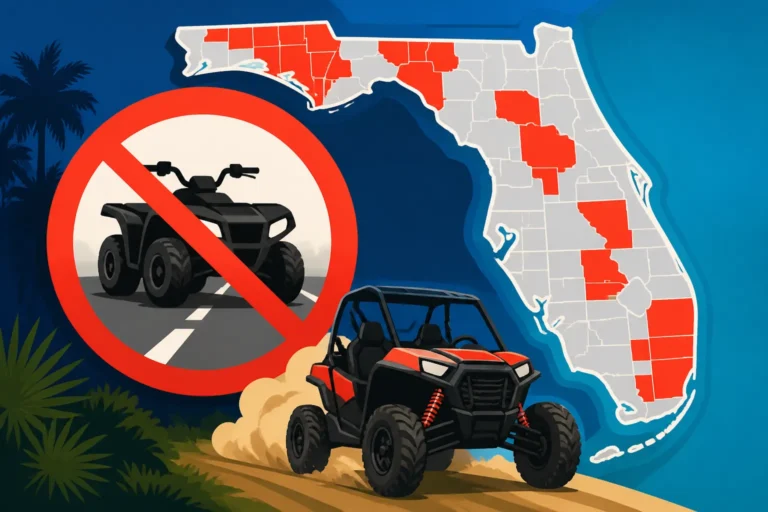
Let's make this crystal clear right away: generally, ATVs are not allowed on paved public roads in Florida. This isn't just a suggestion; it's a fundamental aspect of Florida law. You cannot simply ride your ATV down Main Street to the gas station or cruise through your paved neighborhood streets. The rationale behind this strict rule is multi-faceted and rooted in safety. ATVs are designed for traversing uneven, unpaved terrain. Their suspension systems, knobby tires, and high center of gravity make them unstable on hard, flat surfaces, especially at speeds common on public roads. Trying to turn sharply or brake suddenly on pavement can easily lead to a rollover or loss of control.
Furthermore, ATVs often lack the safety features required for street-legal vehicles, such as turn signals, rearview mirrors, and robust lighting for night use. They don't typically have seatbelts in the same way cars do, and their open design offers minimal protection in the event of a collision with a car or truck. The state considers these machines too dangerous for integration into the flow of conventional traffic.
Enforcement of this rule is quite serious. Florida law enforcement officers are well aware of the dangers and will issue citations for illegal road use. These tickets can come with significant fines, and in some cases, your ATV could even be impounded. This can be a huge headache and an unexpected expense, all for a brief, illegal ride. So, while it might be tempting to just zip across a paved section, remember the risks outweigh the convenience. For a deeper dive, check out [Are ATVs Street Legal in Florida?].
Exceptions for Unpaved Roads and Specific Designations
Now, there are some very specific, limited exceptions to the "no paved roads" rule, primarily concerning unpaved roads. Florida Statute 316.2123 allows ATVs to be operated on unpaved roadways where the posted speed limit is 35 mph or less, under certain conditions. This is a big "if," and it's where many riders get confused or make assumptions. First, the road must be unpaved – think dirt roads, gravel paths, or graded fire lanes, not paved country roads. Second, the posted speed limit must be 35 mph or less. If there's no posted limit, or if it's higher than 35, the exception doesn't apply.
Even on these qualifying unpaved roads, there are more rules. The operator must have a valid driver's license. For minors under 16, they must be under the direct supervision of a licensed driver and have completed a safety course. This means you can't just send your 14-year-old out alone on the back roads. The machine must also have proper headlights and taillights if operated between sunset and sunrise, though night riding on these roads is generally restricted to agricultural or specific work-related purposes, or by specific local ordinance. [Florida's Unpaved Road Rule for ATVs Explained] provides more context on this often-misunderstood exception.
Crucially, counties have the power to "opt out" of this unpaved road exception, meaning they can explicitly ban ATVs from all public roads, even unpaved ones, within their jurisdiction. It's vital to check local county ordinances before assuming you can ride on any dirt road you encounter. What's legal in Polk County might be illegal just across the line in Osceola County. The best bet is always to stick to designated off-road trails and private property with permission.
Crossing Paved Highways and Other Limited Movements
What about simply crossing a paved road to get to another trail or private property? Florida law does allow an ATV to cross a paved public highway, but under very strict conditions. The crossing must be made at an angle of approximately 90 degrees to the roadway, at a place where a quick and safe crossing can be made. The operator must bring the ATV to a complete stop before crossing and yield to all traffic on the highway. Think of it like crossing a railroad track – it's a brief, direct movement, not an opportunity to ride along the road.
This exception is not a loophole for riding on paved roads for any significant distance. It's purely for transit from one legal riding area to another, like getting from one section of a vast private ranch to another, or moving from a trail to a dirt path across a lesser-used county road. The moment you start riding along the paved road, even the shoulder, you're back in violation of the law.
These crossings must be done with extreme caution. The disparity in speed between an ATV and other vehicles on a paved highway can be significant, and the visibility of an ATV to car drivers might be low. Always assume drivers don't see you and proceed with the utmost care. It’s also important to remember that this crossing privilege doesn't extend to state highways or interstates; it's generally applicable to less-trafficked paved county roads where an unpaved road might intersect. For more on this specific maneuver, see [Florida ATV Crossing a Paved Highway].
Florida Golf Cart Road Rules and Operating Privileges
Unlike ATVs, golf carts actually do have specific provisions in Florida law that allow them to be operated on certain public roads. However, these privileges come with their own set of rules and limitations, designed to integrate them safely (and slowly) into specific community environments.
Where Golf Carts Are Permitted to Operate
The primary places you'll find golf carts legally cruising on public roads are within designated golf cart communities, on golf course access roads, and on local roads specifically designated by local governmental entities. Florida Statute 316.212 allows golf carts to operate on public roads or streets within a municipality or county, but only if the local government has expressly authorized it. This means a city or county commission must pass an ordinance allowing golf carts on specific roads. These roads typically have a posted speed limit of 25 mph or less, and the carts must be operated during daylight hours unless equipped with headlights, taillights, turn signals, and a windshield.
Many of Florida's popular retirement communities and planned developments, like The Villages, have extensively integrated golf cart paths and designated roads into their infrastructure, making them a primary mode of transportation. These areas are specifically designed with golf cart traffic in mind, often with separate lanes, dedicated crossings, and clear signage. In these communities, golf carts become a convenient, often preferred, way to get around for shopping, dining, and social events. You can learn more about this in [Florida Neighborhood Streets and Golf Cart Communities].
It's absolutely critical to understand that just because you see golf carts on roads in one community doesn't mean it's legal everywhere. Each city or county has to make its own rules. If you're visiting a new area or moving to a different part of Florida, you must check the local ordinances regarding golf cart use on public streets. Don't just assume; a quick call to the local sheriff's office or city hall can save you a lot of trouble.
Age and Licensing Requirements for Golf Cart Drivers
This is an area that saw a significant change in Florida law, specifically impacting younger drivers. Previously, you could be as young as 14 to drive a golf cart. However, as of October 1, 2023, the rules changed. Now, a person must be at least 15 years old and possess a learner's permit, or be 16 years old and possess a valid driver's license to operate a golf cart on public roads or streets. This change was enacted to address safety concerns regarding inexperienced young drivers operating these vehicles.
So, if you're 15, you need to have that learner's permit in your pocket, and if you're 16 or older, your regular driver's license will suffice. Adults operating a golf cart are also now required to carry a valid government-issued photo identification. This means no more letting your 13-year-old take a quick spin to the neighbor's house on a designated road, even if it's within a golf cart-friendly community. The new law is firm on these age and licensing requirements, and enforcement will certainly follow suit. [Florida Golf Cart Age Law Since October 2023] details this important legislative change.
These rules apply to golf carts operated on public roads and streets, as permitted by local ordinances. On private property, such as a golf course or within a gated community that doesn't use public streets, these age restrictions might not strictly apply, but it's always best to check the specific rules of that private property. Safety should always be the top priority, regardless of the legal minimum age.
Equipment Standards for Street-Legal Golf Carts
For a golf cart to be legally operated on public roads in Florida (where permitted), it needs more than just an engine and wheels. While a basic golf cart used solely on a golf course might not need extensive features, one venturing onto public streets needs specific equipment to enhance visibility and safety. Florida law requires golf carts on public roads to have efficient brakes, reliable steering apparatus, safe tires, a rearview mirror, and efficient lights, turn signals, and a windshield if operated between sunset and sunrise.
Think of it this way: if you're going to share the road, even a slow-speed road, with other vehicles, you need to be seen and be able to signal your intentions. Headlights and taillights are crucial for visibility, especially during dusk or dawn, or on overcast days. Turn signals are non-negotiable for indicating turns, and a rearview mirror allows you to monitor traffic behind you. A windshield provides protection from road debris and insects, improving the driver's ability to see clearly.
It's important to differentiate these requirements from those for a Low-Speed Vehicle (LSV), which has even more stringent federal safety standards. While a golf cart with the required lighting can operate on a designated street during nighttime hours, it's still limited to 20 mph max. An LSV, with its full complement of safety features, can go up to 25 mph. So, while you might add some SuperATV accessories to customize your golf cart, ensure that any lighting or mirrors you install meet Florida's legal requirements for golf cart operation on public roads, especially if you plan to use it outside of daylight hours.
Low-Speed Vehicles (LSVs) – The Hybrid Category
Nestled between the traditional golf cart and a street-legal car is the Low-Speed Vehicle, or LSV. These vehicles often look like beefed-up golf carts but carry a distinct legal classification that grants them more freedom on Florida's roads, albeit with their own set of rules. Understanding the LSV is key because it's the closest a golf cart can get to "street legal" status for broader road use.
What Makes a Golf Cart an LSV?
The core difference between a standard golf cart and an LSV lies in its speed capabilities and compliance with federal safety standards. A golf cart, by Florida definition, goes no faster than 20 miles per hour. An LSV, on the other hand, is a four-wheeled vehicle designed to go faster than 20 mph but not exceeding 25 mph. That small speed increase makes a huge difference in its legal standing and what's required of it.
To qualify as an LSV, a vehicle must meet the specific federal safety standards outlined in 49 C.F.R. Section 571.500. This isn't just about adding a few lights; it's a comprehensive set of requirements that ensure the vehicle is safe for limited road use. These requirements include:
- Headlamps
- Stop lamps
- Turn signal lamps
- Tail lamps
- Reflex reflectors
- A parking brake
- A rearview mirror (or exterior mirrors on both sides)
- A windshield
- Seat belts at each designated seating position
- A Vehicle Identification Number (VIN)
Essentially, an LSV is a street-legal vehicle, built or modified to meet specific safety criteria, allowing it to integrate more safely with slower vehicular traffic. Many manufacturers produce LSVs directly, but it's also common for golf carts to be modified to meet these standards. If you're considering modifying a golf cart into an LSV, ensure that all components are federally compliant and installed correctly.
LSV Registration, Insurance, and Equipment
Because an LSV is considered a street-legal motor vehicle, it comes with the same responsibilities as driving a car or truck on Florida's roads. This means it must be registered with the Florida Department of Highway Safety and Motor Vehicles (FLHSMV), just like any other car. It will have a license plate and a title, making it distinct from a golf cart which typically does not require registration or a traditional title (though ATVs do require a title, as covered in [Who Must Title an ATV in Florida]).
Beyond registration, LSVs are also required to have valid motor vehicle insurance. This typically includes personal injury protection (PIP) and property damage liability (PDL) coverage, just like a standard car. This insurance is crucial for protecting you and others in case of an accident. Operating an LSV without insurance is illegal and carries penalties similar to driving an uninsured car. This is a significant difference from golf carts, which usually aren't legally mandated to carry insurance (though it's always a good idea to check your homeowner's policy for coverage).
The equipment list for an LSV is more extensive than for a golf cart. While a golf cart needs lights for night use, an LSV needs turn signals, seatbelts, and a VIN. This reflects its elevated status as a road-going vehicle. When looking at the [Florida LSV Top Speed Limit], it's clear these vehicles are designed for a specific niche – faster than a golf cart, but not fast enough for major roadways.
Road Access for LSVs in Florida
So, where can you actually drive an LSV? Thanks to their federal safety compliance, LSVs have broader road access than standard golf carts. In Florida, an LSV can be operated on any public road where the posted speed limit is 35 miles per hour or less. This is a considerable expansion compared to golf carts, which are limited to roads specifically designated by local ordinance and typically with a 25 mph or less speed limit.
This means LSVs can legally travel on many neighborhood streets, secondary roads, and within planned communities without needing a specific local golf cart ordinance. However, they are strictly prohibited from operating on roads with speed limits exceeding 35 mph, such as most state highways, main arterial roads, and interstates. Their design and limited top speed make them unsafe for higher-speed traffic.
The versatility of LSVs makes them very popular in Florida's many communities with lower speed limits, offering an eco-friendly and convenient way to get around for daily errands, social visits, or simply enjoying the neighborhood. They bridge the gap between recreational use and practical transportation in specific environments. However, it's essential to remember that even with their enhanced road privileges, LSVs are still not ATVs, and they certainly aren't cars. They occupy their own unique legal and operational space on Florida's diverse road network.
Penalties, Enforcement, and Real-World Scenarios
Mistakes happen, especially when navigating complex regulations like Florida's vehicle laws. However, when it comes to ATVs, golf carts, and LSVs, "I didn't know" isn't an acceptable defense. Law enforcement takes these rules seriously, primarily for public safety. Understanding the potential penalties and how enforcement plays out in real-world scenarios can help you avoid costly blunders.
Consequences of Illegal ATV Road Use
Operating an ATV illegally on a paved Florida road can lead to a host of unpleasant consequences. The most immediate is usually a traffic citation, which carries a fine. While specific fine amounts can vary, they are often comparable to other moving violations and can quickly add up. Beyond the fine, repeated offenses or particularly egregious violations could lead to more severe penalties.
Perhaps even more concerning for ATV owners is the risk of impoundment. If a law enforcement officer deems your ATV to be illegally operated on a public road, they have the authority to have it towed and impounded. This means you'll not only have to pay the traffic fine but also towing fees and daily storage fees at the impound lot, which can quickly become very expensive. Getting your ATV back often requires proving ownership and showing it will be legally transported from the impound lot, rather than ridden out. [Florida Penalties for Illegal ATV Road Riding] can be quite substantial, and it's a headache no rider wants.
Beyond the legal and financial penalties, there's the very real risk of an accident. As discussed, ATVs are not designed for paved roads. A collision with a car or truck, especially at speed, can result in severe injuries or even fatalities for the ATV rider, who has minimal protection. It can also lead to significant property damage and liability issues. The enforcement isn't just about revenue; it's about preventing these potentially catastrophic outcomes. Officers often have a good eye for ATVs where they shouldn't be, so don't assume you won't get caught on that "quick hop" down the street.
Golf Cart Violations and What to Expect
While the penalties for golf cart violations might seem less severe than for ATVs, they are still something to avoid. If you're caught operating a golf cart on a road where it's not permitted, or if you violate age/licensing requirements, you can expect a traffic citation. These fines are designed to deter illegal operation and maintain safety within communities.
A common scenario might involve a minor operating a golf cart on a public road without the newly required learner's permit or driver's license. With the recent changes to the law regarding the minimum age and photo ID requirement, law enforcement and community security personnel in golf cart-friendly areas will be more vigilant. A parent could also face legal repercussions for allowing an underage or unlicensed driver to operate the golf cart on a public road. Remember, [Florida Golf Cart Photo ID Requirement for Adults] is also now a thing, so even if you're an adult, make sure you have your ID on you.
In many planned communities or HOAs, violations related to golf cart use might also fall under community rules, leading to additional fines or restrictions imposed by the association, even if law enforcement doesn't issue a state citation. These local rules can vary widely, so it's always wise to be familiar with both state law and any specific community guidelines where you live or recreate.
Navigating Grey Areas and Local Ordinances
Florida's diverse landscape means that what's permissible in one county might be strictly prohibited in another. This creates "grey areas" where riders might unintentionally fall afoul of the law. For example, while Florida law has provisions for ATVs on unpaved roads with speed limits of 35 mph or less, individual counties can "opt out" of this rule. This means a dirt road that looks perfectly fine for riding in one county might be completely off-limits just a few miles down the road in the next county.
Similarly, golf cart regulations are heavily dependent on local ordinances. Some cities might allow golf carts on certain low-speed roads, while neighboring cities might not. These decisions are often made by county commissioners or city councils after public hearings, taking into account local traffic patterns, safety concerns, and community input. [Florida Public Hearing Process for County ATV Rules] is how these decisions are often made, so staying informed about local government actions is helpful.
To avoid penalties and ensure legal operation, always check with the local county sheriff's office, county tax collector, or city hall for the most current and specific regulations for ATVs, golf carts, and LSVs in the area you plan to ride. Never rely on assumptions or what you've seen others do, as they might be operating illegally or under different, older rules. When in doubt, it's always safer to err on the side of caution and stick to clearly designated trails or private property with explicit permission.
Safety, Accessories, and Responsible Riding
Regardless of whether you're riding an ATV, a golf cart, or an LSV, safety should always be your top priority. While the rules for each vehicle type are different, the underlying principle of responsible operation remains constant. This means being properly equipped, understanding the limitations of your machine, and practicing safe habits.
Essential Safety Gear and Practices for ATVs
For ATV riders, proper safety gear isn't just a recommendation; it's often a legal requirement, especially for younger riders, and always a smart choice for everyone. A U.S. DOT-compliant helmet is arguably the most critical piece of safety gear. Florida law specifically requires helmets for ATV riders under the age of 16 when operating on public lands or properties, but any responsible rider knows a helmet protects against severe head injuries regardless of age.
Beyond a helmet, eye protection (like goggles or a face shield) is essential to shield your eyes from dust, debris, branches, and insects. Gloves can improve grip and protect hands from abrasions. Long sleeves and long pants, even in Florida's heat, offer protection against scrapes, cuts, and sun exposure. Over-the-ankle boots protect your feet and ankles, especially important when straddling the machine and shifting your weight.
Responsible riding also means adhering to passenger rules; most ATVs are designed for a single rider, and carrying a passenger on a single-rider ATV is dangerous and often illegal. It also means never riding under the influence, understanding trail conditions, and riding within your skill level. Taking a certified ATV safety course is highly recommended for all riders, regardless of age, to learn proper techniques and build confidence. Many of these courses are mandatory for young riders to operate on public lands, as explored in [Florida ATV Safety Course Requirements for Riders Under 16].
Golf Cart Safety Tips for Designated Areas
While golf carts might seem less inherently dangerous than ATVs, they still require respect and responsible operation, especially when carrying passengers. The primary safety concerns for golf carts often revolve around rollovers, especially when turning too sharply at speed, and collisions with other vehicles or pedestrians due to inattention.
Always ensure all passengers are seated properly and keep their hands and feet inside the cart at all times. Overloading a golf cart with too many passengers or excessive cargo can affect its stability and braking performance. Drive defensively, even on slow-speed roads, and be aware of your surroundings, including pedestrians, cyclists, and other vehicles. Avoid distracted driving, such as using a cell phone, which can lead to accidents just as easily in a golf cart as in a car.
Remember, the recent changes in Florida law also impact golf cart passengers, particularly the new age requirements for drivers and the [Florida Golf Cart Passenger Rules]. While golf carts aren't typically used for aggressive driving, the combination of slow speeds and often open designs means that even minor incidents can lead to injuries. Treat it like any other vehicle on the road.
Upgrades and Accessories: Knowing What's Legal
For both ATVs and golf carts, there's a huge aftermarket for upgrades and accessories. From lift kits and bigger tires to enhanced lighting and sound systems, you can customize your ride to your heart's content. However, when those machines might touch public roads or designated riding areas, you need to be mindful of legality.
For ATVs, while products from companies like SuperATV can significantly enhance performance and capability off-road (think heavy-duty axles, lift kits, or specialized bumpers), most of these are designed for off-highway use. Modifying an ATV with street-style turn signals or mirrors doesn't magically make it street legal in Florida. In fact, some modifications, if they alter the vehicle's original classification (e.g., making it wider than 55 inches), could actually change its legal standing from an ATV to a UTV, which has its own set of rules.
For golf carts and LSVs, modifications for street use must strictly adhere to the equipment standards. If you're adding lighting, ensure it's compliant with visibility requirements. Lift kits and oversized tires on golf carts can also impact stability and might not be advisable if the cart is frequently used on paved surfaces or with passengers, unless specific engineering considerations are met. Always ensure any modification doesn't compromise the safety or legal compliance of your vehicle, especially if it's meant for use on public lands or roads.
Common Misconceptions and Planning Your Ride
It's clear that the lines between ATVs, golf carts, and LSVs are often blurred in people's minds, leading to a host of common misconceptions. Dispelling these myths and properly planning your ride are essential steps for legal and enjoyable recreation in Florida.
Debunking Myths About ATV Street Legality
Perhaps the most pervasive myth is that an ATV can be made "street legal" in Florida simply by adding certain accessories like turn signals, a horn, and mirrors. Many riders from other states might be familiar with "street legal ATV" conversions, but Florida has no such provision for ATVs (as defined by the state statute). As we've extensively covered, ATVs are generally prohibited from paved public roads, regardless of what accessories you bolt on. The core issue isn't just the accessories; it's the fundamental design and purpose of the vehicle itself. [Are ATVs Street Legal in Florida?] is a question often asked, and the answer is almost always no for the traditional ATV.
Another common misconception is that if a dirt road is unpaved, you can automatically ride your ATV on it. Not so fast! As discussed earlier, not only must the speed limit be 35 mph or less, but the county must also not have opted out of the state's unpaved road exception. There are also many private dirt roads, logging roads, or utility easements that may look public but are, in fact, private property, and riding there without permission is trespassing.
Finally, some riders mistakenly believe that if they just ride on the shoulder of a paved road, they're not technically on the road itself. This is incorrect. Riding the shoulder of a public paved road with an ATV is still considered illegal road operation and subject to the same penalties. The "grey area" here is much smaller than most people assume.
Choosing the Right Machine for Your Florida Lifestyle
Given the distinct legal frameworks, choosing between an ATV, a golf cart, or an LSV really depends on your primary intended use in Florida.
- For pure off-road adventure: If your dream is to tackle challenging trails, explore designated OHV parks like the Croom Motorcycle Area, or ride on private land, an ATV or UTV is your go-to. These machines are engineered for rugged performance and will provide the thrill you seek. Just remember, they are not for public paved roads.
- For convenient community travel: If you live in a planned community, a retirement village, or a neighborhood with low-speed roads and designated golf cart paths, a standard golf cart is likely ideal. It's perfect for short trips, visiting neighbors, or getting to the community center. Just ensure you and your passengers meet the new age and identification requirements.
- For broader local road access: If you want a bit more versatility than a golf cart, allowing you to travel on more public roads with speed limits up to 35 mph, then an LSV is the answer. It combines the ease of a golf cart with the legal "street legal" status that allows for wider use within appropriate speed zones, provided it has all the necessary safety features and is registered and insured.
Understanding these distinctions helps you make an informed purchase that aligns with Florida law and your lifestyle. For example, if you live in a rural area with plenty of dirt roads and enjoy off-roading, an ATV is probably what you need. If you live in a community like The Villages and want to drive to the local Publix, an LSV or a street-legal golf cart is your best bet.
Preparing for Public Land Access and Permits
Regardless of your chosen machine, if you plan to ride on public lands in Florida, there's another layer of preparation required. ATVs, UTVs, and often dirt bikes need to be properly titled with the state of Florida. This is separate from registration for street use but is a prerequisite for legal ownership and operation on most public lands. [Florida Off-Highway Vehicle Title Rules Explained] covers this in depth.
Beyond titling, many public riding areas, particularly state forests and national forests, require OHV passes or permits. These can be daily, weekly, or annual passes and often come with specific rules regarding their display and use. For example, [Florida Public Land Riding Without a Pass Penalty] is a real concern, as rangers frequently check for valid passes. You might also need to complete an ATV safety course, especially if you're under 16, to ride on these public lands.
Always research the specific rules and permit requirements for any public riding area you plan to visit before you load up your machine and drive there. Websites for the Florida Forest Service, the Florida Department of Environmental Protection, and the U.S. Forest Service are excellent resources. Proper planning ensures you have all the necessary paperwork, permits, and safety gear, allowing you to focus on the fun of riding rather than worrying about legal hassles.
| Feature / Category | All-Terrain Vehicle (ATV) | Golf Cart | Low-Speed Vehicle (LSV) |
|---|---|---|---|
| Primary Design Use | Off-road recreation, challenging terrain | Golf courses, planned communities, short distances | Community travel, local errands (on low-speed roads) |
| Typical Seating | Straddle-style seat for single rider (some two-up models) | Bench seating, multiple passengers | Bench seating, multiple passengers (with seatbelts) |
| Steering Control | Handlebars | Steering wheel | Steering wheel |
| Top Speed | Varies widely, can exceed 50 mph | Up to 20 mph | 20-25 mph |
| Public Paved Roads | Generally PROHIBITED | Limited to roads with posted 25 mph or less, if designated by local ordinance | Limited to roads with posted 35 mph or less, no local ordinance required |
| Unpaved Roads | Permitted on 35 mph or less unpaved roads, unless county opts out; licensed driver required | Generally PROHIBITED (unless explicitly designated) | Permitted on 35 mph or less unpaved roads |
| Registration/License Plate | NO (requires title for public land use) | NO | YES (requires registration & license plate) |
| Titling Required | YES (for public land use, private sale transfer) | NO | YES |
| Insurance Required | No state requirement (check private parks/landowners) | No state requirement (check homeowner's policy) | YES (PIP & PDL, like a car) |
| Driver Age/License | Licensed driver for unpaved roads; under 16 requires safety course & direct supervision | 15 with learner's permit, or 16 with driver's license | Licensed driver required |
| Required Safety Gear | Helmet (under 16), eye protection, protective clothing advised | Not specified beyond operational safety requirements | Seat belts, headlights, turn signals, mirrors, windshield (federally mandated) |
Disclaimer
This article is for general informational purposes only and does not constitute professional advice. Laws, prices and regulations vary by location and change over time. Consult a qualified professional for guidance on your specific situation.