Strapping a Quad Down for a Highway Tow
There’s nothing quite like the feeling of heading out to your favorite Florida riding spot, whether it’s the muddy trails of Hog Waller or the sandy expanses of Ocala National Forest. But before you get to the fun, there’s the often-dreaded task of getting your quad or side-by-side securely onto a trailer and ready for the highway. The thought of your valuable machine shifting, bouncing, or God forbid, coming loose on I-4 can send shivers down any rider’s spine. This guide is here to walk you through the essential steps and best practices for strapping down your ATV or UTV safely, ensuring a smooth tow to your next adventure.
Preparing Your ATV and Trailer for Transport
Before you even think about throwing a strap over your quad, a little prep work goes a long way in ensuring a secure and damage-free journey. Many riders rush this step, only to find themselves pulling over on the shoulder miles later to re-tighten or re-adjust. Trust me, a few extra minutes here saves a lot of headaches – and potential repairs – down the road.
First, take a good look at your trailer. Is it roadworthy? Check the tires for proper inflation and wear, and make sure all the lug nuts are tightened. Nothing ruins a trip faster than a flat trailer tire or, even worse, a lost wheel. Next, ensure your trailer lights are functioning correctly – brake lights, turn signals, and running lights. This isn't just a courtesy; it's a legal requirement and crucial for your safety and the safety of others on the road. [Trailer Lights That Keep You Out of Trouble] is a great resource if you’re unsure about what Florida requires. Don't forget to check your hitch connection and safety chains. They should be properly engaged and crossed under the hitch, just in case the unthinkable happens.
Next, focus on your ATV or UTV. Remove any loose items that could fly off during transit. This includes coolers, fuel cans (unless securely mounted), small tool bags, and anything else not bolted down. Even seemingly sturdy cargo nets can sometimes fail under highway wind speeds. If you have an enclosed trailer, this might be less of a concern, but on an open trailer, consider everything a potential projectile. It’s also a good idea to put your machine in park and engage the parking brake once it’s loaded onto the trailer. This adds an extra layer of security, preventing accidental roll-offs during loading or unloading, or even slight shifts during bumpy travel.
Finally, think about where you're going to place the machine on the trailer. Aim for a balanced load, slightly nose-heavy. This means the majority of the weight should be forward of the trailer's axle(s). Too much weight at the rear can cause trailer sway, which is incredibly dangerous at highway speeds. Too much tongue weight can overload your tow vehicle's hitch. If you're hauling a large side-by-side, this balancing act becomes even more critical. Some riders even go so far as to get their loaded trailer weighed at a local weigh station to ensure proper distribution, especially for longer hauls. [Weighing a Side-by-Side Before You File] can offer more insights into this process.
The Art of Securely Strapping Your Quad
Now for the main event: securing your machine. This isn't just about cinching down any old strap; it's about strategic placement, proper tension, and using the right equipment for the job. You wouldn't trust your life to a cheap helmet, so don't trust your machine's safety to flimsy tie-downs.
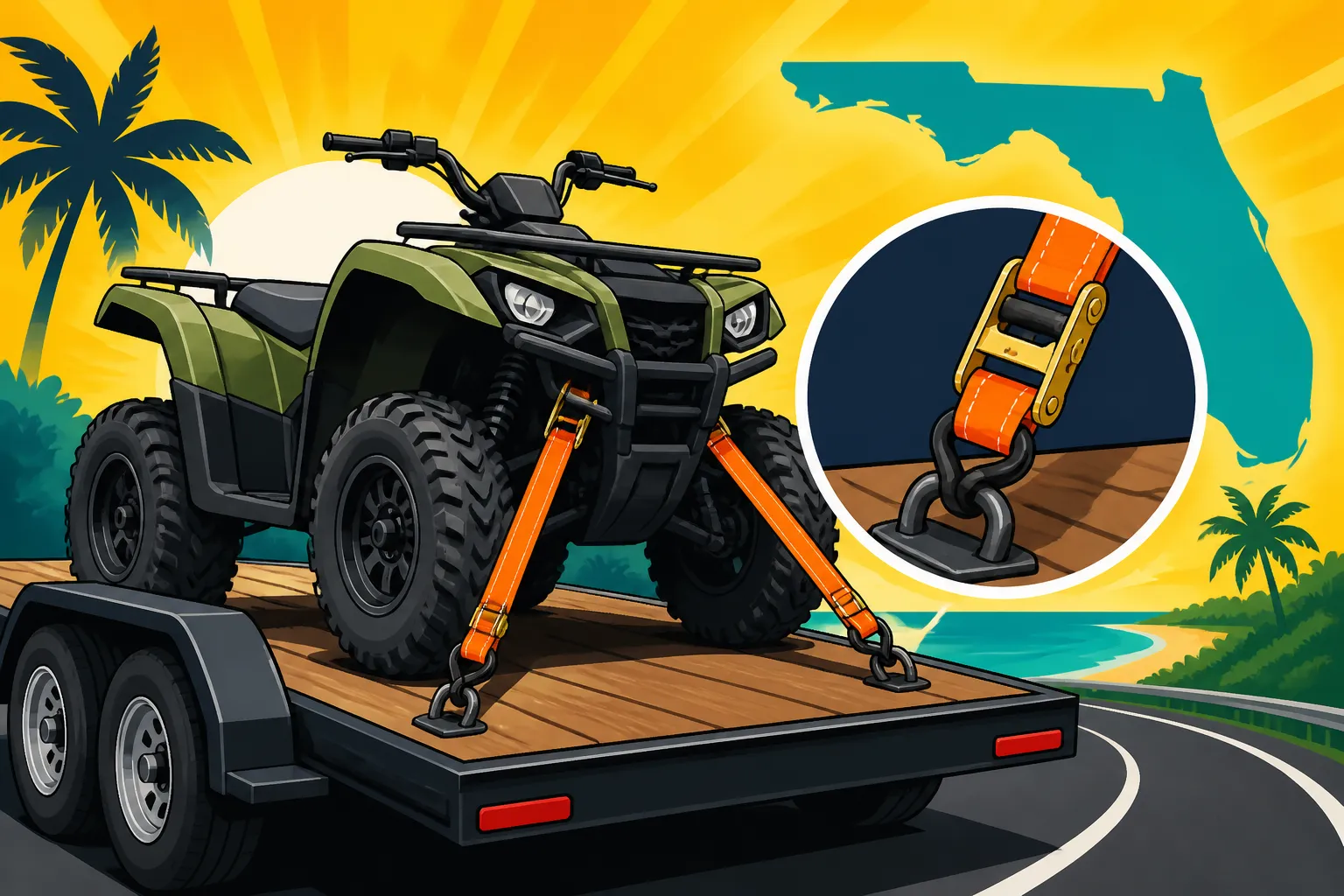
Most riders opt for either ratchet straps or cam buckle straps. Ratchet straps offer superior tightening force, which is great for heavier machines like UTVs, but they also carry the risk of over-tightening and potentially damaging suspension components if you’re not careful. Cam buckle straps are quicker and easier to use for lighter ATVs and are less prone to over-tightening, but they might not provide enough tension for larger, heavier machines or rougher roads. A good rule of thumb is to use at least four tie-down straps, one for each corner of your machine. For heavier UTVs or longer trips, six straps (two front, two rear, and two crossing over the machine's frame) are even better for peace of mind.
When attaching the straps, always seek out solid, structural points on your ATV or UTV. These include frame members, A-arms, suspension points (but avoid compressing the suspension excessively), or purpose-built tie-down points if your machine has them. Avoid attaching straps to plastic bodywork, handlebars (unless specifically designed for it and you're using soft ties), or components that could bend or break under tension. Products from companies like SuperATV often include robust tie-down points or accessories specifically designed to make this process easier and safer, leveraging the strength of your machine's frame. It’s worth exploring these options if you find yourself struggling with secure anchor points.
Here’s a step-by-step approach to strapping:
- Front Straps First: Attach two straps to the front of your ATV/UTV, one on each side. Angle them forward and outward to anchor points on the trailer. This creates a triangular pull that resists forward, backward, and side-to-side movement. Tighten these until the suspension compresses slightly.
- Rear Straps Next: Repeat the process for the rear of the machine, angling them backward and outward to trailer anchor points. Again, tighten until you see slight suspension compression. This combined forward and backward pull is what truly locks your machine in place.
- Cross Strapping (Optional but Recommended for UTVs): For larger machines or rougher roads, consider adding two more straps that cross over the machine. For instance, attach a strap to the front-left of the UTV and run it diagonally to a rear-right anchor point on the trailer. Do the same from front-right to rear-left. This creates an "X" pattern that provides incredible lateral stability.
- Check Tension: Once all straps are attached and tightened, give each one a tug and check for slack. The machine should feel like it's part of the trailer, with very little play. Make sure the straps aren't rubbing against sharp edges on either the machine or the trailer, which could cause fraying. If they are, consider using corner protectors or moving the strap slightly.
- Secure Loose Ends: Critically, tie off or secure any excess strap length. Loose strap ends flapping in the wind can quickly unravel, loosen the strap, or even hit other vehicles. Loop them around themselves and tie them off, or use bungee cords to secure them.
Common Pitfalls and Essential Safety Checks
Even seasoned riders can make mistakes when strapping down a quad, especially when they're in a hurry to hit the trail. Understanding these common pitfalls and performing a few critical safety checks can prevent a roadside disaster. Remember, Florida highways can be unforgiving, and a loose machine isn't just a risk to your investment, but to everyone else sharing the road.
One of the most frequent errors is over-tightening. While you want your machine secure, cranking down ratchet straps with all your might can compress your ATV's suspension completely. This puts undue stress on shocks, springs, and even frame components, especially during bumps and potholes. The goal is to compress the suspension slightly, enough to prevent bouncing, but not to bottom it out. A visual check should show some compression, but not a complete flattening of the suspension. Similarly, avoid attaching straps to plastic fenders or thin-walled tubing. These are not designed to handle significant tensile forces and can easily crack, bend, or break, leaving your machine insecure.
Another common oversight is not checking straps frequently enough. What felt tight when you left your driveway might be loose after 20 miles of highway vibrations and bumps. Make it a habit to pull over after the first 10-15 miles of your trip to check all your straps. Give them a good tug, look for any signs of loosening, and re-tighten as necessary. Repeat this check periodically on longer journeys, especially after rough patches of road. This quick stop can literally save your machine. This is particularly important if you're pulling a heavier UTV over Florida's sometimes-bumpy rural roads on your way to a spot like Tate's Hell OHV Trail System.
Finally, consider the type of trailer you're using. An open utility trailer requires more vigilant strapping due to exposure to wind and elements. An enclosed trailer, while offering more protection, still needs your machine securely anchored to prevent it from slamming into walls during sudden stops or turns. In an enclosed trailer, ensure you have robust floor-mounted D-rings or E-track systems for multiple attachment points. Also, always ensure your trailer’s gross vehicle weight rating (GVWR) is sufficient for your machine's weight plus the trailer's weight. [Plate Requirements for the Trailer, Not the Quad] covers legal aspects of towing, including weight limits that might be important for your trailer itself.
To summarize the crucial checks:
- Tension Check: Are straps tight, but not over-tightening the suspension?
- Rubbing Check: Are straps clear of sharp edges that could fray them?
- Anchor Point Check: Are straps attached to structural frame points, not plastic?
- Loose End Check: Are all strap ends securely tied off and not flapping?
- Initial Roadside Check: Pull over after a short distance to re-verify tension.
- Periodic Checks: Re-check straps every hour or so on long trips.
By following these guidelines, you can significantly reduce the risk of your quad or UTV becoming a roadside hazard and ensure it arrives safely at your destination, ready for some thrilling Florida adventures. Remember, the goal is to make the entire machine and trailer unit act as one solid entity on the road, capable of handling turns, bumps, and sudden stops without incident. Products from reputable brands like SuperATV can often offer stronger, more reliable strap options and innovative securing solutions, which are well worth the investment for the peace of mind they provide.
Disclaimer
This article is for general informational purposes only and does not constitute professional advice. Laws, prices and regulations vary by location and change over time. Consult a qualified professional for guidance on your specific situation.