Plate Requirements for the Trailer, Not the Quad
It can be incredibly confusing when you're trying to figure out all the rules around riding your ATV or UTV in Florida, especially when it comes to something as basic as "does it need a license plate?" Many folks assume if they want to take their quad on a road at all, even just to cross one, they'll need a plate. This guide will cut through that confusion, clarifying Florida's specific requirements for your off-highway vehicle versus the trailer you use to transport it.
The Core Difference: Why Your Quad Doesn't Get a Florida License Plate
One of the biggest sources of misunderstanding for ATV and UTV owners in Florida is the assumption that their machine should, or could, be registered for road use with a license plate. It’s a natural assumption given how we think about cars, trucks, and even motorcycles. However, Florida law draws a very distinct line between vehicles designed for public roads and those built for off-highway adventure. Your ATV or UTV, by its very definition in the state, falls squarely into the latter category, and that classification dictates its lack of a traditional license plate.
Understanding Florida's ATV and UTV Classifications
In Florida, an All-Terrain Vehicle (ATV) or Utility Task Vehicle (UTV) is generally defined as an off-highway vehicle (OHV) not primarily designed for use on public roads. This isn't just a casual description; it's a legal classification that impacts everything from how you prove ownership to where you can ride. These machines are engineered for rugged terrain, often lack the safety features (like turn signals, specific lighting, or crash protection) required for highway speeds, and typically don't meet federal motor vehicle safety standards for on-road vehicles. Because of this fundamental difference in design and intended use, the state classifies them differently than your daily driver. They are recreational machines built for the dirt, the sand, the mud, and the trails, not for cruising down I-75.
This distinction means your quad is treated similarly to a dirt bike or an off-highway motorcycle in the eyes of the law, rather than a street-legal car. While you might see them crossing roads or even briefly on specific unpaved county roads, this limited access doesn't magically transform them into street-legal vehicles that need a tag. The state's system is built around this core classification, and it’s important for every rider to understand that their off-highway vehicle operates under a different set of rules than their car or truck.
The Role of the Florida Off-Highway Vehicle Title
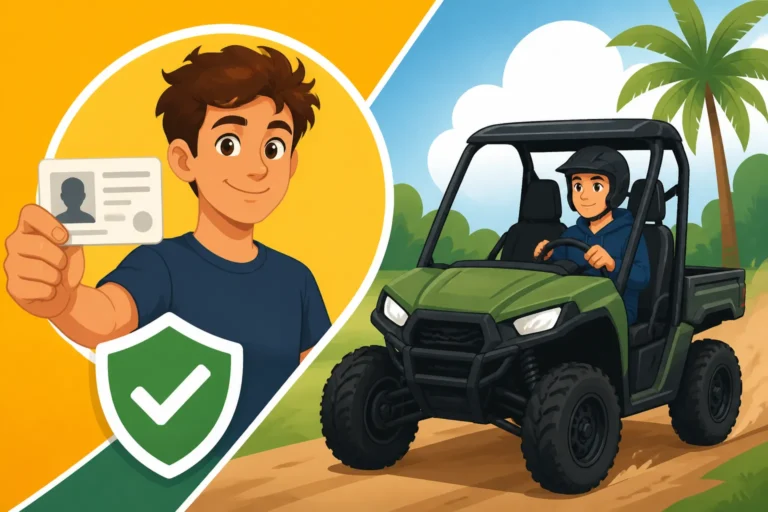
So, if your ATV or UTV doesn't get a license plate, what kind of paperwork does it get? That would be an Off-Highway Vehicle (OHV) title. This title is a crucial piece of documentation, but its purpose is often misunderstood. The Florida OHV title serves as official proof of ownership, much like a car title, but it absolutely does not confer street-legal status or entitle your machine to a license plate. It's about establishing who legally owns the machine, which is incredibly important for preventing theft and for transferring ownership when you buy or sell. Without it, proving you rightfully own your machine can become a real headache.
This title is primarily what you'll need when you buy a new machine from a dealer, purchase a used one, or when navigating certain public lands where proof of ownership is required. For example, if you're riding in a Florida State Forest OHV area, while you'll need a pass, carrying your title information (or knowing your title number) can be helpful if there's any question of ownership. The key takeaway here is simple: your Florida OHV title is a document of ownership, not a road registration document. For a deeper dive into this distinction, check out [Florida ATV Title vs Registration: The Difference]. It's a critical concept to grasp to avoid potential legal trouble or confusion.
When Plates Enter the Picture: Trailering Your ATV or UTV
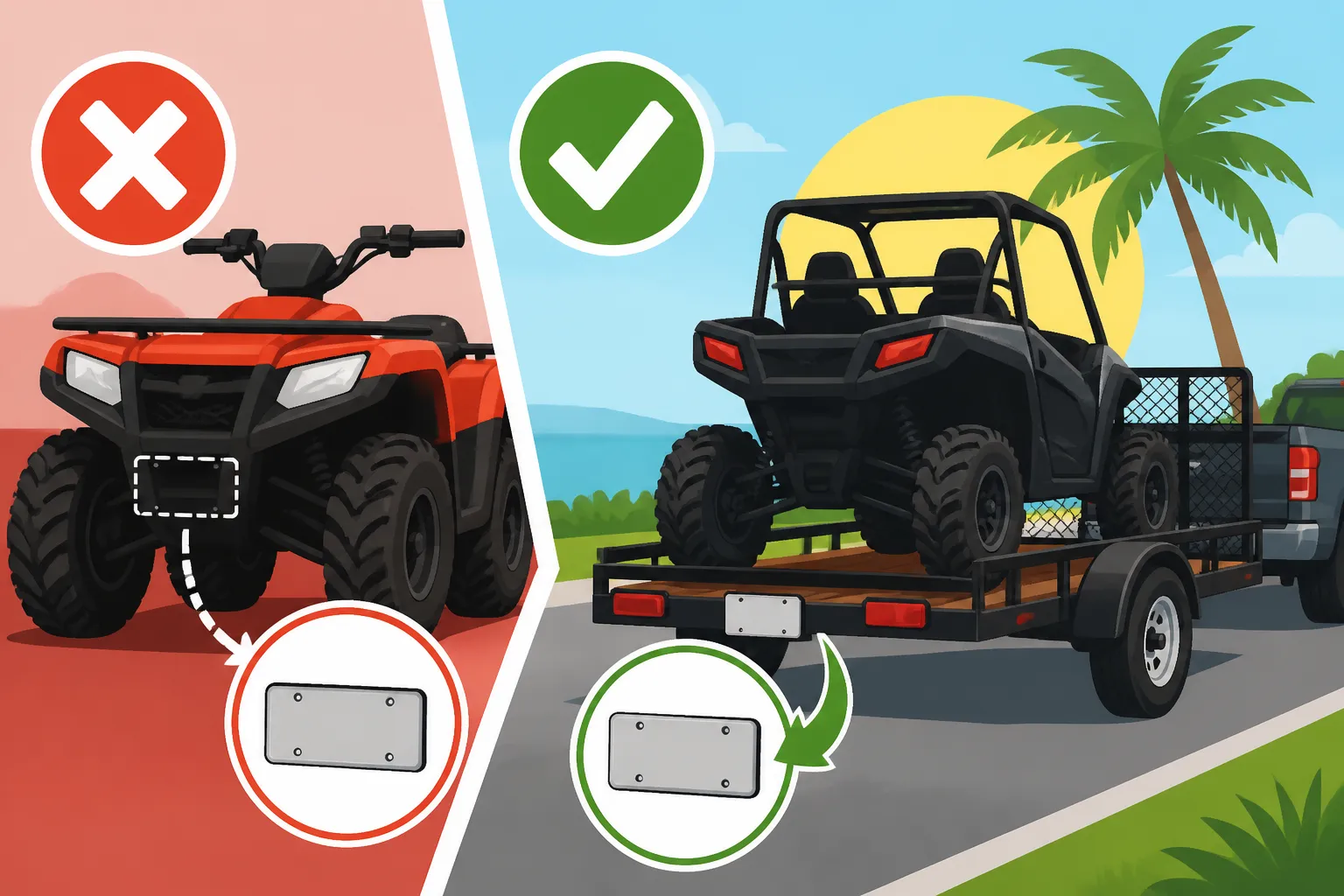
While your ATV or UTV itself won't be sporting a shiny license plate, the situation changes entirely when you need to transport it. Since most off-highway vehicles aren't designed for road travel (except in very limited circumstances), you'll almost certainly be hauling your quad on a trailer. And that trailer, my friend, absolutely needs to be properly registered and plated in Florida. This is where the license plate requirement truly comes into play for most ATV and UTV owners. Ignoring these rules can lead to fines, hassles, and even delays in getting to your favorite riding spot.
Florida Requirements for Utility Trailers
In Florida, utility trailers – the kind you use to haul an ATV, UTV, or other equipment – generally need to be titled and registered, and thus display a license plate. The specific requirements can vary slightly depending on the trailer's weight. For instance, light utility trailers might have a simpler registration process than heavy-duty, commercial-grade trailers, but the principle remains: if it's traveling on public roads, it needs to be identified. This registration and plate process is handled by your local Florida tax collector's office or a licensed tag agency, much like registering your car. You'll typically need proof of ownership for the trailer (like a manufacturer's certificate of origin or a bill of sale), identification, and payment for the necessary fees.
It's a common oversight for new ATV owners to focus solely on their quad and forget about the trailer. But imagine being pulled over for a simple traffic stop, only for the officer to discover your trailer isn't registered. That minor stop could quickly escalate into a citation, or even having your trailer impounded if the issues are severe enough. Don't let that happen! Make sure your trailer's paperwork is in order before you even hitch it up. Getting it done correctly the first time will save you a lot of grief down the road.
Ensuring Safe and Legal Transport
Beyond just having the right plate, safe and legal transport of your ATV or UTV involves several other crucial considerations. First and foremost, you need robust tie-downs to secure your machine to the trailer. Loose ATVs or UTVs bouncing around, or worse, falling off a trailer, are serious safety hazards on the highway. Invest in high-quality, heavy-duty ratchet straps and make sure you use at least four points of contact to secure your machine firmly. Brands like SuperATV offer a fantastic range of durable tie-downs and accessories that are specifically designed to withstand the rigors of hauling off-road vehicles. These aren't areas where you want to skimp on quality.
Secondly, always inspect your trailer before each trip. Check the tire pressure on both your tow vehicle and the trailer. Ensure your trailer lights are fully functional – brake lights, turn signals, and running lights are all mandatory and critical for safety, especially at night or in bad weather. If you’re unsure about what’s needed, a quick look at [Trailer Lights That Keep You Out of Trouble] can clarify things. Lastly, be mindful of weight distribution. Position your ATV or UTV on the trailer so that about 60% of its weight is towards the front, closest to the tow vehicle. This helps prevent dangerous trailer sway. Overloading your trailer or tow vehicle can also lead to hazardous driving conditions and is illegal, so always know your weight limits and adhere to them.
Navigating "Street Legal" UTVs and Specific Road Rules
The world of off-highway vehicles isn't entirely black and white, especially with the rise of increasingly versatile UTVs. While your traditional ATV almost certainly isn't designed for public roads, some UTVs can undergo modifications to become "street legal" under specific Florida classifications. This is a common point of confusion, as it changes the plate requirements for the UTV itself, making it an exception to the "trailer gets the plate, not the quad" rule. Understanding this nuance is key to staying compliant.
The LSV Conversion for UTVs: A Different Ballgame
Certain UTVs can, indeed, be modified and registered as Low-Speed Vehicles (LSVs) in Florida. An LSV is generally defined as any four-wheeled vehicle whose top speed is greater than 20 miles per hour but not greater than 25 miles per hour, and which is manufactured to comply with the safety standards established in Title 49 C.F.R. Section 571.500. This is a very specific designation. To qualify as an LSV, a UTV must meet a long list of equipment requirements, including headlights, tail lights, stop lights, turn signals, a parking brake, rearview mirrors, a windshield, seat belts, and a Vehicle Identification Number (VIN). Once these modifications are made and verified, the UTV can then be titled and registered with a traditional license plate, just like a car.
This is a significant departure from an ATV or a standard, unmodified UTV. When your UTV becomes an LSV, it's no longer considered an off-highway vehicle in the same vein; it's now a vehicle with limited street-legal capabilities. This means it does get its own license plate and registration, allowing it to be driven on public roads where the posted speed limit is 35 mph or less. However, this is not a blanket rule for all UTVs, and it's certainly not applicable to ATVs. For a more detailed breakdown of what this conversion entails, check out [Is a UTV Street Legal in Florida?]. It's a complex process that demands careful attention to state and federal regulations, and it's the only real way for a multi-purpose off-highway vehicle to gain its own license plate.
Unpaved Roads and Limited ATV/UTV Access
While the LSV conversion path exists for some UTVs, it's important to remember that most ATVs and UTVs remain off-highway vehicles. However, Florida does have specific, albeit limited, provisions for ATVs and UTVs to operate on certain public unpaved roads. These rules are usually enacted at the county level, allowing OHVs on roads with specific speed limits and under certain conditions, such as during daylight hours only and with proper safety gear. Even when riding on these designated unpaved roads, your ATV or UTV still does not require, or receive, a license plate. The crucial document remains your Florida OHV title, which serves as proof of ownership.
If you're operating your ATV or UTV on these permitted unpaved roads, deputies will be looking for proper safety equipment like helmets (for riders under 16) and eye protection. They'll also want to ensure you're riding a machine that meets Florida’s definition of an ATV and that you own it legitimately, which is where your title comes into play. The ability to ride on these specific unpaved roads doesn't change the vehicle's fundamental classification as an OHV; it simply grants limited conditional access. Always verify local county ordinances before attempting to ride an ATV or UTV on any public road, paved or unpaved, to avoid fines. For broader insights into where you can legally ride, explore [Florida ATV Road Rules: Where You Can Legally Ride].
Essential Transport Tips and What to Remember
Transporting your ATV or UTV safely and legally is just as important as knowing where and how to ride it. Since your quad itself won't have a license plate, the focus shifts to ensuring your trailer and towing setup are completely up to snuff. A little preparation and attention to detail before you hit the road can save you from a lot of stress, potential fines, and even dangerous situations. Don't underestimate the importance of a thorough pre-trip check.
A Pre-Trip Checklist for Hauling Your Machine
Before every trip where you’re trailering your ATV or UTV, take a few minutes for a crucial safety check. Start with your trailer tires: are they properly inflated and free of cracks or excessive wear? Nothing ruins a riding trip faster than a roadside flat on the trailer. Next, double-check all your tie-downs. Are they securely attached to your quad and the trailer? Are they tight enough to prevent any movement? Some riders even use an extra set of safety chains from the frame of the quad to the trailer for added peace of mind, especially on longer hauls. Robust, reliable tie-downs from a reputable brand like SuperATV can make all the difference in keeping your machine stable.
Then, check your tow vehicle's hitch and wiring harness. Ensure the hitch is securely fastened, the coupler is locked onto the ball, and the safety chains are crossed and attached. Test your trailer lights – headlights, brake lights, turn signals – to make sure they're all functioning correctly. Finally, consider your load distribution. Place your machine so that the tongue weight (the downward force on your hitch) is about 10-15% of the total trailer weight. Too little tongue weight can cause dangerous swaying, while too much can overload your tow vehicle's rear suspension. A good guide for safe towing can be found in [Strapping a Quad Down for a Highway Tow]. Taking these steps will ensure a smooth, worry-free journey to the trails.
Avoiding Common Mistakes
One of the most frequent mistakes ATV and UTV owners make is conflating their vehicle's title with a registration that allows road use. Remember, the [Florida Off-Highway Vehicle Title Rules Explained] make it clear that your OHV title is proof of ownership, not a license to ride on public paved roads. Your quad will not have a license plate, and attempting to operate it on streets where it's not explicitly permitted will lead to citations. Another common error is failing to properly title and register the trailer itself. This is an absolute must. That license plate belongs on the trailer, and if it's missing, expired, or improperly displayed, you could face legal consequences.
Lastly, never assume that just because you see others riding ATVs or UTVs on a particular road that it's legal. Local rules can vary significantly, and what's permissible in one county might be strictly prohibited in another. Always do your homework and verify local ordinances, especially concerning unpaved road access. When in doubt, stick to designated off-road trails and parks. Staying informed and compliant with both your ATV's title requirements and your trailer's registration ensures you can enjoy your adventures without unnecessary headaches or run-ins with law enforcement.
| Vehicle Type | Purpose | Road Legality | License Plate Required (on vehicle itself) | Florida Title Required (on vehicle itself) |
|---|---|---|---|---|
| ATV/UTV (as OHV) | Off-road recreation | Generally NOT street legal | No | Yes (OHV Title) |
| Trailer | Hauling other vehicles | Street legal (with proper reg) | Yes (on trailer) | Yes (Trailer Title) |
| Low-Speed Vehicle (LSV) | Limited street use | Street legal (35 mph limit) | Yes (on LSV) | Yes (LSV Title) |
Disclaimer
This article is for general informational purposes only and does not constitute professional advice. Laws, prices and regulations vary by location and change over time. Consult a qualified professional for guidance on your specific situation.