Learner’s Permits and Cart Driving at 15
It's incredibly frustrating when you're trying to do the right thing, especially as a parent, and the rules around something as common as golf cart use for teenagers seem to change overnight. For years, many Florida families understood that a 15-year-old with a learner's permit could operate a golf cart on approved roadways. But a significant shift in Florida law has thrown a wrench into that understanding, leaving many wondering what's actually allowed now. This guide will walk you through the new regulations, specifically addressing how learner's permits factor into golf cart driving for 15-year-olds in the Sunshine State, and clarify the distinctions from ATV and UTV rules.
The Shifting Landscape: Florida's Golf Cart Laws for Young Drivers
For a long time, the rules around golf carts felt relatively straightforward in many Florida communities. You’d see teenagers zipping around neighborhoods, often with a learner's permit in hand, and it seemed perfectly normal and legal. Many families relied on this common understanding, especially in areas like The Villages, Peachtree City (though that's Georgia, the sentiment is similar), or numerous coastal towns where golf carts are a primary mode of local transportation. However, Florida’s legislature recently decided that a change was necessary, and it directly impacts those young drivers.
Before October 1, 2023: What Was Allowed for 15-Year-Olds?
Prior to a specific date that changed everything for golf cart users, the law allowed individuals with a valid learner's permit to operate a golf cart on designated public roadways. This meant if your 15-year-old had successfully passed their permit test, they could drive the family golf cart to a friend's house, the community pool, or the local ice cream shop, provided they were on streets where golf carts were permitted. It offered a wonderful sense of independence for young Floridians and provided practical transportation in many communities.
Parents often saw this as a safe way for their teens to gain some experience behind the wheel in a controlled, lower-speed environment before tackling the complexities of a full-size car. The logic was sound: if they could learn the basics of road navigation and traffic laws in a golf cart, it would better prepare them for a regular vehicle. This provision was widely used and became an ingrained part of the lifestyle in many Florida neighborhoods where golf carts are king.
The New Reality: What Changed on October 1, 2023, and Why?
The landscape fundamentally shifted on October 1, 2023. With the implementation of [Florida Golf Cart Age Law Since October 2023], the rules regarding who can drive a golf cart on Florida's public roads became significantly more stringent. The previous allowance for 15-year-olds with learner's permits was removed. This means that a 15-year-old with only a learner's permit can no longer legally drive a golf cart on public roads, streets, or paths where golf cart operation is permitted.
The intent behind this change, stemming from legislative discussions around safety, was to align golf cart driving privileges more closely with standard vehicle licensing requirements and to address concerns about accidents involving underage drivers. While many residents argued that golf carts operate at lower speeds and pose less risk, lawmakers ultimately decided that a full driver's license, or at least being 18 years old, was a more appropriate standard for operating these vehicles on public thoroughfares. This change was a direct response to concerns, and the law, once passed, drew a clear line in the sand. You can read more about [Florida's Golf Cart Age Change Explained] to understand the nuances of the legislation.
Why This Matters: The Frustration of Unclear Rules
For families who bought homes in golf cart-friendly communities, or who simply relied on golf carts for their children's local transportation, this change has been a major source of frustration and confusion. It’s hard enough keeping up with all the laws, but when something that's been common practice for years suddenly changes, it can feel like the rug has been pulled out from under you. Parents are now scrambling to understand what their teenagers can and cannot do, trying to avoid potential fines or even accidents.
The problem isn't just about losing a privilege; it's about the uncertainty and the lack of clear, widely disseminated information that often accompanies such changes. Many families only found out about the new rule after seeing local news reports or hearing from neighbors, long after the law had already gone into effect. This kind of legislative shift highlights the importance of staying informed, even on seemingly minor transportation topics, as the impact on daily life can be significant. The old ways of doing things are simply no longer valid, and assuming otherwise could lead to a heap of trouble. [Why a 14-Year-Old Lost Golf Cart Privileges] further illustrates the broader impact of these changes on younger age groups.
Understanding the New Age and License Requirements for Golf Carts
With the new law firmly in place, it's crucial for everyone to understand precisely who is now permitted to operate a golf cart on public roads in Florida. The days of a 15-year-old learner's permit holder cruising down the street are, for now, behind us. The new rules aim for a clearer, albeit stricter, framework for golf cart operation. This also brings up an important point about distinguishing golf carts from other off-highway vehicles like ATVs and UTVs, which have entirely separate sets of regulations.
Who Can Now Drive a Golf Cart on Florida Roads?
As of October 1, 2023, the rules for operating a golf cart on a public street or road in Florida are quite specific:
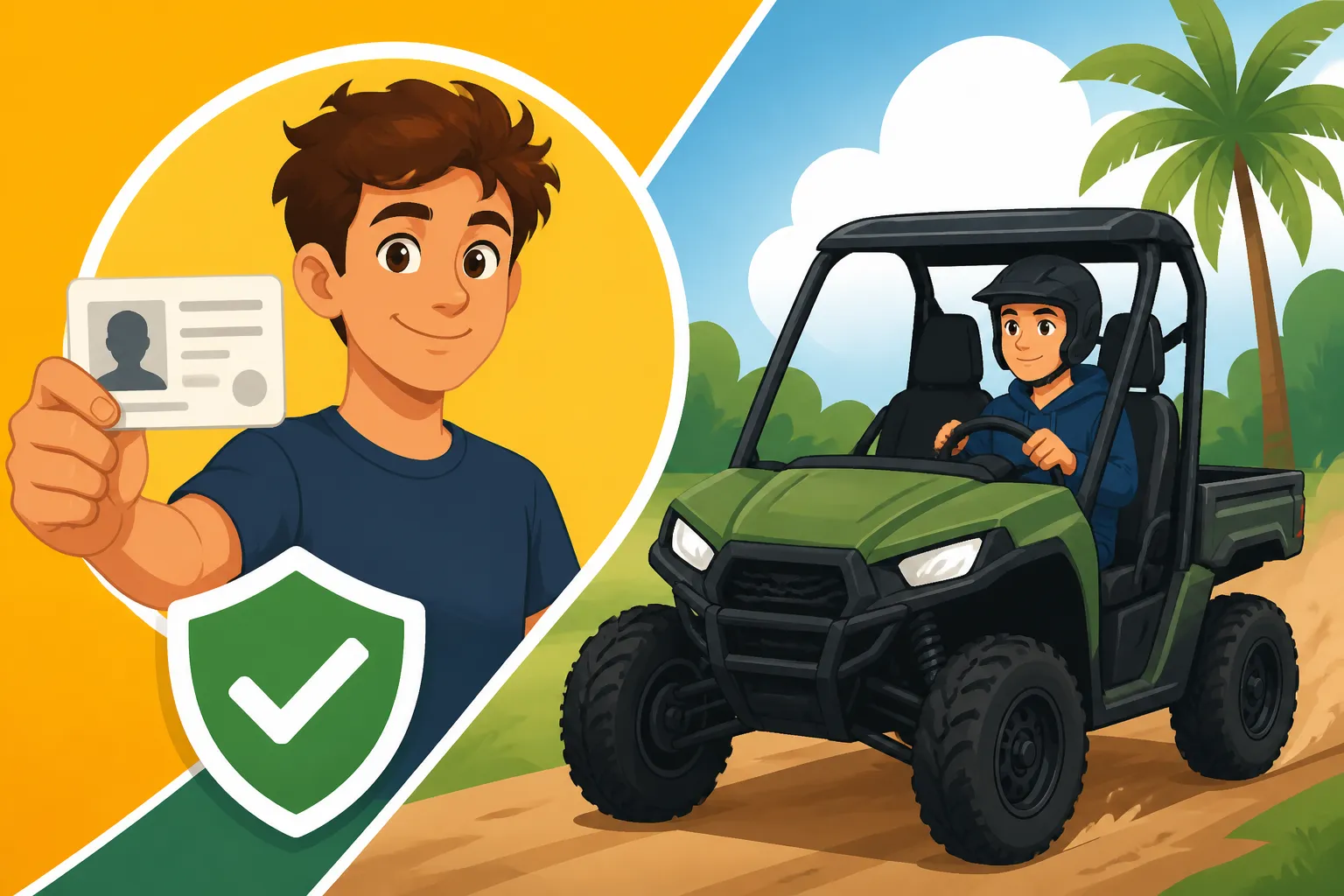
- Age 18 or Older with a Valid Government-Issued Identification: If you are 18 years of age or older, you can drive a golf cart on approved roadways as long as you possess a valid government-issued photo identification card. This ID doesn't necessarily have to be a driver's license, but it must clearly establish your age. This provision is designed to accommodate adults who may not have a driver's license but are still responsible operators.
- Age 16 or Older with a Valid Driver's License: If you are 16 years of age or older, you can drive a golf cart on approved roadways only if you possess a valid driver's license. This means a learner's permit is not sufficient for 16-year-olds either; they must have graduated to a full, unrestricted driver's license.
These requirements supersede any previous understanding or local ordinance that might have allowed younger drivers or those with only a permit. If you're wondering about [Florida Golf Cart Photo ID Requirement for Adults], it's really about proving your age to meet the 18+ threshold, or showing that full driver's license if you're 16 or 17. The key takeaway is: if you're under 16, or if you're 16 or 17 and only have a learner's permit, you're out of luck when it comes to driving golf carts on public roads.
Differentiating Golf Carts from ATVs and UTVs
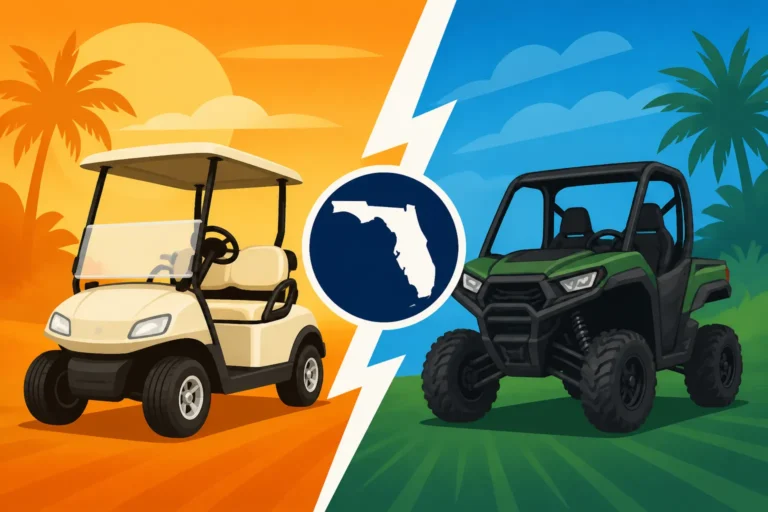
It’s easy for folks to lump all smaller, off-road capable vehicles together, but in Florida, the law makes a very clear distinction between golf carts, All-Terrain Vehicles (ATVs), and Utility Terrain Vehicles (UTVs), also known as side-by-sides. These distinctions are absolutely critical because their legal operation, especially on public roads, varies wildly.
A golf cart is defined primarily by its low speed (typically not exceeding 20 mph) and its original intent for golf courses or short-distance personal transportation. They are not designed for off-road ruggedness.
ATVs (quads) and UTVs (side-by-sides) are entirely different beasts. They are built for off-road use, have more powerful engines, and are designed to handle rough terrain. While some UTVs might resemble a golf cart with a roof and bench seats, their legal classification and capabilities are far from it. Many UTV owners turn to companies like SuperATV for heavy-duty parts, lift kits, and accessories that enhance their machine's off-road performance, which would be entirely overkill and often illegal for a golf cart. [Is a UTV Street Legal in Florida?] is a complex question with very different answers than for a golf cart, requiring specific modifications and registration in many cases.
Crucially, ATVs and UTVs generally have very limited, if any, legal access to paved public roads in Florida. While golf carts have specific statutes allowing them on certain designated public streets, ATVs and UTVs are primarily for off-highway use. Trying to treat your UTV like a golf cart on a paved neighborhood street could land you in serious legal trouble. [Florida ATV Road Rules: Where You Can Legally Ride] outlines the narrow exceptions for ATVs, which typically involve crossing roads or using unpaved county roads under strict conditions, not casual cruising.
Penalties for Non-Compliance: What Happens If You Break the Rules?
Breaking these new golf cart rules isn't just a minor slap on the wrist. Florida takes traffic laws seriously, and operating a golf cart illegally can result in significant penalties. For a young driver, this could mean fines, community service, or even points on their future driving record, which could impact their insurance rates down the line. For parents, allowing an underage or unlicensed driver to operate a golf cart on public roads could lead to charges, especially if an accident occurs.
Beyond direct legal consequences, there's the massive liability risk. If an illegally driven golf cart is involved in an accident, your insurance company might deny coverage, leaving you personally responsible for damages, medical bills, and legal fees. This is a nightmare scenario that no family wants to face. It's a stark reminder that staying informed and adhering to the current laws is not just about avoiding a ticket, but about protecting your family's safety and financial well-being. Ignorance of the law is never a valid excuse, and the consequences for operating illegally can be severe, much like [Florida Penalties for Illegal ATV Road Riding] for off-highway vehicles.
What This Means for 15-Year-Olds with Learner's Permits
So, with golf cart driving off the table for 15-year-olds with learner's permits on public roads, what are the options? It’s a bummer, no doubt, but it doesn’t mean an end to all motorized fun or learning opportunities. It just means a different path for gaining experience and independence. Understanding these alternatives and future steps is key for both teens and their parents.
Exploring Alternatives: Where Can a 15-Year-Old Ride?
While public roads are now restricted, a 15-year-old can still enjoy riding in other, legally permissible ways. The most common and safest alternative is on private property. If you own land or have explicit permission from a landowner, a 15-year-old can ride a golf cart, ATV, or UTV on that private property. This is where the fun really happens without the constraints of public road laws. For those with ATVs or UTVs, private land offers the perfect proving ground, and many enthusiasts deck out their machines with accessories from brands like SuperATV to tackle more challenging terrain.
Beyond private land, Florida boasts a fantastic network of designated Off-Highway Vehicle (OHV) parks and trails. Places like Croom Motorcycle Area, Ocala National Forest, and several state forests offer miles of trails specifically designed for ATVs and UTVs. A 15-year-old can ride an ATV or UTV in these areas, provided they meet certain requirements, such as completing a certified ATV safety course and being directly supervised by a licensed adult. [Florida State Forest OHV Areas Explained] provides a great overview of these public riding opportunities. This is a much better and safer environment for learning to operate these powerful machines than any paved street.
Preparing for Future Road Privileges: Earning a Full Driver's License
Even though the learner's permit doesn't open the door to golf cart driving on public roads anymore, it remains an absolutely crucial step towards full driving privileges. A 15-year-old with a learner's permit is still on track to get their full driver's license. The permit allows them to practice driving a car with a licensed driver over 21, gaining valuable experience that will eventually lead to the freedom of a full license.
Once a young person turns 16 and successfully obtains their full driver's license, they will then be eligible to drive a golf cart on approved public roads, in addition to being able to drive a car independently (with certain restrictions for new drivers, of course). So, the learner's permit phase, while now excluding golf carts, is still a vital period for developing critical driving skills and knowledge that will serve them well in all aspects of future road use. It's not a dead end; it's a necessary detour.
The Importance of Safety Training Beyond the Law
Regardless of legal requirements, prioritizing safety training is paramount, especially for young riders. For ATVs and UTVs, completing a certified safety course isn't just a requirement for public land riding; it's a smart choice for anyone operating these machines. These courses teach fundamental riding techniques, hazard awareness, and responsible operation, drastically reducing the risk of accidents. [Florida ATV Safety Course Requirements for Riders Under 16] outlines these critical programs.
Even for golf carts, while formal training isn't legally mandated, discussing safe driving practices, emphasizing caution around pedestrians and other vehicles, and understanding the limitations of the vehicle are invaluable. Teach your teen defensive driving habits, the importance of adhering to speed limits, and to always be aware of their surroundings. These life skills extend far beyond the specific vehicle they're operating and foster a culture of responsible driving, whether they're behind the wheel of a golf cart, an ATV, or a family car.
Navigating County-Specific Rules and Community Ordinances
Florida is a diverse state, and while the state law sets the baseline for golf cart operation, local ordinances and community rules often add another layer of complexity. What's allowed in one county or neighborhood might be strictly prohibited just a few miles down the road. This patchwork of regulations can be maddening, but understanding how to navigate it is crucial for legal and safe operation.
How Local Rules Can Impact Golf Cart Use
Even with the statewide changes, local authorities retain some power to regulate golf cart use within their jurisdictions. Many counties and municipalities have specific ordinances dictating where golf carts can and cannot be driven, often designating specific streets or multi-use paths. Some communities, especially planned communities or HOAs, might have even stricter rules than the county or state, including age restrictions, hours of operation, or even outright bans on golf carts on certain roads or paths.
For example, a homeowner's association in a gated community might decide that golf carts are only allowed on private community roads, or they might enforce their own age limits that are even higher than the state minimums for public roads. What ATVs Cannot Do on The Villages Cart Paths] is a great example of how a large community creates specific rules that affect its residents. This means that simply knowing the state law isn't always enough; you also need to be aware of the hyper-local rules that apply to your specific area. Always check with your local city or county government, or your HOA, before assuming you know the rules.
Resources for Staying Informed: Where to Check Local Laws
The best way to avoid a costly mistake or an unpleasant encounter with law enforcement is to proactively seek out information about your local golf cart ordinances. Here are a few places to start:
- County Clerk's Office or City Hall: Your local county clerk or city hall should have records of all current ordinances related to vehicle operation, including golf carts. Many now have this information readily available on their websites. [What a County Clerk Checks on Your Application] might give you an idea of the types of detailed information they handle.
- Local Sheriff's Office or Police Department: These agencies are responsible for enforcing the laws. They can often provide clear guidance on what's allowed in your area and may even have brochures or online resources dedicated to local golf cart rules.
- Homeowners' Association (HOA) or Community Management: If you live in a planned community, your HOA or community management office will be the definitive source for rules within your neighborhood. Their rules are often separate from municipal laws and must be followed.
- Florida Department of Highway Safety and Motor Vehicles (FLHSMV): While the FLHSMV sets statewide regulations, their website can be a good starting point for understanding the broad legal framework before diving into local specifics.
Taking a few minutes to make these inquiries can save you a lot of headache in the long run. It's much better to be safe than sorry, especially when it comes to the safety of young drivers and avoiding legal trouble.
Educating Your Young Rider: Responsibility and Respect
Ultimately, fostering a sense of responsibility and respect for the rules in your young rider is the most important step. Even if they can't drive a golf cart on public roads with just a learner's permit anymore, there will come a day when they have a full driver's license and can. It's during these formative years that you instill good habits.
Talk to your teenagers about why these laws exist – not just to be restrictive, but to promote safety for everyone on the roads. Emphasize that following the rules isn't optional, and that understanding the nuances of local ordinances is part of being a responsible community member. Whether it's the 35 mph Posted Limit and Where It Applies] for cars or the specific rules for golf carts, every piece of knowledge contributes to a safer driving experience. Teach them to look for signage, to understand the difference between designated golf cart paths and regular roads, and to always yield to pedestrians and other vehicles. This foundation of respect for the law and for others on the road will serve them well, no matter what kind of vehicle they're operating.
Disclaimer
This article is for general informational purposes only and does not constitute professional advice. Laws, prices and regulations vary by location and change over time. Consult a qualified professional for guidance on your specific situation.