Adults Carrying Photo ID on a Cart
Navigating the sunny streets and sprawling communities of Florida in a golf cart used to feel like a breeze, a carefree way to get around without much fuss. But if you're an adult behind the wheel of a golf cart these days, there's a crucial detail you absolutely cannot overlook: carrying your photo identification. This guide will walk you through the essential reasons why this simple act is now a must, what kind of ID you need, and what could happen if you're caught unprepared.
The Evolving Landscape of Florida's Golf Cart Laws and ID Requirements
Florida is a state where golf carts are practically a way of life, from coastal towns to sprawling retirement communities. For years, the rules around operating them on public roads felt a bit… loose. But with more and more people using golf carts for daily errands, school pickups, and community travel, the need for clearer regulations became undeniable. The landscape of these laws has shifted, and one of the most significant changes directly impacts adults: the requirement to carry photo identification.
Understanding the Recent Legislative Changes
It's easy to assume golf carts are just slow-moving recreational vehicles that don't fall under the same scrutiny as cars or trucks. However, that assumption can now lead to some real headaches. Recent legislative updates, particularly those that came into effect in late 2023, have tightened the reins on golf cart operation on Florida's public roads. These changes were largely driven by safety concerns, an increase in golf cart-related incidents, and the sheer volume of these vehicles sharing space with traditional traffic.
Think about it: as communities expanded and golf carts became a primary mode of transport for many, the old rules simply weren't adequate. The state recognized that these vehicles, while smaller and slower, are still part of the traffic ecosystem, especially when they venture onto designated public roads, even if they're just crossing a street. These new rules aim to ensure that anyone operating a golf cart on public thoroughfares is identifiable and meets basic eligibility criteria, just like any other driver. It’s no longer about just hopping in and going; there’s a new level of accountability involved. These updates also clarified [Florida Golf Cart Age Law Since October 2023], setting the stage for who can operate these vehicles.
Why Your Photo ID is Now Essential on a Golf Cart
At its core, the requirement for adults to carry photo ID when operating a golf cart on public roads boils down to a fundamental principle of vehicle operation: accountability and identification. When you're driving any vehicle on a public road, law enforcement needs a way to identify you, verify your age, and confirm that you are legally permitted to operate that type of vehicle. A golf cart, when used on public roads, ceases to be just a recreational toy and becomes a regulated mode of transportation.
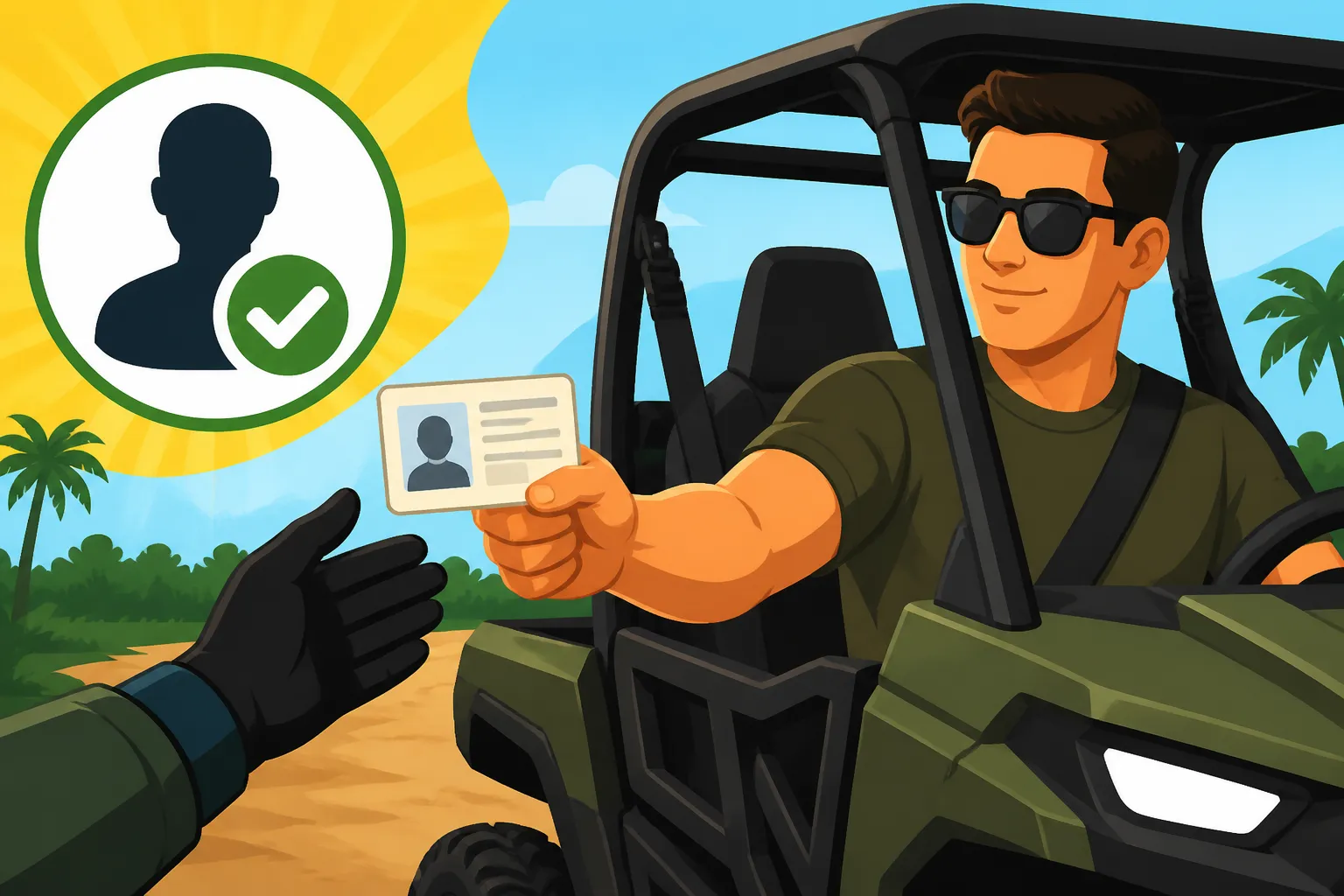
This isn't about singling out golf cart drivers; it’s about aligning their responsibilities with those of other motorists. If you're involved in an accident, even a minor fender-bender, or if a law enforcement officer has cause to stop you, presenting a valid photo ID is the quickest way to establish your identity and confirm that you meet the minimum age and licensing requirements to be operating the vehicle. Without it, things can quickly become complicated and delay the resolution of any situation. Imagine a scenario where you're asked for [Adults Carrying Photo ID on a Cart] and you don't have it; it can quickly escalate a simple stop into a much longer and more inconvenient interaction.
What Kind of Photo ID Florida Requires for Adults on a Golf Cart
So, now that we understand why you need to carry ID, let's talk about what kind of ID is acceptable. This isn't a complex mystery, but it's important to be clear so you're not caught off guard. The state wants a verifiable form of identification that confirms your identity and, importantly, your age.
Acceptable Forms of Identification
When a Florida law enforcement officer asks for your photo ID while you're driving a golf cart on a public road, they're looking for the same types of government-issued identification you'd present if you were driving your car. The most common and universally accepted forms include:
- A Valid Driver's License: This is probably the easiest and most common form of ID. If you're old enough to legally drive a car, you certainly meet the age requirements for a golf cart. Your driver's license clearly shows your photo, name, address, and date of birth, making it a comprehensive document.
- A State-Issued Identification Card: For adults who may not have a driver's license but are still of legal age, a non-driver state ID card issued by the Florida Department of Highway Safety and Motor Vehicles (FLHSMV) is perfectly acceptable. These cards serve the same purpose of identification and age verification.
The key here is that the ID must be current and valid. An expired license or an ID that isn't officially recognized won't cut it. It needs to be the real deal, just as it would be if you were pulled over in your family sedan. This is part of the broader conversation about [Florida Golf Cart Photo ID Requirement for Adults].
Practical Scenarios: When Will You Be Asked for ID?
It's not just about a traffic stop; there are several situations where having your ID readily available will make your life much easier. Being prepared means you can quickly comply and get back to enjoying your day.
- Routine Enforcement Stops: Even in communities where golf carts are prevalent, law enforcement may conduct routine checks, especially if there's been an increase in incidents or complaints. An officer might simply want to ensure drivers meet the age requirements and are operating the cart safely.
- Following an Incident or Accident: This is perhaps the most crucial scenario. If you're involved in any kind of collision, even a minor one, police will respond to investigate. They'll need to identify everyone involved and verify their eligibility to operate their respective vehicles. Having your ID can significantly streamline this process.
- Community-Specific Enforcement: While state law sets the baseline, some communities, especially large ones like The Villages, might have their own local ordinances or specific enforcement practices. While these can't supersede state law, they can mean more frequent checks. Regardless of local flavor, the state ID requirement on public roads still stands. It’s always smart to be familiar with both state rules and any specific [Florida Golf Cart Rules on a Paved Street] in your area.
For those who enjoy customizing their golf carts, much like someone might upgrade an ATV or UTV with parts from SuperATV, remember that a tricked-out cart still requires proper identification for its driver on public roads. While SuperATV is known for heavy-duty off-road accessories, many golf cart owners also invest in aftermarket parts for safety and aesthetics, and ensuring you meet basic driving requirements is paramount regardless of your vehicle's enhancements.
Broader Implications: Golf Carts vs. Other Off-Road Vehicles in Florida
The focus on golf cart ID requirements highlights a broader trend in Florida: clarifying the rules for various off-highway vehicles. It's easy for people to lump all these vehicles together, but the law draws clear distinctions, and understanding them is vital for staying on the right side of the law.
Distinguishing Golf Carts from ATVs and LSVs
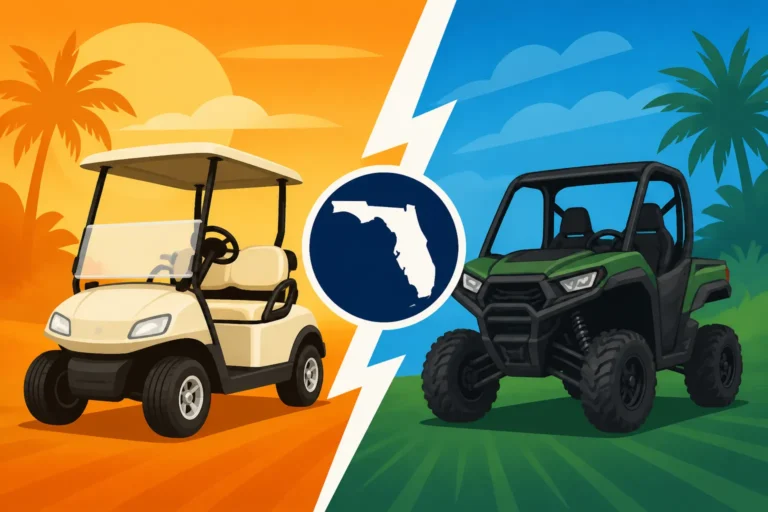
One of the biggest areas of confusion for many Floridians is understanding the difference between golf carts, All-Terrain Vehicles (ATVs), and Low-Speed Vehicles (LSVs). While they all get you around, their legal classifications, permitted uses, and requirements are vastly different:
- Golf Carts: As we've discussed, these are generally slower, typically designed for golf courses or short-distance travel within communities. They have specific rules for road use and, now, ID requirements for adults. They typically don't require titling or registration like a car, but their operation is still regulated on public roads.
- ATVs (All-Terrain Vehicles): These are built for off-road use, with knobby tires and suspensions designed for rough terrain. Florida has extensive rules regarding [Florida Off-Highway Vehicle Title Rules Explained] and where ATVs can be ridden. They are generally not street legal, except for very limited circumstances on unpaved county roads with specific equipment and driver requirements. You wouldn't typically use an ATV for a quick run to the grocery store on a paved street.
- LSVs (Low-Speed Vehicles): These are street-legal vehicles that look a lot like golf carts but are explicitly designed and manufactured to meet federal safety standards for low-speed vehicles. They can travel at speeds between 20 and 25 mph, require a title, registration, license plate, and insurance, and must be equipped with features like headlights, taillights, turn signals, seatbelts, and a windshield. This means a regular golf cart cannot be automatically treated as an LSV; it needs to be manufactured to those specific standards.
The distinctions are critical. Trying to operate an ATV on a paved public road, for example, will lead to different legal consequences than operating a golf cart without ID. If you’re modifying an off-road machine, say with specialized suspension or tires from SuperATV, you’re almost certainly dealing with an ATV or UTV, not a golf cart, and those machines have a separate set of [Florida ATV Road Rules: Where You Can Legally Ride]. It’s important to know your vehicle’s classification because [Florida Golf Cart Laws vs ATV Laws] are very different.
The Role of Local Ordinances and Community Rules
While state law provides the overarching framework for golf cart use, Florida's diverse communities often layer on their own local ordinances. From small coastal towns to sprawling planned communities, these local rules can sometimes add another layer of complexity to golf cart operation.
For example, a Homeowners Association (HOA) might have specific rules about golf cart parking, noise, or even permissible hours of operation within its private roads. While these rules are enforceable by the HOA, they do not negate or supersede state law when it comes to operating a golf cart on public roads. If your HOA says you can ride at night on community roads, but state law says golf carts can only operate during daylight hours on public roads unless equipped with specific lighting, the state law takes precedence if you venture onto a public street.
Similarly, iconic golf cart communities like The Villages have unique rules regarding their multi-modal paths and specific internal roadways. However, even within these specialized environments, if a golf cart travels on a road classified as a public street by the state, the state's ID requirement for adult drivers applies. Always be sure to check both state statutes and any specific local ordinances or community rules that might apply to your area, but remember that when you're on a public road, state law is the ultimate authority.
What Happens If You Don't Carry ID and Common Misconceptions
Despite the clarity of the law, it's easy to forget a small detail like carrying your ID, especially if you're used to a more relaxed approach to golf cart riding. But neglecting this requirement can lead to unnecessary trouble and can even be a costly mistake.
Potential Consequences of Non-Compliance
Forgetting your ID might seem like a minor oversight, but in Florida, it's treated with the seriousness reserved for other traffic infractions. The consequences can range from an inconvenience to a financial hit:
- Citations and Fines: The most direct consequence is likely a traffic citation. Just like driving a car without your license, operating a golf cart on a public road without proper photo identification can result in a fine. These fines can add up quickly, especially if you're a repeat offender. It's far cheaper and less stressful to simply remember your ID. [Florida Sheriff Enforcement of ATV Road Rules] includes golf carts on public roads as well.
- Delayed Resolution of Incidents: Imagine a scenario where you're involved in a minor accident, and you don't have ID. Law enforcement will have to take extra steps to verify your identity, which can mean a longer stay at the scene, potentially involving calls to verify your information through other databases. This extended process can be frustrating for everyone involved.
- Impoundment (in extreme cases): While less common for a simple ID infraction, persistent non-compliance or combining this with other violations could lead to more serious actions, including the temporary impoundment of the golf cart. This is usually reserved for situations where the driver is clearly underage, intoxicated, or otherwise poses a significant risk, but it underscores the importance of legal compliance.
It's clear that the minor effort of keeping your ID with you far outweighs the potential hassle and cost of being cited. Think of it as a small "insurance policy" against an otherwise avoidable problem.
Busting Myths About Golf Cart Use
There are many lingering myths about golf carts that can lead to people making assumptions that are no longer true or were never entirely accurate. It's time to bust some of these common misconceptions:
- Myth: Golf carts are not "real" vehicles and don't require the same rules.
- Reality: While they might not be as fast or heavy as a car, when a golf cart is operated on a public road, it absolutely falls under the purview of state traffic laws. This includes obeying speed limits, traffic signals, and, yes, carrying proper identification if you're an adult driver. The law doesn't make exceptions because a vehicle is small or designed for leisure. The concept of [The New Minimum Age for a Florida Golf Cart] should also clue you into the fact that these are taken seriously.
- Myth: Only kids need to worry about age limits or supervision.
- Reality: While new laws certainly put more emphasis on age limits for minors (e.g., [Why a 14-Year-Old Lost Golf Cart Privileges] and [Learner's Permits and Cart Driving at 15]), the ID requirement for adults ensures that all drivers on public roads are identifiable and meet basic adult driving requirements. It's about accountability across the board.
- Myth: As long as I'm in my community, state laws don't apply.
- Reality: This is a dangerous assumption. If your community's roads are considered "public roads" by the state – which many are, especially if they're not fully gated and privately maintained – then state traffic laws absolutely apply. Even within private communities, if a law enforcement officer has jurisdiction, they can enforce state laws.
Ultimately, golf carts offer a fantastic, convenient, and environmentally friendly way to get around many parts of Florida. But with that freedom comes responsibility. By understanding and complying with the simple requirement of carrying your photo ID, you ensure that your golf cart adventures remain enjoyable and stress-free.
To help you keep these distinctions clear, here's a quick comparison of ID and licensing requirements for common light-duty vehicles in Florida:
| Vehicle Type | Driver's License Required? | Photo ID Required for Adults? | Title/Registration? | Typical Road Use |
|---|---|---|---|---|
| Golf Cart | Yes (or state ID for 18+) | Yes | No | Designated Roads |
| ATV | No (for off-road) | No (for off-road) | Yes | Off-road Only |
| Low-Speed Vehicle | Yes | Yes | Yes | Roads 35 mph or less |
The information above provides a general overview, and it's always wise to consult the latest Florida statutes or your local county's specific ordinances for the most up-to-date and precise details. Whether you're cruising through your neighborhood or exploring trails with your SuperATV-equipped UTV, knowing the rules keeps everyone safe and compliant.
Disclaimer
This article is for general informational purposes only and does not constitute professional advice. Laws, prices and regulations vary by location and change over time. Consult a qualified professional for guidance on your specific situation.