Hunting Access Roads in Florida and Quad Use
For many hunters in Florida, the thought of using an ATV or UTV to access those hard-to-reach hunting spots is incredibly appealing. It saves time, energy, and can haul out gear and game that would otherwise require back-breaking effort. But navigating the legalities of using these machines on hunting access roads across our beautiful state can feel like tracking a ghost through a palmetto thicket. This guide is here to cut through the confusion, helping you understand where and how you can legally and responsibly use your quad or side-by-side to enhance your hunting experience in Florida.
Understanding Florida's General ATV Road Rules
Before we dive into the nitty-gritty of hunting access roads, it's essential to grasp the foundational rules Florida has in place for ATVs and UTVs on any road. These general regulations form the baseline for what's expected of riders, even when operating in less-trafficked hunting areas. Ignoring these can lead to fines and unwanted headaches, distracting from your time in the field.
The "Unpaved Roadway" Rule
Florida law is pretty clear: ATVs and UTVs are generally not street legal on paved roads. This is a common point of frustration for riders who just want to get from point A to point B. However, there's a critical distinction for "unpaved roadways." An unpaved roadway, as defined by statute, is a road that isn't paved, maintained by a county or municipality, and is open to the public. These aren't just any dirt track you come across. They are specific, designated unpaved roads where, under certain conditions, an ATV or UTV might be allowed.
It’s easy to assume any dirt road is fair game, but that's a mistake that can put you on the wrong side of the law. The intent behind this rule is often to allow limited access for purposes like farming, utilities, or residential access in very rural areas, not as a general thoroughfare for recreational riding. So, while a hunting access road might be unpaved, it doesn't automatically qualify under this specific exception unless it's also a public county or municipal road. Most dedicated hunting access roads fall into a different category, which we'll explore shortly. The broader rule of thumb is: if it's not explicitly allowed and marked, assume it's prohibited.
General Restrictions and Requirements
Even when an ATV or UTV is allowed on a designated unpaved roadway—which, again, is distinct from many hunting access roads—certain state-wide restrictions and requirements still apply. For example, operation is generally limited to [Florida's Daytime-Only ATV Road Rule]. This means no riding during the dark hours, which can be a real bummer when you're trying to get to a stand before sunrise or retrieve a deer after sunset. Planning your movements around these light restrictions is crucial for compliance.
Furthermore, Florida has specific helmet laws for younger riders. Anyone under 16 years old operating or riding an ATV or UTV on public land, or even on these designated unpaved roads, must wear a helmet. All riders, regardless of age, are also required to wear [Florida Eye Protection Rule for Young Riders], such as goggles or a face shield. These safety measures are designed to protect riders and are enforced by law enforcement and wildlife officers alike. It's not just about avoiding a ticket; it's about protecting yourself and your passengers from potential injuries in unfamiliar or challenging terrain. Always have the right gear, even if you think you’re just making a quick trip.
The "Closed to Public Access" vs. "Open" Distinction
This is where the nuances of hunting access roads really come into play. Many roads within Florida’s vast Wildlife Management Areas (WMAs), National Forests, or other public lands are specifically designed to provide access for hunting or other conservation activities. However, these roads are often NOT "open to the public" in the same way a county road might be. Instead, they are managed under specific rules that dictate who can use them, what types of vehicles are allowed, and during what times.
A road might physically be a dirt track, but if it’s inside a WMA and designated for "administrative use only," or "foot traffic only" during certain seasons, then operating your quad on it is a violation. These distinctions are absolutely critical for hunters. You can't just assume that because a gate is open, or a road looks traversable, that you have free reign. The Florida Fish and Wildlife Conservation Commission (FWC) and the Florida Forest Service are diligent about managing these access points to protect wildlife, habitat, and other users. Always remember that "access" often comes with specific conditions and limitations, especially on public hunting lands.
Navigating Wildlife Management Areas (WMAs) and Public Hunting Lands
Hunting in Florida’s Wildlife Management Areas (WMAs) and other public lands offers incredible opportunities, but it comes with a strict set of rules, particularly concerning ATV and UTV use. These regulations are designed to minimize environmental impact, prevent user conflicts, and ensure safety for all.
Specific WMA Regulations for ATVs/UTVs
The single most important thing to remember about WMAs is that each one has its own specific regulations. There isn't a blanket rule that applies uniformly across every WMA in Florida. What might be allowed in one WMA, such as specific ATV trails for hunter access, could be strictly prohibited in another. This variability can be a huge source of frustration for hunters who move between different public lands. It means you can't just assume your experience in one area will translate to another.
To avoid costly mistakes and potential citations, you absolutely must check the specific FWC regulations for the WMA you plan to hunt in. These regulations are typically found on the FWC website or in specific WMA brochures available at kiosks or ranger stations. Many WMAs delineate designated roads where ATVs are permitted for hunter access, often for specific purposes like game retrieval or accessing designated camping areas. Others may only allow ATVs on certain trails during certain times of the year, or only for those holding a special [Florida WMA Access Permit for Riders]. For anyone who spends a lot of time on these varied terrains, having a well-equipped machine is key. Aftermarket accessories from companies like SuperATV, such as heavy-duty tires for different ground conditions or a robust winch for unexpected situations, can make a real difference in navigating these diverse WMA environments.
Permitted vs. Prohibited Use
Understanding the "why" behind WMA rules often helps clarify the "what." Most WMAs aim to provide a quality hunting experience while conserving natural resources. This translates into very specific guidelines for ATV and UTV use. For instance, common restrictions include strict speed limits on access roads, limitations on when you can operate your vehicle (e.g., only during designated hunting hours, not before dawn or after dusk), and specific prohibitions against off-trail riding or creating new trails. The mantra is usually "stay on the marked road."
You might find a WMA where ATVs are only allowed on designated marked roads for retrieving harvested game during general gun season, but are completely prohibited for general scouting during archery season. Some access roads are strictly for administrative vehicles (rangers, land managers) and are never open to private ATVs. It's also common to find areas within a WMA that are designated "foot traffic only" or "no motorized vehicles" to protect sensitive habitats or provide a more primitive hunting experience. For example, in some areas of the Big Cypress National Preserve, specific ORV permits and vehicle inspections are required, and travel is restricted to marked trails. This level of detail emphasizes the need to plan your trip, acquire the appropriate [Florida National Forest OHV Pass Prices] or WMA permits, and know the specific rules for your chosen hunting grounds.
The Importance of Scouting and Maps
For seasoned hunters, scouting a WMA is a given. But when you add ATVs or UTVs into the mix, that scouting needs to extend to understanding the vehicle access. It is absolutely paramount for hunters to obtain and meticulously study the specific maps provided by the FWC or the managing agency for their intended WMA. These maps are not just about finding your hunting spot; they are your guide to legal ATV access.
These maps will typically clearly delineate ATV-permitted roads, no-motorized-vehicle zones, and areas reserved exclusively for foot traffic or bicycles. They often indicate gates, water crossings, and other features that impact vehicle use. Since regulations and access points can change due to logging, prescribed burns, or habitat management, checking for updated maps and rules annually, or even before each season, is a smart move. Don't rely on outdated information or maps downloaded years ago. The FWC website is regularly updated, and many WMAs have kiosks at their entrances with current information. Think of it as part of your pre-hunt preparation, just as crucial as checking your rifle scope or sharpening your broadheads.
Private Land Hunting and Access Roads
While public land hunting offers vast opportunities, many Florida hunters also utilize private land through leases, friendships, or family ownership. On private property, the rules for ATV and UTV use on hunting access roads shift significantly, giving the landowner primary authority.
Landowner Permission and Rules
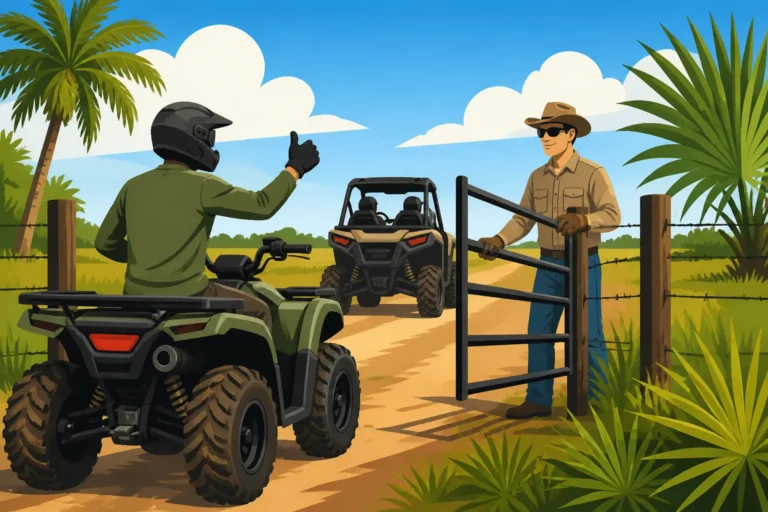
When you're hunting on private land, the property owner's permission and specific rules are paramount. Unlike public lands governed by state agencies, private land gives the owner the ultimate say in how their property, including any access roads, can be used. If you have permission to hunt on someone's land, that permission typically extends to using designated access roads for your quad or side-by-side, provided you adhere to any stipulations the landowner sets forth.
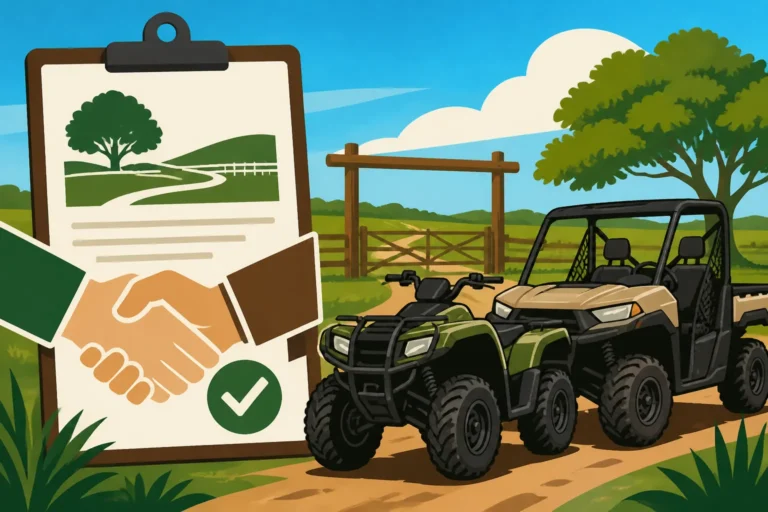
This means a clear conversation with the landowner about ATV use is essential. Will they allow you to drive directly to your stand? Are there certain areas that are off-limits to vehicles? Are there specific times you can use your machine? Getting a clear understanding of these expectations upfront can prevent misunderstandings later. It's often a good idea to have [Florida Landowner Permission Forms] in writing, especially if you're leasing land or hunting with an out-of-town owner. This ensures both parties are on the same page and provides a clear reference should any questions arise about your access and usage. Remember, you are a guest on their land, and respecting their wishes is key to maintaining those hunting privileges.
Easements and Shared Access
Sometimes, private hunting land isn't a single, isolated parcel. Roads leading to your hunting spot might cross other private properties via an easement, or you might share an access road with multiple landowners. This is where things can get a bit more complex, as your right to use an ATV on such a road depends on the specifics of the easement or shared access agreement.
If your access road crosses land owned by someone else, you need to ensure that your permission, or the terms of the easement, explicitly allows for ATV or UTV use. Simply having an easement for "ingress and egress" (coming and going) doesn't automatically grant the right to operate any type of vehicle, especially an off-highway one. It's always best to get written permission from all relevant landowners whose property you might traverse. This due diligence can prevent potential trespassing issues and maintain good neighborly relations. Disputes over shared access roads, especially involving off-highway vehicles, can quickly escalate and jeopardize your hunting access. Knowing the lay of the land, both physically and legally, is crucial in these situations.
Legal Considerations on Private Land
While the landowner's rules generally dictate ATV use on private property, it's important to remember that some state laws still apply. Operating an ATV or UTV recklessly, under the influence of alcohol or drugs, or in a manner that endangers others, remains illegal regardless of whether you're on public or private land. The Florida Highway Patrol, local sheriff's offices, and even the FWC can enforce these general safety laws.
For instance, while a formal title isn't required for riding exclusively on private land in Florida, it's still highly recommended to have your ATV or UTV titled. This provides official proof of ownership, which can be invaluable in cases of theft or dispute. As you can imagine, nobody wants to lose their machine. [Can You Ride an Untitled ATV on Private Land in Florida] is a common question, and the answer is usually yes, but with the caveat that proving ownership can be tricky without one. For hunters, a well-equipped quad from a brand like SuperATV can be a significant asset for private land access. Items like heavy-duty cargo boxes for game and gear, or specialized gun racks, make hauling much easier and safer, leaving you more energy for the hunt itself.
Gear, Enforcement, and Best Practices for Hunters
Successfully and legally utilizing your ATV or UTV for hunting access in Florida isn't just about knowing the rules; it's also about being prepared, responsible, and respectful of the environment and other users.
Essential Gear for Hunting Access
Beyond your rifle or bow, certain gear can make a world of difference when using your quad for hunting access. The terrain in Florida can vary wildly—from deep sugar sand to slick mud and dense palmetto thickets. Having the right tires, for example, designed for the specific conditions you'll encounter, can prevent you from getting stuck and needing a costly rescue. Many hunters find that a winch is an indispensable tool, especially when venturing into remote areas for game retrieval. A quality winch from a brand like SuperATV can pull you out of a sticky situation or help you load heavy game onto a trailer.
Cargo racks, gun boots, and secure tie-downs are also crucial for safely transporting your hunting equipment and, hopefully, your harvest. Riding with unsecured gear is not only dangerous for you but also risks damaging your valuable equipment. Furthermore, while most access roads are daytime-only, reliable lighting on your ATV, including headlights and a good light bar, is essential for visibility during those pre-dawn departures and post-sunset returns, even if you’re just traveling from a parking area to a trail. Always check that your lights are functional before heading out.
Enforcement and Penalties
Florida's wildlife officers, state park rangers, forest service personnel, and local law enforcement actively patrol public lands, including hunting access roads. They are well-versed in the specific regulations for each area and are not shy about enforcing them. Ignorance of the law is never an excuse. If you're caught operating your ATV or UTV illegally—whether it's riding in a prohibited area, off-trail, or without the proper permits—the consequences can be severe.
Penalties often include substantial fines, and in some cases, your vehicle could be impounded. The prospect of [Florida ATV Impound After a Road Violation] is a sobering thought for any hunter. Additionally, violations on public lands can sometimes lead to the loss of hunting privileges or access to specific areas in the future. It's a risk simply not worth taking. Always be prepared to present your hunting license, WMA permits, and proof of ATV ownership if stopped by an officer. Respectful compliance and knowledge of the rules go a long way in avoiding these unpleasant situations.
Respecting the Resource and Other Users
Ultimately, responsible ATV and UTV use on hunting access roads boils down to respecting the natural resources and fellow outdoor enthusiasts. This means always staying on designated trails and roads, avoiding creating ruts or damaging vegetation, and practicing "leave no trace" principles. Riding off-trail can harm sensitive ecosystems, disturb wildlife, and close areas to future motorized access for everyone.
Be mindful of other users. You might encounter hikers, equestrians, or even other hunters on foot. Reduce your speed, yield the right-of-way, and be courteous. Noise from ATVs can be disruptive, so consider running quieter machines or avoiding unnecessary idling, especially during sensitive hunting hours. By adhering to these best practices, you not only protect the environment but also help ensure that motorized access remains available for hunters in Florida for years to come. Your actions contribute to the reputation of all ATV riders, so let's make it a good one.
Summary of ATV/UTV Use on Florida Hunting Access Roads
| Feature | Wildlife Management Areas (WMAs) & Public Lands | Private Hunting Land |
|---|---|---|
| Primary Authority | FWC, Florida Forest Service, National Parks | Landowner (Leaseholder/Owner) |
| Rule Specificity | Highly variable by WMA; must check specific rules | Set by landowner; clear communication is key |
| Permits/Passes Required | Often yes (e.g., [Florida WMA Access Permit for Riders], [Florida National Forest OHV Pass Prices]) | No specific state permits for private land |
| Road Type | Designated ATV trails, administrative roads, specific access roads | Any road landowner permits |
| General Road Rules | State laws (e.g., [Florida's Daytime-Only ATV Road Rule], helmets for minors) apply | State laws (e.g., DUI, reckless endangerment) still apply |
| Off-Trail Riding | Strictly prohibited | Landowner's discretion (often prohibited to protect land) |
| Maps | Essential for identifying legal access points | Landowner's guidance, often informal |
| Enforcement | FWC, Forest Rangers, local LEO | Local LEO (trespassing, general laws) |
| Proof of Ownership | Recommended (for theft/disputes) | Recommended (for theft/disputes) |
Disclaimer
This article is for general informational purposes only and does not constitute professional advice. Laws, prices and regulations vary by location and change over time. Consult a qualified professional for guidance on your specific situation.