Florida Farm and Ranch ATV Road Exceptions
It can be incredibly frustrating to own an ATV or UTV for essential farm and ranch work in Florida, only to find yourself caught in a maze of road rules that seem to make no sense for your daily operations. You rely on these machines to get around your property, move equipment, and check on livestock, but the thought of briefly crossing a public road can bring anxiety about fines or legal trouble. This guide will help you understand the specific exceptions Florida law provides for ATVs and UTVs used in agricultural settings, so you can navigate public roads within the bounds of the law, keeping your focus on the important work at hand.
Understanding Florida's General ATV Road Rules (and Why They're Tricky)
Before diving into the exceptions, it’s really important to grasp the general stance Florida takes on ATVs and UTVs on public roads. For most riders, these machines are strictly off-road vehicles. This can be a bitter pill to swallow when you see perfectly capable machines that could easily handle a short stretch of asphalt or dirt road.
The Baseline: No Public Road Riding
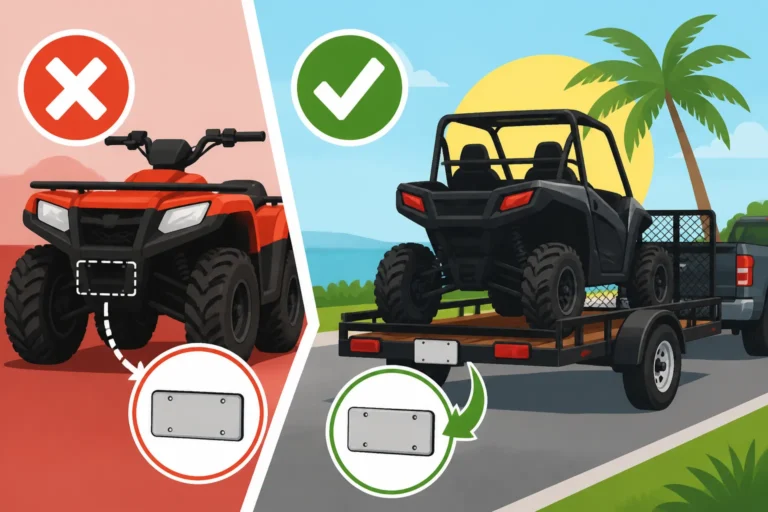
The default rule for ATVs and UTVs in Florida is pretty straightforward: they are not street legal. This means you generally cannot ride your quad or side-by-side on paved public streets, state roads, or even most county-maintained dirt roads. The state statute defines what an ATV is, and that definition typically means it's designed for off-highway use. This rule is in place for safety, as these machines often lack the standard safety features like turn signals, mirrors, and specific lighting required for on-road vehicles. For an ordinary recreational rider, this means trailering your machine to designated riding areas like [Ocala National Forest ATV Trails in Florida] or [Croom Motorcycle Area: Florida's Biggest OHV Park].
Think about it: you've got your trusty quad, maybe a powerful Polaris or a nimble Yamaha, perfect for tearing up the trails. But the moment you consider taking it down the paved road to your buddy's house, or even across the street to another part of your land, you're looking at potential trouble. Law enforcement officers are vigilant about this, and a quick hop onto a main road can result in a citation. It’s a common frustration for folks who live in rural areas where the distinction between "private" and "public" can feel blurred, especially if you're just trying to get from one part of your spread to another.
The Problem for Rural Landowners
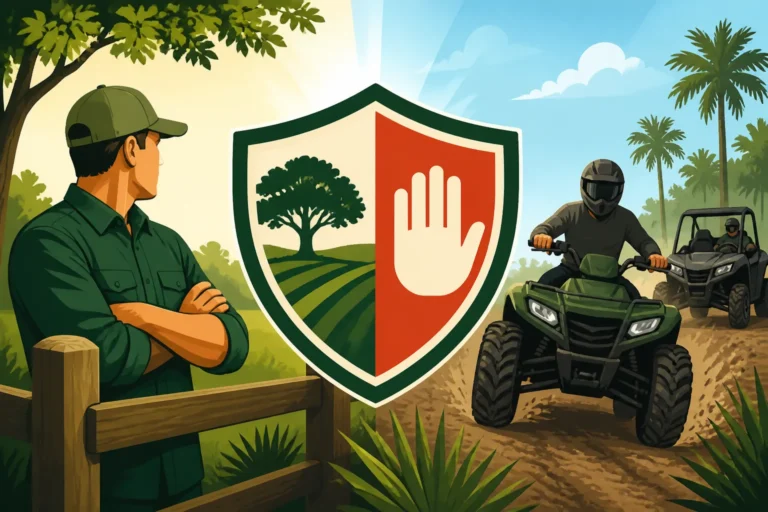
Now, if you're a landowner with acres to manage, this general prohibition creates a real headache. Your property might be bisected by a county road, or you might need to access fields that are just a short distance down a public thoroughfare. Trailering your machine for a few hundred feet seems utterly ridiculous, but under the general rules, that's what you'd be forced to do. It slows down essential tasks and adds unnecessary wear and tear to your truck and trailer. Imagine needing to quickly check on a calving cow in a distant pasture, and having to load your UTV onto a trailer just to cross a small road. It's inefficient, time-consuming, and frankly, a huge burden for agricultural operations where time is often money and animal welfare is paramount. This is precisely why the state recognized the need for specific exemptions for those working the land.
Specific Florida Farm and Ranch ATV Road Exceptions
Thankfully, Florida law does make common-sense allowances for those who use ATVs and UTVs as working vehicles on farms and ranches. These aren't blanket permissions, but rather targeted exceptions designed to facilitate agricultural activities.
Agricultural Exemption Under Florida Statute
Florida Statute 316.2123 is the key here. It allows for the operation of ATVs and UTVs on public roads under specific circumstances if they are being used for agricultural purposes. This isn't a free pass to joyride, but a practical recognition of the tools farmers and ranchers need to do their jobs. The statute generally permits an ATV or UTV to be operated on certain public roads "incidental to the agricultural pursuits of the owner or owner's employees or agents." This is a critical phrase because it ties the road use directly to the work being done on the farm or ranch. For example, moving a specialized sprayer attachment on a SuperATV UTV from one field to another across a small county road would likely fall under this.
The beauty of this exception is that it acknowledges that modern farming and ranching aren't confined to a single, unbroken parcel of land. Many operations are spread out, sometimes across several smaller parcels separated by roads. Without this exception, managing such properties would be significantly harder and more costly, forcing operators to purchase multiple machines or constantly trailer equipment, which is just not practical. It's about enabling productivity and ensuring that agricultural businesses can operate efficiently within the state.
What "Incidental to Agricultural Pursuits" Really Means
So, what exactly does "incidental to agricultural pursuits" entail? It means the use of the ATV or UTV on the road must be directly and necessarily related to farming, ranching, or other bona fide agricultural activities. This could include:
- Moving between fields or pastures: If your cattle graze in a pasture on one side of a county dirt road and you need to move feed or fencing tools there, the ATV use would be incidental.
- Checking fence lines: Many large properties have extensive fence lines that run alongside or even cross public easements. Using your UTV to inspect and repair these fences, requiring a brief stint on a public road, falls into this category.
- Transporting tools or supplies: Hauling small tools, a bag of seed, or emergency supplies from one part of your operation to another.
- Monitoring crops or livestock: Driving along a road that borders your fields to assess crop health or check on herd movements.
It's important to remember that this exception is not for personal errands, recreational riding, or commuting to a non-farm job. It's strictly for tasks that are integral to the farm or ranch's operation. If you're using your ATV to pick up groceries in town, even if your farm is just outside, that would not qualify as incidental to agricultural pursuits. The spirit of the law is about supporting agricultural work, not creating a loophole for general road use.
Conditions for Using the Farm and Ranch Exception
Even with the agricultural exception, you can't just roll onto any road at any time. There are specific conditions and requirements that must be met to ensure both safety and compliance with the law. Overlooking these can negate the exception and still land you with a citation.
Road Types and Speed Limits
The exemption isn't universal for all roads. Generally, it applies to unpaved roads and roads with very low speed limits, often found in rural areas. While the exact wording of the statute can be interpreted by local jurisdictions, the intent is usually for low-volume, low-speed roads where the impact on general traffic is minimal. Riding your quad down a four-lane state highway, even to get to another pasture, would almost certainly not be permitted, regardless of your agricultural intent. Always check local county ordinances, as some counties may have specific designations for [Florida Counties That Designated ATV Roads] or, conversely, [Florida Counties That Banned ATVs From Roads].
When you are permitted on these roads, you must operate your ATV or UTV at a speed that is reasonable and prudent, and never exceeding the posted speed limit. Given the nature of ATVs and UTVs, and their lack of certain safety features, excessive speed is always a hazard. Even on an unpaved road, kicking up dust and driving too fast can still be seen as reckless, even if you’re technically performing agricultural duties. The goal is to safely and efficiently move your machine to where it needs to be for work, not to push its limits.
Time of Day and Safety Equipment
This is where many riders get tripped up. The agricultural exception for ATVs and UTVs often comes with a "daytime hours only" stipulation. This means no operating on public roads between sunset and sunrise. While your side-by-side might have powerful SuperATV LED light bars that make night riding on your property easy, those lights might not meet the specific legal requirements for on-road use, even under an exception. It's a common-sense safety measure; visibility for ATVs and UTVs, especially to other motorists, is significantly reduced in low light.
Beyond the time of day, your machine must be equipped with certain safety features. While not a full street-legal conversion, requirements often include:
- Brakes: Fully functional brakes are non-negotiable.
- Lights: At least one headlight and one taillight, which must be illuminated, even during the day, for visibility. These might not be the same as full vehicle-grade headlights, but they need to be clearly visible.
- Reflectors: Rear-facing red reflectors.
- Operator protection: While Florida's general [Florida ATV Helmet Law for Riders Under 16] is well-known, operating on public roads under the agricultural exception might imply additional safety considerations, such as appropriate eye protection for all riders.
Remember, the emphasis here is on safe operation for a brief period on public thoroughfares. Just because you have an exception doesn't mean you can disregard fundamental safety principles.
Practical Advice for Florida Farm and Ranch Owners
Navigating these rules can feel like a minefield. As a landowner, your focus is on your livelihood, not on interpreting legal jargon. Here's some practical advice to help you stay compliant and avoid unnecessary headaches.
Know Your Local Ordinances and Consult Officials
Florida's state statutes provide the framework, but local counties and even specific municipalities can have their own ordinances that further refine or restrict ATV use on public roads. What's allowed in rural Putnam County might be different from a more developed area in Marion County. It is crucial to understand [Florida County ATV Opt-Outs: Why Rules Change at the Line]. Don't assume. The best course of action is to contact your local county sheriff's office or the county clerk's office. They can provide clarification on which specific roads, if any, are permissible for agricultural ATV use in your area.
When you speak with officials, be clear about your purpose. Explain that you are a farmer or rancher, and you need to use your ATV or UTV for bona fide agricultural pursuits, such as moving feed across a short county road section that divides your property. This proactive approach can often build goodwill and ensure you receive the most accurate information. It's always better to ask beforehand than to face a penalty later.
Equip Your Machine Properly for Visibility
Even if your ATV or UTV isn't fully street legal, enhancing its visibility when operating under the agricultural exception is a smart move. While the statute specifies minimum lighting, going above and beyond can save you trouble and increase safety. Consider these additions:
- Bright LED Lighting: Beyond the required headlight and taillight, additional LED work lights or even marker lights can make your machine much more noticeable to other drivers, especially on dusty roads or in changing light conditions.
- Safety Flags: A tall, brightly colored flag, like those often seen on dune buggies or off-road vehicles, can significantly increase your visibility, particularly over rises or around blind corners on unpaved roads.
- Reflective Tape: Adding reflective tape to the front, sides, and rear of your machine, especially on utility racks or storage boxes, can dramatically improve its visibility to other vehicles. Many SuperATV accessories come with built-in areas for this.
- Mirrors: While not always explicitly required for the exception, side mirrors are invaluable for situational awareness. Knowing what's behind you can help you react safely to approaching vehicles.
Remember, the goal is to be seen. You want to make it as easy as possible for other drivers to spot you, especially on roads where they might not expect to encounter an ATV or UTV.
Carrying Proof of Agricultural Purpose
If you're stopped by law enforcement while operating your ATV or UTV on a public road under the agricultural exception, you'll need to be able to quickly and clearly demonstrate that your use falls within the legal parameters. This means having proof of your agricultural pursuit readily available.
Consider carrying a simple folder or binder on your machine (in a waterproof container, of course!). This could include:
- Proof of Land Ownership/Lease: Documents showing you own or lease the agricultural land you are operating on.
- Agricultural Exemption Certificate: If you have one for sales tax or other purposes, this helps establish your status as a legitimate agricultural operator.
- Description of Your Operations: A brief written statement outlining your farm or ranch activities and how the ATV/UTV is essential to them.
- Maps: A simple map of your property showing how the public road bisects it or is necessary for access to different areas.
- Business Cards: If you have a farm or ranch business, your business card can help establish credibility.
While not all of these may be strictly required by law, having them on hand demonstrates your good faith and understanding of the regulations. It helps clarify your situation quickly and efficiently, potentially saving you from a lengthy roadside stop or misunderstanding. Think of it as your "agricultural ID card" for your ATV.
Common Misconceptions and How to Avoid Them
The agricultural exception is often misunderstood, leading to mistakes that can result in fines or worse. Let's clear up some common myths and help you stay on the right side of the law.
"If I Own a Farm, My ATV is Always Legal on the Road"
This is a dangerous misconception. The exception is not a blanket pass for all road use simply because you own agricultural land. As discussed, the use must be "incidental to agricultural pursuits." Taking your ATV into town for a quick errand, or letting your kids ride it around the neighborhood streets even if you live on a farm, will likely not be covered. The intent behind the trip matters immensely. An officer seeing you pull out of your driveway and head to the local gas station in your UTV will likely not view that as an agricultural pursuit, even if you fill up fuel for your tractor there.
The focus is on the direct functional link between the road use and the operation of the farm or ranch. If you're using a SuperATV cargo rack on your UTV to haul fence posts from your barn to a field on the other side of a county road, that's clearly incidental. If you're using it to take a scenic drive on that same road on a Sunday afternoon, that's not. Understanding this distinction is key to avoiding penalties.
"Dirt Roads Don't Count as Public Roads"
Another common error is believing that if a road is unpaved, it automatically falls into a different category and ATV rules don't apply. This is generally false. Many dirt roads, especially those maintained by the county or state, are indeed public roads, even if they're not paved. The same laws governing paved public roads often apply to unpaved public roads, with some specific exceptions, like the one for agricultural use. [Florida's Unpaved Road Rule for ATVs Explained] highlights this distinction.
The condition of the road (paved vs. unpaved) can sometimes be a factor in which specific state statutes or local ordinances apply, but it rarely means the road is exempt from all rules simply because it's gravel or dirt. Always assume a road is public unless you have clear, undeniable proof it's private (e.g., a clearly marked private drive to your property). When in doubt, err on the side of caution and treat it as a public thoroughfare requiring adherence to the agricultural exception rules.
"I Don't Need a Driver's License for Farm Use"
While you generally don't need a driver's license to operate an ATV on private property in Florida, the moment you transition onto a public road, even under an agricultural exception, the rules regarding driver licensing can become murky and are often subject to the specific interpretation of the statute by law enforcement. Some interpretations of the law may still require a valid driver's license for anyone operating a vehicle on a public road, regardless of the vehicle type or purpose, unless explicitly exempted.
It's always safest to ensure that anyone operating an ATV or UTV on a public road, even under the agricultural exception, holds a valid driver's license. This is especially true if you have employees or younger family members assisting with farm work. While [Do You Need a Driver's License for an ATV in Florida?] typically applies to recreational riding, the context of public road use shifts the legal landscape. Avoid the complication altogether by ensuring licensed drivers are at the controls when on any public road.
Here's a quick comparison of general ATV road rules versus the agricultural exception:
| Feature | General Florida ATV Road Rules | Florida Farm/Ranch ATV Road Exception (Statute 316.2123) |
|---|---|---|
| Primary Use | Recreational, Off-Highway | Incidental to Agricultural Pursuits |
| Public Road Access | Generally Prohibited | Permitted on specific roads (often unpaved, low speed) |
| Time of Operation | Prohibited | Daytime Hours Only (Sunset to Sunrise) |
| Driver's License | Not required for private land, but may be for public road use | Generally recommended, often implicitly required |
| Required Equipment | Basic off-road machine, no specific road equipment | Brakes, Headlight, Taillight, Reflectors (minimum) |
| Speed Limits | Not applicable on roads | Reasonable and prudent, never exceeding posted limits |
| Purpose for Road Use | None permitted | Directly related to farm/ranch work (e.g., moving feed) |
| Local Ordinance Impact | Can vary by county | Can vary by county, check local rules |
Understanding these distinctions can save you a lot of hassle and help you keep your farm or ranch running smoothly without unnecessary interruptions from legal issues. Stick to the letter and spirit of the law, and you can confidently use your essential farm machinery.
Disclaimer
This article is for general informational purposes only and does not constitute professional advice. Laws, prices and regulations vary by location and change over time. Consult a qualified professional for guidance on your specific situation.