Trailer Lights That Keep You Out of Trouble
There’s nothing quite as frustrating as getting ready for a fantastic weekend of Florida ATV or UTV riding, loading up your machine, hitching the trailer, and then realizing your trailer lights are acting up – or worse, not working at all. It’s a moment that can instantly turn excitement into dread, as you know hitting the road with faulty lights is not only a major safety hazard but also a surefire way to catch the attention of law enforcement. This guide is here to walk you through why those lights are so crucial, how to troubleshoot common problems, and how to keep them working flawlessly so you can get to your favorite trails without a hitch.
Why Your Trailer Lights Matter More Than You Think in Florida
Let's be honest, when you're itching to hit the trails, checking trailer lights can feel like a chore. But in Florida, with our often-unpredictable weather and busy roads, your trailer's lighting system isn't just a nicety – it's a non-negotiable part of safe and legal travel. Thinking of it as just a formality can lead to some real headaches down the road, both literally and figuratively.
The Legal Stakes: What Florida Law Demands
Florida isn't unique in its demand for proper trailer lighting, but the state's statutes are clear and strictly enforced. When you're towing your quad or side-by-side, your trailer becomes an extension of your tow vehicle, and as such, it needs to communicate your intentions to every other driver on the road. This means you need fully functional tail lights, brake lights, and turn signals. Beyond these primary functions, you're also required to have appropriate marker lights, clearance lights if your trailer is of a certain size, and reflectors at key points.
Failing to comply isn't just a minor infraction. Law enforcement officers, from county sheriffs to Florida Highway Patrol, are well aware of the risks posed by unlit or improperly lit trailers. A quick flash of a faulty turn signal or a completely dark trailer at dusk can be an immediate red flag, leading to a roadside stop. These stops can quickly escalate from a simple warning to a citation, imposing fines and potentially points on your driver's license. In more severe cases, especially if your lighting system is severely compromised or completely non-functional, an officer might deem your setup too unsafe to continue, which could lead to an impoundment or requiring immediate repairs before you're allowed to proceed. Imagine being stuck on the side of I-75 with a ticket and a UTV that can't move until you get lights working – it's a scenario no one wants. For more on what Florida laws impact you, check out [Florida ATV Road Rules: Where You Can Legally Ride].
Safety on the Sunshine State's Roads
Beyond the legal requirements, the practical safety implications of well-maintained trailer lights cannot be overstated. Florida's driving conditions are diverse, ranging from blinding midday sun glares to sudden torrential downpours that can reduce visibility to almost zero. In these situations, bright, clear, and responsive trailer lights are your best defense against accidents.
Think about it: a driver behind you needs to know when you're slowing down, stopping, or changing lanes. If your brake lights are dim or non-existent, or your turn signals are inconsistent, you're creating a dangerous ambiguity. This is particularly true when you're [Hauling to a Trailhead Instead of Riding There], often navigating busy highways where sudden stops are common. Semi-trucks and larger vehicles need ample time and clear signals to react to your movements. Even a momentary lapse in your lighting can cause a ripple effect of braking and swerving, potentially leading to a collision. The safety of your precious ATV or UTV, not to mention your own well-being and that of others on the road, hinges on those little bulbs or LEDs doing their job reliably.
Deciphering the Common Trailer Light Problems
It seems like trailer lights have a knack for failing at the worst possible time. One moment everything is fine, the next you're staring at a dark rear end, wondering what went wrong. Understanding the common culprits can save you a lot of time, frustration, and possibly a ticket. Florida’s humid climate and proximity to saltwater can be particularly harsh on electrical systems, making these issues even more prevalent.
The Dreaded "No Lights" Scenario
This is perhaps the most alarming problem: you plug in your trailer, and absolutely nothing lights up. It feels like a big, complex issue, but often, the solution is surprisingly simple. Your first port of call should always be your tow vehicle. Check the fuse box, usually located under the hood or under the dashboard, for the fuse dedicated to your trailer lights. A blown fuse here is a common and easy fix.
Next, examine the trailer plug connection itself. This is where your tow vehicle’s electrical system connects to your trailer. Over time, these plugs can get dirty, corroded, or even have bent pins. Give it a good clean with a wire brush or contact cleaner, ensure all pins are straight, and then firmly re-seat it. Sometimes, the problem is literally just a loose connection. The ground wire is another frequent offender; if the ground isn't solid, electricity can't complete its circuit. Ensure the ground wire is securely fastened to the trailer frame, free of rust or paint. Many aftermarket lighting kits, like those from SuperATV, often come with robust wiring harnesses designed to minimize these common ground issues.
Different trailers use different wiring harnesses, with 4-flat and 7-pin being the most common. If you’re using an adapter to convert between the two, that adapter itself can be a point of failure, especially if it’s old or has been exposed to the elements. You can invest in a simple trailer light tester (a small device that plugs into your tow vehicle’s connector and indicates if each pin is getting power) to help isolate whether the problem is with your vehicle or the trailer. This can save you hours of tracing wires on the trailer itself.
Flickering, Dim, or Intermittent Issues
This is often more maddening than a complete failure because it gives you false hope – "They worked a minute ago!" Flickering, dim, or intermittent lights are typically symptoms of a poor connection or partial corrosion. Loose connections along the wiring harness, particularly at splice points or where wires connect to the light fixtures, are prime suspects. The constant vibration from towing, especially over Florida’s sometimes bumpy roads, can shake connections loose over time.
Corrosion is a huge factor in Florida. The humidity, combined with sea air if you’re near the coast, accelerates the oxidation of metal terminals and wire strands. Even a slight film of rust or green corrosion can impede the flow of electricity, making lights dim or causing them to cut out sporadically. Faulty bulbs or LED units themselves can also contribute; if a bulb filament is partially broken or an LED chip is failing, it might only work when jostled just right. These issues can be particularly dangerous at night or during a sudden downpour, when your signals become critical. Think about the risk of a [Florida ATV Impound After a Road Violation] if your lights are unreliable.
Specific Light Malfunctions (Turn Signals, Brake Lights, Running Lights)
Sometimes, only one function of your trailer lights decides to stop working while the others are fine. This actually helps narrow down your troubleshooting efforts significantly.
- Brake Lights Only: If your running lights and turn signals work but your brake lights don't, the issue is likely with the brake light circuit itself. This could be a fuse specifically for the brake lights in your tow vehicle, a faulty brake light switch on the vehicle, or a problem with the wiring specific to the brake light signal on the trailer. If you have a brake controller, check its connections and functionality as well.
- Turn Signals Only: If your brake lights and running lights are good, but your turn signals are out, look at the flasher relay in your tow vehicle. Sometimes, a bad relay can cause one side's signals to fail, or both. On the trailer side, inspect the specific wires leading to the turn signal lights for breaks or corrosion. Remember, if your trailer uses LED lights and your tow vehicle expects incandescent bulbs, you might experience "hyper-flashing" where the turn signals blink too fast because the vehicle thinks a bulb is out due to the lower power draw of the LEDs. This can be remedied with a load resistor.
- Running Lights Only: If your running lights (the ones that come on with your headlights) aren't working but your brake and turn signals are, it usually points to an issue with the main power wire for the running lights or its associated fuse in the tow vehicle. It could also be a widespread ground issue that only affects the running light circuit, as they are typically constant power, unlike the pulsed power for turn signals or momentary power for brake lights.
Addressing these specific issues systematically can usually lead you to a resolution faster than trying to tackle a general "no lights" problem. Knowing what to look for and where to start can save you a ton of frustration and get you back on the road safely.
Upgrading and Maintaining Your Trailer's Lighting System
Keeping your trailer lights in top shape isn't just about fixing problems when they arise; it's also about proactive maintenance and smart upgrades that can prevent those issues in the first place. Especially with the demands of Florida's environment, investing a little time and effort now can save you major headaches later.
The Switch to LED: A Bright Idea
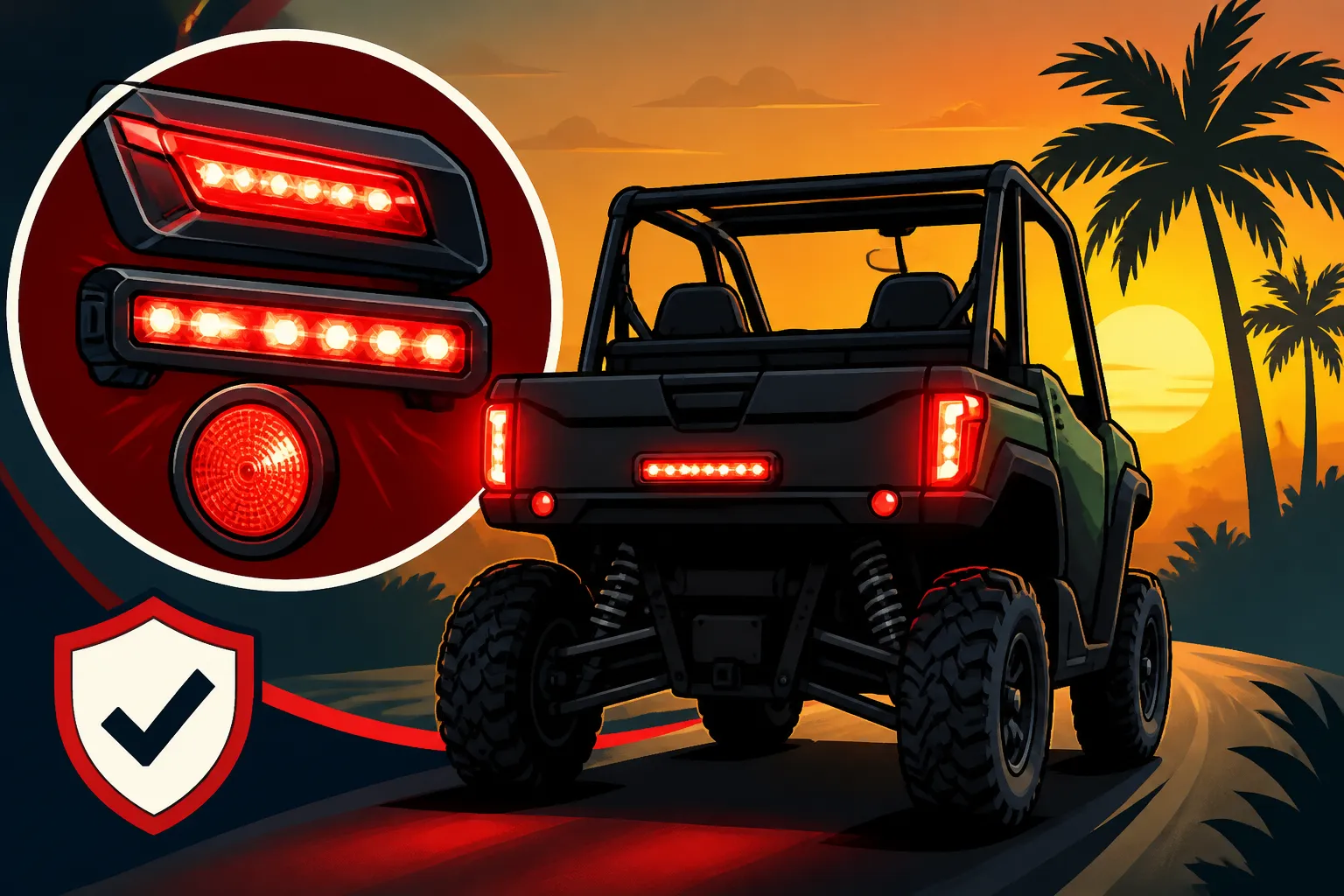
If your trailer still sports old-school incandescent bulbs, making the switch to LED lighting is one of the best upgrades you can implement. The benefits are significant:
- Brighter Illumination: LEDs are simply brighter, making your signals and tail lights much more visible to other drivers, especially in glaring sun or heavy rain. This increased visibility is a massive safety boost when [Trailer Lights That Keep You Out of Trouble].
- Faster Illumination: LEDs light up almost instantaneously, giving drivers behind you precious milliseconds more time to react to your braking.
- Longer Lifespan: Incandescent bulbs rely on fragile filaments that can break with vibrations and heat cycles. LEDs are solid-state devices, making them far more resistant to the bumps and jostles of trailering. This means fewer replacements and more reliable performance.
- Lower Power Draw: LEDs consume significantly less power, which puts less strain on your tow vehicle's electrical system.
- Durability: Many LED trailer lights are sealed units, making them impervious to water, dust, and corrosion, which is a huge advantage in Florida’s damp climate. Brands like SuperATV offer a range of high-quality LED lighting options designed to withstand harsh off-road and towing conditions.
However, it's not entirely without considerations. While beneficial, the initial cost of LED units is generally higher than traditional bulbs. Also, as mentioned, older tow vehicles might experience hyper-flashing with LED turn signals, requiring a load resistor to simulate the electrical load of an incandescent bulb. But for the peace of mind and enhanced safety, the investment is usually well worth it.
Wiring Wisdom: Protecting Your Investment
A lighting system is only as good as its wiring. Even the best LED lights will fail if the wires powering them are compromised. Proper wiring practices are paramount for longevity and reliability. Always use the correct gauge wire for your application – too thin a wire can lead to voltage drop and dim lights.
When installing or repairing wiring, pay close attention to connections. Use high-quality heat shrink tubing with internal sealant for all splices to create a waterproof barrier. Crimp connectors should be of the marine-grade variety, also with sealant. This is crucial for protecting against Florida’s humidity and potential water crossings if your trailer dips into puddles. Route your wiring carefully, away from sharp edges, exhaust components, and moving parts that could chafe or damage the insulation. Securing wires with zip ties every few inches prevents them from flapping around and getting snagged. Applying dielectric grease to all electrical connections, including the tow vehicle plug and light unit terminals, helps prevent corrosion.
Regular inspections are key. Before every major trip, especially when you’re [Hauling to a Trailhead Instead of Riding There], take a few minutes to walk around your trailer. Look for cracked lenses on your lights, which can let water in. Check for any signs of corrosion on the terminals or trailer plug. Gently tug on wires to ensure they aren't loose. Ensure your trailer's ground wire is still securely fastened and free of rust. A solid ground connection is the backbone of any reliable electrical system; if the ground is poor, all other efforts might be in vain. Don't forget about [Plate Requirements for the Trailer, Not the Quad], as that's another physical component that needs to be securely attached and sometimes has its own light.
Essential Tools and Supplies for Roadside Fixes
Even with the best maintenance, things can happen. Having a small, dedicated toolkit for trailer light emergencies can be a lifesaver. This doesn’t need to be extensive, but a few key items can get you out of a bind:
- Wire Strippers/Crimpers: For making quick, clean electrical repairs.
- Multimeter: An invaluable tool for testing voltage and continuity, helping you pinpoint exactly where the power stops flowing.
- Spare Fuses: For your tow vehicle's trailer circuit. It's cheap insurance.
- Electrical Tape & Zip Ties: For temporary insulation and securing loose wires.
- Dielectric Grease: To protect connections from moisture and corrosion.
- Spare Bulbs/LED Units: If you still run incandescent, carry spares. If you've upgraded to LEDs, carry a spare sealed unit if possible, or at least be prepared to make a temporary fix.
- Trailer Light Tester: As mentioned, this can quickly tell you if your tow vehicle is providing power correctly.
Knowing you have these items on hand provides immense peace of mind. A quick roadside splice or fuse replacement might be all it takes to avoid a citation or, worse, an accident. When you're heading out to [Croom Motorcycle Area: Florida's Biggest OHV Park] or the [Ocala National Forest ATV Trails in Florida], being prepared means more time on the trails and less time worrying about your trailer.
Incandescent vs. LED Trailer Lights: A Quick Comparison
| Feature | Incandescent Trailer Lights | LED Trailer Lights |
|---|---|---|
| Brightness | Moderate, can be dim in bright sun or heavy fog | Very bright, excellent visibility in all conditions |
| Response Time | Slower, filament needs to heat up | Instantaneous |
| Lifespan | Shorter, prone to failure from vibration and heat | Much longer, highly durable |
| Durability | Fragile filament, glass lens can break | Solid-state, often sealed, impact-resistant |
| Power Consumption | Higher, more strain on vehicle's electrical system | Very low |
| Cost | Lower initial cost | Higher initial cost |
| Corrosion Resistance | Vulnerable at terminals and bulb contacts | Often sealed units, excellent resistance |
| Compatibility Issues | Generally plug-and-play with older vehicles | May require load resistors for hyper-flashing |
| Maintenance | Frequent bulb replacement | Minimal replacement, focus on wiring protection |
Disclaimer
This article is for general informational purposes only and does not constitute professional advice. Laws, prices and regulations vary by location and change over time. Consult a qualified professional for guidance on your specific situation.