Riding the Shoulder of a Florida County Dirt Road
There's nothing quite like the open air and the rumble of your ATV or UTV beneath you, especially when you're exploring the vast and varied landscapes of Florida. However, a common question many riders grapple with is how to navigate the rules when that perfect dirt path turns out to be a county-maintained road, particularly whether you can legally hug the shoulder. It's a tricky area, full of good intentions clashing with specific statutes, and this guide is here to untangle the complexities of riding the shoulder of a Florida county dirt road, helping you stay on the right side of the law and avoid any unwelcome surprises.
Understanding Florida's Unpaved Roadway Law for ATVs
Florida's laws regarding off-highway vehicles (OHVs) can feel like a labyrinth, especially when you're trying to figure out where you can and cannot ride your ATV or UTV. Many riders assume that any unpaved surface is fair game, but that's a dangerous assumption to make when it comes to county roads. The state has specific statutes, and understanding them is crucial before you even think about putting a tire on a public road shoulder. It's not just about what feels right; it's about what the law explicitly permits or prohibits.
The Legal Definition of an "Unpaved Roadway"
First things first, let's break down what the Florida statutes actually mean by an "unpaved roadway." When we're talking about [Florida's Unpaved Road Rule for ATVs Explained], it's important to differentiate between a designated off-road trail, private property, and a public road that simply isn't paved. An "unpaved roadway" typically refers to roads maintained by a governmental entity (like a county or state) that lack a hard, paved surface. Think of your typical shell roads, dirt tracks cutting through rural areas, or graded limerock paths. These are still considered part of the public road system, even if they don't have asphalt or concrete.
This distinction is vital because the rules that apply to a paved highway also, in many respects, extend to these unpaved counterparts. You're not on a free-for-all trail; you're operating a vehicle on a public thoroughfare. The statute defines an "unpaved roadway" as a road not paved with asphalt or concrete, maintained by a county, the state, or other public authority. This definition is very broad and encompasses a huge variety of roads that might look like trails but are, in fact, public roads with specific regulations. Ignoring this distinction can lead to significant legal trouble, as many riders have learned the hard way when approached by law enforcement on what they thought was merely a harmless dirt path.
Where the "Shoulder" Fits Into the Law
Now, let's tackle the shoulder specifically. Is the shoulder of an unpaved county road considered part of the "unpaved roadway" for ATV purposes, or does it offer a legal loophole? The general intent behind road shoulders, whether paved or unpaved, is to provide an area for temporary stops, emergencies, or to allow slower vehicles to move aside safely. They are unequivocally part of the public right-of-way. The Florida statute concerning OHVs explicitly grants permission to operate these vehicles on an "unpaved roadway," provided certain conditions are met and the county hasn't specifically opted out. The statute usually doesn't create a separate class of rules for the shoulder of that unpaved roadway.
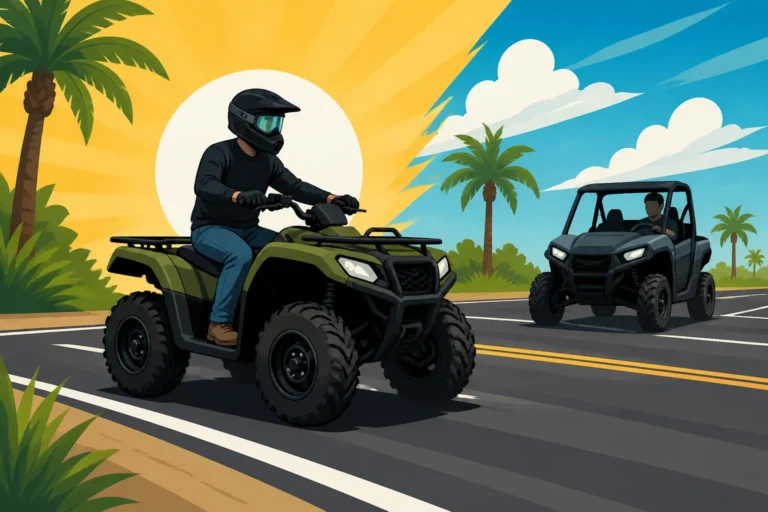
Therefore, if you're riding on the shoulder, you're generally considered to be operating your ATV or UTV on the unpaved roadway itself. This means all the rules and restrictions that apply to riding in the main travel lane of an unpaved road will also apply to the shoulder. There's no magical exemption for riding a few feet to the right of the main track. In fact, depending on the circumstances, operating on the shoulder could even be interpreted as an attempt to circumvent rules or, worse, an unsafe maneuver if it impedes other traffic or creates a hazard. The safest and most legally sound approach is to assume that if you can ride on the unpaved road, you can ride on its shoulder, but you must still adhere to all the same regulations that govern the entire roadway. For a more detailed look, check out [Unpaved Roadway: How the Statute Defines It].
Specific Rules for Riding ATVs on Unpaved County Roads
So, you've figured out that the dirt road you're eyeing is, in fact, a county-maintained unpaved roadway, and that the shoulder falls under the same general rules. Great! But what are those general rules? It's not a free-for-all, even if the road looks deserted. Florida has specific requirements for who can operate an ATV or UTV on these roads, and what equipment your machine needs to have. Overlooking these details is a surefire way to get pulled over and issued a citation, putting a serious damper on your day of riding.
Who Can Ride: Age, Supervision, and Licensing
This is where many riders, especially those with younger family members, can get tripped up. Florida has clear guidelines on age and supervision for ATV operation on public roads. For anyone under the age of 16, they must be under the direct supervision of a licensed adult. "Direct supervision" isn't just about being in the same general area; it means the adult must be close enough to observe and immediately respond to the minor's actions, and often implies riding on another ATV in close proximity. This rule is non-negotiable and designed for safety. If you're wondering about the specifics, take a look at [Minors Riding Roads Under Supervision in Florida].
As for licensing, here's a crucial point: an adult operating an ATV or UTV on an unpaved county road must possess a valid driver's license. This isn't just for paved roads; it extends to any public roadway, unpaved included. This often surprises people who assume that since it's an off-road vehicle, a license isn't necessary. It absolutely is. Furthermore, anyone under 16 operating an ATV on public lands, including unpaved roads, must also have completed an approved ATV safety course and carry proof of completion. This safety certification requirement is critical for young riders. For the full scoop on driver's license requirements, you'll want to read [Do You Need a Driver's License for an ATV in Florida?].
Equipment Requirements for Road Use
Even though you're on a dirt road, you're still on a public thoroughfare, and that means your machine needs to meet certain basic equipment standards for visibility and safety. Your ATV or UTV must be equipped with working headlights, taillights, and brake lights. This is especially important for safety, as even during the day, dust can obscure visibility, and these lights help other vehicles, whether they're cars or other OHVs, see you coming or going. Many off-the-shelf ATVs might have basic lights, but it's worth checking their functionality and brightness.
Beyond lights, eye protection is mandatory for all riders, and helmets are required for anyone under 16 years of age. While a helmet isn't legally required for adults (unless they are passengers on a specific type of ATV), it's always a smart choice for your own safety, especially on varied terrain. Additionally, a visible orange flag, mounted at least 10 feet above the ground, is often required for off-road riding in many public areas, and while not universally mandated for all unpaved county roads, it's a great safety feature to adopt for increased visibility to other traffic. When you're looking for gear that stands up to the Florida elements, SuperATV offers a wide range of accessories, from durable lighting kits to robust roll cages, which can significantly enhance your machine's safety and your peace of mind, though remember, adding accessories doesn't make your ATV street legal, only safer within the allowed boundaries. For more information on helmet laws, refer to [Florida ATV Helmet Law for Riders Under 16].
The Role of Florida Counties in ATV Road Access
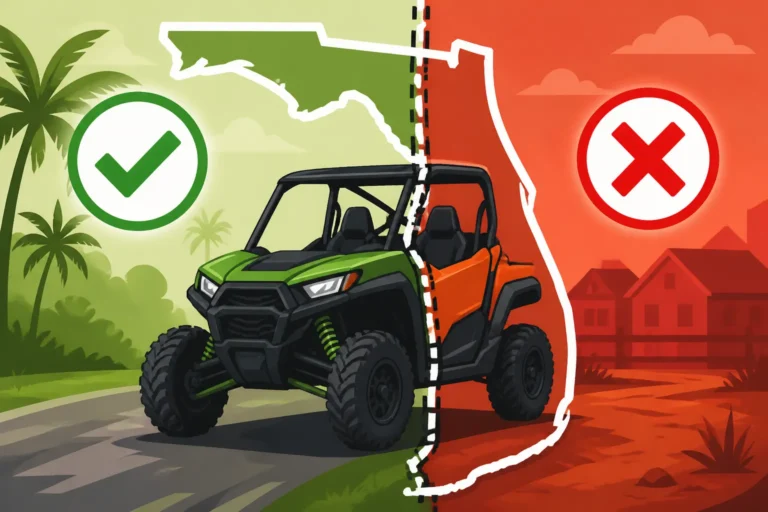
Here's where things get really localized and, frankly, a bit confusing for many riders. While Florida state law provides a framework for ATVs on unpaved roads, it gives individual counties significant power to modify or even override these state provisions. This means that what's perfectly legal in one county might land you a hefty fine just a few miles down the road in the next county over. It's a critical detail that absolutely cannot be overlooked, and it’s often the cause of frustration for riders who travel across county lines.
County Opt-Outs and Designated Roads
The state law, Florida Statute 316.2123, allows for ATVs and UTVs to operate on unpaved county roads. However, it explicitly includes a provision for counties to "opt-out" of this general permission. This means a county commission can pass an ordinance that completely prohibits ATVs and UTVs from all unpaved roads within its jurisdiction. Alternatively, a county might choose to designate specific unpaved roads where OHVs are permitted, while prohibiting them everywhere else. This nuanced approach allows counties to manage local traffic, safety concerns, and environmental impact according to their unique needs and population density.
For example, a heavily populated county with many residential areas might opt to ban ATVs from all its unpaved roads to reduce noise complaints and ensure resident safety. In contrast, a more rural county with vast agricultural lands might designate certain roads for ATV use to assist farmers or allow access to recreational areas. The key takeaway here is that you absolutely cannot assume that because you rode on an unpaved road in Marion County last weekend, you can do the same in Polk County this weekend. Each county's rules must be researched independently. This concept is explored further in [Florida County ATV Opt-Outs: Why Rules Change at the Line].
Identifying a Legal ATV-Designated Road
So, how do you know if a particular unpaved county road is open to ATVs? This is probably the single most important piece of research you'll need to do before embarking on your ride. The simplest way is to look for official signage. Designated ATV roads are typically marked with specific signs indicating that OHV use is permitted. These signs often show an ATV symbol and might include speed limits or other conditions. If you don't see any such signage, the default assumption should be that ATV use is not permitted, unless you have confirmed otherwise through official county channels.
Many counties will publish their ordinances online, often on the county clerk's or sheriff's office website. Some even provide maps. It's not always easy to find this information, and sometimes a phone call to the non-emergency line of the local sheriff's department or the county commission's office might be necessary. Never rely on hearsay or what a friend of a friend told you. Law enforcement officers are trained to enforce the specific ordinances of their county, and pleading ignorance won't save you from a ticket. Understanding [Signed ATV Roads and How to Spot One] is crucial for any rider.
To illustrate the variability, here’s a simplified table comparing hypothetical county approaches:
| County Name (Hypothetical) | ATV Road Rules on Unpaved Roads | How to Verify |
|---|---|---|
| Orange County | Opted Out: No ATVs/UTVs permitted on any unpaved county roads. | Check County Ordinance website; look for "Off-Highway Vehicle" or "ATV" ordinances. |
| Osceola County | Designated Roads Only: ATVs/UTVs only permitted on specific, clearly marked unpaved roads, typically for agricultural access. | Look for explicit "ATV Permitted" signage on designated roads. Consult county DOT or Sheriff's office for maps. |
| Hernando County | State Law Applies (No Opt-Out): ATVs/UTVs permitted on any unpaved county road, adhering to state regulations (age, license, equipment). | Confirm no specific county opt-out ordinance exists. Assume state law applies but always double-check with local authorities or Hernando County Roads Open to Riders. |
| Putnam County | Mixed Approach: Some areas are opt-out, others are designated. Rules vary significantly by specific district within the county. | Detailed research required. Consult county planning department or specific district offices. Local riders' groups can also be a resource. |
This table highlights why local research is paramount. Always, always check the specific rules for the county you intend to ride in before you even load your machine.
Potential Pitfalls and Enforcement on County Dirt Roads
Even with the best intentions, riding on unpaved county roads in Florida can lead to unexpected trouble if you're not fully aware of the regulations and the realities of enforcement. It's easy to assume that because you're on a dirt road, far from city limits, law enforcement might be less vigilant. This is a misconception that can cost you dearly, both in terms of fines and the inconvenience of having your ride cut short. Understanding the common violations and what to expect from a roadside stop is essential for responsible riding.
Common Violations and Penalties
Riding an ATV or UTV on a Florida county dirt road comes with a specific set of rules, and violating any of them can result in penalties. One of the most common infractions is simply riding on a road that is not designated for ATV use or in a county that has opted out entirely. As we discussed, ignorance of local ordinances is not a valid defense. Another frequent violation involves age and supervision rules; allowing an unsupervised minor to operate an ATV on a public road, or a minor without a safety certificate, is a serious offense.
Other violations include operating without a valid driver's license (for adults), riding during [Daytime Hours Only: What That Means at Dusk] (typically sunrise to sunset), failing to have required equipment like proper lighting, or carrying illegal passengers. [Florida ATV Passenger Rules] are very specific, and many ATVs are designed for a single rider only. Exceeding posted speed limits, even on unpaved roads where speed limits might seem arbitrary, can also lead to a citation. Penalties can range from a simple traffic infraction fine to more severe charges, and in some cases, your ATV or UTV could even be impounded. The thought of your machine being towed away while you're stranded miles from home is enough to make any rider double-check the rules. For more on what happens if your machine is impounded, see [Florida ATV Impound After a Road Violation].
Sheriff Enforcement and Roadside Stops
Florida sheriff's deputies and other law enforcement agencies are well aware of the state and local laws regarding ATVs on county roads. They often patrol these areas, especially in response to complaints from residents or concerns about safety. If you're pulled over on an unpaved county road, expect the deputy to be thorough. They will likely check several things:
- Operator's License: Do you, the adult driver, have a valid driver's license?
- Minor's Credentials: If a minor is riding, are they under direct supervision, and do they have their ATV safety course certificate?
- Machine Title: Do you have proof of ownership? While ATVs don't require registration in the same way cars do for road use, a title is still proof of ownership.
- Equipment: Are your headlights, taillights, and brake lights working? Is everyone wearing eye protection? Is the minor wearing a helmet?
- Road Designation: Is this specific road actually legal for ATV use in this county?
It's crucial to cooperate fully with law enforcement. Have your documents readily available and be respectful. Arguing about the law on the side of the road is never productive. The deputy's primary goal is to ensure public safety and enforce the laws as they understand them. If your machine is found to be illegally operated or not permitted on that road, you could face fines, a mandatory court appearance, or even impoundment of your ATV or UTV. Knowing [What Florida Deputies Check at a Roadside Stop] can help you be prepared.
Best Practices for Riding Florida Dirt Roads (Legally and Safely)
Riding ATVs and UTVs on Florida's unpaved county roads can be an incredibly rewarding experience, offering unique access to scenic routes and a sense of freedom that paved roads just can't match. However, to truly enjoy these adventures, it's paramount to prioritize both legality and safety. A little preparation goes a long way in ensuring your ride is memorable for all the right reasons, not for an unexpected interaction with law enforcement or an unfortunate accident.
Researching Local Ordinances Before You Ride
We've said it before, and we'll say it again: research, research, research! Before you even hitch up your trailer, you absolutely must confirm the specific ATV ordinances for the county you plan to ride in. This isn't just a suggestion; it's the single most important step to avoid legal trouble. County rules can change, and what was legal last year might not be this year. Start by visiting the county's official website – look for sections related to county ordinances, transportation, or the sheriff's office. Many counties have specific sections dedicated to ATV or OHV regulations.
If the information isn't clear online, don't hesitate to make a phone call. Contact the county clerk's office, the local sheriff's department (on their non-emergency line), or even the county's planning and zoning department. Explain exactly where you plan to ride and ask about current ATV regulations for those specific unpaved roads. Joining local Florida ATV clubs or online forums can also be a valuable resource. Experienced local riders often have up-to-date knowledge about which roads are open and which are closed. However, always cross-reference information from informal sources with official county documentation. It's your responsibility to know the law, not someone else's.
Safety Considerations and Responsible Riding
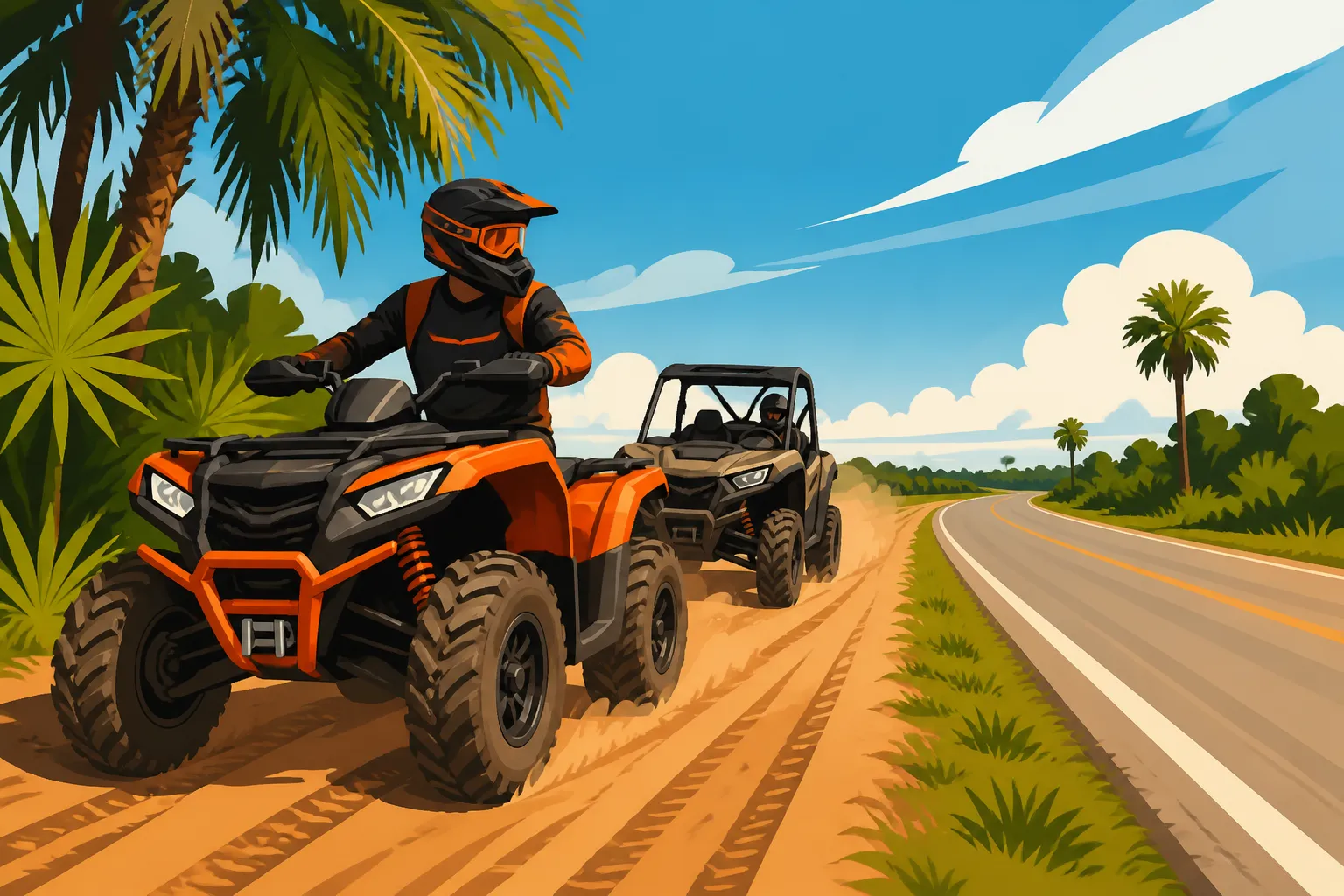
Once you've confirmed you're on a legal road, safety becomes the next priority. While riding on unpaved roads, always assume that other vehicles could be around the next bend, even if the road seems deserted. This means driving defensively, maintaining a safe speed, and being prepared to react. Always stay as far to the right as safely possible on the shoulder or road, yielding to cars, trucks, and other larger vehicles. Dust can be a significant visibility hazard on dirt roads, so keep your distance from other riders and vehicles, and consider riding with your lights on during the day to enhance your visibility.
Beyond legal requirements for helmets (for minors) and eye protection (for all), consider wearing additional safety gear like gloves, long sleeves, long pants, and sturdy boots, even on a hot Florida day. These items can protect you from scrapes, branches, and sun exposure. Ensure your ATV or UTV is in good working order, with properly inflated tires, functioning brakes, and clear mirrors. When it comes to enhancing your machine for safer use on varied terrain, brands like SuperATV offer robust aftermarket components. While these parts, such as improved suspension systems or heavy-duty winches, don't make your machine street legal, they can certainly improve its handling, durability, and your control, which are all vital safety factors when navigating potentially challenging unpaved roads. Always be mindful of the environment and respect private property; stick to designated areas and leave no trace behind. Responsible riding ensures these unpaved roads remain accessible for everyone to enjoy safely and legally. The speed limit is a common point of confusion, so always pay attention to [The 35 mph Posted Limit and Where It Applies] if no other limit is stated.
Disclaimer
This article is for general informational purposes only and does not constitute professional advice. Laws, prices and regulations vary by location and change over time. Consult a qualified professional for guidance on your specific situation.