Florida ATV Crossing a Paved Highway
Riding an ATV in Florida offers an incredible sense of freedom, whether you're tearing through mud bogs or exploring the vast network of sandy trails. However, that freedom often comes with a very specific challenge: how do you get from one trail section to another when there's a paved highway standing in your way? This guide is here to walk you through the often-confusing rules and real-world considerations for legally and safely crossing a paved highway on your ATV in the Sunshine State, helping you avoid headaches and fines.
The Challenge of Paved Highways for Florida ATV Riders
Let's face it, Florida's landscape is a patchwork of wild trails, managed forests, and, inevitably, bustling paved roads. For us ATV and UTV enthusiasts, these paved highways can feel like insurmountable barriers, cutting off access to our favorite riding spots or forcing long, inconvenient detours. It’s a common frustration, hitting that asphalt stretch and realizing your off-road machine isn’t meant for this, nor is it legally allowed on it in most cases.
Why Paved Roads Are a Problem for Off-Highway Vehicles
The fundamental issue is that ATVs and UTVs are designed for off-highway use, period. They lack many of the safety features, like sealed cabins, seatbelts, and specific lighting requirements, that make traditional street-legal vehicles safe for high-speed, multi-lane traffic. Their tires are often knobby, providing superb grip in mud and sand but poor traction and rapid wear on asphalt. Furthermore, their suspension systems are built to absorb bumps and jumps, not to handle the precise steering and stability needed for pavement at speed. Trying to operate an ATV on a paved road for anything more than a direct crossing quickly becomes a safety hazard, not just for the rider but for other motorists as well. This is why the law is so strict about [Why Florida ATVs Cannot Use Paved Streets].
Think about it: your quad, with its aggressive tires, is designed to dig into loose terrain. On slick asphalt, those same tires can actually reduce your grip, especially when turning or braking suddenly. The limited visibility of many ATVs, often sitting lower than cars, also puts you at a disadvantage in traffic. You’re less seen, less stable, and ultimately, less safe. It's not just about what you can do, but what your machine is designed to do safely.
The Risk of Legal Trouble and Safety Concerns
Beyond the mechanical mismatch, there's the very real risk of legal repercussions. Florida law is quite clear: operating an ATV on a paved public road can lead to significant fines, points on your license, and in some cases, even the impoundment of your machine. Deputies and FHP troopers are well aware of the state's off-highway vehicle laws, and they won't hesitate to enforce them. We’ve all heard stories, or perhaps even experienced it ourselves, of a quick dash across a road turning into a costly citation.
But let's be honest, the legal trouble is just one part of it. The safety concerns are paramount. Imagine you're on your ATV, pulling out onto a busy highway to cross, and a car comes flying around a blind corner. You're exposed, vulnerable, and your machine isn't built to withstand that kind of impact. Even without an accident, the sheer act of maneuvering a wide, powerful ATV that isn't made for precise steering on a hard surface, amidst cars going 60 mph, is inherently dangerous. It's a situation that stresses everyone out, riders and drivers alike, and it's best avoided unless absolutely necessary and done according to the letter of the law. You really need to know [Florida ATV Road Rules: Where You Can Legally Ride] before you venture anywhere near pavement.
Florida's Specific Rules for Crossing Paved Highways
Navigating Florida’s rules for ATV use on roads can feel like deciphering ancient texts, but when it comes to crossing paved highways, there are very specific allowances and limitations. It's not a free-for-all, nor is it a complete ban. The key is understanding the nuances. The state aims to keep off-road machines off paved roads as much as possible, but it does provide a lifeline for riders who need to connect trails or access private property.
Understanding the "Unpaved Roadway" Definition
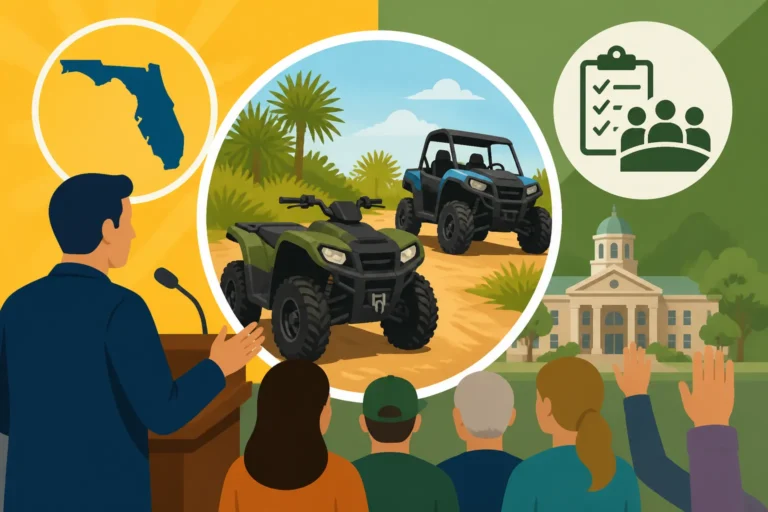
Before we get to paved roads, it's crucial to understand what Florida considers an "unpaved roadway" for ATVs. Generally, Florida Statute 316.2123 allows ATVs to be operated on "unpaved roadways" that are part of the state, county, or municipal road system, provided they meet certain conditions. These conditions often include daylight hours only, appropriate safety gear like helmets (especially for riders under 16), and a speed limit that aligns with the posted limit of the unpaved road, not exceeding 35 mph.
This is a critical distinction because it sets the stage for what happens when an unpaved road meets a paved highway. If you're legally riding on an unpaved road, that doesn't automatically grant you permission to then ride down a paved road. It only allows you to use the unpaved portion. Knowing [Unpaved Roadway: How the Statute Defines It] is your first step in understanding these permissions. The moment you transition from dirt or gravel to asphalt, the rules change dramatically, and you need to be acutely aware of those shifts.
The Direct Crossing Provision: What It Means
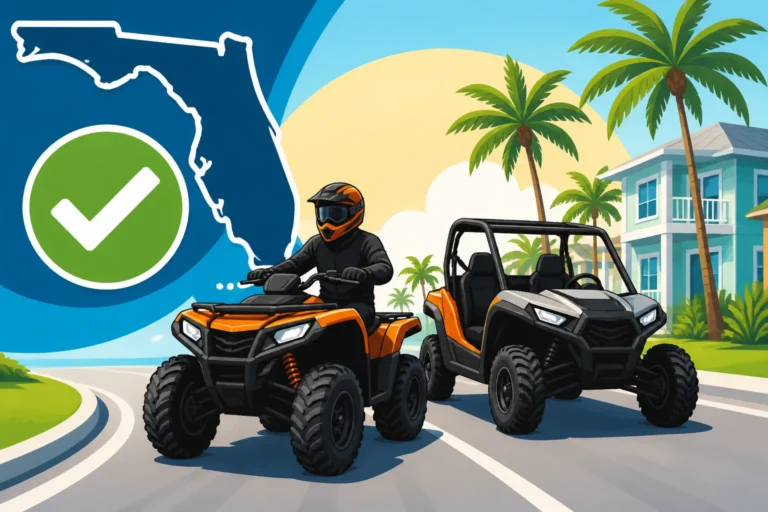
This is the big one for many riders. Florida law, specifically Florida Statute 316.2123(1)(a) and (1)(b), does allow for a very limited use of ATVs on paved public roads: a direct crossing. This provision is designed for situations where an unpaved trail or road is bisected by a paved highway, and there's no other practical way to continue your ride without briefly touching the pavement.
Here’s the catch, and it’s a big one:
- Direct Crossing Only: You must cross the paved highway at approximately a 90-degree angle to the direction of the highway, or at the closest possible angle that allows for a safe and swift crossing. You cannot ride along the paved road for any distance, not even a few feet. It’s point A to point B, straight across.
- Intersection or Designated Crossing: The crossing must occur at an intersection with a paved public road, or at a clearly designated public ATV crossing point. You can't just pick a random spot in the middle of a highway to cross. This usually means a stop sign or traffic light at the intersection where the unpaved road continues on the other side.
- Full Stop and Yield: Before you even think about entering the paved roadway, you absolutely must come to a complete stop and yield to all oncoming traffic. Treat it exactly as you would in a car. You are responsible for ensuring the crossing is safe before proceeding.
- Daytime Hours Only: As with most ATV operations on public land or roads in Florida, this direct crossing must occur during daylight hours. Night riding on a paved highway, even for a crossing, is a huge no-no and incredibly dangerous.
- Licensed Driver (If Applicable): If the paved highway crossing is part of a designated [Florida Counties That Designated ATV Roads], and you are operating a machine that falls under the requirements for a licensed driver, then the operator must possess a valid driver’s license. For basic direct crossings, a license is generally not required if you are otherwise legally allowed to operate the ATV. However, it’s always wise to understand [Do You Need a Driver's License for an ATV in Florida?] for all scenarios.
A common scenario might be riding on a county dirt road, reaching a state highway, stopping, looking both ways, and then driving straight across to pick up the continuation of the dirt road on the other side. This is the explicit intent of the law. Anything more, and you're veering into illegal territory.
When a Permit or Designated Crossing is Required
While the general direct crossing rule is helpful, there are specific situations where extra permissions or designated points come into play. Some counties in Florida have their own ordinances that might designate certain paved roads or crossing points as permissible for ATVs, often with specific signage and local rules. These are not universal, and what's allowed in Polk County might be strictly forbidden in Marion County.
For instance, certain areas within state forests or national forests, like the Ocala National Forest, may have trails that require crossing a paved road. In these cases, the crossing points are usually clearly marked, sometimes with specific signage indicating an "OHV Crossing" or similar. These designated crossings are typically the safest and most legal places to make your brief venture onto the asphalt. Always check the specific rules and maps for the public land you're riding in. [Ocala National Forest ATV Trails in Florida] is a prime example where designated crossings exist.
It's also worth noting that some private landowners might have arrangements or easements that allow for crossings, but this permission does not supersede public road laws. You need permission for both the private land and adhere to state laws for the public road. When in doubt, always err on the side of caution and look for official signage or contact the local land management office.
Practical Steps for Safely and Legally Crossing
So, you've understood the law, and you know you need to make a direct crossing. Now, let's talk about how to do it in the real world – safely, confidently, and in a way that minimizes your risk of an accident or a citation. It's not just about knowing the rules; it's about executing them with precision and awareness.
Pre-Crossing Checklist: Gear and Awareness
Before you even approach that paved highway, you need to have a mental (or even physical) checklist. Being prepared is half the battle.
- Gear Check: Ensure you're wearing all your required safety gear. A DOT-approved helmet is non-negotiable, especially for riders under 16, but honestly, it should be for everyone. Eye protection is also crucial; imagine a rock flicking up from a car's tire as you cross. You might also want to wear gloves, long sleeves, and sturdy boots. [Florida ATV Helmet Law for Riders Under 16] covers the legal minimums, but responsible riding goes beyond that.
- Machine Check: Do a quick glance over your ATV. Are your tires properly inflated? Are your brakes responsive? While ATVs don't typically have traditional turn signals, ensuring your headlights and taillights are functional can make you more visible, especially if you're crossing a major road. [Florida ATV Lights and Equipment for Road Use] discusses equipment that can improve visibility.
- Visibility: Make yourself as visible as possible. Wear bright clothing. If your ATV has a flag, ensure it's properly mounted and visible. You want to stand out, not blend in.
- Route Planning: Ideally, you've planned your route and know exactly where you'll be crossing. Are there designated ATV crossing points? Are there signs warning motorists of OHV activity? Knowing your exact entry and exit points on the unpaved roads will help you make the crossing as direct as possible.
- Traffic Assessment: As you approach the paved road, start assessing traffic conditions well in advance. Is it rush hour? Is visibility good? Are there curves or hills nearby that limit sight lines? Look for any factors that could complicate a safe crossing. Your awareness is your best defense against accidents.
Executing the Crossing: Best Practices
Once you've done your prep, it's time for the actual crossing. This isn't a race; it's a careful maneuver that requires your full attention.
- Come to a Complete Stop: Do not roll through the intersection. Stop completely before the white line (if present) or at the very edge of the paved road. Plant your feet, take a deep breath, and focus.
- Look Left, Right, Left (and Again): Just like you learned in driver's ed. Scan for traffic in both directions. Pay attention to speed and distance. Don't assume drivers see you. Make eye contact if possible. Remember, your ATV is smaller and less visible than a car. If the road is multi-lane, be extra cautious, as vehicles in closer lanes might block your view of faster-moving traffic further out.
- Identify a Safe Gap: Wait for a gap in traffic that is more than sufficient for you to cross safely and without rushing. Don't try to squeeze in. It's far better to wait an extra minute than to take an unnecessary risk. Consider the acceleration of your ATV – it’s not a sports car.
- Cross Directly and Decisively: Once you have a clear opening, accelerate smoothly and cross the paved road as directly as possible, maintaining that approximate 90-degree angle. Don't weave, don't look back, just focus on getting to the other side efficiently. Avoid any unnecessary braking or sharp turns on the pavement. Your knobby tires aren't meant for that.
- Maintain Awareness: Even once you've started crossing, keep an eye on traffic. Things can change quickly. Be prepared to react if a driver isn't paying attention.
- Exit Pavement Promptly: As soon as your tires are safely off the paved surface and onto the unpaved road or trail, you're good to go. Do not linger on the shoulder or parallel the road for any distance. The goal is to minimize your time on the pavement.
What to Do (and Not Do) Once You've Crossed
Congratulations, you've successfully crossed the paved highway! Now, what next?
- Continue Off-Road: Your primary objective is to continue your ride on the designated off-highway trail or unpaved road. The moment you are safely across, shift your focus back to off-road riding.
- Resist the Temptation to Go Further: It's tempting, especially if the next section of trail isn't immediately visible, to ride just a little bit down the paved shoulder. Don't do it. That "little bit" is exactly what the law prohibits and what could get you a ticket. Remember, your ATV is not meant for [Florida ATV Road Rules] beyond designated unpaved sections or direct crossings.
- Be a Good Steward: If you encounter other riders waiting to cross, be courteous. If safe to do so, wave them on once you’ve cleared the path. This fosters a positive community and helps ensure everyone knows the rules.
- Report Issues: If you find a designated crossing point that is dangerously situated, poorly marked, or has other safety concerns, consider reporting it to the relevant land management agency or local authorities. Better to improve it for everyone than to let a hazardous situation persist.
Common Misconceptions and Local Variations
When it comes to ATVs and roads in Florida, there are a lot of old wives' tales and misunderstandings floating around. It's crucial to separate fact from fiction, especially since Florida's legal landscape can sometimes feel like a mosaic of state statutes and local ordinances.
The Myth of "Just a Quick Hop Across"
One of the biggest misconceptions I hear is, "Oh, it's just a quick hop across, no one cares." This couldn't be further from the truth. While the law does allow a direct crossing, the emphasis is on "direct" and "crossing," not "a little bit of riding." That "quick hop" can quickly turn into an illegal operation if you:
- Ride Parallel: Even for a few feet to find a better entry point or to avoid a puddle on the shoulder. This is technically riding on the paved road, not crossing it.
- Use Undesignated Points: Just because it looks like a good spot doesn't mean it's a legal crossing. You must cross at an intersection with a paved public road or a designated crossing.
- Fail to Stop and Yield: The "quick hop" mentality often leads to riders rolling right into traffic without a proper stop, which is incredibly dangerous and illegal.
- Assume You're Invisible: Especially if you're deep in the woods, it's easy to forget that highway drivers are often going fast and not expecting an ATV to pop out. Don't rely on being unseen.
Every instance of operation on a paved road, no matter how brief, that doesn't strictly adhere to the direct crossing provision, is a violation. Law enforcement doesn't always distinguish between a "little bit" and "a lot" when they issue a citation. [Florida ATV Ticket Cost for Illegal Road Riding] can be substantial, making that "quick hop" a very expensive shortcut.
County-Specific Ordinances: A Complicating Factor
Florida's statewide statute (316.2123) provides the general framework, but individual counties have the power to enact their own ordinances regarding ATV use on local roads. This is where things can get really confusing. A county might designate certain unpaved roads as open to ATVs, or even, in rare instances, designate certain paved roads for limited ATV use within specific parameters.
For example, while the state allows unpaved road riding under certain conditions, a county might [Florida Counties That Banned ATVs From Roads] entirely within its jurisdiction, or only allow them on specific, clearly marked roads. The direct crossing rule generally applies statewide, but the context around it (i.e., whether you were legally on an unpaved road to begin with) can be influenced by local rules.
Here's how to navigate this:
- Check Local Laws: Before you ride in a new county, especially if you plan on using any roads (even unpaved ones), do your homework. Check the county's official website, look for local ordinances related to off-highway vehicles, or call the county sheriff's office for clarification.
- Look for Signage: Counties that have designated ATV roads or specific rules usually have clear signage. If you don't see any, assume the most restrictive rules apply.
- Don't Assume: Just because you rode an unpaved road in Putnam County doesn't mean you can do the same in Collier County. Every county can be different, and ignorance of local law is no excuse. This mosaic of rules is a huge headache for riders, but it's the reality of Florida.
Enforcement and Penalties for Violations
Florida law enforcement, including county deputies, city police, and Florida Highway Patrol (FHP), takes ATV road violations seriously. The primary reason is safety – yours and that of other motorists. An ATV on a paved road is an accident waiting to happen, and officers know it.
What kind of penalties can you expect?
- Traffic Citations: These are typically non-criminal infractions, but they come with fines and potentially points on your driver's license (if you have one). The fines can vary but are often comparable to other moving violations.
- Machine Impoundment: In some cases, especially for repeat offenses or egregious violations, your ATV could be impounded. Getting it back involves fees, fines, and a lot of bureaucratic hassle.
- Misdemeanor Charges: While less common for simple crossings, reckless operation or repeated violations could escalate to misdemeanor charges, which carry more severe penalties, including higher fines and even jail time.
- Insurance Issues: If you're involved in an accident while illegally operating your ATV on a paved road, your insurance company might deny coverage. This could leave you on the hook for significant medical bills, property damage, and legal fees. [Do Florida ATVs Need Insurance to Be Titled] covers some insurance aspects, but road use is a different animal.
It's critical to understand that officers aren't just looking for people hot-rodding down the highway. They're also looking for those brief, seemingly harmless excursions onto pavement that violate the direct crossing rule. The safest bet is to always err on the side of caution and adhere strictly to the law.
Equipping Your ATV for Florida's Diverse Terrain and Rules
Florida’s riding environment is incredibly varied, from deep sugar sand to mucky swamps and dense pine forests. While your ATV is designed for off-road adventure, preparing it for occasional, legal road crossings and navigating diverse terrain involves smart equipping choices. It’s about enhancing safety, durability, and compliance.
Essential Accessories for Trail and Occasional Road Use
Even if you're only making quick, legal crossings, certain accessories can make a huge difference in safety, visibility, and overall enjoyment. You want to ensure your machine is ready for whatever Florida throws at it, including those brief moments on asphalt.
- Improved Lighting: While not required for off-road use, adding brighter headlights, taillights, and even a small amber or white light bar can significantly increase your visibility to other motorists during those brief crossings, especially in low light conditions (though remember, paved road crossings should only be in daylight). This is not about making your ATV street legal, but about enhancing safety during a legal crossing. Aftermarket options from companies like SuperATV offer a range of robust lighting solutions that are built to withstand off-road abuse while providing ample illumination and visibility.
- Horn or Air Horn: Your voice might not carry over engine noise or highway traffic. A loud horn is a simple, effective safety device to alert others if necessary, or to signal other riders on the trail.
- Mirrors: While not typically found on pure off-road ATVs, side mirrors can be incredibly useful when you're approaching a paved road. They allow you to safely check for oncoming traffic without constantly turning your head, which can be unstable on an ATV. Look for durable, fold-away mirrors that can take a hit on the trail.
- Tires: Your knobby mud tires are fantastic in the swamp, but they wear quickly and offer less grip on pavement. If you frequently encounter hard-packed dirt or rock sections leading to paved crossings, a more all-terrain style tire might offer a better compromise than a purely aggressive mud tire, giving you better handling across varied surfaces. However, avoid going for street tires, as they'll defeat the purpose of your ATV in the mud.
- Winch: This isn't for road crossing, but for the off-road segments. A winch is an invaluable tool for getting unstuck from mud or sand, or for helping a buddy. It ensures you can clear the trail efficiently, which prevents situations where you might be tempted to illegally use a paved road to bypass an obstacle. Many quality winches, like those offered by SuperATV, are designed to integrate seamlessly with various ATV and UTV models, providing reliable pulling power when you need it most.
- Storage Solutions: Cargo boxes or bags are great for carrying essential gear like a first-aid kit, water, snacks, and extra clothing. Having everything securely stowed prevents distractions and ensures you have what you need for a full day of riding.
Upgrades for Enhanced Safety and Durability
Beyond the basics, some upgrades can significantly improve your ATV’s durability and safety, giving you peace of mind on the trails and during those critical road crossings.
- Skid Plates and A-Arm Guards: Florida's trails can be rocky in places, and fallen branches are common. Robust skid plates protect the underside of your ATV, while A-arm guards shield vital suspension components from damage. A cracked case or broken A-arm far from the trailhead can put you in a bind, potentially leading to an illegal road ride back to civilization. Companies like SuperATV specialize in heavy-duty protection for nearly all popular ATV and UTV models.
- Heavy-Duty Suspension Components: Upgraded shocks and springs can improve ride quality, handling, and durability, especially if you're carrying passengers or extra gear. Better suspension also translates to more stable handling, which can be a minor but noticeable benefit during a brief paved road crossing.
- Fuel Management Systems: If you're doing long rides or riding in remote areas, carrying extra fuel in a safe, approved container is wise. Running out of gas is another reason riders might be tempted to use paved roads illegally.
- GPS or Trail App: A good GPS unit or a smartphone with a reliable trail app is essential for navigation, especially in unfamiliar territory. Knowing exactly where you are and where the legal crossing points are can prevent accidental road use. Many apps show public land boundaries and designated trails, helping you stay compliant.
- Spark Arrestor: While not directly related to road crossings, a US Forest Service approved spark arrestor is often required for riding on public lands in Florida, like the Ocala National Forest. Ensuring your ATV is equipped with one helps prevent wildfires, which in turn helps keep our precious trails open for everyone.
By thoughtfully equipping your ATV, you're not just preparing for the thrill of the ride; you're also taking proactive steps to enhance your safety and ensure you remain compliant with Florida's intricate off-highway vehicle laws, making those necessary paved highway crossings as smooth and stress-free as possible.
Disclaimer
This article is for general informational purposes only and does not constitute professional advice. Laws, prices and regulations vary by location and change over time. Consult a qualified professional for guidance on your specific situation.