Riding a Florida Fire Road on a Quad
You've probably seen those tempting, unpaved paths winding deep into Florida's wilder areas – often called "fire roads" – and wondered if your quad or side-by-side can legally explore them. It's a common dilemma, as Florida's rules for off-highway vehicles (OHVs) on public lands can feel like a tangled web of regulations. This guide will help you understand the nuances of riding Florida's fire roads, ensuring you stay legal, safe, and respectful of our beautiful natural spaces.
Understanding "Fire Roads" and Florida's OHV Landscape
When people talk about "fire roads" in Florida, they're generally referring to unpaved service roads that crisscross state forests, national forests, and other public lands. These roads are primarily used by land management agencies for access to prevent and fight wildfires, conduct timber operations, and facilitate wildlife management. They might look like inviting shortcuts or scenic routes, but their primary purpose isn't always recreational ATV use, which is where the confusion and legalities come into play.
The True Nature of Unpaved Roads in Florida
It's easy to assume that any unpaved path is fair game for an OHV, but that's a misconception many riders regret. In Florida, an "unpaved roadway" as defined by statute (Florida Statute 316.2123) refers to roads not surfaced with asphalt, concrete, or other hard material. However, this definition alone doesn't grant universal access to ATVs. The critical distinction lies in who owns and manages the land, and what specific rules that agency has put in place for these particular roads. A path might be unpaved, but if it's not explicitly designated for OHV use, or if it's on private land without permission, it's off-limits. You see, the state provides a baseline, but the specific land manager gets the final say.
For instance, a fire road in the Ocala National Forest might have completely different access rules than a similar-looking unpaved road in a State Forest like Blackwater River, or even a service road maintained by a local water management district. Even within a single forest, certain sections might be designated for OHVs, while others are strictly prohibited to protect sensitive ecosystems or wildlife habitats. It’s a patchwork system, and riders often get frustrated trying to figure out what's what. It’s not about how the road looks; it’s about what the signs say (or don’t say) and what the governing agency permits.
Distinguishing OHV Areas from General Public Roads
Florida draws a very clear line between designated off-highway vehicle (OHV) areas and other public roads, even if those roads are unpaved. Public OHV areas, like those found in the Ocala National Forest or Croom Motorcycle Area, are specifically designed and managed for recreational OHV use. They often have marked trails, staging areas, and specific entry/permit requirements. These are the places where you can confidently ride your quad, knowing you’re following the rules.
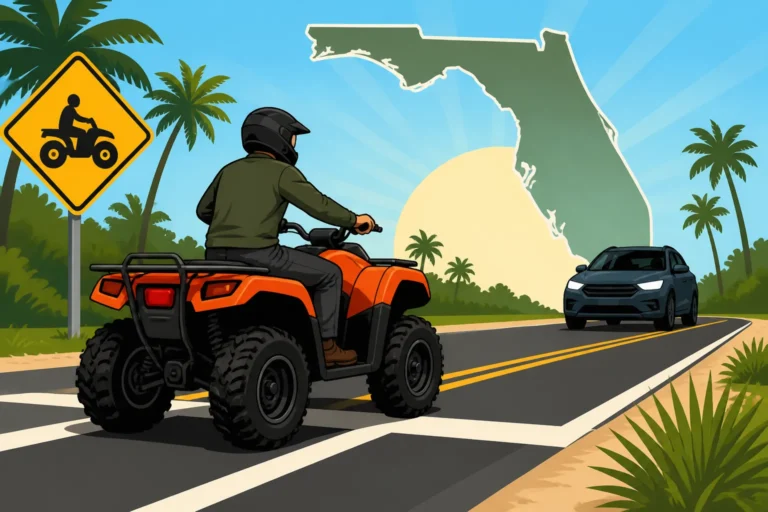
On the other hand, many "fire roads" or unpaved service roads outside of these designated OHV areas are considered part of the general road network, even if they're dirt. This is where [Florida's Unpaved Road Rule for ATVs Explained] becomes so important. While Florida law allows for limited ATV operation on unpaved public roads if certain conditions are met (daytime hours only, specific speed limits, proper equipment, and licensed driver if on a public road, and often county permission), these are not the same as riding a designated OHV trail. Many fire roads simply don't fall under the "unpaved public road" exception or might be in counties that have "opted out" of allowing ATVs on any public roads. The temptation to simply explore an open-looking dirt track can lead to serious fines and machine impoundment if you haven't done your homework.
Legalities and Permitting for Riding Fire Roads in Florida
Navigating the rules for riding unpaved fire roads in Florida requires more than just a quick glance at a map. You need to understand the permitting system, the local ordinances, and the specific requirements for your machine and yourself. It's not a one-size-fits-all scenario, and failing to check these details can quickly turn a fun ride into a costly headache.
Permits and Passes for Forest Land Access
If you plan to ride on fire roads within Florida's State Forests or National Forests, you'll almost certainly need a specific permit or pass. These passes are how the land management agencies fund the maintenance of trails, roads, and facilities. It's a small price to pay for access to some incredible riding areas, but it's crucial to have the correct one. [Florida National Forest OHV Pass Prices] vary, offering options like 3-day, 7-day, or annual passes, and typically come with a processing fee. Similarly, State Forests have their own day-use and annual pass systems, often available at kiosks or online through services like ReserveAmerica.
It's also important to remember that these passes are usually per machine, not per rider, and they have specific expiration dates – an annual pass bought in March might still expire on June 30th, so always check the valid-through date. Beyond the pass, some areas require an OHV title for your machine if you're riding on public lands, as explained in [Riding Public Land as the Trigger for a Title]. Always carry your proof of ownership, your permit, and any required safety certifications, especially for younger riders. Rangers and law enforcement routinely conduct [Florida Ranger Checks at a Trailhead], and not having your paperwork in order is a quick way to end your ride.
County-Specific Ordinances and Restrictions
Even when dealing with state or federal lands, county ordinances can play a significant role in where you can and cannot ride, especially if a "fire road" connects to or crosses a county-maintained public road. Florida law gives counties the power to opt out of the state's unpaved road allowance, meaning some counties might completely prohibit ATVs on any public roads, paved or unpaved, including fire roads that fall under their jurisdiction. It's a common frustration for riders who travel across county lines, only to find rules change abruptly.
Before heading out, always research the specific county you plan to ride in, alongside the rules for the particular forest or land management area. Many counties have designated specific roads where OHVs are permitted, but these are often limited and clearly signed. Without explicit permission or designation, assume a fire road that isn't part of a formal OHV trail system is off-limits. If you're caught riding illegally, the [Florida Penalties for Illegal ATV Road Riding] can range from significant fines to your machine being impounded, a truly disheartening experience no one wants.
| Land Type | General Access Rule for Fire Roads | Permit/Pass Requirement | Additional Considerations |
|---|---|---|---|
| National Forests | Generally restricted to designated OHV trails and forest roads specifically marked for OHV use. Many fire roads are not open to ATVs. | Required. National Forest OHV Pass (3-day, 7-day, Annual). Purchase online or at ranger stations. | Check specific forest maps (e.g., Ocala National Forest) for designated OHV routes. |
| State Forests | Similar to National Forests; access is typically limited to designated OHV areas and specific forest roads. | Required. State Forest OHV Day Use or Annual Pass. Purchase online or at self-pay kiosks. | Verify rules for individual State Forests (e.g., Blackwater River, Tate's Hell). An OHV title may be required for public land. |
| Water Management Districts | Highly restricted; generally not open to public OHV use without specific permits for hunting/fishing access or other authorized activities. | May be required. Specific WMD permits for certain activities. Very limited, often no general recreational OHV access. | Always check directly with the specific Water Management District. Trespassing is a risk. |
| County Roads (Unpaved) | Only allowed if the county has not opted out of FS 316.2123, and if the road is designated as suitable for ATV use. Conditions apply. | Not required for the road itself, but an OHV title might be. | Many counties have banned ATVs from all public roads. Requires a licensed driver, proper equipment, and daytime only. |
Essential Gear and Responsible Riding on Florida Fire Roads
Once you've done your homework and confirmed that a particular fire road or area is legally accessible for your quad, it's time to prepare for the ride itself. Florida's terrain, while beautiful, can be unforgiving, and responsible riding means being equipped, safe, and aware of your surroundings. After all, a fire road is often less maintained than a dedicated trail system.
Equipping Your Quad for Unpaved Terrain
Riding on fire roads can be quite different from well-groomed trails. You might encounter deep sand, loose gravel, ruts, washouts, unexpected obstacles, or even encroaching vegetation. Therefore, outfitting your quad or side-by-side properly is paramount. Good quality tires designed for off-road use with adequate tread will offer better traction and durability. Protection for your machine, such as skid plates for the undercarriage and A-arm guards, can save you from costly damage if you encounter hidden rocks or stumps. Many riders also find upgraded suspension components beneficial for soaking up the bumps and providing a smoother, more controlled ride over uneven surfaces. Brands like SuperATV offer a vast selection of these types of aftermarket parts, from heavy-duty axles to full protection kits, that can truly enhance your machine's capability and your comfort on less-than-perfect fire roads.
Beyond the machine itself, consider communications. Cell service can be spotty, or even non-existent, deep in Florida's forests. Carrying a satellite messenger or a two-way radio can be a lifesaver in an emergency. Also, always have a basic toolkit, tire repair kit, and enough water and snacks for longer than you expect to be out. A small first-aid kit is also a wise addition. Being prepared for unexpected mechanical issues or minor injuries means you're not solely reliant on external help, which might be hours away on a remote fire road.
Rider Safety and Environmental Stewardship
Your own safety gear is non-negotiable, regardless of where you're riding. A DOT-approved helmet is essential – for riders under 16, [Florida ATV Helmet Law for Riders Under 16] makes it mandatory on public lands, but it's a smart choice for everyone. Eye protection, gloves, long pants, and sturdy boots are also crucial for protecting yourself from debris, scrapes, and impacts. Remember, fire roads might not be actively maintained for recreational riding, meaning hazards like fallen branches or deep ruts might appear without warning.
Beyond personal safety, being a responsible rider means being an environmental steward. Stick to marked trails and designated roads; never forge new paths. Avoid disturbing wildlife, and always pack out everything you pack in – leave no trace. Be mindful of noise, especially if you're near residential areas or sensitive wildlife habitats. Many fire roads traverse delicate ecosystems, and your actions directly impact their preservation. Remember, we share these lands with hikers, horseback riders, cyclists, and hunters, so slow down, yield, and be courteous to everyone you encounter. Adhering to these principles ensures that these unique riding opportunities can be enjoyed for years to come.
Disclaimer
This article is for general informational purposes only and does not constitute professional advice. Laws, prices and regulations vary by location and change over time. Consult a qualified professional for guidance on your specific situation.