Florida Beach and Dune Access for ATV Riders
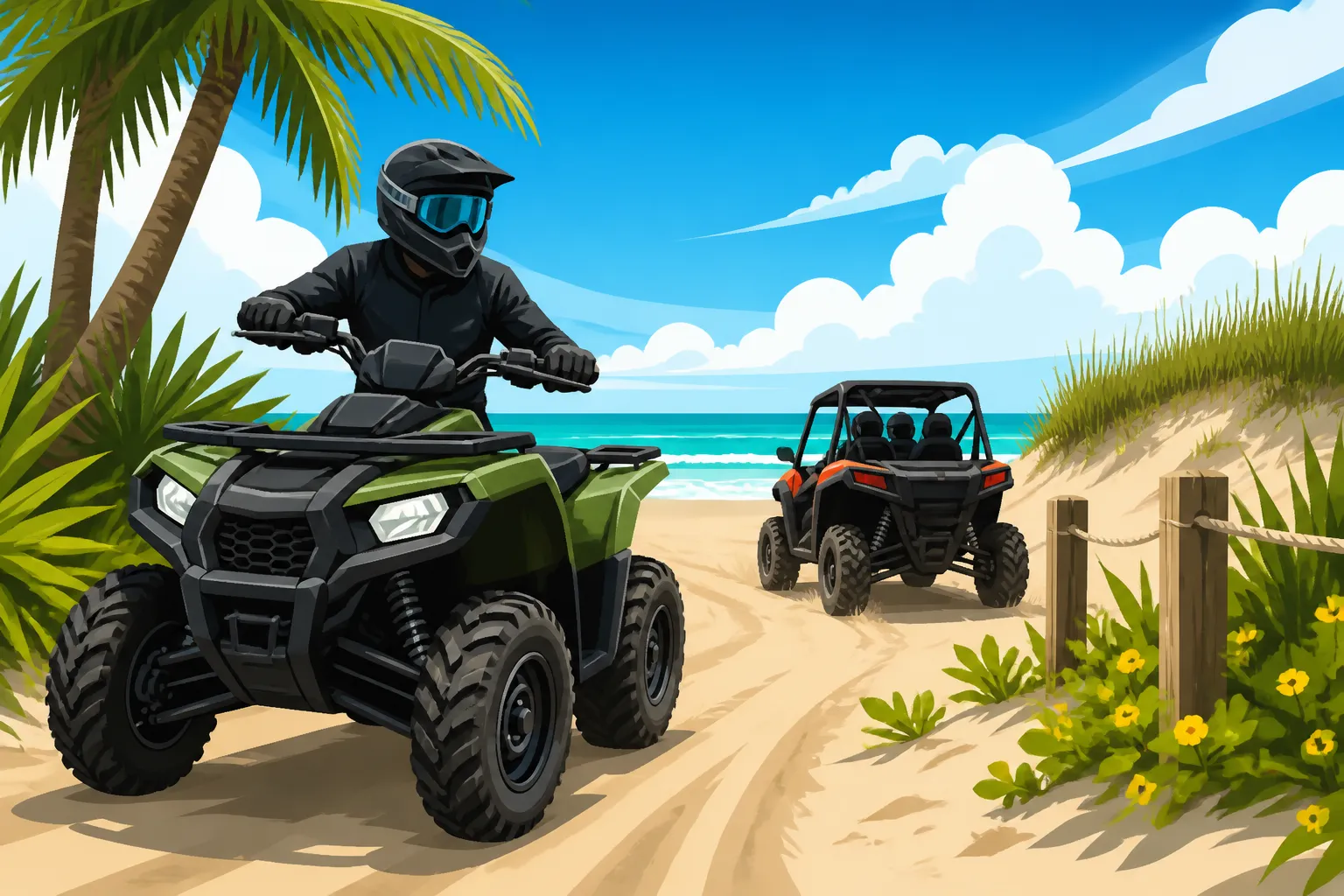
Oh, the dream of riding your ATV or UTV along Florida's sun-drenched beaches, feeling the ocean breeze and the sand flying under your tires! It's an idyllic image, one that many off-road enthusiasts conjure up when they think of the Sunshine State. But here's the honest truth: for most of us, that dream remains just that – a dream. Florida's pristine coastlines are incredibly beautiful, but they're also among the most regulated and environmentally sensitive areas in the state. This comprehensive guide is here to cut through the confusion and explain exactly what you can and cannot do when it comes to ATV and UTV access on Florida's beaches and dunes, so you can avoid costly mistakes and find legal ways to enjoy your machine.
The Dream vs. The Reality: Understanding Florida's Coastal Regulations for ATVs
It’s easy to look at Florida’s thousands of miles of coastline and imagine wide-open spaces perfect for a quad. After all, isn't Florida all about outdoor adventure? The reality, however, is a swift and often disappointing wake-up call for many riders. While some states have vast expanses of beach where recreational vehicle access is commonplace, Florida operates under a much different set of rules. You might even see a picture online of a vehicle on a beach, giving you false hope, but rarely is that picture depicting a recreational ATV ride by the general public.
Why Public Beaches Are Largely Off-Limits
For the vast majority of Florida's public beaches, motorized vehicle access, including ATVs and UTVs, is strictly prohibited. Imagine spending hours trailering your beloved machine, perhaps a powerful utility quad or a sleek sport ATV, down to a beautiful stretch of coastline, only to be met with prominent "No Motorized Vehicles" signs, or worse, a local sheriff's deputy ready to issue a citation. This is the common, heartbreaking scenario for riders who haven't done their homework. These beaches are designated primarily for passive recreation – think swimming, sunbathing, shelling, and long walks along the shore. The peace and quiet desired by beachgoers, coupled with the inherent dangers of mixing high-speed vehicles with pedestrians, means that general ATV access simply isn't feasible or safe.
The rationale behind these widespread restrictions is multifaceted and deeply rooted in both public safety and environmental preservation. Picture a family with young children playing near the waterline; the sudden appearance of a roaring ATV, even if driven cautiously, poses an immediate risk and disrupts their enjoyment. Beyond safety, there's the critical issue of noise pollution, which detracts from the natural serenity of the coast, and the visual impact of tire tracks marring an otherwise pristine landscape. The very act of driving on soft sand, especially repeatedly, contributes to erosion, altering the natural contours of the beach and potentially exacerbating the impacts of storms. It’s a delicate balance, and the scales in Florida overwhelmingly tip towards preserving the natural beach experience for the masses, rather than accommodating motorized recreational vehicles.
Furthermore, Florida's extensive coastal regions are not just pretty places; they are vital ecosystems teeming with life. Driving on the sand can compact it, disturbing the micro-organisms that form the base of the food chain, or directly crush unseen nests of shorebirds and sea turtles. While general state statutes may broadly govern beach use, they empower local authorities to implement specific rules that address these unique vulnerabilities. This often means that even if a state law doesn't explicitly mention "ATVs," the spirit and letter of local ordinances will make it clear that your machine is not welcome for recreational purposes on the sand.
This restrictive approach really sets Florida apart from other riding destinations. If you've ridden on private ranch land or explored the vast expanses of desert riding areas in the western United States, you're likely accustomed to a more permissive environment for off-road vehicles. However, Florida’s public beaches are managed with a completely different set of priorities – namely, conservation, public safety, and tourism that doesn't involve heavy machinery on the sand. Don't let experiences in other regions or on private property dictate your assumptions about Florida's strict coastal access.
The Critical Role of County and Municipal Ordinances
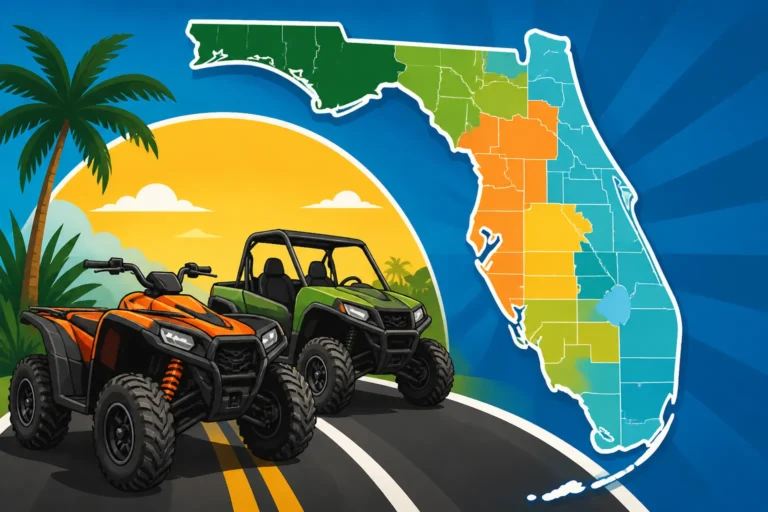
While the state of Florida provides a general framework for coastal management, the actual, boots-on-the-ground rules for beach access are almost entirely determined by individual counties and municipalities. This is where the landscape gets truly granular and, frankly, a bit confusing. A blanket "no" from the state doesn't necessarily mean a specific county or town can't carve out a very narrow exception, but these are exceedingly rare for recreational ATV use. The differences can be stark; what might be permissable (for very specific, non-recreational uses) in one county could lead to an immediate citation in an adjacent one. This variability highlights why understanding [Florida County ATV Opt-Outs: Why Rules Change at the Line] is so crucial, as it perfectly illustrates how local governance dictates where you can and cannot ride.
These hyper-local rules aren't just arbitrary decisions; they are typically the result of extensive local government processes, including public hearings, community input, and the careful weighing of competing interests. Local elected officials balance the desires of residents and tourists, the need for environmental protection, and the economic benefits (or drawbacks) of various activities. For example, a community heavily reliant on eco-tourism might have stricter rules than one that historically had more industrial coastal uses. This reflects a local government's priorities and concerns, which means that while you might hear anecdotal stories of someone riding a quad on a beach in Florida, it's essential to verify if that specific location actually permits it, and under what exact circumstances.
The sheer length of Florida's coastline, stretching from the Panhandle to the Keys, means that you'll encounter a bewildering variety of local regulations. Some areas, particularly in the Panhandle, have historically allowed very limited, designated vehicle access for purposes like driving directly to a fishing spot, though recreational ATV use is still typically excluded. Even in these rare cases, the rules are often contingent on the time of year, specific permits, and strict adherence to designated corridors. Meanwhile, a few miles down the coast in a more densely populated tourist area, any motorized vehicle on the sand outside of emergency services would be met with an immediate fine. This makes thorough, pre-trip research absolutely non-negotiable for any rider hoping to even approach a Florida beach with their ATV.
The biggest challenge for riders, and a source of considerable frustration, is often the difficulty in finding clear, consolidated information about these local rules. It's not always clearly signposted at every beach access point, nor is it typically compiled in a single, easy-to-digest government document. Many well-meaning riders find themselves accidentally violating ordinances simply because the rules are obscure or conflicting. You might read something online, only to find it's outdated or applies to a different county. This constant need for verification is why the dream of casual beach riding in Florida often clashes so harshly with the complex legal reality, making a simple joyride a potential legal headache.
Understanding "Beach" vs. "Dune" in Florida Law
When we talk about Florida's coast, it's tempting to lump everything together as "the beach." However, legally and ecologically, there's a critical distinction between the wet sand, the dry sand, and the coastal dunes. For ATV riders, understanding this difference isn't just academic; it's the key to comprehending why access is so restricted and where the greatest risks of penalties lie. The rules governing the fragile dune system are almost universally more stringent than those for the open beach, and violating them carries far more severe consequences.
Why Coastal Dunes Are Ecologically Sacred and Strictly Protected
Coastal dunes are far more than just mounds of sand; they are absolutely vital to Florida's coastal protection and ecological health. These natural fortifications serve as the primary buffer against the relentless forces of tropical storms, hurricanes, and daily erosion. Without healthy dune systems, coastal communities would be far more vulnerable to storm surges, flooding, and the rapid disappearance of their beachfronts. They are, quite literally, the frontline defense for millions of residents and countless properties along the Florida coast. This protective role alone makes their preservation a top priority for state and local governments.
Beyond their physical protective functions, dunes harbor incredibly delicate and unique ecosystems. They are home to specialized flora, such as sea oats and dune sunflowers, which are adapted to harsh, sandy, saltwater environments. The root systems of these plants are critical for stabilizing the sand, preventing wind and water erosion. Furthermore, dunes and the areas immediately behind them provide essential nesting habitats for a variety of shorebirds and, most famously, sea turtles. Florida's coast is one of the most important sea turtle nesting grounds in the world, and even slight disturbances to these areas can have devastating impacts on these protected species. This is why [Sea Turtle Nesting Season Beach Closures] are strictly enforced, often impacting even pedestrian access, let alone motorized vehicles.
Because of their immense ecological value and their role in coastal resilience, dunes are afforded incredibly strict protections under both state and federal law. In almost every conceivable scenario, driving an ATV or UTV on, over, or even through the vegetation of a coastal dune is unequivocally illegal. The damage caused by a single vehicle tearing through dune grass can take years, even decades, to naturally repair, and during that time, the exposed sand is highly susceptible to further erosion. These are not merely local regulations; they often come with the weight of state environmental agencies and federal wildlife protections behind them, reflecting their critical importance.
The penalties for damaging or driving on coastal dunes can be severe. It's not uncommon for fines to run into the thousands of dollars per violation, and depending on the extent of the damage or whether endangered species are impacted, riders could face misdemeanor or even felony charges. Ignorance of the law is never an excuse, especially when it comes to harming such visibly protected areas. Law enforcement, including Florida Fish and Wildlife Conservation Commission (FWC) officers, are highly vigilant in these areas, and the consequences for violations are designed to be a significant deterrent.
The Legal Definition of "Beach" and "Dune"
Understanding the precise legal definitions of "beach" and "dune" in Florida is crucial because what might seem like continuous sand to a casual observer is often demarcated by strict legal boundaries. Generally, the "beach" refers to the area of unconsolidated sand, shell, or gravel that extends from the mean low water line landward to the vegetation line, a man-made structure, or the point where the topography changes significantly. A key demarcation is often the "mean high water line," which separates the public trust lands (typically the wet sand, accessible to the public) from the private upland property (often the dry sand, if owned privately).
The "dune" is typically defined as a mound or ridge of loose sediment, usually sand-sized, lying upland of the beach and vegetated with grasses, shrubs, or trees. This vegetation is the tell-tale sign of a dune and is critical to its stability. The line where this vegetation begins is often considered the start of the protected dune system. While the mean high water line is a relatively fixed legal point, the actual width of the dry sand beach can vary dramatically with tides, seasons, and erosion events. What looks like a wide-open expanse of sand suitable for driving at a super low tide might become completely submerged or push right up against the protected dune system at high tide, leaving no legal space for a vehicle.
For ATV riders, these shifting definitions create an inherent trap. Even in the incredibly rare instances where some form of vehicle access might be permitted on a very specific stretch of beach (usually for non-recreational purposes), navigating the precise legal boundaries between the wet sand, dry sand, and the dunes is a constant challenge. You might technically be on a "beach" in the wet sand, but drift just a few feet too far landward into the dry sand (which might be private property) or, worse, onto the initial vegetation of a dune, and you've instantly crossed into an illegal zone. The lines are not always marked with obvious signs, and the natural environment itself doesn't come with clear boundary markers.
This complexity underscores the absolute importance of adhering to any and all signage you encounter at beach access points. If there are designated paths, stay strictly on them. If an area is roped off or marked as a protected habitat, respect it without question. Assume that any area with vegetation above the high water line is a protected dune, and keep your machine well away. Trying to discern the exact legal boundary while in motion on an ATV is an impossible task, so err on the side of extreme caution to avoid the hefty fines and legal entanglements that come with violating Florida's strict coastal protection laws.
Where You Might Actually Find ATV-Permitted Beach Access
Given the stringent regulations and environmental protections in Florida, the idea of finding a stretch of beach where you can legally ride your ATV or UTV for recreation is, frankly, almost non-existent. While the dream persists for many, the reality is that the few places where motorized vehicles are permitted on the sand are under highly specific, limited, and often non-recreational circumstances. This isn't like some vast, open coastlines in other parts of the world; Florida's approach is meticulously controlled.
Limited Vehicle Access for Permitted Uses (Not General Recreation)
Let's get this out of the way: if you're picturing a wide-open recreational joyride on a Florida beach, you're almost certainly envisioning something illegal. The exceptions to Florida's general prohibition on motorized vehicles on beaches are incredibly narrow and almost exclusively tied to essential, non-recreational purposes. For example, local governments or permitted organizations may use ATVs or UTVs for beach maintenance, such as cleaning up debris, post-storm recovery efforts, or for beach renourishment projects where heavy equipment is needed. These are work vehicles, operating under strict permits and schedules, not recreational machines.
Other examples of permitted vehicle access might include emergency services – think lifeguards, law enforcement, or paramedics responding to an incident. These are critical uses where speed and mobility on sand are paramount, but they are clearly marked emergency vehicles, not private ATVs. Similarly, some commercial fishing operations, particularly those that use large nets or traps, may be granted very specific, limited access to drive vehicles onto certain beaches to launch or retrieve equipment. Even then, these operations are typically under close supervision, adhere to strict timeframes (e.g., before sunrise), and must avoid all protected areas.
It's also worth noting that in extremely rare cases, individuals with specific disabilities might be granted permits for beach access with appropriate mobility vehicles, but these are highly specialized and not for general-purpose ATVs or UTVs. For a rider hoping to gain broader access, these limited-use scenarios offer no pathway. The conditions under which these permitted vehicles operate are incredibly stringent: they often involve slow speed limits, designated travel corridors that avoid sensitive habitats, and seasonal restrictions (especially during sea turtle nesting season). Any deviation from these rules, even by a permitted operator, can lead to severe penalties.
These specific exceptions are heavily regulated and closely monitored by local authorities, park rangers, and Florida Fish and Wildlife Conservation Commission (FWC) officers. They are not opportunities for the general public to slip through loopholes with their personal machines. Law enforcement patrols, often using their own robust ATVs or side-by-sides, are vigilant in these areas, specifically looking for unauthorized users. So, while you might occasionally see a vehicle on a Florida beach, assume it's there for a legitimate, permitted, and non-recreational reason, and do not attempt to replicate it with your personal quad. The consequences, including impoundment of your machine and substantial fines, are simply not worth the risk.
Specialized Events or Private Land with Beach Frontage
The idea of a "specialized event" that allows ATVs on a Florida beach is an intriguing one, but again, the reality is far from a casual recreational opportunity. Very occasionally, a highly organized, heavily permitted event might receive temporary permission for limited vehicle use on a specific stretch of beach. Think along the lines of sanctioned beach races (which are incredibly rare now due to environmental concerns), large-scale clean-up operations, or perhaps film shoots that require vehicles. These events are not open to the public to simply show up with their ATVs; they involve months of planning, environmental impact assessments, numerous permits, and often a significant law enforcement presence to ensure compliance. They are exceptions that prove the rule, not an invitation for general riding.
Another common question revolves around riding on private land that has beach frontage. Theoretically, if you own property that extends all the way to the mean high water line, or you have express, ironclad written permission from such a landowner, you might have some very limited access on the private portion of the beach. However, this is fraught with legal complexities. In Florida, the "dry sand" (the area above the mean high water line) can sometimes be privately owned, but the "wet sand" (the area seaward of the mean high water line) is generally considered public trust land, meaning it’s accessible to the public. So, even if you own beach frontage, your riding might still be limited to a small strip, and even then, state and federal environmental laws, especially those protecting dunes and sea turtle nesting sites, still absolutely apply and can override private property rights.
The complexities of private beach ownership in Florida cannot be overstated. Even if you theoretically have permission, you’re navigating a legal gray area that most riders simply don’t want to mess with. The dry sand is often subject to prescriptive easements, meaning the public has a right to use it regardless of private ownership, which further complicates any claim of exclusive access for a vehicle. This means that even with a deed in hand, you could quickly find yourself in a dispute over whether your ATV use infringes on public access rights or violates environmental protections. Getting a clear answer and legal justification for riding even on privately owned beach frontage is incredibly difficult and almost always requires legal counsel.
Therefore, for any private land access, you would need not just a verbal okay, but explicit, detailed, and written permission from the landowner, clearly outlining the scope of your access. Even with that in hand, you would still be personally responsible for ensuring your activities do not violate any state or federal environmental regulations, which are extensive along Florida's coast. For most riders, the legal and environmental risks simply aren't worth the extremely limited and ambiguous potential for private beach access. It's a much safer and more responsible choice to seek out designated off-road parks or inland trails for your sand-riding fix.
The Logistical Hurdles and Necessary Preparations
While recreational ATV riding on Florida's beaches is largely off-limits, let's consider for a moment the immense logistical hurdles and specific preparations you would need if, by some incredibly rare chance, you found a legitimate, permitted opportunity. Riding on sand, especially the variable, often deep, and sometimes wet sand of a coastal environment, is a completely different beast than trail riding in the woods. It requires specialized gear, meticulous maintenance, and a deep understanding of the unique challenges it presents.
Essential Gear for Coastal Riding (If Permitted)
First and foremost, if you were to somehow secure legal access to a sandy coastal area, your machine would need to be specifically equipped for the unique demands of deep sand. Standard trail tires, designed for mud or hardpack, will simply dig you in. You'd need specialized paddle tires, or at the very least, exceptionally wide flotation tires with aggressive tread patterns, to get enough traction and stay on top of the soft stuff. Brands like SuperATV offer a range of robust tires, including their "Terminator" or "Assassin" lines, and lift kits that are often seen on machines tackling extreme mud or sand conditions, providing the necessary ground clearance and grip. These are the kinds of modifications serious riders consider for such environments, not just stock setups.
Beyond tires, the coastal environment is brutally corrosive. Saltwater and salt spray can wreak havoc on metal components, electrical systems, and even plastics. Your maintenance routine would need to become obsessive. After every single ride, your machine would require a thorough washdown with fresh water, focusing on every nook and cranny, followed by diligent drying and application of anti-corrosion sprays on all metal parts. Sand also has a nasty habit of getting into bearings, seals, and air filters, accelerating wear and tear. You’d need to carry spare air filters and perform frequent checks to prevent costly damage to your engine.
Recovery gear is absolutely non-negotiable for sand riding. Getting stuck in soft, deep sand is not a matter of if, but when. A high-quality winch, securely mounted to your ATV or UTV, is paramount. You’d also need strong tow straps, shackles, and a sturdy shovel to dig yourself out. Imagine being stuck in rapidly rising tide waters – that’s a terrifying scenario that emphasizes the critical need for effective recovery tools. Carrying a small air compressor or CO2 inflator to air down your tires for better flotation, and then reinflate them, would also be a smart move.
Finally, don't forget personal safety gear. While a helmet and eye protection are standard for any ATV riding, the intense Florida sun and open exposure on a beach necessitate additional precautions. Long-sleeved, breathable clothing, strong sunscreen, a wide-brimmed hat when off the machine, and plenty of water are essential to prevent heatstroke and sunburn. Even on a beach, falling off can result in significant injuries, so full protective gear remains critical. The reflection of sunlight off the water and sand can also intensify UV exposure, so proper eye protection with UV filtering is a must.
Permitting, Licensing, and Rules of the Road (or Sand)
As established, finding legitimate beach access for recreational ATVs in Florida is like finding a needle in a haystack. But in the hypothetical scenario that you did find a permitted location, your first and most critical step would be to meticulously verify and understand all local ordinances. This means going directly to the source – calling the local county sheriff's office, city hall, or the relevant parks and recreation department. Do not rely on outdated forum posts, social media groups, or anecdotal evidence. A quick phone call could save you thousands in fines and the impoundment of your machine. This proactive research is the only way to ensure you're riding legally, if at all.
Beyond local rules, remember that if any motorized vehicle access is granted on a beach, it almost certainly comes with the requirement that the operator possesses a valid driver's license. Just because you're off the pavement doesn't mean standard licensing requirements disappear. [Do You Need a Driver's License for an ATV in Florida?] is a critical read for understanding these requirements, which often extend to any operation of a vehicle, even on what might seem like an unpaved road or open area. Operating without a license, even in a supposedly permissible area, would invite immediate legal trouble.
Any permitted beach access will also come with a strict set of operational parameters. Expect very low speed limits, often enforced through visual checks and patrols. You'd likely be restricted to very specific, narrow corridors of travel, carefully marked to avoid sensitive habitats or areas with high pedestrian traffic. Furthermore, time-of-day restrictions are common, often limiting vehicle access to early mornings or late evenings when the beach is less crowded or during periods outside of critical wildlife nesting seasons. These rules are non-negotiable and designed to minimize impact and ensure safety for all beach users.
Finally, environmental awareness must be paramount. Even if you have a permit, you become an ambassador for the off-road community. This means actively looking out for and avoiding sea turtle nesting areas (often marked with stakes), shorebird habitats, and any sensitive vegetation. Respecting all signs, even those that seem ambiguous, is critical. Ignorance of an environmental protection zone is absolutely no excuse for damage, and the consequences for violating these rules can be far more severe than a simple traffic ticket. Being a responsible rider means understanding and protecting the natural environment you wish to enjoy.
Penalties, Enforcement, and Environmental Impact
The allure of riding on Florida's beaches is strong, but the state's resolve to protect its coastlines is even stronger. Attempting to ride an ATV or UTV on a prohibited beach or, worse, on protected dunes, is not just a minor infraction; it carries significant financial, legal, and environmental consequences. Law enforcement agencies in Florida are highly vigilant when it comes to coastal protection, and they have the resources and legal authority to enforce these regulations rigorously.
The Cost of Illegal Beach or Dune Riding
The immediate and most tangible consequence of illegal beach or dune riding is usually a hefty financial penalty. Fines for operating a motorized vehicle in a prohibited coastal area can easily range from several hundred to several thousand dollars, depending on the specific ordinance, the location, and the discretion of the enforcing officer. These aren't just minor parking tickets; they are substantial sums that can quickly turn what was supposed to be a fun outing into an incredibly expensive regret. Imagine paying a fine that could rival the cost of a decent set of tires or even a major repair for your ATV – that's the kind of financial hit you could be looking at.
Beyond monetary fines, illegal beach riding can lead to more severe legal consequences. Depending on the specific laws violated and the nature of the infraction (e.g., damaging dunes, disturbing wildlife, or repeated offenses), you could face misdemeanor charges. A misdemeanor goes on your criminal record and can have lasting impacts, potentially affecting future employment, professional licenses, or even your ability to obtain certain recreational permits down the line. Moreover, your ATV or UTV could be impounded, resulting in additional towing fees, storage fees, and the headache of navigating the legal system to retrieve your machine. [Florida ATV Impound After a Road Violation] details how this process works, and similar procedures would apply to coastal violations.
The long-term impact of a citation for illegal riding can extend beyond the immediate financial and legal ramifications. It creates a permanent record that could be visible to future employers or licensing boards. Furthermore, if your actions lead to demonstrable environmental damage, such as destroying sea turtle nests or significant dune erosion, you could face civil liabilities. This means you might be sued by state or local agencies to cover the costs of environmental restoration and mitigation. Such lawsuits can result in judgments for tens of thousands of dollars, making the initial thrill of an illegal ride pale in comparison to the financial burden.
The entire process of dealing with a citation – court dates, retrieving an impounded vehicle, consulting with legal counsel, and the sheer stress of it all – is a significant time suck and a major headache. What might seem like a spur-of-the-moment decision to take your quad onto the beach can quickly snowball into a prolonged and frustrating legal battle. It's simply not worth the risk when there are so many legitimate and regulated places to ride off-road in Florida.
Why Enforcement Is Strict on Florida's Coasts
Florida's strict enforcement of coastal regulations isn't arbitrary; it's a strategic necessity driven by several critical factors. First, the state's massive tourism industry, a cornerstone of its economy, relies heavily on the pristine beauty and natural integrity of its beaches. Unregulated motorized vehicle use would quickly degrade these valuable assets, deterring tourists and negatively impacting local businesses. Local authorities are highly motivated to protect this economic engine, and strong enforcement sends a clear message that coastal rules are taken seriously.
Second, environmental stewardship is a deeply ingrained principle in Florida, especially concerning its vulnerable coastal ecosystems. State agencies like the Florida Fish and Wildlife Conservation Commission (FWC), along with local law enforcement, are highly trained and equipped to protect these areas. Wildlife officers and environmental agencies are vigilant, particularly during critical periods like [Sea Turtle Nesting Season Beach Closures], when they actively patrol beaches to prevent any disturbance. They understand the delicate balance of these ecosystems and the severe, long-lasting damage that vehicles can inflict, making them relentless in their enforcement efforts.
Public safety is another paramount concern. Florida's beaches are incredibly popular, drawing millions of residents and visitors annually. Mixing fast-moving ATVs or UTVs with crowds of pedestrians, swimmers, and sunbathers creates an inherently dangerous environment, increasing the risk of accidents and injuries. Local law enforcement, including county sheriffs and municipal police departments, are tasked with ensuring the safety of all beachgoers, and they view unauthorized vehicle access as a direct threat to that safety. They will not hesitate to intervene to prevent potential harm.
Finally, violations on open beaches are simply hard to hide. An ATV or UTV leaves clear tracks in the sand, and the sight and sound of a motorized vehicle on an otherwise pedestrian beach stand out dramatically. Law enforcement patrols, often utilizing their own ATVs, UTVs, or even aerial surveillance, can quickly spot and intercept unauthorized riders. The visibility of these violations makes enforcement relatively straightforward. Some areas, like state parks, national seashores, or protected preserves, have even stricter rules and dedicated enforcement personnel, often with broader legal authority to issue citations and manage resources. What [What Ocala National Forest Staff Can Ask to See] might entail for trail riding, beach patrols might similarly check for permits, licenses, and adherence to specific coastal regulations.
Finding Alternative Sand and Surf Riding Experiences
While the dream of riding your ATV directly on Florida's ocean beaches might be largely unattainable, it doesn't mean you have to give up on the exhilarating experience of riding in sand or near water. Florida offers fantastic, legal alternatives that provide similar thrills without the risk of hefty fines or environmental damage. These options allow you to push your machine, whether it's equipped with SuperATV aftermarket parts or is fresh off the showroom floor, in a responsible and enjoyable manner.
Designated Off-Road Parks with Sand Sections
For those riders craving the unique challenge and fun of sand riding, Florida is home to several excellent dedicated off-road parks that feature extensive sand pits, sand trails, and even "mud-beach" type areas. These parks are purpose-built for motorized recreation, offering a safe, legal, and often more controlled environment than trying to sneak onto a prohibited coastline. Here, you can truly open up your throttle, practice your sand-riding techniques, and enjoy the sensation of your tires digging into soft earth, all without looking over your shoulder for law enforcement.
Parks like Hog Waller ATV Resort in Palatka or Redneck Mud Park near Punta Gorda are prime examples of destinations that offer vast, challenging sand sections. Hog Waller, for instance, boasts miles of sandy trails and massive mud pits, providing a full range of off-road experiences. Redneck Mud Park is famous for its large, open areas that can become "mud-beaches" after heavy rains, giving riders a taste of water and soft terrain that's reminiscent of a coastal environment, but completely legal and designed for vehicle interaction. These are the kinds of places where the robust lift kits, portals, and aggressive tires from brands like SuperATV truly shine, allowing riders to tackle the deepest ruts and softest sand with confidence.
The benefits of riding at these designated parks are numerous. First and foremost, you're riding legally and safely. These parks often have clearly marked trails, safety guidelines, and sometimes even medical staff on site. They are typically well-maintained, with amenities like restrooms, washdown stations (essential after a day in the mud or sand!), and often camping facilities. This transforms your riding trip from a clandestine risk into a comfortable and enjoyable weekend adventure. You can focus entirely on your riding skills and the fun of the experience, rather than constantly worrying about legal consequences or damaging sensitive ecosystems.
Many of these parks also host special events, races, and charity rides, offering a vibrant community atmosphere where you can meet fellow off-road enthusiasts. Instead of the solitude of a forbidden beach, you get the camaraderie of a shared passion. These environments are specifically designed to handle the impact of motorized vehicles, so you can ride hard without fear of causing irreparable environmental damage, knowing that the park management is implementing responsible land use practices.
Other Public Lands with Sandy Trails (Away from the Coast)
Beyond dedicated off-road parks, Florida also boasts a vast network of public lands managed by state and federal agencies that offer extensive opportunities for legal sand riding, far away from the protected coastal zones. The most famous of these is undoubtedly the Ocala National Forest, which is renowned throughout the Southeast for its sprawling network of sugar sand trails. Riding in Ocala is a completely different experience than coastal beaches, but it provides an authentic and challenging sand-riding adventure that many riders truly cherish. [Ocala National Forest ATV Trails in Florida] offers a deep dive into these fantastic opportunities.
The inland sand of Ocala and other state forests (like Blackwater River State Forest or Tate's Hell State Forest) can be incredibly deep, soft, and demanding, providing a true test of both rider skill and machine capability. While it lacks the saltwater and immediate ocean views, the challenging terrain of these natural sand trails offers a similar kind of exhilaration to beach riding, pushing your suspension and tires to their limits. These environments, while still requiring responsible use, do not carry the same stringent and near-total prohibition as coastal dunes and beaches because they are not critical nesting habitats for sea turtles or primary erosion barriers for coastal communities.
These public lands offer a legitimate and enjoyable way to experience sandy conditions in Florida. You'll find long, winding trails that snake through pine forests and scrubland, with varying levels of difficulty. It’s a fantastic way to explore Florida’s unique inland ecosystems while enjoying your ATV. You can plan day trips or even multi-day adventures, often with primitive camping opportunities available within the riding areas. It's a much more immersive natural experience than a structured park, but still within legal bounds.
However, even on these designated public lands, obtaining the necessary permits and adhering to all park rules is absolutely essential. For instance, most Florida State Forests and National Forests require an OHV pass, which can be purchased as a day pass or an annual pass. [Florida OHV Permits: What You Need Before You Ride] is an indispensable guide for understanding these requirements. Additionally, riders must follow all posted speed limits, stay on marked trails, and practice Leave No Trace principles to preserve these beautiful areas for future generations. Respecting these rules ensures that these valuable riding opportunities remain available and are not jeopardized by irresponsible actions.
| Feature | Florida Coastal Beach (General Public Access) | Florida Inland Sand Trails (e.g., Ocala National Forest) |
|---|---|---|
| Legal Access | Extremely rare; typically prohibited | Common in designated OHV areas |
| Primary Use | Pedestrian recreation, swimming, sunbathing | Off-highway vehicle recreation, hunting, forestry |
| Environmental Sensitivity | Very high (dunes, sea turtles, shorebirds) | High (wildlife, erosion prevention) |
| Permits Required | Special, limited-purpose permits (rare for ATVs) | OHV Pass (Day Use or Annual) |
| Enforcement | Strict; FWC, local Sheriff, park rangers | Moderate to strict; Forest Service, FWC |
| Surface | Wet and dry sand, often soft; saltwater | Sugar sand, hardpack in spots; freshwater nearby |
| Machine Impact | High risk of corrosion, getting stuck | Sand is tough on machines; less corrosion risk |
| Recovery Gear | Essential (winch, tow straps) | Highly recommended (shovel, tow strap) |
| Best For | Commercial/emergency access (limited) | Recreational trail riding, challenging terrain |
Disclaimer
This article is for general informational purposes only and does not constitute professional advice. Laws, prices and regulations vary by location and change over time. Consult a qualified professional for guidance on your specific situation.