Driving an ATV on a Florida Dirt Road
Navigating the rules for riding your ATV on Florida's unpaved roads can feel like trying to find your way through a palmetto patch in the dark – confusing, full of hidden snags, and easy to get turned around. Many riders are desperate to know if they can legally take their quad down that scenic dirt track or simply use a rural unpaved road to get from point A to B without breaking the law. This comprehensive guide will shed light on Florida's complex regulations regarding ATV use on dirt roads, cutting through the confusion to give you a clear path forward.
The Core Question: Is a Florida Dirt Road an Option for Your ATV?
It's a question that echoes across every online forum and campfire discussion among Florida quad enthusiasts: "Can I actually ride my ATV on a dirt road here?" The simple answer, like so many things in the Sunshine State's regulations, is "it depends." While the general rule for ATVs is to stay off paved public roads, unpaved or dirt roads present a unique grey area that many riders hope to exploit for legitimate travel or recreational access. The desire to connect trails, reach hunting leases, or simply enjoy a scenic ride through the rural backroads is strong, but so is the fear of a ticket or, worse, having your machine impounded.
The confusion stems from a blend of state statutes that set a baseline, and a patchwork of county-level ordinances that can completely change the landscape from one jurisdiction to another. You might be able to legally ride on an unpaved road in Levy County, but cross a county line into Marion, and suddenly, you're breaking the law. This variability is incredibly frustrating for riders who just want consistent rules, making it seem like you need a legal degree just to plan a weekend ride. It’s this very specific pain point—the ambiguity surrounding dirt roads—that often leads to accidental violations, not malicious intent.
The General Rule: No Pavement, No Problem… Usually
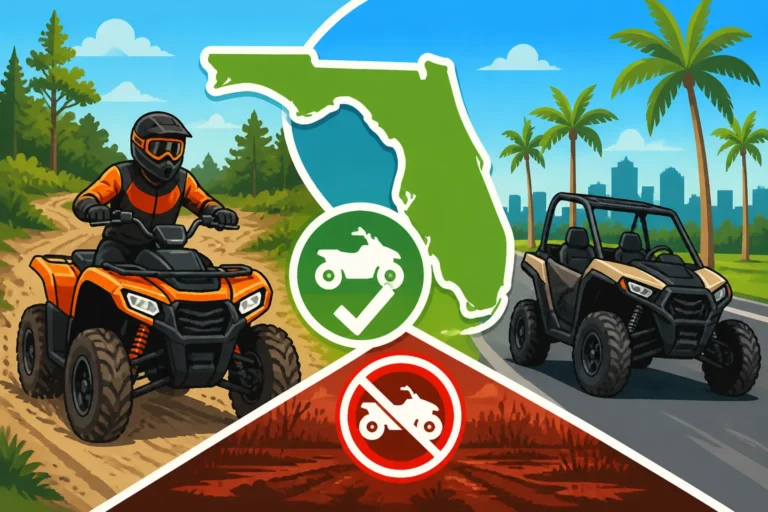
At the state level, Florida Statute 316.2123 generally addresses the operation of ATVs on public roads. The core principle for off-highway vehicles (OHVs), which includes most ATVs and UTVs, is that they are prohibited from operating on public paved roads, streets, or highways. This is a pretty clear line in the sand for asphalt. However, the statute does make specific allowances for "unpaved roadways," often referred to simply as dirt roads, under certain conditions. This is where the "usually" part comes in, because while the paved road ban is firm, the unpaved road allowance comes with its own set of important caveats and conditions.
These conditions typically involve operating during daylight hours, adhering to specific speed limits, and ensuring the rider meets certain age and supervision requirements. The idea is to permit some utility and access on less-trafficked, unpaved routes, recognizing that these machines are often essential for rural life, agriculture, or simply getting to legitimate off-road riding areas. For example, a farmer might need to cross an unpaved county road to move equipment between fields, or a hunter might use one to access public lands. The law tries to strike a balance between prohibiting dangerous or disruptive use on main thoroughfares and allowing practical, controlled use where it makes sense.
The Frustration of Ambiguity: Why It's Not Always Simple
Despite the state statute outlining general permissions for unpaved roadways, the practical application is far from simple. The biggest hurdle is Florida's "home rule" provision, which grants counties and municipalities significant authority to enact their own ordinances. This means that while the state may allow ATVs on unpaved roads under specific conditions, a county can, and often does, opt out of that provision, effectively banning ATVs from all public roads within its borders, paved or unpaved. This creates a deeply frustrating situation for riders. Imagine meticulously researching the state law, believing you understand the rules, only to discover a local ordinance you never knew about makes your intended ride illegal.
This leads to a confusing patchwork of regulations across the state. You might live in a county where unpaved roads are fair game, but a friend in the next county over lives under a complete ban. This lack of statewide uniformity makes it incredibly difficult for riders, especially those traveling between areas, to know what's legal and what's not without granular, county-by-county research. It's a key reason why many riders feel hesitant to even try using dirt roads, preferring to stick to designated [Florida ATV Trails: Every Public Riding Area] to avoid any potential legal trouble. The burden of proof, and the consequences of being wrong, typically fall squarely on the rider.
Understanding Florida's "Unpaved Roadway" Definition
To truly grasp whether you can ride your ATV on a Florida dirt road, you need to understand how the state legally defines an "unpaved roadway." It's not just any patch of dirt. Florida statutes are very specific, and these definitions dictate where and how you can operate an off-highway vehicle. Without this clarity, what might seem like a harmless dirt track could actually be a restricted area, leading to fines or worse. The legal language is designed to prevent ambiguity, but it often creates more questions for the average rider trying to interpret it.
It’s crucial to distinguish between a casual trail, a private driveway, or an access path, and what the law considers a public "unpaved roadway." The consequences of misinterpreting these definitions can be severe, highlighting the importance of thorough understanding. This section dives into the specifics, helping you decipher the legal landscape that governs your ATV adventures on Florida's unpaved surfaces.
What the Statute Actually Says
Florida Statute 316.003 defines "roadway" as "that portion of a highway improved, designed, or ordinarily used for vehicular travel, exclusive of the berm or shoulder." Then, for our purposes, it's the unpaved characteristic that matters. Specifically, Florida Statute 316.2123, which governs OHV operation, refers to "an unpaved roadway that is not a part of the State Highway System." This is a critical distinction. It means we're primarily talking about county or municipal dirt roads, not dirt roads that are somehow part of a state route, which are generally off-limits regardless of surface type.
The intent here is often to allow access on less-trafficked, non-primary routes. These are typically the rural, graded dirt roads maintained by local governments. They might lead to remote homes, agricultural properties, or serve as connectors in less developed areas. Understanding [Florida's Unpaved Road Rule for ATVs Explained] means recognizing that the state is making a conditional allowance, not granting carte blanche. If you're on a dirt road that you suspect might be part of the state system, or if it has any pavement at all, even a small strip, your ATV typically does not belong there.
Differentiating From Other Road Types
The "unpaved roadway" definition is often confused with other types of dirt or off-road paths. It’s not a [Florida Trail Riding and Snake Season] trail within a state forest or national park, though those have their own access rules. It’s distinct from a private driveway, a logging road on private timber land, or a simple path through a field. The key differentiator is public access and maintenance by a governmental entity (county or municipality), but not as part of the State Highway System.
For instance, a road within a designated off-highway vehicle park, like the ones in the Ocala National Forest, is not what the statute means by "unpaved roadway" in this context; those are specifically designated OHV trails with their own permit requirements. Similarly, a private dirt road on a ranch, even if it looks identical to a county road, falls under private property rules, not public road statutes. You need the landowner's permission there. The rule for "unpaved roadways" applies strictly to those public, locally maintained dirt roads that aren't state-controlled. This distinction is vital for avoiding inadvertent trespass or illegal operation.
The Mandated Equipment and Safety for Dirt Road Riding
Even if you find a legally designated unpaved road where ATVs are permitted, you can’t just hop on your quad as-is and go. Florida law specifies certain equipment requirements for ATVs operating on any public roadway, including unpaved ones. These aren't just suggestions; they are legal mandates designed to ensure safety for both the ATV rider and any other traffic or pedestrians encountered. Ignoring these requirements can lead to citations, regardless of whether you’re on a permitted dirt road. It’s all part of the state's broader effort to regulate OHV use responsibly.
Beyond the equipment, there are fundamental safety practices that, while perhaps not codified in every line of the statute, are critical for survival on shared unpaved roads. Dirt roads often have blind corners, loose gravel, ruts, and can be used by everything from pickups and tractors to bicycles and pedestrians. Your ATV needs to be visible, controllable, and your head needs to be protected. These rules aren't just bureaucratic hurdles; they're in place to keep everyone safer.
Essential Gear: Lights, Brakes, and Beyond
When operating on an unpaved roadway, your ATV needs to be equipped with specific functional components. At a minimum, Florida law generally requires that any motor vehicle operating on a public road, including an ATV on a permissible unpaved roadway, must have functional headlights, taillights, and brake lights. These aren't just for night riding (which is generally prohibited on these roads anyway); they're crucial for daytime visibility, especially when dust is kicked up or weather conditions are poor. You need to be seen by other drivers.
Beyond lighting, your ATV must have an adequate braking system capable of controlling the machine and stopping it safely. A functioning muffler is also usually required to prevent excessive noise, which can be a nuisance in residential or rural areas and can attract unwanted attention from law enforcement. While not always explicitly spelled out for ATVs in every road use statute, rearview mirrors are also a smart addition for safety, especially if your machine is not equipped with them from the factory. Many riders turn to aftermarket suppliers like SuperATV for high-quality lighting kits, mirrors, and other accessories that help ensure their machine meets or exceeds these safety standards, making it more suitable for shared road use. Ensuring all these components are in good working order before you venture out is not just a matter of compliance, but a matter of personal and public safety.
Helmet and Eye Protection: Non-Negotiable Rules
Florida has specific helmet and eye protection laws, particularly for younger riders, that apply when operating an ATV on any public land or roadway, including unpaved ones. For riders under the age of 16, a U.S. Department of Transportation (DOT) approved helmet is absolutely mandatory. There's no wiggle room here; if you're under 16, that helmet better be on your head and properly secured. This rule underscores the state's commitment to protecting its youngest and most vulnerable riders from serious injury in the event of an accident.
Furthermore, eye protection is also generally required for all riders, regardless of age, if the ATV does not have a windshield. This can be goggles, a face shield on a full-face helmet, or safety glasses. Kicking up dust, gravel, or encountering bugs is common on unpaved roads, and clear vision is paramount for safe operation. Beyond the legal mandate, wearing a helmet and eye protection is just plain common sense. Accidents can happen quickly on uneven dirt surfaces, and these pieces of safety gear are your primary defense against head and eye injuries. Always ensure your gear meets current safety standards and is in good condition. [Florida ATV Helmet Law for Riders Under 16] provides even more detailed information on these critical safety requirements.
Who Can Ride: Driver's License and Age Requirements
One of the most frequently asked questions about riding ATVs on Florida dirt roads revolves around who is actually allowed to operate the machine. It's not just about the equipment; it's about the operator's qualifications. Unlike operating an ATV exclusively on private land or within a closed OHV park, venturing onto a public unpaved roadway introduces a different set of rules regarding driver licensing and age. These regulations are in place to ensure that those operating powerful machines on shared roads have a minimum level of competence and responsibility.
The distinctions often confuse riders, particularly those with younger family members who enjoy ATV riding. The rules for adults differ significantly from those for minors, and understanding these nuances is critical to staying legal and safe. Ignoring these rules can lead to serious legal repercussions, not just for the rider, but potentially for parents or guardians as well.
Adult Riders: Do You Need a Driver's License?
For adult riders (typically 16 years of age and older), the question of needing a driver's license to operate an ATV on an unpaved public roadway in Florida is often met with some uncertainty. The short answer, as generally interpreted, is yes, you usually need a valid driver's license. While an ATV is not a traditional "street-legal" vehicle in Florida, when it operates on any public roadway, even an unpaved one, the expectation is that the operator holds a valid license. This aligns with the broader principle that anyone operating a motor vehicle on public roads should be a licensed driver.
This requirement ensures that the rider has passed a basic competency test for operating a motor vehicle and understands traffic laws. It's not about the specific vehicle type as much as it is about the location of operation – a public thoroughfare. So, if you're planning to ride your ATV on a designated or permissible unpaved county road, make sure you have your driver's license in your wallet. Driving without one, even on a dirt road, could result in a citation for operating a motor vehicle without a valid license, which is a serious offense. For more details on this, you can look up [Do You Need a Driver's License for an ATV in Florida?].
Minor Riders: Supervision and Age Limits
The rules become even more stringent and specific when it comes to minor riders operating ATVs on Florida's public unpaved roadways. In Florida, riders under the age of 16 are generally prohibited from operating ATVs on any public road, including unpaved ones, unless they are under the direct supervision of a licensed adult and, in some cases, riding on a road specifically designated for such use by the local government. Furthermore, any minor operating an ATV on public land or roadways must have completed an approved ATV safety course and carry the safety certificate.
The "direct supervision" aspect is critical; it usually means the adult must be within visual and audible range, able to immediately intervene if necessary. It's not enough for the adult to just be "nearby" or "in the vicinity." This strict rule reflects the state's concern for the safety of young riders, who may lack the experience, judgment, or physical capabilities to safely navigate shared public roads. Trying to let a child ride an ATV unsupervised on a dirt road, even a very quiet one, is a sure way to incur severe penalties and put the child at significant risk. Always check the specific county ordinances, as many counties maintain outright bans on ATV road use for minors, even with supervision.
Navigating County-Specific ATV Ordinances
Here's where things get really complicated, and where many riders find themselves unintentionally on the wrong side of the law. While Florida state statutes lay out some general permissions for ATVs on unpaved roadways, they also grant significant power to individual counties and municipalities to enact their own, more restrictive ordinances. This "home rule" means that the rules for riding your ATV on a dirt road can change dramatically from one county line to the next. What's perfectly legal in rural Okeechobee County might be strictly forbidden in a more populated county like Pasco or Hillsborough.
This patchwork of local laws is the single biggest source of frustration and confusion for ATV riders in Florida. It's not enough to know the state law; you absolutely must research the local ordinances for every county you plan to ride in. Failing to do so can turn an enjoyable outing into a costly legal headache. This section will delve into how these county-specific rules work and emphasize the crucial steps you need to take before you ever hit the dirt.
How Counties Open or Close Roads to ATVs
Florida law (specifically, Florida Statute 316.2123) gives counties and municipalities the authority to either allow or restrict OHV operation on their unpaved roadways. The state's provision essentially offers a baseline: ATVs can ride on unpaved county roads if the county hasn't specifically opted out or if they have specifically designated certain roads for ATV use. This means a county can pass an ordinance that completely bans ATVs from all public roads, including dirt roads, within its jurisdiction. Conversely, a county might pass an ordinance that specifically identifies certain unpaved roads where ATVs are allowed, often with additional conditions.
The process usually involves public hearings, local commission votes, and the publication of these ordinances. This means the rules aren't static; they can change over time as local governments respond to community concerns, safety data, or new recreational needs. For instance, [Florida Counties That Designated ATV Roads] might do so in less developed areas where ATVs are integral to the local lifestyle or economy. On the other hand, counties with growing populations or environmental sensitivities might choose to implement blanket bans to mitigate noise, dust, and safety concerns. It's a localized democratic process, and the outcome directly impacts where you can legally ride.
Researching Local Rules: Your Homework Before You Ride
Given the significant power of county ordinances, your most critical step before attempting to ride your ATV on any unpaved public road in Florida is thorough research. You cannot assume that because a dirt road looks rideable, it's legal for your ATV. This is especially true if you are traveling to a new area or through multiple counties. The best place to start is the county's official website, typically under the "Code of Ordinances" or "County Laws" section. You can often use search terms like "ATV," "OHV," "off-highway vehicle," or "dirt road" within their online legal databases.
If you can't find clear information online, don't hesitate to contact the county sheriff's office (non-emergency line) or the county clerk's office. They are the authorities who enforce these laws and can provide the most accurate, up-to-date information. While it might seem like a hassle, this preemptive research is absolutely essential. It not only keeps you compliant with the law but also protects you from potentially expensive fines, citations, or even the impoundment of your ATV. Never rely on hearsay or what a friend "heard" about a particular road; always verify the current regulations directly.
The Penalties of Getting It Wrong: Illegal Road Riding
Ignorance of the law is never an excuse, especially when it comes to operating powerful machinery like an ATV on public roads. Even if your intentions are good, riding an ATV illegally on a Florida dirt road can lead to significant and often costly penalties. It’s not just a minor slap on the wrist; the state and local authorities take these violations seriously, often viewing them as a public safety issue. Understanding these potential consequences is crucial, not to scare you, but to reinforce the importance of knowing and following the rules.
The financial hit can be substantial, and the inconvenience of dealing with legal proceedings and machine recovery can quickly overshadow any fun you might have had. This section aims to provide a realistic look at what happens when you get caught riding an ATV where it's not permitted, highlighting why thorough preparation and adherence to the law are non-negotiable.
Fines, Impoundment, and Other Legal Headaches
The consequences for operating an ATV illegally on a Florida public roadway, including a restricted dirt road, can range from traffic citations to more severe penalties. Expect to face fines, which can vary depending on the specific violation and the county ordinance. These fines can quickly add up, easily reaching hundreds of dollars, not including court costs or administrative fees. [Florida ATV Ticket Cost for Illegal Road Riding] can give you an idea of the financial impact.
Beyond monetary fines, one of the most frustrating and costly penalties is the impoundment of your ATV. Law enforcement has the authority to seize vehicles operated illegally, and getting your machine back often involves paying towing fees, storage fees (which accrue daily), and any outstanding fines. This process can be prolonged and expensive, potentially costing you thousands of dollars, far outweighing the cost of any permit or a legal trip to an OHV park. In some cases, repeat offenses or dangerous driving could lead to misdemeanor charges, which carry even more severe consequences, including possible jail time, although this is less common for a first-time, non-reckless violation.
The Importance of Knowing Before You Go
Given the potential for significant fines and the costly hassle of impoundment, the lesson is clear: doing your homework before you ride on any unpaved public road is non-negotiable. It's not worth the risk. Many riders have learned this lesson the hard way, thinking a quiet dirt road was fair game only to be surprised by a sheriff's deputy. The key takeaway here is that a proactive approach is always the best defense.
Take the time to research the specific county ordinances, understand the state statutes, and ensure your machine is properly equipped and you (and any passengers) meet all age and licensing requirements. If you're ever in doubt about a particular road, err on the side of caution and find an alternative route or a designated riding area. This diligence will save you money, time, and a tremendous amount of stress, ensuring your ATV adventures in Florida remain legal and enjoyable. Consulting [Florida Penalties for Illegal ATV Road Riding] will underscore the severity of these infractions.
Practical Tips for Safe and Legal Dirt Road Adventures
Even with all the rules and regulations in mind, there are practical steps you can take to make your ATV riding experience on Florida's permissible unpaved roads safer and more enjoyable. It's not just about avoiding tickets; it's about being a responsible rider, sharing the road respectfully, and ensuring your own well-being. Dirt roads, even quiet ones, come with their own unique challenges that require a different approach than riding on a dedicated trail or private land.
These tips are born from years of riding experience and an understanding of what makes a successful and trouble-free outing. From meticulous route planning to staying aware of your surroundings, being prepared is half the battle. Let's dive into some actionable advice that can help you navigate Florida's unpaved roadways with confidence and compliance.
Planning Your Route: Avoiding Paved Sections
One of the biggest challenges when planning a ride that incorporates permissible unpaved roads is the inevitable intersection with paved sections. Even a perfectly legal dirt road might require you to cross a state highway or briefly use a paved county road to get to another dirt section. The moment your ATV's tires hit that asphalt on a prohibited road, you're usually in violation. Therefore, meticulous route planning is paramount. Use detailed maps – both physical and digital (like satellite views) – to identify purely unpaved routes and pinpoint any mandatory paved crossings.
If a paved crossing is absolutely unavoidable, try to minimize the distance and choose areas with good visibility and low traffic. Be prepared to quickly and safely cross, adhering to all traffic laws for intersections. Remember that [Why Florida ATVs Cannot Use Paved Streets] is a strict rule that you must respect. Some riders even trailer their ATVs to the start of a strictly unpaved section to avoid any paved road travel whatsoever. This approach, while perhaps less convenient, completely eliminates the risk of illegal road use and allows you to fully enjoy the unpaved stretches without worry.
Situational Awareness: Sharing the Road Safely
Riding an ATV on an unpaved public roadway means you are sharing that space with a variety of other users, including cars, trucks, farm equipment, bicycles, pedestrians, and even horseback riders. Unlike a dedicated ATV trail, you are not the only, or even primary, user of these roads. Therefore, heightened situational awareness is absolutely critical. Ride defensively, anticipate potential hazards, and always be prepared to yield. Dust can significantly reduce visibility, so be cautious, especially on blind curves or hills.
Keep your speed appropriate for the conditions and the environment; even if the posted limit is higher, a rutted, dusty dirt road with limited sightlines demands a slower pace. Signal your turns and intentions clearly, and give plenty of space to other road users. If you come across horses, slow down, stop, and turn off your engine if necessary to avoid spooking them, and always ask the rider how they prefer you pass. Being a courteous and safe operator not only keeps you out of trouble but also helps foster a positive image for ATV riders in the community.
Equipping Your ATV for Road Use
While an ATV is primarily designed for off-road performance, venturing onto public unpaved roads, even where permissible, demands that your machine meets certain standards. It’s not just about legal compliance; it’s about safety and reliability when operating in a shared environment. Many stock ATVs might be adequate for the trail, but a bit of thoughtful accessorizing can significantly improve their suitability for limited road use, making them safer, more visible, and more comfortable. This preparation ensures that your machine is not only legal but also robust enough to handle the unique demands of a dirt road journey.
Think of it as preparing for a different kind of mission. The requirements shift from pure articulation and traction to visibility, control, and basic roadworthiness. Investing in the right gear for your quad can prevent problems down the road, literally, and ensure that your focus remains on the ride itself, not on potential equipment failures or legal infractions.
Enhancing Visibility: Lights, Horn, and Reflectors
When you're sharing an unpaved roadway with other vehicles, visibility is king. While Florida law requires basic headlights, taillights, and brake lights, enhancing these can make a huge difference, especially in dusty conditions or at dawn/dusk (even though night riding is generally prohibited). Consider upgrading to brighter LED lights, which consume less power and offer superior illumination. Adding auxiliary LED light bars or cubes, while primarily for off-road use, can significantly increase your forward visibility for others during the day.
A working horn is also essential for alerting other road users to your presence, especially around blind corners or when passing. Additionally, ensure your ATV has appropriate reflectors, particularly on the rear and sides, to catch light from other vehicles. Many companies, including SuperATV, offer a wide range of DOT-compliant lighting upgrades, turn signal kits, and mirrors that can help transform your off-road machine into one that's safer and more visible for limited road use. These aren't just aesthetic upgrades; they're vital safety components for operating in a mixed-traffic environment. [Florida ATV Lights and Equipment for Road Use] offers more specific guidance.
Tires and Suspension: Considerations for Unpaved Roads
While knobby, aggressive off-road tires are perfect for mud and rocks, they can behave differently on harder-packed dirt roads. They might wear faster, generate more noise, and offer less predictable handling, especially if the road has loose gravel. While you likely won't swap your tires just for a dirt road ride, be aware of their characteristics. Maintaining proper tire pressure is also crucial; too low and you risk rim damage on hidden obstacles, too high and you'll have a harsh ride and reduced traction on loose surfaces.
Your suspension also plays a key role. Unpaved roads can be severely rutted, washboarded, or peppered with potholes. A well-maintained suspension system will absorb these impacts, provide a smoother ride, and help you maintain control. If your ATV frequently sees road use, even unpaved, ensure your shocks are in good condition and consider adjusting them for a slightly stiffer setting to reduce body roll and improve stability at higher speeds, if appropriate for your machine. This helps maintain predictable handling, which is critical when sharing the road with other vehicles.
Beyond Dirt Roads: Other Unpaved Access Points
While the focus has been on public "unpaved roadways," it's worth briefly touching on other types of unpaved access points in Florida where ATVs might be allowed. These often fall under different regulatory frameworks than public county roads but are equally important for riders to understand. The key differentiator for these areas is usually specific permission, permits, or use agreements, rather than general road use statutes. These additional opportunities highlight the diverse landscape of Florida and the many ways ATVs are integrated into the state's rural, agricultural, and recreational fabric.
Understanding these distinctions can open up more riding opportunities while ensuring you remain compliant with local and state laws. Always remember that "unpaved" does not automatically mean "open to ATVs." Always seek explicit permission or permits for these specialized areas.
Hunting Access Roads and Agricultural Exceptions
Florida's vast agricultural lands and extensive hunting preserves often feature networks of unpaved roads. For licensed hunters during specific hunting seasons, or for individuals engaged in bona fide agricultural purposes, there are often exceptions to general ATV road prohibitions. For instance, ATVs might be permitted on unpaved roads within a Wildlife Management Area (WMA) for hunting access, but only during specific times and with the necessary permits. Similarly, farmers and ranch hands frequently use ATVs and UTVs on unpaved roads connecting fields or pastures, and state law often provides specific exemptions for these agricultural uses.
These exemptions are usually tied directly to the purpose of the travel. You can't just joyride on an agricultural access road because it's unpaved; you must be actively engaged in farming, ranching, or permitted hunting activities. It's crucial to carry proof of your license, permits, or agricultural identification if you're operating under these exemptions. Understanding [Florida Agricultural Property ATV Exceptions] is vital for riders who use their machines for work or regulated hunting, as these rules are very specific and narrow in scope.
Water Management District Lands and Special Permits
Florida's Water Management Districts (WMDs) oversee vast tracts of land, often containing unpaved roads, levees, and service roads used for water control and environmental management. Some of these WMD lands offer recreational opportunities, including limited ATV access, but this is almost always governed by specific permits and rules established by the individual WMD. You cannot assume that because a WMD road is unpaved, it's open to ATVs. In fact, most are closed to unauthorized motorized access.
If a WMD does allow ATV use, it will typically require a specific permit, adherence to strict rules regarding times, areas, and environmental protections, and often a designated access point. These permits are not interchangeable with general OHV passes for state or national forests. Always check the specific WMD's website or contact them directly before attempting to ride on their property. Unauthorized entry onto WMD lands, especially with an ATV, can result in trespass charges and significant environmental penalties, as these areas are often ecologically sensitive.
Disclaimer
This article is for general informational purposes only and does not constitute professional advice. Laws, prices and regulations vary by location and change over time. Consult a qualified professional for guidance on your specific situation.