Florida Low-Speed Vehicle Rules for Side-by-Sides
It's incredibly frustrating when you want to take your side-by-side from your house to the local gas station, or maybe just across town to link up with a friend before hitting the trails, only to realize the paved roads are a no-go zone. You've heard whispers about "street legal" conversions, especially for UTVs, and the idea of making your powerful machine more versatile is incredibly appealing. This guide is here to untangle the often-confusing web of Florida's Low-Speed Vehicle (LSV) rules, specifically for side-by-sides, so you can understand what it truly takes to make your machine road-ready and where you can actually take it once it is.
The Lure of Street-Legal Side-by-Sides in Florida
There's a natural desire among side-by-side owners to expand the utility of their machines. Why should these capable vehicles be confined strictly to dirt, sand, and mud when they could potentially handle light duty on pavement too? The dream of cruising down a local street, waving at neighbors, and easily accessing nearby amenities is a powerful one.
Why Riders Want Road Access
Imagine this scenario: you're planning a weekend ride with buddies, and the closest trail system is just a few miles down a paved county road from your house. Without a street-legal option, you're faced with the hassle of loading your side-by-side onto a trailer, securing it, driving those few miles, and then unloading it. It's an extra layer of logistics that can really eat into your riding time and energy. If your UTV could legally traverse that short stretch of road, it would unlock a whole new level of convenience. Riders often crave this freedom for quick trips to the corner store for snacks and drinks, heading to a friend's house in the neighborhood, or simply connecting two segments of a trail that are separated by a public road. It makes the side-by-side feel less like a specialized piece of equipment and more like a true utility vehicle for your everyday life in Florida's vast and varied landscape.
Another common desire for road access comes from those who live in communities designed with mixed-use pathways or areas where golf carts are prevalent. They see these smaller vehicles freely moving about and wonder why their more robust side-by-side can't do the same. This can lead to misconceptions about what constitutes a "street legal" conversion and the specific rules that apply. The truth is, while a golf cart might seem similar, the legal framework for a side-by-side is far more complex and stringent. The sheer size and power of many modern UTVs also make them seem perfectly capable of handling lower-speed road conditions, further fueling the desire for street legality.
The "Street Legal" Myth vs. Reality
When people talk about making their side-by-side "street legal," it often conjures images of simply adding a few lights and mirrors. The reality in Florida, however, is much more nuanced and involves a specific classification: the Low-Speed Vehicle (LSV). It's not about making your side-by-side an "automobile" in the traditional sense; it's about transforming it into an LSV, which has its own distinct set of requirements and limitations. Many assume that if they slap on some turn signals and a horn, they're good to go, but this couldn't be further from the truth. The Florida Statutes define an LSV very precisely, and meeting these definitions involves more than just a quick aftermarket add-on.
The distinction between a casual modification and a full, legally compliant LSV conversion is critical. Failure to meet all the requirements means your vehicle is still considered an Off-Highway Vehicle (OHV) when on public roads, and operating an OHV on most paved public roads in Florida carries significant penalties, including fines and potential impoundment. This is where the frustration really sets in for many riders. They've invested in a powerful machine, maybe even added some common accessories they thought would help, only to find out they're still breaking the law. Understanding that "street legal" for a side-by-side means meeting the LSV criteria is the first, most important step in navigating this process correctly. It's a journey into a specific legal classification, not just a set of upgrades.
Understanding Florida's Low-Speed Vehicle (LSV) Definition
Before you even think about buying parts or modifying your side-by-side, you absolutely need to understand what Florida legally considers a Low-Speed Vehicle. This isn't just semantics; it's the foundation upon which all other rules and regulations are built. Get this wrong, and all your efforts (and money) could be for nothing.
What Makes a Vehicle an LSV
In Florida, a Low-Speed Vehicle (LSV) is officially defined as "any four-wheeled electric vehicle whose top speed is greater than 20 miles per hour but not greater than 25 miles per hour." Now, here's where it gets interesting for side-by-sides: while many original LSVs were indeed electric, the law has evolved to allow gasoline-powered vehicles to be classified as LSVs, provided they meet all the other criteria. The critical factor is that top speed. If your side-by-side, after conversion, can go faster than 25 mph, it immediately disqualifies it from being an LSV. Conversely, if it can't even reach 20 mph, it falls into a different category, potentially a golf cart, which has different rules entirely.
Beyond the speed, an LSV must also meet specific safety equipment standards. These aren't suggestions; they are mandatory features that must be installed and fully functional. We're talking about headlamps, stop lamps, turn signals, tail lamps, rearview mirrors, a parking brake, a windshield, seatbelts for all designated seating positions, and a vehicle identification number (VIN). Every single one of these components must meet federal safety standards to ensure the vehicle is safe for limited road use. It's a comprehensive list that transforms an off-road machine into something capable of interacting safely with other traffic at low speeds. Think of it as a significant re-engineering effort rather than just adding accessories.
Distinguishing LSVs from Golf Carts and ATVs
This is where many riders get confused, and it's a critical distinction to grasp. While all three — ATVs, UTVs (often mistakenly called ATVs, but UTVs are side-by-sides), golf carts, and LSVs — can operate on specific non-paved or private lands, their legal standing on public paved roads is vastly different.
- ATVs (All-Terrain Vehicles): These are designed for single riders (or two-up if specifically designed for it, but not common for side-by-sides) and are primarily off-road machines. In Florida, ATVs require a title if used on public lands but are generally not permitted on public paved roads, with very few, highly specific exceptions. They lack the safety equipment required for road use and are not designed for it. [Florida ATV Road Rules: Where You Can Legally Ride] details this extensively.
- Golf Carts: These vehicles are generally slower, typically topping out at around 20 mph. They have fewer equipment requirements than an LSV (no turn signals or brake lights are federally mandated, though many voluntarily add them). Golf carts are allowed on certain public roads where the posted speed limit is 25 mph or less, or on roads specifically designated for golf cart use by local ordinance. Crucially, they do not need to be titled or registered with the state, nor do they typically require insurance unless modified into an LSV. [Florida Golf Cart Laws vs ATV Laws] can help you understand the nuances.
- LSVs (Low-Speed Vehicles): As established, these bridge the gap. They are faster than golf carts (20-25 mph), have more stringent safety equipment requirements, and, importantly, must be titled, registered, and insured just like a regular car to be legally operated on public roads. A side-by-side, originally an OHV, can become an LSV if it meets all the structural, speed, and safety requirements. This conversion is a significant undertaking, essentially changing the vehicle's legal identity from an off-road utility vehicle to a specialized on-road vehicle. Without these distinctions, every slow-moving vehicle on the road would be treated the same, which would lead to chaos and unsafe conditions. The specific criteria are in place for public safety and traffic flow.
Essential Equipment for an LSV Conversion
So, you've decided you want to take your side-by-side and transform it into a Florida-legal Low-Speed Vehicle. This isn't just about bolting on a few accessories you picked up online. It's about meeting a specific set of federally mandated safety standards, which the state of Florida enforces rigorously. You're essentially taking an off-road vehicle and making it safe enough to share certain public roadways with other vehicles.
The Non-Negotiables: Headlights, Taillights, Brake Lights, Turn Signals, Windshield, Seatbelts, VIN
This is the core list of equipment that absolutely must be on your side-by-side for it to qualify as an LSV in Florida. Skipping even one item means your conversion is incomplete and illegal for road use.
First, headlights. These need to provide sufficient illumination for safe driving during dusk, dawn, or nighttime conditions, even though LSVs are typically restricted to daytime use on many roads. They need to meet Department of Transportation (DOT) standards. This isn't just about having a light; it's about having one that casts a proper beam pattern and intensity. Next, you need stop lamps (brake lights) and taillights. Your taillights should be visible from a certain distance, and your brake lights must illuminate clearly when you press the brake pedal, just like on a car, signaling to drivers behind you that you're slowing down. This is crucial for preventing rear-end collisions, especially in mixed traffic environments.
Then there are turn signals. These are non-negotiable for an LSV, allowing you to clearly indicate your intentions to other drivers when making turns or changing lanes. A simple hand signal, while acceptable in some contexts for bicycles, won't cut it for an LSV interacting with vehicle traffic. You'll need both front and rear turn signals, integrated into your vehicle's electrical system. A proper, sturdy windshield is also required. This isn't just for deflecting bugs and debris off-road; it's a safety component designed to protect occupants from impacts and wind buffeting at road speeds. It should be made of safety glass or a similar approved material, not just a thin plastic shield.
Seatbelts are another critical safety item. Every designated seating position on your side-by-side must have a seatbelt assembly that meets federal motor vehicle safety standards. This means lap belts or lap-and-shoulder belts, properly installed and functional. If your side-by-side is designed for two people, it needs two seatbelts. If it's a four-seater, it needs four. This ensures occupants are restrained in the event of a sudden stop or collision. Finally, your side-by-side must have a properly affixed Vehicle Identification Number (VIN). While most UTVs come with a VIN, this is crucial for the titling and registration process, as it uniquely identifies your machine for legal purposes. Without a legible VIN, you won't be able to title it as an LSV.
Beyond the Basics: Reflectors, Horn, Rearview Mirror, Parking Brake, DOT Tires
While the previous list covers the primary requirements, there are several other components that are just as mandatory for an LSV conversion to be compliant in Florida. These might seem like smaller details, but they contribute significantly to the overall safety and legal standing of your machine on public roads.
You'll need properly placed reflectors. These are passive safety devices that make your vehicle more visible to other drivers, especially at night or in low-light conditions, even if your lights fail. Typically, these include amber reflectors on the front sides and red reflectors on the rear sides. A functioning horn is essential for alerting pedestrians or other drivers to your presence, especially in close quarters or when approaching intersections. This needs to be a standard automotive-type horn, not just a bicycle bell.
A rearview mirror is also a must-have. This allows the driver to see traffic approaching from behind, a fundamental safety requirement for any road-going vehicle. You might opt for a single center-mounted mirror or two side mirrors, as long as it provides an adequate field of vision. A reliable parking brake is another key component. This isn't just for holding your vehicle on an incline; it's a safety feature to prevent unintended movement when parked or stopped. It needs to be robust and capable of holding the vehicle securely.
Perhaps one of the most overlooked, yet critical, requirements is having DOT-approved tires. Most off-road tires that come standard on side-by-sides are not rated for highway use. They might be too soft, have the wrong tread pattern, or simply not be designed to withstand the heat and stresses of paved road driving. DOT-approved tires are specifically engineered for road conditions, providing better handling, braking, and durability on asphalt. Brands like SuperATV offer a wide range of DOT-approved tires and complete wheel kits that can make this conversion step much easier, ensuring you meet the legal requirements for both safety and performance. Don't skimp on this, as improper tires can be a safety hazard and a reason for failing inspection.
Aftermarket Parts and Compliance
The beauty of the aftermarket industry, with companies like SuperATV leading the way, is that it has recognized the demand for street-legal conversions for UTVs. This means you don't necessarily have to custom-fabricate every single component. You can find ready-made kits and individual parts designed to help your side-by-side meet the LSV requirements. For example, SuperATV offers turn signal kits, DOT-approved glass windshields, rearview mirrors, and even complete street-legal conversion kits that bundle many of the necessary items together.
However, simply buying aftermarket parts doesn't automatically guarantee compliance. You need to ensure that each component you purchase is specifically designed to meet federal motor vehicle safety standards (FMVSS) where applicable. For instance, a windshield marketed as "shatter-resistant" for off-road use might not be the same as a DOT-approved safety glass windshield. Always look for certifications or explicit statements from the manufacturer confirming their parts meet the required standards for LSV conversion. It's not enough for the parts to simply look like they belong on a car; they must perform and be certified to the same safety benchmarks. This careful selection of parts is paramount to a successful and legal LSV conversion.
The Titling, Registration, and Insurance Process for a Florida LSV
Once you've diligently equipped your side-by-side with all the necessary LSV components, you're still not ready to hit the pavement. The vehicle needs to be officially recognized by the state as an LSV, which involves a specific administrative process. This is where many off-road enthusiasts find themselves scratching their heads, as it's a stark contrast to how their traditional ATVs and UTVs are usually handled.
Converting Your Side-by-Side: The Inspection and Certification Steps
The journey to an LSV plate begins with proving that your converted side-by-side actually meets the legal definition and equipment standards. In Florida, this typically involves a multi-step process. First, you'll need to gather all your documentation. This includes your original Manufacturer's Certificate of Origin (MSO) or existing title for your side-by-side, along with receipts and documentation for all the new LSV-specific parts you've installed. This might feel like a lot of paperwork, but it's crucial for establishing the vehicle's history and the legitimacy of its conversion.
Next, your vehicle will likely need an inspection. While the state doesn't have a specific "LSV inspection station" per se, you will bring your documentation and the vehicle to a Florida County Tax Collector's office or a designated motor vehicle service center. The staff there will review your paperwork and physically inspect the vehicle to ensure it has all the mandatory LSV safety equipment installed and functioning correctly, including the headlights, taillights, turn signals, mirrors, horn, parking brake, and DOT-approved tires. They will also verify the VIN. It's during this process that your side-by-side transitions from being an OHV in the eyes of the state to a road-worthy LSV. Don't show up unprepared, as a single missing or non-compliant item can send you back to the garage for more work. This is a critical checkpoint to ensure public safety on Florida's roads.
Registration and Plate Requirements
Unlike an ATV, which might only need a title for public land access, an LSV requires full state registration and a license plate, just like a car. This is a fundamental difference that underscores its new legal status. Once your side-by-side passes inspection and its documentation is approved, you'll apply for a new title that designates it as an LSV. This new title will reflect its transformation and legal classification. The process is handled through your local Florida County Tax Collector's office or a licensed tag agency. [Florida County Tax Collector vs Service Center for ATV Titles] can give you an idea of what to expect at these offices, although the LSV process is more detailed than a simple ATV title.
Upon successful titling, you will then register your LSV. This involves paying the appropriate registration fees, which are similar to those for passenger cars and depend on the vehicle's weight and intended use. Once registered, you will be issued a standard Florida license plate that must be prominently displayed on the rear of your now-LSV side-by-side. This plate is your official permission to operate the vehicle on specified public roads. It's a visible signal to law enforcement and other drivers that your machine has met the necessary safety and legal requirements to be on the street. Without both a valid registration and a physical license plate, even a fully equipped LSV cannot be legally driven on public roads in Florida.
Insurance: Why It's Mandatory for LSVs and What Kind
This is another significant departure from standard ATV or UTV ownership. While liability insurance is highly recommended for off-road vehicles (and often required by private parks), it is mandatory for any LSV operating on Florida's public roads. Because your side-by-side is now classified as a street-legal vehicle, it falls under the same insurance requirements as a car. This means you will need to carry personal injury protection (PIP) and property damage liability (PDL) coverage, at minimum.
The purpose of this mandatory insurance is to protect you and others in the event of an accident. If you're involved in a collision while driving your LSV on a public road, your insurance will help cover medical expenses for injuries and damages to property. Without it, you could face significant financial liability. When you go to register your LSV, you will be required to show proof of this insurance coverage, just as you would when renewing your car's registration. Many major insurance carriers offer policies for LSVs, but it's always a good idea to shop around and compare quotes. Be prepared to provide details about your converted side-by-side, including its make, model, VIN, and the specific modifications made for LSV compliance. Getting the right insurance is not just a legal hurdle; it's a crucial step in responsible LSV ownership.
Where You Can (and Can't) Drive a Florida LSV
So, you've gone through all the effort of converting, inspecting, titling, registering, and insuring your side-by-side as an LSV. Congratulations! But don't just fire it up and head anywhere you please. The "low-speed" part of Low-Speed Vehicle isn't just a suggestion; it dictates precisely where you can and cannot legally operate your machine. This is an area where many new LSV owners get into trouble, assuming that "street legal" means "any road."
Permitted Roadways: Detail the Speed Limits and Types of Roads
In Florida, the primary rule for LSVs is clear: you can only operate them on public roads where the posted speed limit is 35 miles per hour or less. This is a hard limit. If a road sign indicates a speed limit of 40 mph, 45 mph, or anything higher than 35 mph, your LSV is absolutely not permitted on that roadway. This immediately restricts LSVs from major arterial roads, state highways, and most busy thoroughfares. The intent is for LSVs to be used in slower-moving traffic environments, typically in neighborhoods, residential areas, or local community roads where vehicle speeds are naturally lower.
Think of it this way: your LSV has a top speed of 25 mph. Putting a vehicle that can only go 25 mph on a road where traffic is flowing at 45 or 55 mph creates an obvious safety hazard. The 35 mph rule is there to maintain a reasonable speed differential between the LSV and other vehicles, reducing the risk of dangerous situations. Therefore, you'll mostly be sticking to local streets, residential avenues, and designated low-speed zones. Some communities, especially planned developments like [The Villages], have extensive networks of roads specifically designed for golf carts and LSVs, which provides fantastic opportunities for LSV use. Always pay close attention to the posted speed limits – they are your ultimate guide for legal operation.
Prohibited Areas and Exceptions
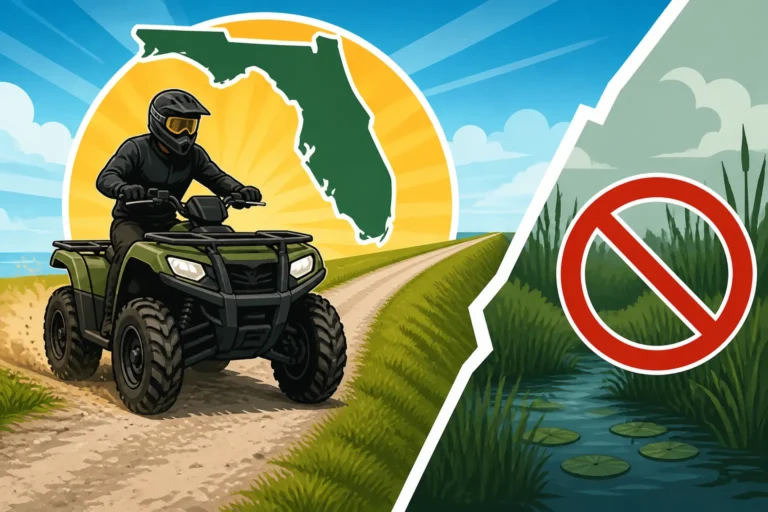
Just as important as knowing where you can drive an LSV is knowing where you absolutely cannot. Beyond the 35 mph speed limit rule, there are other explicit prohibitions. LSVs are generally not allowed on sidewalks or bike paths, which are typically reserved for pedestrians and cyclists. While it might seem convenient, the weight, size, and speed of an LSV make it incompatible with these shared spaces and dangerous for vulnerable users.
Furthermore, state parks and national forests, even if they have internal paved roads, often have their own specific rules regarding vehicle types. Just because your side-by-side is an LSV doesn't automatically grant it access to every paved path within these areas. Always check with the specific park or forest management before assuming you can drive your LSV there. For instance, some areas may classify your LSV as a "motor vehicle" and restrict it to main roads or prohibit it entirely from certain recreational zones.
Then there's the layer of local county and municipal ordinances. While state law sets the baseline, individual counties or cities in Florida have the authority to create additional restrictions or even designate specific roads where LSVs are prohibited for safety reasons, even if the speed limit is 35 mph or less. Conversely, some communities might have ordinances specifically allowing LSV use on certain roads where it might otherwise be unclear, often in areas with a high density of golf carts. Always check the local ordinances for the area you plan to ride in; a quick call to the local sheriff's office or city hall can save you a lot of grief. Without this local check, you could easily find yourself facing a ticket.
Age and Licensing Requirements
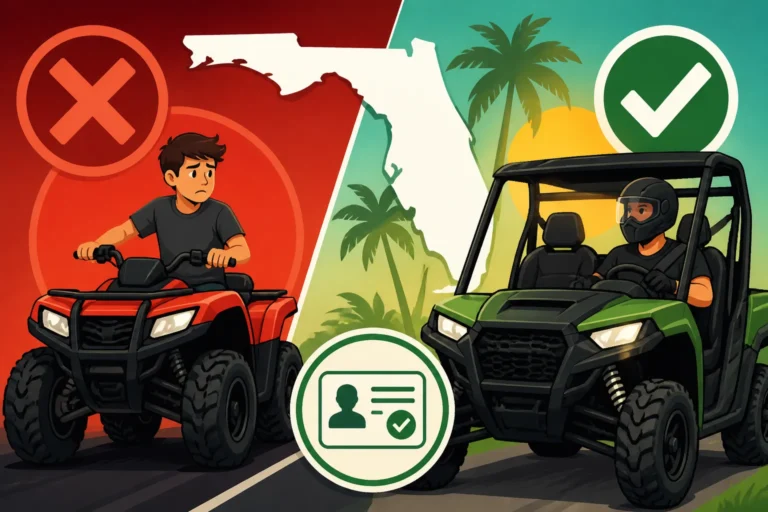
Operating an LSV on Florida's public roads isn't just about the vehicle; it's also about the driver. Unlike some off-road trails where younger riders might be permitted with supervision, driving an LSV on a public street requires a valid driver's license. Specifically, any person operating an LSV on a public street or highway must hold a valid Class E driver's license (the standard Florida driver's license) or an equivalent license from another state.
This means that minors, even if they are old enough to operate an ATV on private land or have completed an ATV safety course, cannot legally drive an LSV on public roads without a valid driver's license. The same rules that apply to driving a car apply to driving an LSV in this regard. This requirement ensures that LSV operators understand traffic laws, road etiquette, and possess the basic driving skills necessary to safely share the road with other motor vehicles. Do not assume that because it's a "low-speed" vehicle, the licensing requirements are relaxed. They are not. If you don't have a valid driver's license, you cannot legally drive an LSV on a public roadway in Florida.
Weighing the Pros and Cons of an LSV Conversion
Making your side-by-side a Florida-compliant Low-Speed Vehicle is a significant decision, involving time, money, and changes to how you use your machine. Before you dive headfirst into purchasing conversion kits and scheduling inspections, it's wise to consider the full picture. What are the real advantages, and what are the drawbacks you'll need to live with?
The Freedom and Convenience
The most obvious and compelling "pro" of converting your side-by-side to an LSV is the newfound freedom and convenience it offers. Imagine you live just a few blocks from your favorite off-road park, or perhaps there's a fantastic trail system that requires a short hop across a residential road to connect. With an LSV, you can legally drive your machine from your driveway to the trailhead without the hassle of loading it onto a trailer. This not only saves time and effort but also makes impromptu rides much more feasible. [Getting to Croom Without Touching Pavement] is a common challenge for riders, and an LSV could offer a solution for those short hops.
Beyond trail access, an LSV opens up possibilities for everyday utility. You can use it for quick errands to a nearby store, grabbing groceries, or simply visiting neighbors in your community. Many Florida communities have expansive networks of lower-speed roads where an LSV fits right in, much like a golf cart. This enhances the overall versatility of your side-by-side, transforming it from a purely recreational vehicle into a practical mode of local transportation. For those who live in areas with designated [Florida Counties That Designated ATV Roads], an LSV provides a legal and convenient way to navigate those routes. It makes your investment in a powerful side-by-side feel even more justified by expanding its functionality beyond just weekend trail shredding.
The Costs and Limitations
However, the benefits don't come without a price, both financially and in terms of operational limitations. The most immediate "con" is the initial cost of conversion. Purchasing all the necessary DOT-approved components – headlights, taillights, turn signals, windshield, seatbelts, mirrors, horn, parking brake, and especially DOT-approved tires – can add up quickly. Even with cost-effective kits from providers like SuperATV, you're still looking at a substantial investment in parts, plus any labor costs if you're not doing the installation yourself.
Then there are the ongoing expenses. As an LSV, your side-by-side now requires mandatory insurance, adding another recurring bill to your budget. You'll also incur titling and registration fees annually, similar to a regular car. These are costs that many traditional ATV/UTV owners don't face to the same extent.
Perhaps the biggest operational limitation is the speed restriction. An LSV cannot exceed 25 mph and is legally restricted to roads with a posted speed limit of 35 mph or less. This means no zipping down major roads or even slightly faster county roads. If your primary goal is to use your side-by-side for anything other than very low-speed local travel, these limitations can feel incredibly restrictive. You'll also need to be mindful of maintenance to keep all those new safety features in working order for annual inspections. While the freedom is appealing, it comes with a definite trade-off in speed, reach, and ongoing financial commitment.
Is It Right for Your Riding Style?
The decision to convert your side-by-side to an LSV really boils down to your primary use case and riding style. If you primarily use your machine for hardcore, technical trail riding, mudding, or high-speed dune blasting, then an LSV conversion might not make sense. The modifications for street legality, particularly the DOT-approved tires, might not be ideal for extreme off-road conditions, potentially compromising performance where it matters most to you. For serious off-roaders, the added weight and complexity might feel like a hindrance, and the ability to ride on a few low-speed roads might not justify the expense or the compromise in off-road capability.
However, if you're a rider who enjoys more casual trail riding, often needs to connect short distances on paved roads, lives in an ATV-friendly community, or frequently uses your side-by-side for utility tasks around a large property that abuts public roads, then an LSV conversion could be a game-changer. For those who enjoy cruising around their neighborhood, heading to community events, or just want more local versatility, the LSV status offers unparalleled convenience. Consider how often you actually need to drive on paved roads and if those roads meet the 35 mph speed limit. If your riding involves a lot of short, low-speed hops on local streets, then the investment in an LSV could significantly enhance your ownership experience. It's about aligning the vehicle's capabilities with your specific needs and the local environment you ride in.
Navigating Local Ordinances and Enforcement
Even after successfully converting, titling, registering, and insuring your side-by-side as a Florida LSV, your journey isn't quite over. Florida's legal landscape for off-highway vehicles and low-speed vehicles is a blend of state statutes and local ordinances, which can add layers of complexity. What's legal in one county or municipality might be restricted or even prohibited just a few miles down the road. This patchwork of rules can be incredibly frustrating for riders who just want clear, consistent guidelines.
County-Specific Rules and Opt-Outs
While state law sets the fundamental definition and operational rules for LSVs, counties and municipalities in Florida retain significant authority to pass their own ordinances regarding where and how these vehicles can be operated within their jurisdiction. This means a county could, for example, designate specific roads as off-limits for LSVs even if they meet the state's 35 mph speed limit criterion. Conversely, a municipality might create specific zones or pathways where LSVs are encouraged, perhaps in connection with golf cart communities. [Florida County ATV Opt-Outs: Why Rules Change at the Line] gives a broader overview of how local control affects various vehicle types.
This is why it's absolutely critical to do your homework on a local level. Before you plan a route or regularly use your LSV in a new area, take the time to check the specific ordinances of that county or city. Many local governments post their ordinances online, or you can contact the local sheriff's office or city clerk's office. Don't assume that because your LSV is legal statewide on 35 mph roads that it's immune to local restrictions. Ignoring these local rules can lead to citations, fines, or even having your vehicle impounded. The idea that you can drive your street-legal side-by-side anywhere the state allows is a common misconception that often leads to disappointment for riders.
What Law Enforcement Looks For
When a Florida sheriff's deputy or local police officer pulls over an LSV, they're typically checking for a few key things to ensure compliance and safety. First and foremost, they'll verify that the vehicle indeed meets the LSV definition. This means visually checking for all the required safety equipment: functioning headlights, taillights, brake lights, turn signals, horn, mirrors, windshield, and seatbelts. They'll also look for DOT-approved tires, as non-compliant tires are a dead giveaway that the conversion might not be complete.
Beyond the physical attributes of the vehicle, officers will check the driver's credentials. They'll ask for your valid driver's license and proof of current LSV registration and insurance. If any of these are missing or expired, it's an immediate problem. They will also verify the roadway itself. Is the LSV being operated on a road with a posted speed limit of 35 mph or less? Operating on a faster road is a direct violation. Common reasons for stops include a driver or vehicle appearing out of place on a particular road, a lack of visible safety equipment, or simply the absence of a visible license plate. Familiarity with [What Florida Deputies Check at a Roadside Stop] can prepare you for what to expect.
Staying Informed
Given the dynamic nature of local laws and the potential for new ordinances, staying informed is an ongoing responsibility for LSV owners. Don't rely on outdated information or hearsay from other riders. Regularly check the websites of your county and any municipalities where you frequently ride. Many local governments have email newsletters or public meeting schedules where proposed changes to vehicle ordinances are discussed. Attending community meetings or engaging with local ATV/UTV clubs can also be valuable ways to stay updated.
The Florida Department of Highway Safety and Motor Vehicles (FLHSMV) website is a crucial resource for state-level regulations. However, remember that their information pertains to statewide laws, and local rules can add further layers. When in doubt, make a direct inquiry to the local law enforcement agency or county clerk's office. It's much better to ask a question beforehand than to receive a citation later. By proactively staying informed about both state and local regulations, you can enjoy the enhanced utility of your LSV side-by-side with peace of mind, knowing you're riding legally and responsibly on Florida's diverse network of roads.
| Feature | ATV (Off-Highway Vehicle) | Golf Cart | LSV (Low-Speed Vehicle) |
|---|---|---|---|
| Primary Use | Off-road recreation | Golf courses, private communities | Local street travel, connecting trails |
| Top Speed | Varies widely, often 30+ mph | Typically up to 20 mph | Greater than 20 mph, not exceeding 25 mph |
| Engine Type | Gasoline (most common) | Electric or Gasoline | Electric or Gasoline |
| Road Restrictions | Generally not permitted on paved roads, limited exceptions (e.g., [Florida Farm and Ranch ATV Road Exceptions]) | Roads 25 mph or less, designated areas | Roads 35 mph or less |
| Titling Required? | Yes, for public land use | No, not for standard golf cart | Yes, state-issued LSV title |
| Registration? | No (state OHV registration for some areas, but not like a car) | No | Yes, state-issued license plate |
| Insurance? | Not mandatory by state for operation on trails (but highly recommended) | Not mandatory by state for basic use | Mandatory (PIP & PDL) |
| Driver's License? | Not always required for off-road use, but for public roads where permitted | Not always required (varies by age/road type), often ID needed | Required (valid Class E or equivalent) |
| Key Equipment | Off-road tires, usually no turn signals, windshield, or seatbelts | Basic lights (head/tail), no turn signals federally required | Headlights, taillights, brake lights, turn signals, windshield, seatbelts, rearview mirror, horn, parking brake, DOT tires, VIN |
Disclaimer
This article is for general informational purposes only and does not constitute professional advice. Laws, prices and regulations vary by location and change over time. Consult a qualified professional for guidance on your specific situation.