Florida ATV Road Use Needs a Licensed Driver
Navigating the rules for riding ATVs on Florida roads can feel like trying to solve a puzzle with half the pieces missing. Many riders understandably assume that if they own an ATV, they can use it for quick trips down the street or to get to a local trail, only to find themselves confused or, worse, facing a citation. This guide is here to untangle the complexities of Florida's laws regarding ATV road use, specifically focusing on who needs a driver's license and under what circumstances.
Understanding Florida's Stance on ATV Road Use
Florida's stance on ATVs on public roads is often a source of frustration and confusion for riders. The Sunshine State is known for its vast natural landscapes and off-road opportunities, which naturally leads many to wonder why their trusty quad can't simply take them from point A to point B on a paved street. The core of the issue lies in how the state defines and regulates different types of vehicles.
The Core Rule: Why ATVs Aren't Street Legal by Default
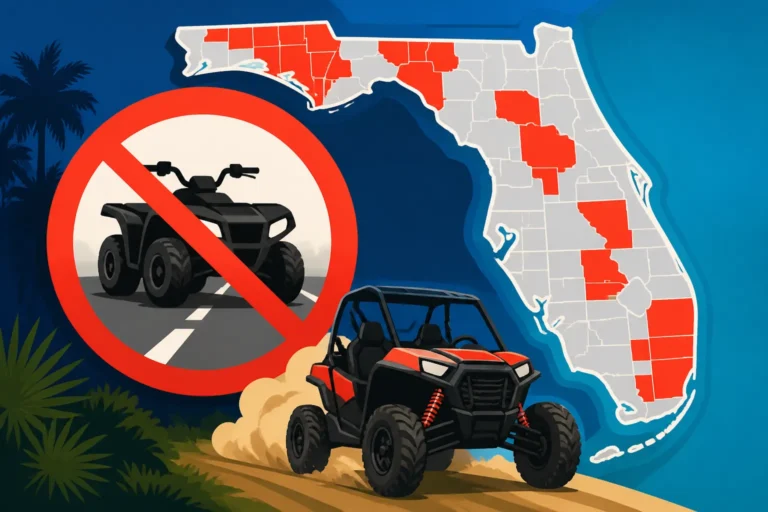
At its heart, Florida law generally prohibits ATVs and other off-highway vehicles (OHVs) from being operated on public roads, streets, or highways. This isn't because the state dislikes ATVs; it's rooted in their design and intended use. ATVs are built for off-road environments – mud, sand, trails – not for the high speeds, hard surfaces, and mixed traffic of paved roadways. They typically lack essential safety features required for street-legal vehicles, such as turn signals, rearview mirrors, proper braking systems for road speeds, and DOT-approved tires. These machines are often much lighter, have a higher center of gravity, and are designed for agility on uneven terrain, making them less stable and predictable on pavement, especially when encountering other vehicles. So, if you're thinking of just putting a license plate on your quad and heading out, you're likely to run into trouble. [Are ATVs Street Legal in Florida?]
Defining "Unpaved Roadway" and Its Importance
While paved roads are largely off-limits, Florida law does carve out specific exceptions for unpaved roadways. This distinction is absolutely critical for ATV owners. An "unpaved roadway" typically refers to dirt, shell, or gravel roads that are not maintained with asphalt or concrete. These are the kinds of roads you might find in rural areas, leading to ranches, farms, or remote trailheads. The law, specifically Florida Statute 316.2123, acknowledges that these types of roads are more akin to the terrain ATVs are designed for. However, just because a road is unpaved doesn't automatically mean it's open season for ATVs. It has to be an unpaved public roadway and often requires local county ordinances to designate it for ATV use. Without such designation, even a dirt road might still be off-limits if it falls under the general prohibition of public roads. Understanding what counts as an "unpaved roadway" as defined by the statute is the first step in knowing where you can legally ride. [Unpaved Roadway: How the Statute Defines It]
Designated Roads: When Counties Pave the Way
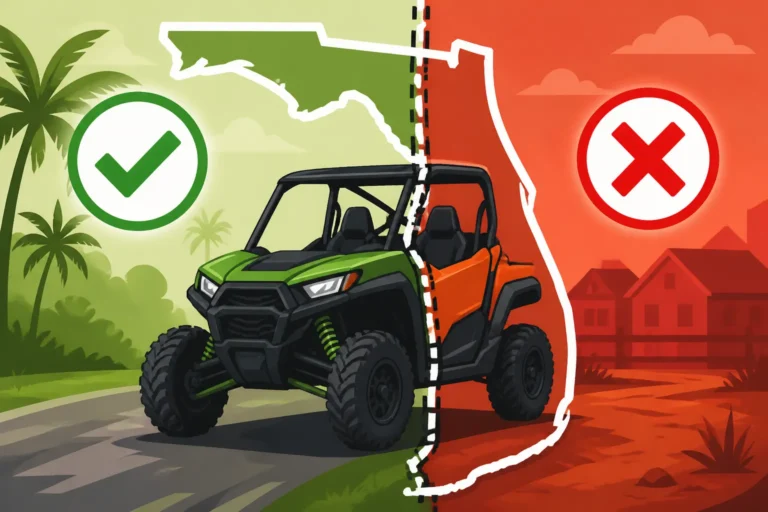
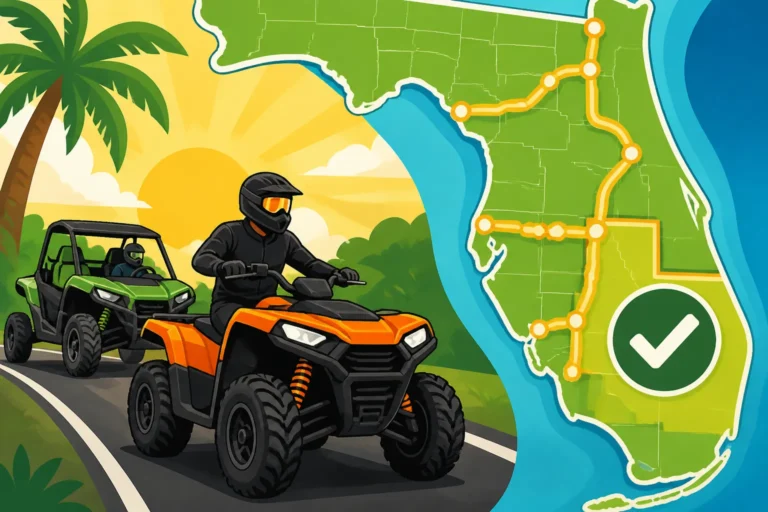
Here's where things get really nuanced: Florida counties have the authority to "opt in" and designate specific unpaved roads within their jurisdiction for ATV use. This means that while state law sets a general prohibition, it also provides a framework for local governments to create exceptions that cater to their specific needs and communities. A county might decide to open certain dirt roads for recreational riding, or to allow access for residents to reach their property, especially in areas with extensive unpaved networks. These designations usually come with specific conditions, such as hours of operation, speed limits, and other safety requirements. It's not a blanket approval for all unpaved roads in a county; rather, it applies only to those explicitly "designated" by the county commission. This is why it's so important to check local ordinances, as what's legal in Putnam County might be completely prohibited in Collier County. [Florida County ATV Opt-Outs: Why Rules Change at the Line]
The Licensed Driver Requirement for Florida ATV Road Use
The question of whether you need a driver's license to operate an ATV on Florida roads is one of the most frequently asked, and it's tied directly to whether that ATV is even allowed on the road in the first place. The answer, like much of Florida's ATV law, is not a simple yes or no, but rather depends on the specific circumstances of where and how you're riding.
Who Needs a Driver's License and When
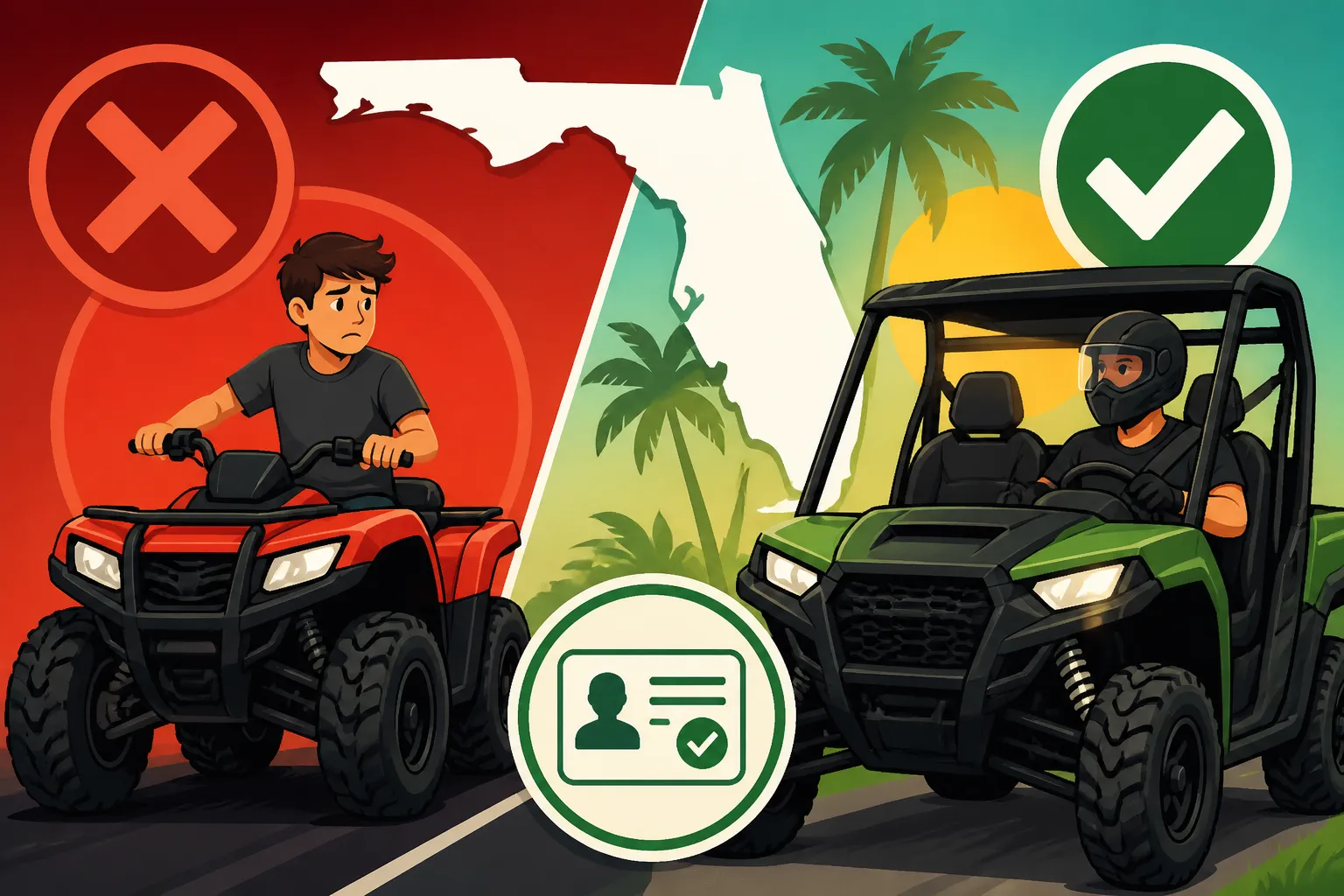
If you are operating an ATV on a designated unpaved public roadway in Florida, you absolutely must possess a valid driver's license. The state views the operation of any motorized vehicle on a public roadway, even an unpaved one designated for ATVs, as requiring the same basic competency and legal authorization as driving a car. This means your standard Class E (car) license is perfectly acceptable. The rationale is clear: even on a dirt road, you're still sharing space with potential vehicle traffic, pedestrians, and other hazards, and the state wants to ensure operators have met the minimum requirements for road safety. If you don't have a valid license, or if your license is suspended or revoked, operating an ATV on these designated roads is illegal and can lead to significant penalties, just as if you were driving a car without a license. This rule applies to everyone, regardless of age, once they are on a public road. [Do You Need a Driver's License for an ATV in Florida?]
Minors, Supervision, and Public Roads
This is where things can get a bit tricky, especially for families who enjoy riding together. For minors (under 16) to operate an ATV on a designated unpaved public roadway, they must meet two critical conditions in addition to the road being designated for ATV use:
- Safety Course Certification: The minor must have successfully completed an approved ATV safety course and carry the certificate of completion with them. This ensures they have a basic understanding of safe ATV operation.
- Direct Supervision: The minor must be under the direct supervision of a licensed adult. This adult must also be present on the same designated unpaved public roadway and capable of immediately intervening if necessary. "Direct supervision" is key – it doesn't mean the adult is miles away, but rather close enough to effectively supervise.
It's important to remember that these rules only apply if the ATV is legally on a designated unpaved public roadway. On private land, the rules around minors and supervision are different, often left to the discretion of the landowner and the parents. However, the moment you transition to public land, even an unpaved one, these requirements kick in. A parent can't just send their 14-year-old on an errand down a designated dirt road without meeting these specific criteria.
The Consequences of Driving Without a License
Operating an ATV on a designated unpaved public roadway without a valid driver's license is not a minor infraction in Florida. It can lead to the same penalties as driving a car without a license, which can include:
- Traffic Citations and Fines: You'll receive a ticket with a corresponding fine.
- Impoundment of the Vehicle: Law enforcement has the authority to impound your ATV, meaning you'll face towing and storage fees to get it back, in addition to the citation. [Florida ATV Impound After a Road Violation]
- Court Appearances: Depending on the severity or if it's a repeat offense, you may be required to appear in court.
- Points on Your Driving Record: Such an offense can add points to your driver's license, potentially affecting your insurance rates and even leading to license suspension if you accumulate too many points.
- Increased Scrutiny: Future interactions with law enforcement might carry more weight if you have a history of operating vehicles without proper licensing.
These consequences are a strong deterrent and highlight why understanding and complying with the licensing requirements for road use is so crucial. It's far better to be prepared and legal than to face the hassle and expense of a citation and impoundment.
Specific Scenarios and Exceptions to the Rule
While the general rule is strict, Florida law, like many legal frameworks, includes specific scenarios and exceptions where ATVs might be allowed on roads, or where the rules bend slightly. These are often for practical purposes and are usually tightly regulated.
Agricultural and Emergency Use Exceptions
Florida's economy has a strong agricultural backbone, and the law recognizes that ATVs and UTVs are vital tools for farmers, ranchers, and utility workers. As such, there are specific exceptions that allow these vehicles to be operated on public roads for agricultural or utility purposes. For instance, a farmer might need to drive their side-by-side a short distance on an unpaved public road to move between fields or access irrigation equipment. Similarly, utility companies might use ATVs for maintenance work along power lines or easements that necessitate brief road travel.
However, these are not blanket exemptions for anyone with a utility rack on their quad. These exceptions are typically limited to:
- Direct Agricultural Operations: The ATV must be actively engaged in or directly supporting agricultural work.
- Utility or Emergency Services: For workers performing official duties.
- Short Distances: The travel on the public road is usually limited to the shortest practical distance to accomplish the task.
- Daylight Hours: Often, these operations are restricted to daylight hours.
It's critical for anyone relying on these exceptions to understand the precise wording of the statute and to ensure their use falls squarely within its intent. Misinterpreting these exceptions could still lead to a citation. [Florida Farm and Ranch ATV Road Exceptions]
Crossing Paved Highways and Other Brief Road Touches
Even if an ATV is generally prohibited from riding on a paved public road, there are allowances for crossing them. For example, if you're riding on private land or a designated unpaved trail system, and that path is bisected by a paved highway, Florida law generally permits a direct crossing of that highway.
The key here is "direct crossing." This means:
- Perpendicular Crossing: You must cross the paved road at approximately a 90-degree angle, not travel parallel to it.
- Quickest Route: The crossing should be made by the most direct route available.
- Come to a Complete Stop: Before crossing, you must come to a complete stop and yield to all oncoming traffic.
- Safety First: All applicable traffic laws, like yielding to pedestrians and obeying traffic signals, still apply.
This allowance is designed to facilitate access to riding areas without requiring extensive detours. It's not an excuse to ride down a paved street for a block to get to the store, but strictly for brief, unavoidable crossings. Similarly, briefly entering the shoulder of a paved road to avoid an obstacle or dangerous situation might be tolerated, but extended travel on the shoulder is generally not permitted. [Florida ATV Crossing a Paved Highway]
Private Roads and Gated Communities: Different Rules Apply
The rules governing ATV use often change dramatically when you move from public land to private property. On genuinely private roads, such as those within a large ranch, a private hunting club, or certain gated communities, Florida state law regarding public road use generally does not apply. Here, the rules are typically set by the landowner, homeowners' association (HOA), or property management.
This means:
- Landowner's Discretion: A landowner can permit ATV use on their private roads, regardless of whether the operator has a driver's license or if the ATV has street-legal equipment.
- HOA Rules: In gated communities, an HOA might have its own set of bylaws and restrictions on ATV operation, including age limits, hours of use, or noise restrictions. These rules are contractually binding for residents and guests. [When a Florida HOA Bans Quads]
- No Public Access: The critical distinction is that these roads are not open to the general public. If a private road becomes accessible to the public, even informally, state laws may then begin to apply.
It's vital to always seek explicit permission and understand the specific rules of any private property before riding your ATV. Assuming "private property means anything goes" can still lead to trespass charges or other issues if you don't have the proper authorization.
Beyond the License: Other Essential Rules for Road-Legal ATV Operation
Acquiring a driver's license and finding a designated unpaved road are just the first steps for legal ATV road use in Florida. Even when permitted, there are additional safety and equipment requirements that riders must adhere to, ensuring not only their safety but also that of others on or near the roadway.
Equipment Requirements for Road-Designated ATVs
While ATVs are not typically built for road use, if a county designates an unpaved road for ATV traffic, riders are still expected to meet certain basic equipment standards to enhance visibility and safety. Unlike street-legal conversion kits you might see for UTVs, which often include a full suite of lights, mirrors, and signals from brands like SuperATV, standard ATVs on designated unpaved roads usually have simpler requirements.
These typically include:
- Headlights and Taillights: While unpaved road use is often limited to daytime, having functional headlights and taillights is crucial, especially during dawn, dusk, or in low visibility conditions. These make the ATV visible to others.
- Brakes: A properly functioning braking system is non-negotiable for safe operation.
- Spark Arrestor: All ATVs operating on public lands (including designated unpaved roads) must be equipped with a U.S. Forest Service approved spark arrestor. This is a critical safety device to prevent wildfires.
- Tires: While not DOT-approved street tires, the ATV's tires must be in good condition, suitable for the terrain, and not present a hazard to the roadway or other users.
It's a good idea to ensure your ATV is in top mechanical condition, similar to how you'd maintain any vehicle used on a public way. A broken headlight or faulty brake could not only be dangerous but also lead to a citation. [Florida ATV Lights and Equipment for Road Use]
Daytime-Only Operation and Posted Speed Limits
One of the most common restrictions for ATV use on designated unpaved public roads is the "daytime-only" rule. Florida Statute 316.2123 explicitly states that operation on these roads is permitted only during "daytime hours." This means from sunrise to sunset. Attempting to ride your ATV on a designated unpaved road after dark, even with functioning headlights, is generally prohibited. This rule is in place due to the inherent visibility challenges of ATVs and the often less-lit nature of unpaved roads, which increases accident risks after dark. [Florida's Daytime-Only ATV Road Rule]
Furthermore, even though these are unpaved roads, they are still public roadways, and posted speed limits apply. You can't just open up the throttle because you're on a dirt road. If a sign indicates a 25 mph or 35 mph limit, you must adhere to it. Exceeding the posted speed limit is not only dangerous on an ATV but also a traffic violation that can lead to fines and other penalties. It’s about sharing the road responsibly and safely, regardless of the surface.
Passenger Rules on Designated Roads
Carrying passengers on an ATV, even on a designated unpaved road, is another area where riders need to be extremely careful. Many ATVs are designed strictly for a single rider. Carrying a passenger on a single-rider ATV, even if they're small, significantly alters the machine's balance and handling characteristics, making it much more difficult to control, especially at speed or on uneven terrain.
Florida law is quite clear:
- Single-Rider ATVs: You generally cannot carry a passenger on an ATV that is designed and manufactured for only one rider. This is a safety issue, plain and simple.
- Two-Rider ATVs: If your ATV is specifically designed by the manufacturer for two riders (often called a "two-up" or "tandem" ATV), then carrying a passenger is permitted, provided the passenger meets any age or size requirements for the machine. These ATVs have an extended seat and footrests for a second person, making them more stable.
- Side-by-Sides (UTVs): UTVs, or side-by-sides, are designed to carry multiple passengers, typically in a car-like seating arrangement with seatbelts. They are generally treated differently than ATVs in this regard, and passengers are usually permitted as long as they are within the vehicle's design capacity and using restraints.
Always check your ATV's owner's manual and manufacturer's specifications to understand its design capacity. Riding a single-rider ATV with a passenger on a public road, even an unpaved one, is a common reason for citations and can lead to dangerous situations. [Florida ATV Passenger Rules]
Comparing ATVs to Other Off-Highway Vehicles and Golf Carts
Florida's vehicle classifications can be a maze, and it's easy to confuse an ATV with a UTV, or even a golf cart, especially when discussing road use. Each vehicle type has its own set of rules, and understanding these distinctions is crucial to staying compliant.
What Makes a UTV Different and Its Road Status
A Utility Terrain Vehicle (UTV), often called a side-by-side, is distinctly different from an ATV, both in design and how it's treated under Florida law. UTVs are generally:
- Wider: Often wider than the 55-inch limit that defines many ATVs.
- Heavier: Typically heavier than ATVs, often exceeding the 1,500-pound dry weight limit for ATVs.
- Multi-Passenger: Designed with bench or bucket seating for two or more occupants, along with seatbelts and often a roll cage.
- Steering Wheel: Operated with a steering wheel and foot pedals, similar to a car, rather than handlebars.
Because of these differences, UTVs are sometimes classified differently, often as Recreational Off-highway Vehicles (ROVs). While UTVs also fall under the general prohibition for paved public roads, some counties may have specific designations for UTV use on unpaved roads, similar to ATVs. More significantly, UTVs often lend themselves more readily to being converted into Low-Speed Vehicles (LSVs) for street legality, which is a different pathway entirely. For instance, aftermarket companies like SuperATV offer a range of UTV accessories, from windshields and mirrors to full street-legal kits, which can help a UTV meet the requirements to become an LSV, a path not typically available to traditional ATVs. [Is a UTV Street Legal in Florida?]
Florida Low-Speed Vehicle Rules for Side-by-Sides
The Low-Speed Vehicle (LSV) classification is a pathway that some UTV owners explore to gain limited street legality. An LSV is defined as a four-wheeled vehicle whose top speed is greater than 20 miles per hour but not greater than 25 miles per hour. To be registered as an LSV and legally driven on certain public roads in Florida, a UTV must meet specific federal and state safety equipment standards, including:
- Headlights, Taillights, Brake Lights, Turn Signals: All functional and visible.
- Windshield: Automotive-grade safety glass.
- Seatbelts: For all seating positions.
- Rearview Mirror and Side Mirrors: Essential for road visibility.
- Vehicle Identification Number (VIN): The vehicle must have a VIN.
Once converted and registered as an LSV, a UTV can typically be operated on public roads where the posted speed limit is 35 mph or less. However, it cannot be operated on roads with speed limits exceeding 35 mph. This is a popular option for residents in master-planned communities or areas with extensive networks of lower-speed roads. It's a significant investment to convert a UTV to an LSV, but for some, the convenience of limited street use is worth it. [Florida Low-Speed Vehicle Rules for Side-by-Sides]
Golf Carts vs. ATVs: A Crucial Distinction
Many people conflate golf carts with ATVs, especially in communities where golf carts are a common mode of transport. However, under Florida law, they are very distinct vehicle types with different rules.
| Feature | All-Terrain Vehicle (ATV) | Golf Cart | Low-Speed Vehicle (LSV) (Often converted UTVs) |
|---|---|---|---|
| Intended Use | Off-road recreation, utility tasks on rough terrain | Golf courses, short-distance transport in communities | Limited public road use (35 mph or less), neighborhood transit |
| Steering | Handlebars | Steering wheel | Steering wheel |
| Seating | Straddle-style (single or tandem "two-up") | Bench seating (usually 2 or 4 passengers) | Bench or bucket seating (usually 2 or 4 passengers) |
| Speed | Varies greatly, often capable of high speeds | Typically 20 mph or less | Greater than 20 mph but not greater than 25 mph |
| Road Use (Paved) | Generally prohibited, except for direct crossings or specific agricultural/emergency uses | Permitted on certain public roads (20 mph or less), often by local ordinance | Permitted on public roads with posted speed limits of 35 mph or less |
| Driver's License | Required for public road use (even unpaved designated roads) | Required for operators 16 and older on public roads (as of Oct 2023) | Required |
| Title/Registration | Title required for public land use (even unpaved designated roads) | No state title/registration required | Title and registration required |
| Safety Features | Limited (no signals, mirrors, etc., by default) | Limited (no signals, mirrors, etc., by default) | Extensive (lights, signals, mirrors, windshield, seatbelts) |
The critical difference is that golf carts are designed for low speeds and specific environments, while ATVs are for rugged, off-road conditions. While a golf cart might be street-legal on certain community roads, an ATV generally is not. Florida's recent changes to golf cart laws, including an age minimum for drivers on public roads, further underscore that these are separate categories of vehicles with distinct regulations. [Florida Golf Cart Laws vs ATV Laws]
Navigating Local Ordinances and Staying Compliant
The patchwork nature of Florida's ATV road use laws means that understanding state statutes is only half the battle. Local county and municipal ordinances play a significant role in determining where and when you can legally ride your ATV on unpaved public roads. Ignoring these local rules can quickly put you on the wrong side of the law.
How Counties Opt-In or Opt-Out of ATV Road Use
Florida Statute 316.2123 allows individual counties to "opt in" and permit ATVs and other OHVs to be operated on designated unpaved public roadways within their jurisdiction. This means a county commission must pass a specific ordinance that identifies which unpaved roads are open to ATV traffic. It's not a default; a county has to proactively decide to allow it.
Conversely, a county can also "opt out" or simply choose not to designate any roads for ATV use. If a county has not passed such an ordinance, then the default state prohibition on ATVs on public roads (paved or unpaved) remains in full effect. This leads to the situation where you might legally ride an ATV on a dirt road in one county, but cross a county line onto an identical dirt road and instantly be in violation of the law. This is why you might see signs at county lines or trailheads indicating local regulations.
Checking Local Regulations Before You Ride
Given the variability from county to county, it is absolutely essential to check the local ordinances of the specific area you plan to ride in before you load up your ATV. Relying on what you heard from a friend or what's allowed in your home county is a recipe for trouble.
Here's how you can check:
- County Clerk or Sheriff's Office Website: Most county government websites will have sections dedicated to local ordinances, traffic laws, or sheriff's office information. Look for specific language regarding "off-highway vehicles," "all-terrain vehicles," or "designated roadways."
- Direct Contact: If you can't find clear information online, don't hesitate to call the county clerk's office, the local sheriff's department (non-emergency line, of course!), or the relevant county commissioner's office. They can provide definitive answers about designated ATV roads.
- Local Riding Clubs/Forums: While not official sources, local ATV clubs and online forums can often provide insights into popular riding spots and the known regulations in the area. Just remember to always verify the information with an official source.
It's about being proactive and responsible. A few minutes of research can save you a significant amount of hassle, fines, and potential vehicle impoundment.
The Role of Law Enforcement and Penalties
Florida law enforcement agencies, including county sheriff's departments and the Florida Highway Patrol, are responsible for enforcing ATV regulations on public roads. They are well aware of the state statutes and local ordinances. If you are caught operating an ATV illegally on a public road, you can expect a citation.
Penalties can vary depending on the specific violation and whether it's a first offense. As discussed earlier, operating an ATV on a public road without a driver's license carries stiff penalties. Other violations, such as riding on a prohibited road, riding at night, or carrying an illegal passenger, will also result in fines. Repeat offenses can lead to more severe consequences, including higher fines, mandatory court appearances, and extended impoundment of your machine. [Florida Penalties for Illegal ATV Road Riding]
Law enforcement often conducts patrols in areas known for illegal ATV activity, especially near residential areas where noise complaints or safety concerns are prevalent. They are not just looking for reckless driving but also for compliance with licensing, equipment, and road designation rules. Being respectful and cooperative with law enforcement, even if you made an honest mistake, can sometimes help mitigate the situation, but it will not excuse a violation of the law. Your best bet is always to know the rules and ride legally.
Disclaimer
This article is for general informational purposes only and does not constitute professional advice. Laws, prices and regulations vary by location and change over time. Consult a qualified professional for guidance on your specific situation.