How a Florida County Opens Specific Roads to ATVs
Many of us living the Florida ATV and UTV lifestyle have felt that familiar pang of frustration: wanting to take our machines just a short distance on a public road, maybe to get to a trail, a friend's house, or even just the local gas station, only to be met with the cold, hard reality that it's often illegal. Florida's general stance on ATVs on paved roads can feel restrictive, leaving riders wondering if there's any way their local community can carve out some legal riding opportunities. This guide is here to unravel that mystery, explaining exactly how a Florida county can go through the process of officially designating specific roads for ATV use, and what it takes for that to happen.
The Core Challenge: Why Most Florida Roads Are Off-Limits to ATVs
It’s no secret that the vast majority of Florida’s public roads, especially the paved ones, are strictly off-limits to ATVs and UTVs. This isn't just a random rule; it stems from deep-seated concerns about safety, vehicle design, and the flow of traffic. Many riders find this incredibly frustrating, particularly when they see neighboring states or even other areas within Florida with different rules. It can feel like your passion is being unfairly restricted.
The state law framework for ATVs and UTVs (often lumped together under "off-highway vehicles" or OHVs) primarily views these machines as recreational vehicles designed for off-road environments. They typically lack many of the safety features standard in passenger cars – think turn signals, brake lights that are always visible, proper mirrors, and crash protection. Imagine a fast-moving car encountering a slower, less visible ATV on a busy highway; the potential for serious accidents is just too high for the state to allow widespread road access. This fundamental difference in design and intended use is the bedrock of Florida's general prohibition.
However, recognizing the diverse needs and landscapes across the state, Florida law does include provisions that allow local governments – specifically counties – to make exceptions. This is where the possibility of opening specific roads to ATVs comes into play. Without this local option, every road would be a no-go, regardless of how rural or quiet it might be. This flexibility is crucial for communities where ATVs are a part of the local culture, serve agricultural purposes, or provide essential transportation in areas with few paved roads.
Understanding the State Law Baseline
The foundational principle in Florida Statute 316.2074 explicitly states that "An all-terrain vehicle, as defined in s. 316.20745, may not be operated on the public roads or highways of this state." This is the default, the rule of thumb that every ATV owner must understand. It's not just about getting a ticket; it's about potentially endangering yourself and others, and that's a risk no responsible rider wants to take. This blanket prohibition is in place for a good reason, even if it feels inconvenient at times.
This statute serves as a baseline, ensuring a consistent safety standard across Florida unless a specific local exception is made. It highlights that ATVs and UTVs are distinct from street-legal vehicles like cars, trucks, and even golf carts or low-speed vehicles (LSVs) which have their own sets of regulations for road use. The state recognizes that these off-highway machines, with their specialized suspension, open designs, and often knobby tires, are built for mud, sand, and trails, not smooth asphalt with high-speed traffic. The state is essentially saying, "these machines are great, just keep them where they belong – off the main roads."
However, the statute doesn't stop there. It includes critical language that grants local counties the power to designate certain public roads or portions thereof for ATV use. This specific carve-out is the silver lining for riders and communities who wish to integrate ATVs into their local transportation fabric in a safe, controlled manner. It means that while the state sets the general rule, individual counties have the autonomy to evaluate their unique local conditions and determine if certain roads can safely accommodate OHVs. This is the mechanism by which your local County Commission can potentially transform a forbidden stretch of road into an approved path for your quad. You can gain more insight into these regulations by reading [Florida's Off-Highway Vehicle Title Law Explained].
The Local Authority Exception
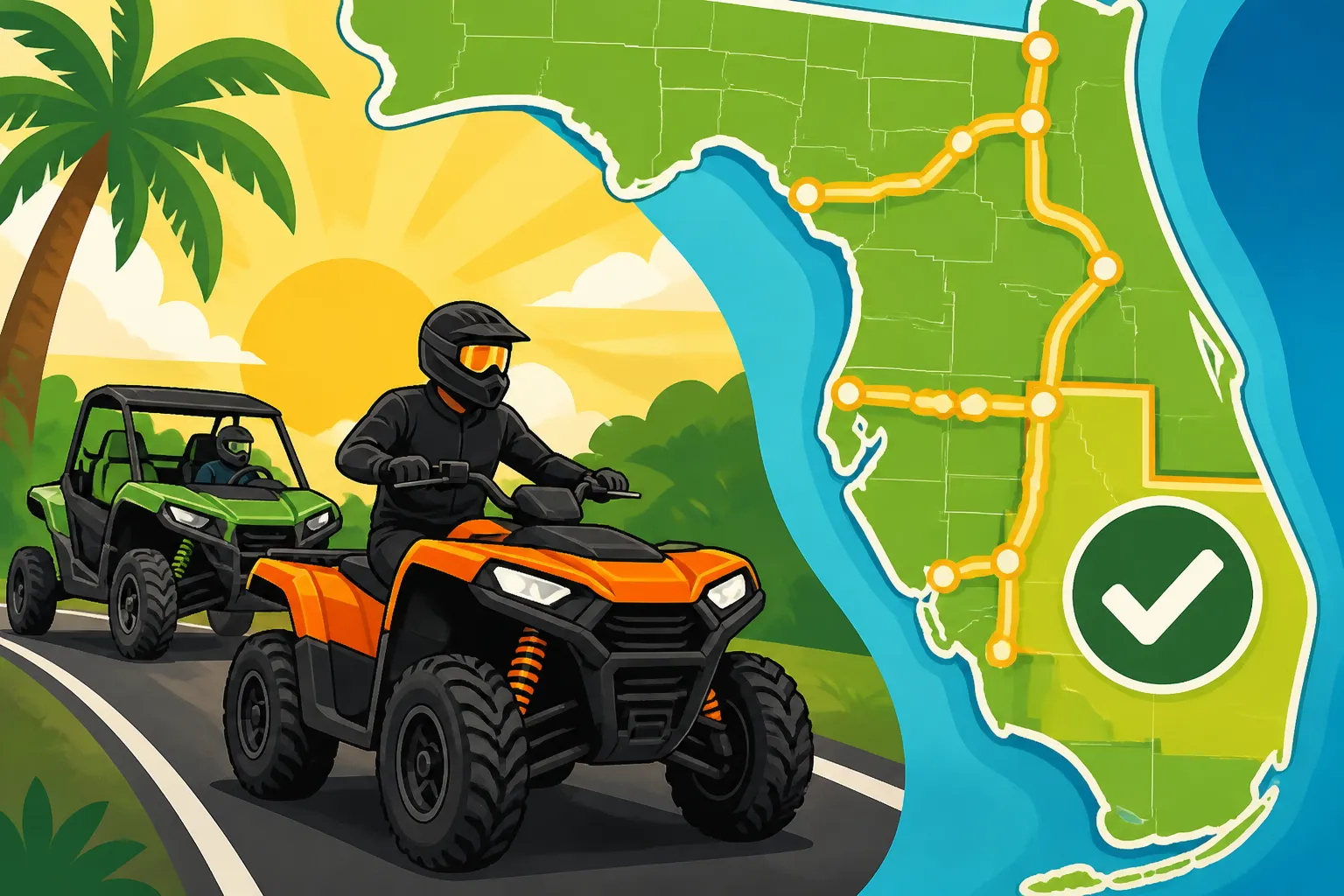
So, while the state law generally says "no ATVs on roads," it hands the keys to the county. This means that a local county commission has the power to pass an ordinance that specifically identifies certain roads where ATVs are permitted. This isn't a free-for-all; these designated roads are typically unpaved, low-traffic routes, often in rural or agricultural areas where ATVs are already commonly used for legitimate purposes like farming or hunting access. It's a way to legalize what might already be happening informally, but in a structured and safe manner.
This local authority is crucial because Florida is incredibly diverse. What works for a bustling urban county like Miami-Dade simply wouldn't make sense for a vast, rural county like Okeechobee or Collier, where ranches and natural areas dominate the landscape. In these less developed areas, dirt roads are often the primary means of access, and ATVs are not just recreational vehicles but essential tools for work and property management. A county commission, being closer to the ground, can better understand these localized needs and implement rules that reflect their community's unique character. They can weigh the benefits to local residents against potential safety concerns, ultimately deciding where and under what conditions ATV use on public roads is appropriate.
When a county decides to exercise this authority, they aren't just waving a magic wand. They typically undertake a thorough process, which involves public discussions, safety assessments, and the drafting of a formal ordinance. This ensures that any designated road meets specific criteria and that the community has a chance to voice its opinions. It's a careful balancing act, and while it might seem like a bureaucratic hurdle, it's designed to ensure that these local exceptions truly serve the community without compromising safety. For instance, in areas like Marion County, where the Ocala National Forest provides extensive riding opportunities, residents might seek road designations to connect trailheads or access services, and the county has the power to facilitate this.
Navigating the County Designation Process for ATV Roads
Getting a road designated for ATV use in Florida isn't as simple as just asking politely; it’s a formal process that involves public engagement, official review, and legislative action at the county level. Many riders find this part daunting, feeling like their requests disappear into a bureaucratic black hole. However, understanding the steps involved can empower you to advocate effectively and ensure your voice is heard. It’s about more than just wanting to ride; it’s about presenting a well-reasoned case to your elected officials.
The journey typically begins with citizens or organized groups bringing a proposal to their county commissioners. This isn’t a quick decision; it often involves multiple meetings, workshops, and opportunities for public comment. The county has to consider not only the desires of ATV riders but also the concerns of other residents, local law enforcement, and even environmental groups. It's a democratic process, and like any democratic process, it requires active participation and persistence from those who want to see a change.
Ultimately, the process culminates in the county commission voting on a specific ordinance. If approved, this ordinance then legally designates the roads or sections of roads for ATV use, often with specific conditions like speed limits, helmet requirements, or hours of operation. This local legislative act officially carves out that exception to the state's general prohibition. Without this formal, documented action, riding an ATV on any public road remains illegal, regardless of how deserted or remote it might seem.
Initiating the Conversation: Who Can Spark the Change?
Change rarely happens without a catalyst, and when it comes to opening up specific roads for ATVs, that spark often comes from the local community itself. It's not usually the county commission that wakes up one morning and decides to proactively open roads; it's typically initiated by the people who live, work, and ride in that area. This can be an individual rider who has a compelling need, but more often, it’s organized groups that carry the most weight.
Local ATV clubs, landowner associations, or even agricultural committees are often the driving force behind these initiatives. These groups have a collective voice, can pool resources, and are usually better equipped to research and present a well-reasoned argument to the county. For instance, a group of farmers in Polk County might petition to use a certain stretch of unpaved road to access different parts of their property, arguing that an ATV is the most efficient vehicle for their work. These requests are often backed by practical reasons beyond just recreational riding, which can make them more palatable to county officials. For specific instances, you might look into [Florida Farm and Ranch ATV Road Exceptions].
The key is to identify local leaders or community organizers who are willing to champion the cause. These advocates need to understand not only the benefits for ATV riders but also how opening these roads aligns with broader community interests, such as supporting local businesses that cater to riders or providing access for emergency services in remote areas. Without a strong, organized initiative from residents, the idea of designating ATV roads might never even make it onto the county commission's agenda.
The Role of the County Commission
Once the conversation has been initiated, the county commission becomes the central actor in this drama. These elected officials hold the ultimate authority to create or amend local ordinances, and that includes determining which roads, if any, will be opened to ATVs. Their role isn't just to rubber-stamp requests; it's to carefully consider all aspects of a proposal, balancing community desires with public safety, environmental concerns, and legal obligations.
The process often begins with a presentation from the proponents of the change, followed by staff reports from various county departments, such as public works, planning, and law enforcement. These reports provide commissioners with crucial data on road conditions, traffic patterns, accident history, and potential impacts. For example, the Public Works Department might assess the durability of a gravel road and its capacity to handle increased ATV traffic without excessive wear and tear, or whether adding new signage would be feasible. This detailed review ensures that decisions are based on facts and expert opinions, not just passionate pleas.
Ultimately, the county commission will hold public meetings and hearings where residents on all sides of the issue can speak. After gathering all information and listening to public input, the commissioners will debate the merits of the proposal. If they decide to proceed, they will vote on an ordinance. This ordinance will not only designate the specific roads but also outline the conditions under which ATVs can operate, such as specific hours, speed limits, or equipment requirements like headlights or taillights. It’s a thorough, often lengthy, legislative process that requires careful deliberation.
Public Input: Your Voice Matters
In any decision that affects a community, public input is not just a formality; it's a vital part of the democratic process. When a Florida county considers opening specific roads to ATVs, they are legally and ethically obligated to solicit and consider feedback from their residents. This is your chance – and everyone else's – to make your voice heard, whether you are strongly in favor, vehemently opposed, or somewhere in the middle. Neglecting this opportunity means missing a critical step in influencing the outcome.
County commissions typically schedule public hearings specifically for proposed ordinances like road designations. These hearings are advertised in local newspapers, on the county's website, and sometimes through direct mail to affected property owners. It's essential for anyone interested in the issue to attend these meetings. Showing up, signing up to speak, and clearly articulating your position – backed by facts and respectful arguments – can have a significant impact on how commissioners view the proposal. A large turnout, whether in support or opposition, sends a clear message about community sentiment.
Beyond formal hearings, proactive engagement can also make a difference. Writing letters to your commissioners, sending emails, making phone calls, and even meeting with individual commissioners can help build support or raise awareness of concerns before a final vote. For riders, this means presenting the benefits: increased access to trails, economic boost from recreational tourism, or practical advantages for landowners. It also means addressing potential downsides, perhaps suggesting ways to mitigate noise or dust. For example, if you're outfitting your machine with rugged components from a brand like SuperATV, you might highlight how these durable parts support responsible riding on designated roads. Every piece of constructive feedback contributes to a more informed decision-making process for the county, ensuring that a broad spectrum of views is considered. To understand what to expect, read [Reading a County Commission Notice of Hearing].
What a County Considers When Opening ATV Roads
When a Florida county commission sits down to decide whether to open specific roads for ATV use, they aren't just looking at a map and drawing lines. They're engaging in a complex balancing act, weighing the desires of riders and local residents against a host of practical, safety, and environmental considerations. This process is designed to prevent unforeseen problems and ensure that any changes benefit the community as a whole. Understanding these considerations can help advocates tailor their proposals to address common concerns.
It's a much deeper dive than simply "should we or shouldn't we?" Commissioners must consider everything from the current condition of the road to the potential impact on property values and wildlife. They often rely on expert opinions from county staff, including traffic engineers, environmental specialists, and law enforcement. This means a good proposal isn't just about where you want to ride, but how that riding will interact with the existing infrastructure, ecology, and community life.
Ultimately, the goal is to create a designation that is both practical and sustainable, minimizing risks while maximizing benefits. This multi-faceted approach ensures that any decision to open roads is well-reasoned and considers the long-term implications for everyone in the county.
Safety First: Traffic, Speed Limits, and Road Design
Without a doubt, safety is the number one concern for any county commission considering opening roads to ATVs. They are acutely aware of the potential for accidents and the liability associated with them. This means they will scrutinize every aspect related to safety, including existing traffic volumes, the typical speed limits on the proposed roads, and the physical design of the roadways themselves. A road might seem quiet on a Sunday afternoon, but what about during peak weekday commuting hours?
Traffic engineers will often conduct studies to assess current vehicle counts and speeds on the candidate roads. If a road already carries significant vehicle traffic or has a high posted speed limit (like the [The 35 mph Posted Limit and Where It Applies] common on many county roads), it's far less likely to be considered suitable for ATV use. ATVs are generally slower and less visible than cars, making interactions on busy roads inherently more dangerous. Counties often look for roads with minimal existing traffic or those where speeds can be easily regulated and enforced.
Furthermore, the actual design of the road plays a critical role. Are there sharp curves with limited sightlines? Are there narrow bridges or culverts? Is the road surface stable and wide enough to safely accommodate both ATVs and occasional vehicle traffic? Roads that are predominantly unpaved, wide enough for two vehicles to pass safely, and relatively straight are usually preferred. Even then, the ordinance might specify particular [Florida ATV Speed Limit on Unpaved Roads] for designated sections, reinforcing the need for caution and responsible operation. Any proposal needs to demonstrate a clear plan for ensuring the safety of all road users.
Environmental and Community Impact
Beyond immediate safety, county commissioners must also consider the broader environmental and community impact of designating ATV roads. This often becomes a point of contention for residents who live along or near the proposed routes. Concerns can range from increased noise pollution and dust to potential impacts on local wildlife and property values. No one wants their peaceful rural lane turned into a noisy thoroughfare.
Noise can be a significant issue, especially for residents who live adjacent to proposed ATV routes. While most modern ATVs are quieter than older models, a consistent stream of machines can still disrupt the tranquility of a rural neighborhood. Counties might consider specific hours of operation to mitigate noise or even require specific muffler standards. Similarly, ATVs on unpaved roads can kick up considerable dust, especially during Florida's dry season, which can affect air quality and visibility for nearby homes. Measures like requiring slower speeds or even scheduled watering of roads could be discussed.
Environmental considerations also loom large. Will increased ATV traffic lead to erosion, impact water quality in nearby wetlands, or disrupt local wildlife habitats? Commissioners might consult with environmental protection agencies or local wildlife experts to assess these risks. Property values are another concern; some residents might fear that increased ATV traffic could diminish the appeal and value of their homes. Addressing these community concerns proactively, perhaps by suggesting specific buffers, limited access points, or strictly enforced etiquette guidelines, is essential for any successful designation proposal.
Infrastructure and Maintenance Concerns
Opening roads to ATVs isn't just about drawing lines on a map; it's about the physical infrastructure and the long-term costs of maintaining those roads. County public works departments will be particularly interested in this aspect, as they are the ones responsible for keeping roads in good condition. Increased traffic from ATVs, especially on unpaved surfaces, can lead to accelerated wear and tear, necessitating more frequent grading, pothole repair, and dust control measures.
The type of road material is a key factor. A well-maintained dirt or shell-rock road might handle ATV traffic better than a poorly constructed gravel path. Commissioners will want to know if the existing road network can withstand the added stress without becoming a costly burden on taxpayers. They will also consider the need for additional signage, which clearly indicates where ATVs are permitted and any specific rules that apply, such as speed limits or hours of operation. This signage needs to be durable, visible, and regularly maintained.
There's also the question of enforcement. If roads are designated, how will local law enforcement ensure compliance with the new rules? Are there sufficient resources to patrol these areas, especially if they are remote? The county will need to consider the costs associated with increased enforcement, potential ticketing, and even impoundment if riders don't follow the rules. It’s a comprehensive look at the practicalities of implementing and sustaining a new road designation, ensuring that the county isn’t creating a costly or unmanageable problem down the line.
Practical Steps for Advocates: How to Help Your County Open Roads
Feeling like your county should open specific roads for ATV use is one thing; actually making it happen is another. It requires strategic planning, persistent effort, and a deep understanding of the local governmental process. Many riders feel frustrated by the perceived bureaucracy, but with a structured approach, you can significantly increase your chances of success. It’s about being more than just a passionate rider; it’s about becoming an effective advocate for your community.
The key to successful advocacy lies in preparation and collaboration. You can't just show up to a commission meeting with a vague request; you need to present a well-researched, well-supported case that addresses the county's concerns. This often means working with others who share your goals, leveraging their expertise, and presenting a unified front. The more organized and informed your advocacy efforts are, the more seriously your proposal will be taken.
Ultimately, helping your county open roads for ATVs is a marathon, not a sprint. It requires patience, the ability to listen to opposing viewpoints, and a willingness to compromise when necessary. But with dedication, you can play a crucial role in shaping local regulations to better serve the needs of Florida's ATV community.
Forming a Coalition and Gathering Support
You know the saying, "There's strength in numbers," and nowhere is that truer than in local advocacy. Trying to convince a county commission as a lone voice is an uphill battle. To truly make an impact, you need to form a coalition of like-minded individuals and groups who share the vision of designated ATV roads. This isn't just about making noise; it's about demonstrating broad community support and showing that your proposal isn't just a niche interest.
Start by reaching out to local ATV clubs, hunting groups, agricultural associations, and even neighborhood watch groups in areas where ATV use might be beneficial. Farmers, for instance, might see the practical benefit of using ATVs to navigate unpaved roads connecting different parts of their land. These diverse groups can provide different perspectives and strengthen your argument. For example, if you're involved in a group that frequently modifies machines with parts from SuperATV for enhanced off-road capability, you can emphasize the responsible approach to equipment and maintenance within your community.
Hold informal meetings to discuss concerns, brainstorm solutions, and assign roles. A well-organized coalition can divide tasks like research, public outreach, and direct communication with commissioners. When commissioners see a unified front representing various segments of the community, they are far more likely to take the proposal seriously, understanding that it addresses a genuine need rather than just a passing fancy.
Researching and Presenting Your Case
Passion is important, but facts win arguments. To effectively advocate for designated ATV roads, you need to thoroughly research your case and present it in a clear, compelling manner. This means going beyond anecdotal evidence and gathering concrete data that supports your proposal while addressing potential concerns the county might have.
Begin by identifying specific roads or areas that would be suitable for ATV use. Consider factors like low traffic volume, unpaved surfaces, existing informal use, and connectivity to trails or important local services. Document these roads with maps, photos, and even traffic counts if you can gather them. Next, research how other Florida counties (or even counties in other states with similar laws) have successfully implemented ATV road designations. This provides valuable precedents and examples of ordinances that work. For inspiration, consider looking at [Florida Counties That Designated ATV Roads].
When presenting your case to the county commission, be prepared with a professional, data-driven presentation. Highlight the benefits to the community: increased access for residents, support for agricultural activities, potential for recreational tourism revenue, and improved public safety by directing ATV use to appropriate areas. Also, proactively address potential downsides, proposing solutions for noise, dust, or enforcement challenges. The more comprehensive and well-thought-out your presentation, the more credible and persuasive your arguments will be.
Understanding the Specific Ordinances and Requirements
Even if your county decides to open specific roads for ATVs, it's not a blanket free pass. These designations always come with specific rules and requirements outlined in the county ordinance. It's absolutely crucial for advocates and riders to understand these details thoroughly, as compliance is key to the success and continuation of any designated road program. Ignorance of the law is never an excuse, and violating these specific rules can lead to citations and even the revocation of the designation.
These ordinances will typically specify the exact roads or road segments where ATVs are permitted. They will also detail operating conditions, which can include:
- Time restrictions: For example, ATVs might only be allowed during [Florida's Daytime-Only ATV Road Rule].
- Speed limits: Often lower than the standard posted speed limits for cars.
- Equipment requirements: Mandating working headlights, taillights, brake lights, and sometimes mirrors or a visible safety flag. While many off-road machines are ready for tough terrain, thinking about street use might mean adding accessories, perhaps even from a reputable brand like SuperATV, to ensure full compliance.
- Rider requirements: Such as age restrictions, helmet laws for minors, or requiring a valid driver's license for operation on designated roads. [Do You Need a Driver's License for an ATV in Florida?] is a question often addressed here.
- Passenger rules: Specifying if and how many passengers are allowed.
This table summarizes key considerations for counties:
| Consideration Area | Key Questions for County Commissioners | Why It Matters |
|---|---|---|
| Safety | What are current traffic volumes and speeds? Are sightlines adequate? What is the accident history? | Prevents injuries, fatalities, and reduces county liability. |
| Road Design/Condition | Is the road paved or unpaved? What is its width and surface stability? Are there sharp curves/blind spots? | Determines suitability for mixed traffic, prevents excessive wear, ensures safe passage. |
| Environmental Impact | Will ATVs cause erosion, dust, or noise pollution? How will it affect local wildlife/ecosystems? | Protects natural resources, maintains quality of life for residents. |
| Community Impact | How will noise/dust affect nearby residents? What about property values? Are there schools/parks nearby? | Addresses resident quality of life, avoids creating nuisance complaints. |
| Infrastructure/Maintenance | What will be the cost of increased road maintenance? What signage is needed? | Manages budget, ensures roads remain safe and functional. |
| Enforcement | Can law enforcement adequately patrol? What are penalties for violations? Are resources sufficient? | Ensures compliance with new rules, deters unsafe operation. |
| Public Support | What is the sentiment of local residents? Have public hearings revealed widespread support or opposition? | Gauges community buy-in, reflects democratic process. |
| Economic Impact | Will it benefit local businesses (e.g., fuel, restaurants, repair shops)? | Considers potential economic boost for the community. |
Understanding these details is not just about avoiding a ticket; it's about being a responsible rider and ensuring the long-term viability of ATV road access in your county. Advocates should actively participate in the ordinance drafting process to ensure the rules are reasonable and clearly communicated to the riding community.
Disclaimer
This article is for general informational purposes only and does not constitute professional advice. Laws, prices and regulations vary by location and change over time. Consult a qualified professional for guidance on your specific situation.