Reporting an ATV Accident in Florida
Riding an ATV or UTV across Florida's diverse landscapes, from the sandy scrub trails to the muddy bogs, offers an incredible sense of freedom. But even the most experienced rider can find themselves in an unexpected situation – an accident. When that happens, the immediate aftermath can be disorienting and stressful, leaving you wondering what to do, who to call, and what your responsibilities are. This guide is here to cut through the confusion and walk you through the specifics of reporting an ATV accident in Florida, helping you understand the legal requirements, the critical steps to take, and what you need to know to navigate the process effectively.
Understanding Florida's ATV Accident Reporting Thresholds
It's a common misconception that because ATVs and UTVs aren't cars, their accidents don't fall under the same strict reporting guidelines. In Florida, however, the rules for off-highway vehicle (OHV) accidents can be quite serious, especially when injuries or significant property damage are involved, particularly on public lands. Knowing when you must report an incident versus when it's simply a good idea can save you a lot of headache down the line.
When a Report is Absolutely Required
Florida law is pretty clear on when an ATV accident transitions from a minor mishap to a legally reportable incident. Generally, if an ATV accident on public land results in injury to any person, death, or property damage exceeding a certain monetary threshold (which is typically set at $500, similar to regular vehicle accidents), you are legally obligated to report it to the proper authorities. This means if you're out on the [Croom Motorcycle Area: Florida's Biggest OHV Park] trails and there's a collision where someone gets hurt, or two machines sustain more than minor scrapes, you need to make that call.
Think of a scenario where you're riding with friends, and someone takes a corner too wide, colliding with another rider. If one rider is thrown and suffers a broken bone, or if both ATVs are damaged with bent frames and cracked plastics, that absolutely triggers the reporting requirement. It's not just about what you think is serious; it's about meeting the legal definition of an accident that requires official documentation. Failing to report such an incident could lead to legal penalties, including fines or even more serious charges, especially if someone was injured and you did not seek help. This is why understanding the specific conditions is paramount for every rider.
The Importance of Documenting Even Minor Incidents
While not every minor tumble or scuff on private land necessitates a call to the police, thoroughly documenting any incident involving your ATV or UTV is always a smart move. Even if no one is injured and the damage seems superficial, things can change. A minor ache could turn into a significant injury days later, or a small crack in the frame could indicate a larger structural issue. Having a detailed record can be invaluable for insurance claims, personal injury lawsuits, or simply for your own peace of mind.
Imagine you're riding on private property, maybe even a farm, and you hit a hidden stump, causing your ATV to flip. You dust yourself off, the machine seems okay, and you continue riding. A week later, you notice persistent back pain, and your ATV starts making an odd noise. Without immediate documentation—photos, notes, a witness account—proving the connection to that specific incident becomes much harder. Your insurance company might question the claim, or if a third party was somehow involved (even indirectly), establishing liability could be next to impossible. Always take photos of the scene, the machines involved, any injuries, and collect contact information from anyone present. Even if you think it's just a bent [Florida Rules for a Quad With Headlights and Turn Signals] bracket, document it.
Distinguishing Between Public and Private Land Accidents
The distinction between where an ATV accident occurs is crucial because it often dictates the level of official involvement and your reporting obligations. Accidents on public lands, such as state forests, national forests like [Ocala National Forest ATV Trails in Florida], or designated OHV parks, generally fall under stricter governmental oversight. These are considered "public roadways" in a broad sense for accident reporting purposes, even if they aren't paved. Therefore, the reporting thresholds for injury and property damage are more likely to apply, and law enforcement (such as a county sheriff or park ranger) is more likely to respond and generate an official report.
On the other hand, an accident that happens entirely on private property—a friend's ranch, your own backyard, or a private mud park like Hog Waller—might have different reporting requirements. While the owner of the private property may have their own rules, law enforcement typically won't intervene unless there's a serious injury, a death, or a potential criminal act involved. Even then, their role might be more limited to investigating the criminal aspect rather than filing a formal traffic accident report. However, if your ATV has significant aftermarket parts, maybe from SuperATV, and they're damaged on private land, you'll still want to document it thoroughly for your own records and any potential insurance claims. Always remember that even on private land, if 911 is called for a serious injury, emergency services will respond, and depending on the severity, law enforcement may follow.
Steps to Take Immediately After an ATV Accident in Florida
The moments immediately following an ATV accident can be chaotic and frightening. Your first priority should always be the safety and well-being of everyone involved. Remaining calm and following a structured approach can help ensure everyone gets the help they need and that crucial information is preserved.
Prioritizing Safety and Assessing Injuries
The very first thing to do after an accident is to stop, take a deep breath, and assess the situation. Check yourself and any passengers for injuries, even if they seem minor. Even a helmeted rider can suffer a concussion or internal injuries that aren't immediately obvious. Then, check on any other riders or individuals involved. If anyone is seriously injured, or if you suspect head trauma, spinal injury, or severe bleeding, call 911 immediately. Provide clear, concise information about your location, the nature of the injuries, and the number of people involved. Remember, trained emergency responders can offer critical care, and getting them to the scene quickly is paramount.
If it's safe to do so, and your ATV is obstructing a trail or could pose a further hazard, carefully move it to a safer location off the main path. Turn off the engine to prevent any further damage or risk. If there's a fuel leak or other immediate danger, move everyone away from the scene to a safe distance. Your safety, and the safety of others, always comes before documentation or worrying about the machines.
Gathering Information at the Scene
Once immediate safety and medical needs are addressed, the next critical step is to gather as much information as possible from the accident scene. This data will be vital for any official reports, insurance claims, or legal proceedings. Don't rely on memory; write everything down or use your phone to record details.
- Other Parties: Get the full name, contact information (phone, email, address), and driver's license number for anyone else involved in the accident. If they own an ATV, get its make, model, VIN, and any [Florida ATV Title vs Registration: The Difference] information they can provide.
- Witnesses: Ask anyone who saw the accident for their name and contact information. Their impartial account can be incredibly valuable.
- Law Enforcement: If law enforcement responds, get the officer's name, badge number, and the report number. This will make it easier to follow up later.
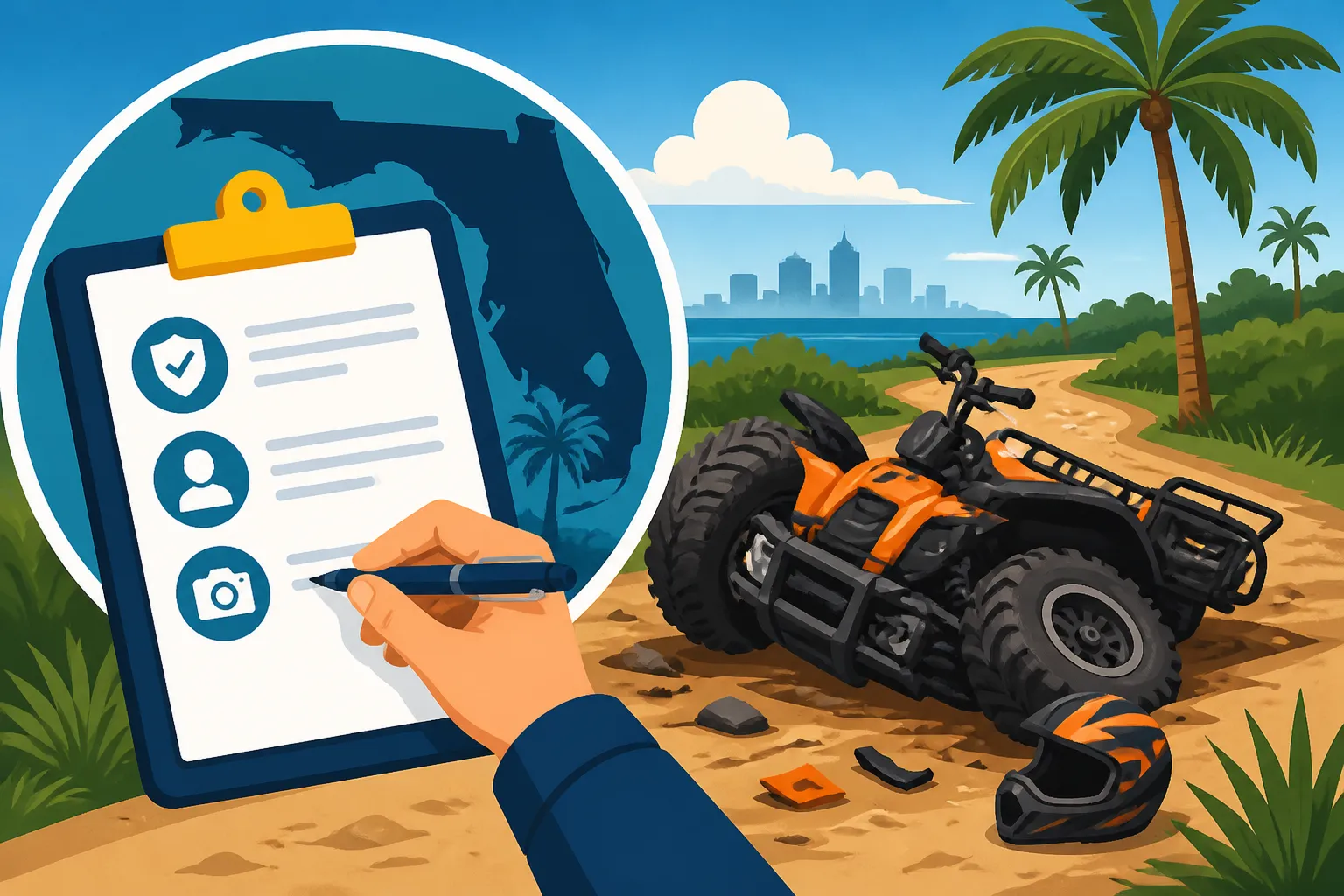
- Photos and Videos: Use your phone to take numerous photos and videos of the accident scene. Capture the positions of the ATVs, any damage to the machines (including specific parts, even aftermarket ones from companies like SuperATV), tire marks, road or trail conditions, weather, and any visible injuries. The more visual evidence, the better.
- Location Details: Note the exact location of the accident. If on a trail, look for mile markers, trail names, or any distinctive landmarks. If on a road, record street names, intersections, and nearby addresses.
- Time and Date: Make a note of the precise date and time the accident occurred.
Notifying Law Enforcement or Emergency Services
Deciding when and how to notify authorities is a key part of responding to an ATV accident. As discussed, if there's significant injury, death, or property damage exceeding Florida's threshold (typically $500), you are legally required to notify law enforcement. In these situations, calling 911 is the appropriate first step. They will dispatch emergency medical services and law enforcement to the scene. Be prepared to give them your location, a brief description of what happened, and information about any injuries.
For less severe incidents that still meet the reporting criteria, or if you're unsure, you can often call the non-emergency number for the local sheriff's office or the Florida Highway Patrol. They can advise you on whether an officer needs to respond or if you can file a report yourself later. For accidents occurring within specific parks or state forests, you might also need to notify park rangers or forest service personnel, who may have their own reporting protocols in addition to state law enforcement. Understanding [Florida Sheriff Enforcement of ATV Road Rules] can give you an idea of who might respond in your specific area.
The Official Reporting Process in Florida
Once the immediate aftermath of an ATV accident has been handled, the official reporting process kicks in. This typically involves forms, deadlines, and understanding what happens once your report is on file. It's not always as straightforward as reporting a car accident, so knowing the specifics can help.
Filling Out the Necessary Forms
If law enforcement responds to your accident, they will typically complete a Florida Traffic Crash Report (HSMV 90010S or similar). This is the official document that details the incident, including parties involved, vehicles, injuries, and a narrative of what occurred. It's crucial that you cooperate fully with the investigating officer, providing accurate and truthful information. You'll want to get a copy of this report number, as it's vital for any subsequent insurance claims.
However, if law enforcement doesn't respond to an accident that meets the reporting criteria (for example, on private property where authorities were not called, but significant damage or injury occurred), you, as the operator, may still be legally required to file a report with the Florida Highway Safety and Motor Vehicles (FLHSMV) within a specific timeframe. This usually involves filling out a "Driver's Report of Traffic Crash" form. These forms require detailed information about all parties, vehicles (including VIN, make, model, year – which can be cross-referenced with your [What an OHV Title Proves in a Theft Claim]), insurance, and a description of the accident. Ensuring accuracy here is critical, as this document becomes part of the official record.
Deadlines for Submitting a Report
Florida law generally requires accidents that meet the reporting criteria to be reported within a certain timeframe. If law enforcement investigates at the scene and files a report, your part in the initial reporting is largely done. However, if no officer responds to an accident that should have been reported, the involved parties (usually the drivers/operators) are typically given a short window, often around 10 days, to submit their own written report to the FLHSMV.
Missing this deadline can lead to consequences, including potential suspension of your driving privileges (even if it's for an OHV incident) or other penalties. It's a serious matter, and even if you think the damage is minor, if it's close to the $500 threshold or someone mentions pain, it's always safer to err on the side of caution and ensure a report is filed. Checking the current FLHSMV guidelines for off-highway vehicles is always recommended to ensure you're up-to-date on any specific deadlines.
What Happens After a Report is Filed
Once an official accident report is filed, several things can happen, depending on the severity and nature of the incident.
- Insurance Claims: This is often the immediate next step. You or the other party will notify your respective insurance companies. The accident report serves as the primary document for their investigation, helping them determine fault and process claims for vehicle damage, medical expenses, and other losses. If your ATV was equipped with quality aftermarket parts, perhaps from SuperATV, make sure to detail any damage to those components as well, as their replacement cost can add up quickly.
- Investigations: For serious injuries or fatalities, law enforcement or other agencies (like the Florida Fish and Wildlife Conservation Commission if the accident occurred on certain public lands) may conduct a more thorough investigation. This could involve interviews, scene reconstruction, and technical analysis.
- Legal Implications: Depending on fault and the extent of damages or injuries, there could be legal implications. This might include civil lawsuits for personal injury or property damage. Additionally, if the accident involved violations of [Florida Penalties for Illegal ATV Road Riding] or other statutes, criminal charges could be filed.
- Driver Record: While ATVs typically don't involve traditional driver's licenses, serious incidents can sometimes impact your overall driving record or privilege to operate certain vehicles, especially if gross negligence or impairment was involved.
Common Misconceptions and Key Considerations
When dealing with an ATV accident in Florida, there are several nuances and common misunderstandings that riders often encounter. Being prepared for these can make the process smoother and help you protect your interests.
"It's Just an ATV, Not a Car"
One of the most persistent misconceptions among ATV riders is that accidents involving these machines are somehow less serious or subject to fewer regulations than those involving cars. This couldn't be further from the truth, especially when operating on public lands or encountering traditional motor vehicles. In many critical aspects, particularly regarding accident reporting and liability, Florida law treats ATVs similarly to other motor vehicles, especially if they are involved in incidents on designated public roadways or trails. This means that an ATV vs. car collision on a dirt road, for instance, will be handled with the same gravity as two cars colliding.
The consequences of an ATV accident can be just as devastating, if not more so, due to the lack of occupant protection. Serious injuries, extensive property damage, and even fatalities are unfortunately not uncommon. Therefore, approaching an ATV accident with the mindset that "it's just an ATV" is a dangerous oversight. Always assume that the same level of responsibility and adherence to reporting procedures applies, particularly if you are riding where [Florida ATV Road Rules: Where You Can Legally Ride] are in effect. Your machine might be nimble, but the legal framework surrounding its operation in an accident scenario is robust.
Insurance and Liability
Accident reports are the bedrock of any insurance claim. Without a properly filed report, insurance companies may deny coverage or significantly delay processing your claim. After an accident, your insurance company will use the official report to determine who was at fault and what damages they are responsible for covering. If you have comprehensive or collision coverage on your ATV, or if you carry specific [Does Florida Require ATV Insurance for Road Use?] for such vehicles, this report is your gateway to getting your machine repaired or replaced, and your medical bills covered.
Liability is a critical component here. If you are found to be at fault for an accident, you could be held financially responsible for the other party's medical bills, property damage, and other losses. This is where liability insurance becomes invaluable. Conversely, if another party caused the accident, their insurance should cover your damages. Detailed documentation, including the official report, witness statements, and photos, provides the necessary evidence to support your claim and protect you from unwarranted liability. For example, if you've invested in a robust suspension system or custom roll cage from SuperATV, you'll want that damage properly documented to ensure its replacement value is recognized by the insurance adjuster.
Avoiding Legal Trouble
Failing to report an ATV accident in Florida when legally required can lead to significant legal trouble. This isn't just about insurance; it can involve citations, fines, and even criminal charges depending on the severity of the oversight. For instance, leaving the scene of an accident where injuries or significant property damage occurred is a serious offense, similar to a hit-and-run in a car. Even if you initially think the incident is minor and no one is hurt, ignoring reporting duties can escalate a simple mishap into a legal nightmare.
Beyond reporting, ensure you are always riding legally and safely. Familiarize yourself with regulations such as [Florida Rules for Riding Two Up on a Quad] if you carry passengers, and ensure your machine is in good working order. Adhering to all safety protocols and legal requirements proactively reduces your risk of an accident and minimizes potential legal exposure should one occur. When in doubt, always consult with law enforcement or a legal professional after an accident to ensure you are meeting all your obligations and protecting your rights.
| Accident Type | Location | Injury/Damage Threshold | Reporting Likelihood/Requirement |
|---|---|---|---|
| Single ATV, minor tip | Private Land | Minor scrapes, no significant injury/damage | Not legally required, but wise for personal records |
| ATV vs. ATV collision | Public Trail | Any injury, over $500 property damage, or fatality | Legally required to notify law enforcement |
| ATV vs. Car | Unpaved Roadway | Any injury, over $500 property damage (combined), or fatality | Legally required to notify law enforcement (treated like a standard vehicle accident) |
| ATV, serious injury | Private Land | Significant injury requiring medical attention | Strongly recommended to call 911; law enforcement may investigate due to injury severity |
| ATV, damage to property | Public Land/Trail | Damage to public land features (signs, fences, etc.) | Legally required if damage exceeds minimal threshold or impacts safety; official report likely |
Disclaimer
This article is for general informational purposes only and does not constitute professional advice. Laws, prices and regulations vary by location and change over time. Consult a qualified professional for guidance on your specific situation.