Power Line Corridors and Florida Riding Access
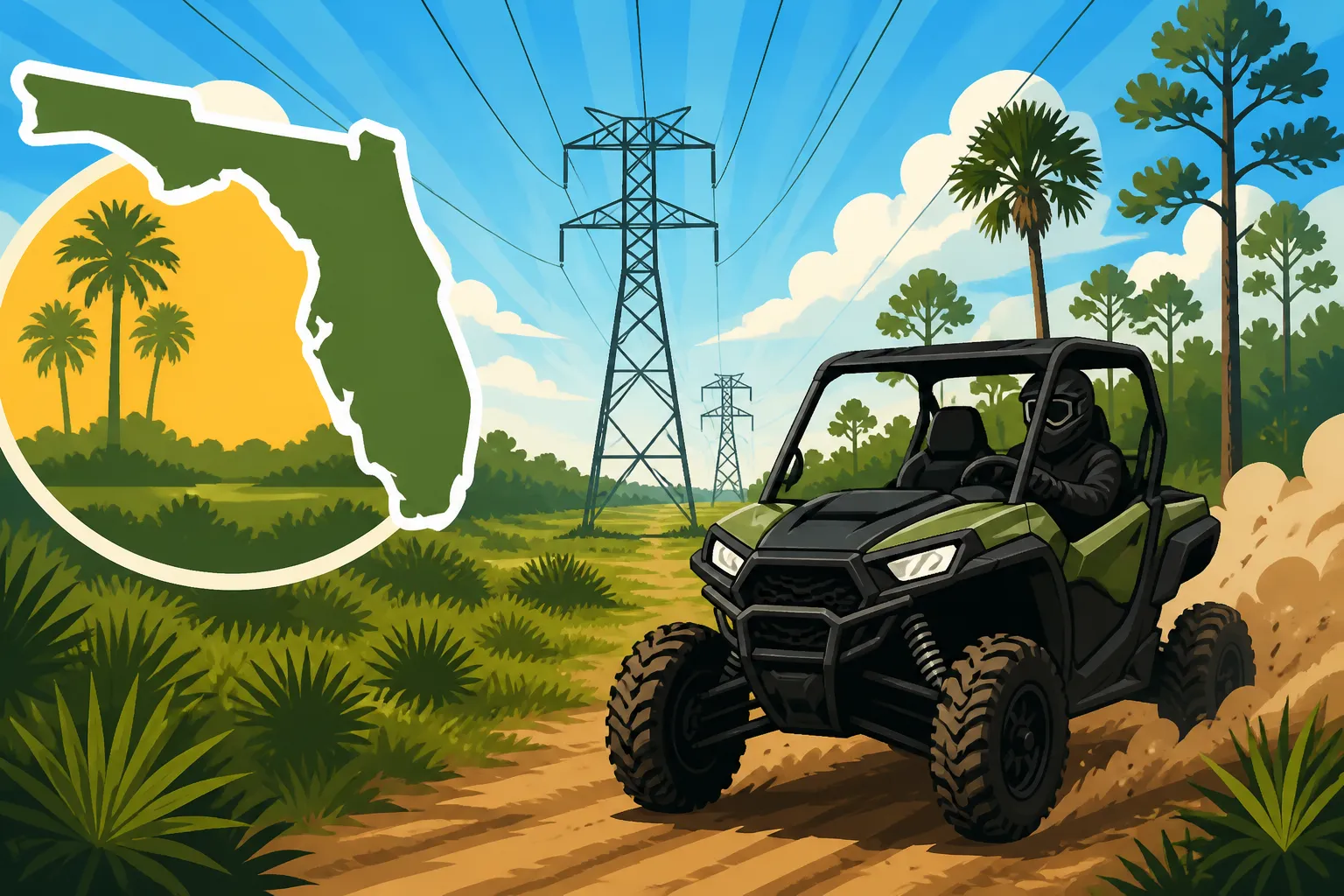
For many ATV and UTV enthusiasts in Florida, those sprawling power line corridors can look like an open invitation to adventure. They’re often cleared, unpaved, and stretch for miles, offering what seems like a perfect, ready-made trail system right in our backyard. But here’s the rub: what looks like a wide-open path is actually a complex legal landscape. Riding on these utility easements without proper understanding can quickly turn a fun day into a costly mistake, leading to trespassing charges, fines, or even vehicle impoundment. This guide is dedicated to clearing up the confusion, helping you understand the rules, risks, and responsible ways to enjoy off-road riding in Florida, steering clear of the common pitfalls associated with power line corridors.
Understanding Power Line Corridors in Florida
Before we dive into the nitty-gritty of riding, it’s essential to understand exactly what a power line corridor is and who controls it. This isn't just a patch of cleared land; it's a critical part of our state's infrastructure with specific legal definitions and ownership structures.
What Exactly Are Power Line Corridors?
Imagine a long, narrow strip of land, often kept clear of tall trees and major obstructions, stretching across the Florida landscape. That's typically a power line corridor. These strips are essentially easements granted to utility companies. An easement is a legal right to use another person's property for a specific purpose. In this case, the purpose is to construct, maintain, and operate electrical transmission lines.
Because utility companies need clear access to these lines for maintenance, repairs, and inspections, they often keep the vegetation low and the path relatively open. This constant clearing, coupled with the sheer length of these corridors, is precisely what makes them so appealing to ATV and UTV riders looking for an expansive place to explore. They often cut through various types of terrain, from sandy scrub to more marshy areas, presenting diverse riding conditions. However, it’s crucial to remember that their appearance as "open" land doesn't automatically translate to public access for recreational riding.
Who Owns and Manages These Easements?
This is where the common misconception often arises. While a utility company, like Florida Power & Light or Duke Energy, holds an easement right over the land, they typically do not own the land itself. The actual ownership of the land beneath the power lines usually remains with the original private landowner – whether that's an individual, a corporation, or sometimes a public entity like a county or the state.
The utility company's rights are quite specific: they have the right to build and maintain their infrastructure, and to access it as needed. These rights generally do not include granting permission for the public to use the corridor for recreational activities like ATV or UTV riding. Their focus is on ensuring reliable power delivery and the safety of their lines, not on creating public recreation trails. This means that even if a power company doesn't explicitly tell you not to ride there, you still need permission from the actual landowner who holds title to the property. This distinction is paramount in Florida, where property rights are taken very seriously.
The Legalities of Riding ATVs and UTVs on Power Line Corridors in Florida
The legal landscape surrounding power line corridors and off-road vehicles can be incredibly murky, leading many riders to inadvertently break the law. Understanding these legalities is your first defense against potential trouble.
The Crucial Distinction: Easement vs. Public Access
It's a common and understandable assumption: "If the power company clears it, and it's not fenced, it must be okay to ride." Unfortunately, this couldn't be further from the truth in most cases. An easement, as discussed, grants a specific right to the utility company. It does not magically transform private land into public riding trails. The underlying landowner still owns the property and, therefore, controls who can access it.
Think of it like this: a utility company might have an easement to run a pipeline across your neighbor's backyard, but that doesn't mean you can walk across that strip of their yard whenever you please. Your neighbor still owns the property and can restrict access. The same principle applies to power line corridors. Without explicit, documented permission from the actual landowner, you are generally trespassing. This nuance is often where riders encounter significant frustrations and legal trouble. Many folks don't even know how to begin finding out who owns the specific parcel of land under a stretch of power line, which makes seeking permission nearly impossible for casual riders. This is where [Florida Trespass Law for ATV Riders] becomes highly relevant.
Florida Law and Power Line Access
Florida doesn't have a specific law that broadly opens or closes all power line corridors to ATV and UTV riding. Instead, general property and trespass laws apply. If the land under the power lines is privately owned, you absolutely need the owner's permission to ride there. Even if a corridor crosses what appears to be "public" land (like state or county property), it doesn't automatically mean recreational riding is permitted. Those lands will have their own specific regulations regarding off-highway vehicles, and riding is typically restricted to designated trails.
The challenge for riders is that these corridors often span multiple parcels, meaning you might need permission from several different landowners for one continuous stretch. It’s a logistical nightmare, making legal access highly improbable for most general riding. Enforcement can vary, with some areas being heavily patrolled by local law enforcement or utility company security, while others are rarely checked. But relying on lack of enforcement is a risky gamble. As a rider, you are responsible for knowing where you can and cannot legally ride. [What a Landowner Can Do About Trespassing Riders] makes it clear that landowners have significant rights to protect their property.
Potential Consequences of Unauthorized Riding
Riding on power line corridors without permission can lead to a host of unpleasant consequences that far outweigh the thrill of an impromptu ride.
- Trespassing Charges: This is the most common outcome. Trespassing can range from a second-degree misdemeanor to a felony, depending on the circumstances, and can lead to significant fines, court costs, and even jail time. A criminal record is something no one wants, especially for recreational activity.
- Vehicle Impoundment: Law enforcement has the authority to seize and impound your ATV or UTV if you're caught trespassing. Getting your machine back can be an expensive, time-consuming process involving impound fees, storage charges, and potentially legal fees, easily running into hundreds or even thousands of dollars.
- Damage Liability: Even if you don't intend to, riding off-road can cause damage. You could accidentally damage vegetation, fences, irrigation systems, or even utility equipment. If this happens, you could be held financially responsible for the repairs, which could be substantial. Moreover, there are inherent dangers in these corridors like unmarked utility poles, guy wires, or sudden dips and changes in terrain that could lead to an accident, causing damage to your machine or injury to yourself.
- Safety Hazards: Beyond the legal risks, power line corridors themselves pose unique safety hazards. You could encounter live electrical equipment, underground cables, or even utility crews working with heavy machinery. These areas are not designed for public recreation and may lack proper signage for hazards that could be critical for an off-road rider.
Navigating Access: Permissions, Risks, and Best Practices
Given the complexities, how does a responsible rider even begin to think about legally accessing power line corridors, or should they? The answer leans heavily toward caution and due diligence.
How to Legally Ride a Power Line Corridor
The path to legally riding a power line corridor is narrow and challenging. It almost always involves direct engagement with property owners.
- Identify the Landowner: This is the absolute first step, and often the most difficult. You'll need to use your county's property appraiser's website or geographic information system (GIS) maps to identify the specific parcels of land that the corridor crosses. This can be a patchwork, as one corridor might traverse dozens of different properties. You'll then need to find contact information for each owner.
- Obtain Explicit Written Permission: If you manage to identify the landowners, you must contact them and obtain clear, written permission. Verbal permission is often insufficient and can lead to disputes later. A simple signed letter stating that you, and perhaps your group, have permission to ride on their specific property on certain dates, can be a lifesaver. Without it, you're always at risk.
- Check with the Utility Company: While they don't own the land, utility companies sometimes have specific policies or may even lease land for other uses that do permit some form of recreational access. This is rare, but it's worth a phone call. However, their primary concern will always be the safety and maintenance of their lines, not facilitating recreational riding. Don't expect them to grant you sweeping access.
- Look for Designated Access: Very occasionally, a segment of a power line corridor might be officially designated as part of a public OHV trail system or might cross public land where riding is explicitly allowed. This is the exception, not the rule. If you find such a rare instance, it will be clearly marked, and you'll still need to follow all applicable rules, including having your vehicle properly titled as required by [Florida's Off-Highway Vehicle Title Law Explained] and carrying any necessary permits.
Risks Beyond Legal Ramifications
Even if you somehow manage to secure legal access, riding power line corridors comes with unique environmental and operational risks.
- Environmental Damage: Power line corridors often cut through sensitive habitats. Riding off an established path (if one even exists) or through wetlands can cause significant environmental damage. This can lead to ecological fines, which can be even steeper than trespassing penalties, and harms the reputation of all responsible riders.
- Maintenance Operations: Utility crews are constantly working on these corridors. They use heavy equipment, dig trenches, and sometimes conduct controlled burns. Riders can easily stumble into an active work zone, creating dangerous situations for themselves and the workers. These corridors are a workplace first and foremost.
- Vandalism and Illegal Dumping: Sadly, remote stretches of land, including some power line corridors, are sometimes used for illegal activities like dumping trash or even more serious crimes. This can make them less safe for recreational users, as you might encounter unexpected debris or other dangerous situations.
- Equipment Challenges: The terrain under power lines can be highly unpredictable. One moment you might be on firm, sandy soil, and the next you could be in deep mud, over loose rocks, or facing steep, unmaintained embankments. It’s not uncommon to find areas with deep ruts from utility vehicles or sudden drops. If you do find legal access, ensure your machine is equipped for such varied and potentially harsh conditions. Upgrading components like suspension, tires, or skid plates from a brand like SuperATV might be essential to handle this kind of unpredictable terrain safely and reliably.
Best Practices for Responsible Riding
To avoid trouble and ensure the longevity of our sport, responsible riding is key.
- Assume No Access Until Proven Otherwise: This is the golden rule. Always operate under the assumption that a power line corridor is off-limits unless you have explicit, written proof to the contrary.
- Do Your Homework: Never just "wing it." Before you even consider riding a corridor, invest the time to research property ownership and local regulations. A quick check of county GIS maps can save you a world of trouble.
- Stay on Established Trails: If you are incredibly lucky and find a corridor segment that is part of a legally designated OHV trail, stay on the marked trail. Deviating from it can still lead to trespassing if you cross onto adjacent private property.
- Respect Private Property Signs: "No Trespassing" signs are not suggestions; they are legal warnings. If you see one, turn around immediately. Ignoring these signs is a direct path to legal repercussions.
- Carry Proof of Ownership and Any Permits: When you're riding anywhere off-road in Florida, it's wise to carry proof of ownership for your ATV or UTV. For public land riding, which is the trigger for needing a title, you'll want to have your [Riding Public Land as the Trigger for a Title] documentation handy. If you have secured special permission to ride a corridor, carry that written permission with you at all times. This can make all the difference during a law enforcement encounter.
Where to Ride Legally in Florida: Alternatives to Corridors
The good news is that Florida offers a fantastic array of legal, safe, and exciting places to ride your ATV or UTV, completely sidestepping the headaches and risks associated with power line corridors. These designated areas are designed for off-road fun and are managed to ensure a great experience for everyone.
Designated Public Riding Areas
Florida is home to several well-maintained public riding areas that welcome ATVs and UTVs. These are the places where you can ride with peace of mind, knowing you’re completely legal and supported.
- Florida's State Forests: The Florida Forest Service manages several excellent OHV areas, including the [Croom Motorcycle Area: Florida's Biggest OHV Park] within the Withlacoochee State Forest, and the [Clear Creek OHV Area at Blackwater River State Forest] in the Panhandle. These areas offer miles of varied trails, from tight woods to open sand.
- National Forests: The Ocala National Forest is another gem, boasting extensive ATV and UTV trail systems like the [Ocala National Forest ATV Trails in Florida]. These national forest lands provide a vast natural playground, offering a different kind of riding experience with beautiful scenery.
- Permits and Rules: To ride in these public areas, you'll typically need an OHV permit or pass. This is where [Florida OHV Permits: What You Need Before You Ride] comes into play. You might need a [Florida National Forest OHV Pass Prices] for national forest land or a [Florida State Forest OHV Day Use and Annual Passes] for state forest areas. These passes are affordable and directly support the maintenance and improvement of the trails you enjoy. These areas also have clear rules about helmets, passenger limits, and staying on marked trails, often enforced by rangers who perform [Florida Ranger Checks at a Trailhead].
Private Parks and Mudding Resorts
For riders looking for a specific type of off-road adventure, especially mudding or more extreme challenges, Florida's private parks are a fantastic option.
- Specialized Riding: These parks are designed specifically for recreational off-roading. Places like [Hog Waller ATV Resort in Palatka, Florida] and [Redneck Mud Park Near Punta Gorda, Florida] are legendary for their massive mud pits, obstacle courses, and vibrant event calendars. They offer a controlled environment where you can truly test your machine's limits.
- Amenities: Private parks often come with amenities not found in remote corridors, such as campgrounds, washdown stations, concessions, and sometimes even cabins. They usually charge an entry fee, which contributes to maintaining the park, ensuring safety, and providing an exciting experience.
- Equipment Focus: If you're tackling serious mud or challenging obstacles at these parks, having robust accessories from a brand like SuperATV can make a huge difference. Heavy-duty axles, lift kits, snorkel systems, or durable winches are often put to the test in these environments, and investing in quality parts ensures your machine can handle the abuse and get you through the toughest spots. These parks are a great place to show off your custom builds!
Private Land with Permission
The most straightforward and least complicated form of legal off-road access is riding on private land that you own, or with explicit permission from the landowner.
- Direct Access: If you or a friend own a substantial piece of property, particularly agricultural land or large acreage, you have the ultimate freedom to ride as you please (while still respecting local noise ordinances and safety). This eliminates all the guesswork of public or easement access.
- Formal Agreements: Sometimes, landowners might allow groups or clubs to ride on their property under a formal agreement or lease. These arrangements provide clear boundaries and expectations for all parties involved.
Why It's Better to Stick to Designated Areas
Choosing designated trails and private parks over questionable power line corridors isn't just about avoiding legal trouble; it's about supporting the sport and ensuring its future.
- Clear Legality: You won't have to worry about trespassing, fines, or impoundment. Your focus can be entirely on enjoying the ride.
- Enhanced Safety: Designated trails are typically mapped, maintained, and often patrolled. Emergency services know where to find you if something goes wrong. Hidden hazards are usually marked or mitigated.
- Community and Support: Riding in official areas connects you with a community of fellow enthusiasts. Your permit fees and park entries contribute directly to maintaining and expanding these precious riding opportunities. It's a way to give back to the sport we all love.
- Reduced Risk of Fines: The cost of an annual pass or a day-use fee at a public or private park is a fraction of what a trespassing ticket, impoundment fees, or legal battles would cost you. It's a smart investment in your peace of mind.
Here’s a quick overview contrasting power line corridors with designated OHV parks:
| Feature | Power Line Corridors (Generally) | Designated OHV Parks (e.g., Croom, Hog Waller) |
|---|---|---|
| Legal Access | Highly complex; requires explicit, written landowner permission for each parcel. High risk of trespassing. | Clearly designated, public or private access with permits/fees. No ambiguity. |
| Ownership/Management | Utility easement over private land; managed for utility maintenance, not public recreation. | State/Federal land or private enterprise, specifically managed and maintained for OHV recreation. |
| Safety Hazards | Unmarked obstacles, utility equipment, low-hanging lines, unknown terrain, active maintenance, exposure to high voltage. | Trails are typically marked, hazards mitigated, emergency services aware, rules enforced for safety. |
| Environmental Impact | High risk of damaging unmanaged land, leading to ecological fines and damage to natural habitats. | Managed to minimize impact; strict "stay on trail" rules and environmental protections in place. |
| Cost | "Free" if legal access is obtained, but comes with a high risk of costly fines and impoundment. | Day use or annual passes/fees, which directly support trail maintenance, facilities, and staff. |
| Amenities | None (no restrooms, dedicated parking, maps, emergency services). | Parking, restrooms, maps, camping, wash stations, concessions, and on-site staff. |
| Law Enforcement/Staff | Active enforcement for trespass by local LEOs and utility security. | Patrols ensure safety, adherence to park rules, and provide assistance if needed. |
Disclaimer
This article is for general informational purposes only and does not constitute professional advice. Laws, prices and regulations vary by location and change over time. Consult a qualified professional for guidance on your specific situation.