Signed ATV Roads and How to Spot One
Florida's vast, beautiful landscapes beckon ATV and UTV riders, offering miles of potential adventure. Yet, a common frustration many riders face is the sheer confusion surrounding where they can legally ride their machines on public roads. It's not a free-for-all, nor is it a complete ban in every corner of the state. This guide will help you understand the specific nuances of Florida's signed ATV roads and, more importantly, how to identify them, so you can ride confidently and within the bounds of the law.
Navigating the Maze of Florida ATV Road Rules
For anyone new to the Florida ATV scene, or even seasoned riders trying to keep up with local ordinances, understanding where you can legally ride your off-highway vehicle (OHV) can feel like deciphering ancient hieroglyphs. The state laws provide a framework, but the real decisions often boil down to individual county and municipal regulations. It's a patchwork quilt of rules, and what's permitted in Putnam County might be strictly forbidden just over the line in Marion County. This inconsistency is a major source of headaches for riders who just want to enjoy their machines without fear of a citation.
The "Unpaved Road" Exception: Understanding the State Statute
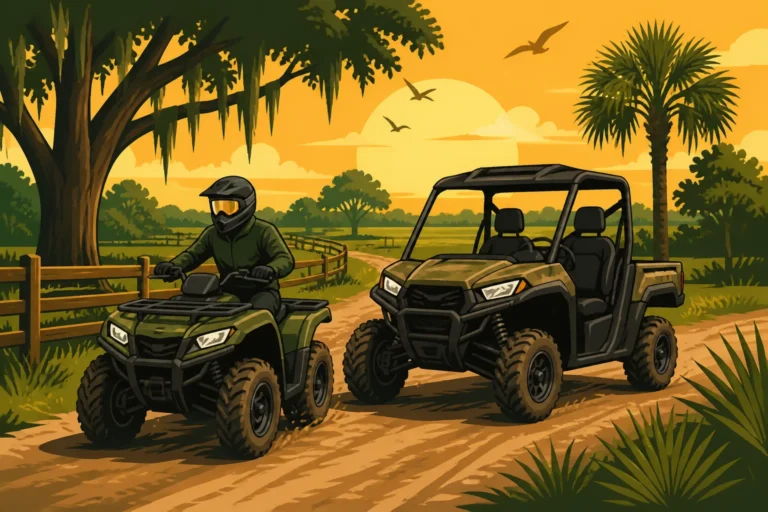
At the heart of Florida's ATV road laws is a specific provision within Florida Statute 316.2123, which essentially permits the operation of ATVs and UTVs on unpaved roads owned and maintained by the county or municipality. This is a critical distinction: it's not about paved roads, highways, or even most designated bike paths. It's specifically for those often-bumpy, dusty, or sandy unpaved roads that crisscross many rural Florida communities. The statute sets the groundwork, stating that an OHV can be operated on such roads during daylight hours by a licensed driver, and only if the county or municipality hasn't specifically prohibited it. This "unless prohibited" clause is where the plot thickens and local control truly takes center stage. This is a very different set of rules than what applies to highway-legal vehicles, as described in [Are ATVs Street Legal in Florida?].
What does "unpaved" truly mean in this context? Think about those sand and gravel roads that lead to rural properties, ranches, or out-of-the-way fishing spots. These are the kinds of roads the statute envisions. It's crucial to remember that simply because a road is unpaved doesn't automatically make it an "ATV road." The county still has the power to say "no," and they often do, either through a blanket ban or by simply not designating any roads for OHV use. So, while the state opens the door, the county holds the key.
Why County Decisions Matter: Local Control and Variability
Because Florida law empowers counties and municipalities to make the final call, the landscape of ATV-friendly roads varies wildly. Some counties have embraced the idea, seeing it as a way to connect communities, support agricultural operations, or provide recreational access. Other counties, often those with denser populations, higher traffic volumes, or concerns about noise and safety, have chosen to ban OHVs from all public roads, paved or unpaved. This local control can be incredibly frustrating for riders, especially if they live near a county line or frequently travel with their machines. You might have a perfectly legal ride planned on an unpaved road in one county, only to inadvertently cross into another where the same type of road is off-limits. Understanding this hyper-local variability is the first step in avoiding potential legal trouble and is a common topic of discussion among riders, as explored in [Florida County ATV Opt-Outs: Why Rules Change at the Line].
This means that simply having a properly titled ATV, which is a requirement for riding on public land for Florida residents (and often for visitors as well, depending on the rules of the specific riding area), isn't enough. You also need to know the specific road rules for that particular piece of pavement-free asphalt. The responsibility falls squarely on the rider to research and understand these local ordinances before hitting the trail.
How Florida Counties Designate ATV-Friendly Roads
So, if counties are the gatekeepers, how exactly do they go about designating roads for ATV use? It's not a casual decision; it involves a formal process, public input, and official action. Knowing this process can help you understand why some roads are open and others are not, and how to potentially advocate for more ATV-friendly access in your area.
The County Commission's Role: Public Hearings and Ordinances
When a Florida county or municipality decides to open certain unpaved roads to ATVs, they do so through an official ordinance or resolution passed by their governing body – typically the County Commission. This isn't something that just happens overnight or by a single department. It involves a public process, which usually includes:
- Proposals and Research: County staff, often from the public works, planning, or sheriff's departments, might research specific roads, assess their suitability, and consider community impact.
- Public Hearings: Before an ordinance is passed, the County Commission will hold public hearings. This is where citizens, including ATV riders, local residents, and landowners, can voice their opinions, concerns, and support. These hearings are critical opportunities for the riding community to engage. Information about upcoming hearings is usually posted on the county's official website or in local newspapers.
- Ordinance Development and Vote: Based on input and research, a proposed ordinance is drafted. This document will specifically list the roads or areas where OHV operation is permitted, along with any conditions or restrictions (e.g., speed limits, times of operation). The County Commission then votes on this ordinance. Once passed, it becomes local law.
Without this formal process and a specific ordinance on the books, even an unpaved county road is generally off-limits for ATVs, despite the state statute's general allowance. It is the county's active decision to not prohibit by specifically permitting certain roads that makes the difference.
Identifying County-Designated Routes: Looking for Official Documentation
The best way to know if a county road is designated for ATV use isn't just to look for tracks or rely on hearsay; it's to consult official documentation. Here's how you can find this crucial information:
- County Websites: Most Florida counties have comprehensive websites. Look for sections related to "Ordinances," "County Code," "Public Works," "Sheriff's Office," or "Parks and Recreation." You might find a specific ordinance related to "Off-Highway Vehicles," "ATV Use," or "Road Use." Many counties also publish maps that delineate permitted OHV routes. For example, a quick search on the Hernando County website might reveal an ordinance or map listing specific roads in the area near the [Croom Motorcycle Area: Florida's Biggest OHV Park] that are open to OHVs.
- Clerk of Court's Office: The official repository for all county ordinances and resolutions is typically the Clerk of Court's office. You can often search their online database or visit in person.
- Local Law Enforcement: Your local Sheriff's Office or municipal police department can be a good resource. They are the ones who enforce these laws, so they should be able to provide accurate information about designated roads. However, always try to back up any verbal information with official written documentation.
- Local Riding Clubs: Connect with local ATV and UTV riding clubs. These groups often stay up-to-date on local regulations, attend public hearings, and can be invaluable sources of information on where it's legal to ride. They might even have maps or guides to designated local routes.
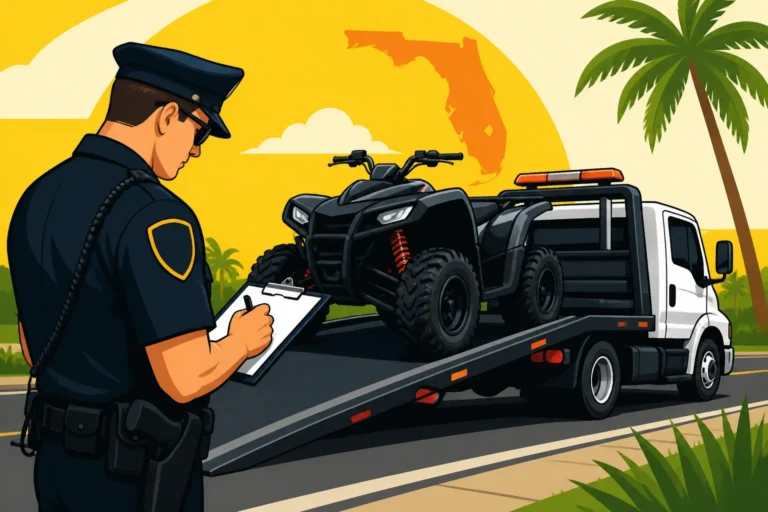
Relying on information from these official sources is paramount. Simply assuming a road is open because you've seen other riders on it is a risky gamble that could lead to fines or even impoundment of your machine, as discussed in [Florida ATV Impound After a Road Violation].
Spotting the Signs: What to Look For on an Approved ATV Road
Once you've done your homework and identified a county that does designate roads for ATV use, and perhaps even pinpointed specific road names, the next step is knowing what to look for when you're actually out there. This is where physical signs become your most important guide.
Official Signage: Types of Signs, Colors, Wording
Counties that designate roads for OHV use are typically required to post clear, unambiguous signage. This is for the safety of all road users and to ensure riders know where they can and cannot go. Here's what to look for:
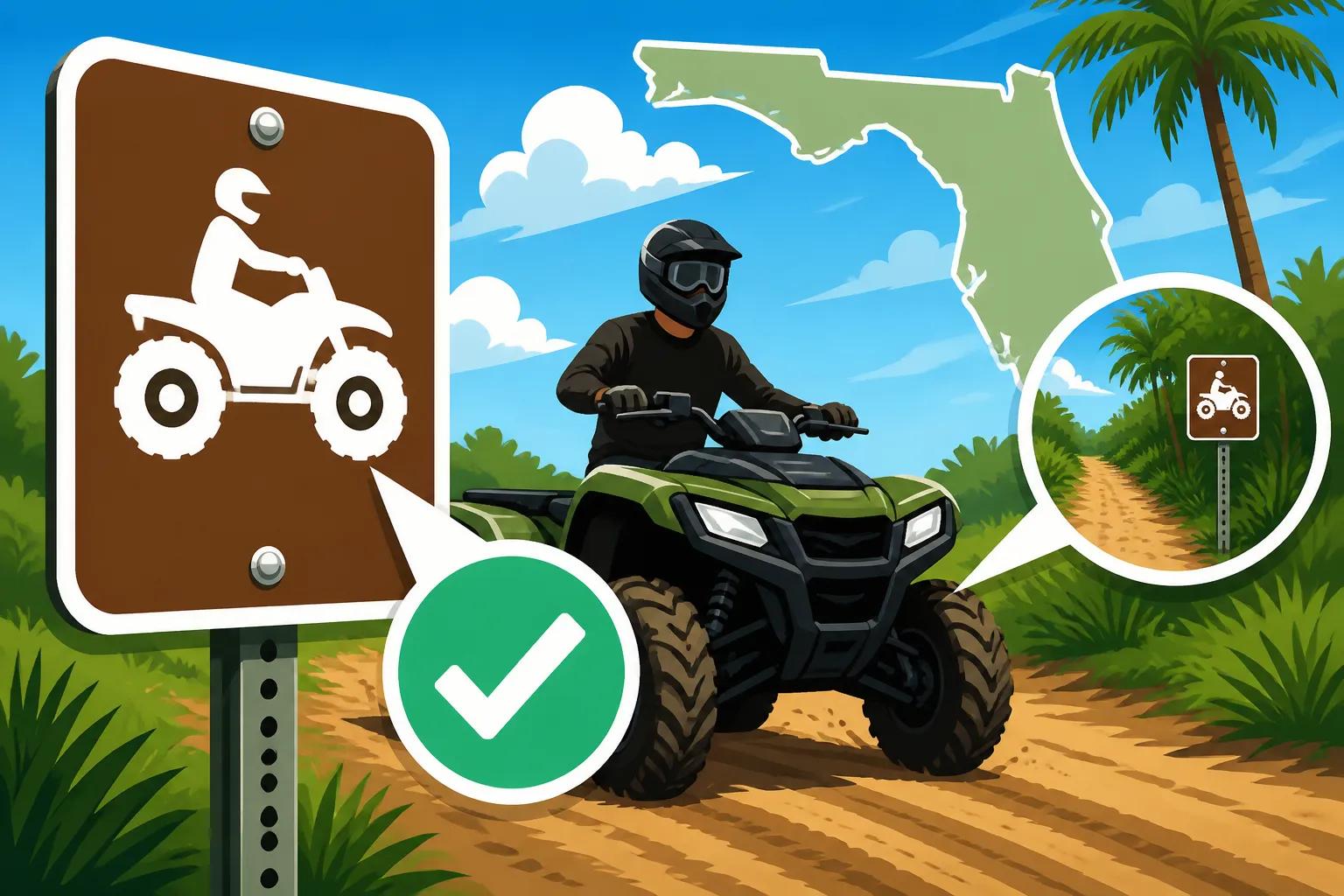
- "Shared Use" or "ATV Permitted" Signs: These are the most direct indicators. They often feature an ATV or UTV symbol and text explicitly stating that off-highway vehicles are allowed. They might also specify conditions, such as "Daylight Hours Only" or "Licensed Drivers Only." These signs are usually standard road signs, with clear, high-contrast lettering and symbols.
- Speed Limit Signs: Even on unpaved roads, specific speed limits will apply, and these limits are often lower for OHVs than for traditional vehicles, or the county might impose a blanket low speed limit for all vehicles on designated roads, as mentioned in [The 35 mph Posted Limit and Where It Applies]. Keep an eye out for these.
- Warning Signs: You might see signs warning other motorists to be aware of ATV traffic, especially in areas where these designated roads intersect with paved roads or residential areas. This helps to promote safety for everyone.
- Boundaries and Closures: Equally important are signs indicating where ATV use ends or where a road becomes prohibited. These might be "No OHV" signs, or signs indicating that the road beyond a certain point is no longer county-maintained or is privately owned. A good example might be a sign marking the boundary between a designated county road and a [Florida Water Management District Riding Permits] access road that requires a different permit.
Remember, the absence of a "No ATV" sign does not automatically mean ATVs are permitted. The presence of a positive "ATV Permitted" or "Shared Use" sign is what you're looking for. These signs are generally installed at the entry points of designated road sections and at regular intervals along their length, particularly after intersections. If you're unsure, it's always safer to turn around.
Road Characteristics: What Makes a Road "Unpaved" and Suitable
Beyond the official signs, the physical characteristics of the road itself can help you understand if you're on a potentially designated route. Florida law is very specific about "unpaved roads," but interpretation can vary slightly.
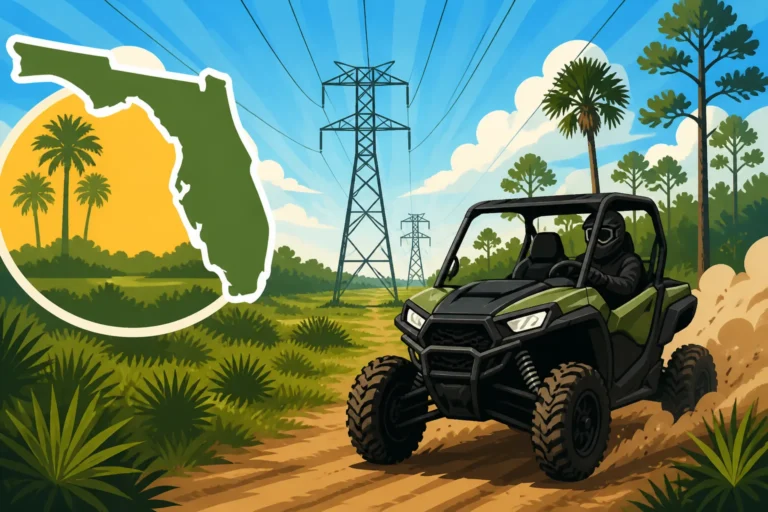
- Surface Material: The most obvious characteristic is the lack of asphalt or concrete. These roads will typically be composed of sand, shell rock, packed dirt, or gravel. Many are maintained by the county, meaning they might be graded periodically but are never surfaced with pavement. They're often prone to washouts and potholes, which is part of the off-road adventure, but also a reason many riders choose aftermarket upgrades like suspension components or stronger axles from companies like SuperATV to handle the rough terrain.
- Width and Condition: Designated unpaved roads are usually wide enough for two vehicles to pass comfortably, even if they are often single-lane in practice. They are generally not narrow trails or private driveways. Their condition might vary, from relatively smooth, well-maintained dirt roads to deeply rutted or sandy paths.
- Location: These roads are most commonly found in rural, agricultural, or less developed parts of the county. You're less likely to find designated ATV roads in dense suburban or urban areas, even if there are unpaved alleyways or service roads, due to population density and safety concerns. Look for them connecting ranches, farms, or leading to remote natural areas. The definition of [Unpaved Roadway: How the Statute Defines It] is key here.
It's also important to note that these designated unpaved roads are distinct from true off-road trails found in state forests or dedicated OHV parks like [Ocala National Forest ATV Trails in Florida]. While both offer off-pavement riding, the designated county roads are still considered public thoroughfares, even if they lack a paved surface, and require a different set of considerations and respect for other users.
Riding Signed ATV Roads: Responsibilities and Safety
Finding a signed ATV road is only half the battle; riding it responsibly and safely is just as crucial. Even on designated roads, specific state and local laws still apply, and your behavior can directly impact the future of ATV access in Florida.
Your Obligations as a Rider: Licenses, Helmets, and Other Rules
Just because a road is open to ATVs doesn't mean all other rules go out the window. Riders still have important obligations:
- Driver's License: On any public road, even an unpaved, designated one, the operator of the ATV must possess a valid driver's license. This means minors, even if they've completed an ATV safety course, cannot legally operate an ATV on these roads unless under specific, direct supervision conditions outlined by law, such as those described in [Minors Riding Roads Under Supervision in Florida].
- Daytime Hours Only: Florida law restricts ATV operation on public roads to daylight hours only. This means no night riding, even if your ATV has headlights.
- Helmets for Minors: Riders under the age of 16 are generally required to wear a helmet that meets USDOT standards. While adults are not always mandated to wear helmets on private land, the rules can be different on public roads, even unpaved ones. Always check local ordinances. You can read more about this in [Florida ATV Helmet Law for Riders Under 16].
- Eye Protection: Young riders are also required to use eye protection.
- Passengers: If you're riding a two-up ATV, ensure it's designed for a passenger and that your passenger also adheres to age and safety equipment requirements, such as those covered in [Florida ATV Passenger Rules]. Single-rider ATVs are not legally allowed to carry passengers on public roads.
- Speed Limits: Obey all posted speed limits. If none are posted, default to a safe and reasonable speed for the conditions.
- Right of Way: Yield to all other traffic, including cars, trucks, and pedestrians. Designated ATV roads are often shared-use, and ATVs are generally expected to defer to other vehicle types.
- Environmental Responsibility: Stay on the designated road surface. Do not venture off into private property, conservation areas, or wetlands. Respect private land and ensure you have [Written Permission Slips Worth Carrying] if you plan to access private property from a designated road.
Failing to adhere to these rules can result in citations, fines, and may jeopardize future ATV access on public roads. Law enforcement, such as [What Florida Deputies Check at a Roadside Stop], are empowered to enforce these rules just as they would for any other vehicle.
Equipment Considerations for Designated Roads: How Accessories Can Help
While a Florida ATV doesn't need to meet full street-legal requirements to ride on designated unpaved roads, certain equipment can enhance safety and compliance. Many riders choose to equip their machines with accessories from companies like SuperATV to make their experience safer and more enjoyable, especially when sharing roads with other vehicles.
Here's what to consider:
- Lighting: Even though riding is limited to daylight hours, functional headlights and taillights are essential for visibility, especially in dusty conditions or at dawn/dusk. Ensure your existing lights are in good working order.
- Mirrors: While not universally mandated for ATVs on unpaved county roads, side mirrors can significantly improve your awareness of traffic approaching from behind. They are a common feature on many UTVs and can be a smart addition to an ATV.
- Horn: A working horn can be invaluable for alerting other vehicles or pedestrians to your presence, particularly around blind corners or crests.
- Spark Arrestor: All ATVs operating on public lands (including designated county roads that may border or lead to such lands) are generally required to have a U.S. Forest Service-approved spark arrestor to prevent wildfires. This is a critical safety item.
- Tires: While your knobby off-road tires are perfect for the dirt, consider their impact if you have to briefly traverse a paved section to get to a designated unpaved road. SuperATV, for instance, offers a range of tires suitable for varying terrain, including those that might offer a smoother ride and better longevity if you're frequently on harder-packed dirt roads.
- Safety Gear: Always wear appropriate safety gear, including a helmet (if required or desired), eye protection, gloves, long pants, and sturdy footwear.
Equipping your ATV or UTV thoughtfully for designated road use is part of being a responsible rider. It's about maximizing safety for yourself and others, and ensuring your machine is ready for whatever the Florida terrain throws your way, even on a public road.
Disclaimer
This article is for general informational purposes only and does not constitute professional advice. Laws, prices and regulations vary by location and change over time. Consult a qualified professional for guidance on your specific situation.