Florida ATV Impound After a Road Violation
Riding your ATV on Florida's roads can feel like a great way to connect trails or simply enjoy the freedom of the open air, but unfortunately, it often comes with a hefty price tag and a lot of headaches if you're not careful. One of the most frustrating and costly consequences of a road violation can be the impoundment of your ATV, leaving you without your machine and facing a mountain of fees and bureaucracy. This guide will walk you through why your ATV might get impounded in Florida, what to expect if it does, and most importantly, how to avoid this common and painful situation altogether.
Understanding Florida's ATV Road Rules and Why They Matter
Florida has very specific rules about where you can and cannot ride an ATV, and these regulations are the foundation for why impoundment can happen. It's not just about getting a ticket; it's about operating a vehicle in a place it's not legally permitted, which can lead to it being removed from the roadway entirely.
The Core Restriction: No Paved Roads (Mostly)
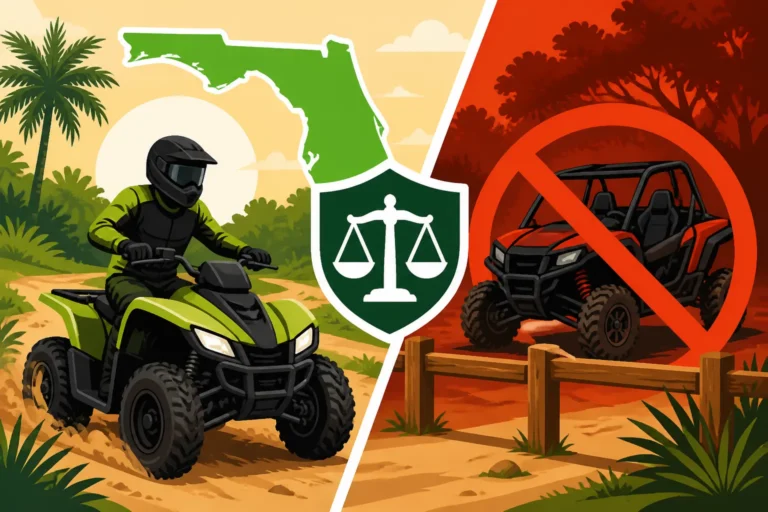
Let's cut right to it: in Florida, ATVs are generally not allowed on paved public roads. This isn't just a suggestion; it's enshrined in state law. The statutes clearly define an ATV as an off-highway vehicle, designed for off-road use, not for navigating the complexities of public highways, streets, or even most paved shoulders. You might see people doing it, but that doesn't make it legal or safe. The state considers ATVs fundamentally different from cars, trucks, or even street-legal golf carts or low-speed vehicles (LSVs), which have different registration and equipment requirements. They lack the safety features, road-specific lighting, and stability needed for consistent on-road travel. This core restriction is the number one reason riders find themselves in trouble. If you're on a paved road, you're almost certainly breaking the law, and that immediately puts you at risk.
Limited Exceptions: Unpaved Roads and Agricultural Use
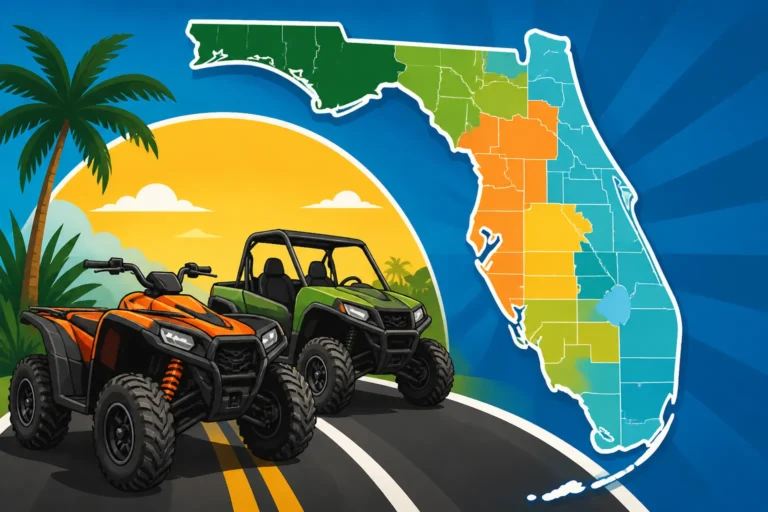
Now, there are a few very narrow exceptions to the "no paved roads" rule, and it's crucial to understand them thoroughly, as misinterpreting them can lead directly to a violation. First, some counties in Florida might have specific ordinances that designate certain unpaved roads where ATVs are allowed to operate. These are typically rural, low-traffic dirt or shell roads, and even then, there are usually specific rules about speed limits, time of day, and rider age. These exceptions are county-specific, so what's okay in Putnam County might be strictly forbidden in Collier County. You cannot assume an unpaved road is fair game just because it's not paved.
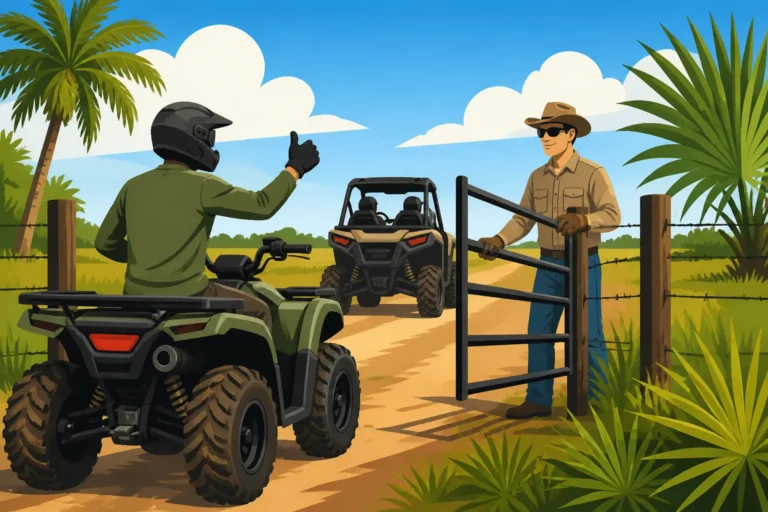
Beyond that, Florida law allows ATVs to be used on public roads for specific agricultural or construction purposes, but only if they are being operated by an authorized individual for the explicit purpose of conducting business related to farming or construction. This isn't a loophole for joyriding to the feed store; it's a functional exception for specific work-related tasks. Furthermore, ATVs are generally permitted to cross a paved highway at a 90-degree angle if the crossing is made safely and without undue interference to other traffic. This is meant to allow access between private lands, not to permit travel along the highway. Understanding these very limited scenarios is key to staying out of trouble, as any deviation can put you squarely in violation territory and potentially lead to your machine being impounded. For a deeper dive into these nuances, you might want to read [Florida's Unpaved Road Rule for ATVs Explained] or [Florida Farm and Ranch ATV Road Exceptions].
The Risk of Violation: What Happens Legally
When a law enforcement officer spots an ATV operating illegally on a public road in Florida, the initial response is usually a traffic stop. During this stop, the officer will verify your identity, check for any other violations, and determine the appropriate course of action. This almost always begins with a citation, or a ticket, for the road violation. These tickets can carry significant fines, and they also mean points on your driving record if you have a driver's license. But beyond the immediate fine, operating an ATV illegally on a road can quickly escalate to impoundment. The decision to impound is often based on the officer's discretion, the severity of the violation, and whether allowing the ATV to continue would pose an ongoing risk to public safety. This is where the cost and inconvenience truly begin to pile up, turning a simple ride into a logistical and financial nightmare. If you want to know more about the penalties, check out [Florida Penalties for Illegal ATV Road Riding].
Why Your ATV Can Be Impounded for a Road Violation in Florida
It’s one thing to get a ticket; it’s another entirely to watch your ATV get loaded onto a tow truck. The impoundment of your quad isn't just a random act; it's a tool law enforcement uses for specific reasons, mainly centered around safety and compliance.
Public Safety and Preventing Further Violations
When an officer decides to impound your ATV, a primary driver behind that decision is often public safety. An ATV operating illegally on a public road is considered a hazard. These machines are not designed for road conditions, they lack the necessary lighting and signaling equipment for safe street use, and their handling characteristics are very different from traditional road vehicles. They can be unpredictable in traffic, especially with inexperienced riders. By impounding the ATV, the officer is immediately removing that hazard from the roadway. It also serves as a deterrent to prevent the rider from simply re-entering traffic or continuing to violate the law moments after receiving a citation. The goal is to ensure that the immediate danger is eliminated, and that the rider doesn't have the opportunity to commit the same offense again right away. This is often the logic applied when you're caught far from home or a legal riding area.
Lack of Proper Registration, Insurance, or Street-Legal Equipment
Unlike cars, ATVs in Florida don't typically have the same kind of road-specific registration. While they do need to be titled if you plan to ride them on designated public lands, that title doesn't make them street legal. This means that if you're pulled over on a paved road, your ATV won't have a license plate or current registration stickers, which are standard for street-legal vehicles. Furthermore, ATVs aren't subject to the same insurance requirements as cars when it comes to personal injury protection (PIP) or property damage liability (PDL) for road use. This lack of appropriate documentation and insurance for road operation makes them a liability on public streets.
Beyond that, ATVs typically don't come from the factory with the equipment required for road legality—things like DOT-approved tires, turn signals, brake lights, mirrors, and proper headlights. While aftermarket companies like SuperATV offer conversion kits to add some of these components, simply bolting them on doesn't automatically make an ATV street legal in Florida. Many of these kits are designed for specific UTVs that might meet low-speed vehicle (LSV) criteria, or for states with different ATV road laws. The basic definition of an ATV in Florida means it's still primarily an off-highway vehicle, and trying to use it on general public roads, even with added lights, still puts you at risk of impoundment because it doesn't meet the fundamental legal classification for road use. Without the required legal status and equipment, your ATV is considered an unauthorized vehicle on the road, making impoundment a very real possibility. [Are ATVs Street Legal in Florida?] explores this more deeply.
Aggravating Factors: Reckless Riding, Minor Operators, or DUI
While a simple road violation can lead to impoundment, certain aggravating factors significantly increase the likelihood that your ATV will be towed away. If an officer observes reckless riding, such as speeding, weaving through traffic, performing stunts, or generally operating the ATV in a manner that clearly endangers others, impoundment is almost a certainty. This isn't just a traffic violation; it's a severe breach of public safety.
Similarly, if the ATV is being operated by a minor without proper supervision or without having met specific safety course requirements (especially if on roads where limited use might otherwise be permitted), an officer might impound the vehicle to ensure the minor's safety and to prevent further illegal operation. Florida has strict rules about minors and ATVs, and violating these can have serious consequences. [Florida ATV Helmet Law for Riders Under 16] touches on some of these requirements.
Perhaps the most serious aggravating factor is operating an ATV while under the influence (DUI) of alcohol or drugs. Just like driving a car, operating an ATV while impaired is illegal and incredibly dangerous. If an officer suspects or confirms DUI, the ATV will almost certainly be impounded, and the rider will face arrest and significant legal penalties, including potential license suspension and heavy fines. These factors escalate the situation from a minor infraction to a serious offense, making impoundment a necessary step for law enforcement.
The Impound Process: What to Expect When Your ATV is Towed
Watching your ATV being driven away on a flatbed can be a sinking feeling. Knowing what happens next, and what you'll need to do, can help you navigate the stressful process of retrieval.
Initial Encounter and Officer's Discretion
The process begins, of course, with the initial traffic stop. The law enforcement officer will pull you over and explain the nature of the violation – typically operating an off-highway vehicle on a restricted roadway. During this interaction, the officer will ask for your identification and any proof of ownership for the ATV, such as the title or a bill of sale. It's during this phase that the officer exercises their discretion regarding impoundment. Factors like your demeanor, whether you've been warned before, the specific road you're on, and any aggravating factors (like those mentioned earlier) will influence their decision. If the officer determines that impoundment is necessary, they will inform you of this decision and usually provide a clear reason why. This is often the point of no return for your ATV being towed.
The Towing and Storage
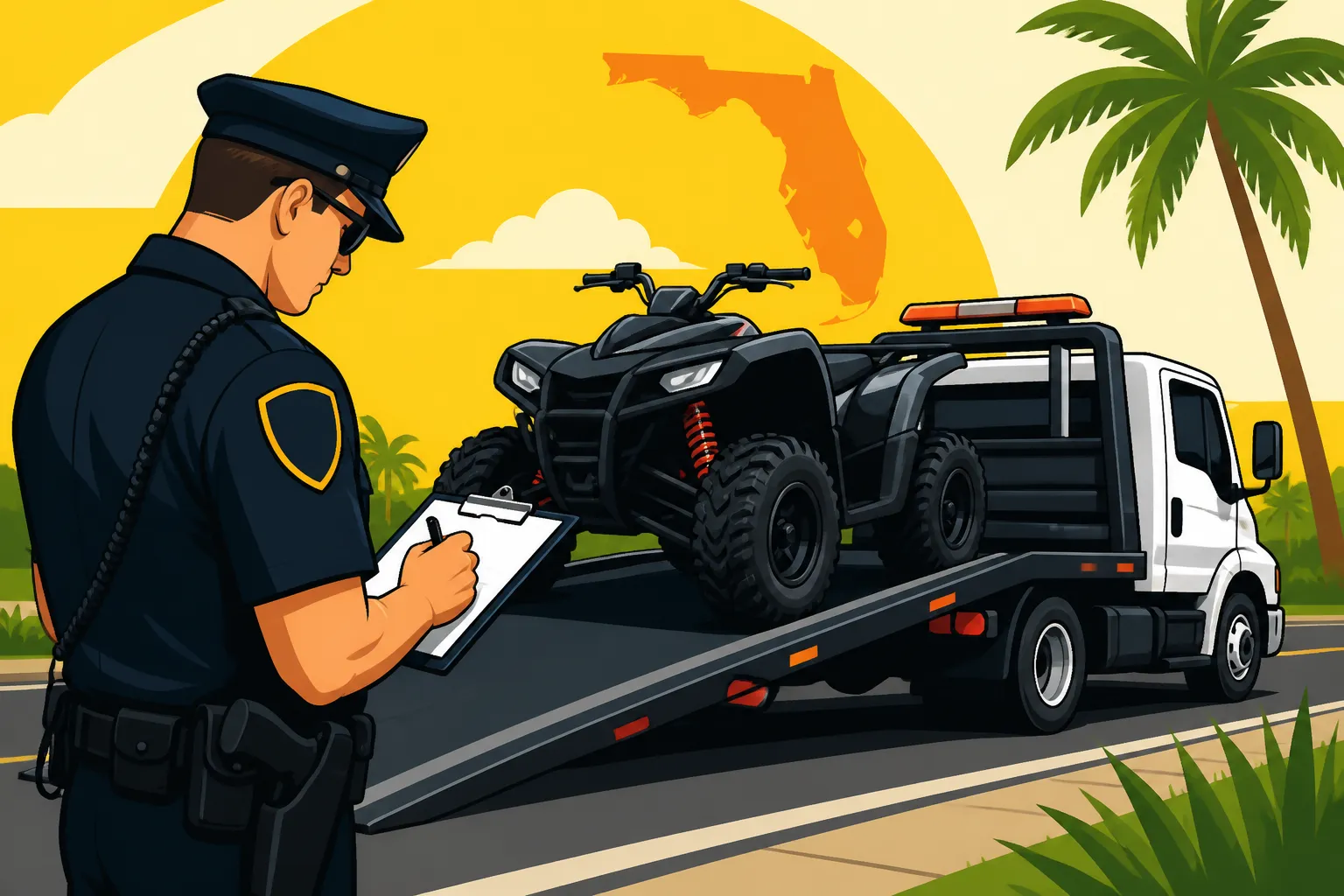
Once the decision to impound is made, the officer will typically contact a pre-approved towing service. The tow truck will arrive, and your ATV will be loaded and transported to an impound lot or a private tow yard. This usually happens fairly quickly, and you won't be able to retrieve the ATV from the scene. You'll likely receive some paperwork from the officer detailing the violation and the impoundment, which will include information about where your ATV is being stored. It's crucial to keep this documentation safe, as you'll need it to retrieve your machine later. From the moment it's towed, daily storage fees will begin to accrue, adding to the total cost you'll eventually have to pay. These fees can add up very quickly, especially over weekends or holidays when offices might be closed.
Retrieving Your Impounded ATV: The Hurdles You'll Face
Getting your ATV back from impound isn't as simple as showing up with cash. You'll face several hurdles. First, you'll need to provide proof of ownership. This usually means presenting the ATV's title, which shows you are the legal owner. If you don't have the title, you might need to jump through hoops to prove ownership, which can involve visiting the county tax collector's office or even getting a bonded title if the ownership chain is completely broken. [Florida ATV Title Lost or Damaged: Getting a Duplicate] or [Titling a Homemade or Rebuilt ATV in Florida] might be helpful resources if you're in this bind.
Next, you will have to pay all outstanding fines and fees. This includes the original traffic citation (the impoundment is separate from the ticket itself), the towing fee, and all daily storage fees that have accumulated. These fees can range from hundreds to thousands of dollars, depending on how long your ATV is impounded. You'll typically need to pay these directly to the tow yard or the impound facility. In some cases, you might also need to resolve any other legal issues related to the impoundment, such as outstanding warrants or a DUI charge, before the ATV can be released.
Finally, once released, you often cannot simply ride your ATV out of the impound lot. Since it was impounded for a road violation, you will likely need to arrange for its legal transportation off the impound lot – typically on a trailer. The impound facility won't want to release it only for you to immediately re-violate the law, and they don't want the liability. This means you might need to bring a truck and trailer or arrange for another tow to get your ATV home or to a designated legal riding area like [Florida ATV Trails: Every Public Riding Area]. The entire process is designed to be costly and inconvenient, underscoring the importance of avoiding impoundment in the first place.
Avoiding Impoundment: Staying on the Right Side of Florida Law
The best way to deal with an impoundment is to prevent it from ever happening. It requires a proactive approach, understanding the rules, and making smart choices about where and how you ride your ATV in Florida.
Know Your Local Rules and Designated Riding Areas
Florida's laws regarding ATV road use can be complex, especially with county-specific ordinances. What might be permissible on a dirt road in one county could be strictly forbidden just across the county line. The single most important step you can take is to research and understand the specific rules for the area you plan to ride in. Don't rely on hearsay or what you've seen others do. Check the county's official website, or even better, call the local sheriff's office or tax collector's office for clarification. They can provide specific information about designated [Florida Counties That Designated ATV Roads] or areas where ATVs are expressly prohibited on public rights-of-way.
Beyond county rules, always stick to clearly designated off-road riding areas. Florida boasts numerous fantastic public and private parks and trail systems specifically designed for ATVs and UTVs. These are the places where your machine belongs and where you can enjoy it legally and safely. Riding outside of these areas, particularly on paved roads, is an unnecessary risk. Remember, even if a road is unpaved, it doesn't automatically mean it's legal for ATVs. Always confirm before you ride.
Trailer, Don't Ride, to Designated Trails
This is perhaps the most straightforward and effective way to avoid road violations and potential impoundment. Instead of attempting to ride your ATV on public roads to get to a trail, trailer your machine to the designated riding area. Investing in a proper trailer and understanding the rules for trailering (like appropriate tie-downs and trailer lights) is a small price to pay compared to the cost and headache of an impounded ATV.
Many impoundments happen when riders, often just trying to get from their house to a nearby dirt road or to a friend's property, briefly venture onto a paved section of a road. Even a short distance can be enough for an officer to spot you and initiate a stop. Treat your ATV like the off-highway vehicle it is; it's designed to be transported to its playground, not to be driven on public thoroughfares. This simple practice will save you immense stress, fines, and the potential loss of your machine.
Understand Street-Legal Conversions (and their limits in Florida)
Many ATV and UTV enthusiasts look at "street legal" conversion kits, often from companies like SuperATV, as a potential solution to riding on roads. It's true that these kits can add turn signals, mirrors, horns, and other road-specific equipment. However, it's vital to understand that simply adding these accessories does not automatically make an ATV street legal in Florida. Florida's definition of an ATV fundamentally classifies it as an off-highway vehicle, and it doesn't have a direct path to becoming a street-legal vehicle like a car or even an LSV (Low-Speed Vehicle) unless it meets very specific criteria, which most ATVs simply don't.
While some UTVs might be able to be converted to meet LSV requirements if they fall within strict size, weight, and speed limits, an ATV generally cannot. Trying to make an ATV street legal is usually an exercise in futility in Florida, and it won't protect you from road violations or impoundment if an officer determines your machine doesn't meet the state's very particular criteria for on-road vehicles. Always verify with the Florida Department of Highway Safety and Motor Vehicles (FLHSMV) or a legal professional before assuming a conversion kit will grant you road privileges. For more on this, check out [Is a UTV Street Legal in Florida?] and [Florida Low-Speed Vehicle Rules for Side-by-Sides].
Disclaimer
This article is for general informational purposes only and does not constitute professional advice. Laws, prices and regulations vary by location and change over time. Consult a qualified professional for guidance on your specific situation.