Florida Trespass Law for ATV Riders
It's an all too common scenario for Florida ATV and UTV riders: you're out enjoying the beautiful trails, feeling the freedom of the open air, and suddenly you realize you've crossed an unmarked line. Maybe it's a field that looked wild, a dirt path you thought was public, or simply a vague boundary line you didn't even know existed. The truth is, accidentally or intentionally, riding on someone else's property without permission is trespassing, and in Florida, that can lead to some serious headaches, fines, and even losing your machine. This guide is here to help you understand Florida's trespass laws for ATV riders, how to identify different types of land, and most importantly, how to stay on the right side of the law so your rides remain fun and stress-free.
Defining Trespass in the Context of ATVs in Florida
Trespassing, at its core, means entering or remaining on someone else's property without permission. For ATV and UTV riders in Florida, this isn't just a polite suggestion; it's a legal concept with real consequences. Chapter 810 of Florida Statutes outlines the various forms of trespass, and while there are different degrees, the fundamental principle remains: if you don't have explicit permission, you shouldn't be there.
What Constitutes Trespass for an ATV Rider?
It's not always as simple as a "No Trespassing" sign. While those signs are certainly a clear indicator, their absence doesn't automatically grant permission. Trespass can occur in several ways when you're on an ATV:
- Entering Private Land: This is the most straightforward. If a property is privately owned—whether it's a farmer's field, someone's backyard, or a timber company's forest—and you drive your ATV onto it without their consent, you are trespassing. This includes land that might appear unkempt or abandoned; it still belongs to someone.
- Exceeding Permitted Access: Sometimes, you might have permission to ride on a specific part of a property, but you go beyond those agreed-upon boundaries. For example, a landowner might say, "You can use this trail here," but if you venture into their citrus grove or across their pasture, you've overstepped your permission and are now trespassing. [Ranch Easements and Written Permission] are crucial here.
- Ignoring Posted Warnings: "No Trespassing," "Private Property," "Posted," or "Keep Out" signs are legally binding. Ignoring them is a direct violation of Florida law.
- Entering Restricted Areas on Public Land: Even on public lands like [Florida State Forest OHV Areas Explained] or national forests, there are often designated trails and areas where ATVs are permitted, and others where they are strictly prohibited. Riding off-trail or into a protected wildlife area is also a form of trespass, violating the rules for that specific public land. [Florida Public Land Riding: Permits and Proof] details what you need to know.
The Nuance of "Unmarked" or "Ambiguous" Land
This is where many riders get into trouble. Florida has vast stretches of land that might look like open range, but are, in fact, privately owned. There could be old logging roads, disused tracks, or simply undeveloped acreage that gives the impression of public access. Without clear fencing or signage, it's easy to assume the land is fair game.
However, the burden of proof often falls on the rider to know where they are. This is why it's so important to do your homework before you ride. Relying on an assumption can lead to a very unpleasant encounter with a landowner, law enforcement, or worse. GPS units with property line overlays can be incredibly helpful here, especially if you're exploring new territory. Even with such tools, it's always best practice to seek explicit permission if you're unsure.
Understanding Different Types of Land Ownership and Access Rules
Florida's landscape is a patchwork of different land types, each with its own set of rules regarding ATV access. Knowing these distinctions is vital for staying legal.
Private Property: The Strict "Permission Required" Rule
Any land owned by an individual, a family, a business, or a private entity falls under this category. This includes everything from residential yards and farms to large timber tracts, hunting leases, and undeveloped parcels. The cardinal rule here is simple: you must have express permission from the landowner to ride your ATV on private property.
- Verbal vs. Written Permission: While verbal permission might seem sufficient, it's always best to get it in writing. A simple, signed note or email stating the dates, specific areas allowed, and the landowner's contact information can save you a lot of grief. This also protects the landowner by clarifying the scope of the permission. If you're a regular rider on a friend's property, don't just assume; always confirm.
- Leased Land: Be aware that "private land" can also include land leased by someone other than the owner for hunting, farming, or other purposes. The lessee may or may not have the authority to grant ATV access, so always confirm with the actual landowner or property manager.
- Protecting Your Ride: Beyond legal concerns, riding on unknown private land can also expose you to hazards like hidden fences, unmarked wells, or even dangerous wildlife that the landowner might be managing. Using robust aftermarket parts, perhaps from a brand like SuperATV, to reinforce your machine for off-road challenges is one thing, but it won't protect you from legal issues if you're on the wrong property.
Public Land: State Forests, National Forests, and WMDs
Florida offers incredible opportunities for ATV riding on public lands, but these come with very specific regulations. These lands are managed by various agencies, and while they are "public," they are not free-for-all zones.
- Florida State Forests: Managed by the Florida Forest Service, these areas often have designated OHV (Off-Highway Vehicle) trail systems. You'll typically need a pass or permit to ride, and you must stick to marked trails. For example, the Croom Motorcycle Area in the Withlacoochee State Forest is a popular spot, but even there, rules about machine width and safety gear are strictly enforced. Read up on [Florida State Forest OHV Areas Explained] and [Florida OHV Permits: What You Need Before You Ride] to be prepared.
- National Forests: Ocala National Forest and Apalachicola National Forest are prime examples. These federal lands also have designated OHV trail networks, and you'll usually need a National Forest OHV Pass. Like state forests, staying on marked trails is paramount. Drifting off-trail into sensitive ecosystems can lead to hefty fines.
- Water Management Districts (WMDs): Florida has five WMDs that manage vast tracts of land, often for water resource protection. Some WMD lands offer limited recreational access, but ATV riding is usually highly restricted or requires specific [Florida Water Management District Riding Permits]. Do not assume open access. Many WMD properties are closed to motorized vehicles entirely to protect natural resources.
- Other Public Lands: This category includes county parks, wildlife management areas (WMAs), and other state-managed lands. Access rules vary widely. WMAs, for instance, often permit ATVs during hunting seasons for game retrieval but may prohibit them at other times or for general recreation. Always check the specific WMA's regulations before heading out.
Easements and Rights-of-Way: A Tricky Area
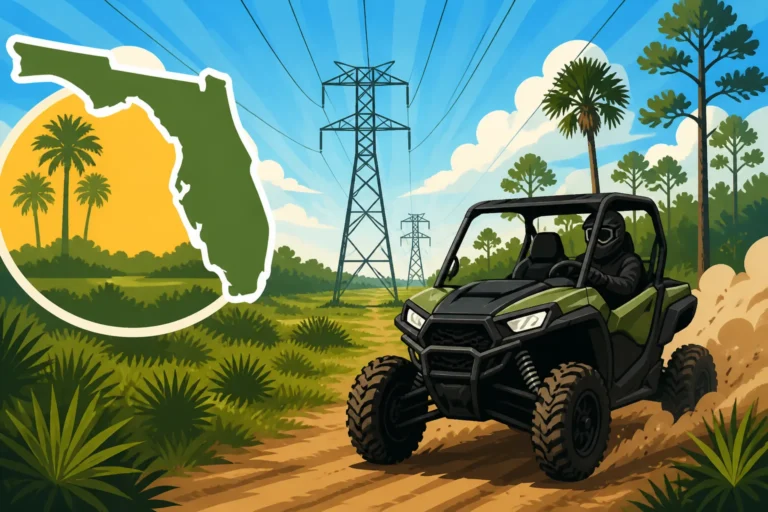
Easements and rights-of-way can be confusing for ATV riders. An easement grants someone the right to use another person's land for a specific purpose (e.g., utility companies for power lines, a neighbor for access to their property). A right-of-way is similar, often pertaining to public access over private land, like a public road crossing a private parcel.
- Limited Use: Just because an easement exists doesn't mean you, as an ATV rider, have a right to use it for recreation. The use is typically very specific to the purpose of the easement. For example, a power line easement might allow utility workers to drive on it, but not the general public for recreational ATV riding.
- "De Facto" Trails: Many riders mistakenly assume that old logging roads or faint tracks that run through private land are public easements. This is rarely the case. Unless explicitly designated as a public access route or trail by a governmental body or the landowner, these are private.
To avoid inadvertently trespassing, always refer to a current map (digital or physical), check with local land management agencies, or, when in doubt, seek permission. It's far better to ask and be denied than to ride first and face the consequences later.
Consequences of ATV Trespassing in Florida
Riding where you shouldn't can turn a fun day into a costly nightmare. Florida law treats trespassing seriously, and the penalties can range from financial to criminal, potentially affecting your ability to ride in the future.
Legal Penalties: Fines and Imprisonment
Florida Statute § 810.09 addresses trespass on property other than a structure or conveyance. The severity of the charge depends on a few factors:
- First Degree Misdemeanor: If you willfully enter or remain on land, and notice against entering or remaining is given (e.g., "No Trespassing" signs, fencing), it's a first-degree misdemeanor. This can carry a penalty of up to one year in jail, a fine of up to $1,000, or both.
- Second Degree Misdemeanor: If the land is not fenced or posted, but you enter or remain on it without permission, it's generally a second-degree misdemeanor, punishable by up to 60 days in jail, a fine of up to $500, or both.
- Trespass with a Firearm or Dangerous Instrument: If you trespass while possessing a firearm or other dangerous instrument, the penalties become more severe, potentially escalating to felony charges. [Carrying a Firearm on an ATV in Florida] outlines related laws.
- Damage to Property: If your ATV causes damage to the property while trespassing—like tearing up fields, damaging fences, or harming natural habitats—you could face additional charges for criminal mischief, and be liable for civil damages, which means you'd have to pay for the repairs.
These aren't abstract possibilities; Florida law enforcement, especially rural sheriffs and state park rangers, actively enforce trespass laws.
Civil Liability and Damages
Beyond criminal charges, a landowner can pursue civil action against you for trespassing. This means they can sue you for any damages your ATV caused to their property. This could include:
- Repair Costs: For fences, crops, irrigation systems, or other structures you might have damaged.
- Environmental Restoration: If you damaged sensitive wetlands, disturbed wildlife habitats, or contaminated an area.
- Lost Income: For farmers, this could mean compensation for damaged crops or livestock.
- Punitive Damages: In some cases, if your trespass was particularly egregious or malicious, a court might award punitive damages to punish you and deter future misconduct.
This is where your everyday ATV insurance policies often fall short. Most standard ATV insurance is designed for accidents on designated trails or your own property, not for incidents arising from illegal activities like trespassing.
Machine Impoundment and Confiscation
Law enforcement has the authority to impound your ATV if it was used in the commission of a crime, including severe instances of trespassing. In some cases, particularly repeated offenses or those involving significant property damage, your machine could even be subject to forfeiture. Imagine having your prized quad, perhaps upgraded with top-tier components like those from SuperATV, seized and potentially lost forever because you chose to ignore property lines. It's a devastating, but very real, consequence. [Florida ATV Impound After a Road Violation] discusses this in another context, but the principle applies.
Reputation and Community Impact
While not a legal penalty, the damage to your reputation as a responsible rider and the overall riding community cannot be understated. Trespassing gives all ATV riders a bad name, fueling negative stereotypes and contributing to the closure of legitimate riding areas. When landowners and local communities face repeated issues with illegal riding, they become less likely to support new trails or recreational access for anyone. This creates a ripple effect that harms the entire sport.
How to Ensure You're Riding Legally and Responsibly
Avoiding trespass in Florida isn't just about knowing the law; it's about adopting a mindset of respect, preparedness, and continuous learning. Here's how you can make sure your ATV adventures are always above board.
Research and Planning are Your Best Friends
Never head out on a ride without doing your homework, especially if you're exploring a new area.
- Consult Maps and Apps: Use reliable mapping tools. Many GPS units and smartphone apps now offer property line overlays. Services like onX Offroad or various county property appraiser websites can show you parcel boundaries and ownership information. Don't rely on outdated maps or verbal directions that might be inaccurate.
- Contact Land Management Agencies: If you're planning to ride on state or national forests, call or visit their websites for the latest trail maps, regulations, and permit requirements. Check for closures due to weather, hunting seasons, or logging.
- Seek Explicit Permission: If you wish to ride on private land, identify the landowner and ask for permission well in advance. Explain your intentions, the route you'd like to take, and offer to provide your contact information. As mentioned, get it in writing! This protects both you and the landowner.
- Understand Different Land Classifications: As detailed in the table below, different types of land have different rules. Make sure you know which type of land you're on.
| Land Type | General Access Rule | Required Permission/Proof | Key Considerations |
|---|---|---|---|
| Private Land (Individual/Company) | Strict: No entry without explicit permission | Written permission, lease agreement, or direct invite | Always assume private; check for "No Trespassing" signs. |
| Florida State Forests | Designated OHV trails only | State Forest OHV Pass (Day Use or Annual) | Stick to marked trails; observe width/machine restrictions. |
| Florida National Forests | Designated OHV trails/roads only | National Forest OHV Pass (3-day, 7-day, Annual) | Check for specific road/trail numbers; stay on designated routes. |
| Water Management Districts | Highly restricted; often no motorized access | Specific WMD permit, often tied to hunting or conservation access | Research carefully; most are closed to recreational ATV use. |
| Agricultural/Ranch Lands | Private: No entry without explicit permission | Written permission from landowner/lessee | Often unfenced; easy to mistake for public land. |
| Unpaved County Roads | Limited access if designated & posted | Valid driver's license, proper machine equipment (if applicable) | [Florida ATV Road Rules: Where You Can Legally Ride], check county ordinances. |
Equip Your Machine for Legal and Safe Riding
While not directly related to trespass law, having a well-maintained and appropriately equipped machine can indirectly help you stay out of trouble.
- Visibility: Good lighting, including headlights and taillights (especially if riding on designated roads where permitted, see [Florida ATV Lights and Equipment for Road Use]), can help you see property markers, signs, and boundaries more clearly, reducing the chance of accidental trespass. High-quality light bars or auxiliary lights from companies like SuperATV can significantly improve visibility in varied conditions.
- Reliability: A reliable machine is less likely to break down and leave you stranded. If you're stuck on private property, you might have to leave your ATV there, or walk across unauthorized land to get help, exacerbating the trespass issue. Investing in durable parts, such as heavy-duty axles or suspension components, from a reputable supplier like SuperATV can reduce breakdowns on challenging legal trails.
- Appropriate Tires: Using the correct tires for the terrain (e.g., mud tires for a mud park or sand tires for the scrub) helps maintain control and prevents you from getting stuck, which could lead to inadvertently straying off designated paths onto private land.
Always Carry Proof of Ownership and Permission
When riding, always carry your necessary documents.
- Proof of Ownership: Have your ATV's title or registration handy. [Carrying Proof of Ownership on the Trail] is a smart move.
- Permits and Passes: If you're on public land, carry your valid OHV pass or permit.
- Written Permission: If you have permission to ride on private land, carry that written consent with you. It's your best defense if questioned by law enforcement or a landowner.
Be a Responsible Rider and Community Member
Finally, practicing good trail etiquette and being a responsible member of the ATV community benefits everyone.
- Stay on Marked Trails: This is the most fundamental rule for preventing trespass on both public and private lands.
- Respect "No Trespassing" Signs: These signs are clear indicators that you are not welcome.
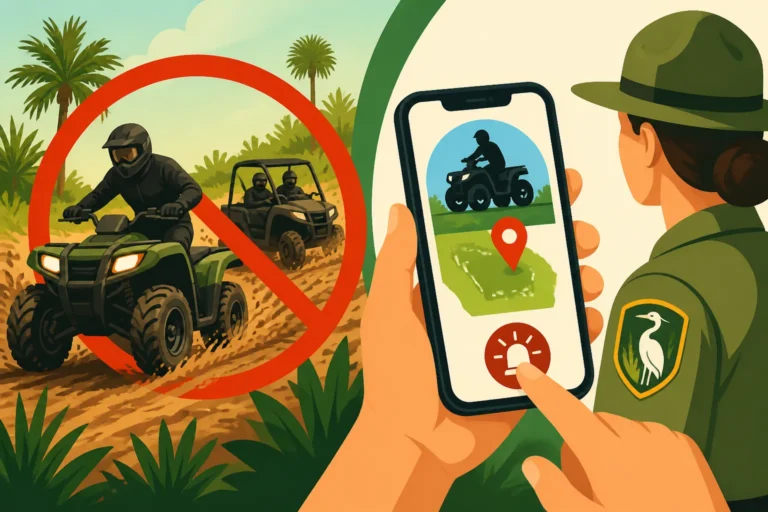
- Report Illegal Riding: If you witness other riders trespassing or damaging property, [Reporting Illegal Riders on Conservation Land] is important. While it might feel like "ratting," it helps protect access for everyone else and shows that the riding community is committed to responsible use.
- Support Local Clubs and Organizations: Many ATV clubs work with landowners and land management agencies to create and maintain legal riding opportunities. Getting involved can help you stay informed about legal riding areas and access changes.
By understanding Florida's trespass laws, respecting property rights, and planning your rides responsibly, you can continue to enjoy the fantastic ATV opportunities Florida has to offer, without the unwelcome stress of legal trouble.
Disclaimer
This article is for general informational purposes only and does not constitute professional advice. Laws, prices and regulations vary by location and change over time. Consult a qualified professional for guidance on your specific situation.