Sea Turtle Nesting Season Beach Closures
For many off-road enthusiasts in Florida, the thought of cruising along the state's pristine beaches on an ATV or UTV is a powerful draw. You envision the salty air, the wide-open sands, and the roar of your engine. However, the reality of beach access, especially during critical times, can be a major source of confusion and frustration, particularly when it comes to safeguarding Florida's beloved sea turtles. This guide aims to clear up the rules and restrictions surrounding sea turtle nesting season beach closures, helping you understand why these regulations exist and how they impact your dreams of beach riding.
Understanding Florida's Sea Turtle Protection Laws and ATV Access
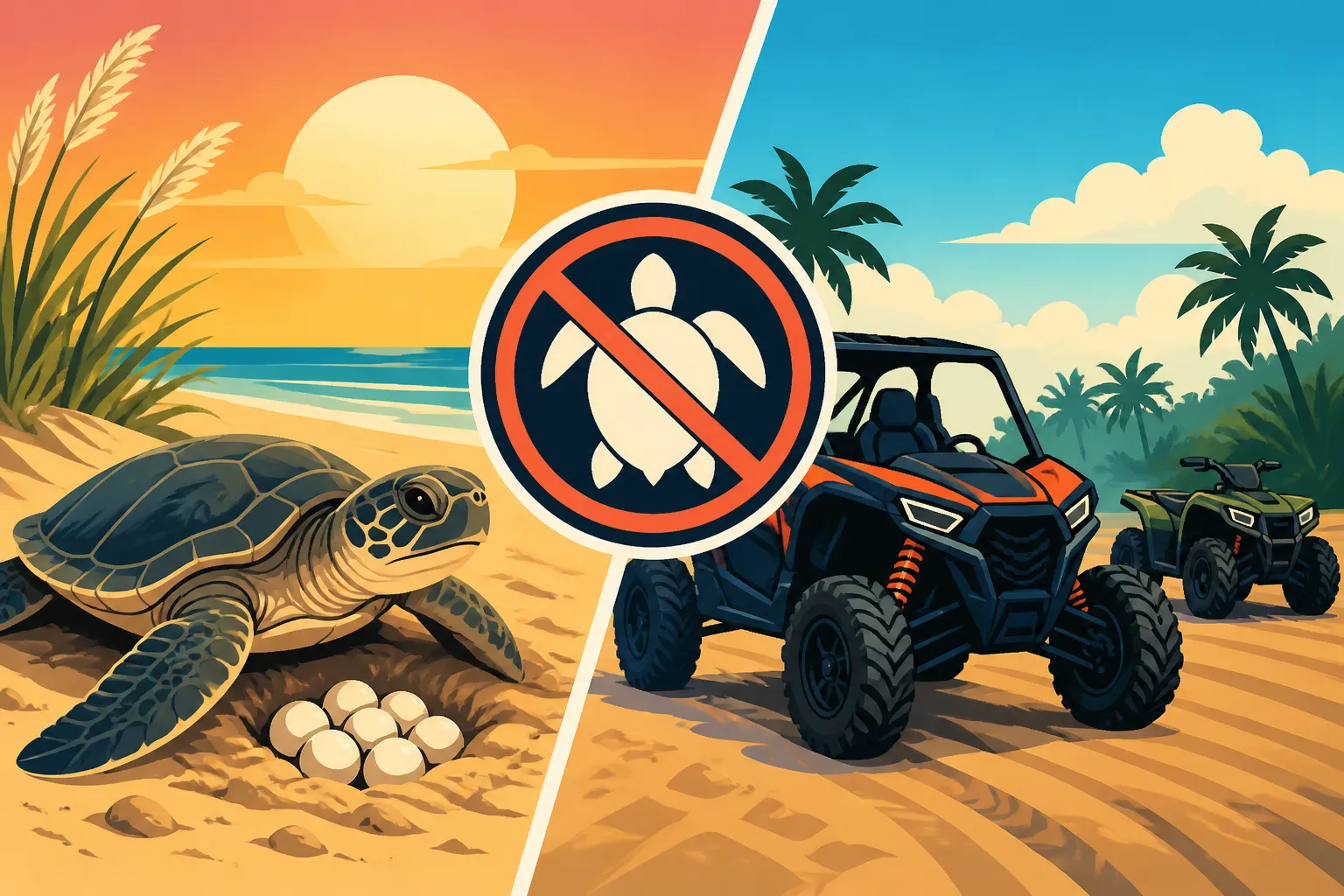
Florida's coastline isn't just a playground; it's a vital nursery for several species of sea turtles, many of which are endangered or threatened. The protection of these ancient mariners and their offspring is a serious matter, backed by extensive federal and state laws. If you're hoping to find a stretch of sand where your ATV or UTV can roam freely, it's crucial to understand that these conservation efforts severely limit, and in most cases completely prohibit, such activities. The primary goal is to ensure the survival of these species, which often means sacrificing recreational vehicle access.
Why Sea Turtles and Their Nests Matter in Florida
Imagine a creature that has traversed the oceans for millions of years, only to return to the very same beaches where it was born to lay its own clutch of eggs. That's the incredible life cycle of a sea turtle, and Florida's sandy shores provide some of the most important nesting habitats in the world. Species like the loggerhead, green, and leatherback sea turtles depend on these quiet, undisturbed beaches for successful reproduction. Their nests, often buried just beneath the surface, are incredibly vulnerable to disturbance from vehicles, foot traffic, and even artificial lights.
Each nest can contain over a hundred eggs, and the survival of these hatchlings is critical for the future of the species. When an ATV or UTV drives over a nesting area, it can compact the sand, crush eggs, or damage the delicate nest structure, making it impossible for hatchlings to emerge. The mere presence of vehicles can also deter nesting females from coming ashore, or disorient emerging hatchlings trying to find the ocean. This delicate balance of nature is why protective measures are so stringent, and why the state takes violations very seriously.
The Role of Federal and State Regulations
The protection of sea turtles is not just a local concern; it's mandated by powerful federal legislation like the Endangered Species Act (ESA). Under the ESA, it's illegal to harm, harass, or kill sea turtles or their eggs, and this includes any activity that might indirectly cause such harm, like disturbing nesting sites. Florida complements these federal protections with its own robust state laws, primarily enforced by the Florida Fish and Wildlife Conservation Commission (FWC). These regulations establish specific guidelines for coastal activities, including strict rules around lighting, construction, and, crucially for our discussion, vehicle access on beaches.
These laws are designed to create a safe haven for nesting mothers and their hatchlings. While the state encourages residents and visitors to enjoy its beautiful beaches, that enjoyment comes with a profound responsibility to protect its natural heritage. For ATV and UTV riders, this means understanding that the environmental sensitivity of Florida's beaches, coupled with these strict legal protections, often overrides any desire for recreational vehicle use on the sand. Ignoring these laws doesn't just risk a ticket; it directly impacts the survival of an endangered species.
The Specifics of Beach Closures During Nesting Season
So, when exactly does this critical period for sea turtles occur, and what does it mean for anyone hoping to even think about putting tires on the sand? Florida's sea turtle nesting season is a significant annual event that dictates many aspects of coastal management, including when and where activities like beach driving are allowed. Understanding these timelines and restrictions is paramount to avoiding hefty fines and, more importantly, protecting these vulnerable creatures.
When is Sea Turtle Nesting Season in Florida?
Sea turtle nesting season in Florida generally runs from March 1st through October 31st, though the precise timing can vary slightly depending on the specific species and region of the state. For instance, leatherbacks, the largest sea turtles, often start nesting as early as March, while loggerheads and green turtles typically begin in April or May. The season officially wraps up in late October, with hatchlings continuing to emerge into early November. This eight-month window is a period of intense vigilance for coastal communities and environmental agencies.
During this time, beaches become active nesting grounds, and every dune and stretch of sand is a potential home for a sea turtle clutch. Coastal counties and cities implement a variety of measures, from reducing beachfront lighting to restricting beach furniture, all aimed at safeguarding nests and hatchlings. For off-road enthusiasts, this means that even if a beach theoretically had vehicle access outside of nesting season (which, as we'll discuss, is rare), it would almost certainly be off-limits during these crucial months.
Types of Beach Closures and Restrictions for ATVs/UTVs
Let's be very clear: recreational ATV or UTV riding is not permitted on the vast majority of Florida's beaches at any time, regardless of nesting season. This is a foundational rule based on environmental protection, safety, and local ordinances. Nesting season simply adds another layer of stringent protection to an already highly restricted environment. Any exceptions are incredibly rare and typically limited to authorized emergency vehicles, law enforcement, or very specific, permitted commercial activities like commercial fishing, and even then, strict protocols are in place to avoid nesting areas. You won't find general access to drive your personal side-by-side, even one equipped with robust SuperATV components, on Florida's sandy shores.
During nesting season, many coastal areas implement additional restrictions even for pedestrian access or permissible activities. This might include:
- Nighttime Curfews: Many beaches become off-limits to everyone after dusk, to prevent disturbance to nesting females and disorienting hatchlings.
- Designated Paths: Where any form of vehicular access is absolutely necessary and permitted (e.g., for beach cleaning equipment), very narrow, marked paths are often established to avoid potential nest sites.
- Total Closures: In some sensitive areas, entire sections of beach may be completely closed to all public access to ensure maximum protection.
The takeaway here is that if you're an ATV or UTV owner in Florida, your beach riding opportunities are essentially nonexistent due to existing regulations, which are only amplified and made more critical during sea turtle nesting season.
Identifying Protected Areas and Nesting Sites
For the rare instances where you might be on a beach for permitted activities (or even just walking), it's important to know how to identify sea turtle nesting sites. Biologists and trained volunteers regularly patrol Florida's beaches during nesting season, meticulously looking for signs of turtle tracks that indicate a nesting event. Once a nest is confirmed, it is typically marked with wooden stakes and yellow flagging tape, often bearing information about the species and nest date. These markings serve as a clear warning: "Stay away!"
It's not just the marked nests that demand respect. The entire beach ecosystem is a potential nesting area. Hatchlings, once they emerge, follow the light of the moon to the ocean. Any artificial light, or even deep ruts left by vehicles, can disorient them, leading them away from the water and to their demise. Even if you don't see a marked nest, exercising extreme caution and awareness is vital. Always assume that the beach is a sensitive habitat, especially during nesting season. Remember, your off-road machine, no matter how capable with its SuperATV suspension or tires, is an unwelcome intruder in these delicate environments.
Navigating Beach Access for ATV/UTV Riders During Nesting Season
The reality for ATV and UTV riders looking for beach access in Florida, particularly during sea turtle nesting season, is often a harsh dose of disappointment. While the allure of riding on sand is strong, the environmental sensitivities and legal frameworks in place make it virtually impossible for recreational purposes. It's critical for riders to understand the distinction between private land and public beaches, and the severe limitations that apply to both.
Permitted Beach Access for ATVs in Florida (Spoiler: It's Extremely Limited)
Let's cut right to the chase: if you're a recreational ATV or UTV rider in Florida, there are almost no public beaches where you can legally ride your machine. The dream of cruising the coastline is, for the vast majority, just that—a dream. Florida's beaches are primarily managed for conservation, public pedestrian access, and very specific, authorized activities. This restriction isn't just during nesting season; it's year-round. While there might be a few exceptions for vehicles like law enforcement, emergency services, or very limited commercial fishing operations with special permits, these are not avenues for general public use.
Even on private beachfront property, while you might own the land, the beach itself and its wildlife are often subject to state and federal regulations. Sea turtles and their nests are protected regardless of land ownership, meaning that even a private beach cannot be used for unrestricted ATV or UTV riding if it impacts nesting activities. The Florida Fish and Wildlife Conservation Commission (FWC) has jurisdiction over wildlife protection, and the Department of Environmental Protection (DEP) oversees coastal land use, ensuring that these rules are broadly applied. For more details on what might be possible, you could explore resources on [Florida Beach Driving and ATVs] or [Florida Beach and Dune Access for ATV Riders], but prepare for very restrictive answers.
Consequences of Violating Nesting Season Rules
Attempting to ride an ATV or UTV on a Florida beach, especially during sea turtle nesting season, can lead to severe legal and financial repercussions. This isn't just a slap on the wrist for trespassing; it's a violation of wildlife protection laws. Fines can be substantial, often in the thousands of dollars, and your vehicle could be impounded. In some cases, repeated or egregious violations could even lead to criminal charges, particularly if a nest or turtle is directly harmed. The state takes these matters very seriously, and ignorance of the law is not an excuse.
Beyond the legal penalties, there's the undeniable environmental cost. Driving on a beach during nesting season can destroy nests, compact sand over developing eggs, and disorient hatchlings. Even the subtle act of leaving tire ruts can create obstacles that hatchlings cannot overcome, or trap them in their desperate journey to the ocean. The frustration of not being able to ride on the beach might feel significant, but it pales in comparison to the irreversible damage that can be done to an endangered species. It’s a stark reminder that even with advanced off-road gear from a company like SuperATV, the most important 'equipment' for any rider is knowledge and respect for the law and environment.
Alternative Riding Destinations in Florida
Given the extensive restrictions on beach riding, smart ATV and UTV enthusiasts in Florida focus their attention on the numerous legal and designated off-highway vehicle (OHV) parks and trails available throughout the state. Florida boasts a fantastic network of riding opportunities, from sandy scrub trails to muddy bogs, all designed specifically for off-road recreation. These are places where you can safely and legally unleash the power of your machine without fear of legal consequences or environmental harm.
For example, areas like the Croom Motorcycle Area in the Withlacoochee State Forest, or sections of the Ocala National Forest, offer miles of diverse trails suitable for various skill levels. [Florida ATV Trails: Every Public Riding Area] or [Ocala National Forest ATV Trails in Florida] are excellent resources for finding these legal riding spots. These designated areas often have amenities like parking, restrooms, and sometimes even camping. By choosing these legal alternatives, you not only protect Florida's fragile coastal ecosystems but also ensure a more enjoyable and stress-free riding experience. It’s a win-win: thrilling rides for you, and safe nesting grounds for the sea turtles.
Staying Informed and Riding Responsibly
Being an off-road enthusiast in Florida comes with a responsibility to understand and respect the state's unique environment and its laws. While the idea of riding on a pristine beach might seem exhilarating, it's crucial to prioritize conservation and legal compliance. Staying informed about local regulations and embracing responsible riding practices are key to ensuring that Florida's natural beauty and wildlife thrive for generations to come.
How to Check for Local Regulations and Updates
Because Florida's regulations can vary from county to county and even city to city, it's never safe to assume. The best way to stay informed about beach access and sea turtle nesting season rules is to proactively check local sources. Start with the Florida Fish and Wildlife Conservation Commission (FWC) website, which provides comprehensive information on sea turtle protection. Beyond state-level guidance, consult the official websites of the specific county or city where you plan to visit.
Many coastal communities have dedicated environmental departments or tourism boards that publish detailed guidelines, including dates for nesting season, restricted areas, and any temporary closures. Look for signs posted at beach access points as well, as these will often provide immediate, on-site information. Remember, even if you’re traveling with a fully outfitted machine from SuperATV, ready for any terrain, that preparation also includes knowing where you’re legally allowed to take it. A quick online search or a call to the local sheriff's office or park ranger station can save you a lot of trouble and potential fines.
Being a Responsible Off-Road Enthusiast
True off-road enthusiasts are also responsible stewards of the environment. This means adhering to the "Leave No Trace" principles wherever you ride, whether it's on a designated trail or, in the extremely rare and permitted cases, a specific piece of private land. It involves packing out everything you pack in, staying on marked trails, and minimizing your impact on the natural surroundings. When it comes to sensitive habitats like beaches during nesting season, this responsibility extends to completely avoiding restricted areas.
Respecting wildlife means understanding that your presence, especially with a noisy vehicle, can disturb delicate ecosystems. For sea turtles, even something as seemingly innocuous as bright lights from a vehicle can disorient hatchlings or deter nesting mothers. By choosing to ride only in designated OHV parks and trails, you demonstrate respect for Florida's natural resources and its wildlife. This approach ensures that you can continue to enjoy your passion for off-roading, while also contributing to the preservation of Florida's unique and vulnerable coastal environment. Your adventures, even with the toughest parts from SuperATV, are best had in places designed for them, not sensitive nesting grounds.
| Aspect | Sea Turtle Nesting Season (March – October) | Non-Nesting Season (November – February) |
|---|---|---|
| ATV/UTV Beach Access | Strictly Prohibited for recreational use. | Generally Prohibited for recreational use. |
| Primary Concern | Protecting nests, eggs, and hatchlings from disturbance. | General environmental protection, dune integrity, public safety. |
| Consequences of Violation | Significant fines, vehicle impoundment, potential criminal charges under ESA. | Significant fines, vehicle impoundment (less severe wildlife implications). |
| Why Restrictions Exist | Federal (ESA) and State (FWC) laws for endangered species. | Local ordinances, environmental protection, public safety. |
| Finding Information | FWC, county/city coastal management, park ranger offices. | County/city ordinances, local law enforcement. |
Disclaimer
This article is for general informational purposes only and does not constitute professional advice. Laws, prices and regulations vary by location and change over time. Consult a qualified professional for guidance on your specific situation.