Sheriff Airboat and Quad Patrols in the Glades
The call of the wild, the vast, untamed beauty of the Florida Everglades and Big Cypress, is an undeniable draw for many off-road enthusiasts. But venturing into these incredible natural landscapes isn't like riding on your back forty. It’s a privilege that comes with serious responsibilities and strict rules, all enforced by vigilant law enforcement agencies. This guide is going to walk you through what to expect from sheriff airboat and quad patrols in the Glades, why they're out there, and how you can ensure your unforgettable adventure stays on the right side of the law.
The Unique Challenge of Patrolling the Florida Everglades and Big Cypress
Imagine a landscape so vast, so intricate, and so environmentally sensitive that it requires highly specialized equipment and dedicated personnel just to monitor it. That's the Glades for you. It's not just a big swamp; it's a critical ecosystem, a delicate balance of water, sawgrass, cypress domes, and pinelands, teeming with unique wildlife that needs constant protection.
Why the Glades Demand Specialized Enforcement
The Florida Everglades and Big Cypress National Preserve are truly national treasures. They're home to endangered species, act as a vital water filtration system for our state, and represent one of the largest remaining subtropical wildernesses in North America. Because of this, they are subject to intense conservation efforts. Unfortunately, not everyone respects these boundaries or understands the fragility of the environment.
This is where specialized enforcement comes in. Agencies like the local Sheriff's Offices, Florida Fish and Wildlife Conservation Commission (FWC), and National Park Service rangers patrol these areas to prevent and address a range of illegal activities. We're talking about poaching, illegal dumping of everything from household trash to construction debris, unauthorized trail blazing that destroys sensitive habitats, and even criminal enterprises hidden deep within the remote swamps. The sheer size and inaccessibility of these areas make them tempting targets for those looking to operate outside the law, which means law enforcement needs to be just as capable of navigating the challenging terrain.
The Role of Airboats in Navigating the Wet Wilderness
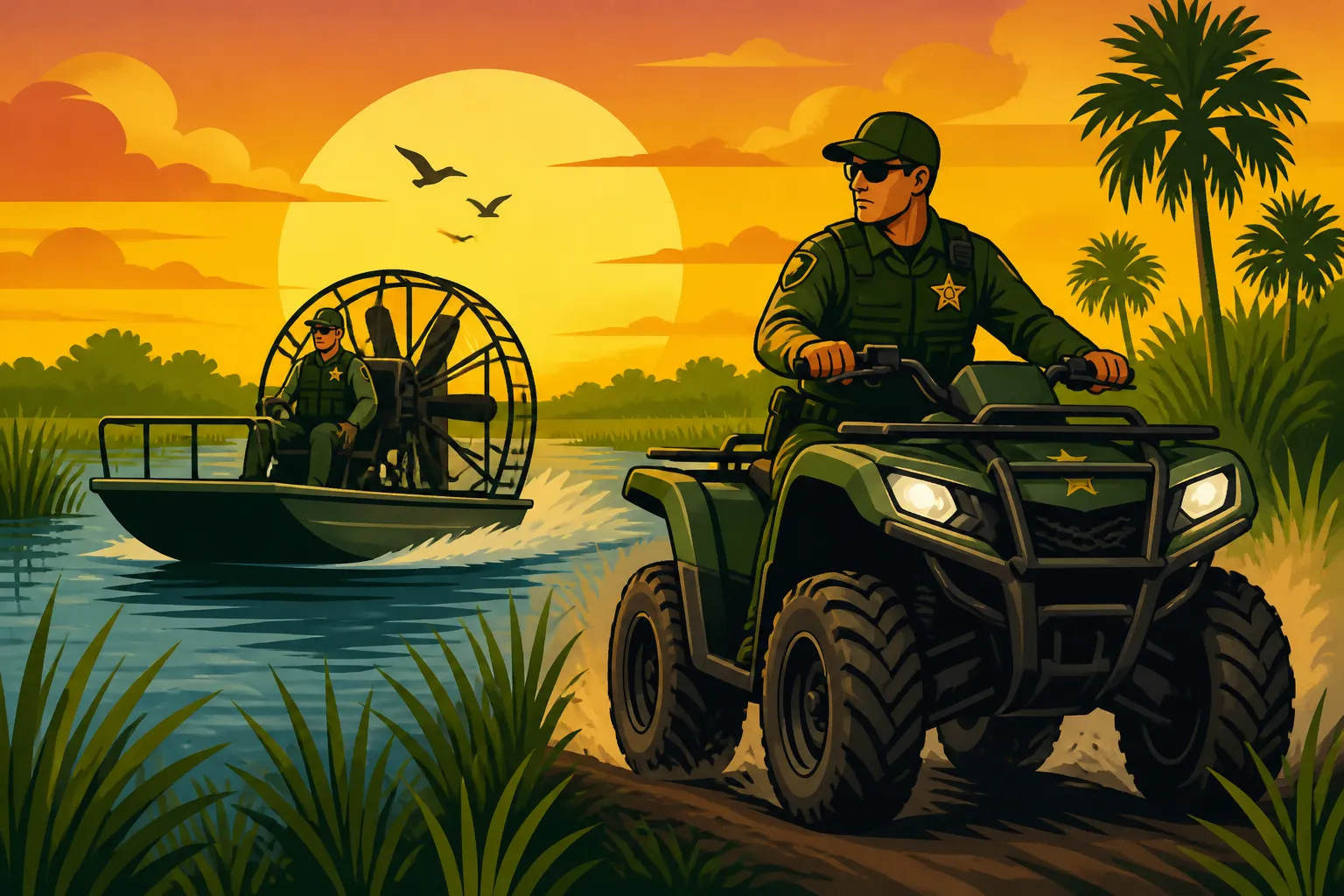
When you think of the Glades, you probably picture an airboat zipping across the water, and for good reason. Airboats are absolutely indispensable for law enforcement in these predominantly wet environments. Their flat bottoms and propeller propulsion allow them to glide effortlessly over shallow water, thick sawgrass prairies, and even short stretches of dry ground, reaching areas that would be utterly impassable for traditional patrol vehicles or even wheeled ATVs.
These specialized vessels enable officers to cover vast distances quickly across marshlands, monitor waterways, and respond to incidents in the most remote corners of the Everglades. However, even airboats have their limitations. They're fantastic for open water and sawgrass, but they can't effectively navigate dense tree lines, rocky terrain, or the tight, winding trails found in cypress domes or pineland hammocks. They also rely on sufficient water levels, which can fluctuate dramatically with Florida's seasons.
How ATVs and UTVs Cover the Drier and Denser Terrain
While airboats rule the watery expanses, all-terrain vehicles (ATVs) and utility task vehicles (UTVs) are the workhorses for patrolling the drier, denser, and more varied terrains within the Glades. Think about the raised levees that crisscross the landscape, the network of fire roads, abandoned logging trails, and the rugged, often mucky paths that wind through forested areas or sloughs with varying water depths. These are prime territories for ATVs and UTVs.
Sheriff's deputies and FWC officers utilize these machines to access remote hunting camps, investigate environmental violations deep in the brush, track down poachers, or simply conduct routine patrols on the miles of designated trails. These quads and side-by-sides are often specially equipped with winches, heavy-duty tires, extra lighting, and communications gear to handle the extreme conditions. Much like how a dedicated enthusiast might equip their personal machine with robust aftermarket parts from a company like SuperATV for ultimate reliability on tough trails, law enforcement vehicles are similarly outfitted to ensure they can perform in the most demanding environments, ensuring they don't get stuck miles from anywhere while on patrol. These machines are crucial for maintaining a presence and enforcing regulations where airboats simply can't go.
What to Expect from Law Enforcement Encounters in the Glades
So, you're out there, enjoying the pristine beauty of the Glades on your quad, and suddenly, you see an airboat approaching, or a UTV crests a levee behind you. Your heart might do a little flutter. It’s natural to feel a bit apprehensive, but knowing what to expect and how to react can make all the difference.
Understanding Jurisdictions and Authority
It's important to remember that the Florida Glades aren't under the sole jurisdiction of one agency. Depending on where you are, you might encounter deputies from a local Sheriff's Office (like Collier, Broward, or Miami-Dade), officers from the Florida Fish and Wildlife Conservation Commission (FWC), or rangers from the National Park Service if you're in areas like Big Cypress National Preserve. Each of these agencies has distinct responsibilities, but they often work collaboratively, especially in such a vast and challenging environment.
For example, a Sheriff's deputy will be focused on general law enforcement, theft, trespass, and other criminal acts. FWC officers specialize in wildlife and environmental laws, hunting and fishing regulations, and boating safety. National Park Rangers enforce federal regulations within the preserve boundaries, which can include specific ORV permit rules and environmental protection mandates. All of them have the authority to stop you, verify your compliance with regulations, and issue citations or make arrests if necessary. It's best to treat any uniformed officer with respect, regardless of their specific agency.
Common Reasons for a Stop and What Officers Look For
When an officer approaches you in the Glades, they're typically looking to ensure you're operating safely, legally, and responsibly within this sensitive environment. Here are some of the common reasons they might stop you and what they'll likely be checking for:
- Permits: Are you in a designated riding area? Do you have the correct permits for that area? This is absolutely critical in places like Big Cypress National Preserve, where you need a specific [Big Cypress ORV Permit Rules] to ride, or on lands managed by the Water Management Districts, which often require [Florida Water Management District Riding Permits]. They'll want to see these, so have them readily accessible.
- Proof of Ownership and Identification: Officers will often ask for your ID and proof of ownership for your ATV or UTV. This means having your valid driver's license (if required for the area you're riding), and your machine's title or registration. It's smart to carry a copy of your [Florida's Off-Highway Vehicle Title Law Explained] for your machine.
- Safety Gear: Especially for younger riders, they'll be checking for helmet compliance and other safety gear. Even adults should ride with appropriate protection.
- Machine Compliance: Is your machine legal for the area? This includes things like spark arrestors, tire type, and width restrictions in certain areas. For example, some trails might have width limits, making larger UTVs or heavily modified machines unsuitable.
- Environmental Violations: This is a big one. Are you staying on designated trails? Are you going through sensitive wetlands or disturbing vegetation? Officers are trained to spot signs of environmental damage.
- Hunting/Fishing Compliance: If you're out during hunting or fishing season, they'll check for appropriate licenses and compliance with bag limits or other regulations. [Florida Hunting License and Quad Access] often comes with specific rules.
They’re essentially performing a safety and compliance check, similar to a roadside stop for a car, but tailored to the unique environment. Having your [Carrying Proof of Ownership on the Trail] and all necessary permits in a waterproof bag will make the process much smoother.
Your Rights and Responsibilities During an Encounter
When an officer stops you in the Glades, your primary responsibility is to cooperate. Pull over safely to the side of the trail or waterway, turn off your engine, and keep your hands visible. Be polite and respectful. Just like any other law enforcement encounter, you have the right to remain silent, but it's generally in your best interest to provide identification and requested documentation.
Officers are generally looking to educate and ensure compliance, not to ruin your day, unless you're clearly breaking the law or endangering the environment. Don't argue, don't try to flee, and definitely don't try to hide anything. If you receive a citation, you'll have the opportunity to address it in court. The best approach is always to be prepared, know the rules of the specific area you're riding in, and adhere to them strictly. Being respectful and prepared will help ensure your interaction with law enforcement is brief and professional. [What Florida Deputies Check at a Roadside Stop] is a good general guide to how these interactions typically go.
Navigating the Glades Legally: Essential Permits and Practices
Riding in the Glades offers unparalleled experiences, but it's not a free-for-all. To protect these invaluable ecosystems and ensure future access for responsible riders, a strict system of permits and regulations is in place. Ignoring these is a surefire way to run into trouble with the patrols.
Key Permits Required for Off-Road Access
Before you even load your quad onto the trailer, you need to know exactly where you plan to ride and what permits are required for that specific area. This is the single most important step to avoiding an unwelcome encounter with law enforcement.
- Big Cypress National Preserve: This is a vast, iconic area where ORV use is a long-standing tradition for hunting and access. However, it's also highly regulated. You must obtain a [Big Cypress ORV Permit Rules] to operate your machine within the preserve. These permits involve specific requirements, including a safety inspection of your vehicle. Don't even think about entering Big Cypress without one; it's one of the first things rangers will check.
- Water Management District (WMD) Lands: Large tracts of land across Florida are managed by various Water Management Districts (e.g., South Florida WMD, Southwest Florida WMD). Many of these offer recreational access, including some for ATVs and UTVs, but almost all require specific permits. These can range from simple day-use passes to more involved annual permits. It's crucial to research the specific WMD tract you plan to visit and understand their [Florida Water Management District Riding Permits] requirements.
- State Forests and Wildlife Management Areas (WMAs): While not strictly "Glades" in the traditional sense, many of these areas offer similar terrain and also have specific permit systems. For example, if you plan to hunt in a WMA and use your quad for access, you'll need to understand the rules outlined in [Florida Hunting License and Quad Access], which often include requirements for your vehicle.
These permits aren't just bureaucratic hurdles; they're essential tools for managing access, funding maintenance, and protecting the delicate balance of these lands. Always check the official websites of the managing agencies for the most up-to-date information on permits, fees, and rules before you head out. [Florida Public Land Riding Without a Pass Penalty] can be quite steep, so it's always worth the effort to get properly permitted.
Respecting the Environment and Staying on Designated Trails
The mantra for riding in the Glades and other sensitive Florida ecosystems should always be "tread lightly." The damage caused by going off-trail, especially in wetlands, can take decades to recover and can lead to immediate and severe penalties. Law enforcement patrols are extremely vigilant about riders who deviate from marked trails or designated areas.
- Stay on Marked Trails: This isn't just a suggestion; it's a legal requirement. Designated trails are established to minimize environmental impact and protect sensitive habitats. Venturing off them can lead to deep ruts, erosion, destruction of vegetation, and disturbance of wildlife.
- Understand [Wetland Protection and Florida Quad Riders]: Florida's wetlands are legally protected. Riding through or damaging them outside of designated trails is a serious offense that can result in significant fines, court costs, and even impoundment of your machine. Officers will be looking for signs of illegal wetland crossings.
- Pack It In, Pack It Out: Leave no trace. Any trash you bring in must leave with you. This includes fuel containers, snack wrappers, and anything else. Officers on patrol are also looking for illegal dumping, which is a significant problem in remote areas.
Remember, the privilege of riding in these incredible places can be revoked if too many riders act irresponsibly. Every one of us has a responsibility to be a steward of the land.
Safety Gear and Machine Readiness for Remote Riding
Being prepared isn't just about permits; it's about personal safety and ensuring your machine can handle the rigors of the Glades. Law enforcement will often assess these factors during a stop, especially in remote areas where rescue can be challenging.
- Essential Safety Gear: A properly fitted DOT-approved helmet is non-negotiable for most public riding areas, particularly for riders under 16, as per [Florida ATV Safety Course Requirements for Riders Under 16]. Eye protection, sturdy boots, long pants, and a long-sleeved shirt are also highly recommended to protect against sun, brush, and potential falls.
- Machine Maintenance: Your ATV or UTV needs to be in top operating condition. Remote breakdowns can be dangerous and costly. Check your tires, brakes, fluids, and ensure your lighting is functional. Consider carrying a basic tool kit and spare parts.
- Communication and Navigation: Cell service is often nonexistent in large parts of the Glades. Carry a satellite communication device, a GPS unit with pre-loaded maps, and a physical map and compass as backup. Always let someone know your planned route and expected return time.
- Emergency Supplies: Pack plenty of water, high-energy snacks, a first-aid kit, a small shovel, a tow strap, and a fire extinguisher. If you're going deep, a robust winch, possibly from a brand like SuperATV, is a smart investment to self-rescue from mud or tight spots.
Being prepared not only enhances your own safety but also demonstrates to patrolling officers that you are a responsible and conscientious rider, reducing the likelihood of issues during an encounter.
Consequences of Violations and Protecting This Unique Landscape
The beauty of the Glades is undeniable, but so are the very real consequences for those who disregard the rules. Law enforcement patrols aren't just there for show; they're there to enforce, and the penalties for violations can be significant.
Penalties for Illegal Glades Riding and Environmental Damage
The allure of riding where you shouldn't or neglecting permits can lead to a host of headaches, financially and legally. The penalties are designed to be deterrents, reflecting the seriousness of protecting these vital ecosystems.
- Fines and Court Costs: Even a simple permit violation or minor trespass can result in hefty fines. These can easily run into hundreds of dollars, plus additional court costs. Depending on the severity of the offense, multiple citations can be issued, compounding the financial hit.
- Machine Impoundment: For more serious offenses, such as significant environmental damage, repeated trespass, or operating a vehicle that is not compliant (e.g., no spark arrestor), law enforcement has the authority to impound your ATV or UTV. Getting your machine back often involves paying impound fees, storage fees, and resolving the underlying legal issues, which can be an incredibly expensive and frustrating process.
- Criminal Charges: Intentional or severe environmental damage, poaching, or other serious violations can escalate beyond civil citations to criminal charges. This can lead to probation, community service, or even jail time, depending on the nature of the crime.
- Loss of Future Access: Beyond immediate legal consequences, violations can lead to a loss of privileges. Agencies may ban individuals from using public lands or revoke permits, effectively ending your access to these riding areas. This isn't just a personal loss; every incident of illegal riding puts pressure on land managers to restrict access for all riders.
A single bad decision can tarnish your record, empty your wallet, and potentially cost you your machine, proving that [What a Landowner Can Do About Trespassing Riders] extends to public conservation lands with severe consequences.
The Importance of Reporting Illegal Activity
Just as law enforcement is on patrol, every responsible rider has a role to play in protecting the Glades. You are eyes and ears on the ground, and reporting illegal activity is crucial for preserving these spaces for everyone.
- Be a Steward: If you witness someone dumping trash, tearing up sensitive areas, poaching, or engaging in any other illegal activity, consider yourself a steward of the land. Taking a moment to report it helps protect the environment you love to explore.
- How to Report: If you see something, say something. Note the location, time, a description of the individuals and their vehicles, and the nature of the activity. Do not confront individuals directly, as this could be dangerous. Instead, contact the FWC's Wildlife Alert Hotline or the local Sheriff's Office. Many agencies have non-emergency numbers or online reporting tools. [Florida Ranger Checks at a Trailhead] can also be a good opportunity to share information with officers directly.
- Collective Impact: Every report, every instance of responsible behavior, contributes to a larger effort to keep the Glades pristine and accessible. When the community of off-road enthusiasts actively helps enforce the rules, it sends a powerful message that these lands are valued and protected. It helps secure the future of legal riding opportunities for generations to come.
Riding in the Florida Glades is an adventure unlike any other. By understanding the critical role of sheriff airboat and quad patrols, respecting the environment, securing the right permits, and riding responsibly, you can ensure your experiences are not only thrilling but also legal and sustainable.
Disclaimer
This article is for general informational purposes only and does not constitute professional advice. Laws, prices and regulations vary by location and change over time. Consult a qualified professional for guidance on your specific situation.