Direct Supervision of a Minor on a Roadway
It’s a common scene in Florida: kids learning to ride ATVs, zooming around on what seems like a harmless dirt road near home. But for many parents and guardians, the specifics of when and how a minor can legally operate an off-highway vehicle (OHV) on a public roadway in the Sunshine State are murky, leading to potential legal trouble and safety risks. This guide will clarify the crucial concept of "direct supervision" under Florida law, helping you navigate the rules to ensure your young rider stays safe and compliant.
Understanding Florida's ATV Road Rules for Minors
Many folks assume that if a road isn't a major highway, it's fair game for an ATV, especially when it comes to teaching a younger rider. However, Florida law has very specific stipulations about where and how minors can operate off-highway vehicles, particularly when those operations touch any public roadway. Misunderstanding these rules can lead to hefty fines, serious accidents, and even impoundment of your beloved machine. It’s crucial to differentiate between riding on private property and riding on any kind of public road, even if it's unpaved or feels remote.
The Core Statute: What 316.2074 Requires of Riders Under 16
Florida Statute 316.2074 is the backbone of these regulations, specifically addressing riders under 16 years of age. This statute isn't just a suggestion; it's a legal requirement that carries real consequences if ignored. It dictates that anyone under the age of 16 operating an ATV on a public roadway must be under the direct supervision of a licensed adult. This isn't a casual "keep an eye on them from the porch" kind of supervision; it implies an active, immediate oversight. The law is designed to ensure that an experienced, responsible individual is present to mitigate risks that younger, less experienced riders might not foresee or handle effectively. It's about protecting the minor, but also protecting others who might be sharing that road, whether it's another ATV rider, a pedestrian, or someone in a vehicle.
Moreover, the statute also outlines requirements regarding safety courses. For riders under 16, they generally need to have completed an approved ATV safety course. While this isn't directly tied to the roadway supervision aspect, it often goes hand-in-hand because a minor who is riding on a public roadway is highly likely to also be riding on other public lands where this course is mandatory. This means that even with supervision, the minor needs to be properly trained and certified. You can find more details about this in our guide on [Florida ATV Safety Course Requirements for Riders Under 16].
Where Minors Can and Cannot Legally Ride on Roads
Florida's rules regarding ATV road use are strict. Generally, ATVs are not street legal in Florida on paved public roads. However, there are exceptions, primarily for unpaved roads and specific designated areas. When it comes to minors, these exceptions are still constrained by the supervision rule. A minor can operate an ATV on an unpaved public roadway, a specified county road, or designated trail crossing only if they are directly supervised by an adult with a valid driver's license. This means you can't just let your teen cruise down the dirt road leading to your friend's house if you're not actively supervising them.
The crucial distinction lies in what constitutes a "roadway." Even a seemingly private dirt path might actually be a public right-of-way. It's not enough to assume; you need to know. Many counties have specific ordinances, so what's permitted in one county might be prohibited in another. For instance, some counties have adopted specific rules for [Florida Counties That Designated ATV Roads] while others have completely [Florida Counties That Banned ATVs From Roads]. Always check local county ordinances before hitting any road, paved or unpaved, with a minor on an ATV. This due diligence ensures you're not inadvertently putting your child or yourself in a legally precarious situation.
Age and License Requirements for Supervising Adults
The "adult" providing direct supervision isn't just any adult. Florida law specifies that this individual must hold a valid driver's license. This isn't an arbitrary requirement; it ensures that the supervisor possesses a basic understanding of traffic laws, road safety, and responsible vehicle operation. The idea is that someone who can legally operate a car on the road is better equipped to oversee a minor operating an ATV on or near a road. This licensed adult must be at least 18 years old.
It's not just about having the license; it's about being in a position to effectively supervise. If you're riding your own ATV 200 yards ahead, or trailing so far back that you can't react quickly, you're likely not meeting the spirit, let alone the letter, of the law. The licensed adult is essentially taking on the responsibility for the minor's actions on that roadway, and the state expects them to do so competently. If you're a new resident, understanding [Florida ATV Title Requirements for a New Resident] is essential, but equally important is familiarizing yourself with these operational rules.
What "Direct Supervision" Truly Means in Florida Law
The term "direct supervision" might sound straightforward, but in the context of Florida ATV law, it carries a very specific legal weight. It’s not a vague suggestion but a defined standard of oversight. Many parents or guardians mistakenly believe that merely being on the same property or within earshot is sufficient. However, the law demands a much more engaged and immediate level of attentiveness from the supervising adult. This distinction is vital for both safety and legal compliance.
Physical Proximity and Line of Sight
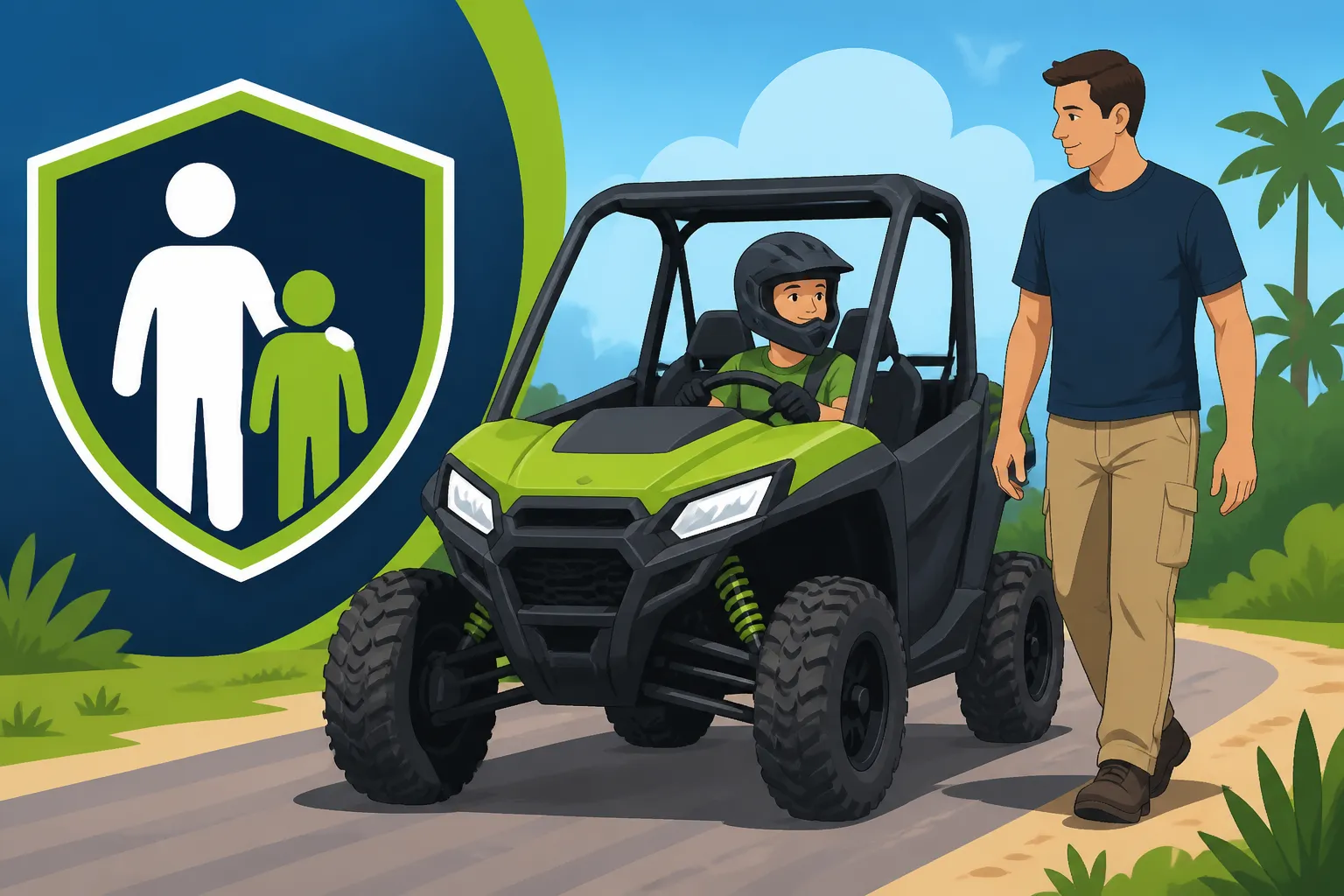
For supervision to be "direct," the licensed adult must be close enough to the minor to intervene immediately if necessary. This implies a clear line of sight and close physical proximity. Imagine a scenario where a minor is riding on an unpaved road. If the supervising adult is back at the campsite, cooking hotdogs, or even riding their own ATV a quarter-mile ahead, that is not direct supervision. The law generally expects the supervisor to be riding with the minor, either on their own ATV or in a vehicle following closely behind.
This close proximity allows the supervisor to constantly assess the minor's riding, the surrounding environment, and any potential hazards. It means being able to see if the minor is struggling with a particular terrain feature, if another vehicle is approaching unexpectedly, or if the minor is deviating from safe riding practices. Consider it akin to teaching a child to swim; you don't just watch from the shore, you're in the water right next to them, ready to grab them at a moment's notice. The same principle applies here, ensuring that the minor is under the watchful eye of someone who can react instantly.
Active Monitoring vs. Passive Presence
"Direct supervision" necessitates active monitoring, not just a passive presence. This isn't about simply being in the vicinity; it's about continuously observing, evaluating, and being prepared to offer instruction or intervene. The supervisor should be actively scanning the environment, communicating with the minor (if appropriate and safe to do so), and anticipating potential issues. For instance, if you're supervising a minor riding a [Florida Title for a Youth 90cc Quad], you need to be aware of the smaller machine's limitations and the minor's experience level, adjusting your monitoring accordingly.
A passive presence might involve sitting in a parked truck while the minor rides loops around a field nearby. While this might be acceptable on private property, it absolutely does not meet the criteria for direct supervision when any part of that riding occurs on a public roadway. Active monitoring means your attention is fully engaged with the minor's riding activity, not divided by a phone call, a conversation with another adult, or anything else that detracts from your primary responsibility.
The 'Immediate' Ability to Intervene
The cornerstone of direct supervision is the "immediate" ability to intervene. This means the supervisor must be able to take prompt action to prevent an accident, correct unsafe behavior, or provide assistance. If the minor swerves unexpectedly, approaches a dangerous obstacle, or is about to make an illegal maneuver on the roadway, the supervisor needs to be able to stop them, guide them, or physically assist them without delay. This often translates to riding on a separate ATV or UTV right alongside or immediately behind the minor, allowing for verbal commands, hand signals, or even physically blocking a dangerous path.
This is where the equipment aspect also becomes critical. A well-maintained machine, perhaps with aftermarket parts from a brand like SuperATV that enhance visibility or control, can contribute to safer riding, but it never replaces the supervisor's active role. If you are supervising from a vehicle, it must be capable of keeping pace and maneuvering effectively with the ATV. If you can't keep up or get to the minor quickly, you're not providing immediate intervention. This principle is why [Florida ATV Passenger Rules] also have strict guidelines, as adding a passenger can change the dynamics of control and intervention.
The Licensed Adult's Responsibilities When Supervising
Being a supervising adult isn't just about showing up with a valid driver's license; it's a significant responsibility that encompasses preparing the rider, inspecting the equipment, and continuously ensuring safety throughout the ride. It's a role that requires diligence, foresight, and a commitment to protecting the minor under your care. Many accidents involving minors on ATVs could potentially be avoided with more rigorous oversight from the supervising adult.
Ensuring the Minor's Safety Equipment
Before any wheel turns on a public roadway, the supervising adult is responsible for ensuring the minor is properly outfitted with the required safety gear. Florida law specifies [Florida ATV Helmet Law for Riders Under 16], mandating a U.S. DOT-compliant helmet. But it doesn't stop there. Proper eye protection, such as goggles, is also a must for young riders, as outlined in [Florida Eye Protection Rules for Young Riders]. Beyond the legal minimums, it's highly recommended to ensure the minor wears long pants, long-sleeved shirts, over-the-ankle boots, and gloves.
As a supervisor, you need to visually inspect this gear. Is the helmet snug? Are the goggles clear and properly fitted? Are their boots securely fastened? Do they have appropriate clothing to protect against scrapes and sun? This isn't just about ticking boxes; it's about physically verifying that the minor is as protected as possible against potential injuries. A quick check can prevent a serious injury, and it's a fundamental part of the supervising adult's duty.
Assessing the Minor's Skill Level and Machine Readiness
A critical, often overlooked, responsibility of the supervising adult is to objectively assess both the minor's riding skill level and the readiness of the ATV itself. Just because a minor meets the age requirement for a certain size machine doesn't mean they have the necessary skill or judgment to handle it safely on or near a roadway. The supervisor should consider the minor's experience, their ability to handle different terrains, and their understanding of traffic rules. Is the minor new to riding? Stick to easier, less trafficked areas. Are they seasoned? Still, maintain vigilance, especially near public thoroughfares.
Equally important is the machine itself. Is it the right size for the rider? Is it in good mechanical condition? Are the brakes working? Are the tires properly inflated? If you're using aftermarket parts, ensure they're installed correctly and enhance safety. For instance, robust skid plates or A-arm guards from SuperATV can protect vital components, but they don't absolve you from pre-ride checks. The supervisor must conduct a thorough pre-ride inspection of the ATV to ensure it's safe to operate. A breakdown on a roadway could be dangerous, and a supervisor should minimize that risk.
Setting Clear Rules and Boundaries
Effective supervision involves not just observation but also clear communication and the establishment of strict rules and boundaries before the ride even begins. This means outlining exactly where the minor can ride, what speed limits apply (even on unpaved roads, there's a [Florida ATV Speed Limit on Unpaved Roads]), and what maneuvers are prohibited. Discuss potential hazards, such as blind corners, other vehicles, or changing road conditions.
Before heading out, have a detailed conversation about what the minor should do in various situations: what if they encounter a car? What if they get separated from the supervisor? What if the machine breaks down? Establishing hand signals or simple radio communication protocols (if feasible) can be invaluable. These discussions empower the minor with knowledge and decision-making frameworks, while also reinforcing the supervisor's authority and expectations for safe conduct. Remember, the goal is to prevent incidents, not just react to them.
Common Misconceptions and Risky Practices
Even with the best intentions, many riders and supervising adults fall prey to common misconceptions or engage in risky practices that can undermine the effectiveness of "direct supervision" and lead to legal trouble or accidents. It's easy to assume things that simply aren't true or to become complacent, especially if you've been riding for years. Recognizing these pitfalls is the first step toward avoiding them and ensuring a truly safe and compliant experience.
Thinking "Private Road" Means No Rules
One of the most pervasive misconceptions is that if a road looks private, or is unpaved, then the standard public road rules, including supervision requirements, don't apply. This is a dangerous assumption. Many roads that appear to be private—like dirt access roads to ranches, logging trails, or paths within residential developments—are actually public rights-of-way or have easements that make them subject to Florida's traffic laws. What might seem like a secluded path for your family ride could very well be considered an "unpaved roadway" under the statute, instantly triggering the direct supervision rule for minors.
The consequence of this misunderstanding can be severe. A sheriff's deputy on patrol isn't going to care if you "thought it was private land." If it's a public right-of-way, you're on the hook. Always verify the legal status of any road before allowing a minor to operate an ATV there unsupervised. When in doubt, assume it's public and ensure direct supervision is in place. This proactive approach saves a lot of headaches, especially when you're exploring new areas like those detailed in [Marion County ATV Title Office Hours] or [Putnam County ATV Title Paperwork] areas, where rural roads might blur the lines between public and private.
Believing a Passenger Counts as Supervision
Another risky practice is the idea that if a licensed adult is riding as a passenger on the same ATV as the minor, this constitutes direct supervision. While having an adult passenger might offer some level of oversight, it generally does not meet the legal definition of "direct supervision" in Florida, especially if the ATV is designed for a single rider. Most ATVs are single-rider machines, and carrying a passenger can compromise balance, control, and the operator's ability to react effectively. If the adult is solely a passenger, they are not operating the machine, and therefore their ability to intervene might be limited.
Furthermore, Florida has strict [Florida ATV Passenger Rules], which often prohibit passengers on ATVs not specifically designed for two riders. Trying to use a passenger as a supervisor can lead to a double whammy: a citation for an illegal passenger and a citation for unsupervised minor operation. It's much safer and legally sound for the supervising adult to be on their own machine, allowing them full control and the ability to maneuver independently to provide assistance.
Ignoring Gear Requirements
It's easy, especially on a hot Florida day, to think that just a helmet is enough, or even to skip the helmet entirely for a "quick spin." This is a critical error. Ignoring mandatory gear requirements for minors is not only incredibly dangerous but also a direct violation of Florida law, and it undermines any claim of responsible supervision. The [Florida Eye Protection Rule for Young Riders] is there for a reason – flying debris or insects can cause eye injuries or distract a rider, leading to a crash.
The supervisor is accountable for ensuring all necessary safety equipment is worn correctly. This includes a DOT-compliant helmet, eye protection, and strongly recommended protective clothing. Sometimes, riders might opt for lighter gear for comfort, but safety should always be the priority. Brands like SuperATV offer robust accessories that can enhance safety, but they are complementary to, not a replacement for, proper personal protective equipment. Penalties for non-compliance with these rules can be significant, ranging from fines to potential legal liability in case of an accident.
Practical Tips for Safe and Legal Supervision
Knowing the rules is one thing; putting them into practice effectively is another. Supervising a minor on an ATV or UTV, especially on a roadway, requires preparation, ongoing vigilance, and consistent communication. These practical tips are designed to help you not only comply with Florida law but also to foster a safer and more enjoyable riding experience for everyone involved.
Pre-Ride Briefings and Safety Checks
Before you even start the engines, a thorough pre-ride briefing and safety check are paramount. This is your opportunity to go over the rules of the road, discuss the route, and remind the minor about safe riding practices. Emphasize concepts like maintaining a safe speed, looking out for other vehicles, staying to the right on unpaved roads, and avoiding sudden maneuvers. You might even discuss the importance of being able to stop quickly, a skill that can be enhanced by reliable brakes and quality control components, which can sometimes be upgraded with parts from companies like SuperATV.
During this briefing, conduct a comprehensive check of both the minor's safety gear and their ATV.
Make sure:
- Helmets are snug and buckled.
- Eye protection is clean and properly fitted.
- Tires are properly inflated.
- Brakes are tested and fully functional.
- Lights (if applicable for the machine and conditions) are working.
- Fuel levels are adequate.
This routine not only ensures readiness but also instills good habits in the young rider.
Communication Methods While Riding
Effective communication is vital for direct supervision. On the trail or an unpaved road, this can be challenging due to engine noise, wind, and distance. Consider implementing a system of hand signals that both the supervisor and minor understand for common commands like "slow down," "stop," "caution," or "turn." These signals should be practiced and reinforced regularly.
For longer rides or situations where verbal communication is difficult, consider using two-way radios or helmet-mounted communication systems. These can provide instant feedback and allow the supervisor to offer real-time instructions or warnings, significantly enhancing the safety aspect of supervision. The ability to quickly warn a minor about an approaching vehicle or a sudden change in terrain is invaluable. Remember, while a minor may be capable of riding on private land, the dynamics of [Driving an ATV on a Florida Dirt Road] introduce new variables that require heightened communication.
Leading by Example
As a supervising adult, you are a role model. The way you ride, your adherence to safety rules, and your respect for the law will significantly influence the minor's behavior. Always wear your own safety gear, even if you're over 16 and not legally required to wear a helmet on private land. Follow all traffic laws, including posted speed limits and right-of-way rules, even on unpaved roads. Demonstrate responsible riding by avoiding reckless behavior, staying on designated trails, and respecting private property.
If you preach safety but then engage in risky maneuvers, the message will be lost. Leading by example reinforces the importance of safe riding practices and shows the minor that these rules apply to everyone, regardless of age or experience. This consistent modeling helps to build a foundation of responsible riding that will serve the minor well throughout their riding life, whether they're riding for fun on the weekends or utilizing their machine for tasks on [Florida Farm and Ranch ATV Road Exceptions].
Consequences of Non-Compliance
Ignoring Florida's direct supervision laws for minors on ATVs and UTVs isn't just a minor oversight; it carries a range of serious consequences that can impact both the supervising adult and the minor, legally, financially, and sometimes tragically. It's not a risk worth taking, considering the potential repercussions far outweigh the convenience of lax supervision.
Legal Penalties for the Adult and Minor
The most immediate consequence of non-compliance is legal penalties. If a law enforcement officer, such as a Florida Sheriff, encounters a minor operating an ATV on a public roadway without direct supervision from a licensed adult, both the adult (if present or responsible) and potentially the minor can face citations. The supervising adult could be cited for violating Florida Statute 316.2074, which can result in fines. The amount of the fine can vary, but it's typically a traffic infraction. Additionally, if the minor is also found to be lacking a required safety certificate, that's another potential citation.
Beyond simple fines, repeated offenses or involvement in an accident could lead to more severe legal actions, including charges of child endangerment or negligence, depending on the circumstances. This is particularly true if the lack of supervision directly contributed to an injury. These are not minor traffic tickets; they can have lasting impacts on an adult's record and can escalate quickly in a court of law. For a detailed look at some of these costs, you might review [Florida ATV Ticket Cost for Illegal Road Riding].
Machine Impoundment and Financial Repercussions
In some cases, law enforcement has the authority to impound the ATV or UTV if it's being operated illegally, especially when minors are involved without proper supervision or safety gear. This means not only a citation but also the hassle and expense of retrieving the machine from an impound lot. Impound fees, storage fees, and administrative costs can quickly add up, creating a significant financial burden that far exceeds any initial fine.
Beyond impoundment fees, there are other financial repercussions. An accident resulting from unsupervised riding could lead to costly medical bills for injuries sustained by the minor or others. Property damage to the ATV or other vehicles could also be substantial. Insurance policies might not cover incidents that occur due to illegal operation or negligence, leaving you personally liable for all damages. This financial strain can be immense, proving that cutting corners on supervision can be a very expensive mistake. Always be mindful of [Florida Sales Tax When You Title an ATV] as well, as this represents a significant investment that you want to protect from impoundment.
The Broader Impact on Off-Road Riding Access
Every incident involving illegal or unsafe ATV operation by minors, particularly on public roadways, contributes to a broader negative perception of the off-road riding community. When local communities and law enforcement repeatedly deal with issues related to unsupervised youth on ATVs, it can fuel calls for stricter regulations, increased enforcement, or even outright bans on ATV use in certain areas. This means that a few irresponsible actions can impact the riding access for everyone.
Counties are constantly evaluating their rules regarding ATV access. Incidents of non-compliance can lead to [Florida Counties That Banned ATVs From Roads] or further restrictions on where and when ATVs can be ridden. This limits opportunities for responsible riders and families who follow the rules. By adhering to direct supervision laws, you're not just protecting your own family and finances; you're also helping to preserve access to public riding areas for the entire off-road community in Florida, ensuring that the next generation can continue to enjoy this pastime responsibly.
Comparison of Supervision Scenarios
Here's a quick comparison of common supervision scenarios and whether they meet Florida's "direct supervision" standard for minors on public roadways:
| Scenario | Supervising Adult Present? | Licensed Driver? | Close Proximity/Line of Sight? | Immediate Intervention Possible? | Meets "Direct Supervision" Standard? |
|---|---|---|---|---|---|
| Adult riding own ATV alongside minor | Yes | Yes | Yes | Yes | YES |
| Adult following closely in a vehicle | Yes | Yes | Yes | Yes | YES |
| Adult on same ATV as minor (single-rider machine) | Yes | Yes | Yes (but limited) | Limited | NO (also likely illegal passenger) |
| Adult at campsite, minor on dirt road nearby | Yes | Yes | No | No | NO |
| Adult riding ahead, out of sight of minor | Yes | Yes | No | No | NO |
| Minor riding alone on friend's "private" dirt road (actually public) | No | N/A | N/A | N/A | NO (and adult liable) |
| Minor riding on paved road for "quick errand" | Yes | Yes | Yes | Yes | NO (ATVs generally illegal on paved roads) |
Disclaimer
This article is for general informational purposes only and does not constitute professional advice. Laws, prices and regulations vary by location and change over time. Consult a qualified professional for guidance on your specific situation.