Crossing a Florida State Road on a Quad
There’s nothing quite like the freedom of hopping on your quad or side-by-side, ready to hit some of Florida's incredible trails or just cruise around your own private property. But then you encounter it: that pesky paved state road standing between you and where you want to go. It’s a common frustration for riders across the Sunshine State, often leading to confusion and, sometimes, trouble. This guide is here to clear up exactly when, where, and how you might legally cross a Florida state road on your ATV, and more importantly, when you absolutely should not.
The Strict Reality of Florida's Paved Roads for ATVs
Let's face it, Florida is a paradise for outdoor enthusiasts, and ATVs are a big part of that. But when it comes to riding on public roads, especially paved state roads, the rules are pretty clear and often quite strict. It’s not just about what you want to do, but what you can do safely and legally.
Why Paved State Roads Are Generally Off-Limits
The primary reason you can’t simply ride your ATV down a paved state road like it’s a car is fundamental: ATVs and UTVs are classified as Off-Highway Vehicles (OHVs) for a reason. They are designed for rugged, unpaved terrain – think sandy trails, mud bogs, and grassy fields – not high-speed asphalt. Florida law, specifically Chapter 316, "State Uniform Traffic Control," clearly outlines where OHVs can and cannot operate, and paved state roads are almost universally a no-go zone.
Imagine trying to navigate a busy stretch of, say, US-27 or State Road 70 during rush hour on your quad. It’s not just illegal; it's genuinely dangerous. Cars and trucks are traveling at much higher speeds, and your ATV just isn’t designed for that kind of environment. Most ATVs lack the basic safety features that street-legal vehicles are required to have: no turn signals, small or non-existent brake lights compared to a car’s, and often only a single small rearview mirror, if any. Your machine's tires are aggressive, built for traction in dirt and mud, not smooth pavement, which can make handling unpredictable at road speeds. The lack of standard safety features, combined with the significant speed differential and the ATV's lower profile, creates a recipe for disaster on a paved state highway. These aren't minor infractions; these are serious safety concerns that lawmakers have addressed to prevent severe accidents.
Understanding the Unpaved Roadway Distinction
A key concept in Florida's ATV laws is the distinction between paved and "unpaved roadways." This is where the nuances of the law reside. While the law is generally restrictive about ATVs on paved surfaces, it does provide some specific allowances for unpaved roads. An "unpaved roadway" refers to roads constructed of dirt, shell rock, gravel, or other natural materials, as opposed to asphalt or concrete. This distinction is absolutely crucial because it dictates where you might have any legal standing to operate your ATV.
Think about the difference between a county-maintained dirt road leading deep into agricultural land, or a shell-rock access road cutting through a power line easement, versus a four-lane state highway like State Road 44 or SR 50. The law specifically allows ATVs on certain unpaved roads under very specific conditions, usually requiring a title and sometimes a safety course, as detailed in articles like [Florida Off-Highway Vehicle Title Rules Explained] or [Florida ATV Safety Course Requirements for Riders Under 16]. However, that carve-out rarely, if ever, extends to anything with asphalt or concrete that is part of the state's main road network. It's designed to facilitate access in rural areas where unpaved roads are common, not to allow ATVs onto the primary transportation arteries.
When and How You Can Cross a State Road
Given the general prohibition, many riders wonder if there’s any scenario where they can legally cross a paved state road. Thankfully, Florida law does provide a very narrow exception, but it’s crucial to understand its strict limitations.
The Brief, Direct Crossing Exception
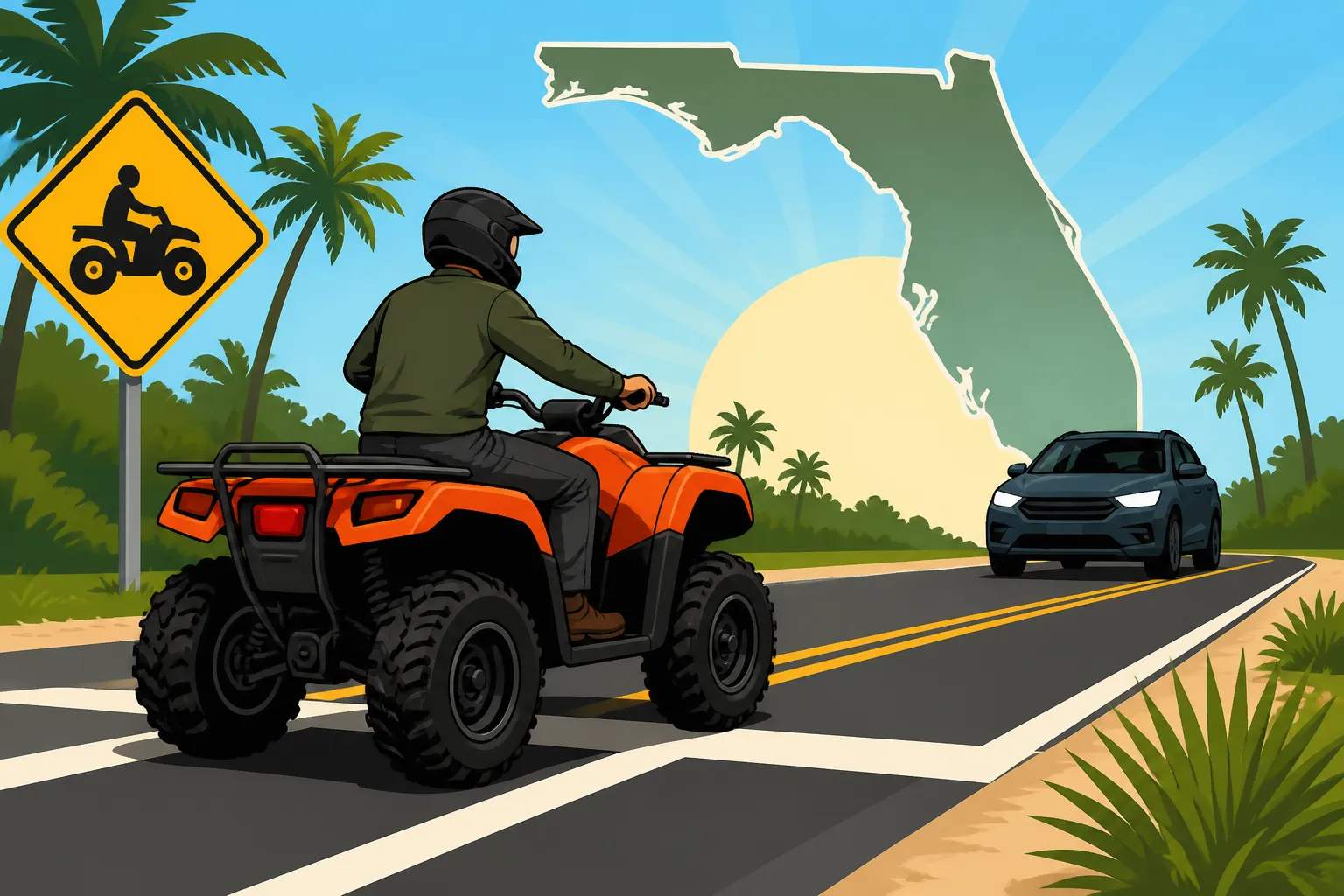
Florida Statute 316.2123 outlines the specific conditions under which an OHV may cross a public highway. This is the critical piece of information for any ATV rider needing to get from one side of a state road to another. This exception is not a carte blanche to ride down the road, but rather a highly controlled maneuver.
Here are the strict conditions you must meet for a legal crossing:
- Crossing at Approximately 90 Degrees: You must cross the highway at as close to a right angle as possible. This minimizes your time in the travel lanes and makes your path predictable to other drivers. You can't angle across the road diagonally, which would extend your time on the pavement and make you harder for oncoming traffic to judge.
- At a Place Where a Quick, Safe Crossing Can Be Made: This means you need a clear line of sight in both directions, free from blind spots, hills, or curves that could obscure your view or that of approaching vehicles. You're looking for an area where you can quickly and efficiently traverse the pavement without lingering.
- The Operator Must Yield to All Oncoming Traffic: This is non-negotiable. You have to wait until there is absolutely no oncoming traffic that poses a hazard. You cannot assume drivers will slow down or see you. Your responsibility is to ensure the path is clear before you even begin your crossing.
- Crossing From an Unpaved Road or Shoulder to Another Unpaved Road or Shoulder: This is a huge qualifier. You cannot just pop out of the woods or a ditch onto a state road. Your crossing must be a continuation from an unpaved public road, a designated trail, or the unpaved shoulder of the road, leading directly to another unpaved road or shoulder on the opposite side. This isn't about connecting paved roads; it's about bridging two unpaved sections.
- This Only Applies to Unpaved Public Roads or Easements Legally Open to ATVs: The unpaved paths you are connecting must themselves be legal for ATV use. You can’t use this exception to illegally access a trail system or private land that isn’t otherwise open to OHVs. For example, if you're riding on a county-maintained dirt road that's open to ATVs, and it's bisected by a state road, you might be able to cross. This is typically applicable for roads that are part of a larger off-highway network or provide access to large tracts of land.
Consider a hypothetical scenario: You're enjoying a ride on a legal unpaved forest service road within the Ocala National Forest, or perhaps a section of rural county dirt road. This unpaved road is suddenly interrupted by a paved state road for a short distance before continuing as another unpaved section on the other side. You pull up to the edge, stop, scan for traffic in both directions, wait for a completely clear window, and then quickly and directly cross the pavement to the unpaved section on the opposite side. This is precisely the kind of situation this statute aims to address.
Local Ordinances and Designated Crossings
While state law provides the general framework, some counties or municipalities might have specific ordinances that either restrict or, in rare cases, facilitate ATV use. It's always a good idea to check with the local county sheriff's office or municipal clerk's office for specific rules in the area you plan to ride. However, it's very uncommon for local ordinances to supersede state law regarding state highways. While you might find designated ATV roads at the county level (as explored in [Florida Counties That Designated ATV Roads]), these generally won't apply to state-maintained paved roads.
It’s incredibly frustrating when you know a great riding spot is just across that one paved road, and you might even see other people doing it. But local laws can be tricky, and what’s okay in one county might get you a ticket in another. Never assume. A friend's experience in Hernando County might be completely different from what's allowed in Putnam County. Always do your homework.
Equipment and Safety Considerations for Crossing
Even when a crossing is legally permitted, safety is paramount. Your ATV might be a beast on the trail, but it's vulnerable on a paved road. Make yourself as visible as possible to minimize risk.
Here are some practical tips:
- Bright Clothing: Wear highly visible colors, such as neon green, orange, or yellow.
- Safety Flag: Many riders attach a tall, brightly colored safety flag to their machine. This adds a crucial element of visibility, especially in areas with tall vegetation or rolling terrain leading up to the crossing. Brands like SuperATV offer a variety of whip lights and flags that can make you stand out.
- Headlights On: Always have your headlights on, even in broad daylight.
- Hand Signals: Since many ATVs lack turn signals, use clear and unambiguous hand signals to indicate your intention to cross, even if you don't expect other drivers to perfectly understand them. It demonstrates your awareness and intent.
- Eye Contact: If possible, make eye contact with drivers of approaching vehicles. Acknowledgment can go a long way in ensuring they see you.
- Check Mirrors (if applicable): If your ATV has mirrors, use them to check for traffic behind you before starting your crossing. Aftermarket mirrors are a great addition for improved situational awareness.
- Minimize Time on Pavement: The goal is to get across as quickly and safely as possible. Don't stop in the middle of the road, and don't hesitate once you've committed to the crossing.
While these additions enhance safety, they don't magically transform your ATV into a street-legal vehicle. They are simply best practices for making a permitted crossing as safe as it can possibly be.
Penalties, Risks, and Alternatives to Illegal Crossings
The temptation to take a shortcut across a paved road can be strong, especially when the destination seems so close. However, the legal and physical risks associated with illegal road use are substantial and far outweigh any perceived convenience.
The Legal Consequences of Illegal Road Use
Florida law takes the illegal operation of OHVs on public roadways seriously. Deputies, the Florida Highway Patrol (FHP), and even forest rangers are well aware of the rules. A simple "I was just trying to cross" or "I didn't know" won't get you out of trouble if you're violating the law.
Here are some potential consequences:
- Fines: Expect a significant traffic citation. Fines can vary but can quickly add up, often starting in the hundreds of dollars.
- Points on Your Driver's License: Operating an ATV illegally on a public road can result in points being added to your standard Florida driver's license, which can lead to increased insurance premiums or even license suspension if you accumulate too many points. [Florida ATV Ticket Cost for Illegal Road Riding] is an article that further details this.
- Impoundment of Your ATV: This is one of the most common and frustrating penalties. Law enforcement has the authority to impound your machine, especially if it's being operated illegally. Getting your ATV out of impound is not only a logistical nightmare but also an expensive one, involving towing fees, storage fees, and administrative charges. These costs can easily exceed the initial fine.
- Criminal Charges: In certain egregious cases, such as reckless operation, repeated violations, or if an accident occurs, more serious criminal charges could be filed.
- No Insurance Coverage: Your ATV insurance, if you have it (and it's not required for titling, as explained in [Do Florida ATVs Need Insurance to Be Titled]), is almost certainly void if you're operating the machine illegally on a public road. This means you'll be personally liable for any damages or injuries if you cause an accident.
The Dangers of Mixing ATVs and Paved Traffic
Beyond the legal ramifications, the physical dangers of operating an ATV on paved roads, even for short distances, are immense. Nobody wants to think about getting into an accident, especially when you're just trying to enjoy a ride. But the reality is that a relatively lightweight, often uncaged ATV offers minimal protection in a collision with a car or truck.
- Severe Injury or Fatality: ATVs lack seatbelts, airbags, and the structural integrity of a road vehicle. Riders are highly exposed, and even a low-speed impact can lead to severe injuries, including head trauma, broken bones, and internal injuries.
- Vulnerability: Your ATV's aggressive tires, high center of gravity, and open design make it inherently unstable at road speeds, especially when interacting with paved surfaces, potholes, or sudden maneuvers.
- Driver Visibility: Other drivers on a state road simply aren't looking for an ATV. Your machine is much smaller and lower to the ground than most cars, making it difficult to see, especially in traffic, at dusk, or in adverse weather conditions.
- Liability: If you are involved in an accident while illegally operating your ATV on a state road, you will almost certainly be found at fault, leading to significant personal liability for damages, medical bills, and potential lawsuits.
Trailering: The Safest and Most Legal Option
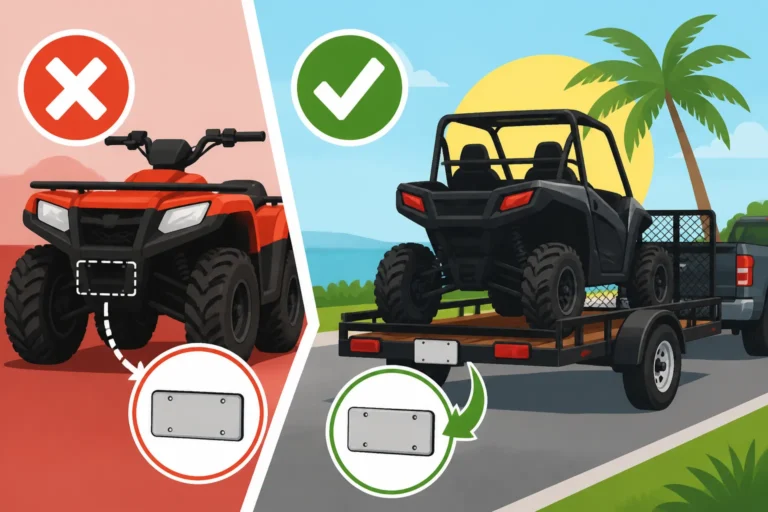
While it might feel like an extra step or an inconvenience, trailering your quad to the next riding spot, across town, or between different trailheads is almost always the safest and most legal approach. Investing in a small utility trailer or using a truck bed is a smart decision for any Florida ATV enthusiast.
- Eliminates Legal Risk: You entirely bypass any concerns about violating road use laws.
- Maximizes Safety: Your ATV is securely transported, and you are in a vehicle designed for road travel, offering maximum protection.
- Protects Your Machine: Trailering prevents unnecessary wear and tear on your ATV’s drivetrain, suspension, and tires that comes from riding on pavement.
- Peace of Mind: You can focus on enjoying your ride once you arrive, rather than constantly worrying about law enforcement or safety hazards on the road.
If you don't already have one, consider looking into a small utility trailer. You'll want to ensure [Trailer Lights That Keep You Out of Trouble] are functioning correctly and that you understand how to properly secure your machine, as outlined in guides like [Strapping a Quad Down for a Highway Tow]. It’s a small investment that offers huge returns in safety, legality, and peace of mind.
Special Cases and Important Distinctions
Florida law, like much legislation, has its nuances and exceptions. While the general rule is "no ATVs on paved state roads," it's important to understand where other vehicles fit in and what truly constitutes an exception.
Side-by-Sides and LSV Conversions
UTVs, or side-by-sides, are increasingly popular for both recreation and utility. While they are generally subject to the same off-highway vehicle rules as ATVs, there's a specific pathway for some UTVs to gain limited road-legal status: conversion into a Low-Speed Vehicle (LSV). This is a very different process than simply putting an aftermarket light bar on your quad.
An LSV is defined in Florida as any four-wheeled vehicle whose top speed is greater than 20 miles per hour but not greater than 25 miles per hour. For a UTV to qualify as an LSV, it must meet stringent safety requirements, including headlights, turn signals, stop lights, reflective devices, a parking brake, a windshield, seatbelts, and a Vehicle Identification Number (VIN). This is not just about adding a few parts; it's a comprehensive conversion that often requires professional installation and inspection. Even as an LSV, these vehicles are strictly limited to roads with a posted speed limit of 35 mph or less, and they are prohibited from crossing major state roads or highways unless there is a specifically marked crossing. They also require proper registration and insurance.
This pathway is typically costly and doesn't apply to traditional ATVs, which are usually designed for much higher speeds and don't fit the LSV classification. For more on this, you can check out articles like [Florida LSV Registration and Insurance Rules] and [Turning a Side-by-Side Into a Florida LSV]. It's a niche solution for very specific UTV models and road types, and it certainly doesn't open up state highways for general ATV use.
Farm and Ranch Exemptions
Florida law does provide some specific exemptions for vehicles used in agricultural operations. Bona fide farmers, ranchers, and those involved in agribusiness might be permitted to operate certain types of ATVs or UTVs on public roads for specific agricultural purposes, such as moving between fields or accessing equipment.
However, it's crucial to understand that this exemption is strictly for legitimate agricultural use. You cannot claim a "farm exemption" simply because you ride your quad to pick up feed for your backyard chickens or to check a small garden plot. The law is designed to support commercial farming and ranching operations, not to provide a loophole for recreational riders. Misrepresenting your use to claim a farm exemption could lead to severe penalties. So, don't confuse riding your quad to check on your back forty with cruising it down State Road 17 to the convenience store. The law makes a very clear distinction.
What an OHV Title Does Not Allow
Finally, let's address a common misconception: having a Florida title for your ATV somehow grants you special privileges on public roads. While Florida does require titling for ATVs, as discussed in [Who Must Title an ATV in Florida] or [Florida Off-Highway Vehicle Title Rules Explained], this title is primarily for establishing ownership, facilitating sales, and providing a record for vehicles operated on public lands or designated trail systems.
An ATV title in Florida does NOT mean your machine is street legal. It does not give you permission to ride on paved public roads, nor does it excuse you from the rules regarding crossing state highways. An OHV title is distinctly different from a motor vehicle registration and plate, which are required for street-legal vehicles. For a deeper dive, read [What an OHV Title Does Not Let You Do]. It simply proves you own your machine, which is important for theft recovery and complying with rules for riding in places like the Ocala National Forest or Croom Motorcycle Area, where [Florida OHV Permits: What You Need Before You Ride] are often required.
Understanding these distinctions is key to staying safe and legal while enjoying your ATV in Florida.
Here’s a quick overview of the distinctions:
| Feature | Illegal Paved Road Use / Improper Crossing | Legal Direct Crossing | Trailering ATV |
|---|---|---|---|
| Paved Road Travel | Prohibited | Prohibited (except direct cross) | Vehicle only (ATV on trailer) |
| Purpose | Convenience, shortcut | Connecting unpaved sections | Transporting machine safely |
| Conditions | None met | 90-degree, clear visibility, yield | Secure machine, proper trailer lights |
| Legal Status | Illegal, dangerous | Permitted under strict rules | Legal, safest |
| Consequences | Fines, impoundment, points, accident risk | No issue if rules followed | None |
| Required Equipment | Basic ATV features (insufficient) | Basic ATV + high visibility | Truck/trailer, tie-downs |
Disclaimer
This article is for general informational purposes only and does not constitute professional advice. Laws, prices and regulations vary by location and change over time. Consult a qualified professional for guidance on your specific situation.