Florida Beach Driving Rules for Quads
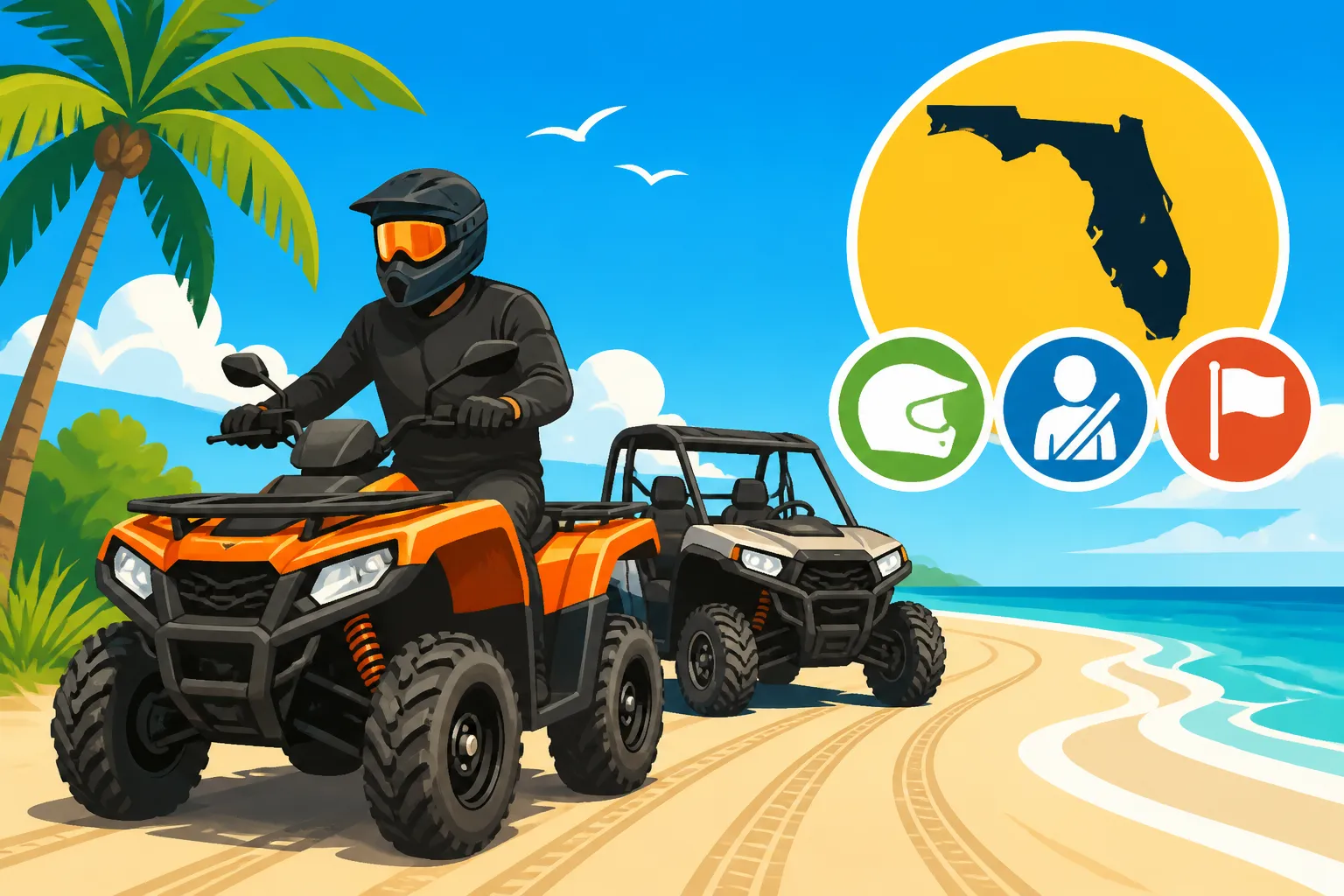
The image of cruising down a sun-drenched Florida beach on your quad, the salty breeze in your hair, is a dream many ATV and UTV enthusiasts share. However, for most of Florida, that vision remains exactly that: a dream. The reality is far more restrictive, and attempting to ride your ATV on Florida's beautiful coastlines can lead to significant fines, impoundment, and environmental damage. This guide will walk you through the stringent rules surrounding ATVs on Florida beaches, clarify the rare exceptions, and help you understand the serious implications of ignoring these regulations.
The Harsh Reality: Why Beach Riding Your Quad in Florida is Mostly a No-Go
It’s easy to look at the vast expanse of Florida’s coastline and think it’s the perfect playground for an ATV. After all, it's just sand, right? But the truth is, Florida’s beaches are highly protected and regulated environments. Unlike some other states where beach driving might be commonplace, Florida has largely restricted off-road vehicles from its sandy shores due to a confluence of environmental, safety, and logistical concerns.
Coastal Protection and Sensitive Ecosystems
Florida is home to some of the most fragile coastal ecosystems in the world. Our beaches aren't just stretches of sand; they are vital habitats for countless species. This is perhaps the biggest reason why ATV access is so severely restricted.
Imagine the churned-up sand and noise an ATV creates. This can be devastating for nesting sea turtles, whose eggs are laid in precisely the soft, undisturbed sand that ATVs would disrupt. Sea turtle nesting season, which typically runs from May through October, is a particularly sensitive time, but the protection extends year-round. Beyond turtles, the dunes themselves are critical. They act as natural barriers against storm surge and erosion, protecting inland properties. The vegetation on these dunes, like sea oats, has shallow, delicate root systems that are easily destroyed by tires, leading to erosion and habitat loss for shorebirds, small mammals, and insects. Even the simple act of driving across the sand can compact it, making it harder for burrowing creatures to survive. The state understands that uncontrolled vehicular access would quickly degrade these precious natural resources beyond repair, impacting not only wildlife but also the long-term health of the coast.
Safety Concerns and Public Access
Beyond environmental concerns, public safety plays a massive role in restricting ATVs from beaches. Florida beaches are immensely popular tourist destinations, often crowded with swimmers, sunbathers, families with young children, and joggers. Introducing fast-moving, heavy off-road vehicles into such a high-traffic pedestrian environment is a recipe for disaster.
The speed and maneuverability of ATVs, while thrilling off-road, pose a significant risk to an unsuspecting public. Visibility can be limited, especially around dunes or in crowded areas, and the soft sand can make stopping quickly challenging. Local authorities are tasked with ensuring a safe and enjoyable experience for all beachgoers, and allowing ATVs would fundamentally undermine that mission. Furthermore, the very concept of public access dictates that these shared spaces should be free from the dangers and disturbances that motorized vehicles can present. It's about preserving the tranquility and safety of a universally cherished natural amenity for everyone to enjoy without fear of collision or excessive noise. For these reasons, you'll rarely find an exception to the rule.
State vs. Local Control: Who Makes the Rules?
It’s easy to get confused about who exactly sets the rules for Florida’s beaches. Is it a state law, or do counties and cities have a say? The answer is a bit of both, but generally, local jurisdictions have significant power, often leading to a patchwork of regulations that are almost universally prohibitive for ATVs.
While there are overarching state statutes that protect coastal areas and wildlife, individual counties and municipalities have the authority to enact their own ordinances regarding beach access and vehicle use. This means that what might be technically allowed (however rare) in one county could be strictly forbidden just a few miles down the coast in another. For example, some counties might allow street-legal vehicles on certain stretches of beach during specific times of the year, usually for fishing or access to private property, but almost never for recreational ATV riding. The challenge is that these local rules are typically very specific, highly restrictive, and often change. You simply cannot assume that because you saw a truck on a beach once, your quad is also welcome. This intricate web of regulations means that "checking local ordinances" isn't just a suggestion; it's a critical step, and even then, you'll likely find that recreational ATV riding on the beach is prohibited.
The Rare Exceptions: Where You Might Find Limited Beach Access
Given the strong reasons against ATV beach riding, truly legal recreational access is virtually non-existent in Florida. However, it's important to understand the very narrow circumstances under which any vehicle might be permitted, and why these don't typically apply to ATVs for casual fun.
Permitted Access for Specific Purposes
In extremely limited scenarios, certain vehicles might be granted access to Florida's beaches, but these are almost always for official, essential, or very specific non-recreational purposes. This is not for a weekend joyride.
Think about law enforcement patrols, beach cleanup crews, or emergency services responding to an incident. These are vehicles operated by trained personnel with specific missions that necessitate beach access. Similarly, some coastal properties, particularly in more remote areas, might have easements or permits for property owners to access their beachfront homes or fishing spots with a conventional vehicle, often requiring four-wheel drive. [Florida Beach Driving and ATVs] makes it clear that these exceptions are usually for traditional vehicles, not ATVs, and are highly regulated. Even then, such access often comes with strict speed limits, designated travel paths, and time restrictions to minimize environmental impact. The key here is "permitted access" – it means someone has applied for, and been granted, specific authorization for a specific purpose, which recreational ATV riding almost certainly does not qualify for. This also extends to certain commercial fishing operations or scientific research, where vehicles are integral to their work.
Historic Access Points (and Why They're Vanishing)
There was a time, long ago, when beach driving was more common in Florida. Iconic images of cars parked right at the water's edge were once a reality in places like Daytona Beach. However, over the decades, these historic access points have progressively faced more restrictions or have been completely phased out due to the very same environmental and safety concerns we've discussed.
While a few areas, like specific stretches of Daytona Beach and St. Johns County beaches, still allow conventional street-legal vehicles (cars, trucks) to drive and park on the sand, these are typically very confined areas, heavily managed, and come with significant fees, speed limits, and strict rules. Critically, these allowances almost universally exclude ATVs and UTVs. The definition of a "street-legal vehicle" for beach access typically refers to vehicles that are registered, insured, and designed for highway use, often requiring proper licensing and equipment, which most ATVs are not. Even in these rare spots, the focus is on parking and access, not free-roaming recreational driving. So, while a nostalgic postcard might show a car on the sand, the window for recreational ATV beach riding has largely closed, and is unlikely to reopen.
Understanding Local Ordinances and Permits
Navigating the rules for beach access requires a deep dive into local ordinances, and it can be a headache. You can't just assume what applies in one town applies to the next. Every county, city, and even some smaller coastal communities might have their own specific set of rules.
To find out the exact regulations for a particular stretch of beach, you would need to consult the local government's website, specifically looking for codes or ordinances related to beach use, vehicle access, and environmental protection. Many municipalities will have signs posted at beach access points detailing what is and isn't allowed, including prohibitions on motorized vehicles. [Florida County ATV Opt-Outs: Why Rules Change at the Line] is a prime example of how localized these rules can be, where one county might ban ATVs entirely from roads that another permits. When it comes to beaches, the level of scrutiny is even higher. If by some incredibly rare chance you find an ordinance that seems to permit a specific type of off-highway vehicle, it will almost certainly come with a requirement for a special permit, specific hours of access, and limitations on where you can drive. Never rely on hearsay or what you see others doing; always verify directly with local authorities. The fines for violating these rules can be steep, and ignorance of the law is never an excuse.
Here's a simplified look at the typical restrictions you'd encounter:
| Rule Category | Typical Florida Beach ATV/UTV Stance | Implications for Riders |
|---|---|---|
| Recreational Riding | Almost universally prohibited. Exceptions are practically non-existent for casual riding. | Expect tickets, fines, and vehicle impoundment if caught. |
| Environmental Protection | Strict bans to protect dunes, sea turtle nests, and sensitive ecosystems. | Even "just driving on the wet sand" can disrupt habitats and is often illegal. |
| Public Safety | Beaches are for pedestrians. Mixing fast vehicles with crowds is deemed too dangerous. | High risk of collision with people, especially children, leading to severe legal consequences. |
| Vehicle Type | Even where vehicles are allowed (e.g., Daytona Beach), it's typically for street-legal cars/trucks, not ATVs/UTVs. | Your quad, even if registered for off-highway use, is generally not considered street-legal for beach access. |
| Permits & Access | Very few, highly specific permits exist, usually for official duties (e.g., law enforcement, cleanup) or property access. Rarely for ATVs. | Without a specific, explicit permit for your vehicle, assume you are not allowed. |
| Time Restrictions | Even permitted access usually has strict time windows (e.g., non-peak hours, low tide). | Don't assume if you see a vehicle at one time, it's allowed at all times. |
| Consequences | Fines can range from hundreds to thousands of dollars, plus impoundment and potential legal action. | A quick joyride can turn into a very expensive and stressful ordeal. |
What Happens When You Ignore the Rules: Penalties and Consequences
The desire to ride on a beautiful beach is understandable, but the temptation to ignore the rules in Florida can lead to very serious, and very costly, consequences. It's not just a slap on the wrist; breaking beach vehicle ordinances is taken seriously by law enforcement and environmental agencies.
Tickets, Fines, and Impoundment
If you decide to take your ATV onto a Florida beach where it's prohibited, you're not just risking an admonishment. You're likely facing immediate and significant penalties. Law enforcement patrols our beaches regularly, looking for violations that could endanger the public or harm the environment.
First and foremost, expect a citation. Fines for driving an unauthorized vehicle on a beach can range from several hundred to over a thousand dollars, depending on the specific ordinance and the county or city. These aren't minor parking tickets; they are serious infractions. Beyond the immediate fine, your ATV will almost certainly be impounded. This means towing fees, storage fees that accrue daily, and the hassle of arranging for its release, which often requires paying all outstanding fines and fees first. The cost of retrieving an impounded vehicle can quickly add up to hundreds or even thousands of dollars on top of the initial ticket. This doesn't even account for the time lost, the stress, and the potential for a criminal record depending on the severity of the violation, especially if environmental damage is involved. Many riders who have faced these consequences will tell you that the brief thrill of breaking the rules was absolutely not worth the financial and logistical nightmare that followed. [Florida ATV Ticket Cost for Illegal Road Riding] gives you an idea of how seriously law enforcement views unauthorized vehicle use.
Environmental Damage and Reputation
Beyond the direct legal and financial hit, riding an ATV on a prohibited Florida beach contributes to environmental damage and tarnishes the reputation of the entire off-road riding community. While a single rider might think their individual impact is small, cumulative actions can have devastating effects.
The tracks left by your ATV can destroy delicate dune vegetation, leading to erosion and making the coastline more vulnerable to storms. It can crush or disturb the nests of protected species like sea turtles and shorebirds. The noise and presence of a vehicle can also stress and displace wildlife, impacting their feeding, breeding, and resting behaviors. For those of us who love ATVs, we understand the importance of responsible riding and preserving the natural spaces we enjoy. When riders disregard these critical protections, it creates a negative image for all off-road enthusiasts, leading to stricter regulations across the board, even in areas where riding might otherwise be permitted. It fuels the narrative that ATVs are inherently destructive, making it harder for responsible riders to advocate for new trails or maintain access to existing ones. Protecting these environments is a shared responsibility, and upholding the rules helps ensure the long-term viability of both our natural landscapes and our beloved sport.
The Importance of Knowing Before You Go
Ultimately, the best advice for any ATV or UTV owner in Florida hoping for a beach ride is to assume it's prohibited unless you have absolute, verifiable proof otherwise. This means doing your homework, not just looking for an open stretch of sand.
Before you even think about heading toward a beach access point with your quad, take the time to research the specific local ordinances for that exact location. Check the county and city websites, look for posted signs, or even call the local sheriff's department or parks and recreation department for clarification. Remember, a lack of "No ATV" signs doesn't mean "Yes ATV." It usually means the general prohibition is assumed or covered by broader regulations. Don't be swayed by what you see others doing; they might be authorized, or they might be breaking the law themselves and simply haven't been caught yet. SuperATV, for instance, offers a wide range of parts and accessories that can enhance your ATV's performance and safety for permitted off-road trails and parks, but none of these modifications will make it legal to ride on a Florida beach. Invest in good gear, understand [Florida's Off-Highway Vehicle Title Law Explained] and find fantastic, legal riding opportunities at places like [Ocala National Forest ATV Trails in Florida] or [Croom Motorcycle Area: Florida's Biggest OHV Park]. These designated areas are designed for off-road fun and are where you can truly unleash your machine without risking environmental harm or legal trouble. Florida has some incredible, legal riding spots; save your beach trips for a stroll or a swim, and keep your ATV on the trails it was meant for.
Disclaimer
This article is for general informational purposes only and does not constitute professional advice. Laws, prices and regulations vary by location and change over time. Consult a qualified professional for guidance on your specific situation.