Why a Cart Needs No Title but an LSV Does
It's incredibly easy to get tangled up in Florida's rules when you're just trying to enjoy a ride in your neighborhood. Many of us see golf carts and Low-Speed Vehicles (LSVs) cruising around, and it's natural to think they're pretty much the same thing. But when it comes to the legal paperwork, especially titles, the state treats them like entirely different beasts. This guide will walk you through the surprising reasons why an LSV absolutely needs a title in Florida, while your trusty golf cart can roll along without one, and what that means for you as an owner.
Decoding Florida's Vehicle Classifications
Before we can even begin to understand the titling difference, we need to get a grip on how Florida's Department of Highway Safety and Motor Vehicles (FLHSMV) actually defines these two popular types of neighborhood cruisers. It's not just about what they look like; it's about their engineering, their intended use, and crucially, their speed.
What Defines a Golf Cart in Florida?
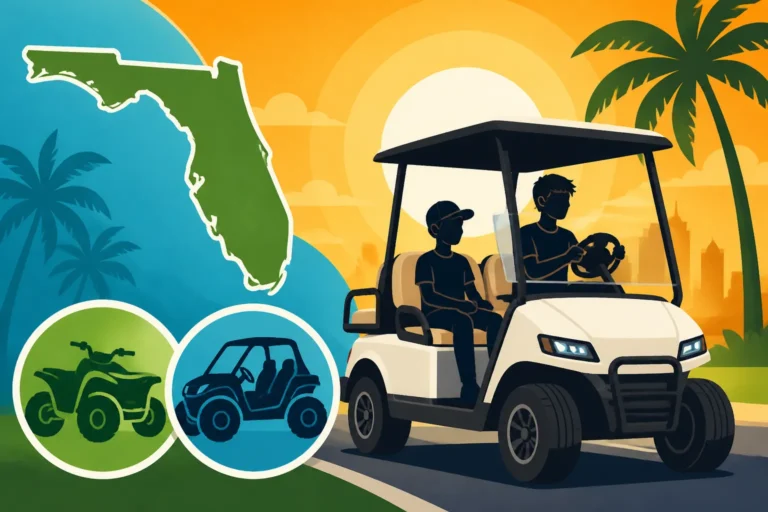
When we talk about a "golf cart" in Florida, we're generally referring to a motor vehicle that's designed primarily for use on a golf course for golfing purposes. But here's the kicker that makes all the difference: its maximum speed is engineered to be less than 20 miles per hour. That's right, it's all about that top speed. These vehicles are usually pretty basic – they don't typically come with all the bells and whistles you'd expect on a regular car, and their safety requirements are often less stringent.
Think of your typical neighborhood runabout, the kind you see folks driving from their house to the clubhouse, or just puttering around a large retirement community to visit friends. They're built for short distances, low speeds, and a relaxed pace. They're not designed with public highways or even higher-speed local roads in mind. In the eyes of the law, a golf cart isn't generally considered a "motor vehicle" in the same way your car is, which is a key part of why it gets a pass on some of the heavier paperwork.
Understanding Low-Speed Vehicles LSVs
Now, an LSV is where things start to get a bit more serious in terms of legal requirements. While an LSV might often look very similar to a souped-up golf cart, especially to the untrained eye, it's actually classified as a true "motor vehicle" under Florida Statute 320.01(42). The most significant difference? Its top speed. An LSV is designed to reach speeds greater than 20 miles per hour but not greater than 25 miles per hour. That small 5 mph window between 20 and 25 mph is incredibly significant for its legal classification and all the associated rules.
Because an LSV is capable of these slightly higher speeds and is intended for use on public roads with speed limits up to 35 mph, it's required to have a whole host of safety equipment that a standard golf cart doesn't. We're talking headlights, taillights, stop lights, turn signals, reflex reflectors, a parking brake, an exterior rearview mirror (or two if the interior one is obstructed), a windshield, and seatbelts for all designated seating positions. It also must have a Vehicle Identification Number (VIN), just like a car. This robust safety gear and the VIN are critical indicators that the state considers it a legitimate road-going vehicle, even if it's limited in speed.
The Crucial Speed Difference and Its Impact
It really all boils down to that speed threshold. The moment a vehicle designed for personal transport can exceed 20 miles per hour, Florida's legislature decided it needed to be treated with a higher level of scrutiny. That 5 mph difference isn't just a minor technicality; it's the dividing line that separates a leisurely golf course accessory from a machine capable of interacting more directly and frequently with regular road traffic.
This distinction has ripple effects across every aspect of ownership, from what kind of paperwork you need to what roads you can legally use. When a vehicle hits that 20 mph mark, it crosses into a category where the state wants to ensure proper ownership is established, its safety features are up to par for public roads, and it can be tracked in the event of theft or an accident. It's less about the engine size or the number of seats and almost entirely about how fast it can go.
The Titling Divide: Why LSVs Get a Title, Golf Carts Don't
This is the core question that stumps so many Floridians, and it makes perfect sense why it's confusing. Both vehicles are small, often electric, and primarily used in communities. But the law draws a very clear line in the sand.
Florida's Titling Mandate for Motor Vehicles
In Florida, a title serves as the official proof of ownership for a motor vehicle. It's a fundamental document in the state's system for tracking vehicles, recording liens, and preventing fraud. Generally speaking, if it's considered a "motor vehicle" and travels on public roads, it needs a title. This includes cars, trucks, motorcycles, and yes, even ATVs and UTVs under specific circumstances, as detailed in articles like [Florida's Off-Highway Vehicle Title Law Explained]. The title establishes who legally owns the vehicle and, if there's a loan involved, who the lienholder is. It's a critical piece of paper that gives you legal standing as the owner.
Golf carts, however, are typically exempt from this requirement. Because they are capped at under 20 mph and are often used on private property or very specific, designated public access routes, they don't meet the state's full definition of a "motor vehicle" that requires titling. This exemption makes buying and selling them a bit simpler, but it also means there's less official record-keeping by the state for these vehicles.
How LSV Requirements Mirror Standard Vehicle Laws
LSVs, on the other hand, absolutely fall under Florida's titling mandate because they are explicitly defined as motor vehicles capable of 20-25 mph. This is why you'll find that their requirements are much more akin to those for a traditional car or even a motorcycle. When you purchase an LSV, whether new from a dealer or used from a private seller, you'll go through a titling process that's very similar to buying any other titled vehicle. This process records your ownership with the state and assigns a unique title number to your specific VIN.
The presence of a VIN (Vehicle Identification Number) on an LSV is key here. It's a unique serial number that identifies the specific vehicle, and it's what the state uses to issue a title. This makes it possible to track the vehicle's history, ensure it hasn't been reported stolen, and record any liens against it. For owners looking to customize their LSV or even convert a golf cart into an LSV, it's crucial to ensure all components, especially those related to safety and identification, meet FLHSMV standards. Companies like SuperATV offer a range of parts and accessories, and if you're outfitting an LSV, you'd want to ensure any additions are compliant with state street-legal requirements, from lighting to mirrors, to maintain its titled status. This careful adherence to standards helps your LSV meet the same legal scrutiny as other titled vehicles.
The Importance of a Title for Ownership and Security
Having a title for your LSV isn't just about jumping through bureaucratic hoops; it's genuinely important for your peace of mind and legal protection. The title is the ultimate proof that you legally own that vehicle. Imagine if your LSV were stolen. Without a title, proving it's yours to law enforcement or an insurance company would be significantly more challenging. The title provides a clear, official record. Similarly, if you ever decide to sell your LSV, a clean title is absolutely essential. Any buyer worth their salt will demand to see it, and trying to sell an LSV without one would be a massive red flag, suggesting potential legal issues or that the vehicle might be stolen.
Furthermore, if you need to finance your LSV, a title is non-negotiable for lenders, as they will record their lien on it until the loan is paid off. This is precisely why articles like [Checking a Florida Quad's Title History] or even [Florida Title for a Youth 90cc Quad] emphasize the importance of having proper documentation when dealing with vehicles that require titles, as it validates ownership and protects against future headaches. A title essentially anchors your LSV in the legal framework of vehicle ownership, providing a layer of security that an untitled golf cart simply doesn't have.
Practical Realities for Florida Owners
So, what does this title versus no-title distinction actually mean for you, the person who owns or wants to own one of these vehicles in the Sunshine State? The differences extend far beyond just a piece of paper.
Buying and Selling: What Paperwork Do You Need?
When you're looking to buy or sell a golf cart in Florida, the process is generally quite straightforward, precisely because no title is involved. Typically, a simple bill of sale, often handwritten and signed by both parties, is sufficient to transfer ownership. While it's always a good idea to include details like the make, model, year, and any serial number, the state doesn't track these sales in the same way it does titled vehicles. This can make private sales quick and easy, but it also means there's less official recourse if a problem arises.
For an LSV, however, you absolutely must have a Florida title to complete a legal transfer of ownership. When buying, ensure the seller provides a clear, properly endorsed title. If the seller doesn't have it, walk away. Attempting to buy an LSV without a title is extremely risky and can lead to serious legal complications, including unknowingly purchasing a stolen vehicle. The advice given in [Buying a Quad With No Title From a Neighbor] resonates deeply here: never buy a titled vehicle without its title. When selling, you'll need to sign over the title to the new owner, often at a county tax collector's office, to ensure the transfer is legally recorded. The bill of sale for an LSV, as outlined in [Florida ATV Bill of Sale: What It Needs to Say], will complement the title transfer but not replace it.
Registration and Plates: A Clear Distinction
Here's another big differentiator: LSVs in Florida are required to be registered with the state and display a license plate, just like a standard car. This means you'll pay annual registration fees, and your LSV will have a unique plate number issued by the FLHSMV. This registration is critical for legal road use and allows law enforcement to identify the vehicle and its owner quickly. You'll renew this registration periodically, keeping your vehicle compliant for public street use.
Golf carts, on the other hand, do not require registration or a license plate in Florida. This is a significant convenience for owners, as it removes an annual fee and a piece of paperwork. However, this lack of registration also highlights their limited legal use on public roads. While some communities or local ordinances might allow golf carts on certain designated streets, they operate under different rules than registered, plated vehicles. For a comprehensive look at the specific requirements for LSVs on Florida roads, you can check out [Florida LSV Registration and Insurance Rules].
Insurance Considerations for Both Vehicle Types
The titling and registration status directly impacts the type of insurance you'll need or should consider. For LSVs, because they are titled and registered as motor vehicles for road use, Florida's financial responsibility laws apply. This means you are legally required to carry Personal Injury Protection (PIP) and Property Damage Liability (PDL) insurance. This coverage protects you and others in the event of an accident on a public road, which is a very real possibility when you're sharing the street with cars. You'll want to discuss these specific requirements with your insurance provider. The higher speeds of LSVs, nearing that 25 mph mark, naturally lead to a higher risk profile, as discussed in [Florida LSV Top Speed Limit], making mandated insurance a crucial safety net.
Golf carts, conversely, are not legally mandated to carry PIP or PDL insurance for operation on public roads because they aren't registered as motor vehicles. However, it is highly recommended that you secure some form of liability coverage. Many homeowners' insurance policies may offer limited coverage for golf carts used on private property, but you might need a separate golf cart policy if you frequently use it on community roads or have significant assets to protect. Imagine an incident where your golf cart causes damage or injury – without insurance, you could be personally liable. Even though it's not legally required, smart owners ensure they're covered.
Beyond Titling: Road Rules and Equipment
The differences between golf carts and LSVs extend well beyond paperwork and fees. The state of Florida has distinct rules governing where and how these vehicles can be operated, as well as the safety equipment they must possess.
Where Can You Legally Ride Each?
This is perhaps one of the most important distinctions for owners to understand, as violating these rules can lead to citations and fines. Golf carts in Florida are generally restricted to private property, golf courses, and designated public roads where the posted speed limit is 25 mph or less. Crucially, these public roads must be designated for golf cart use by a local ordinance. You can't just drive your golf cart on any road with a 25 mph limit; the county or municipality must have explicitly allowed it. Many gated communities and retirement villages have their own internal rules, but when you hit a public street, state and local laws take precedence. Understanding these specific local nuances is key to safe and legal operation.
LSVs, because they are titled and registered as motor vehicles, enjoy broader road access. They can legally operate on any public road where the posted speed limit is 35 mph or less. This significantly expands their utility for running errands, commuting short distances, or simply enjoying a cruise around your neighborhood without needing special local permission. However, they are still prohibited from state highways, interstates, and other high-speed roadways. It's a significant upgrade in freedom of movement compared to a golf cart. For a clearer understanding of the differences in road use, you might find [Florida Golf Cart Laws vs ATV Laws] and [Florida Low-Speed Vehicle Rules for Side-by-Sides] helpful in navigating these regulations.
Essential Safety Equipment Requirements
The equipment requirements are where the LSV truly distinguishes itself as a road-worthy vehicle. To be classified and legally operated as an LSV in Florida, the vehicle must be equipped with a specific list of safety features. This includes headlamps, stop lamps, turn signals (front and rear), tail lamps, reflex reflectors, a parking brake, an exterior rearview mirror (or two if an interior one is obstructed), a windshield, and seatbelts at all designated seating positions. These aren't optional; they are mandatory for the vehicle to be titled and registered. This comprehensive list of equipment is designed to ensure the LSV can safely share the road with other motor vehicles, signaling its intentions and remaining visible.
Golf carts, by contrast, have far fewer mandated equipment requirements at the state level. While manufacturers typically include basic lights and horns, they are not legally required to have turn signals, rearview mirrors, or seatbelts unless specific local ordinances dictate otherwise. If you're considering upgrading a golf cart with a lift kit or other performance parts, for example from SuperATV, remember that simply adding accessories doesn't magically turn it into an LSV in the eyes of the law; it needs to meet all the speed and safety equipment criteria for that classification. Many owners do add aftermarket lights, mirrors, or even seatbelts to their golf carts for increased safety, and that's a smart move, but it doesn't change its classification or exempt it from golf cart road rules.
Penalties for Non-Compliance
Operating either a golf cart or an LSV outside of Florida's established rules can lead to real consequences. For an LSV, failing to title, register, or insure it, or operating it on roads with speed limits over 35 mph, can result in tickets, fines, and even impoundment, much like with any other motor vehicle. The penalties for such infractions can be significant, reflecting the state's view of an LSV as a legitimate, albeit limited, road vehicle. These are not mere suggestions; they are laws that law enforcement officers are tasked with enforcing.
Similarly, operating a golf cart illegally on public roads where it's not permitted, or disregarding local ordinances, can also lead to citations. While the penalties might not always be as severe as those for an un-titled or un-registered LSV, they are still a hassle and can involve fines and court costs. It's crucial for golf cart owners to be acutely aware of their local rules, as they vary widely from county to county and community to community. For an idea of the kinds of penalties one might face for unauthorized road use, referencing articles such as [Florida Penalties for Illegal ATV Road Riding] can give you a sense of the consequences the state imposes for improper vehicle operation. Always err on the side of caution and ensure you're compliant with all applicable laws for your specific vehicle.
Golf Cart vs. Low-Speed Vehicle (LSV) Comparison
| Feature | Golf Cart | Low-Speed Vehicle (LSV) |
|---|---|---|
| Top Speed | Less than 20 mph | 20-25 mph |
| Titling Required? | No | Yes (State-issued title) |
| Registration? | No | Yes (with license plate) |
| Insurance | Not legally mandated (liability highly recommended) | Legally mandated (PIP, PDL) |
| Road Use | Restricted (designated roads, private property) | Public roads up to 35 mph speed limit |
| VIN | Often a serial number, not a legal VIN | Required (unique 17-digit Vehicle ID Number) |
| Safety Equipment | Basic (lights, horn often standard) | Headlights, taillights, stop lights, turn signals, reflex reflectors, parking brake, rearview mirror, windshield, seatbelts |
| Legal Classification | Not typically a "motor vehicle" for titling purposes | "Motor Vehicle" under Florida Statute |
Disclaimer
This article is for general informational purposes only and does not constitute professional advice. Laws, prices and regulations vary by location and change over time. Consult a qualified professional for guidance on your specific situation.