Why Florida State Parks Turn Quads Away
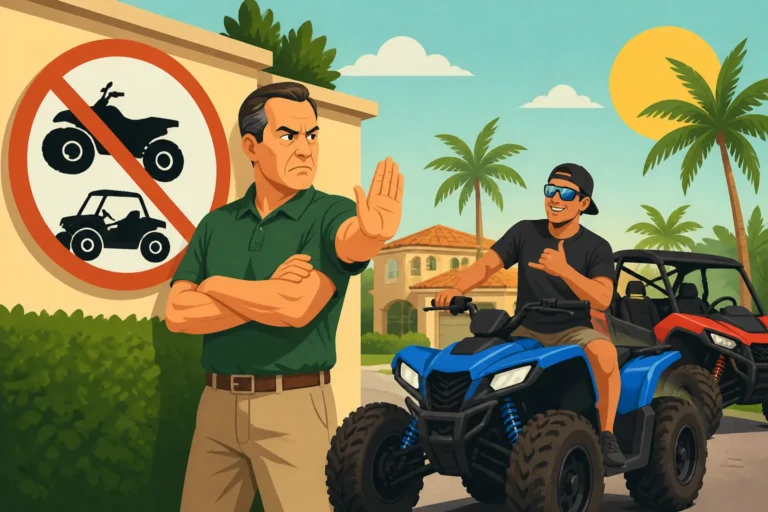
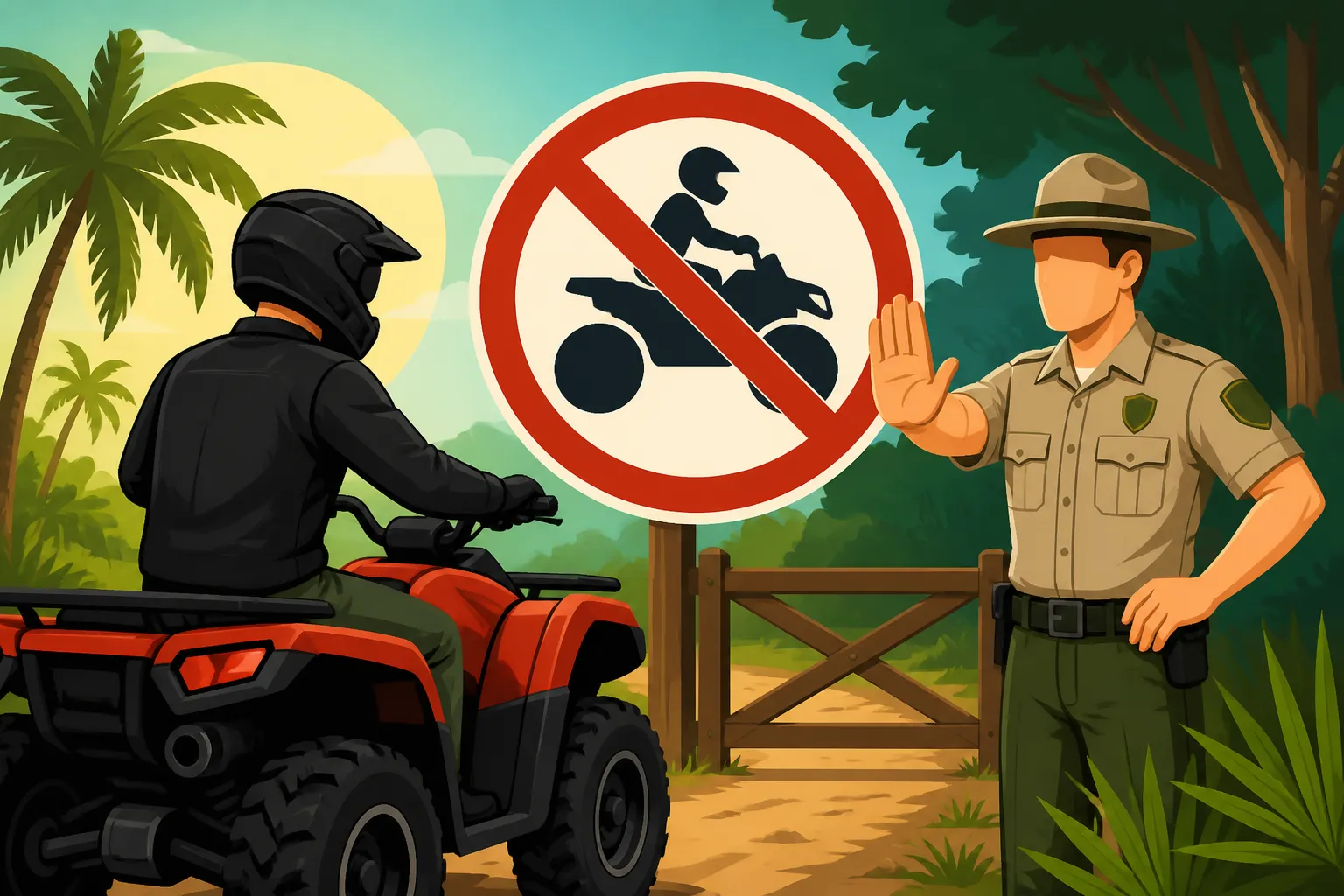
It’s a beautiful sunny day in Florida, and you’ve loaded up your quad or side-by-side, dreaming of exploring some scenic state park trails. You arrive at the gate, full of anticipation, only to be met with a friendly but firm "no." Many riders find it incredibly frustrating and confusing why their beloved ATVs and UTVs are often turned away from Florida State Parks. This guide will dive deep into the specific reasons behind these seemingly restrictive rules, explain what kind of vehicles are permitted, and point you towards fantastic alternatives where your off-highway vehicle (OHV) is welcomed with open arms.
The Distinct Mission of Florida State Parks
Florida's State Parks are truly jewels in the crown of the state's natural beauty, offering serene landscapes and rich biodiversity. However, their primary mission is fundamentally different from designated off-highway vehicle (OHV) riding areas, and this distinction is at the heart of why ATVs and UTVs are typically not allowed.
Conservation and Passive Recreation Focus
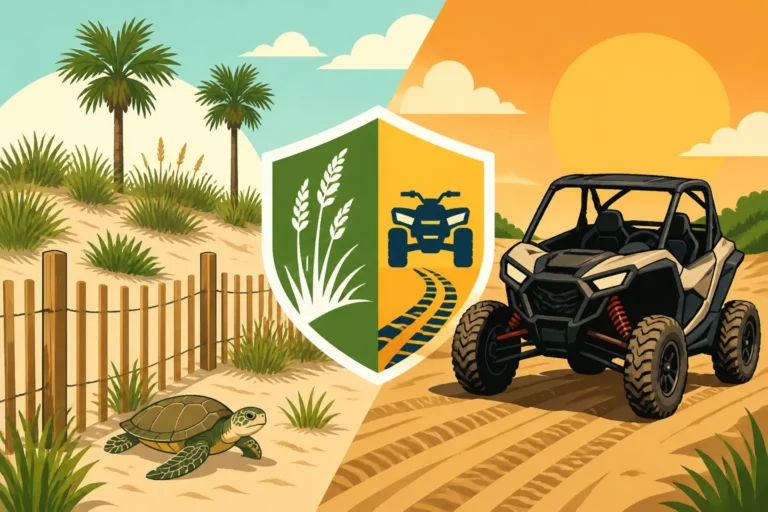
The Florida Park Service manages state parks with a strong emphasis on the preservation of natural and cultural resources, coupled with providing opportunities for passive, resource-based recreation. Think activities like hiking, birdwatching, kayaking, picnicking, fishing, and camping. These activities are designed to have minimal impact on the environment and allow visitors to connect with nature in a quiet, contemplative way. The roar of an engine or the churn of knobby tires, while exhilarating for riders, simply doesn't align with this conservation-first, tranquil experience. The entire infrastructure of a state park, from its carefully maintained walking paths to its sensitive ecological zones, is set up for this specific type of interaction, not for high-impact vehicle use.
Imagine strolling along a boardwalk through a pristine cypress swamp, listening to the calls of wading birds. Suddenly, the tranquility is shattered by the sound of an ATV approaching. This scenario is precisely what state park regulations aim to prevent, protecting both the delicate ecosystems and the experience of visitors seeking peace and quiet. The focus is on preserving the integrity of the natural landscape for generations to come, which means limiting activities that could lead to erosion, habitat disruption, or noise pollution.
Protecting Fragile Ecosystems and Wildlife
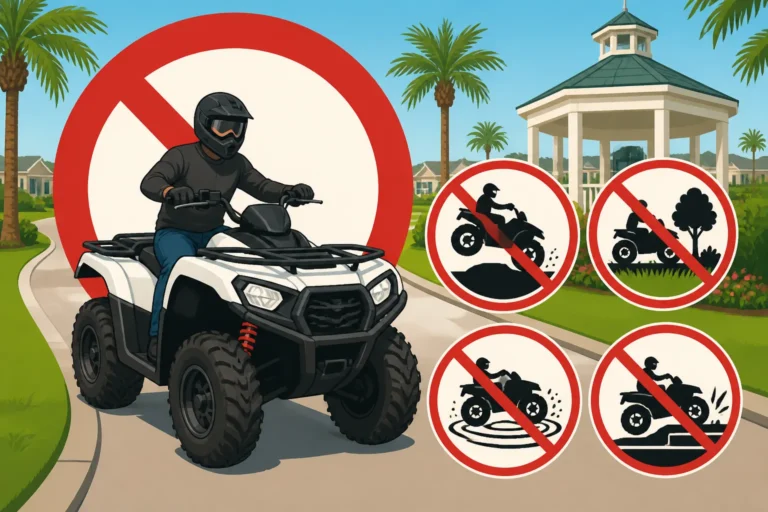
Florida's diverse ecosystems, from coastal dunes to pine flatwoods and freshwater springs, are incredibly fragile. Many state parks protect critical habitats for endangered and threatened species. The heavy weight and aggressive tires of ATVs and UTVs can cause significant soil compaction and erosion, especially in sandy or wetland areas. This erosion can damage plant roots, alter water flow, and lead to sediment runoff into waterways, harming aquatic life. Beyond the direct physical impact, noise and exhaust fumes can disturb wildlife, disrupting their natural behaviors, breeding cycles, and foraging patterns.
Consider a pristine scrub habitat, home to the Florida scrub-jay, a federally threatened bird. Every square foot of this unique environment is vital. Allowing OHVs would quickly degrade the delicate balance of plants and animals that call it home. The deeply rutted trails left by off-road vehicles don't just look unsightly; they can become conduits for invasive species, channel rainwater in unnatural ways, and create barriers for small animals. Park management has a duty to safeguard these sensitive areas, and prohibiting ATVs and UTVs is a direct measure to fulfill that responsibility. It's not about making things difficult for riders; it's about protecting something irreplaceable.
Legal and Practical Roadblocks for OHVs in Parks
Beyond their foundational mission, Florida State Parks face very specific legal and practical challenges that further prevent the widespread use of ATVs and UTVs on their lands. These often boil down to how these vehicles are classified and the potential for unintended consequences.
Not Street Legal and Infrastructure Limitations
A major hurdle for ATVs and UTVs in state parks is their general classification as off-highway vehicles, meaning they are not considered street legal for paved public roads. While some Florida laws allow limited use of OHVs on specific unpaved county roads, state parks typically have paved access roads, parking lots, and a network of designated trails that are either paved, boardwalks, or natural surface paths intended for pedestrian or bicycle traffic. Trying to integrate off-road vehicles into this existing infrastructure creates a safety nightmare. You might be interested in reading [Florida ATV Road Rules: Where You Can Legally Ride] to understand the nuances of this classification.
Imagine a family cycling down a paved park road to a picnic area. The sudden appearance of a quad, even at low speed, presents a clear hazard. State parks are not designed with separate roadways or extensive trail systems robust enough to safely accommodate both OHV traffic and the traditional park activities. Modifying every park to create designated, safe, and environmentally sound OHV trails would be an astronomical undertaking, fundamentally changing the character and purpose of these protected areas. The existing paths are often narrow, winding, and traverse sensitive areas completely unsuitable for vehicle traffic. Even if a particular quad had certain aftermarket street-legal conversions from a company like SuperATV, the park's internal rules and lack of appropriate infrastructure would still be the deciding factor.
Lack of Designated OHV Trails and Permitting
Unlike specific OHV recreation areas, Florida State Parks simply do not have designated, engineered trails for ATVs and UTVs. Creating and maintaining such trails requires significant resources, specialized engineering to prevent erosion and manage drainage, and a robust permitting system to track usage and enforce safety regulations. State parks are funded and staffed to manage hiking trails, camping loops, and visitor centers, not extensive networks of challenging off-road tracks. The very nature of off-road riding, often involving mud, steep grades, and varied terrain, is antithetical to the established trail maintenance practices in state parks.
Furthermore, Florida's OHV title laws, as explained in articles like [Florida Off-Highway Vehicle Title Rules Explained], primarily pertain to ownership and the ability to ride on designated public OHV areas or certain private lands, not access to state parks. There isn't a permit structure in place for OHVs within the state park system because the activity itself is not sanctioned. Attempting to ride an OHV on a state park trail would be considered trespassing or illegal operation of a vehicle, potentially leading to fines or impoundment. The legal framework simply doesn't exist for it.
What Types of Vehicles Are Welcome in State Parks?
So, if your ATV or UTV is usually a no-go, what can you bring to a Florida State Park for some wheeled fun or transportation? The answer lies in vehicles that align with the parks' mission of passive recreation and minimal environmental impact.
Bicycles, Electric Bicycles, and Mobility Devices
Bicycles are almost universally welcomed in Florida State Parks, often boasting miles of paved and unpaved trails perfect for a leisurely ride or a more vigorous workout. Electric bicycles (e-bikes) are also increasingly permitted, though rules can vary by park and trail type, so it's always wise to check ahead. The key here is their non-motorized nature (or low-power electric assist), their minimal footprint, and the quiet experience they offer. You can find everything from smooth paved paths ideal for road bikes to natural surface trails suitable for mountain biking.
For individuals with mobility challenges, electric wheelchairs, scooters, and other approved personal mobility devices are generally allowed on accessible trails and paths, ensuring that everyone can experience the beauty of the parks. These devices are designed for accessibility, operate at low speeds, and are specifically intended to help people move around without disrupting the natural environment or the experience of other visitors. The emphasis remains on enabling access and enjoyment in a quiet, non-disruptive manner, a stark contrast to the power and purpose of an ATV or UTV.
Park-Approved Vehicles and Special Exceptions
On rare occasions, certain park staff may operate specialized utility vehicles (e.g., small electric carts or Gator-type vehicles) for maintenance, emergency response, or guided tours. These are internal, park-managed operations and are not accessible to the general public. These vehicles are strictly controlled, operate on specific service roads, and are used for essential park functions, not recreational riding.
In very specific, limited circumstances, a state park might host an event or have a designated area where a very specific type of vehicle might be allowed, but these are exceptions, not the rule, and would be heavily advertised and regulated. For instance, a park might have a paved path where a golf cart (which has its own set of distinct regulations from ATVs, as discussed in [Florida Golf Cart Laws vs ATV Laws]) is permitted to transport visitors to a beach access point. However, these are distinct from OHVs and fall under different legal and operational guidelines. Always assume ATVs and UTVs are prohibited unless explicitly stated otherwise by the park directly.
Where Florida OHV Enthusiasts Can Truly Ride
Getting turned away from a state park can be disappointing, but Florida is far from a barren landscape for ATV and UTV riders! There are numerous dedicated spaces where your off-highway vehicle is not only permitted but celebrated. You just need to know where to look.
Dedicated Public OHV Areas and State Forests
Florida boasts several fantastic public lands specifically set aside for off-highway vehicle recreation. These areas are managed by entities like the Florida Forest Service or the USDA Forest Service and are designed with OHV riding in mind, featuring extensive trail systems, designated mud holes, and facilities catering to riders. These are the places where you can truly let loose and enjoy your machine.
One of the most popular is the [Croom Motorcycle Area: Florida's Biggest OHV Park] within the Withlacoochee State Forest, offering miles of diverse trails, including sand, mud, and technical sections. You'll also find trails in the [Ocala National Forest ATV Trails in Florida], such as the Centennial OHV Trail. These areas understand the needs of OHV riders and often have varying terrain suitable for different skill levels, from beginner-friendly loops to challenging routes for experienced riders. They also have specific rules and permit requirements, which might include purchasing a [Florida National Forest OHV Pass Prices] or [Florida State Forest OHV Day Use and Annual Passes]. Unlike state parks, these locations embrace the culture and activity of off-roading, providing a safe and legal environment for riders. Many riders outfit their vehicles with high-performance parts from SuperATV specifically for these types of challenging environments.
Private Mud Parks and Off-Road Resorts
Beyond public lands, Florida is home to a vibrant scene of private mud parks and off-road resorts that cater specifically to ATV and UTV enthusiasts. These privately owned and operated parks offer controlled environments where riders can enjoy everything from open mud bogs to drag strips, obstacle courses, and camping facilities. They often host events, races, and themed weekends, creating a lively community atmosphere. You can find more information about these in articles like [Florida Mud Parks: Where Riders Actually Go].
Consider places like Hog Waller ATV Resort in Palatka or Redneck Mud Park near Punta Gorda. These venues are built for machines and the kind of hard-charging riding that would be completely inappropriate (and illegal) in a state park. They understand that riders want to test their vehicles, tackle challenging terrain, and get a little (or a lot) muddy. Many riders will have already installed lifts, heavy-duty axles, and other robust components, perhaps from SuperATV, to prepare their machines for the extreme conditions found at these parks. These parks provide a safe, legal, and often social outlet for the passion of off-roading, complete with amenities like wash stations, food vendors, and even live entertainment. Just remember to check their specific rules, entry fees, and safety requirements before you go.
Comparing OHV Riding Venues in Florida
To help you quickly understand where your quad or side-by-side will be welcomed, here's a quick comparison of the types of venues we've discussed.
| Feature / Venue Type | Florida State Parks | Public OHV Areas (e.g., State/National Forests) | Private Mud Parks / Off-Road Resorts |
|---|---|---|---|
| Primary Mission | Conservation, passive recreation | OHV recreation, resource management | OHV recreation, entertainment |
| ATV/UTV Access | Generally NOT allowed | YES, on designated trails | YES, on designated trails/areas |
| Typical Activities | Hiking, biking, swimming, camping | OHV riding, camping, hunting | OHV riding, mudding, camping, events |
| Environmental Focus | High protection, minimal impact | Managed impact, trail sustainability | Designated impact zones |
| Road Legality Concern | High (lack of street-legal access) | Low (trails are off-road) | Low (trails are off-road) |
| Permit/Fee Structure | Entrance fees (no OHV permit) | OHV permits required, entrance fees | Entrance fees (daily/event based) |
| Noise & Disturbance | Prohibited | Managed, part of the experience | Embraced |
| Infrastructure | Paved roads, pedestrian trails | Dirt trails, some service roads | Dirt trails, mud pits, event areas |
| Example Locations | Bahia Honda State Park | Croom Motorcycle Area | Hog Waller ATV Resort |
Conclusion: Knowing Where to Roam
While the pristine and peaceful environment of Florida State Parks might not be the place for your ATV or UTV, that doesn't mean Florida is without incredible opportunities for off-road adventure. Understanding the distinct mission and regulations of different land management agencies is key to finding the perfect spot for your ride. Instead of being frustrated by a "no" at the state park gate, turn your sights towards the vibrant network of dedicated public OHV areas and private parks where your machine, equipped with robust parts, perhaps from SuperATV, is not just allowed but encouraged. Happy trails!
Disclaimer
This article is for general informational purposes only and does not constitute professional advice. Laws, prices and regulations vary by location and change over time. Consult a qualified professional for guidance on your specific situation.