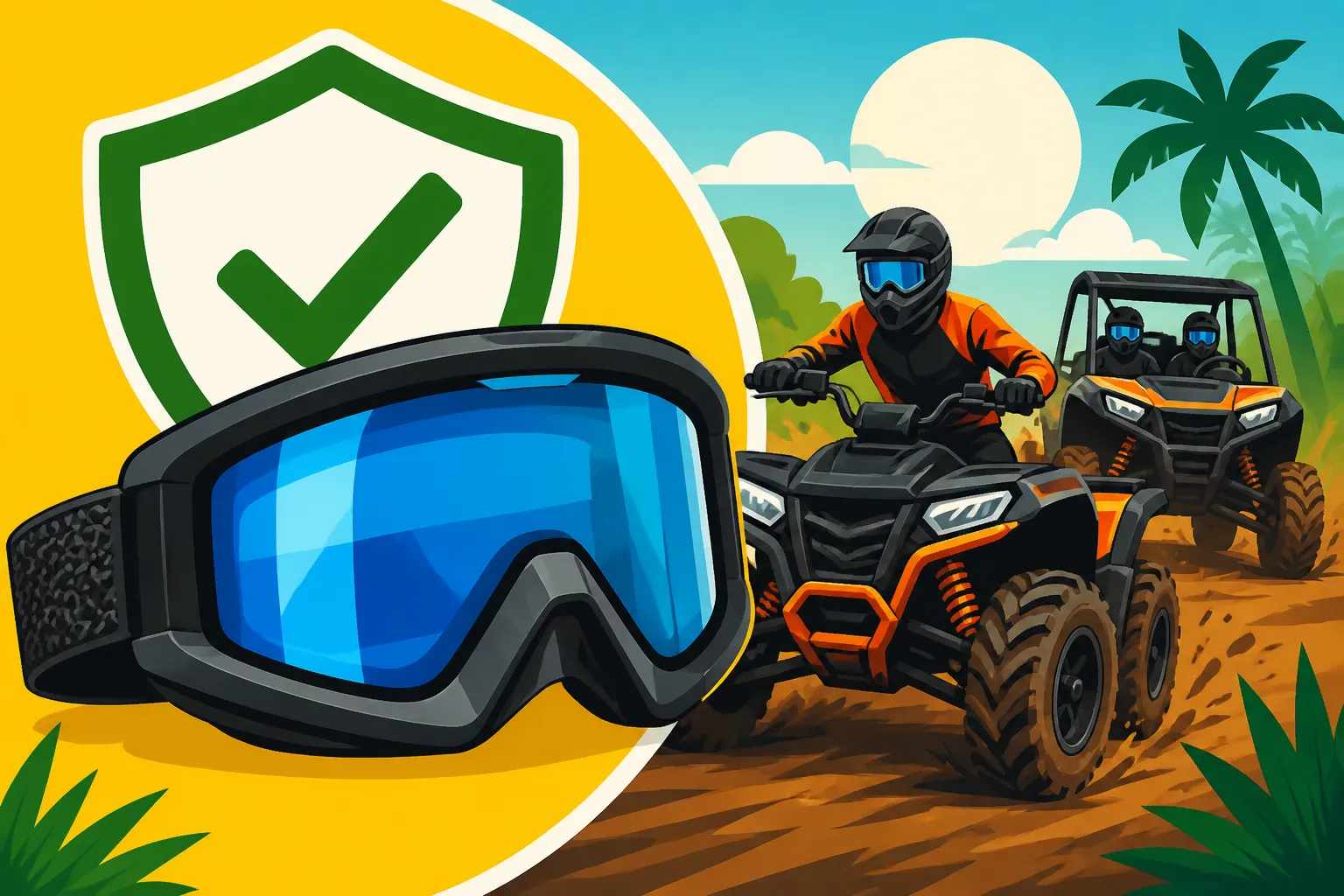
Goggles That Satisfy an Eye Protection Rule
Riding an ATV or UTV in Florida is an incredible experience, but the sunshine and open air also bring potential hazards – not least of which are flying debris, dust, and those pesky lovebugs that seem to appear out of nowhere. Many riders are left scratching their heads wondering exactly what kind of eye protection the state actually requires, and if their favorite sunglasses truly cut it. This guide is designed to cut through the confusion and help you understand what kind of goggles and eyewear truly satisfy Florida's eye protection rules, ensuring both your safety and compliance.
Understanding Florida's ATV Eye Protection Law
Navigating the various rules and regulations for ATVs and UTVs in Florida can sometimes feel like trying to find your way through a dense palmetto patch blindfolded. When it comes to eye protection, the statutes can seem a bit broad, leaving riders wondering if their gear truly makes the cut. It’s not just about avoiding a citation; it's about protecting one of your most vital senses while enjoying the trails and dirt roads of our beautiful state.
Who Needs Eye Protection and When
Florida's specific regulations regarding eye protection primarily target younger riders and certain riding scenarios, but the spirit of the law, and plain common sense, suggests everyone should be wearing appropriate gear. The most explicit mention often comes into play when discussing minors. For example, Florida Statute 316.2074, which deals with off-highway vehicles, requires that "an operator or passenger under 16 years of age must wear a safety helmet and eye protection." This is a critical detail for parents and guardians. If your child is riding an ATV on public lands, designated trails, or even on certain private properties where these regulations are enforced, compliant eye protection is not optional; it’s the law. This rule often goes hand-in-hand with the [Florida ATV Helmet Law for Riders Under 16].
Beyond the under-16 rule, you’ll find that certain counties or specific riding areas might have their own local ordinances that expand these requirements to all riders, regardless of age, especially on designated recreational trails or unpaved public roads. Even if a local rule isn't explicitly stating "goggles," the general expectation for "eye protection" means something substantial, not just a casual pair of glasses. Imagine kicking up a roost of sand or dirt on a dry trail; without proper eye protection, you're not only risking injury, but potentially losing control if your vision is suddenly obscured. This is why understanding [Florida Eye Protection Rule for Young Riders] is a great starting point for all riders.
What the Law Doesn't Explicitly Say (and the Gap It Creates)
Here's where a lot of the confusion stems from: while the law mandates "eye protection," it typically doesn't dive into the granular specifics of what kind of eye protection. It rarely specifies lens material, impact ratings, or brand names. This lack of explicit definition can lead riders to assume that any pair of glasses or sunglasses will suffice. Unfortunately, that assumption can be dangerous and costly. The gap in the statute means that while a deputy or park ranger might not be able to point to a specific line of code saying your cheap sunglasses are illegal, they can certainly issue a citation if they deem your eye protection insufficient for the conditions or if it clearly doesn't meet the spirit of "protection."
This vagueness forces riders to use good judgment and err on the side of caution. An officer's primary concern is safety, and if your eyewear appears inadequate for preventing injury from common off-road hazards like flying rocks, branches, or mud, it could be deemed non-compliant. This is particularly true when riding on public lands like the Croom Motorcycle Area or Ocala National Forest, where staff are well-versed in the practicalities of off-road safety. They aren't looking for excuses to ticket you, but they are absolutely looking out for rider safety. Remember, the law is designed to prevent injury, not just to look good on paper. For those operating on roads, it's also worth looking into [Florida ATV Road Rules: Where You Can Legally Ride] to understand the broader context.
Essential Features of Compliant and Safe ATV Goggles
Since the law doesn't get into the nitty-gritty of what makes "eye protection" truly protective, it falls to us as responsible riders to choose gear that goes beyond the bare minimum. When you're out there, whether tearing up the trails or just cruising down a designated unpaved road, your eyes are vulnerable. Investing in the right kind of goggles isn't just about compliance; it's about preserving your vision and making your ride more enjoyable and safe.
Impact Resistance: Your First Line of Defense
This is, arguably, the single most critical feature of any good pair of ATV goggles. When you're riding, your eyes are constantly in the path of potential projectiles. Think about it: small rocks kicked up by your own tires or those of the rider in front of you, low-hanging branches on a tight trail, stubborn insects hitting you at speed, or even splashes of mud and water. A flimsy pair of glasses simply won't cut it against these forces. You need lenses made from materials designed to withstand significant impact without shattering or dislodging.
Polycarbonate is the industry standard for ATV goggle lenses, and for good reason. It's incredibly durable, lightweight, and offers excellent optical clarity. When shopping for goggles, look for indications of impact resistance. While off-road goggles aren't always required to meet industrial safety standards like ANSI Z87.1 (which designates high-impact resistance), choosing a pair that at least references these standards, or is clearly designed for powersports, is a smart move. Companies like SuperATV often highlight the ruggedness and impact resistance of their goggle offerings, as they understand the harsh environments their products are used in. Don't skimp here; a broken lens could mean a trip to the emergency room instead of a fun day of riding.
Fit, Field of Vision, and Comfort for Florida Riding
Beyond impact resistance, how your goggles fit and feel on your face can dramatically affect your riding experience and overall safety. A proper fit ensures that the goggles stay securely in place, even over rough terrain, and creates a seal that prevents dust, dirt, and debris from getting into your eyes from the sides, top, or bottom. Look for goggles with a wide, adjustable strap that can comfortably fit over your helmet, and a flexible frame that conforms to your face shape without creating pressure points. Foam padding around the frame is crucial not only for comfort but also for absorbing sweat and creating that essential seal.
A wide field of vision is equally important. You need to be able to see clearly, not just what's directly in front of you, but also your peripheral surroundings. Narrow goggles can restrict your view, making it harder to spot obstacles, other riders, or potential hazards in your blind spots. When trying on goggles, ensure there are no significant frame obstructions in your line of sight. Given Florida's humid climate, ventilation is another key factor for comfort and safety. Well-designed goggles will have vents to promote airflow and minimize fogging, which can be a real nuisance and a serious hazard on a hot, muggy day. Think about [Florida Riding Gear for the Heat] – your goggles are part of that essential kit.
UV Protection and Lens Tints for Variable Conditions
Florida is known for its abundant sunshine, which means UV protection isn't just a nice-to-have; it's a necessity. Prolonged exposure to harmful UV rays can cause eye strain, fatigue, and long-term damage. Most quality ATV goggle lenses offer 100% UV protection, which should be clearly stated in the product description. This protects your eyes from both UVA and UVB rays, regardless of the lens tint.
Speaking of tints, the best goggles will offer options or interchangeable lenses to suit different light conditions you might encounter across Florida's diverse landscapes.
- Clear Lenses: Ideal for cloudy days, night riding, or heavily shaded trails where maximum light transmission is needed.
- Smoke/Gray Lenses: Excellent for bright, sunny days, reducing glare and eye strain without distorting colors. This is often a go-to for open scrub or beach riding.
- Amber/Yellow Lenses: These tints enhance contrast and depth perception, making them great for overcast conditions, hazy days, or riding in dense woods where shadows can play tricks on your eyes.
- Mirrored/Iridium Lenses: Often combined with a base tint, these lenses further reduce glare and add a stylish touch.
Having the right tint can make a significant difference in visibility and comfort, allowing you to react more quickly to changes in terrain or trail conditions.
Beyond Basic Goggles: Advanced Options and What to Avoid
While basic ATV goggles offer fundamental protection, the world of eye protection for off-road enthusiasts has evolved. There are specialized options designed to cater to specific needs, such as riders who wear glasses, or those who prefer integrated helmet solutions. Just as important as knowing what does work, is understanding what absolutely doesn't cut it and why it's essential to avoid insufficient eyewear on the trails.
Over-the-Glasses (OTG) Goggles and Prescription Inserts
For riders who wear prescription glasses, finding comfortable and effective eye protection can be a genuine struggle. Simply wearing goggles over your everyday glasses often leads to discomfort, pressure points, and a poor seal, letting in dust and causing your glasses to fog up even faster than usual. This is where Over-the-Glasses (OTG) goggles come into their own. These are specifically designed with a larger internal volume and sometimes cut-outs in the foam to accommodate the arms of your prescription frames, allowing them to sit comfortably inside the goggles without pinching or distorting your vision.
Another excellent solution for prescription wearers is a goggle with a prescription insert. These inserts clip into the inside of your goggles, and you can have your optician fill them with your exact prescription. This eliminates the need for two layers of eyewear, often providing a more comfortable fit and reducing the likelihood of fogging. While options like these might cost a bit more upfront, the improved comfort, clarity, and safety they offer are invaluable for riders who need corrective lenses. Think of it as an essential upgrade, similar to opting for a better suspension from a company like SuperATV for a smoother ride.
Full-Face Helmets with Integrated Shields vs. Goggles
Many riders, especially those on UTVs or those who also ride motorcycles, opt for full-face helmets that come with an integrated face shield. These shields offer comprehensive facial protection, including the eyes, and can be very convenient. For some riding conditions, particularly on less dusty trails or when riding on [Florida Unpaved Road Rule for ATVs Explained], a good quality integrated shield can certainly satisfy the eye protection requirement. The key here is "good quality." Just like goggles, these shields must be made of impact-resistant materials, typically polycarbonate, and offer clear, undistorted vision.
However, full-face shields aren't always the best choice for every off-road scenario. In very dusty or muddy conditions, fine particles can sometimes work their way under the shield, making it hard to clean and potentially scratching it. Goggles, with their tight seal against the face and often more robust foam filtration, tend to offer superior protection against these specific elements. Furthermore, if a shield gets heavily scratched or damaged, it can be expensive to replace. Many experienced off-road riders actually prefer to wear goggles under a full-face helmet or a dirt bike helmet (which typically doesn't have an integrated shield) for the best combination of dust sealing and ventilation. When considering a helmet, also check if it meets the [Helmets That Meet the USDOT Standard].
What Doesn't Count: Sunglasses and Everyday Eyewear
Let's be absolutely clear: your everyday sunglasses, reading glasses, or even most sports-specific eyewear (like cycling glasses) are almost never sufficient to satisfy the "eye protection" requirement for ATV and UTV riding, neither legally nor practically. Here's why:
- Lack of Peripheral Protection: Regular glasses, even wraparound styles, leave significant gaps around the sides, top, and bottom. This is an open invitation for dust, debris, insects, and even small stones to enter and cause injury. Goggles, by design, create a complete seal around your eye socket.
- Insufficient Impact Resistance: While some fashion sunglasses might claim impact resistance, they are generally not designed to withstand the forces encountered during off-road riding. The lenses can shatter or pop out, and the frames can break, potentially causing more harm than good.
- Poor Retention: Regular glasses are simply not designed to stay on your face during the jarring, bouncing, and sudden movements of ATV riding. They can easily fall off, get lost, or become a dangerous distraction if you're trying to retrieve them mid-ride.
- Limited Vision: Many sunglasses are designed for fashion more than function, with frames that can obstruct peripheral vision. They also rarely offer the anti-fogging and ventilation features crucial for clear vision in humid Florida conditions.
Relying on standard eyewear is a gamble with your vision. While it might seem like a minor detail, deputies conducting a roadside stop for [What Florida Deputies Check at a Roadside Stop] are trained to look for proper safety equipment, and insufficient eye protection could result in a citation. Do yourself a favor: leave the fashion eyewear for walking around town and invest in proper, purpose-built ATV goggles.
| Feature | Standard Sunglasses / Eyewear | ATV/UTV Goggles (Good Quality) | Full-Face Helmet Shield (Good Quality) |
|---|---|---|---|
| Impact Resistance | Low to Moderate | High (Polycarbonate) | High (Polycarbonate) |
| Peripheral Protection | Poor | Excellent (Full Seal) | Excellent (Full Coverage) |
| Dust/Debris Seal | Poor | Excellent | Good (Can allow fine dust) |
| Anti-Fog Features | None | Common (Vents, coatings) | Common (Vents, coatings) |
| UV Protection | Varies | 100% (Typically) | 100% (Typically) |
| Secure Fit | Poor (Easy to dislodge) | Excellent (Adjustable Strap) | Excellent (Integrated with Helmet) |
| Lens Options | Varies (Fashion-driven) | Clear, Tinted, Mirrored, OTG | Clear, Tinted, Mirrored |
| Comfort with Glasses | Poor | OTG models available | Can be worn with glasses |
| Cost | Low to High | Moderate to High | Moderate to High (Helmet cost) |
| Compliance (FL Law) | Usually NO | YES | YES (If robust and well-maintained) |
Where to Find Compliant Eye Protection and Maintenance Tips
Once you understand the features that make for genuinely protective and compliant ATV goggles, the next step is finding the right pair and, crucially, knowing how to keep them in top condition. Good eye protection is an investment in your safety and enjoyment, so it pays to choose wisely and care for your gear properly.
Choosing the Right Retailer and Brands
When it comes to purchasing ATV goggles, don't just grab the cheapest pair you see at a big-box store. Seek out reputable retailers that specialize in powersports gear. This includes dedicated motorcycle shops, ATV dealerships, or online stores known for selling quality off-road equipment. These retailers typically stock brands that are trusted by the riding community and are designed to withstand the rigors of trail use. They'll also often have knowledgeable staff who can help you with fit and features.
Look for established brands known for their goggle lines. While specific brand recommendations can vary based on personal preference and current product cycles, many popular powersports companies offer excellent options. When you visit a store or browse online, pay attention to the product descriptions. They should clearly state lens material (polycarbonate is preferred), UV protection levels, anti-fog features, and whether they are designed for specific conditions like OTG use. Brands like SuperATV and other specialized off-road accessory manufacturers often provide detailed specs on their eye protection, designed for the real-world demands of ATV and UTV riding. Don't be afraid to read reviews from other riders who have used the goggles in similar conditions to what you expect in Florida.
Maintaining Your Goggles for Longevity and Clarity
Even the best goggles won't do you much good if they're scratched, dirty, or fogged up. Proper maintenance is key to ensuring your eye protection remains effective and clear ride after ride.
-
Cleaning: After each ride, especially in dusty or muddy conditions, clean your goggles carefully.
- First, gently rinse them with clean water to remove loose dirt and grit. Never wipe a dry, dusty lens, as this will almost certainly cause scratches.
- Use a mild soap (like dish soap) and your fingertips or a soft cloth (the microfiber bag your goggles came in is often perfect) to wash the lens. Avoid abrasive cleaners or paper towels.
- Rinse thoroughly and allow them to air dry, or gently dab with a clean microfiber cloth.
- For stubborn mud or streaks, a specialized goggle cleaning solution can be helpful.
-
Storage: Store your goggles in a protective bag or case when not in use. This prevents scratches from other gear in your helmet bag or toolbox. Keep them out of direct sunlight for prolonged periods, as excessive heat can sometimes warp frames or degrade foam.
-
Anti-Fog Treatments: If your goggles don't have built-in anti-fog coatings (or if they wear off over time), you can purchase anti-fog sprays or wipes. Apply these according to the manufacturer's instructions, especially before riding in humid or cold conditions, or if you're prone to sweating.
-
Replacing Lenses: Lenses are sacrificial. Over time, they will get scratched, no matter how careful you are. Scratched lenses impair vision, cause glare, and reduce overall clarity – which is a safety hazard. Many quality goggles offer replacement lenses, so you don't have to buy a whole new pair. If your lens becomes significantly scratched or damaged, replace it immediately. This small cost is a huge investment in your ongoing safety.
By following these simple maintenance tips, you'll extend the life of your goggles and ensure they provide the clear vision and robust protection you need for every Florida ATV adventure. Whether you're hitting the [Croom Motorcycle Area: Florida's Biggest OHV Park] or exploring some of the [Florida ATV Trails That Allow Side-by-Sides], clear vision is paramount.
Disclaimer
This article is for general informational purposes only and does not constitute professional advice. Laws, prices and regulations vary by location and change over time. Consult a qualified professional for guidance on your specific situation.