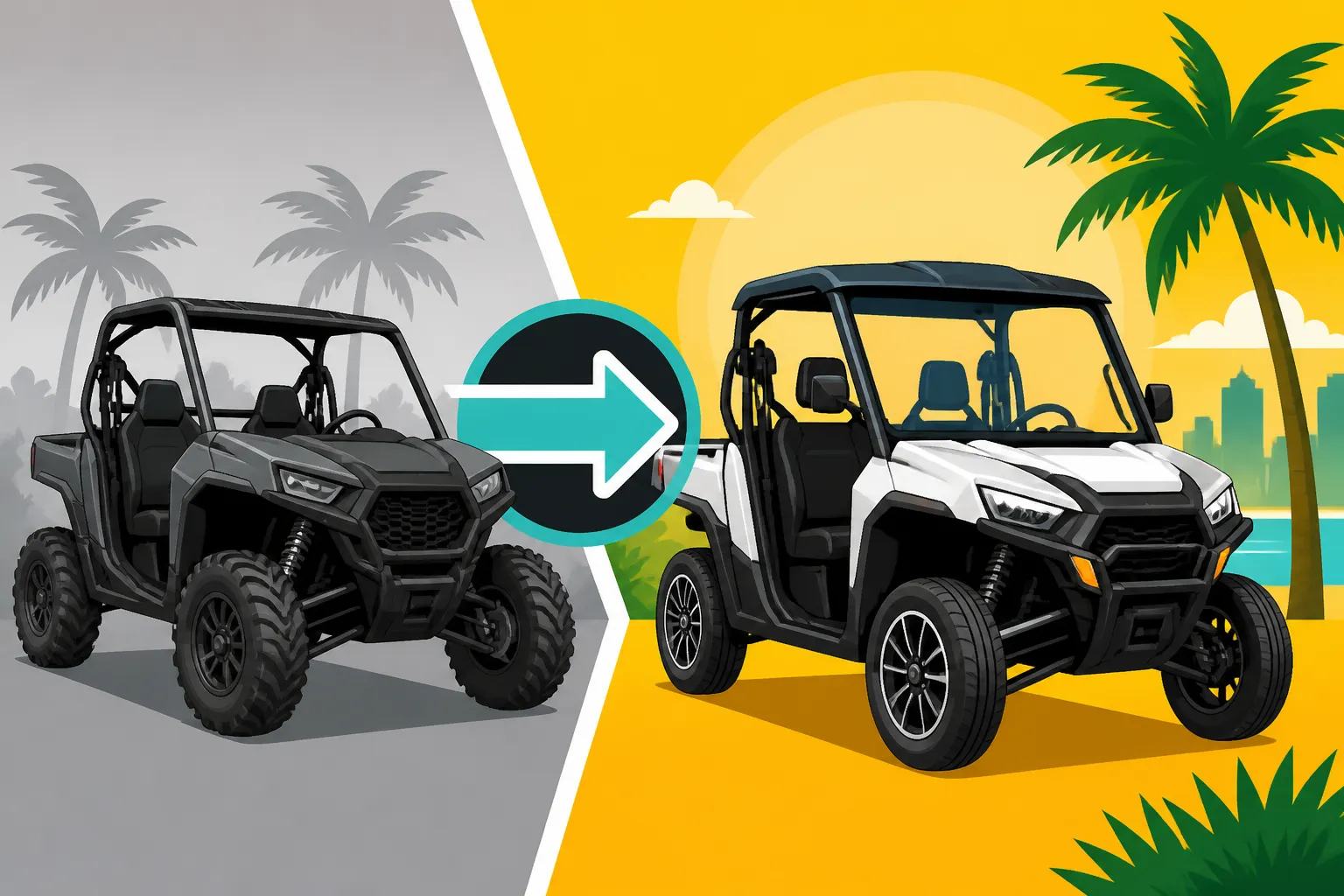
Turning a Side-by-Side Into a Florida LSV
Many Florida side-by-side owners dream of the day they can cruise their beloved UTV down the street to the gas station, a friend's house, or the local ice cream shop without worrying about breaking the law. Unfortunately, the path to making your powerful off-road machine street-legal in the Sunshine State isn't as simple as slapping on some turn signals. This guide will meticulously break down the intricate process of transforming your UTV into a Florida Low-Speed Vehicle (LSV), detailing the specific equipment, rigorous inspections, and crucial paperwork you'll need to navigate.
Decoding Florida's LSV Definition for Your Side-by-Side
Before you even think about buying a single part, it’s absolutely critical to understand what Florida legally defines as a Low-Speed Vehicle. Many riders get excited about the idea, only to realize their current UTV or the one they have their eye on might not be a good candidate for conversion without significant (and sometimes costly) modifications. This isn't just bureaucratic red tape; it's about ensuring safety on public roads.
What Separates a UTV from a Legal LSV in Florida?
At its core, a Utility Terrain Vehicle (UTV), or side-by-side, is designed for rugged off-road performance, hauling, and often high-speed recreation. These machines are typically wider, heavier, and more powerful than standard ATVs, often accommodating multiple passengers side-by-side (hence the name). They come from the factory ready to tackle trails, mud, sand, and tough terrain.
However, a Florida Low-Speed Vehicle is a very specific type of street-legal vehicle defined by state statute. For a machine to qualify as an LSV, it must have four wheels and be capable of a top speed greater than 20 miles per hour but not greater than 25 miles per hour. This speed range is the absolute bedrock of the LSV definition. While your UTV might have four wheels, its capability of easily exceeding 25 mph is usually the first, and often biggest, hurdle to overcome. Many UTVs can hit 50, 60, or even 70+ mph, which immediately disqualifies them from being considered an LSV in their stock form. It’s a common frustration for owners who see their UTV as perfectly capable of handling neighborhood streets, only to be met with this strict speed limitation. It means your high-performance off-road beast will need to be electronically or mechanically throttled back for street duty.
Why the Speed Limit Matters (and How to Address It)
The 20-25 mph top speed requirement for an LSV isn't arbitrary. It's a critical safety measure that dictates where the vehicle can operate, how it interacts with other traffic, and the level of protection it offers. Vehicles in this speed bracket are generally intended for use on local roads, not main thoroughfares where faster traffic creates dangerous speed differentials. If your side-by-side can naturally go faster than 25 mph, you must implement a modification that limits its top speed to no more than 25 mph.
This isn't a suggestion; it's a hard and fast rule for LSV designation. For many UTVs, especially newer models with electronic fuel injection and complex engine management systems, this often means installing a speed governor, or in some cases, reflashing the Engine Control Unit (ECU) to limit the output. Some older, more mechanically controlled machines might require gearing changes. This particular modification can be one of the most challenging and, for some owners, disheartening steps, as it means permanently (or at least semi-permanently) altering the vehicle's performance capabilities. You have to weigh the desire for street legality against the potential loss of your UTV's full off-road power. It's worth noting that once you've made this modification and successfully registered it as an LSV, removing the speed limiter and operating it on public roads at higher speeds would render it illegal and subject you to penalties. To learn more about specific regulations, it's helpful to review information on [Florida Low-Speed Vehicle Rules for Side-by-Sides].
Essential Equipment: What Your Side-by-Side Needs to Become an LSV
Once you’ve tackled the speed limitation, your side-by-side needs a comprehensive suite of safety equipment to meet Florida's LSV standards. These aren't just accessories; they are non-negotiable requirements that ensure your converted UTV can safely share the road with cars, trucks, and other vehicles. Think of it as upgrading your off-road warrior for a new, urban mission.
The Mandatory Safety Features for Florida Roads
Florida statutes clearly outline the specific components an LSV must possess. This list is extensive, and missing even one item can lead to a failed inspection and a delay in getting your UTV street-legal. Let's break down the essentials:
First and foremost, your UTV needs headlights. These must be capable of illuminating the road at night and must have both high and low beam settings, just like a standard car. You'll also need taillights that illuminate when the vehicle is in operation, accompanied by dedicated brake lights that clearly signal when you're slowing or stopping. Perhaps the most frequently overlooked item for off-road machines is turn signals. These are absolutely mandatory for signaling your intentions to other drivers and must be visible from both the front and rear, on both sides of the vehicle. Integrated kits often provide a clean solution for these lighting components. Many owners find integrated kits from reputable aftermarket providers like SuperATV can streamline this part of the process, ensuring all components are designed to work together and meet the necessary standards.
Beyond lighting, you'll need reflective devices on the sides and rear to enhance visibility. A windshield is also required, and it must be composed of safety glass or a similar shatter-resistant material. Standard off-road plastic windshields often don't meet this specific safety standard. Seat belts are crucial for every occupant the vehicle is designed to carry, and they must be securely mounted and in good working order. For visibility, you'll need a rearview mirror that provides a clear view of the road behind you, and at least one side mirror on the driver's side (though most prefer one on both sides for better situational awareness). Lastly, a fully functional parking brake is a must, capable of holding the vehicle stationary on an incline. And of course, your side-by-side must have a properly affixed and legible Vehicle Identification Number (VIN), which is standard for all UTVs.
DOT-Approved Tires and Braking Systems
While your UTV's knobby, aggressive off-road tires might be perfect for tearing through mud or gripping rocky trails, they are very likely not street-legal. For an LSV, you must have Department of Transportation (DOT)-approved tires. These tires are specifically designed and tested to meet certain safety and performance standards for highway use, including proper tread patterns, speed ratings, and load capacities. You'll typically find "DOT" stamped on the sidewall of approved tires. This is a crucial distinction, as operating a vehicle on public roads with non-DOT tires can result in fines and even rejection during the LSV inspection. Finding DOT-approved tires that still offer decent off-road performance can be a challenge, but companies like SuperATV offer a wide range of options that cater to this specific need, balancing street legality with trail capability.
Regarding the braking system, your side-by-side's existing hydraulic brakes are typically robust enough to meet LSV requirements, provided they are in excellent working order. The inspection will verify that the brakes are effective and capable of stopping the vehicle safely within a reasonable distance, given its weight and limited top speed. Ensure all brake lines are intact, pads are not excessively worn, and the system is free of leaks. Don't overlook the importance of having your braking system in top shape; it's fundamental to safe operation on public roads. Considering the total expense involved, understanding the full [Florida Side-by-Side Street Legal Conversion Cost] helps in planning your budget effectively.
The Paperwork and Inspection Gauntlet: Making It Official
Even with all the right parts installed, the process isn't complete until you've successfully navigated Florida's administrative hurdles. This involves gathering specific documents, presenting your modified side-by-side for an official inspection, and then applying for a new title and registration that formally designates it as an LSV. This can feel like a daunting process, but breaking it down into steps makes it manageable.
Gathering Your Documentation and Prepping for Inspection
Before you even think about showing up at the Department of Highway Safety and Motor Vehicles (DHSMV) or a designated inspection station, you need to compile a comprehensive packet of documentation. This is where proof of ownership, previous titling (if any), and details about your UTV's history become critical.
You’ll absolutely need the Manufacturer's Certificate of Origin (MSO) if your side-by-side is new and has never been titled, or your existing Florida title certificate if it's a used machine you already own. If you bought the UTV used, a bill of sale that clearly establishes your ownership, along with a previous title, will be essential. Make sure the VIN on all documents matches the physical VIN plate on your machine precisely. Any discrepancies will halt the process immediately. It’s also wise to keep receipts for all the parts you purchased and any professional labor performed for the conversion, as this demonstrates due diligence in meeting the requirements. The inspection process essentially treats your converted UTV as a "rebuilt" or "modified" vehicle in terms of its classification for road use, even if its core frame remains factory. Therefore, ensuring everything is meticulously documented will save you a lot of headaches.
Critically, all modifications – from the speed limiter to the last reflective decal – must be complete and fully functional before you present the vehicle for inspection. An incomplete conversion means an automatic fail and a wasted trip. Test everything: headlights (high and low), turn signals, brake lights, horn, parking brake, and ensure your speed limiter is actively working. Florida often requires a VIN verification, which can be performed by a law enforcement officer or a licensed motor vehicle dealer. Make sure this is done and the form (HSMV 86020) is properly filled out before you head to the title office. This thorough preparation will not only speed up your visit but also increase your chances of a first-time success. Understanding [Florida LSV Registration and Insurance Rules] will give you a head start on what comes next.
The DMV Inspection and Title Application Process
Once your side-by-side is fully equipped and you have all your paperwork in order, it's time for the official inspection. These inspections are typically conducted at a local DHSMV office or a designated facility. The inspector will go through a checklist, verifying that every single piece of required LSV equipment is present, functional, and meets the statutory standards. They will also confirm the vehicle's VIN and ensure it operates within the 20-25 mph speed range. Expect them to physically test the lights, mirrors, seatbelts, and brakes. Be prepared for them to ask questions about how the speed limiter was installed and its functionality.
After passing the inspection, you can proceed with applying for a new Florida title and registration. You will typically use Form HSMV 82040, "Application for Certificate of Title With/Without Registration." On this form, you will need to clearly indicate that the vehicle is now a Low-Speed Vehicle. The fees involved will include the initial title application fee, potentially a plate fee, and any applicable sales tax if this is the first time the vehicle is being titled in Florida, or if its value has significantly increased due to the modifications. This new title will explicitly state "LSV" or "Low-Speed Vehicle" as the body type, officially differentiating it from a standard off-highway vehicle (OHV). This is the key document that grants your UTV its new identity on public roads. Always remember that even after conversion, a Florida sales tax generally applies when you title an OHV, including a converted LSV. For more information, you might look into [Florida Sales Tax When You Title an ATV].
Here's a quick checklist of the mandatory equipment:
| Requirement | Description |
|---|---|
| Headlights | Both high and low beams, capable of illuminating the road. |
| Taillights | Red, visible from 500 feet, always on when vehicle is operating. |
| Brake Lights | Red, activate upon brake pedal depression, visible from 300 feet. |
| Turn Signals | Front and rear, amber or red, operational on both sides. |
| Reflective Devices | Red on rear, amber on sides, enhances visibility. |
| Windshield | Safety glass or shatter-resistant material. |
| Seat Belts | For every designated seating position. |
| Rearview Mirror | Provides clear view of the road to the rear. |
| Side Mirrors | At least one on the driver's side. |
| Parking Brake | Capable of holding the vehicle stationary. |
| DOT-Approved Tires | Marked with "DOT" on the sidewall, rated for highway use. |
| VIN | Clearly visible and legible Vehicle Identification Number. |
| Speed Governor/Limiter | Restricts top speed to between 20 mph and 25 mph. |
| Horn | Audible from 200 feet, to alert other drivers. |
Operating Your New Florida LSV: Rules and Responsibilities
Congratulations, you've successfully navigated the conversion and titling process! Your side-by-side is now legally a Low-Speed Vehicle in Florida. But the journey isn't over. Owning a street-legal UTV comes with a new set of rules and responsibilities that are fundamentally different from those governing off-road vehicles. Understanding these regulations is crucial to enjoying your LSV safely and legally on public roads.
Where Can You Actually Drive Your LSV in Florida?
The freedom of having a street-legal side-by-side is fantastic, but it's not absolute freedom to go anywhere. Florida law is very specific about where LSVs can and cannot be operated. The primary rule is that LSVs are generally limited to roads with a posted speed limit of 35 mph or less. This is the golden rule you absolutely cannot forget. You might find yourself on residential streets, within planned communities, or on specially designated county roads that fall under this speed limit. You can generally cross a road with a higher speed limit (e.g., crossing a 45 mph highway to get from one 35 mph road to another), but you cannot drive on those higher-speed roads for any significant distance.
This rule means main arterial roads, state highways, and interstates are strictly off-limits to your LSV. It's designed to keep slower-moving vehicles away from faster traffic, minimizing the risk of accidents. You also cannot drive your LSV on sidewalks, bicycle paths, or any pedestrian-only areas. While your UTV might be a great off-road machine, as an LSV, it's now considered a motor vehicle and must obey all standard traffic laws. It's a significant difference from how you might operate an ATV on private land. For example, communities like The Villages have extensive golf cart paths, but the rules for LSVs can differ significantly from those for golf carts, especially after recent legislative changes. For detailed information on where you can and cannot go, refer to [Florida Neighborhood Streets and Golf Cart Communities] and understand how they apply specifically to LSVs, which have different legal standing than standard golf carts, particularly since the [Florida Golf Cart Age Law Since October 2023] went into effect.
Licensing, Insurance, and General Road Etiquette
Operating an LSV on public roads in Florida requires more than just a street-legal vehicle; it requires a street-legal driver. Any person operating an LSV on public roads must possess a valid Florida driver's license. A learner's permit is not sufficient for operating an LSV on public roads. This means that if you're under 16 and only have a permit, or if you've never obtained a driver's license, you cannot legally drive your converted side-by-side on the street. This is a crucial difference from some off-road scenarios where age and licensing rules are more relaxed on private property. For more clarification on licensing requirements, you might want to read [Do You Need a Driver's License for an ATV in Florida?].
Furthermore, unlike many traditional ATVs used solely for off-road recreation, LSVs are required to carry liability insurance. This insurance provides financial protection in case you are at fault in an accident, covering damages or injuries to other parties. Make sure your insurance policy specifically covers your vehicle as an LSV and meets Florida's minimum liability requirements. This isn't optional; it's a legal necessity for road use.
Finally, operating your LSV means adhering to all standard traffic laws. This includes obeying posted speed limits (even if your LSV can only do 25 mph, if the limit is 15 mph, you must do 15), stopping at stop signs and traffic lights, yielding the right-of-way, and, of course, using those newly installed turn signals to communicate your intentions. You're now a part of the regular flow of traffic, albeit a slower part, and should drive defensively and predictably. Becoming familiar with [Florida ATV Road Rules: Where You Can Legally Ride] will help you understand the broader context of street-legal operation in the state, even though LSV rules have their own specific nuances.
Weighing the Investment: Is LSV Conversion Right for You?
The idea of a street-legal side-by-side is undoubtedly appealing for many Florida residents. It offers a unique blend of utility, recreation, and freedom. However, the path to LSV conversion is not without its costs and trade-offs. Before embarking on this project, it's wise to take a clear-eyed look at the financial investment and consider whether a converted UTV truly aligns with your needs and expectations.
The Costs Involved: Beyond Just the Parts
The expense of converting a side-by-side into a Florida LSV can accumulate quickly, and it's often more than just the price of a turn signal kit. Let's break down the potential costs:
First, if you don't already own a side-by-side, there's the initial purchase cost of the UTV itself. These machines can range from several thousand dollars for a basic model to well over $20,000 for a high-performance or utility-focused unit. Then come the parts for conversion. This is where costs can vary wildly. You might need to buy complete kits that include headlights, taillights, turn signals, mirrors, and a horn, or source individual components. A DOT-approved windshield can be several hundred dollars alone. New DOT-approved tires can be a significant investment, especially if you're replacing a full set of specialized off-road tires. The installation of a speed governor or an ECU reflash, particularly if done by a professional, will also add to the bill. Many owners turn to companies like SuperATV for their conversion needs, appreciating their extensive catalog of DOT-compliant accessories and full kits designed to simplify the process.
Beyond the hardware, you'll incur inspection fees for the VIN verification and the LSV safety check. There are also title fees for the new LSV designation, as well as registration fees to get your annual tag. Don't forget the potential for sales tax if you're titling the vehicle for the first time or if the state assesses a value increase due to the modifications. Florida's initial title application fee itself is a specific amount, and understanding these individual charges is part of the budgeting process. You can find detailed breakdowns of these charges, such as [The $29 Initial Title Application Fee Explained]. Finally, there are the ongoing costs: mandatory liability insurance will be an annual expense, and general maintenance for a machine that's now seeing both on-road and off-road use might be slightly higher. The cumulative cost can be surprisingly high, leading some to question if a factory-made LSV or even a small, used car might be a more cost-effective solution for neighborhood errands.
Pros and Cons of a Converted Side-by-Side LSV
Deciding whether to convert your UTV to an LSV involves weighing the benefits against the drawbacks. It's a unique solution that isn't for everyone, and it's essential to consider your personal use case.
Pros of a Converted Side-by-Side LSV:
- Increased Versatility: This is arguably the biggest benefit. You get a machine that can still dominate off-road trails but can also legally take you to the corner store, the post office, or a friend's house in your neighborhood.
- Unique Vehicle: There's a certain cool factor to cruising in a street-legal side-by-side that stands out from typical golf carts or cars.
- Utility for Local Errands: For those living in areas with lower speed limits and short distances, an LSV can be a practical and fun way to run local errands without firing up a full-sized vehicle.
- Cost-Effective Alternative (Potentially): If you already own a UTV, the conversion cost might be less than buying a second, dedicated street vehicle for short trips, depending on the extent of modifications needed.
Cons of a Converted Side-by-Side LSV:
- Speed Limitation: For many, the mandatory 20-25 mph top speed is a significant drawback. It means giving up the exhilarating high-speed capabilities of your UTV, which can be frustrating if you also enjoy aggressive trail riding.
- Complex and Costly Conversion: The process isn't cheap or simple. Gathering parts, installing them, and navigating the inspection and titling paperwork takes time, effort, and money.
- Impact on Off-Road Performance/Resale: Some modifications, particularly the speed limiter, might permanently alter the vehicle's off-road characteristics. The aftermarket components for street legality might also affect the machine's durability in extreme off-road conditions, and the "LSV" designation on the title could potentially impact its resale value as a pure off-road machine.
- Limited Road Use: While street-legal, an LSV is restricted to roads with speed limits of 35 mph or less, meaning it can't serve as a primary vehicle for longer commutes or travel on major roads.
- Ongoing Insurance Costs: The requirement for liability insurance adds an annual expense that many purely off-road UTV owners don't face.
Ultimately, turning your side-by-side into a Florida LSV is a highly personalized decision. It's a fantastic option for those who prioritize neighborhood mobility and a unique vehicle experience, and who are willing to accept the speed limitations and investment required. For others, the trade-offs might be too significant, and a dedicated off-road machine combined with a separate street vehicle might be a better fit.
Disclaimer
This article is for general informational purposes only and does not constitute professional advice. Laws, prices and regulations vary by location and change over time. Consult a qualified professional for guidance on your specific situation.